
I’ve wanted to take my wife to Italy pretty much since the day we met. After a memorable college year in Rome in the 1980s I knew I’d go back one day, especially since I tossed a few coins into the famous Trevi Fountain before I left. Today however, I sit wondering if I really will set foot in the Eternal City again. Thanks to overwhelming numbers of tourists, Rome might as well put a “sold out” sign on its city gates. Blame it on the Catholics?

2025, less than four months from now, is a Jubilee Year for the Catholic Church. Maybe your idea of a jubilee is a celebration, much like Britain’s in 2022 when they honored Queen Elizabeth’s unprecedented seventy years of service to the Crown. Not so the Catholics. They define a jubilee – every 25 or 50 years – as a “marked opportunity for the remission of sins, debts, and of universal pardon”.
 Catholic jubilees traditionally include a pilgrimage to Rome. I’d love to know who runs the calculations (and how) but the forecast for next year in Rome has Catholic pilgrims at around 32 million… in addition to the 50 million tourists who normally pass through. To put that total in perspective, the population of Rome is only 3 million. That’s a whole lot of extra pepperoni on the pizza (or piazza, if you will).
[Side note: 1983, the year I lived in Rome, was an out-of-cycle Catholic jubilee known as the Holy Year of the Redemption. Do I remember millions of Catholics “roaming” through the city streets? I do not. Then again I’m a Methodist, so maybe I have an excuse for missing the obvious…]

Thanks to next year’s jubilee, officials are clamping down on a visitor’s ability to see or tour the city’s most famous attractions. The Fontana di Trevi is a good example of how things will change. In the 1980s I could stand in front of the Baroque fountain to my heart’s content. In 2025 I will need a ticket through a reservation system. That ticket gets me entry through one side of the piazza and exit through the other, at a specific time and for a specific (amount of) time. Hired “stewards and hostesses” make sure I don’t linger, and collect a 2-euro fee for the experience.
If I really wanted to be herded like sheep I’d join a flock on the green, green grass of Ireland, instead of paying for the privilege in Rome. And speaking of paying, the Trevi already collects over $1.5M in coins voluntary thrown into its waters (the money then donated to local charities). Add in the new 2-euro fee, and even if just 10% of next year’s visitors make it to the Trevi, Rome will nab an additional $18M. Jubilee indeed.

If I sound jaded about Rome’s forced hand, it’s only because I have the perspective of a time when everything seemed so much easier. In the 1980s I could wander through St. Peter’s Square without photo-bombing dozens of iPhones. I could also wander without encountering a random protest about a religious war or climate change. I still remember plunking down on the cobblestones of that grand piazza to paint a watercolor of the Basilica, and nobody bothered me. I also remember Frisbee with a fellow student in another piazza, while the local Italians watched the spinning disc in wonder. Innocent times indeed.
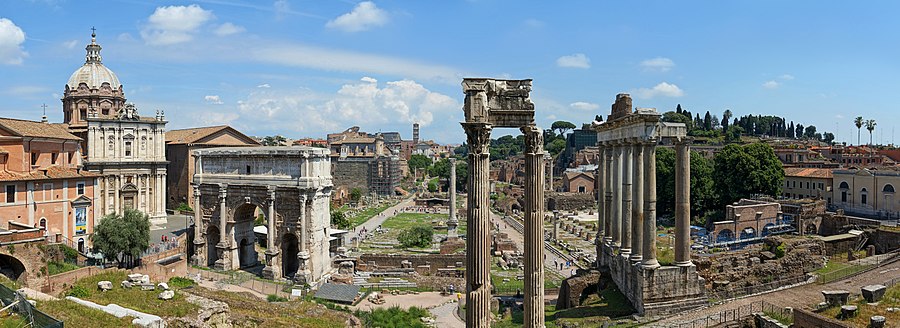
In 2024, a guided tour of the Vatican (the only way to see it) – including the sublime Sistine Chapel – will set you back $50. A tour of the Colosseum and Roman Forum will cost you twice that much. I’m sure next year’s pilgrims will pay these fees without blinking a sin-forgiven eye. I just can’t get past my free-and-easy days as an architecture student, when each of the city’s wonders was as wide open and come-on-in accessible as you can imagine.
 The truth is I’d go back to Rome in a heartbeat, even if I knew untold millions of pilgrims would be standing alongside me. The Eternal City is worth the look even if you never step inside any of its buildings. On the other hand, if I’m patient and wait until 2032, it’ll be the 50th anniversary of my college year. That calls for a jubilee! I’ll be the only pilgrim of course (er, two of us counting my wife) but at least we’ll have no hassles dropping coins into the Trevi.
Some content sourced from the Skift Newsletter article, “Rome Tourism Chief Says There’s ‘Total Chaos’ at Trevi Fountain…”, and Wikipedia, “the free encyclopedia”.


