Keeping Score at the Grocery Store

In the chaos of the supermarket a few days before Christmas, milk, eggnog, and a package of those Li’l Smokies sausages fell into our shopping cart. These items don’t usually find their way into our frig but the year-end holiday meals somehow demanded them. If the market wasn’t so frantic I would’ve also whipped out my phone to see if these purchases deserved my dollars. After all, just about everything we use in the kitchen (and bathroom) these days has a little numeric value lurking just below the surface.
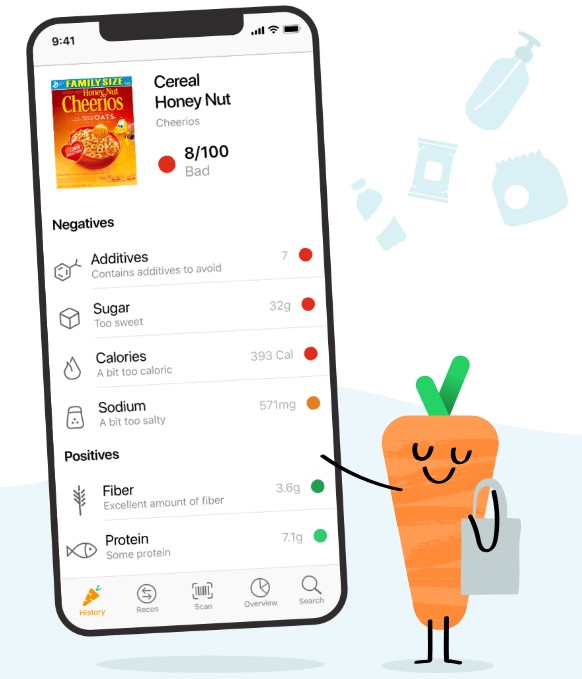
Nacho Cheese Doritos are now a “5” in my world.  You might say pretty good! until I tell you that’s on a scale of 1-100.  But let’s say you choose Blue Diamond’s Almond Nut-Thin Crackers instead.  The number skyrockets to 84.  A roll of Wint-O-Green Life Savers earns a 28 while a box of Tic Tac Freshmints doubles the number.  Nature Valley Granola Bars? 51. Heinz Ketchup? 33.  And in the ultimate insult to products considered “food”, perfectly round Nabisco Oreos earn a perfectly round 0/100.

What’s with all the tallying, you ask?  The numbers are simply the output of a little smartphone app called Yuka, which joined my personal parade of subscriptions last May.  In the words of its young French founders (Julie, and brothers Francois and Benoît), Yuka “deciphers product labels and analyzes the health benefits of foods and cosmetics”.  Plain English: Scan the barcode of anything in the supermarket and Yuka tells you whether to buy it or not.

Candidly, it wasn’t the numbers that sold me on Yuka.  Rather it’s this: the app is completely ad-free because brands cannot pay Yuka to advertise their products.  In other words, the numerical ratings I’ve shared are generated objectively, using common perceptions of the health benefits of ingredients.  Yuka has rocked the small space known as my kitchen pantry.

Never is this overhaul more evident than with “cosmetics”, Yuka’s catch-all for everything you find in the bathroom.  In the last eight months I’ve swapped out my deodorant, mouthwash, shaving cream, shampoo, and face wash for items with better Yuka numbers.  Five products I used every day and purchased for years just went flying off my medicine cabinet shelves, replaced by other products that are healthier on and in me (including Aveeno’s facial cleanser, which earns a perfect 100).

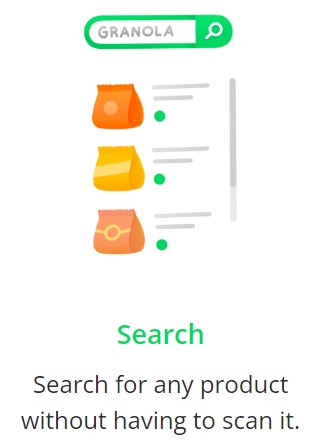
Yuka (the name is a nod to Yucatán) is about more than scan-and-score.  You can also simply search on products, mining a database of five million entries.  Even if a product isn’t in the database you can enter the ingredients from the label and Yuka will give it a number.  And if that number is lousy (like it is for your Oreos or my L’il Smokies) Yuka will point you to a list of alternatives with better numbers.  Again, Yuka doesn’t recommend one product over another; it just presents the numbers for you to consider.
In a nod to the healthy habits of Europeans (who favor fresh foods), Yuka’s founders realized its app was most popular in America, where we are so fond of packaged products.  So they packed up their French offices and French families and moved to the middle of Manhattan – temporarily – to better connect with their target audience.  Eventually they’ll head back home but not before Yuka is sure to land on the smartphones of millions of Americans.
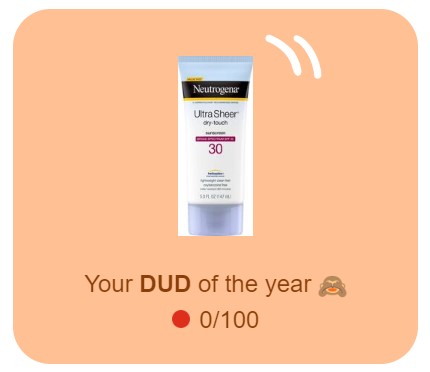
Here’s one more aspect of Yuka I appreciate: the founders take time to communicate with their users.  In the eight months I’ve subscribed, they’ve sent me twelve emails with interesting articles about healthy eating, healthy “cosmetics”, and the entertaining evolution of their little company (which includes a dog as an employee).  They also sent me a fun video of their first few days in New York City.  And just last week I received a year-end recap of my app use (93 products scanned with an average score of 46).  No advertisements and no product pushes.

The subscriber version of Yuka is $15/year (you can try a more limited version for free), which includes the convenient scan-for-a-score feature.  Furthermore, your subscription dollars are what keeps Yuka in business, instead of funding manufacturers who’d like nothing more than to push their products on you.  That’s just one of the reasons I now keep score at the grocery store.

Fresh-Breath Foods

There was a time, not so long ago, when the Girl Scouts knocked on your front door instead of standing outside your local supermarket, selling their popular cookies. My wife would tease me because I never had the heart to turn down the cute little uniformed kids on my doorstep. But let the record show, I really do like Girl Scout cookies. And if I had the money to buy just one box, it’d be the Thin Mints every time.

Nature’s fresh-breath herb

I’ve been a mint fan as long as I can remember.  I’m not talking about foods (yet) so much as the flavor itself.  Peppermint, spearmint, wintergreen, or even a fresh sprig right out of the ground – they all speak to me with a sort of spicy vibe.  I find a food so “tasteful” when it’s freshening your breath at the same time.

For a hot minute I thought the Girl Scout Thin Mints were gone for good.  A recent headline teased the departure of a “cult-favorite” cookie flavor and I feared the Mints had run their course.  Instead, it’s the lookalike “Raspberry Rally” calling it quits.  No harm, no foul.  As long as I can still buy the Thin Mints (and an occasional Caramel Delite) I’ll happily fork over the $5 (now $6) a box.

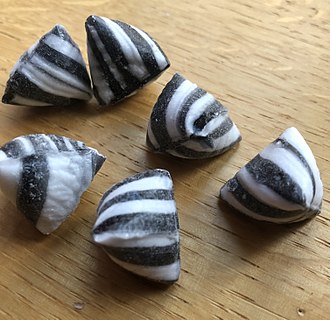
Mint-striped “humbug” candies

Had the Thin Mints really been gone for good, I needn’t look far to find other fresh-breath foods.  Who doesn’t like a scoop of peppermint or mint chocolate-chip ice cream?  A pack of Mentos?  Listerine?  Heck, I’ll even settle for that gritty peppermint paste the hygienist uses to polish your teeth.

Brach’s “Star Brights”

Minty consumables really do run the gamut.  You’ll find over fifty global brands of breath mints, including Altoids (my favorite), Breath Savers, Certs, Clorets, Ice Breakers, Tic Tac, and Velamints.  But put all of these together and you still wouldn’t come close to the Starlight Mint population.  The origin of Starlights is one of the world’s great mysteries.  Brach’s Candy claims their invention, but if so then why do they call them “Star Brights”?

If Starlights are too dime-store for your taste perhaps you prefer the softer texture of a “butter mint”.  Butters are often found, individually wrapped, in the lobbies of fine restaurants (gone are the days where you’d just spoon yourself a handful on the way out the door).  I’ve always thought a butter mint is caught in a quandary,  Does it identify more as “butter” or “mint”?

Mint julep

Speaking of a refined palate, minty liquors make for some mighty fine beverages.  The first drink my wife and I ever shared was hot chocolate and peppermint schnapps from a thermos at our college’s movie night.  A grasshopper (and my wife has a killer recipe for one) is a fresh-breath milkshake made with crème de menthe.  And the Kentucky Derby’s mint julep is more bourbon than mint but you’ll always find fresh sprigs garnishing the top.

If not the Starlights, my first introduction to mint was probably packs of Life Savers.  There used to be several mint flavors of “the candy with the hole in the middle” including Wint-O-Green, Stik-O-Pep, and Spear-O-Mint.  But when the trendier Mentos and Tic-Tac came along, Life Savers headed for the rear-view mirror.

Mistake-O-Mint

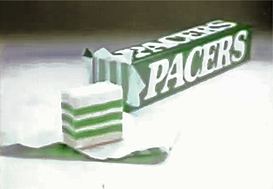
No mention of mint would be complete without a couple of failures (at least IMHO).  In the 1970s the makers of Starburst came out with a short-lived minty version called Pacers.  They never worked for me because I always expected those chewy little squares to be fruit-flavored.  Nabisco’s Oreo, which blossomed into 85+ varieties from their black-and-white signature sandwich cookie, include ones with green mint filling.  No, just no.  Oreos are meant to be the vanilla originals.  Food-color them orange for Halloween if you will but don’t change the taste.

[Side advertisement: The next time I fly overseas I’ll have to give Jet Blue’s Mint class a try.  Their individual “apart-mint” cubicles allow you to lie flat, with lots of cushions, a TV, and plenty of storage space for your carry-on items.  Fancy, huh?  All that’s missing is a chocolate mint on your memory foam pillow before you drift off to sleep.]

France’s “Monnaie de Paris” Mint

Here’s a chicken-or-egg question.  Which mint came first, the flavor itself or the stodgy industrial facility which manufactures coins?  I always thought it’d be cool to work in a mint.  You’re handling millions of dollars every day and if someone asked what you do for a living, you just say casually, “Oh, I make money.”  And If it were up to me I’d give all those coins a sweet-smelling scent on their way out the door so they’d be “freshly-minted” two times over.

Our Christmas celebrations used to include a box of Frango Mints, the melt-in-your-mouth chocolates you could buy at Chicago’s Marshall Field’s.  These days we go with Williams-Sonoma peppermint bark.  Our tree will always welcome a peppermint candy cane or two.  And if a Girl Scout should ever knock on my front door again, I’ll be happy to help her meet her quota, because the Thin Mints will always be a breath of fresh air.

Some content sourced from the CNN Business article, “The Girl Scouts are discontinuing a cult-favorite cookie”, and Wikipedia, “the free encyclopedia”.

P.S. I Love You

When it comes to snack foods, I’m not a fan of variations on a theme. Kellogg’s Pop-Tarts debuted in the 1960s with just four flavors: strawberry, blueberry, apple, and brown sugar cinnamon. Today you choose from more than twenty Tarts, including “Hot Fudge Sundae”. The original Triscuit cracker was a baked whole wheat square with a little salt. Today you’ll find a dozen Triscuit flavors on the shelf, including “Fire Roasted Tomato & Olive Oil”. Then we have the Oreo cookie. The original, of course, was two chocolate wafers sandwiching just the right amount of vanilla cream filling. Now Oreo flavors are too numerous to count.  But there’s one you can be sure is a whopping success: pumpkin spice.

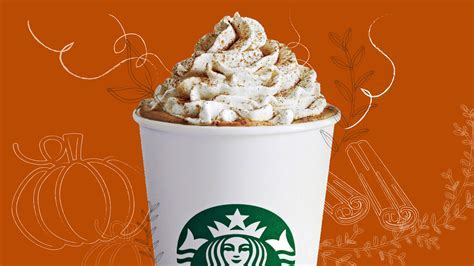
 Welcome to mid-September, Americans, and the beginning of our pumpkin spice delirium.  For the next two months you can expect an endless parade of “P.S.” product advertisements.  My wife & I, we’ve already caved to the obsession.  We have a package of “Pumpkin Spice Snaps” sitting on the counter.  We have two leftover pieces of this year’s first homemade pumpkin pie sitting in our frig.  And it’s only a matter of time before my car veers off the road and right through a Starbucks drive-thru for one of their classic P.S. lattes.  (I’ll take a grande, if you please).

My daughter just reminded me Starbucks also brings back their pumpkin cream cold brew this time of year.  That’s a good one too but let’s be real: none of Starbucks’ P.S. offerings should be considered “coffee”.  We buy them for the spice and the sweet, not for the taste of the beans underneath.

Lest you think Starbucks gets the credit for our pumpkin spice mania, the record must be set straight.  McCormick and Company, they of the little red-capped spice bottles, debuted their “Pumpkin Pie Spice” in 1934.  At least three of the following are in the bottle: cinnamon, ginger, allspice, cloves, and nutmeg.  Do I have this spice blend?  Yes.  Do I use it?  Heck, no.  My wife’s family recipe for pumpkin pie contains a different proportion of the individual spices than McCormick’s, which may be the secret to its delectable flavor.  Plus, pumpkin pie is easy enough to make without having the spices combined for you. Dump the ingredients into a bowl and mix well. Pour into a pie shell.  Bake. My kind of dessert.

Starbucks can’t even take the credit for the first P.S. latte.  That accolade goes to Mexico’s Candle Company in 1995.  The Starbucks version debuted eight years later.  But you could argue Starbucks kicked off the forever-trend where we infuse P.S. into everything imaginable, including the good (Krispy Kreme doughnuts, Cheerios, candles) and the ridiculous  (lip balm, deodorant, beer).  As of 2016, “pumpkin spice consumables” accounted for an annual market of over $500M. Yep, we’re hooked.

The “Pumpkin Spice Flavored Creme Oreo” is not even an Oreo, at least not in my pantry.  Nabisco attached the word “Oreo” but c’mon, let’s just admit it’s a seasonal wolf in sandwich cookie clothing.  “Golden” Oreo cookies… with “festive pumpkin spice flavored cream” (and is it cream or creme?)  Nope, the only Oreos in my book are black and white, though I will allow shelf space for the “Double Stuf” variety.

I’m not sure why this topic caught my eye because I haven’t had an Oreo in years.  The last time I did I realized the taste was different from the Oreo of my youth.  The cookies are not as soft, and there’s less cream filling in between (which is like messing with the ratio of chocolate and peanut butter in a Reese’s, a sin for all mankind).  Like the misfortune of many other snack foods though, size and ingredients change for the sake of profit.  And new varieties pop up to keep consumers buying.  At least we’re not talking about the Lady Gaga Oreo.  You’ll need your sunglasses for that one.

Now you’ll excuse me as I head off to a doctor’s appointment.  My drive will take me past several Starbucks, which means I could be caving to my first P.S. latte of the season.  Not that I’m worried about missing out.  As soon as the P.S. season is over I can look forward to Starbucks’ Chestnut Praline latte all the way through New Year’s Day.  Now we’re talking!

Some content sourced from the CNN Business article, “Oreo is bringing back this flavor after a 5-year hiatus:, and Wikipedia, “the free encyclopedia”.