(Not) Making Cents

The other day when I drove into town I felt a sneeze coming on, so I reached into my car’s pull-out coin drawer and grabbed a handkerchief. If I’d wanted a breath mint for my mouth or an eye drop for my contacts I’d reach into the same place. But I wouldn’t find quarters, dimes, nickels, or pennies anywhere in there.  Come to think of it, someday soon I won’t find pennies anywhere at all.

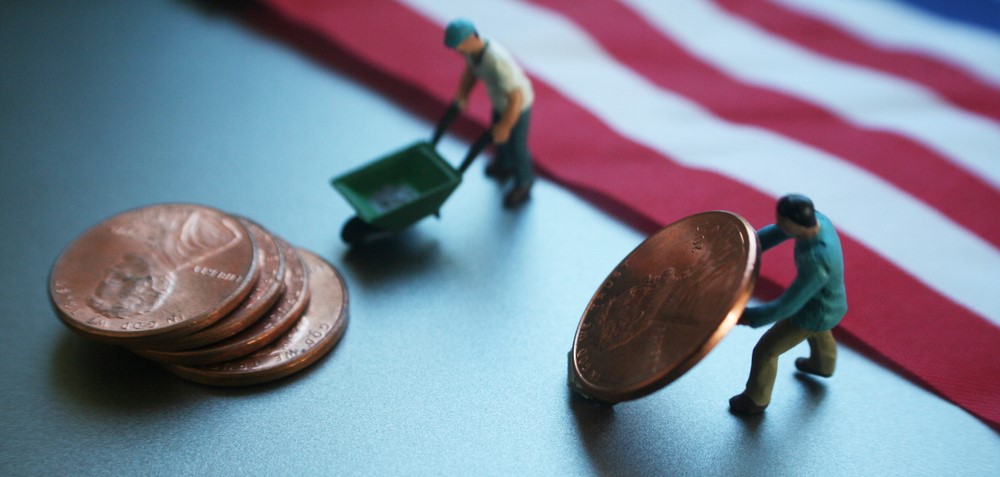
You probably caught the headline in your news feed.  The population growth of U.S. pennies is about to come to a grinding halt.  Our country will no longer mint shiny new “Lincolns” for the first time since their debut in 1787.  Two hundred years and change (ha) is a darned good run for a coin but the penny appears to have been done in by compelling arguments.  One, the production cost is three times the face value.  And two – and perhaps most humiliating – the penny’s face value has descended into, well, obsolescence.

There was a time not so long ago when I wouldn’t pass up a lost penny lying in the street.  In addition to “free money” there was the old adage find a penny pick it up, and all day long you’ll have good luck.  Today you’d better settle for just the luck because you can’t buy anything for pennies anymore.  You’d be better off using them for more practical purposes like checking your tire tread depth or turning screws.  My brother and his wife turned thousands of their pennies into a beautiful, copper-colored floor for their kitchen.
Losing their shine

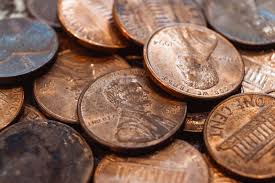
Speaking of copper (I’m easily distracted today) I had no idea pennies are no longer made of copper.  They’re primarily zinc because of the rising cost of metals (yet they still cost three cents apiece?)  You’d assume quarters, dimes, and nickels were made from an alloy of silver, lead, or aluminum, but – go figure – those coins are primarily copper.

Enough with the facts.  I’m bummed to see the penny put out to pasture.  Along with it goes a ton of childhood memories.  You could roll pennies into coin wrappers and enjoy the thrill of exchanging the whole lot for paper bills at the bank.  You could drop them into handheld banks for untold savings (and my banks were delightfully mechanical).  Finally, you could walk into any 7-Eleven or drug store, hit the candy aisle, and find several “penny candy” choices.  A chunk of Bazooka bubble gum, hard candies, or licorice whips could be purchased for just a few cents back then.

Three cents each… a long, long time ago

Practically speaking I’m on board with the penny’s retirement, because I can’t recall the last time I involved a cent in a financial transaction.  If something costs $9.99, are you telling me you’d reach into your pocket and pay the $9.99 in cash and coin?  Nope, you’d more likely hand over a ten-dollar bill and then what happens?  You get a penny in return.  What are you supposed to do with that?

Certain sayings will have to head out to pasture as well.  An expensive item can no longer be described as “a pretty penny”.  “A penny saved is a penny earned” literally has no value.  A frugal person should now be described as a “quarter-pincher” (in case the nickel and dime are also on life support).  And “pennies from heaven” certainly don’t describe good fortune anymore, even if the song of the same name will continue to be sung.
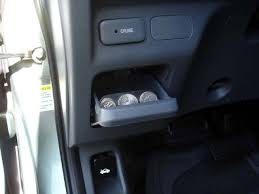
Do you have one of these?

For my money, I hope car manufacturers continue to include coin drawers in their dashboards.  I keep important things in there and I’d prefer not to change my ways.  Then again maybe I should keep a few pennies in the drawer, if only for my childhood memories.  Those will always have value.


LEGO Notre-Dame de Paris – Update #5

(Read about the start of this “church service” in Highest Chair)

I decided to have my lunch today while working through Bag 8… of 34 bags of pieces.  That was a mistake.  I reached for a LEGO piece, grabbed a little block of cheese instead, and Notre-Dame de Paris almost had cheddar in its walls. I immediately vowed food would go nowhere near the assembly ever again.  It’s unnerving enough putting in the real pieces.

As I worked on the uppermost level you see here I used a little too much force, and a piece in the level below loosened and scampered down into the sanctuary.  I shook, rattled, and rolled the entire cathedral trying to get it out but to now avail.  Just before admitting defeat, the little devil finally emerged (he must’ve gone to confession).  And here’s where I learned an unnerving truth: re-assembling pieces long after you’re supposed to can be near impossible.  I had to tear down an entire wall to get the piece back in place.  We’re working in close quarters here, people.

“LEGO lever”

Today is also a good chapter to point out the tool to the right.  It’s a “LEGO lever” (my words), designed to easily remove a piece from a place it wasn’t meant to go.  I didn’t need my lever through the first seven bags, but today?  Half a dozen times.  My mind’s eye was off just a hair and I kept assembling pieces a quarter or half-inch off from where they were supposed to go.  LEGO lever = life saver.

Pasta noodles?

Bag 8 started slow and repetitious but finished grand and confident.  In fact, I was so full of myself after the mere forty-five minutes of construction, I boldly plunged into Bag 9.  Mistake.  I mean, look at the pieces in this photo!  Are these LEGOs or the little bits of pasta you find in your chicken soup?  Seriously, we may be almost a quarter of the way through the bag count but the pieces are shrinking.  Some Sunday soon the parishioners will look to the heavens and be burned by the giant magnifying glass above them.

Running build time: 4 hrs. 22 min.

Total leftover pieces: 17

Some content sourced from the CNN Business article, “Trump instructs Treasury to halt penny production”, and Wikipedia, “the free encyclopedia”.

Celestial Silver Dollar

I walk the dog late at night, just to be sure he doesn’t nudge me awake in the wee hours of the morning. The walk can be a chore when I’m tired but most nights it’s a quiet, peaceful stroll through our pitch-black horse pastures. We’re usually blessed with clear skies here in South Carolina, which means the stars and planets put on a display worthy of a paid ticket to an observatory. Regardless, the moment I’m out the door I’m in search of my other faithful companion: the moon.

Through the trees

The “heavens” offer a plethora of topics to blog about (which I have: Saturn in Of Rings and Romans or Starlink satellites in Celestial Strings of Pearls, for example) but I’m overdue with a few words about the moon. Our nearest galactic neighbor is a constant wonder to me.  The moon (or is it “The Moon”?) is the reason we have ocean tides here on Earth and solar eclipses far, far away.  The moon has been the target of some of the most impressive space technology and exploration in history.  But let’s put the science aside, shall we?  Today I’d rather just muse about the moon as its sits in the night sky, like a shiny silver dollar laid out on top of a black velvet cloth.

My favorite moons are full – the perfectly round ones – but the shadowed partials can be just as beautiful.  Depending on the season and the atmosphere, the moon takes on countless looks.  Some nights it rises giant above the trees, as if invisible binoculars rest before my eyes.  Other nights the moon sits as an elegant crescent, a perfectly white slice of melon.  Still other nights the moon doesn’t rise at all, or at least, not until well after I’m in bed.  It’s a guessing game every time the dog and I head out into the dark.

I also make a game of trying to guess when the moon is full just by looking at it.  On the nights just before or after it occurs the moon can still appear as full.  So you have to look very carefully at the edges to decide if it’s perfectly round or not.  Conveniently, the moon is full about once a month, or at least, once every month in 2024.  Next year or the year after, perhaps we’ll get a “blue”: that second full moon in a calendar month.  Doesn’t happen very often, of course.

Here’s a fascinating fact about the moon.  It’s locked into place by the earth’s gravity, meaning it’s always showing you the same face.  Try to picture the earth taking a trip around the sun (once a year or so), while it’s spinning on its own axis (once a day), while the moon is spinning around the earth.  Technically the moon is rotating, just not on its own axis.  So you never get to see “the dark side”.

Here’s another fact that makes me pause.  If you drive across the United States from coast to coast and back again, you’re driving about 6,000 miles.  Do that same drive thirty times and you’ve driven to the moon.  Suddenly our celestial silver dollar doesn’t seem so far away, does it?

The next full moon (from my perspective), nicknamed “The Wolf”, is a week from this posting, on Thursday, January 25th.  It’ll be the first full one of the new year.  Good timing really, because some of you readers don’t make it to my blog until several days after the fact.  If you’re exactly a week late, walk outside tonight after dark.  A spectacular scene in the heavens awaits.

Some content sourced from Wikipedia, “the free encyclopedia”.
Heavy Metal

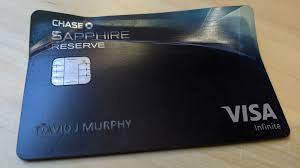
The most appealing aspect of my slim bi-fold wallet is – slipped into my front pocket – I sometimes forget it’s even there. Between the couple of credit cards, insurance cards, driver’s license, and the wallet itself, you’re talking about an item less than a half-inch thick, weighing just a couple ounces. That suits (pants?) me just fine, since I don’t want to be weighed down (or bulged) any more than I have to be. Maybe that’s why I don’t understand the fuss over trendy credit cards made of metal. Then again, my “vanity score” probably wouldn’t qualify me for one anyway.

I guess I missed the memo on metal credit cards. They’re in circulation to the tune of 32 million these days, which sounds impressive until you stack them up against the four billion plastic cards out there. Less than 1% of any total is never impressive, but the forecasters say metal cards will quadruple in the next two years. One reason for the increase: some financial institutions issue metal cards as a replacement for expiring plastic ones. Another reason: consumers are willing to pay an annual fee for the privilege of metal vs. plastic.

The demand for this sort of thing fascinates me. If my financial institution wants to gift me a metal card (whose hefty feel apparently makes me feel special and therefore inclined to spend more), so be it. Just don’t charge me an annual fee. Speaking of annual fees, here’s the extreme example with metal. A by-invitation-only American Express Centurion “Titanium” card will set you back $5,000/year, just so you can carry it in your wallet. You’ll also be tagged with a $10,000 initiation fee. I know several country clubs who’d let me in the door for less than that.

Honestly, I have no problem with holders of metal cards. Those same 32 million people probably pay for vanity license plates and gold-colored trim on their cars. They also pay to avoid standing in line, whether at the airport or at Disneyland. Maybe there should be a website to purchase “vanity fair” in one place. We could call it IFeelSpecial.com

Let’s get the drawbacks of metal cards out of the way up front. They’re high-maintenance. Apple has a titanium credit card, complete with care guide, which advises “… against keeping it in a pocket or bag with loose change… or other potentially abrasive objects”. Metal cards also demand a cleaning solution (like rubbing alcohol), though I suspect that’s more to make them look pretty than keep them charging. Finally, metal cards destroy your shredder if you try to get rid of them when they expire. Buy a pair of tin snips instead.

I’ll own up to having an American Express Platinum card and a Visa Platinum card, but both are plastic, and “Platinum” simply means they have a rewards program. Which brings me to a point of missed opportunity. If issuers are trending towards metal cards, why not make them out of whatever material they’re named for? A platinum card should be made of platinum. A titanium card titanium. Citibank’s Diamond Preferred card? Oooooooo.

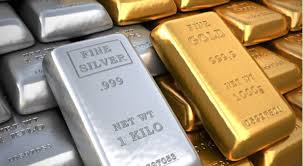
It’s not the craziest idea. Metal cards weigh up to five grams. If Amex issued my Platinum card from five grams of pure platinum, they could charge me $600 (current market value). A Gold card made of gold would be worth almost $1,000. A Silver card made of silver? Okay, that’d only be worth eleven bucks. But think about it. Your card gets declined? No problem. Just surrender it and say, “I’d like the current market value in cash, please”.

[As usual, someone beat me to the punch with my great ideas. If you live in the Middle East, Singapore, or the Czech Republic, you have access to a company called CompoSecure. CompoSecure makes its credit cards out of pure gold.]

Counter to the forecasters, I think metal cards will be challenged by no cards at all. Meaning, pay-thru-phone (i.e. Apple Pay, Google Pay, Venmo) is on the rise, and the security of these transactions – not to mention no need to carry cards and cash – may trump the “special feelings” metal brings. Can you imagine – plunking down your country-club-rate Amex Titanium after dinner, and one of your guests goes, “Really? You still pay with a physical card? How old-school!”

Pretty sure I’m going to miss the metal credit card movement completely (even if they do make better ice-scrapers than plastic). I’ll be jumping straight from my plastic Amex Platinum to digital one of these days.

It would probably help if I set up Apple Pay on my iPhone first.

Some content sourced from the 12/5/2019 Wall Street Journal article, “Once a Tool of the Elite, Metal Credit Cards Now Turn Up Everywhere”.

Two for the Money

Not so long ago people would say to me – my grandpa included – “a penny for your thoughts”. I always liked that phrase, though I was never paid for whatever was on my mind. Today you don’t hear it so much, because nothing is worth just a penny anymore. You’d be better off giving a dollar. Or two dollars.  Maybe then you’d find out what people think.

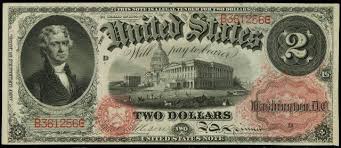
The other day I was in the drive-thru lane at my bank, and the teller cashed a twenty, returning a small stack of bills – a $1, a $5, a $10… and two $2-dollar bills.  I’ve seen plenty of the first three, but when was the last time you came across the double-dollar? U.S. currency may be downright boring compared to the colorful equivalents in other countries, but today I say this: the uncommon $2 is a cool bit of cash.

America’s paper money prints in just seven options today, from the $1 on up to the $100-dollar bill.  Fifty years ago you could find several larger denominations ($100,000!), but the big boys were dropped from circulation to deter organized crime.  Even today, the $50 and the $100 get second looks for fear of counterfeits.  The lion’s share of circulating bills is the $1 on up to the $20.  But the one that earns a second look? The $2.

What makes the $2 so tony?  Try finding one.  I asked my bank how many they have in the drawer at any given time.  They said none.  In fact, I didn’t just get my couple of $2’s – I had to ask for them – and the teller had to go back to the vault to find them.  The $2 just isn’t in demand anymore – hasn’t been for a long time.  The U.S. Mint stopped printing $2’s in 1966, but thanks to America’s bicentennial, started the presses again in 1976.  The most recent printing of the $2 was 2016 – almost 200 million – but it’s a drop in the bucket compared to the rest of the U.S. currency clan.  If you could shake the globe over a big basket, you’d find 40 billion U.S. bills in circulation right now.  But the overlooked $2 represents less than 0.5% of the lot.

I like the $2 because of its unique look.  Thomas Jefferson is on the front – oval-framed as in a portrait (only George on the $1 has the same look).  The words “Federal Reserve Note” curve gracefully over TJ’s head; on all other bills those words are in a mundane straight line.  Finally, the $2 is the only bill without a building on the back, like the Lincoln Memorial or the White House.  Instead, you have an edge-to-edge top-to-bottom rendition of the signers of the Declaration of Independence (replacing TJ’s Monticello home from earlier versions).

The two-dollar bill has several chapters of urban legend much more colorful than other denominations.  Apple co-founder Steve Wozniak purchases $2’s in uncut sheets; then has them perforated and glued like a Post-It pad.  He enjoys tearing off several for tipping.  U.S. Air Force pilots of the U-2 spy plane keep a $2 in their flight suit; a sort of badge of distinction. $2’s are often used by gun rights activists to show support for the Second Amendment. The website Where’s George? keeps track of the circulation of over five million registered $2’s.

Despite my enthusiasm for the buck-buck, it’s not without its challenges.  The $2 is not accepted at most vending machines.  The common misconception the $2 is no longer circulating leads to suspicion of counterfeiting.  Two years ago at Christa McAuliffe Middle School in Texas, a 13-year-old was denied lunch privileges for using a $2 at the cafeteria window.  A man in Baltimore was jailed for using $2’s to pay for a purchase at Best Buy.

My couple of $2’s will stay with me a little while, at least until the novelty wears off.  Maybe I’ll spend one of them just to see what happens.  Maybe I’ll return the other to the bank vault for safekeeping.  Today’s lesson; there’s more to American money than fives, tens, and twenties.  $2’s have a place at the U.S. currency table as well, just as they did when first minted in 1862.

Some content sourced from Wikipedia, “the free encyclopedia”.
Chump Change

This week’s headlines included a downer from the animal kingdom.  The world’s last male northern white rhino passed away, leaving just two females to live out their days before the species goes extinct.  How sad is that?  Especially since the northern white’s demise is the result of the poaching of its horns – questionable behavior from we humans.

Speaking of questionable behavior, did you know the U.S. penny and nickel are also on the verge of obsolescence?  It’s true, if you believe the arguments of those who say the one-cent and five-cent pieces have outlived their utility.  Consider: 1) both coins cost more to mint than they’re worth; 2) a nickel today buys less than 20% of its worth in 1970 (a penny – less than 10%); 3) merchants routinely adjust pricing to avoid their use; and 4) the metals involved – zinc, copper, and nickel – have perfectly good uses elsewhere.

The prosecutions rests and the defense now takes the stand.  Pennies and nickels should not go the way of the northern white.  Consider: 1) Demand for the little guys is soaring; double what it was a decade ago; 2) The U.S. Mint “makes money” on its production of coins – fully 45 cents for every dollar’s worth (in 2017: a $400 million profit); 3) If zinc becomes too expensive (97.5% of the makeup of today’s pennies), a cheaper metal can be used for filler, and 4) eliminating pennies and nickels could threaten confidence in the U.S. dollar with a forced dependence on higher denominations.

I’ll get behind any of these arguments – pro or con – I just think they’re boring.  Defending our little Mr. Lincoln’s and little Mr. Jefferson’s can be so much more creative.  Take away pennies and nickels; then consider the following:

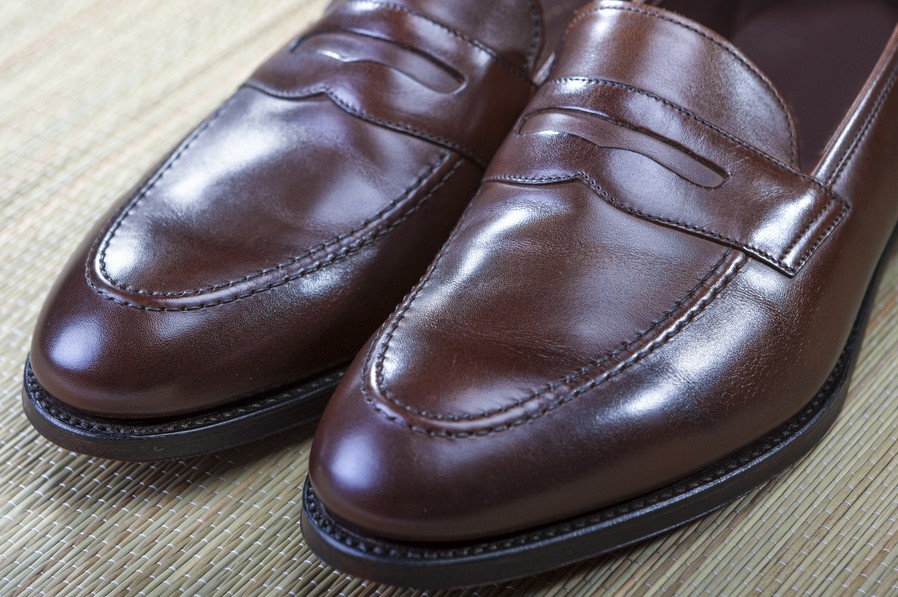
1) Penny loafers.  No longer the classic men’s slip-on shoes with the cool name, including the cross strap and small opening at the center; the perfect size and shape for a penny.  Add those Lincolns and you gave new meaning to the term “shoe shine”.  You also had a built-in conversation starter, when the girl asked why you put coins in your shoes.  You told her you were retro – back in the day a phone call cost a penny, and loafers were a convenient way to carry around the cost.

2) 99 Cent Only Stores.  Fifty years of U.S. retail, with over 400 locations and thousands of products priced at “ninety-nine cents or less”, goes belly-up without the penny.  How would a cashier make change on the dollar?  They’d have to give you a nickel instead, and… oops, the nickel’s gone too.  New math: buy something for $0.99, pay a dollar, and get a dime in change.  Huh?

3) Girls named Penelope.  They could no longer be “Penny” for short (or “Nickel”) because no one would understand what made the nickname so cute.  You say you don’t know anyone named Penelope?  Wait a few years.  In 2008, Penelope was #2,222 on the list of girl’s names.  This year it’s #573.

4) Your thoughts.  They used to be “a penny for…”.  Now you’ll have to pay at least ten times that much.  Keep them to yourself.

5) Beatles hits.  “Penny Lane” drops out of the Fab Four’s impressive list of #1’s.  The quaint little street no longer exists in Liverpool, England.  The barber never shows another photograph (of every customer he’s had the pleasure to have known).  There’s no fireman with an hourglass (nor in his pocket a portrait of the Queen).  You’re no longer there, beneath the blue, suburban skies.

6) Copper (+ zinc) floors.  Okay, I didn’t even realize this was a “thing” until recently.  Who ever said you had to spend a penny to give it value?

7) Your parent’s sayings.  Out the window goes “If I had a nickel for every time I heard that…”, or “we didn’t have two pennies to rub together”, or “that costs a pretty penny”, or “penny-wise, pound-foolish”, and so on.  Nobody would ever “nickel-and-dime” you again.

8) Derailed trains.  Okay, a derailed train was just a childhood power trip, to heighten the suspense of flattening pennies on the tracks.  The train rumbled on.  The pennies sometimes got lost.  Would a train flatten a dime or a quarter?  Never tried it; wouldn’t expect a kid to sacrifice that much pocket change for cheap thrills.

These arguments are solid; not a bad penny in the bunch.  We can’t let a subspecies like the U.S. penny or the U.S. nickel go extinct.  Think twice the next time a cashier takes a penny out of the counter cup just so she can give you change in dimes or quarters.  Think twice the next time you’re humming along with Billie Holiday:

Oh every time it rains
It rains pennies from heaven
Don’t you know each cloud contains
Pennies from heaven
You’ll find your fortune
Fallin’ all over town
Be sure that your umbrella is upside down

Some content sourced from the Wall Street Journal article, “”Should the U.S. Retire the Penny and Nickel?”

gratuity

Last week as I was buying lottery tickets, it occurred to me that very few transactions require payment by cash these days. Perhaps you still buy your newspaper at the street corner box.  Or you feed the parking meter with coins, even though most meters now take credit.  Maybe you still throw coins into the bridge toll basket just because it’s fun.

My family and I were in New York City this past weekend and I was quickly reminded that cash is a necessity in the big city.  Specifically, I’m talking about tips.  “Tip” is a word that supposedly originated in the 17th century, and somewhere along the way it was more elegantly referred to as a gratuity.  But sometimes I question how elegant the practice of tipping really is.

26 - gratuity

When my family and I arrived at our mid-town Manhattan hotel last Friday, I found myself tipping three people inside of fifteen minutes.  The cabbie, the curbside bellman, and the valet (who helped us with our bags and refused to step aside until I “greased his palm”).  In my book, a gratuity is a gesture of recognition for a job well done; a service that went above and beyond what you had in mind.  Nowadays however, tipping has reduced itself to more of an expectation.

Case in point.  That New York City cab ride was nothing more than a lift from Point A (airport) to Point B (hotel).  The cabbie did not say a word the entire time, when in fact he could’ve joined in the family conversation or at least pointed out the city sights as we passed them.  When we arrived at the hotel, the cab’s credit card machine allowed me the gratuity options of 20%, 25%, and 30% (nothing lower), and the cabbie actually complained about my choice of 20% for a large party.  I suppose you could decline all of those options and hand over less cash instead (which is what the cabbie’s sour attitude deserved).  Regardless I felt manipulated, as if the tip was mandatory instead of voluntary.

Americans would be surprised to learn that tipping is not a common practice outside of this country.  Canada and a few locales in Europe promote the practice, but otherwise the world’s countries don’t expect tipping and in some cases discourage it.  I find it interesting that tipping in the U.S. supposedly started in the Prohibition Era, when business owners reluctantly promoted tipping as a means of supplementing their employees’ wages at a time of lost revenue.  But again, the spirit of tipping in those days was for recognition; not as an expectation.

When I was in sixth grade, gratuity showed up on the weekly list of spelling words.  A few days after, a friend and I found ourselves at a local snack bar; the kind where you order at the counter and take your tray to a dining area.  After finishing our food we realized we could be “cool” and use one of our spelling words.  We left a $10 gratuity (virtually the same amount we spent on our snacks), then went to the corner of the dining area where we could watch the person who clears the trays.  I remember that person looking around as if someone had forgotten their cash.  I also remember the lecture from my friend’s mother a few hours later.  That verbal smack-down – fully deserved – included something along the lines of not understanding the meaning of our spelling words, and clearly not understanding how long it took our fathers to earn $10.  Whoops.

Here’s a little tip for you – ha.  The next time you dine at a restaurant or have your hair done, or receive some other service that asks for a little recognition, ask yourself the following:  Was the experience beyond expectation?  Did the person go out of their way to make the meal or the service a little more meaningful?  If yes, then the inevitable gratuity will be given in the spirit it was intended for all those years ago.