
I’ve always liked the play on words of Men’s Wearhouse. If you’re familiar with MW you know they cover more ground than just formal wear. They’ve set aside an area for tuxedos and such, but they have other sections for dress shirts, accessories, and even shoes. It’s like walking through a miniature department store… which is probably why MW is destined for the dust bin sometime in the coming year.
 Just eighteen months after Saks Fifth Avenue acquired bankrupt Neiman-Marcus (for the “bargain” price of $2.65 billion) Saks itself filed for bankruptcy; just yesterday. The 2024 merger of these big-box luxury retailers (which included Bergdorf Goodman) never really came to fruition. Chalk it up to biting off more than they could chew, or more likely to the impact of the changing habits of consumers. Today’s shoppers want smaller, more specific brick-and-mortar options; that is, whenever they can drag themselves away from online purchasing.
 The shuttering of department stores is not limited to the high-end verions, of course. Macy’s is in the process of closing 150 “underperforming locations”. JC Penny, Kohl’s, and Marshall’s are closing outlets here and there. Even Carter’s, the popular option for children’s clothing, is calling it quits on 150 locations. And Sears, which had almost 3,000 locations just fifteen years ago, is down to a mere five. Frankly, I didn’t know Sears had any locations anymore.

Sears (or the Sears, Roebuck and Co I remember as a child) was my family’s go-to-department store for just about anything. My brothers and I were outfitted in Sears-brand clothing. My mother purchased all kinds of items for her kitchen. My father built up his workshop with dozens of Craftsman tools. And of course, the Sears catalog was not only a kid’s dream-book of Christmas wishes, but its arrival in the mailbox was a sign Santa was on his way… not to your house but to the toy department at Sears.
 Like many other things in the States, department stores were based on the originals in Europe. Harrods of London has been around since 1849 and boasts of 1,100,000 square feet of selling space, making it the largest department store on the continent. Paris hosts several stores I’ve never heard of yet many have been around as long as Harrods. And Australia’s David Jones is considered the world’s longest continuously operating department store (since 1838!)
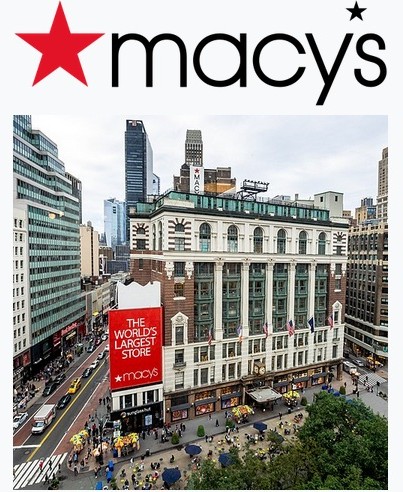 As you read this post – and if you’re Millennial or older – I’m sure a department store of your own experience comes to mind. Towards the East Coast: Gimbels, Hudson’s, or Wanamaker’s. Towards the West: May Company, Bullock’s, or Robinson’s. In Chicago alone: Marshall Field’s, Carson Pirie Scott, or Wieboldt’s. In Canada: Eaton’s. The list is endless, even as most of them are downsizing or closing altogether.
In deference to my former department store habits, I also prefer more specific retail these days. My shoes come from shoe stores. My shirts come from stores of particular name brands. But with shopping malls closing along with their aforementioned “anchors”, my stores of choice are now stand-alones or in outlet malls. Now that I think about it, outlet malls are kind of like outdoor department stores, aren’t they?
 I may be nostalgic for the department stores of my past, but I certainly understand why the concept has come and is about to be gone. We have more convenient, more tailored options these days. Which has me wondering about supermarkets. Supermarkets are also under the threat of the changing habits of consumers. No, I don’t expect a return to those wonderful merchant-driven street markets you find all over Europe. But we are getting more comfortable with placing orders ahead of time and having groceries delivered to our car or front door. In other words, enjoy shopping in “food warehouses” while you still can, because department stores are about to become nothing more than worthless wardrobe boxes.
Some content sourced from the CNN Business article, “Saks Global files for bankruptcy protection…”, and Wikipedia, “the free encyclopedia”.






 Life In A Word