
My wife’s sister and her husband just wrapped up a visit here in South Carolina. On the drive down from Colorado they made several sightseeing detours, but the trip back was pedal-to-the-metal… with the exception of one stop: the Moon Marble Company in Bonner Springs, Kansas. Moon Marbles stocks beautiful handmade wooden games and toys but c’mon, who braves the barren wastelands of Kansas for those? Marbles on the other hand, would draw me in like a bee to nectar.
 A marble is the perfect example of a sphere, isn’t it? I love spheres (including the word itself; much more elegant than “ball” or “orb”). Take a semicircle, revolve it a full loop around its diameter and voila! – a sphere. Calculating the volume of a sphere involves cubing its radius but let’s stop right there with the math lesson. Cubes and spheres just don’t belong in the same conversation.

Most of you readers are tuned in from the Northern Hemisphere, the half of our planet above the Equator. I find it cool to think of Earth as a sphere (with “big blue marble” a close second). It’s the biggest sphere we humans know (or have you been to Jupiter?) At your next party, wow your friends by telling them Earth is actually an oblate spheroid: flattened at both poles and bulging at the Equator. Ewwwww. Not a very pretty sphere, now is it?
Here’s the paragraph where I cop out and simply list a bunch of spheres, like oranges, Christmas ornaments, eyeballs, pearls, and the moon, but that’s just so three-hundred-blog-posts ago. Spheres can be much cooler. For instance, picture an atom (I’ll pause for those who need a microscope). An atom is a spherical cluster of neutrons and protons (which are also spheres) encircled by whizzing electrons (more spheres). Did you know your body is made up of over 7 octillion atoms? That’s a lot of spheres. You might want to lose a little weight.
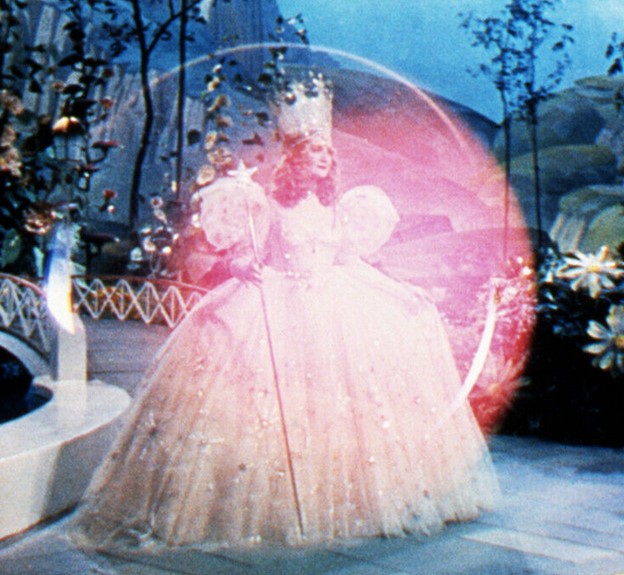
Soap bubbles are spheres. Sure, you aim to create those giant wibbly-wobbly monsters but for the most part you generate a cloud of perfectly spherical transparent globes, born on a whisper of air and extinguished seconds later. I’m guessing soap bubbles have the shortest lifespans of all spheres.
When a college buddy visited several years ago, he brought a paperweight made by an artist near his hometown in New Jersey. It’s a glass sphere with just the slightest bit of the bottom lopped off so it doesn’t roll off my desk. I’ve picked up a lot of tchochkes over the years but I’m not letting this one go. Did I mention spheres are cool?
 Three years before he wrote Jurassic Park, Michael Crichton authored a novel called Sphere. It’s about a group of scientists exploring a giant spacecraft sunk to the bottom of the Pacific Ocean. In the spacecraft’s cargo hold: a mysterious sphere, determined to be extraterrestrial and literally mind-blowing. Mark my words; spheres can be as terrifying as dinosaurs. Read it.
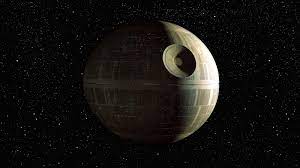
Star Wars focused on a giant spherical colony – the Empire’s “Death Star” – but the air went out of my perfectly round balloon as soon as I saw the giant divot on its side, not to mention all those channels and openings pierced by the X-wing starfighters. In other words, the Death Star was a decidedly less-than-perfect orb. So I applauded alongside everybody else when Luke Skywalker blew this sphere to kingdom come.
Here’s a place you wouldn’t expect to find a sphere: a Christian hymn. In the first verse of This Is My Father’s World we have, “All nature sings and round me rings, the music of the spheres”. The plural throws me off, because more than one sphere suggests more than just Earth (the entire solar system?) Or maybe we aren’t singing about the planets at all. A quote from August Rush seems relevant; the final line in the movie: “The music is all around us… all you have to do, is listen.”

We’re starting to go round and round here (heh) so let’s conclude with the world’s largest sphere. The Guinness Book writers will deem it so once the “MSG Sphere” opens in Las Vegas in a few months. At 300 feet tall and 500 feet wide, the Sphere will dramatically change a skyline that’s already pretty dramatic, especially with 1.2 million LEDs on its surface generating all sorts of images and animation. For concerts, sports, and the like, the Sphere can seat up to 18,000 spectators. I plan to be one of them… just as soon as I make it to Moon Marbles in Kansas.
Some content sourced from the CNN Travel article, “This futuristic entertainment venue is the world’s largest spherical structure”, and Wikipedia, “the free encyclopedia”.


 Life In A Word