Fruit of the Bloom

On Monday I noticed a lot of the wearing o’ the green because, of course, Americans celebrate St. Patrick’s Day as if we are somehow Irish. It’s a fitting burst of color as winter slowly but inevitably surrenders the seasonal baton. Soon you’ll find a full-on rainbow of blooms in every garden you pass. For now however, let’s drink and dance in honor of another bright color this week: pink. More to today’s topic, cherry pink.

If you’re tuning in from Washington D.C. you already know where I’m going with this one.  Today is the first day of spring, and the beginning of the Cherry Blossom Festival in our nation’s capital: four weeks of seemingly countless opportunities to celebrate the flowering of the graceful trees on the banks of the Potomac.  If you’d asked me a week ago what the bloomin’ fuss is all about, I’d have said the festival’s significance is as shallow as the water in the Lincoln Memorial Reflecting Pool.  But now I’m properly informed.  There’s more to this story than just pretty in pink.

“Yoshino” cherry blossom

In the early 1900s, America and Japan were unconditionally friendly countries (years before that little dust-up in the 1940s).  To acknowledge the friendship, Tokyo’s mayor shipped 3,000 Japanese cherry trees to Washington D. C.  There’s a longer, more convoluted history behind this gesture, including players from both countries making repeated efforts to populate the city with trees, but the details are about as interesting as pushing a bill through Congress.  Suffice it to say cherry trees were planted along the river, up and down the avenues, and in numbers worthy of an annual festival starting in the 1930s.

I love cherries; always have.  I think the flavor itself appealed to me before the fruit, in the popular junk food of the 1970s.  Hostess Fruit Pies.  Life Savers.  Slurpees from 7-11.  Or the proverbial maraschino on top of an ice cream sundae.  As much as I got my fill of those, I could never get my fill of my mother’s homemade cherry pie, and I mean homemade.  The cherries were passed down from her mother each year, picked, jarred, and ready to go.  The crust was made from scratch, including the signature latticework on top.  It’s a wonder the butter wasn’t churned from the milk of a family cow.

Alas, no longer on the menu

It’s also a wonder I’ve never been to D.C.’s Blossom Festival, considering my unabashed affection for the fruit.  I’m sure I’d find a couple dozen new ways to enjoy cherries besides the usuals.  I’d happily scarf down a serving of flambéed Cherries Jubilee over ice cream, or the cherry-filled sponge cake of a Black Forest gateau.  For the more adventurous there’s a savory Hungarian soup made with sour cherries.

“Petals and Paddles” race

Of course, there’s a lot more to the Blossom Festival than just food.  You’ll find parades, concerts, and kite-flying, with every shade of pink you can imagine.  Tour the historic Anderson House, filled with art and floral displays (featuring the cherry blossom, of course).  Compete in a “Petals and Paddles” boat race across the tidal basin surrounded by the trees.  Or get wet in “Pink in the Pool”, a family-friendly swim party replete with colorful beach balls.  There’s even an “Opening Ceremony” event on the first Saturday, (already sold out by the time I checked the website).  The weeks-long agenda proudly declares “events are primarily free” but I beg to differ. Tickets to the first several on the list were decidedly pricey.

For all I’ve just written, it’s a wonder the word “cherry” appears less than ten times in the hundreds of posts I’ve published on Life In A Word.  One time I referred to the children’s game “Hi Ho! Cherry-O”.  Another I talked about Cherry Coke.  The rest were the same things I mention here – ice cream sundaes, Slurpees, and so on.  So let’s add the Blossom Festival to the list, shall we?  With four weeks of celebrating, it’s safe to say life is a lot more than just a bowl of cherries.


LEGO Notre-Dame de Paris – Update #9

(Read about the start of this “church service” in Highest Chair)

What was once a giant box of LEGO pieces is finally starting to resemble a cathedral!  Bags 15 and 16… of 34 bags of pieces, focused entirely on the body (nave) of the structure.  We’re now building in the years 1220-1225, when the walls of the nave rise to the same height as the semicircular chancel at the east end.
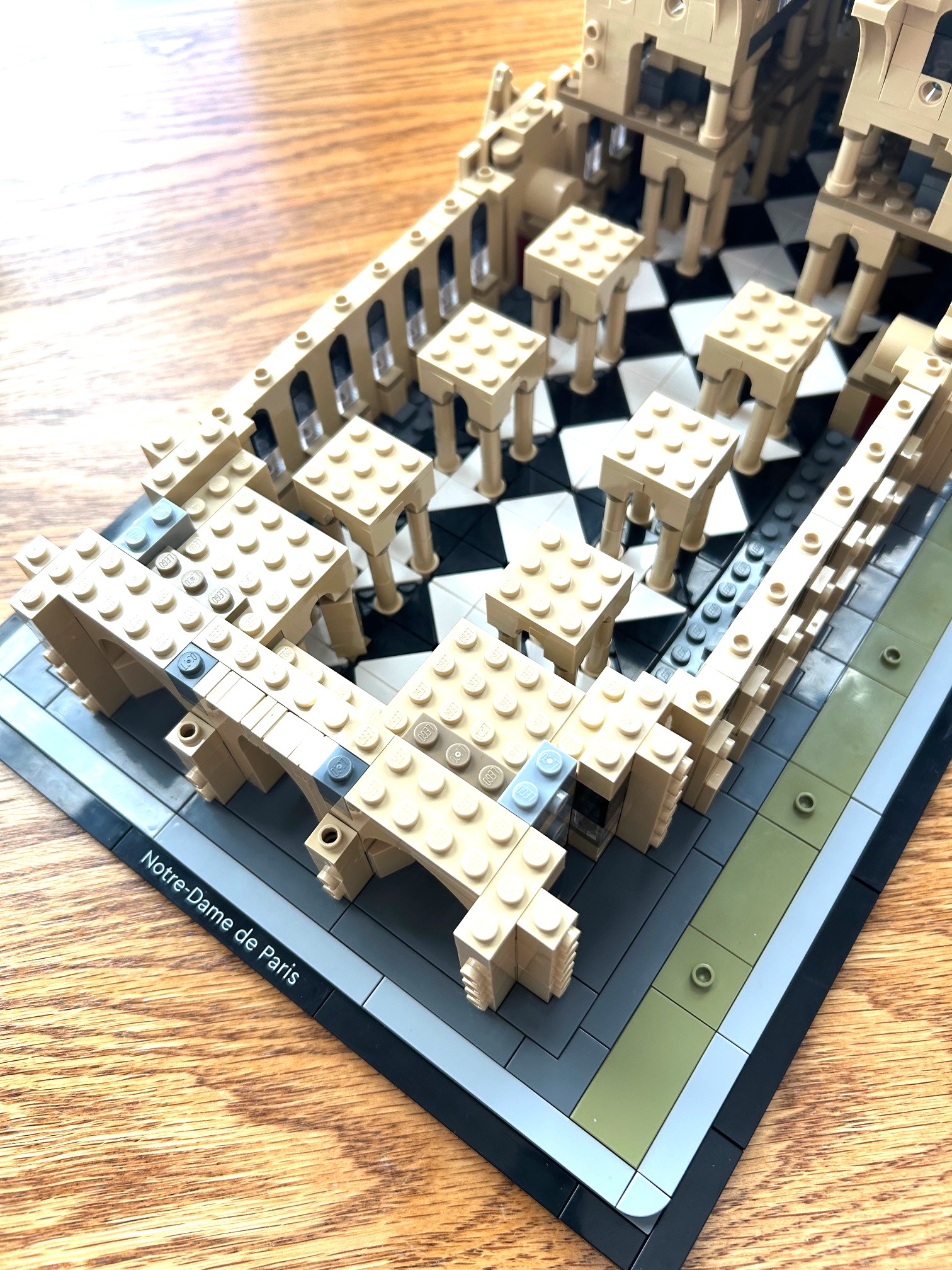
Under construction
Fully fortified

The parishioners look rather tiny, now that we’re working so far above them.  And notice all those free-standing columns from last week aren’t so free-standing anymore.  We’ve capped them with structural elements to support what is still to be built up above.  Also notice we’ve closed in the west end of the cathedral, which patiently awaits the addition of the soaring bell towers.

West end “front doors”

Okay, it’s time to address the elephant in the room; an elephant that gets bigger with every update.  A few of you have sounded the alarm on my running count of leftover pieces.  It’s a fair concern, considering the LEGO Grand Piano also started as thousands of pieces but only amounted to a handful of extras.

extras

Here’s the truth of it: the twenty-six leftovers shown here amount to just a handful as well.  Every one of them is among the tiniest pieces in the entire cathedral.  It probably cost LEGO pennies to add in these “bench players”.  And given the tendency of pieces to run away I’m grateful to have them.  Heck, by the time the cathedral is finished maybe I’ll have enough leftovers to build a small elephant. 

Running build time: 7 hrs. 57 min.

Total leftover pieces: 26

Some content sourced from the National Cherry Blossom Festival website, and Wikipedia, “the free encyclopedia”.

Decades to Decadence

Waiting in line for the bank teller, as I did last Monday, is decidedly old-school. It’s a face-to-face experience so much more inefficient than the drive-thru lane or smartphone options. But sometimes we still go brick-and-mortar, don’t we?  Stopping into the bank is either convenient in the moment or perhaps the transaction demands a real, live person. And so we wait.  But at least cashing a check doesn’t take thirty years.  It just seems that long sometimes.

Every now and then you see a headline and say, “Wait a minute… WHAT?”  And then, even with no interest whatsoever you still read the article.  Such was the case this week with a story about Kobe beef.  I’ve never eaten Kobe beef.  I’m too cheap to even give it a try.  I’ll concede the price is justified by the high quality, high demand, and low supply.  But what if you had to wait until Thanksgiving of 2052 to be able to enjoy it?

Here’s the gist of the story.  A small, family-run butcher shop in Japan makes a beef croquette so popular it’ll take you thirty years to get one.  Asahiya, about to celebrate a century in the meat business, began producing its croquettes shortly after World War II.  The deep-fried meat-and-potato dumplings were designed as a tease; a mere taste to draw customers to its larger, more expensive products.  The strategy didn’t pan out so well but the croquettes themselves became an Internet sensation, and the inevitable hype that followed created a line of customers thirty years long.

[Note: If a Kobe beef croquette sounds “decadent” you’re probably right, but you’re using the wrong word to describe it.  Decadent actually means “excessively self-indulgent”.  Instead of the food itself perhaps you’re talking about a customer willing to wait thirty years.]

I hear what you’re saying.  I wouldn’t pay big bucks for something like this Dave, let alone wait thirty years for it.  But go figure; an Asahiya beef croquette costs only $3.40 USD.  You could buy a box of ten for less than you probably paid for your Thanksgiving turkey.  You just need a very comfortable chair as well.  Asahiya makes only two hundred croquettes a day (or twenty customers’ worth) so it’s no wonder you have to wait so long.

Technology being what it is today, we’re not patient waiters anymore.  Amazon and others are getting close to same-day delivery on the items we consume regularly.  Many amusement parks and tourist attractions have adopted Disney’s approach, where you can pay more to “jump the line”.  Want tickets to the next Taylor Swift concert?  Pay a “line-stander” to buy them for you.  Want season tickets to the Green Bay Packers?  Okay, sorry, there’s no way around that one.  The seats at sold-out Lambeau Field simply pass down the line from generation to generation.  But you can still join the list for this impossible get, just to say you’re on it.

This week’s visit to the bank felt like an impossible get.  I made it to within one customer of the front of the line before things came to a grinding halt.  Only two tellers were open out of the four.  One was preoccupied by a woman who wanted cash and a money order, with terms so specific you knew she was going to be awhile.  The other was completely preoccupied by an older gent, carrying on a personal conversation while constantly losing track of whatever he was asking for in the first place.  Meanwhile, the back window drive-thru teller was cranking out transaction after transaction after transaction.  Shoulda, coulda… I know, I know.

I thought the beef croquette story was timely, not because I went to the bank but because next Thursday is Thanksgiving, when Americans wait all day long.  We wake up early, get the oven going, prep the bird, and spend a long time putting the rest of the meal together.  We eat earlier than most dinners (does that make it “supper”?) but it’s still a waiting game.  Hours and hours of anticipation before the food is finally brought to the table.

If there’s any good news about Asahiya’s Kobe products, it’s that they have options besides the “Extreme” beef croquettes.  There’s a more accessible variety called the “Premiere”.  You only have to wait four years for those.  When you consider how fast we’re going through U.S. Presidents lately, four years doesn’t seem like a long time at all.

Some content sourced from the CNN Travel article, “These Japanese beef croquettes are so popular there’s a 30-year waiting list”.

Late Night Racquet Sports

My newsfeed nets a lot of headlines, but I almost missed the one about the Saharan sandstorm last week, blowing its way across the southern United States. Our son lives in Austin and said you can’t miss it: eerie dusty brownish fog center-stage in an otherwise hot and humid Texas day. (The silver lining: the sunsets are spectacular.)  I can’t spin a sandstorm positive.  Instead, I picture every granule as a moth and every moth descending on my house like Japanese Zeroes, somehow finding entry and making my life a living hell.

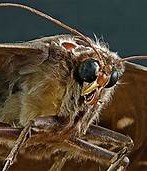
They’re at it again, Mr. & Mrs. Miller and their countless compadres. The million (billion?) miller moth march made its way across the Midwest (today’s letter is “M”), destined for an oasis called Colorado and a house called mine. The little winged beasties arrived unannounced and in droves (awful word: drove). One night I noticed one or two of the millers performing their spastic dance around the outside lights and I thought, “Oh no… scouts“.  The next night one of them sounded a tiny bugle at dusk and the swarming commenced.  I’m convinced miller moths have air traffic controllers, letting them know “Roger that Moth 259 – you’re cleared for landing on any ceiling or wall in Dave’s house”.

Light is a moth’s drug of choice

From the minimal research I’ve conducted (like, I don’t want to know moths have 8,000 eyes or whatever), the high country of the Rocky Mountains is a miller moth’s summer resort.  Picture Colorado as their Motel 6 for the night (just don’t “leave the light on”), feeding on backyard flowers and storing up oxygen for the next day’s flight to altitude.  They seem to be headed towards Utah in particular.  Maybe the flowers are better over there.  Maybe moths are Mormon and the Utah state line feels like the pearly gates of heaven.  Here’s what I say: if Utah really is “The Beehive State”, train those yellow-jacketed armies to take down the miller moths as soon as they arrive.  The massacre would be an event worth pay-per-view prices.

I thought I’d developed a sound battle plan for Mr. & Mrs. Miller this year.  Turn out ALL the lights and live in hermit darkness for several nights (like Halloween, when you don’t want any trick-or-treaters at your door).  Then maybe they’d fly over to my neighbor’s place instead.  Wrong.  They see your glowing phones.  They see the little LED’s you can’t cover up on your electronic devices.  They just park in the dark in discreet places around the house, waiting for you to wake up the next morning so they can announce, “WE’RE HERE!!!”

There was no avoiding battle with this year’s crop of “Army cutworms” (an image even worse than “miller moth”).  At first I was a mercenary, developing a cupping technique with my hands where I could catch-and-release (moths are the devil’s mess if you squash ’em).  But I rapidly tired of saving their little one-inch lives one at a time.  Try getting ready for bed at night brushing your teeth while a half-dozen bombers circle your head.  Or reaching for the water glass only to find a miller has staged a glorious dramatic death at the bottom.

Armed with a fly swatter, I thought to myself time for a little badminton (actually, I just thought “kill”). But here’s the reality: moths have half a brain, wings, ears (or at least a sense of hearing), and endless energy.  They know you’re coming almost before you do.  They hover close to the ceiling, frustratingly out of reach just beckoning you to climb to unsafe heights.

Our bathtub’s too small to accommodate a ladder so I was forced to balance precariously on the porcelain edge while swinging the swatter skyward.  The best analogy I can give you is this: picture King Kong on the top of the Empire State Building, gripping with his feet and flailing with his arms, only in men’s pajamas.  Little buzzing machines dart about him.  He knocks down one or two (with an instant and satisfying plummet back to earth), but most of the time he just swings at the air while trying not to die in a bathtub.  It’s part-cardio, part-yoga (only you’re more stressed when you’re done).

Let’s visit the Army cutworm’s half-brain again. I believe moths are designed by Mom Nature to taunt their predators.  One of mine made it into the refrigerator and probably enjoyed a helping of leftovers.  Another survived a tumble of laundry dryer clothes and still came out intact (though it was hard to tell if he was dizzy or just flitting as normal).  Yet another spent the night in the soaking water of our dirty dishes, popped up the next morning when I approached the sink, and said, “Have a nice day!” as he darted away. Trust me; these mini-monsters don’t die easy.  Even a spirited swipe of the racquet (er, swatter) – picture enough force to explode a shuttlecock – doesn’t always kill a moth.  Bless their pitter-patter hearts – they sometimes need three or four good whacks before raising the white flag.

Enough about Mr. & Mrs. Miller, right?  To swat this topic once and for all, most of you know the movie monster Godzilla but what about his nemesis Mothra?  Back in the 1960’s, (sick) Japanese filmmakers created a “good-girl” winged creature; an awkward-looking mega-insect who defies the laws of physics by flying.  Mothra’s just what you picture in my worst nightmares: a moth the size of a jumbo jet.  She was labeled “the protector of island culture, the Earth, and Japan” and revered among the Japanese film-going public (especially women).  Mothra sold a lot of movie tickets.

Mothra

So, the Japanese think a moth is damn near a heroine, eh?  Well then, they should come to Colorado next summer for a visit.  I’ll leave the light on for ’em.

Some content sourced from Wikipedia, “the free encyclopedia”.

Putting the Kettle On

Kacey Musgraves is a blossoming country music artist whose recent album “Golden Hour” will compete with heavy-hitters at this year’s Grammy Awards for Album of the Year. She’s released only four albums (through major labels), so the nomination is remarkable. And yet – despite the acclaim heaped on “Golden Hour” – my favorite Kacey song remains a track from her second album, “Pageant Material”. In her words, it’s “a little, tiny, music-box-of-a-song” called “Cup of Tea”.

The message in “Cup of Tea” (have a listen here) – is simple: no matter who you are or what you stand for, you’re never going to appeal to everybody.  There will always be haters out there no matter how you present yourself.  My favorite lyrics in “Cup of Tea” are the refrain itself:

You can’t be, everybody’s cup of tea
Some like it bitter, some like it sweet
Nobody’s everybody’s favorite
So you might as well just make it how you please

Kacey wouldn’t mind if I told her “Cup of Tea” gets me thinking just as much about tea as about how well I mesh with other people.  Not that I’ll be steeping anytime soon, mind you.  I can’t seem to acquire tea-taste, no matter how many times I put the kettle on.  Go figure – half my DNA originates from England, so you’d think my instincts would have me setting out the fine china and doilies every afternoon.  I’d nibble on the cakes or scones or whatever comes with, but no tea, please.  I much prefer my morning coffee.

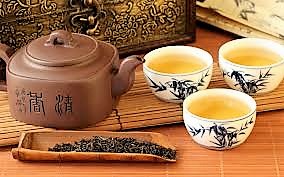
Ironically, tea brews with some of my earliest childhood memories.  My parents used to take my brothers and I downtown in Los Angeles, to restaurants on the streets of Chinatown – probably as much for the cultural experience as for the food. I can still picture those dark, quiet dining rooms, with the strange music and gaudy decor.  The meal always began with a pot of tea, including the little round cups that seemed to have misplaced their handles.  Tea was a cool experience back then. Listen, when all you drank was milk or water (or the occasional soda), tea was pretty sweet no matter how it tasted.  It was like having a “grown-up” drink before being grown up.

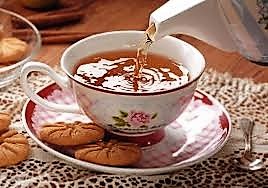
Forty-odd years later, I notched another tea-riffic memory.  My wife and I took a cruise on the Baltic Sea a few summers ago (“six countries in eight days”), and chose Oceania, one of the nicer cruise lines.  Good decision.  As much as we enjoyed the excursions off the ship, we enjoyed the return even more, because every day we were treated to “afternoon tea”.  Oceania’s tea was the perfect respite between the early morning touring and the evening dinners/dancing.  “Tea” included tableside service from tuxedoed waitstaff, countless cakes and petit fours, and those little triangle sandwiches with the crusts removed.  “Tea” even included a string quartet; their soft music adding to the ambiance.  I suppose I could’ve asked for coffee instead, but that would’ve tainted the experience.  Not to say I enjoyed the tea itself.  Just “afternoon tea”.

The culture, history, and preparations of tea could generate a week’s worth of posts.  (See the Wikipedia article here).  What I find more interesting is how tea has become the daily routine of several global cultures.  The Chinese and Japanese consume tea in the morning “to heighten calm alertness”.  The Brits serve tea to guests upon arrival (or in the mid-afternoon), for “enjoyment in a refined setting”.  The Russians consider a social gathering “incomplete” without tea.  Not sure about all that, but I can at least agree with the moment of pause tea provides; the respite from the faster pace.  It’s just… my “cup of tea” is coffee.

Back in the Sandbox

76-zen-1       76-zen-2

Draw a line in the sand.

Therein lies the allure of the most unique Christmas gift I received this year.  The before/after photos above depict a modern-age spin on a Zen garden, only the “gardening” is done automatically; almost magically.  Place the ball where you feel the magnetic pull, spin a couple of dials underneath, and sit back and watch.  The ball is pulled invisibly around the sand, creating beautiful designs like the one in the second photo.  My “Sandscript” (which can be found here if you want one of your own) reminds me of “Spirograph”, the geometric drawing toy I had as a kid.  But my Zen garden is so much more than cool drawings.  It’s about finding calm within the daily chaos, or perhaps just a different way of looking at things.

Here’s what’s really Zen about my Sandscript.  First, you determine when the drawing is done by turning off the dials – the ball doesn’t just come to a stop on its own.  Second, the line drawings are random, and rarely symmetrical.  That’s my own brand of Zen right there.  I like things a little too neat and organized, so anything never really finished or never really perfect is my kind of therapy.

I always thought Zen gardens – one of countless cultural contributions from the Chinese and Japanese – were a little out there.  Authentic Zen gardens are the size of basketball courts and have you shuffling around the gravel and rocks, raking and rearranging as you seek your higher self.  Several years ago we bought my mother-in-law a tabletop Zen garden and I found myself drawn to the “gardening”, not really understanding why.  There is an undeniable calming effect when you draw lines in the sand.

The same can be said for mazes.  I loved mazes as a kid, especially the books you could draw in or the tabletop box where you turn the dials and tilt the maze to get the ball from start to finish.  Mazes are purported to have the same calming affect as Zen gardens.  I always thought mazes were limited to the hedge or cornfield variety but there are all sorts, including a chain of amusement parks throughout America.  We have a maze right here in our neighborhood, fashioned from painted lines on the asphalt surface of a cul-de-sac.  I’ve walked a few mazes in my lifetime but I’m still in search of the Zen in the experience.  I think I’m too preoccupied with finding my way out to discover any calming effect.

Zen is a great word, by the way.  There’s something about the sound of the “Z”.  Zen.  Or maybe I just like words starting with “Z” because they’re not used all that often.  Quick, name ten words off the top of your head starting with “Z”.  I gave myself sixty seconds and could only come up with seven.

If you don’t think Zen goes hand-in-hand with American culture, check out the following photo from a visit to a local retailer:

76-zen-3

My posts on Life In A Word will continue to run the gamut of topics, including personal experiences and humor for added zest (ha).  As you read you may find unexpected comfort in my words.  That’s not by chance – it’s probably just me playing with my Zen sandbox before I sat down to the keyboard.