Where The Buffalo Roam

In southwestern Alberta, Canada, there’s a historical landmark curiously named “Head-Smashed-In Buffalo Jump”. It’s the former location of a vast communal bison trap. Thousands of years ago native hunters would drive herds of the roaming animals over the plains and then right over the adjacent cliffs, in what is described as “the single greatest food-gathering method ever developed in human history.” The buffalo aren’t running in this part of Canada anymore. They’re no longer running in Boulder, Colorado either.

In case you missed it, the American college football season kicked off last Saturday… in Dublin, Ireland.  Kansas State played Iowa State in a converted rugby stadium in front of a sell-out Guinness-filled crowd.  A roving reporter took to the streets to ask locals what they knew about the American game and the answers were wonderfully ignorant.  How many points is a touchdown? (“4?”)  Name any American college football team (“Yankees?” “Dodgers?”)  And then my favorite: What is Kansas State’s mascot? (“A tractor?”)  Not a bad answer if you ask me.  I’d guess there are more tractors than wildcats in Kansas.

Ralphie’s run

Speaking of wild things, let’s get back to Boulder.  The University of Colorado (CU) boasts one of the few live animal mascots in college football: a full-grown snortin’ stompin’ buffalo named Ralphie.  Before each half of the home games Ralphie is released from her trailer on the sidelines (yes, Ralphie is a “her”) to run a horseshoe lap around the field at full speed, before her five handlers corral her back into the trailer.  It’s the stuff of rodeos, and more than a few handlers have eaten dirt in the process (but at least they earn a varsity letter for their efforts).

Ralphie is actually the sixth live buffalo to represent CU since the mascot was selected in 1934.  But Ralphie VI – aka “Ember” – has a singular distinction.  She’s just not into the run.  Whereas her five predecessors ran for at least ten seasons each, Ember decided to call it quits after just three.  The University officially called it “indifference to running” and cut Ember from the team so she could spend the rest of her days roaming in pastures.  Maybe Ember’s thinking she’s going to go over a cliff every time she runs.  Can you blame her for hanging it up?  No word on whether Ralphie VII is up for the task.

At least CU has a ferocious mascot, one a fan would associate with the Colorado surrounds.  Like Texas’s Longhorn or Florida’s ‘Gator, you want a mascot that speaks to your particular locale and does so with a confident puff of the chest.  But instead, a lot of America’s college football mascots have you thinking either lightweight or what the heck is THAT?

Don’t mess with Texas!

Cases in point.  If I pull up this year’s top college football teams, I guarantee I’ll find several to underscore my point.  And I am right.  Ohio State’s mascot is a buckeye (which is a tree, and not a very ferocious one at that).  Georgia’s is a bulldog, described as “loyal, gentle, and affectionate”.  Oregon’s is a duck (A duck!)  Alabama is known as “the Crimson Tide”, which was a reporter’s colorful spin on a long-ago game played in the mud (and not a mascot at all).  Finally, Arizona State’s is a Sun Devil, which better belongs on Saturday morning cartoons than Saturday afternoon football fields.

On the other hand, you have the Penn State Nittany (Mountain) Lions, the Michigan Wolverines (don’t mess with wolverines), the South Carolina Gamecocks (don’t mess with those either), and the Miami Hurricanes (not an animal, but points for ferociousness and local flavor). Any one of those deserves to stand side-by-side with a live buffalo.

Notre Dame’s leprechaun

As much as I’d like leave this topic with Ember the Buffalo and her chest-thumping buddies, I sheepishly include one more: my beloved alma mater Notre Dame.  We at Notre Dame are the Fightin’ Irish, because our football teams (at least those from the early 1900s) showed “the grit, determination, and tenacity characteristic of Irish immigrants”)  That all sounds great until you see our mascot: a leprechaun who looks like he’s taking a break from the Lucky Charms cereal box.  Is there anything less ferocious and less “state of Indiana” than that?

NOW we’re talking!

If it were up to me, Notre Dame’s mascot would be an open-wheeled, open-cockpit IndyCar (VROOM! VROOM!), the kind they race every year at the Indianapolis 500 just four hours south of campus.  An IndyCar toughs out a jigging leprechaun by a mile, not to mention an indifferent buffalo who’d rather roam than run.  I still say, good on you for choosing to head out to pasture, Ember.  I wish the Notre Dame leprechaun would tag along.

Some content sourced from the Athabasca University Press article, “Imagining Head-Smashed-In”, the CUBuffs.com article, “Ralphie VI retires”, and Wikipedia, “the free encyclopedia”.

Licking My Lips

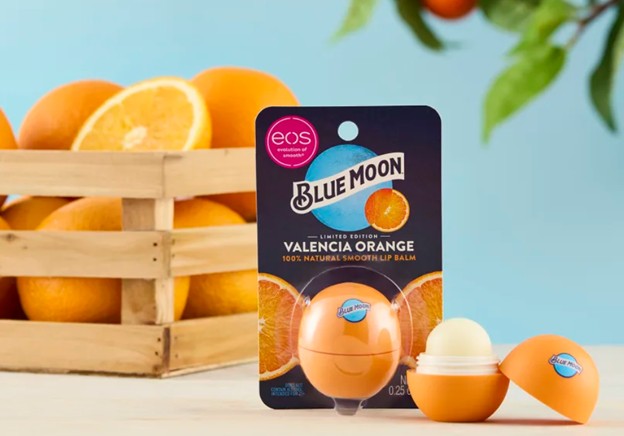
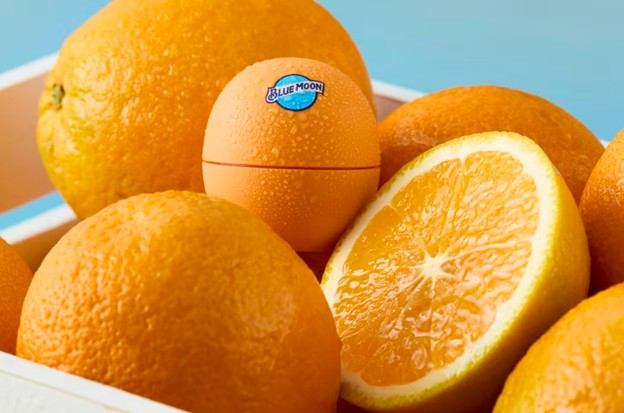
I wouldn’t normally be drawn to a company whose products target women. I’m pretty well stocked when it comes to lip balms, lotions, and shaving cream. But here comes EOS (“Evolution of Smooth”), a newish company using organic ingredients and bright, colorful packaging to entice its buyers. Now I’m enticed too because EOS just came out with an orange product. Or should I say, a product in an orange. You could say it’s something that only comes ’round once in a blue moon.

Evolution of Smooth may be trying to target men as well.  Why else would they concoct a lip balm that tastes like Blue Moon?  If you haven’t had so much as a sniff of beer, Blue Moon is an everyday man’s brew produced by the Canadian-American conglomerate Molson Coors.  It’s a Belgian-style wheat beer: high on the wheat but not so much on the malted barley.  And now it’s a flavor of EOS lip balm inside of a plastic orange.

If you order a Blue Moon off the menu, the bottle or glass should arrive garnished with an orange slice.  It’s a nod to the orange peel component of the beer; an ingredient giving the witbier its subtle citrus flavor.  I should know because I’ve had more Blue Moons than any other beer out there.  When you live in Colorado as long as I did (almost 30 years) sooner or later you’ll tour the Molson Coors facility in Golden, just west of Denver.  They bus you around town first (a quaint holdover from the era of the Pikes Peak Gold Rush) before depositing you at the doors of the rather industrial-looking facility. 

Golden, Colorado

When you get down to touring – walking through the massive brewery, seeing the step-by-step production process, and sort-of-but-not-really believing the beer’s water content flows straight from the nearby Colorado Rockies – you’ll get a better appreciation of just how much effort goes into a single bottle.  But like most breweries a beer fan anticipates the final stop – the tasting room – where you’re offered brands and flavors not yet released to the public.  It was here I discovered Blue Moon, back in 1995 when it was just a concept beer.

Fancy homes boast of well-stocked, temp-regulated walk-in wine cellars with dozens of the finest bottles on display.  I boast of a 24″x 24″x 36″ below-counter drink cooler, purchased on sale at The Home Depot for $225.  I may not have dozens of the finest bottles on display, but in my house you’ll always find a half-dozen bottles of Blue Moon at the ready.

My “wine cellar”

To be clear, I’m any occasional beer drinker at best.  I can make a six-pack last a month.  The only time a beer really appeals to me is after an afternoon of hard, sweaty, gnat-filled yard work.  I’ll come back into the house after hours of that kind of fun and Blue Moon beckons. And even if I consumed more than a half-dozen bottles a month I certainly wouldn’t be put off by the price.  A six runs you $11.99 at Target.

I do know how good a beer can really taste.  Make your way to Dublin, Ireland sometime, tour the downtown Guinness Storehouse brewery (which trumps the Molson Coors experience in every way imaginable), and have a fresh pint in the top floor tasting room as you gaze out the floor-to-ceiling windows at the fairy-tale surroundings below.  You’ll never want to leave.  You’ll also realize that Guinness you’ve been having in America doesn’t measure up to the one you can have on Irish soil.

Dublin, Ireland

Any beer connoisseur reading this post is laughing at my reverence to Blue Moon.  It’s a product whose color, strength, and lack of history bears little resemblance to the storied lagers of the world.  It’s like the cosmopolitan offerings among the “real” alcoholic drinks on the bar menu.  Light on ingredients and better meant for women.

No, Blue Moon isn’t necessarily meant for women (I hope), but maybe EOS’ latest lip balm is a clever way to get them interested.  It certainly got my attention, and the thought of the taste of Blue Moon on my lips the entire time I’m working outside sounds amazing.  No bottle or glass to juggle while I run the lawn mower.  No garnish of an orange slice necessary.  $4.99 instead of $11.99.  Good call, EOS.  I’m in.

Some content sourced from the CNN Business article, “Blue Moon… is being turned into a lip balm”, and Wikipedia, “the free encyclopedia”.

Pride, Pomp, and Circumstance

I managed to get through high school literature class without having to wrestle with Shakespeare, not even once. To me, Romeo and Juliet are simply characters from a movie I’ve never seen. Hamlet is another name for a small village. Othello is a board game I played as a teenager. But hey, maybe I should be a fan of Shakespeare. After all, he gets the credit for penning the phrase “pomp and circumstance”.

It’s true – “Pride, pomp, and circumstance (of glorious war!)” is a line from Shakespeare’s play Othello, written way back in 1603.  Somewhere in the hundreds of years since, “Pomp and circumstance” became the name of the musical march we all associate with graduation ceremonies.  But for today’s purposes, pomp and circumstance (or “P&C” if you will) means “formal and impressive ceremonies or activities”.  And Monday’s presidential inauguration ceremony was the perfect example of that.

I am a big fan of American P&C.  Without it the inauguration ceremony would’ve been nothing but mundane repeat-after-me oaths.  With it you get your heart fill-er-upped with pride.  Monday’s ceremony was replete with red, white, and blue decor.  American flags were everywhere.  The guests of honor were escorted to their seats by men and women in splendid uniforms.  The cannons nearby boomed over and over when the oaths were completed.  And for my American dollars, nothing says pomp and circumstance like those patriotic anthems.

U.S. Naval Academy Glee Club

Having spent most of my years in Colorado Springs, “America the Beautiful” is close to my heart because its lyrics were born from the top of nearby Pikes Peak.  All credit to Carrie Underwood for her performance of its first verse on Monday, enduring technical difficulties to sing a cappella.  Then there was the charismatic Rev. Lorenzo Sewell, embellishing his prayer of gratitude with the opening lines of “My Country Tis of Thee”.   And you’d be forgiven for shedding a tear during the soaring “Battle Hymn of the Republic”, belted out by the men and women of the U.S. Naval Academy Glee Club (and earning a standing ovation).

Macchio

But I’m forgetting one more anthem.  Or should I say, I can’t forget the one more.  Yes, Christopher Dean Macchio (“America’s tenor”) sang “The Star Spangled Banner” to close out the inauguration ceremony, but he also performed another anthem to kick things off and I’m still humming it today.  Why, I ask myself, have I never heard “O, America” before?

“O, America” – go figure – was written by an Irishman.  Brendan Graham penned the lyrics into a big hit for the group “Celtic Woman”.  You’d think the words would be from the perspective of someone overseas but “O, America” is clearly about someone here… and someone now.  Have a listen and I think you’ll agree.  In the words of Othello, “O, America” is all about “pride, pomp, and circumstance”.  This week I am filled with all three.


LEGO Notre-Dame de Paris – Update #2

(read about the start of this “church service” in Highest Chair)

I’m glad I remembered my antiperspirant today.  Bags 2 and 3 – of 34 bags of pieces – encouraged sweat, tested patience, and made me realize my fingers are anything but nimble.   My hands are still shaking after the hour and change it took to build this section.

We started by tiling the cathedral floor.  Look closely – those black and white pieces aren’t all the same shape or orientation.  I installed one wrong and almost needed pliers to get it back out.  Imagine if you made the same mistake on the floor of the real Notre-Dame.  You’d get fired for wasting priceless marble!

Having said that, the floor was just a warm up for the colonnade that now rises up around the altar.  It is made from tiny, tiny pieces!  I think LEGO should invent special gloves that a) allow you to easily grasp these little guys while b) protecting your fingers from their sharp edges.  Pressing them into place again and again can be painful!  Those beige column supports you see on the tile floor left little round dents in my fingertips.

Finally, notice the repetitive structure of the colonnade, like a circle of rocket ships ready to launch.  LEGO shows you how to build one of these vertical elements (each one is about twenty pieces) and then goes, “Okay Dave, do that fourteen more times”.  The Grand Piano was also tough but I wouldn’t say it was repetitive.  Notre-Dame de Paris has found a new way to test my patience.

Running build time: 1 hour 37 min.

Total leftover pieces: 5

Some content sourced from the Irish Central article, “Irishman’s song ‘O America’ performed at Trump’s inauguration”, and Wikipedia, “the free encyclopedia”.

First-Name Basis

It’s only Tuesday as I type, but I’ve already cleared my calendar for Friday. After all, I have a very important day ahead of me. So important in fact, I need to organize a parade, raise a flag, and prepare unique dishes for the expected throng of adoring fans. But why am I wasting words on the details? You already know we’re celebrating Saint David’s Day in a few days, don’t you?

They’ll be celebrating in Wales, at least, just as they do every first day of March.  You’ll find my cathedral there too, way down in the southwest corner of the country.  Well, St Davids Cathedral, I mean.  And the funny thing is, he’s not the David you’re thinking of, the one from the Bible who took down Goliath as a boy and became king as a man.  This David helped to spread Christianity throughout the UK, united the Welsh people against a warring England, and performed several miracles.  David’s a big deal in Wales.

David’s parade (not Patrick’s)

St. Patrick’s an even bigger deal, of course.  At least Patrick rates a celebration in the U.S.  But admit it, you’re not celebrating Patrick’s spread of Christianity throughout Ireland, nor his miracle of removing all snakes from the land.  You’re thinking more about what garment of green to wear, four-leaf clovers, beer, and maybe, just maybe, this is the year you participate in your local St. Paddy’s Day 5k.

Nice cathedral, Dave

This business of saints is interesting to me because, well, it’s not as defined as I was led to believe.  The rules and processes to put “Saint” in front a first name are a little vague.  Suffice it to say, you need to be a model citizen, as well as a teacher, person of influence, and someone who cares little for the material goods and comforts of this world.  I know a lot of people who fill this bill, but add in “wonder worker” or “source of benevolent power” and the list drops to zero.

Do you know the way to… ?

Saints are also on my mind because I grew up in California and, well, they’re all over the place out there.  Francisco to the north.  Diego to the south.  Barbara somewhere in the middle.  My childhood home was right down the street from Monica.  My brother lives in Fernando’s valley.  99.9% of the state’s residents think of those as “places”, but firstly they were people.  You’ll find “San’s” and “Santa’s” all over the Golden State.

Saints get a little watered down when you consider the Catholic Church’s take on them.  More than 10,000 have been recognized over time.  Even more to the point, Catholics acknowledge anyone making it to heaven to be a saint.  I’d hope that count is way more than 10,000 by now.  Maybe it’s the reason we have patron saints: the cream of the crop, the ones regarded as “heavenly advocates of particular nations, families, or people”.  My patron saint isn’t David by default, but I sure like his name.

Eat Welsh Rarebit when you celebrate on Friday (grilled cheese on toast, zero rabbit)

Admittedly, my mind wanders somewhere other than historical figures when I think of saints.  Our dog is a Saint Bernard, one of those gentle giants you picture with a brandy brandy around the neck.  A few years ago we went on a cruise, with a stop in the Baltic Sea port of Saint Petersburg.  “St. Elmo’s Fire” is a luminous phenomenon caused by an atmospheric electric field. (also a pretty good movie from the 1980s).  And so on.

You can read a bit more about Saint David and his cathedral in one of my very first blog posts: unsung.  You’ll discover that his town of Pembrokeshire – the smallest kingdom enclave in the UK – is right across St. George’s Channel from the Irish town of Kildare, where you’ll find St. Brigid’s Cathedral, my wife’s namesake.  The blog post is really about Brigid but at least David gets a mention towards the end.  Even if you don’t “read a little more”, remember, Friday’s the big day.  Parades, flags, and fun food, all for a darned decent guy.  Makes me blush anytime somebody says, “Dave, you’re a saint.”

Some content sourced from Wikipedia, “the free encyclopedia”.

Rolling in the Isles

With the world “opening up” again, my wife and I often talk about places we’d like to visit. Some of them are more accessible now that we live near the East Coast. One in particular is further away. But coincidence or not, the five locales tempting the travel bug in me have one thing in common.  Every one of them is an island.

#16 at The Masters in Augusta, GA

Let’s get my first choice out of the conversation straight away, because it kind of stretches the definition of “destination” and “island”.  I want to go see a round of The Masters golf tournament in Augusta, Georgia.  If you’re not into golf you won’t understand the fuss, but trust me, when you’ve watched this competition on television every April since you were a kid, the place becomes a shrine of sorts.  The Masters never played into our decision to move to South Carolina, but the course is suddenly only forty-five minutes from my new front door.  So why is it an “island”?  Have you been to Augusta?  The Masters is like finding a bright green emerald in a bowl of gravel.  Let’s just say it would be complimentary to describe the rest of Augusta as “plain vanilla”.

There are no bad photos of Hawaii

Now for the real islands.  The first two fall on a lot of must-see lists: Hawaii and Ireland.  Hawaii is no less appealing even though South Carolina makes it three hours further than from where I used to live.  I’ve only seen “The Islands” on my honeymoon and on family trips (decades ago) so I know this time around would be decidedly more adventurous.  Not that I want to bungee-jump into a volcano or anything; rather just take a closer look at all Hawaii has to offer.

Ho-hum… just another town in Ireland

As for Ireland, it feels a lot closer when you live up against the East Coast.  If I had x-ray vision I might see the Blarney Stone from these parts.  My wife and I celebrated our 25th wedding anniversary with our first trip to the Emerald Isle, where we saw a lot of Dublin and only a wee bit of everything else.  We tossed a coin into the Trevi Fountain to be sure we’d go back, and… oh wait, right… that’s Rome.  Anyway, something we did in Ireland back then – whatever it was – instilled the yearning to go back someday.  And we will.

Mackinac Island’s Grand Hotel

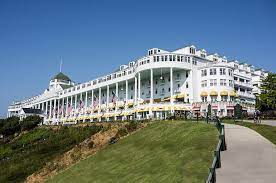
Island #4 – Mackinac – sits neatly between the two peninsulas of the state of Michigan. The “Crown Jewel of the Great Lakes” has been on my must-see list ever since I watched Somewhere in Time in college in the 1980s.  Yeah the movie’s a little corny, but it’s utterly romantic and it stars Jane Seymour, so cut me some slack.  More importantly, Somewhere in Time shows off Mackinac’s Grand Hotel in all of its past/present glory.  No, I can’t afford the stay at the Grand (rooms start at $500/night) but I’ll settle for one of the B&B’s on the island and spend my money on other stuff instead.  Like a horse-drawn carriage tour with my wife (Mackinac has no cars).  Or a round of golf on the only course in the country where the trek between the front nine and the back is, again, by horse-drawn carriage.  Or a brick of Mackinac’s famous fudge.  Whatever the draw, I’ll endure two connecting flights, a couple hours of driving, and a quick ferry ride, just to experience Mackinac’s throwback delights.

I’ve saved the best for last (well, at least, I think it’s the best).  If I ever make it to France, I’m heading straight to Mont-Saint-Michel.  “St. Michael’s Mountain”, which I’ve blogged about here, first captured my imagination when professional sandcastle builders (yes, there are such people) built a replica on the beach where I grew up, and again when I studied architecture in college. 

Mont-Saint-Michel
The beach-sand version

The whole island setup is just so remarkable: nothing but a walled village of shops, restaurants, and other structures, connected by cobblestone streets ascending up, up, up to the Romanesque church and abbey at the pinnacle.  Only 29 residents at last count.  The surrounding tides ebb and flow, so at times Mont-Saint Michel is an island and at other times not so much.  And about that abbey on top.  The first cornerstone was laid in 1023, making Le Mont 1,000 years old this year.  All that time and I’ve never ever seen it?  Mon dieu.

One of Ireland’s many Aran Islands

If I make it to my five “islands”, I might have to add just one more.  Ireland is paying people almost $100k for the “gift” of an island off the western coast of the country.  There are twenty such islands.  The catch: you have to refurbish whatever structures you find and you have to live there.  Shelter yes, but food, water, power, and fellow humans are maybe’s.  Yeah, I won’t be rolling with any of those isles.  Let’s just start with that golf course down the street from me, shall we?

Some content sourced from the CNN Travel article, “Ireland will pay you $90,000 to move to a beautiful island home”

Doorstop Topper

The word nerd in me thinks it’s cool when one can be modified to make four others simply by changing the same vowel. Batter will be in abundance the next several weeks with all of the baking. The holidays are always better when shared with others. Colorado’s bitter cold winters are a thing of our past now that we’ve moved to the South. The chaos of the holiday season doesn’t really “bott_er” me (okay, that one’s reaching). But finally, we have butter. Ah, there’s nothing better than (or bitter about) butter, is there?

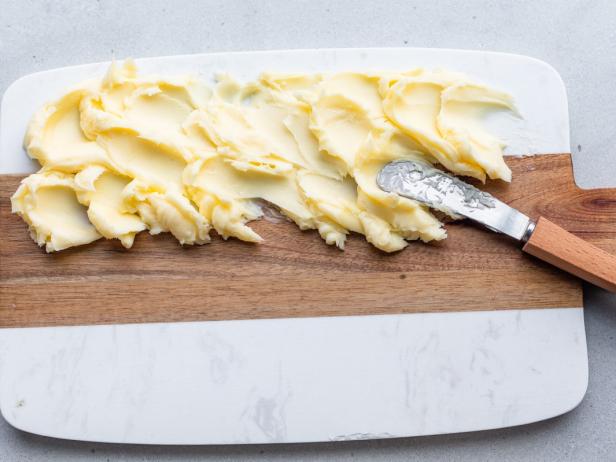
The topic of butter is brought to you today by an utterly ridiculous here-today-gone-tomorrow suggestion to make your holiday hosting more glam than your neighbor’s: butter boards.  When I saw this picture I didn’t even understand what I was looking at.  Even more insulting to this word nerd: the opinion piece I found describes a butter board as “charcuterie”.  No, it’s not.  Charcuterie is meats, not dairy.  This unappetizing appetizer is nothing but butter, spread on a board, with toppings designed to take your attention away from the fact that it’s, well, butter on a board.  I mean, if you’re gonna do faux-fancy at least go with peanut butter on a board, right?

Butter boards are an insult to butter.  I think we can all agree, butter stands alone.  You don’t need nuts or roasted garlic or dried fruit to hide dress it up.  As long as your butter comes from fresh, quality ingredients, it makes anything it pairs with better.  Except a board.

Can you tell I’m “bott_ered” by butter boards?  It’s because my wife and I take our butter so seriously.  Ever since a trip to Ireland, we learned the best butter is not only about quality, but quantity.  At dinner in a quaint hotel in the Connemara region north of Galway, the waiter brought us a big serving of bread with an even bigger serving of butter.  Seriously, the butter was more “brick” than “stick” (and certainly not “pat”).  Ever since, our go-to butter is a brick.  It also makes a great doorstop straight from the freezer.

Our butter dish is even designed for a brick, see?  A stick would be lost in this Irish pottery; a pat even more so.

Speaking of butter pats, I must make mention of the device in the photo below.  I wrote a whole post about it once called Sentimental Utensil.  Who knew this petit guillotine was a timesaver to make butter pats?  It showed up mysteriously in one of our kitchen drawers one day and I can only assume I inherited it from my mother.  But inherited it shall stay.  I can never get enough memories of my mother, as I alluded to in this paragraph from the past post:

And thinking about it even more, I can picture my mother using her butter cutter when I was a kid, leaving a perfect little pat beside the crescent roll that was positioned carefully on the bread plate beside each place setting at the dinner table. Because that was my mother. She was all about the dinner table. Everything had its place, even the pats of butter.

If you read the article on butter boards (please don’t) there are several dead giveaways on how forced this holiday trend feels.  The first is right up there in the teaser subtitle: “Butter boards have gone viral…”.  No, they haven’t, else this topic wouldn’t be worth warning you posting about.  “… because of their novelty and shock value.”  Their novelty?  Shock value?  Is one of your guests going to look at your butter board and say, “Well now, isn’t that novel?”  And just what about a butter board causes “shock” other than the writer’s excuse to use (part of) the overused phrase “shock and awe”?  It’s just butter, people.

The article should’ve gone with just the title so we could draw our own conclusions.  Instead, you’ll find phrases like “… how fun the concept is…”, “… what’s fascinating about butter boards…”, and “… extremely versatile as an appetizer…”; none of which are true.  The writing takes itself way too seriously and goes on way too long about something I will way never prepare.  Unless it were frosting, of course.  A “frosting board” would get my attention for sure.  Put out a plate of cookies with a frosting board and I’m all hands.

But enough of the butter boards.  You’d have to be blind as a bat to fall for this faux-fancy offering.  I’ll bet you’ve already stopped reading.  If you did make it this far, thanks for sparing a bit of your time.  Comment so I know you’re not a bot.

Some content sourced from the Food Network article, “How to Make the Perfect Butter Board for the Holidays”.

Emerald Greens

In the final lines of our national anthem, Americans sing, “O’er the land of the free, and the home of the brave”.  Those labels are a little dicey today.  Are we really free?  Are we really brave?  It’s a debate best left to more intellectual bloggers. I’m simply looking for less controversial words to describe the United States.  Take Ireland, for example.  The little republic is nicknamed “The Emerald Isle”.  Of this, there can be no doubt.  Before your flight even touches down, the window seat view is nothing but endless rolling green hills.  And not just any green.

See what I did there?  Inside of a single paragraph I distanced myself from heavy topics like freedom and bravery, and now I’m focused on the color green.  Bravo, Dave! Now then, let’s continue.

“The Emerald Isle”

Emeralds have always been my favorite of the precious gems.  In the jewelry shop it’s hard to ignore diamonds (because they’re everywhere), yet somewhere in the glass cases you’ll find the more colorful stones. Blood-red rubies. Royal blue sapphires. Modest little garnets (my birthstone).  And green, green emeralds.  I’m drawn to emeralds because green is my favorite color.  On that note, do you realize your favorite color never changes?  Nobody says, “Well, I used to like purple but now my favorite color is orange”.  You can move to another country, switch up your career, or overhaul your wardrobe, but your favorite color is a constant.

I digress (sorry). I have emeralds on the brain for good reason.  My wife & I just celebrated thirty-five years of marriage (thank you very much), and she hinted emeralds might be a nice gift.  So I paid a visit to my jeweler.  I told her I was looking for something understated, maybe earrings and a necklace.  She showed me a pretty set, where I thought my only decision was the shape of the stones (Round? Square? Pear?).  But then she threw me a curve when she said, “Would you prefer natural or lab-created?” Huh? Why would I buy my wife anything other than the real thing?

“Natural”
“Lab-created”

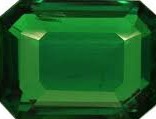
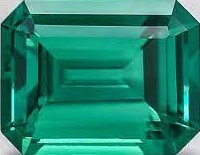
Here’s the rub of the green.  Lab-created gems are the real thing.  They’re “chemically, physically, and optically identical to their natural counterparts.” So why choose one over the other?  Cost. Lab-created gems can be significantly less expensive, especially as the number of carats grows.  In other words, easy choice, right?  Wrong.  The lab-created gems – at least in my jewelry shop – were small enough to be the same price as the naturals.  Instead, my decision came down to color.

Was I tempted by the blue-green clarity of the lab-created?  Absolutely.  Did I choose them?  Absolutely not.  I kept coming back to the emeralds in my brain.  Call it natural green, kelly green, or Irish green, but I prefer the green on the left.  And I think my wife did too.

Liz is wearing $6.5M worth of emeralds and diamonds

I’d like to share some trivia on today’s topic but – warning – it’s a little pedestrian.  Emeralds are one of the twelve birthstones (conveniently, the month of May).  Emeralds come from the mineral Beryl (as do aquamarines).  Their rarity makes them “precious”, alongside diamonds, rubies, and sapphires.  They’re delicate, susceptible to chipping.  Finally, emeralds are considered, among other things, a symbol of rebirth.

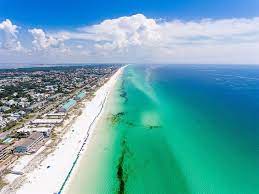
A section of the Florida Panhandle is called the Emerald Coast for the area’s clear, green water.  The Wizard of Oz lived in the Emerald City for reasons only Oz fanatics can explain.  And little Ireland, deservedly, earns its nickname for those rolling green hills, as well as Irish jewelry, made primarily from green gems (if not all emeralds).

Florida’s Emerald Coast

I saved one more fact for last, mostly to make points with my wife.  After I bought her the earrings and necklace, I said to my jeweler, “By the way, it’s silver for the 25th anniversary and gold for the 50th, but what about the 35th?” She replied, “Emerald” (even though several Google searches suggest jade).  Whoa. I didn’t plan on that coincidence but I’ll certainly take the credit.  After all, my wife is one-quarter Irish. My daughter’s name is Kelly. And my favorite color is green. How could it be anything but emeralds?

Some content sourced from Wikipedia, “the free encyclopedia”.

——————–

Lego Grand Piano – Update #17

(Read about how this project got started in Let’s Make Music!)

Today’s build demanded more of an overhead view so you can see the difference between last week and this week. Bag #17 – of 21 bags of pieces – earned me the row of seventeen black caps you see in the second photo (on top of the piano wires), as well as the wide stand for sheet music, just behind the keyboard cover.

Last week

The piano is a remarkable instrument.  When you press down on a key, you’re actually pushing a “hammer” up against the underside of a piano wire, creating a musical sound (or “note”).  When you release the key, a black “damper” (one of the seventeen I just built) drops down on the top of the wire, silencing the sound.  Add in the functions of the three pedals at the base and you should consider the piano a musical mechanical marvel.

Running Build Time: 12.5 hours.  Musical accompaniment: Rimsky-Korsakov’s Flight of the Bumblebee. Leftover pieces: 2

This week

Conductor’s Note: The Bumblebee is a brief orchestral interlude of an opera, composed well over a hundred years ago. Nikolai Rimsky-Korsakov’s furious little piece, when played on the violin, really does sound like a buzzing bee.  It’s only 84 seconds in length, but you find yourself catching your breath after you’ve heard it.  It’s even more remarkable when played on the piano, the fingers almost a blur.  Have a listen to the audio file here. I’m sure you’ll recognize the tune from some of today’s movies and cartoons.

Springtime Rings

My daughter drops little hints on our phone calls recently, teasers to suggest her boyfriend will soon pop the proverbial question. If he does propose, her left hand will be adorned with an engagement ring and she’ll become – literally – a marked woman. She might as well sport a little neon sign on her ring finger blinking, T-A-K-E-N.

While my daughter gets excited about her potential Ring by Spring (Hallmark Channel movie, March 2014), I glance down now at the gold band I’ve been wearing for the last thirty-four years.  My wife and I decided a plain ring wasn’t enough of a statement for wedded bliss so we chose one with seven inset diamonds across the top.  Now that I think about it, those seven gems might as well broadcast M-A-R-R-I-E-D.

My ring

Over the years, I’ve grown fond of the string of bling inside my ring.  It’s a unique setting and the diamonds draw compliments.  But credit to my wife, there’s purpose behind the glitter.  She gives me her coy smile and declares, “When you’re walking down the street by yourself, the woman with her eye on you a block away will easily know you’re married”.  A block away?  That’s pushing it, but my diamond shine certainly does seem to advertise M-I-N-E.

Speaking of the opposite sex, Irwin Shaw, a playwright and author from the early 1900’s, wrote a short story that seems appropriate here.  It’s called The Girls in Their Summer Dresses.  Shaw puts us on the streets of New York City on a beautiful day, where a married couple is going for a walk.  The husband keeps getting distracted by every pretty girl passing by and his wife calls him out on it.  Their conversation over drinks after – and his closing thought – make for an interesting perspective on marriage.  You can read The Girls in Their Summer Dresses here.

Claddagh ring

I can’t talk about my daughter’s forthcoming engagement ring and my own circle of gold without including a ring of my wife’s.  No, not her wedding band (though it’s a beaut’) but rather a Claddagh ring she’ll receive from Ireland in the next few days.  As we learned when we visited the Emerald Isle (and also from the Hallmark Channel – As Luck Would Have It, April 2021), the Claddagh ring includes symbols of love (heart), friendship (clasped hands), and loyalty (crown).  Wear the ring facing one way to show you’re single and looking for love.  Wear the ring the way my wife will, to show you’re already “captured”.

“Eternity” ring

So there’s one more ring for love out there in jewelry shops (and it’s not a “promise ring”, which doesn’t count for much of anything).  Ever heard of an eternity ring?  It’s a band of precious metal with little gems all the way around the circle, to symbolize “never-ending love”.  Talk about a bauble.  Women describe it as “cumbersome”, and rumor has De Beers came up with the concept to justify a large purchase agreement with Russia for small diamonds.  My wife will never get an eternity ring from me.  Our vows included a nod to her wedding ring as “a forever sign of my love and fidelity”.  See?  I’ve got “never-ending” covered already.

My newsfeed included a recent wedding proposal in Atlanta, where the groom-to-be took his bride-to-be on a helicopter tour of the city, then promptly dropped to one knee on top of the skyscraper they landed on.  When he popped the question he opened a box of five engagement rings.  Seriously?  I hope the guy my daughter will marry is way more decisive than that.  Commit to just O-N-E, son, kind of like you did when you chose my daughter.

Some content sourced from the CNN.com article, “Man tops off helicopter proposal with five engagement rings”, and Wikipedia, “the free encyclopedia”.

Come What Mayo

When I was a kid, I had this inexplicable obsession with cheese sandwiches. Maybe it was the popular Wonder Bread of the time (a slice of which could be reduced down to a compact dough ball with minimal effort). Maybe it was fondness for the Tillamook cheese my mother always had on hand; the sandwich merely serving as an edible container.  Surely it was because they were super-simple to make.  Whatever the reason, cheese sandwiches would’ve been utterly dry-mouthed and unappealing without the essential third ingredient: mayonnaise.

Tartar sauce or mayonnaise?

The easy guess here is you have mayonnaise in your refrigerator.  Go check.  Even if you don’t, you have the ingredients to make your own: eggs, oil, and vinegar or lemon juice (blended together at high speed and allowed to set).  The fancier versions of mayo add in some spices.  Your particular brand probably lives quietly in the refrigerator door or towards the back of one of the shelves, alongside several other condiments.  But the more I learn about mayonnaise the less inclined I am to group it together with the basics like ketchup and mustard.

West of the Rockies where I grew up, the standard brand of mayonnaise was always Best Foods.  When I moved east of the Rockies later in life, the name changed to Hellmann’s but the label, the jar, and ingredients were exactly the same.  That was always an oddity to me – until I learned Best Foods acquired Hellmann’s after both brands were solidly established.  Rather than drop one for the other Best Foods just kept them both.  Same product, same packaging, different name.  [Note: those of you in the southeastern U.S. may prefer Duke’s Mayonnaise – a distant third in sales.  At least Duke’s tastes distinctly different than these fraternal twins.]

The essential ingredients

Mayonnaise has one of those prolonged evolutions you could care less about, including its debatable origins.  Several moments in European history claim ties to its invention.  The most credible story (or the most romantic – take your pick) has the French winning the Seven Years’ War in 1756, and the victory dinner including a fish course, but no cream to make the tartar sauce.  The chef improvised with eggs, oil, and garlic instead, and voila: mayonnaise.  Further, the dinner took place in the Spanish port city of Mahon, so the sauce was dubbed “mahonnaise”.  Elegant name, no?

On French fries – seriously?

But for a few uses I can take or leave mayonnaise.  In addition to my childhood cheese sandwiches I only use mayonnaise for tuna salad, potato salad, or cole slaw.  I never put mayonnaise on a burger (do you?)  It’s ketchup on my French fries not mayonnaise (apparently that’s a “thing” with some of you).  It’s drawn butter on my artichokes (again, not mayonnaise).  And speaking of the cheese sandwiches, I recall my mother packing school lunches with bologna-and-mayonnaise sandwiches.  Meat and mayo on the bread – that was it.  No Tillamook cheese, no lettuce or tomato, no pickle on the side.  There’s a harsh simplicity to bologna and mayonnaise.  In other words, I hated the combo (and maybe that’s why mayonnaise only gets “a few uses” in my world now).

After my wife and I met, I discovered another refrigerator regular besides Hellmann’s: Miracle Whip.  You could say Miracle Whip masquerades as mayonnaise (same look, same wide-mouthed jar) but the taste is decidedly sweeter.  Check out MW’s ingredients and you’ll discover a clone of mayonnaise… but with a healthy dose of high fructose corn syrup (sugar).  I like the tangy taste of Miracle Whip but I can’t help thinking mayonnaise is the healthier alternative.  Credit Kraft Foods though, who debuted their “less expensive alternative to mayonnaise” at the Depression-era 1933 Chicago World’s Fair.  Almost a hundred years later MW’s a staple condiment, and the Miracle Whip-or-mayonnaise debate lands in the same conversation as Coke vs. Pepsi, Uncle Ben’s vs. Minute (rice), and Aunt Jemima’s vs. Log Cabin (syrup).

“Mayo-nnaise…”

If you’re like me, at some point in this post your sub-conscience drums up the 1982 romance “An Officer and a Gentleman” (If not, you’ve missed a great film).  If you’ve been to Ireland you probably know County Mayo in the northwest corner of the country.  Better yet, go visit the town of Mayo on the northeast coast of Florida.  A few years ago Mayo changed its name to Miracle Whip as a publicity stunt.  Okay, that tops all other “mayo” references I can come up with.

As little as I dip into my mayonnaise jar, I’ve seen plenty of expiration dates.  It might behoove me to make my own instead.  Eggs, oil, and vinegar, with a little salt to taste, whipped at high speed.  Sounds American easy-as-pie.  But call it mahonnaise, okay?  Then you’ll have something sounding more like what the French cooked up all those years ago.

Some content sourced from the 7/9/2020 Wall Street Journal article, “The Delicious Evolution of Mayonnaise”, and Wikipedia, “the free encyclopedia”.
Climb Ev’ry Mountain

St. Brigid’s Cathedral dominates the quaint urban landscape of Kildare Town in central Ireland. The centuries-old stone church beckons the short walk up the hill from the village square, for a tour around Brigid’s domain. And while you’re on the grounds, you’ll be tempted to climb the adjacent tower for a bird’s eye view of the surrounding county. I assure you; the vistas are breathtaking.

A bird’s eye view from my own locale would be just as breathtaking right about now.  In the last ten days, I’ve ventured beyond my driveway once, for a mundane grocery shop at the local market.  For all I know, nearby Colorado Springs has been erased from the map.  For all I know, all my neighbors in the surrounding county traveled to a tropical island where they’re making merry, while I’m left to keep an eye on things back here at home.  Who nominated me for that job?

Proceed with caution!
The tower “stairs”

No kidding, the view from the tower at St. Brigid’s is spectacular.  Not only do you see all of Kildare Town below, but you’ll be mesmerized by the lush green acreage of the adjacent Irish National Stud (and its countless roaming thoroughbred horses).  When my wife and I visited several years ago, targeting Kildare Town to see the cathedral of her namesake saint, I figured light a few candles and say a few prayers; not climb a ten-story tower.  I have a mild fear of heights so you can imagine my trepidation.  And here’s the kicker: there’s no code-sanctioned, easy-to-navigate stairwell within the tower.  Instead, you hand over a couple of Euros for the privilege of climbing a dozen ladders to the top.  I almost called it quits after the first few rungs.

My longing to “rise above it all” today is not just inspired by the pandemic, nor even my acrophobia-be-damned adventure up the tower at St. Brigid’s.  I also think about nearby Pikes Peak, the highest of the Rocky Mountains in this part of Colorado.  “America’s Mountain” tops out at 14,115 feet, and I’ve hiked to the summit several times (the trail begins at 6,000 feet).  You begin the journey on a series of easy switch-backing trails, which then give way to a remarkably gentle incline through a forest of Ponderosa pines.  For several miles under the treetops, you have no orientation to suggest you’re even climbing a majestic mountain.  But once you hit the tree line, everything upwards is a moonscape: rocks and dirt and scrub brush all the way up to the summit.  The view is stunning; as if you’re looking down from space.  You can see clear to Wyoming to the north and Kansas to the east.

Pikes Peak, through Garden of the Gods

I could use a mountain (or a ladder-filled tower) on my property right about now, just to connect with the world around me.  Oh sure, rural living means the stay-at-home rules are a minor inconvenience, but it’d sure be nice to confirm someone else is out there.  The local news shows human interest stories every night on TV, but c’mon, how many of us trust the media these days?

Here’s my very favorite climb-ev’ry-mountain memory.  I grew up in a narrow canyon on the outskirts of Los Angeles; so narrow in fact, some stretches could only accommodate a single row of houses on one side of a winding two-lane road.  Biking with the cars was taking your life in your own hands, as was scaling the canyon trails into the domains of rattlesnakes and other wildlife.

Lucky for me, a steeply rising network of paved residential streets branched off the canyon floor less than a mile south of our house.  On foot, those streets became a kid’s adventure up and out of the isolation.  I’d stock a daypack with cheese sandwiches, Pop-Tarts, and anything else I could pilfer from the pantry.  Some days I’d go it alone; others I’d drag my brother with me.  Up, up, up we’d climb, rising breathless until we could peer almost straight back down to the canyon floor below.  The final stretch of the topmost street – with houses perched precariously along on its edges – afforded a view of Los Angeles and the nearby Pacific Ocean like none I’ve seen to this day.  There I’d sit, munching snacks, wondering what all I was missing down there in the big city.

Today it’s the same feeling, only different.  What am I missing out there in the big city?  Is Wyoming still to the north and Kansas to the east?  Are cadets still at the Air Force Academy, anticipating this weekend’s socially-distanced graduation ceremony?  Have the majestic red rocks of Garden of the Gods finally crumbled?  Truthfully, I can’t answer any of these questions, not while I’m stay-at-home.  But at least I can see the summit of Pikes Peak from here.  At least I’m confident St. Brigid’s Cathedral still stands in Kildare Town (Notre Dame in Paris, maybe not so much).  And at least I can revisit fond memories, the kind I never thought I’d yearn for again.  On that note, think I’ll make a cheese sandwich.