
I’ve never met a French baked good I didn’t want to devour at first sight. Macarons have called my name ever since my wife and I tried them in a little shop in Strasbourg. I’ve made a surprisingly good Croquet Madame (disguised as a three-cheese breakfast pizza) considering my limited skills in the kitchen. And croissants, well, croissants speak for themselves don’t they? So when a neighbor challenged my wife and I to make beignets ten days ago, I confidently replied, “oui!”
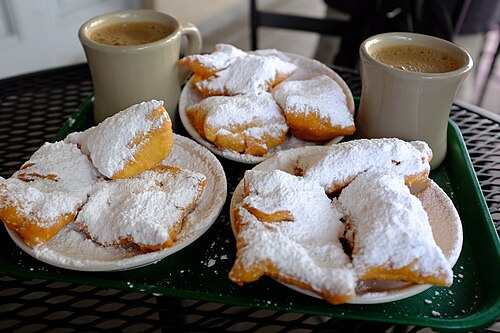
Technically we’re not talking about a baked good today. Beignets are fried in oil, like doughnuts. In fact, they’re exactly like sugar doughnuts, just not as sweet. Think Krispy Kreme’s Original Glazed without the glaze. Small, chewy pillows of heaven.
So why would a neighbor request beignets? Because she invited us to a college football game watch (Clemson vs. Louisiana State) and she’s one of those who turns a basic entertainment into a full-on festivity. Louisiana State is in Baton Rouge so her menu was start-to-finish Cajun. Étouffée. Muffuletta. Red Beans and Rice. Chantilly Cake. I mean, if she’s going to make all of that how could I say non to beignets?

Thankfully, I found an “Easy Beignets Recipe” online (note: whenever a recipe starts with “easy”, it’s anything but). At least I already had the ingredients in my pantry. But beignets start out like a high school science experiment. Heat the water to exactly 105°. Add yeast and a little sugar, because yeast “feeds” on sugar. Then watch it all foam. If it doesn’t foam, you killed the yeast and you have to start over. (No pressure Dave, little lives are at stake here.)

My yeast foamed (it lives!) so I was then allowed to proceed with the more traditional ingredients. Shortening, sugar, milk, and egg whites all mixed together, to which you add boiling water. When the temp is exactly 105°-110° (again with the science experiment) add the foamy yeast, flour and salt, and into the refrigerator it all goes, to rise for an hour or more.
Did my foamy-yeast-shortening-and-other-stuff concoction really rise? I have no idea. It looked the same as it did an hour before. But I threw caution to the wind and proceeded. At this point my wife had to get involved, because (as the recipe warns in capital letters), THIS IS A TWO-PERSON JOB. Maybe a three-person. One of you slaves over a pot of boiling oil (my wife), another gently transfers the beignets to paper towels to “oil off” (me), and the third suffocates them in powdered sugar (me again).

That last sentence happens very quickly. You can’t get the timing wrong on any step or the beignets won’t taste right. They fry for a minute or so on each side, rest for a minute on the paper towel, and don their coat of powdered sugar with just enough oil remaining to serve as the glue.
When beignets are done correctly, they’re light and flaky. The shortening and yeast create an air pocket inside. But you’re not really sure if this science happens until you rescue them from the boiling oil. Remarkably, ours really did rise. Doused in powdered sugar they really were pretty good (then my wife mixed a little cinnamon and vanilla into the dough and they were even better).
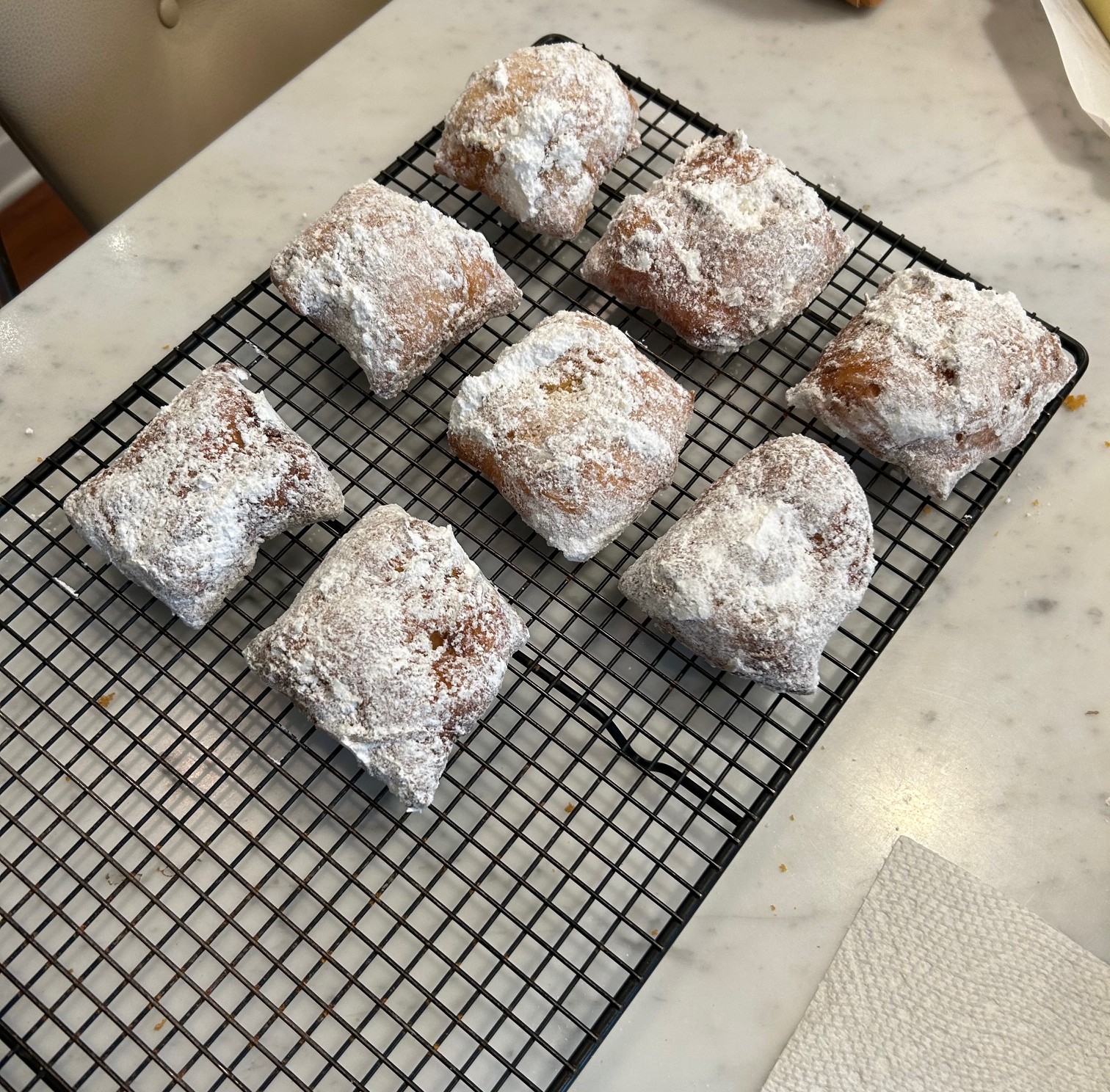
There’s a reason why beignets are so much better at the famous Cafe du Monde in New Orleans than in Dave’s kitchen. You need to eat them as soon as they’re powdered with sugar, and wash them down with a top-shelf cup of coffee. You see, beignets, sadly, have the shortest life of any baked good I know. If you don’t eat them warm, minutes after they’re fried, they’ll shed their light and airy consistency. An hour later they’re as cold and chewy as day-old doughnuts at 7-Eleven. And God forbid you leave them overnight on the counter. The next morning you’ll have nothing but rocks.
 So, you ask, were our beignets a hit at our neighbor’s game watch? Well, let’s just say the other guests were being polite by declaring, “very good!”, especially when they ate more of our frosted sugar cookies instead (our backup dessert). Hey, our kitchen is no Cafe du Monde. I never said it was. It’s the reason I’m never making étoufée. At least I have a neighbor who will be happy to do it for me.
Some content sourced from Wikipedia, “the free encyclopedia”.






 Life In A Word