
A few months ago my wife and I switched out our bedsheets to a product called Rest Evercool. Evercools are pricey threads, but their selling point is the cooling sensation for a better night’s sleep. Evercools do this with “high-conductivity polyamide yarn”. I have no idea what a polyamide is, but I do know the synthetic creates a cool and comfortable sheet, once you get used the satiny, stretchy feel. It’s a product suggesting cotton may have finally met its match.
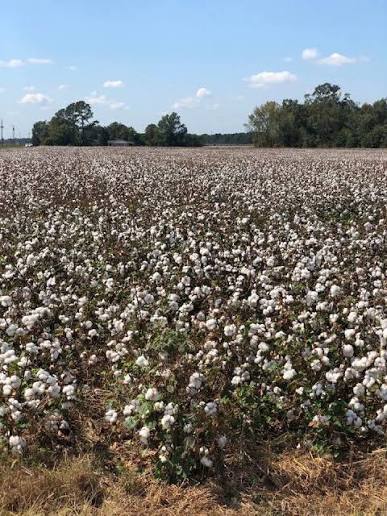
Fifteen minutes north of our front door you’ll find a pristine field of cotton, curiously intact despite the ever-growing suburban sprawl that surrounds it. To those who grew up in the South a cotton field is probably an everyday sight. To me – a relatively new resident – this sixty-acre plot is one of nature’s visual treasures. You can drive along two of its edges, and from certain viewpoints the soft white fluff appear to go on forever. It beckons me to run through the rows, the way Dorothy did with the poppies on her way to Oz.
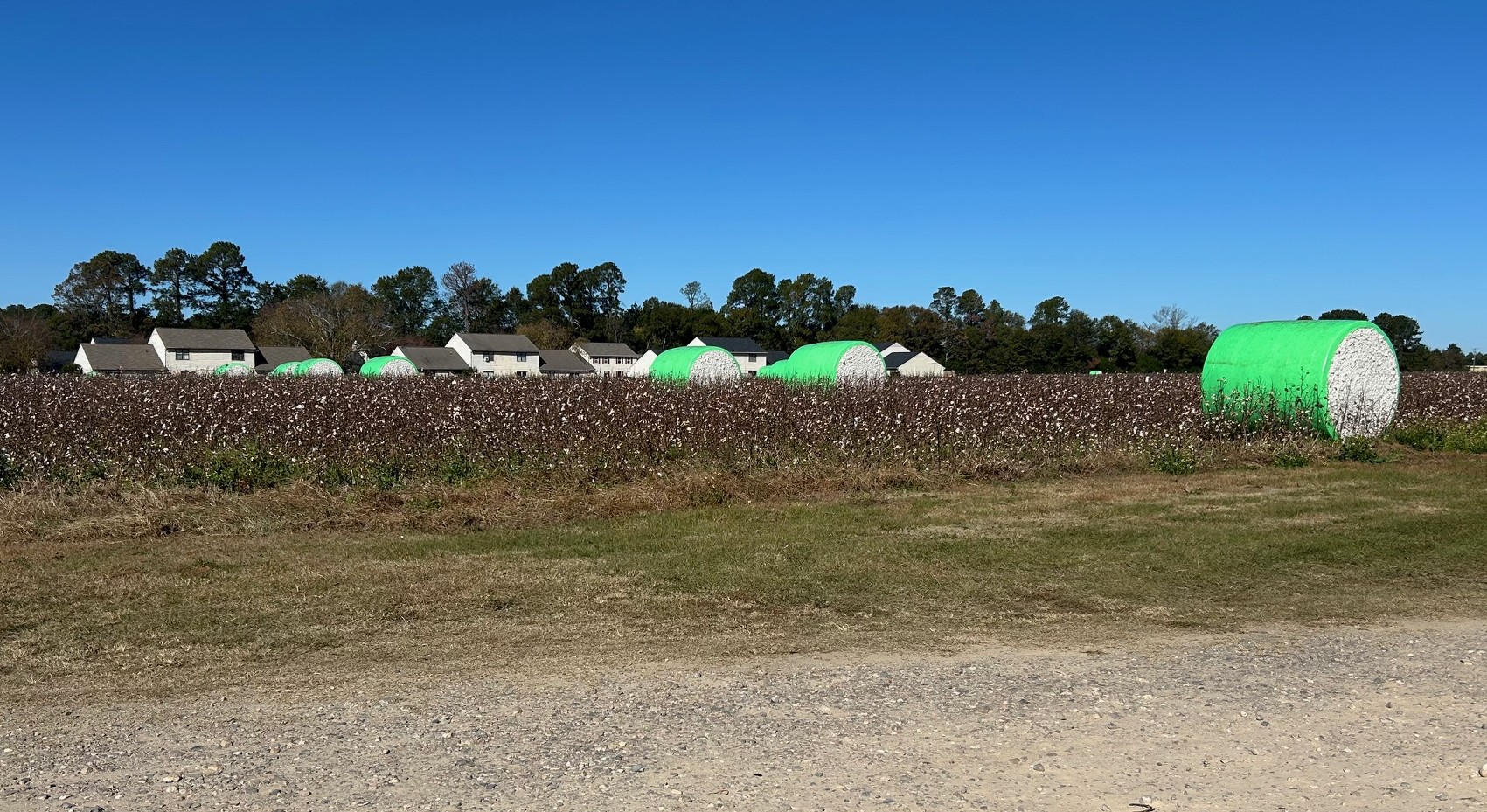
Alas, my nearby cotton reached its maturity just this week and the baling commenced. In a matter of days the field went from bright white to boring brown. All of that eye candy gone in a blink, to one day show up on store shelves as clothing or bedsheets or bathroom toiletries. Nature’s (cotton) candy reduced to a mere textile.
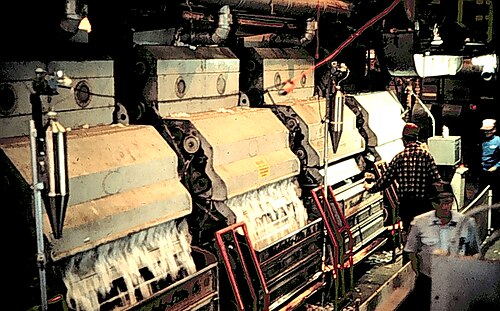
Speaking of the harvest, while the Chinese produce more cotton than anyone else, the U.S. gets the credit for how it’s processed. Eli Whitney invented the cotton (en)gin(e) in the late 1700’s (a fact I still remember from U.S. history classes). The gin separates the cotton strands from the seeds. Much later the Rust brothers invented the harvester, with rows of high-speed rotating spindles to extract the cotton while leaving the rest of the plant intact. The harvester picks, forms, wraps, and drops giant rolls of cotton like you see in the photo above, to then be sent to gins for de-seeding.
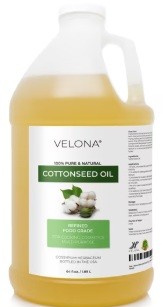 Conveniently, the entirety of a cotton plant can be put to good use. The fibers go into the products we’ve already discussed. The seeds are incorporated into animal feed or are pressed for their oil. And the remainder of the plant is tilled back into the soil to create a sustainable crop, year after year after year.
About those cotton fibers. They get twisted into the threads (or yarns) which make up the fabric of a bedsheet. The thread count is essentially the number of yarns per inch of fabric. But yarns also vary by the number of fibers that go into each one of them. Long story short – the higher the number, the more comfortable the sheet. And whenever you can, choose a long-strand cotton like Egyptian or Pima for the ultimate in softness.

For all my affection towards cotton today, a quick inventory of products I purchase suggests I’m backing away from it. Many of my favorite “active” shirts are made from modal rayon, a more comfortable fiber for the hot/humid conditions of the South. My favorite crew socks are made from more durable bamboo rayon. And my bedsheets are made from something that sounds like it came from NASA.
 Regardless, I hope I’ll get to pass by my cotton field for years to come, and never see it plowed under for yet another housing development. Just before the harvest, you can understand where “cotton candy “gets its name. But it does beg the question: Why is the sweet treat spun up pink or blue, when bright white would seem to be just fine?
Some content sourced from the Barnhardt article, “16 Facts About Cotton That You Don’t Know”, and Wikipedia, “the free encyclopedia”.

