Not-So-Thruways

We live on a long, straight-run residential street, with the option to exit at either end to access the outside world.  Close by, a cluster of our neighbors live on a short, stubby lane, where you won’t get very far before having to turn around and go back the way you came.  A sign posted at their street’s entrance declares, “Not A Through Street”.  It’s what the French – and we Americans – call a cul-de-sac.

In a rather desperate effort to come up with something Halloween-related this week, I landed weakly on “dead-end streets”.  Of course, these tiny avenues are often very much alive.  Cul-de-sac’s host a quaint gathering of houses, with a few on the straight run and even fewer around the end circle.  The setup allows these neighbors to get to know each other easier.  And with so little traffic, the end circle encourages kids to do what their parents normally nix: play in the street.

But maybe I shouldn’t paint/assume such a rosy picture (especially with Halloween right around the corner).  What if your neighbor living right next door on that little end circle is someone you’d sooner see in a horror movie?  Or what if the statistics are true: even more people are struck by cars on a cul-de-sac because of the assumed safety of a quiet street?  Finally, consider the double-hyphenated phrase staring you right in the face.  Cul-de-sac – French translation – “bottom of bag”.  Suddenly your house feels like one of those throwaway candies you find deep down in your trick-or-treat sack.

I didn’t know “cul-de-sac” had such a negative connotation.  I found it rather quaint because it’s double-hyphenated (and French).  Curious, I went in search of other double-hyphenated words to see if I could find something more positive.  Know-it-allWord-of-mouth (which is often gossip).  Son-in-law.  Okay, that last one has potential.  I mean, he’s only been married to my daughter for year now, so…
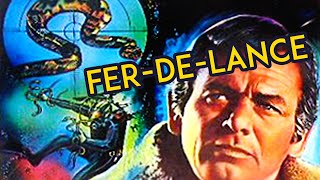
Here’s a really nasty double-hyphenated for you.  Fer-de-lance.  It means “head of spear”, which isn’t so nasty until you realize it’s the name of a snake; an extremely poisonous viper who lives in the tropics.  The fer-de-lance was the killer (literally) in a 1974 movie by the same name.  A movie I never should’ve watched at the fairly innocent age of twelve.  Fer-De-Lance was the original Snakes on a Plane, only the plane was a submarine carrying a crate full of deadly creepy-crawlies.  How’s that for Halloween-scary?

Like Fer-De-Lance, Cul-De-Sac was also a movie (1966), about “a hermit living with his wife in a large dank castle on an island… terrorized by two escaped prisoners.”  Not exactly a romantic comedy, and no explanation of the film’s title, other than maybe this couple finding themselves at their ultimate dead-end.

Let’s circle back to the suburban version of the cul-de-sac (please!)  Two addresses ago we actually lived on one.  There were two houses on each side of the straight-run and four houses on the end-circle.  We lived on the circle.  Were we tight with our neighbors?  No!  Each of our driveways were long and steep so our houses were actually pretty far apart.  I still remember how we’d greet our neighbors faithfully only one day out of the year.  What day?  Halloween, when we’d accompany our kids to their front doors.

We need to end this more-Halloween-than-I thought post on a positive note, so I don’t have you thinking about poisonous snakes and escaped prisoners.  Cul-de-Sac is a locale on the beautiful Caribbean island of Saint Martin.  It was also the name of a 1990s alternative rock band.  And Cul-de-Sac was the title of “a light-hearted comic strip centered around a four-year-old and her suburban life experiences.”  Okay, now we’re talking.

Some advice before I close.  If you live on a cul-de-sac, I suggest you double-stock the candy this Halloween.  After all, trick-or-treaters who make it to your dead-end street may find themselves going round and round the end circle without realizing what they’re doing.  Keep an eye out for repeat customers.

Some content sourced from Wikipedia, “the free encyclopedia”.
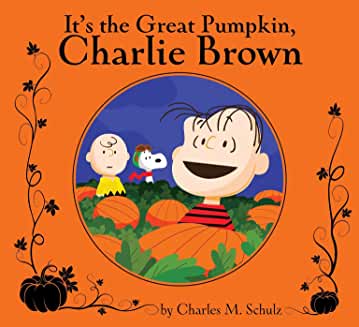
Peanuts and Pumpkins

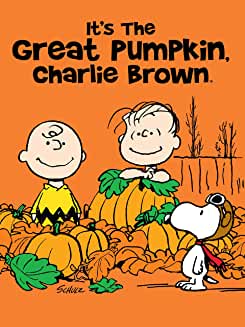
Three years ago, New York Magazine’s website Vulture ranked all forty-five Peanuts animated television specials from worst to best, including a paragraph on each one to justify its ranking. I wouldn’t have guessed Charlie Brown, Linus, and Lucy appeared in fifteen television specials let alone forty-five. But let’s be honest; only two Peanuts adventures have had any staying power: It’s the Great Pumpkin, Charlie Brown (#2 on Vulture’s list), and A Charlie Brown Christmas (#1).

Maybe I’ll weigh in on the Christmas special in a couple of months, but with Halloween on the horizon I need to speak to the runner-up. It’s the Great Pumpkin, Charlie Brown first aired on television in 1966, so those who were alive back then (me) have the chance to see it for the 56th time this year. But maybe not? The networks stopped showing Great Pumpkin two years ago.  Other than PBS in select locations, you’ll have to buy the DVD or subscribe to Apple TV+ to watch Charlie Brown get another rock in his trick-or-treat bag.

Writing about a Peanuts special dates me – there’s no question.  But it’s still worth the words.  The Peanuts gang was the comic strip of my youth.  I remember the anticipation of the Sunday morning newspaper and the “funnies” pages.  Charles M. Schulz and his Peanuts characters always got the first slot.  When the specials debuted in the mid-60s, it was a big deal.  It’s the Great Pumpkin, Charlie Brown only showed up once a year, in mid-October.  We didn’t have DVRs (let alone streaming) back then, so watch it live or you’d miss it.  Peanuts specials were always the hot topic of conversation at grade school the next day.

After so many watches, Great Pumpkin becomes an interesting study.  You pick up on the little things, the ones which would implode under the weight of today’s social media scrutiny.  Right out of the credits, Linus & Lucy head to a patch to pick out a pumpkin.  On the way, Linus picks up an apple among the fallen leaves, takes a single bite, and tosses it into a trash can. (Unnecessary waste!).  In another scene, Lucy stabs a pumpkin with a giant knife as she begins carving (Children with weapons!).  Then Linus looks on in horror and says, “I didn’t realize you were going to kill it!” (Violence!)

Great Pumpkin touches on other themes to sink today’s children’s shows, including bullying, teasing, and casual use of words like “stupid” and “blockhead”.  Charlie Brown is the butt of several jokes, including Lucy pulling the football away just as he tries to kick, and the girls using the back of his head to draw a pumpkin carving design.  Yes, I laughed at these scenes when I was a kid, but only because I wasn’t that kid (and because it was the 1960s humor).

Here’s an oddity with Great Pumpkin.  You’d think a short animation would be a continuous story.  Not so.  Great Pumpkin jumps awkwardly between disconnected scenes, from carving pumpkins to trick-or-treating to a Halloween Party.  The middle minutes shift randomly to Snoopy acting out his costumed “World War I Flying Ace” in the middle of France.  It’s as if Great Pumpkin didn’t have enough Halloween material to fill a half-hour, or at least needed an excuse to include Snoopy in the story.

Finally, “the Great Pumpkin” itself is completely akin to Santa Claus, but for a different holiday.  Linus writes a letter to the Great Pumpkin to say he’s looking forward to the arrival on Halloween night and hoping for lots of presents.  The Great Pumpkin visits pumpkin patches the way Santa Claus visits houses.  There’s even a mention of “pumpkin carols”.  You’re left wondering why this figment of Linus’ imagination wasn’t a little more unique.

If you haven’t watched It’s the Great Pumpkin, Charlie Brown, I probably haven’t given you reasons to rush to your television.  It’s simple and disjointed, and the animation doesn’t win the show any awards (even in the 1960s).  But just like A Charlie Brown Christmas, the characters are endearing, and the story has a pretty good message.  I’ll probably find myself looking for it again next year.

Some content sourced from Wikipedia, “the free encyclopedia”.