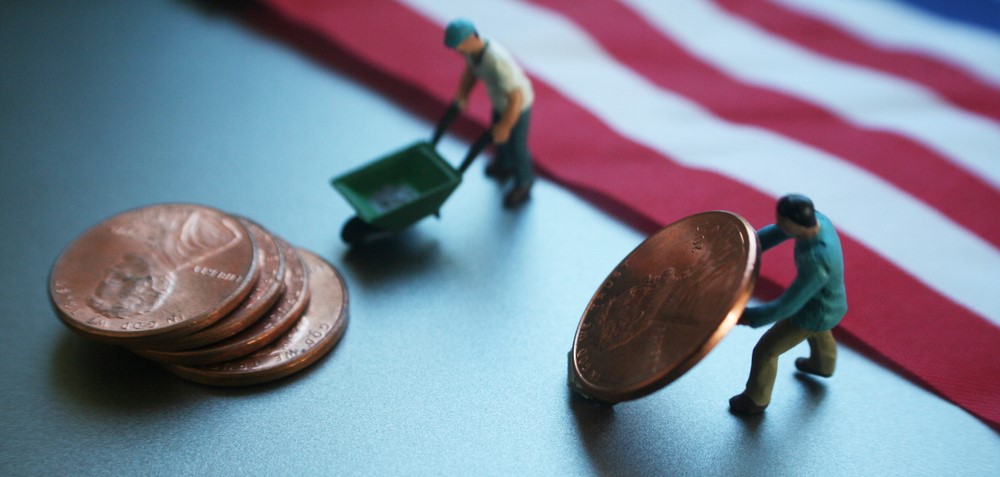
(Not) Making Cents

The other day when I drove into town I felt a sneeze coming on, so I reached into my car’s pull-out coin drawer and grabbed a handkerchief. If I’d wanted a breath mint for my mouth or an eye drop for my contacts I’d reach into the same place. But I wouldn’t find quarters, dimes, nickels, or pennies anywhere in there.  Come to think of it, someday soon I won’t find pennies anywhere at all.

You probably caught the headline in your news feed.  The population growth of U.S. pennies is about to come to a grinding halt.  Our country will no longer mint shiny new “Lincolns” for the first time since their debut in 1787.  Two hundred years and change (ha) is a darned good run for a coin but the penny appears to have been done in by compelling arguments.  One, the production cost is three times the face value.  And two – and perhaps most humiliating – the penny’s face value has descended into, well, obsolescence.

There was a time not so long ago when I wouldn’t pass up a lost penny lying in the street.  In addition to “free money” there was the old adage find a penny pick it up, and all day long you’ll have good luck.  Today you’d better settle for just the luck because you can’t buy anything for pennies anymore.  You’d be better off using them for more practical purposes like checking your tire tread depth or turning screws.  My brother and his wife turned thousands of their pennies into a beautiful, copper-colored floor for their kitchen.
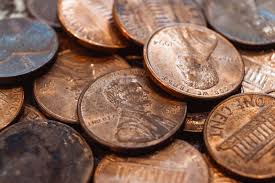
Losing their shine

Speaking of copper (I’m easily distracted today) I had no idea pennies are no longer made of copper.  They’re primarily zinc because of the rising cost of metals (yet they still cost three cents apiece?)  You’d assume quarters, dimes, and nickels were made from an alloy of silver, lead, or aluminum, but – go figure – those coins are primarily copper.

Enough with the facts.  I’m bummed to see the penny put out to pasture.  Along with it goes a ton of childhood memories.  You could roll pennies into coin wrappers and enjoy the thrill of exchanging the whole lot for paper bills at the bank.  You could drop them into handheld banks for untold savings (and my banks were delightfully mechanical).  Finally, you could walk into any 7-Eleven or drug store, hit the candy aisle, and find several “penny candy” choices.  A chunk of Bazooka bubble gum, hard candies, or licorice whips could be purchased for just a few cents back then.

Three cents each… a long, long time ago

Practically speaking I’m on board with the penny’s retirement, because I can’t recall the last time I involved a cent in a financial transaction.  If something costs $9.99, are you telling me you’d reach into your pocket and pay the $9.99 in cash and coin?  Nope, you’d more likely hand over a ten-dollar bill and then what happens?  You get a penny in return.  What are you supposed to do with that?

Certain sayings will have to head out to pasture as well.  An expensive item can no longer be described as “a pretty penny”.  “A penny saved is a penny earned” literally has no value.  A frugal person should now be described as a “quarter-pincher” (in case the nickel and dime are also on life support).  And “pennies from heaven” certainly don’t describe good fortune anymore, even if the song of the same name will continue to be sung.
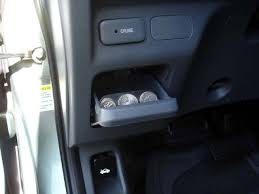
Do you have one of these?

For my money, I hope car manufacturers continue to include coin drawers in their dashboards.  I keep important things in there and I’d prefer not to change my ways.  Then again maybe I should keep a few pennies in the drawer, if only for my childhood memories.  Those will always have value.


LEGO Notre-Dame de Paris – Update #5

(Read about the start of this “church service” in Highest Chair)

I decided to have my lunch today while working through Bag 8… of 34 bags of pieces.  That was a mistake.  I reached for a LEGO piece, grabbed a little block of cheese instead, and Notre-Dame de Paris almost had cheddar in its walls. I immediately vowed food would go nowhere near the assembly ever again.  It’s unnerving enough putting in the real pieces.

As I worked on the uppermost level you see here I used a little too much force, and a piece in the level below loosened and scampered down into the sanctuary.  I shook, rattled, and rolled the entire cathedral trying to get it out but to now avail.  Just before admitting defeat, the little devil finally emerged (he must’ve gone to confession).  And here’s where I learned an unnerving truth: re-assembling pieces long after you’re supposed to can be near impossible.  I had to tear down an entire wall to get the piece back in place.  We’re working in close quarters here, people.

“LEGO lever”

Today is also a good chapter to point out the tool to the right.  It’s a “LEGO lever” (my words), designed to easily remove a piece from a place it wasn’t meant to go.  I didn’t need my lever through the first seven bags, but today?  Half a dozen times.  My mind’s eye was off just a hair and I kept assembling pieces a quarter or half-inch off from where they were supposed to go.  LEGO lever = life saver.

Pasta noodles?

Bag 8 started slow and repetitious but finished grand and confident.  In fact, I was so full of myself after the mere forty-five minutes of construction, I boldly plunged into Bag 9.  Mistake.  I mean, look at the pieces in this photo!  Are these LEGOs or the little bits of pasta you find in your chicken soup?  Seriously, we may be almost a quarter of the way through the bag count but the pieces are shrinking.  Some Sunday soon the parishioners will look to the heavens and be burned by the giant magnifying glass above them.

Running build time: 4 hrs. 22 min.

Total leftover pieces: 17

Some content sourced from the CNN Business article, “Trump instructs Treasury to halt penny production”, and Wikipedia, “the free encyclopedia”.
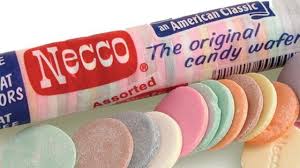
Disc Chalky

Woodstock Candy (“Let Sweet Flashbacks Sprinkle Down”) assembles collections of vintage candy and sells them on Amazon.  The “nostalgic retro mixes” tailor to the buyer’s age, as in “30th Birthday Box” or “65th Birthday Box”.  For those in my decade, Woodstock tosses in classics like Chuckles, Red Hots, Sugar Daddy’s and Smarties. Also, a few Pixy Stix, a Candy Necklace, and a long strip of those colorful Candy Buttons. Finally, buried quietly in the back of the box: one small roll of Necco wafers.

Four months ago, the Wall Street Journal alerted those of us with nostalgic sweet teeth of the fate of Necco wafers.  More correctly, NECCO – the New England Confectionery Company – would shutter if it didn’t secure a buyer.  Apparently, no one came to the candy counter, because the factory closed its doors late last month.  The consumer reaction was immediate – on the order of the Hostess Twinkies frenzy.  Rolls of Necco wafers flew off the shelves.  Frantic calls to candy stores demanded entire boxes be placed on hold.  One Necco devotee offered his 2003 Honda Accord in exchange for the company’s remaining product.  You might call it “disc(o) fever”.

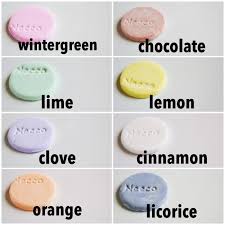
The Necco wafer/disc is an underappreciated candy of years gone by, though admittedly my affection for the confection is not what it used to be.  Necco’s are packaged in rolls of about thirty, in an assortment of eight flavors, including clove.  Clove.  Even the flavors sound dated.  A Necco wafer looks and tastes like a disc of chalk (drywall?), with a hint of flavoring to make it seem like food.  Eat a dozen wafers and your hands and clothes are covered with edible dust.  Eat a dozen more and the flavors all start to taste the same.  What used to be a satisfying crunch now feels like a threat to my dental work.

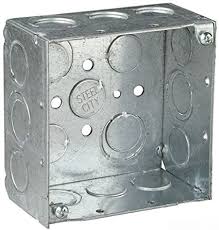
Why was I drawn to Necco wafers, when my back-in-the-day 7-Eleven store included an entire aisle of more appealing candy?  Maybe I just like little discs.  My father used to drive my brothers and I to some of his building sites, and I quickly discovered the concrete littered with dozens of metal coins.  These were “slugs” – today called KO’s or “knockouts”; the quarter-sized remains of partially-stamped openings in electrical junction boxes.  I collected hundreds of them – God knows why (but I was a kid, so I didn’t need a reason).

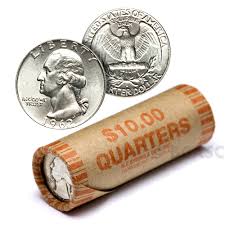
I also collected coins – more specifically quarters, because quarters were big money in my day, and translated into just about everything in that 7-Eleven aisle.  Quarters could also be stacked into paper wrappers; perhaps my precursor to a roll of Necco wafers.

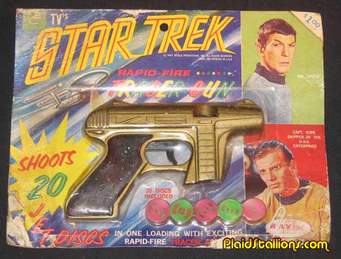
At the same time in life, I had what was probably the coolest toy around.  It was called a “Rapid-Fire Tracer Gun” (if you were really cool you had the Star Trek version).  The Tracer fired little round plastic discs, spinning them out of the barrel so fast they hurt when they hit skin.  They even made a Tracer Rifle for more accurate shots.  The Tracer had a spring-driven magazine, so you could queue up a whole pile of plastic discs.  Or Necco wafers.

Necco wafers aren’t nearly as appealing as some of the stories behind them.  A hundred years ago Necco’s were carried by Arctic explorers and handed out to Eskimo children.  Their “suspiciously long” shelf life (Necco’s are sugar, corn syrup, and not much else) allowed them to be stored for months; then consumed by Union soldiers during America’s Civil War.  And therein lies the significance of the NECCO factory closing: the wafers have been around since 1847.

If I still don’t have your attention, consider this: NECCO also manufactures Sweethearts, the heart-shaped romantic-message-stamped equivalent of the Necco wafer, distributed by the billions on Valentine’s Day.  Think about that: no more candy hearts bearing “Kiss Me” or “Love You” or “Be Mine”.  Instead, just inedible greeting cards and meh grocery-store chocolates.  But don’t despair – I think the factory closing is just a hiatus.  The Hostess Twinkie came back and so will the Necco wafer.  It’s already underway, so join the movement: #SaveNecco.

Chump Change

This week’s headlines included a downer from the animal kingdom.  The world’s last male northern white rhino passed away, leaving just two females to live out their days before the species goes extinct.  How sad is that?  Especially since the northern white’s demise is the result of the poaching of its horns – questionable behavior from we humans.

Speaking of questionable behavior, did you know the U.S. penny and nickel are also on the verge of obsolescence?  It’s true, if you believe the arguments of those who say the one-cent and five-cent pieces have outlived their utility.  Consider: 1) both coins cost more to mint than they’re worth; 2) a nickel today buys less than 20% of its worth in 1970 (a penny – less than 10%); 3) merchants routinely adjust pricing to avoid their use; and 4) the metals involved – zinc, copper, and nickel – have perfectly good uses elsewhere.

The prosecutions rests and the defense now takes the stand.  Pennies and nickels should not go the way of the northern white.  Consider: 1) Demand for the little guys is soaring; double what it was a decade ago; 2) The U.S. Mint “makes money” on its production of coins – fully 45 cents for every dollar’s worth (in 2017: a $400 million profit); 3) If zinc becomes too expensive (97.5% of the makeup of today’s pennies), a cheaper metal can be used for filler, and 4) eliminating pennies and nickels could threaten confidence in the U.S. dollar with a forced dependence on higher denominations.

I’ll get behind any of these arguments – pro or con – I just think they’re boring.  Defending our little Mr. Lincoln’s and little Mr. Jefferson’s can be so much more creative.  Take away pennies and nickels; then consider the following:

1) Penny loafers.  No longer the classic men’s slip-on shoes with the cool name, including the cross strap and small opening at the center; the perfect size and shape for a penny.  Add those Lincolns and you gave new meaning to the term “shoe shine”.  You also had a built-in conversation starter, when the girl asked why you put coins in your shoes.  You told her you were retro – back in the day a phone call cost a penny, and loafers were a convenient way to carry around the cost.

2) 99 Cent Only Stores.  Fifty years of U.S. retail, with over 400 locations and thousands of products priced at “ninety-nine cents or less”, goes belly-up without the penny.  How would a cashier make change on the dollar?  They’d have to give you a nickel instead, and… oops, the nickel’s gone too.  New math: buy something for $0.99, pay a dollar, and get a dime in change.  Huh?

3) Girls named Penelope.  They could no longer be “Penny” for short (or “Nickel”) because no one would understand what made the nickname so cute.  You say you don’t know anyone named Penelope?  Wait a few years.  In 2008, Penelope was #2,222 on the list of girl’s names.  This year it’s #573.

4) Your thoughts.  They used to be “a penny for…”.  Now you’ll have to pay at least ten times that much.  Keep them to yourself.

5) Beatles hits.  “Penny Lane” drops out of the Fab Four’s impressive list of #1’s.  The quaint little street no longer exists in Liverpool, England.  The barber never shows another photograph (of every customer he’s had the pleasure to have known).  There’s no fireman with an hourglass (nor in his pocket a portrait of the Queen).  You’re no longer there, beneath the blue, suburban skies.

6) Copper (+ zinc) floors.  Okay, I didn’t even realize this was a “thing” until recently.  Who ever said you had to spend a penny to give it value?

7) Your parent’s sayings.  Out the window goes “If I had a nickel for every time I heard that…”, or “we didn’t have two pennies to rub together”, or “that costs a pretty penny”, or “penny-wise, pound-foolish”, and so on.  Nobody would ever “nickel-and-dime” you again.

8) Derailed trains.  Okay, a derailed train was just a childhood power trip, to heighten the suspense of flattening pennies on the tracks.  The train rumbled on.  The pennies sometimes got lost.  Would a train flatten a dime or a quarter?  Never tried it; wouldn’t expect a kid to sacrifice that much pocket change for cheap thrills.

These arguments are solid; not a bad penny in the bunch.  We can’t let a subspecies like the U.S. penny or the U.S. nickel go extinct.  Think twice the next time a cashier takes a penny out of the counter cup just so she can give you change in dimes or quarters.  Think twice the next time you’re humming along with Billie Holiday:

Oh every time it rains
It rains pennies from heaven
Don’t you know each cloud contains
Pennies from heaven
You’ll find your fortune
Fallin’ all over town
Be sure that your umbrella is upside down

Some content sourced from the Wall Street Journal article, “”Should the U.S. Retire the Penny and Nickel?”