Kindling the Fire

Last Sunday, in the midst of a sleep-in/no-alarm kind of vacation, my dad dragged my wife and I to early church. That meant falling out of bed by 7 and leaving the house by 8:15. Not my idea of a relaxed schedule, to be sure. On the drive to church and all through the service, I found myself in a fog and close to nodding off (the meh sermon didn’t help). Even at brunch afterwards – stoked with a double-dose of mimosas – I couldn’t seem to shake the cobwebs. It wasn’t until much later in the day I realized something significant went missing from my daily routine. I hadn’t had my morning coffee.

Morning coffee is more a habit than an addiction for me.  Or so I thought.  It wasn’t so long ago I occasionally substituted juice or water, and the day proceeded as normal.  Sunday’s drowsiness made me pause.  Maybe the impact of caffeine is more significant as you age.  Maybe drinking a hundred cups (or more) in a hundred days creates a dependency.  As they say, caffeine is “the world’s most widely consumed psychoactive drug”.

While I debate the impact of no caffeine today, I can absolutely attest to the impact of lots of caffeine, with two examples of inconvenience.  For me, caffeine sends a loud-and-clear, pulsing, Times-Square-sized announcement to my bladder saying, “IT’S TIME TO PEE.”  Not in fifteen minutes.  Not in fifteen seconds.  Now; as in – get up and go NOW.  I better have my path to the bathroom mapped out, and that door better be open.  It’s like clockwork biology, forty-five minutes after that first coffee sip.  Remarkably, the experts still question whether caffeine is a diuretic AND they wonder whether the amount of liquid expelled is equivalent to the amount consumed.  I emphatically answer “yes” and “MORE”.  With all the expelling, it’s a wonder my body doesn’t dry out and disintegrate.  No matter; it’s a small price to pay for my daily drug.

Here’s the second impact of caffeine.  Beware the cup of coffee (or any choice from Starbucks) after three in the afternoon.  Let that late-day caffeine hit take hold and you’re in for a long night.  I can very dependably fall asleep within five minutes of hitting the pillow except when my coffee intake is late-day (and on that note, why is upscale after-dinner restaurant coffee so good?).  I toss and turn like laundry in the wash cycle, staring at the ceiling and ruing my beverage mistake.  Then I stare at the bedside clock.  What a pretty clock it is.  Such colorful numbers.  It’s fun to watch the numbers change every minute.  Every hour.

Let’s review.  Assuming I plan my bathroom trips and lay off the coffee by mid-day, I can safely embrace my caffeine habit.  And if “habit” concerns me at all – its synonyms include “addiction” after all – here’s some good news.  Four cups a day is ideal for heart health, according to recent research by the Germans (my new favorite people).  Not up to four cups, but exactly four cups, netting you about 300 mg of caffeine.  Four cups is also the equivalent of a Starbucks “Venti” (the Nitro cold brew somehow packs in 469 mg of caffeine) but I steer clear of the big cups.  Wouldn’t want to get “addicted”.

We’ve only been talking about coffee here, but thankfully caffeine is found in only a handful of other foods and drinks.  What starts as a naturally-occurring compound in plants finds its way to teas, cocoa, cola soft drinks, energy drinks, and over-the-counter meds (i.e. cough syrup).  The only one I touch is cocoa (my chocolate habit justifies its own blog post).  So, unless I exceed my daily two-square ration of a Lindt 70% Cocoa Excellence Bar, my caffeine intake is all about coffee.

If you count milligrams the way you count calories, know that 300 of caffeine is the threshold to avoid anxiety and panic attacks.  A warning sign might as well pop up after 300 saying, “STOP!  Proceed with caution”.  It’s like there’s this sweet spot with coffee – an oasis between falling asleep in church and earning the jitters – that kindles my fire.  Gives me justification to start every day with a cup of coffee.  Or four.

Creatures of Habit

WHAT IF Starbucks decided to close its stores for a whole day? Imagine, you’re driving to work with early-morning brain fog, you pass by the most convenient Starbucks, and from the street you see a big “CLOSED” sign behind the glass.  Not to be denied, you head for the drive-thru, but your access is blocked by green cones (everything matches at Starbucks).  You’re still in denial, so you pull into a parking space, get out of the car, and peer through the darkened windows. Horrors. Your 7×24 caffeine-addiction fixer-upper (well, almost 7×24, but who craves coffee at 3am?) has taken the day off.  Are you getting a case of the jitters just reading this paragraph? Is this a Catch-22, because you can’t think up another coffee option until you’ve actually had your morning coffee?

We had a little “sip” of this scenario earlier this week, didn’t we?  For reasons that were relevant-today gone-tomorrow (maybe), Starbucks took the high road and delivered several hours of anti-bias training to its employees, closing 8,000 locations in the process.  For one interminably-long afternoon and evening on Tuesday, you had to search a lot harder to find your grande no-whip Caramel Macchiato.  When Starbucks’ announcement lit up the front-page headlines last week, my first thought wasn’t, “the lines are about to get longer at the bathrooms” (though admittedly, it’s a legitimate concern since I’m a man of frequent visits), nor was my first thought, “we’re about to see a lot of, uh, interesting people at Starbucks now” (because we already do, don’t we?)  Rather, my thought was, “how the heck are we gonna cope with several hours of no-Starbucks, when 100 million patrons – you read that right – frequent their stores every week?”

In a related headline, an economist claimed this one-time Starbucks shutdown would cost the company $12 million and be a boon for “coffee competitors” like McDonald’s and Dunkin’ Donuts.  Laughable.  I know those restaurants have their fair share of coffee allegiance these days – if you consider “fair share” less than 1%.  No, the world didn’t rotate off its axis on Tuesday, but I also won’t promise patrons didn’t line up at the Starbucks drive-thru hours before the open on Wednesday morning.  Our Starbucks habit was ingrained at an early age, well before the competition stepped up.  Howard Schultz is a genius.

More likely, the impact of Tuesday’s shutdown is what I refer to as the “Chick-fil-A effect”.  If you’re a fan of CFA, you’ve known from the get-go their stores close on Sundays.  It’s a simple building block of the founder’s philosophy: CFA employees should spend their Sundays resting and at worship, with family and friends.  Now, you might pass Chick-fil-A on a Sunday and think, “Closed.  What a nice gesture – more companies should do that.” But I’m pretty sure you’re actually thinking, “Damn – I was really craving a #1 meal, hold the pickle, w/ lemonade”.  And that thought will stay with you until Monday. And Tuesday, And Wednesday, or whatever day you next pass by Chick-fil-A.  Maybe their alt-slogan should be, “Closure Makes the Heart Grow Fonder” or something like that.  It’s as much a business strategy as a thoughtful benefit for CFA employees.  On that note – trust me – Starbucks will make up Tuesday’s lost business by the time I hit the “publish” button on this post.

Nothing Bundt Cakes (“Home of the Most Delicious Bundt Cakes Ever!”) is kinda sorta the same animal as Chick-fil-A.  For reasons suspiciously vague, NBC allows its franchisees the option to close on Sundays.  Google your NBC’s hours before you head over for a white chocolate raspberry bundt or a lemon bundtlet.  The next time you find their doors unexpectedly locked, I predict your dreams will be relentlessly invaded by dozens of little flying bundtinis – at least until you satisfy your craving with a purchase.  Don’t say I didn’t warn you.

Here’s the irony about today’s musing: I’m typing my post from a Starbucks.  I’m sitting quietly at a table, enjoying a grande cold brew with a touch of cream.  The baristas are unusually perky (surely a side effect of their recent training).  The restaurant feels quiet and “inclusive”.  In other words, I didn’t cry over spilt coffee on Tuesday. Instead, I just proved my theory.  a) Tuesday afternoon I couldn’t go to Starbucks.  b) I wasn’t even planning to go.  c) The store closures were in the headlines, which inserted “caffeine denial” into my brain.  d) Here I am, just two days later, getting my Starbucks on again.

Touché, Mr. Schultz.

The Euphoria of Joe

Today I’m perched at one of my favorite Colorado coffeehouses, sipping the local version of a cafe latte.  The air is rich with the bitter aroma from the nearby roaster.  I’m surrounded by chatty patrons, each with their own coffee-based delight-in-a-cup.  If I had a handful of the crunchy chocolate-covered espresso beans they sell, I could say coffee’s hitting all five of my senses today (instead, I have a delicious apple fritter).  These days, coffee is as infused into American culture as baseball and Apple (pie).  And how far we’ve come from the cups of Joe former generations would brew with store-bought cans of Folgers.

How far have we come (besides the requisite latte foam-art)?  Consider this: my coffeehouse does not allow to-go orders.  You read that right: if you get your coffee here you’re drinking in-house.  According to the resident “roastmaster”, paper cups alter the flavor of the coffee and thus they won’t sell it to-go.  Hard for me to swallow (the cup thing, not the coffee), as my palate has never been very discerning.  Yet here I am, paying top dollar to drink real-cup coffee “in the house”.

It wasn’t always this way.  Not so long ago all you had on the menu was a “cup of coffee”.  Take it black or take it with sugar/cream, but that’s where your options ended.  And the reference to “Joe”?  That comes from a 1914 ban of alcohol on U.S. Navy ships by then Secretary of the Navy Josephus “Joe” Daniels.  The strongest alternative to a “real” drink on-board was black coffee.

Today’s kids get their first taste of coffee at Starbucks.  My own first taste took place in Italy, during the college year I lived there in the 1980’s.  Italians take their coffee very seriously.  Walk into an Italiano café, belly up to the bar, and order an espresso shot and sweet roll.  That’s your standard-brand Italian breakfast, and you take it standing up.  You’re in, you’re out, and you’re on your way again in less than a minute, sufficiently caffeinated.  Not many are baptized on straight espresso, but that was my experience.

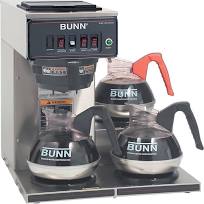
My coffee journey continued after college, but it was quite a stumble.  I graduated from Italian espresso and regressed to the standard-brand Bunn coffeemakers of corporate America.  Starbucks and its kin would not arrive for another 5-10 years.  Office coffee was a mindless, characterless, tasteless experience.  A Styrofoam cup of black nothingness, with a few unbrewed grounds thrown in for texture.  It was like descending from the Golden Age of the Roman Empire to the Dark Ages.

Thankfully, my coffee habits persisted until coffeehouses became an American staple in the late 1980’s.  The houses themselves still aren’t the vision of Starbucks’ Howard Schultz: “comfortable, social gathering places away from home and work”, but at least we’re getting past the Frappuccino-this and macchiato-that, evolving back to straight coffee.

My one dedicated-cash phone app is for coffee.  I literally wake up and smell the coffee thanks to my Keurig; then structure my waking hours with the possibility of a drive-through cup of Joe later on.  To get really serious I could spend $200 on a Ninja’s home coffee bar, which claims to be a coffee system (“Variety of brew types and sizes!” “Built-in frother!” “Tons of delicious coffee recipes!)  Their tagline: “See what all the coffee buzz is about”.

Coffee buzz is no joke, as patrons of America’s 33,000 coffee shops will tell you.  The euphoria we desire – the blissful effects drawn from caffeine – actually has a name: “margaha”.  For that reason, whether your preference is a nitrogen-infused cold brew, a coconut-milk mocha Macchiato, or a take-it-straight cup of Joe, it’s safe to say coffee is here to stay.

Can We Talk?

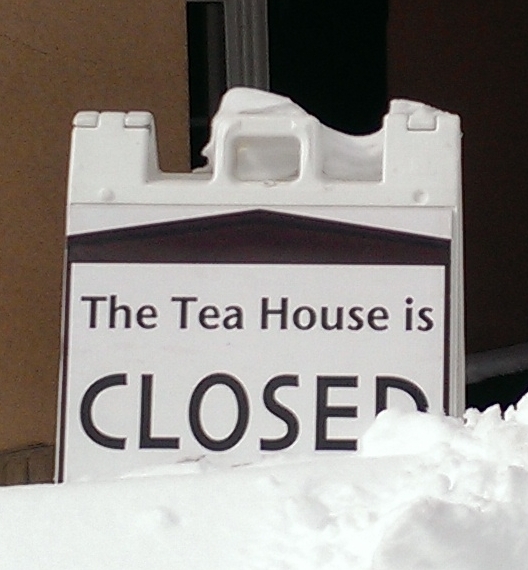
We lost a good friend last month.  Wisdom Tea House, one of our local cafes, closed its doors for good after eight years of business (and a little snow).  And that’s just sad.

29 - requiescence 2 (1)

Why am I sad?  Let’s start with a quick tour of the house itself.  You walk in the front door to the roomy foyer, commanded by a large hutch with dozens of tea cups – choose your own – and a welcoming kitchen where you place your order. If the scrumptious lunch items don’t tempt you, the fresh-baked goods on display certainly will.  Then choose from any room in the house and pull up a chair. Perhaps the living room with the small fireplace. Or one of the upstairs sitting rooms with their small couches and comfy chairs. Your tea and cakes will be delivered no matter where you sit.  This could just as easily be your grandmother’s house.

29 - requiescence 2 (2)

Here’s what I’ll really miss about Wisdom.  You won’t see people talking on their cell phones or working away on their laptops.  You won’t plop down next to a large, loud group of people gathering after work for a drink.  Wisdom’s music is quiet and instrumental.  The tea and coffee are served in their simplest forms (no Oprah Cinnamon Chai Tea Latte here).  In sum, they created a gathering place for requiescence – a bit of rest to escape the bustle of the world beyond the windows.

As I reminisce on Wisdom, I’m sitting at Starbucks.  I typically appreciate the convenience of the drive-thru, but today I’m on the inside, observing Starbuck’s brand of “gathering place”.  Open floor plan.  Hard surfaces.  Rock music.  A few high tables for two and one large low table for many.  Stools at a counter facing the windows with no view to speak of.  The handful of patrons I observe are to themselves, engrossed in all forms of personal electronics.  The few engaged in conversation raise their voices above the music and the baristas just to be heard.  It’s all just so “un-Wisdom”.  But that’s Starbucks – and it works.  It’s grab-n-go coffee, especially with that drive-thru lane (churning out cars so much faster than people passing through the front door).  Having your coffee inside a Starbucks almost feels wrong.

A few years ago my wife and I visited Ireland for the first time..  If you’re ever in Dublin, find your way along the cobblestones to Wicklow Street (just off the wonderful Grafton Street shops), and stop into a little cafe called Gibson’s.  Gibson’s is akin to Wisdom Tea House.  Order at the counter (the pear tarts are a must) and choose from one of the dozen small tables just beyond.  Take in the gentle ambiance and soft decor, and breathe deep.  The Irish come to Gibson’s to meet and to chat; to catch a break from the fervor that is downtown Dublin.  We stopped in several times during our trip and it was always the same: happy patrons engaged in quiet conversation with – at least for the moment – no cares in the world.  I can still picture one particularly well-dressed gentleman a few tables over from ours, sitting alone with his coffee and reading a book.  The very picture of requiescence.

Perhaps you have a Wisdom Tea House in your town.  A place the locals seek out to unplug, and to spend a quiet moment or two with each other.  If you are so fortunate, be regular patrons and keep your little gathering place in business.  Without Wisdom, our little town has precious few places to rest.  We might as well just head home instead.