Eggs-asperating Prep

Every now and then I get a hankering to bake something, which nine of ten times means chocolate-chip cookies. That tenth time I’ll venture into breads or cakes but they’re usually too time-consuming for my “taste”. Thus I’ll buy a perfectly prepared croissant before I ever labor to make one on my own. Maybe the same should be said for so-called perfectly prepared eggs.

Eggs-spensive!

We’re all talking about eggs these days, the same way we talked about gas during the “Energy Crisis” of the late 1970s. Eggs are scarce and evermore expensive, which translates to being more choosy about how we use them at home. I like eggs for breakfast every other day and I’m not likely to change that habit on account of rising prices. My dog may have to forego the occasional scrambled egg on top of his kibble, but until I pay as much for a dozen eggs as I do to fill my gas tank, I’ll still be buying them.

I prefer mine soft-boiled

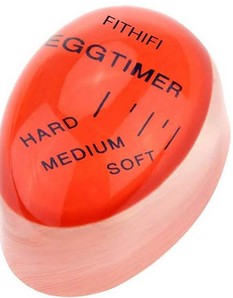
What I won’t be doing is cooking my eggs any differently than I did last week or last month, even if scientists now claim the “perfect method” (their words) to do so.  I prefer my eggs soft-boiled, which means a pot, some water, a $2.99 submersible egg timer from Wal*Mart, and less than ten minutes of prep after the water is boiled.  It’s a quick, mindless process I can pull off even before my morning coffee.
Would you prefer a more time-consuming method instead, with only slightly better results?  Okay.  Take two pots of water and heat one to boiling (212 F for us Americans, 100 C for most of the rest of you) and the other pot to “lukewarm” (86 F, 30 C).  Drop your eggs into the boiling water for two minutes, then transfer them to the lukewarm water for two minutes.  Repeat seven more times.  That’s right, seven more times.  On your calculator as well as mine, that’s 32 minutes until breakfast is ready, and you’re too busy to do other stuff while you’re waiting.

If I dedicate 32 minutes to egg-making, I’m expecting something much more grand and decadent.  An omelette at the least.  A scramble with a load of cut-up veggies.  “Benedict”, including the hollandaise sauce.  Heck, I’d even don my French chef’s hat and try sous vide eggs, which are…. oh, never mind – those take an hour or more.
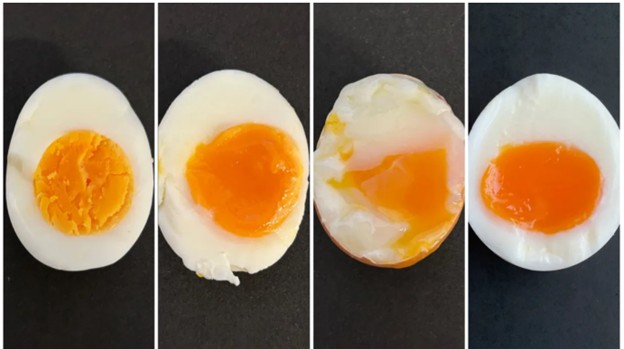
The second is soft-boiled; the fourth is supposedly “perfect”

The thought of “perfect” eggs in 32 minutes instead of soft-boiled in less than 10 is exasperating.  If I wanted to go all science on you, I’d explain why 32-minute eggs allow the albumen and yolk to cook perfectly together, even though each has a different composition.  I’d also explain why this method retains the maximum nutritional benefit of eating eggs (protein and so on).  But c’mon, do you really care about those details when you’re just looking for grub to get your day started?  Heck, the prep of my 10-minute eggs even allows me to feed the dog and clean up last night’s dishes while I wait.

The “perfect eggs” news article is interesting enough but I had to laugh when the writer inserted the standard “… be forewarned that consuming raw or undercooked eggs may increase your risk of foodborn illness”…”  Wait, I thought these eggs were perfectly cooked.  Now you’re hinting the process may cause food poisoning?  Sorry Mr. Scientist, I’ll stick to my $2.99 Wal*Mart egg timer method instead.


LEGO Notre-Dame de Paris – Update #7

(Read about the start of this “church service” in Highest Chair)

Maybe LEGO’s engineers got impatient with the construction of the east-end chancel of Notre-Dame de Paris, because Bags 10 and 11… of 34 bags of pieces, laid out the rest of the foundation of the entire cathedral.  Indeed, when we finished today’s rather brisk build (24 minutes!) we put down enough marble to allow the capacity 1,500 parishioners to “take a pew”.

24 minutes was barely a French coffee break back in the day when Notre-Dame was actually built.  In fact, we’re now twenty years into the construction: AD 1182.  With the chancel complete enough to host church services, we’ll spend the next twenty years (or rather, the builders did) rising the transcept (the “cross” bar, remember?) and first bays of the nave (the cross “long” bar).

Speaking of “bars”, note that I added LEGO’s signature “title bar” to the near edge of the model today (photo below).  LEGO wants you to know what cathedral you’re looking at, even though I’m teaching you enough detail so you won’t need a title bar.  But don’t be fooled; you won’t find a title bar in the foundation of the real Notre-Dame de Paris.

Today’s build was quick but not without the usual antics.  Once again I installed a piece incorrectly – a tiny bit of marble.  Once again I reached for the LEGO lever but it couldn’t lever out this kind of piece.  So I resorted to my paper clip “crowbar” instead and ZING!!! – the piece went flying across the room and ricocheted (another word with French roots – nice, no?) off the wall.  Good thing I managed to find it or several of Notre-Dame’s parishioners would trip on their way out.

Running build time: 5 hrs. 56 min.

Total leftover pieces: 24

Some content sourced from the CNN Science article, “Scientists developed a new method for the perfect boiled egg…”.
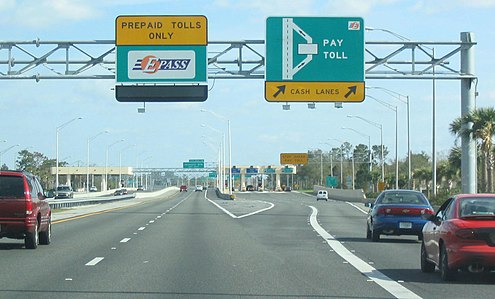
For Whom the Road Tolls

Because we raised our kids in Colorado, vacations to visit our extended families were often by airplane, since my relatives were in California and my wife’s were in Florida. It was the rare trip where we could see any of them by taking the car. So when my wife and I drove from South Carolina to Pennsylvania recently to visit my brother and his wife, we were reminded of what makes travel by car different than by plane. Toll roads, for instance.

Take your pick of payment

I have memories of toll roads my kids will never have. They’re old enough to remember passing through the booths and handing coins or bills to the collector. But they won’t remember the unmanned alternative, which was to toss exact change into a big plastic basket, listen to the coins process through the mechanics below, and hope/pray the gate to the toll road would raise. That automated approach seems almost quaint compared to today’s electronic alternatives.

I say alternatives (plural) because yes, that’s what we have with today’s toll roads. It confounds me. Why in heaven’s name haven’t we developed a painless, seamless, and most importantly, nationally coordinated approach to toll road payments? To some extent (nineteen states) we have a solution – E-ZPass, which by subscription and sticker allows convenient passage.  But even E-ZPass is not a perfect system.

Not so E-Z

For the rest of the country’s tolls – and for most of our round-trip drive between South Carolina and Pennsylvania – we have the clunky alternative. You pass through a now-unmanned (“un-personned?”) toll booth, where a camera grabs your license plate with a noticeable flash. Then, somewhere down the road (ha) a paper bill arrives in your mailbox. By my count I have four or five of these bills coming my way. It’s been ten days since we’ve returned home and I have yet to receive even one.

The cookie recipe is still on the back of the package

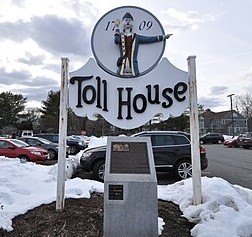
[Trivia detour:  Nestlé’s famous Toll House chocolate chip cookies aren’t named after toll booths but rather for an inn in Massachusetts where baker Ruth Wakefield came up with the recipe.  Wakefield and Nestlé struck a deal in the 1940s: her recipe printed on their bags in exchange for a lifetime supply of chocolate.  How very “Willy Wonka”, eh?]

Here is my unequivocally efficient approach to paying tolls across our many-highway’d nation. When you first get a driver’s license, you also sign up for a bank account-linked program which allows seamless paying of ALL tolls across the land – roads, bridges, tunnels, whatever – through a single readable sticker on your windshield. If you somehow don’t pay the tolls because of say, “insufficient funds”? Well sorry, your driver’s license doesn’t get renewed until you settle up at the DMV.

A $3 toll gets you through Baltimore’s Harbor Tunnel

My system is so logical it’s probably the reason I’ve never been pegged for a government job. In Colorado and elsewhere they almost have it right with the E-ZPass system – a sticker linked to a bank account. The problem is, they hold a minimum balance in a middleman (middle person?) account to guarantee payment of tolls.  I object, your honor. Why should Colorado have forty-odd dollars of my hard-earned money at all times when they can just settle up unpaid tolls whenever I renew my license?

Warning: cash-cow crossing

Then again, I have a beef with the tolls themselves, and that is, they pay for far more than the maintenance of the roads. You can’t tell me $10 per vehicle per crossing of the Golden Gate Bridge (GGB) is needed just to maintain the bridge. Here’s the jaw-dropping math for you.  112,000 cars cross the GGB every day.  That’s over forty million cars per year.  That puts the annual toll-taking at over four hundred million dollars.  $400M for bridge maintenance?  Sorry, fair traveler, you’re voluntarily lining the coffers of California (and San Francisco) every time you cross. “If I’m elected” (as we’ll hear countless times in the next two months), I’ll limit toll-taking to whatever it costs to maintain the bridge, road, or tunnel.  Not a dollar more.

On our return trip from Pennsylvania, I was amused to pass through one toll both with an actual human toll-taker. Those cordial people are still out there, collecting cash one car at a time. The woman in our instance happily returned us $19.25 on a $20.00 bill (and who’s happy to do that anymore?).

Time to bake cookies!

I was also amused… no, “gratified” is the better word; to pull into the parking lot of a South Carolina “rest area” shortly before we got home, for the use of a perfectly safe, clean, toll-free restroom on a toll-free highway. Maybe rest areas and their restrooms are the reason tolls cost more than the maintenance of the roads? Probably not. That would equate to a logical explanation for a government expenditure, which is an oxymoron.

Some content sourced from Wikipedia, “the free encyclopedia”.

Halloween’s Element of Surprise

Same ol’, same ol’… sigh…

Our grocer dedicates an entire aisle to Halloween this time of year.  It’s a pile-on of kid costumes, yard decor, plastic jack-o’-lanterns, and party supplies.  You’ll also find massive bags of assorted small candies, enough to load up your front door bowl with a single pour.  These treats are individually wrapped and brand-familiar to carefully conform to the holiday’s “safe standards”.  In other words, there’s no element of surprise in all that sugar.

When was the last time you were treated to a little something you didn’t expect?  Here’s a good example.  My wife and I traveled to Texas last weekend to visit our son.  As we settled into the hotel room we noticed a tray on the table with two bottles of water and a couple of wrapped candies.  Not so unusual.  But then we read the little card next to the tray.  Not only was the water free of charge (hotels typically stick it to you with bottled water) but the candies were handmade salted caramels from a local culinary kitchen.  Suddenly I’m thinking, “What a nice hotel!”

Perhaps you know a few other hotels with the same gesture, as Doubletree does with its chocolate-chip cookies (see Calories of Contentment for more on that).  But unlike our Texas hotel, Doubletree always goes with the chocolate-chip cookies.  Stay there enough and you come to expect them.  No surprise.

That, in a nutshell, is what’s wrong with Halloween today.  You still get the occasional trick (TP in the trees?  Shaving cream in the pumpkins?) but the “or-treat” routine has been reduced to just that – routine.  Think about a child’s anticipation for the big night.  Hours spent making sure their costume stands out in a crowd.  Miles spent covering sidewalks and front walks.  Fingers spent on doorbells and knockers, all so they can get, what… another fun-size Hershey bar?  Where-oh-where is the element of surprise?

Mom’s Halloween treats

Back in the “ol’ days” (because I’m feeling old today) a lot of front-door Halloween treats were homemade.  People handed out family-recipe popcorn balls and caramel apples.  My mother made the frosted ginger pumpkin cookies you see here.  A guy down the street dressed as Dracula and manned a little round grill in his driveway, handing out barbecued hot dog bites on toothpicks.  You never knew what you’d walk away with until you made it to the next house.

A mini pumpkin has zero HTV

Creative treats only boosted the night’s excitement back then.  I remember catching up with friends in the darkened streets to compare the collective efforts in our bags.  More importantly, the wide variety of treats upped the ante on what one candy-ranking opinion piece referred to as “HTV” or Halloween Trade Value.  After all, the most important event of the night was the post trick-or-treat trade, right?  You’d spill the contents of your pillowcase into a big pile on the floor and the back-n-forth would begin.  “I’ll give you three rolls of Smarties and a Baby Ruth for your Charleston Chew”.  Yes, friends, those were the days.

Everything changed when Halloween lost its young-and-innocent status.  Parents inspected treat bags to filter out anything remotely suspicious.  Homemade items only made it as far as the next-door neighbor’s kids or backyard Halloween parties.  Suddenly a treat didn’t pass muster if it wasn’t recognizable and wrapped.  The creative license of trick-or-treating has expired.

But hold on now.  What about the other 364 days of the year?  Can’t the element of surprise show up on one or more of those?  Can’t we still be caught off guard… in a good way?

Here’s an attempt.  At least two companies offer monthly treats by subscription and you have no idea what’s coming.  SnackCrate describes its product as “a world of snack surprises – monthly”.  TryTreats advertises “each month’s box will feature snacks from a different country in the world.  The country you’ll receive is a secret until you receive the box!”  Kind of a spin on my ol’-days Halloween nights, don’t you think?

Speaking of treats I think the dog got wind of this topic.  The other night I prepped his dinner with the usual two cups of kibble topped with a few bits of lunch meat.  He ate the bits but left the kibble.  He’s never done that before.  Maybe he’s bored with it?  I need to shake things up.  Throw in a few doggie treats.  Add the ol’ Halloween element of surprise and get his tail wagging again.