Setting Little Booklets Free

In Breaking Away, the charming little movie about bicycling and broken dreams, there’s a scene where Barbara Barrie talks with her son about her passport. She’ll never really use it, she says, but she carries her passport all the time so she can present it proudly if ever asked. With newfound hindsight, I should’ve held onto my wife’s passport as tightly as Barbara Barrie held on to hers.

If you have a passport, you know the drill.  Every ten years you have to renew the little book.  The process is cumbersome, even online, because the authorities ask for almost as much information as they did the first time around.  Everything goes into the (re)application except a copy of your birth certificate.  Three pages of personal information later, you print, date, and sign, attach an unflattering black-and-white selfie (no smiling!) and mail it in together with your expiring passport.

So far so good with the hindsight.  But as soon as I went to the post office last October I made a big boo-boo; the so-called fatal error.  The desk clerk convinced me to send the application through regular mail.  “Save your pennies”, I remember him saying. “After all, you’re sending through one government entity to another government entity.  What could possibly go wrong?”  So I saved my pennies… and that’s the last I ever saw of my wife’s passport.

Did this machine eat my wife’s passport?

Okay, maybe not ever.  Perhaps the little booklet eventually finds its way home after completing whatever misguided tour it’s been taking.  Or maybe, as our travel agent was quick to suggest, it was mangled and shredded by the sorting machine of an automated postal facility.  Or maybe #3 – the one that has me staring at the ceiling into the wee hours of the night – it’s the latest identity of the head of an international drug cartel.

Laugh or feign horror at my expense, but you can’t blame me for wandering to the worst case scenario these days.  The outside of the mailing envelope said “National Passport Processing Center” while the inside contained what obviously feels like a passport.  Easy pickings, especially for an enterprising minimum-wage postal worker.  My recurring thought: why didn’t I fork over the fifteen bucks for a secure, insured, overnight envelope?  Because I’m cheap, that’s why.  Ah hindsight, thee be a cruel character.

Where o’ where did you go, little book?

Not that you’ll ever need it (because you’re learning from me) but there’s an easy process to report a “lost or stolen” passport.  You provide as much information as you can and if you’re lucky the authorities identify and “decommission” the missing booklet, reducing it to mere paper and plastic in the hands of another.  But that still left my wife with no passport, which meant filing a new (not “re”) application.  Dig out the birth certificate, take another photo, make an in-person appointment with the local post office, and pay another application fee.  Mercifully, I watched that application get sealed into one of those secure/insured mailers before disappearing down the conveyor belt.

My first inkling of identity theft hit when our credit card company informed us of a $500 charge from a merchant in Germany, a company I didn’t recognize (and couldn’t begin to pronounce).  My second inkling hit when our travel agent tried to make charges for the trip we needed the passports for, and our other credit card was rejected.  One inkling makes you pause, but two inklings?  That pushes the big ol’ panic button.  But the god of credit cards must’ve been looking down on me favorably because the first charge was cancelled while the second charge was only denied because our travel agent had an old card on file.  In other words – to my knowledge – we’re talking random events instead of identity theft.

There’s a happy ending to this story. (Actually, it’s more like an intermission since the authorities sent me a letter saying my wife’s passport is still lost or stolen until it’s not.)  We have new passports now, which means no renewal process for another ten years.  Our compromised credit card was cancelled and replaced.  And we froze our credit in case a “new wife” out there tries to open accounts.  I’m not convinced that’ll ever happen but I’m breathing easier as the months pass by.  And rest assured, I’m keeping our little booklets secure so nobody can, you know, “break away” with them.

Behind the Wheels

Every summer when my wife and I head to the West Coast for a little sunshine and sand, the only intentional exercise we get is a walk on the beach or a dip in the ocean. So this year we decided our vacation equation needed to get behind the wheels. We skipped the flight, racked the bikes onto the back of the SUV, and drove 1,100 Utah/Arizona/Nevada desert miles to bridge the gap between Colorado and California. Now the Pacific Coast sun shines above, the Pacific Ocean waves crash below, and the bikes… well, the bikes just beckon to be ridden every day.

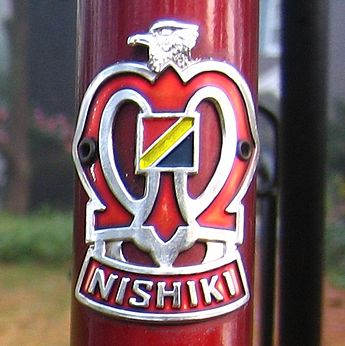
It’s already happened, as I suspected it would.  When we took our first pedal tour around this little seaside town, I saw him for a few fleeting moments.  He was a younger, thinner, blonder version of me.  He was seated confidently behind the drop handlebars of a white Nishiki Regal ten-speed, focused solely on the road in front of him.  He was dressed in Converse tennis shoes, ballcap in place of a bike helmet, white socks halfway to the knees.  When this kid wasn’t body surfing, playing basketball, or working the evening shift at McDonald’s, he was logging mile after mile on his bicycle, in search of driver’s license freedoms, even if he wasn’t old enough to have one.

My fleeting companion is the “me” of forty-five years ago.  In most respects it’s a long period of time.  In others we could be talking about last week.  Bicycling was serious thread in the fabric of my childhood.  It was a way to leave the familiar behind, to pursue esoteric wonders beyond the streets I grew up on.  Bicycling asked the questions, “Where would you like to go?” “Why?”  “And how far?”  At fifteen years old, the answers were limitless.

The Schwinn “Lemon Peeler”

My love of cycling began at a young age (and continues today in weekly spin classes at the gym).  I still remember the very first hand-me-down bike my brothers and I shared – a small blue two-wheeler with no gears, the kind you had to pedal backward to brake.  From there I graduated to a glam Schwinn Lemon Peeler Sting Ray, the all-yellow beauty with the fenders above fat tires, sporting the signature banana seat.

But my Nishiki Regal ten-speed brought bicycling to a whole new level.  I bought it myself: months of hard-earned allowance and odd-jobs cash plunked down for the biggest purchase of my young life.  The Nishiki granted me access to the more sophisticated language of bicycling; terms like “chain stay”, “saddle”, and “derailleur”, even if I couldn’t afford the Raleigh or Motobecane imports more deserving of those words.

Also, the Nishiki meant bike maintenance became a labor of love instead of a chore; a bonding afternoon with friends.  The shade of my dad’s carport colored our “workshop”, where we dismantled, fine-tuned, and reassembled over and over; my friends and I exchanging tools and advice for each other’s spare parts.  I still remember the final touch when the Nishiki was all back together: the pristine white finishing tape wrapped carefully around those drop handlebars, signifying it was finally time to ride.

I was never far behind…

One story of me and my Nishiki will always stand out.  It was all about beating the school bus home.  When the bell rang after my final class, I’d sprint to the rack, jump on my bike, and launch into the six-mile trek back to my house.  The bus meanwhile, needed several minutes to load its passengers, not to mention dozens of stops before it would’ve dropped me.  It was always a neck-and-neck battle as I’d pass the bus and then it’d pass me.  Most times I’d lose the race by mere seconds, easing up on the pedals in exhausted frustration.  But every now and then I’d get the victory.  Did some of my friends deliberately take their time exiting the bus, knowing I was in hot pursuit?  Maybe.

In 1979, a few months after I turned seventeen, a wonderful little film called Breaking Away won the Academy Award for Best Picture.  The movie centered around four friends, bicycling, and Bloomington, Indiana’s “Little 500” bike race, but it was mostly about coming of age.  Learning life’s lessons while putting the miles on the pedals.

Little wonder Breaking Away‘s lead character was named Dave.

[Note: If anything about this post resonates with you, be sure to read Steve Rushin’s Sting-Ray Afternoons.  The author’s childhood is set in Minnesota, but the growing-up memories are remarkably similar to my own.  Even the kid on the cover looks a little like me.  Steve and I could’ve been brothers.]

Some content sourced from Wikipedia, “the free encyclopedia”.