
The Oxford University Press, a publisher for more than 700 years, churns out 6,000 physical titles a year despite today’s electronic alternatives. Oxford focuses on educational materials, including dozens of dictionaries. At one time the Press had the exclusive right to print the King James Version of the Bible. I know Oxford for one other reason, however: their 21-volume illustrated collection of the works of Charles Dickens.

I’ll bet you have a collection of something yourself, where the number of items in the lot goes beyond pure necessity. We have more Christmas ornaments than any reasonably-sized tree can hold. We have more mugs than we’ll ever use for coffee or tea. My brother seems to collect cars (or maybe he really does drive them all). Whatever feeds our need to collect also fuels our stubbornness to ever let these items go.
Such is the case with my Dickens collection. When I was in my twenties I got a mailer from Oxford Press advertising “a Dickens book a month”. Must’ve been inexpensive back then, and somehow the collection spoke to me even though I’d never read a lick of Dickens. Maybe I envisioned my future dwelling with shelves of classic literature (never happened). Several decades after I purchased the last Dickens I still haven’t read a page, but the books sure look nice all standing in a row. I’ll never get rid of them.
 This talk of Dickens and collecting is just a preface to my real topic today. I’d like you to meet PixxiBook. Maybe you don’t collect books (outside of those you purchase on your e-reader) but ask yourself: what if you could have your blog posts pressed into books worthy of your coffee table? That’s what PixxiBook does, and they do it well.
PixxiBook is one of those I-wish-I’d-thought-of-it businesses. The husband and wife behind the scenes did what most startups do: create a business based on a personal need. “Tim and Sabrina” wanted to convert their travel blog into a book but realized the process takes more time and effort than most people are willing to invest. So they designed a computer program to do the work instead. Then they partnered with a printing press, aligned with WordPress and a few other blogging hosts, and a business was born.
 I’m not sure whether Tim or Sabrina gets the credit, but here’s the marketing genius of Pixxibook (and the point where you’ll stop reading this post). You can create your PixxiBooks from your blog now… and instantly preview the finished product. No charge. Just go to Pixxibook’s website, enter your blog’s URL, and watch the computer program crunch through your posts to create your books. If you like what you see, you can purchase the real thing. When my wife ordered my PixxiBooks as a 60th birthday present, they were printed and shipped so quickly I’d only written two new posts by the time I got them. Seven years of weekly posts published in three elegant volumes. Life In A Word is now a “triple-booked” anthology.

Earlier I mentioned your coffee table, and how PixxiBook is worthy of its surface. Not quite true. Some of you – especially you non-bloggers – are thinking, “Nobody’s gonna leaf through old blog posts, Dave”. Hey, I agree with you. Blog posts are read and digested, and then we move on to other things. So why pay for books?
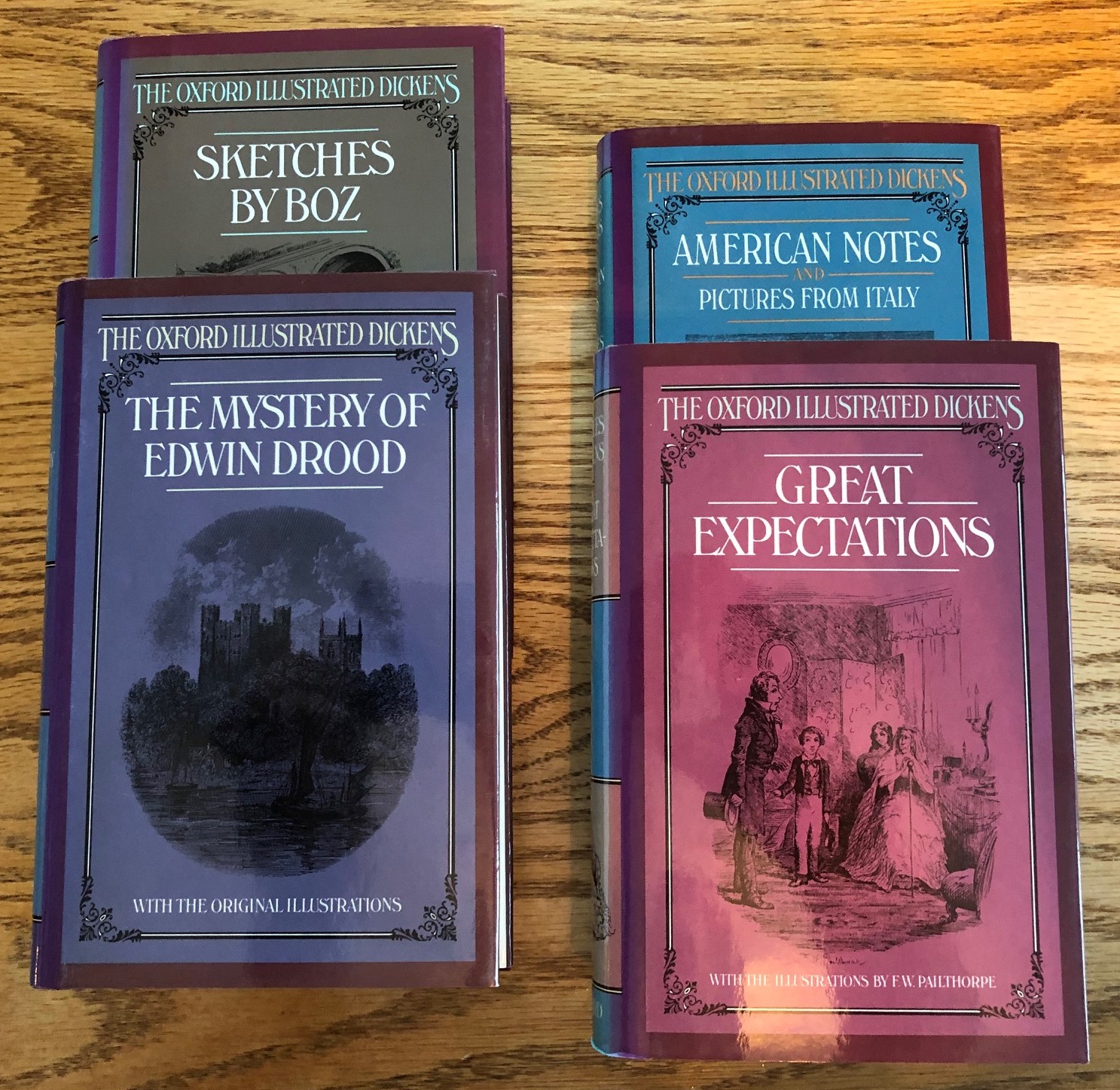 Go back to my Dickens’ collection for the answer. Those Oxford Press gems are mine. Not my wife’s, not my dog’s, not someone’s who we invite over for a dinner party. Mine. I can admire them from across the room, leaf through one every now and then, or maybe finally start to read Oliver Twist. Doesn’t really matter what I do with them. Just like my PixxiBooks. They’re a nice collectible and worthy of my shelf space. I’m never getting rid of them.
——————–
Lego Grand Piano – Update #4
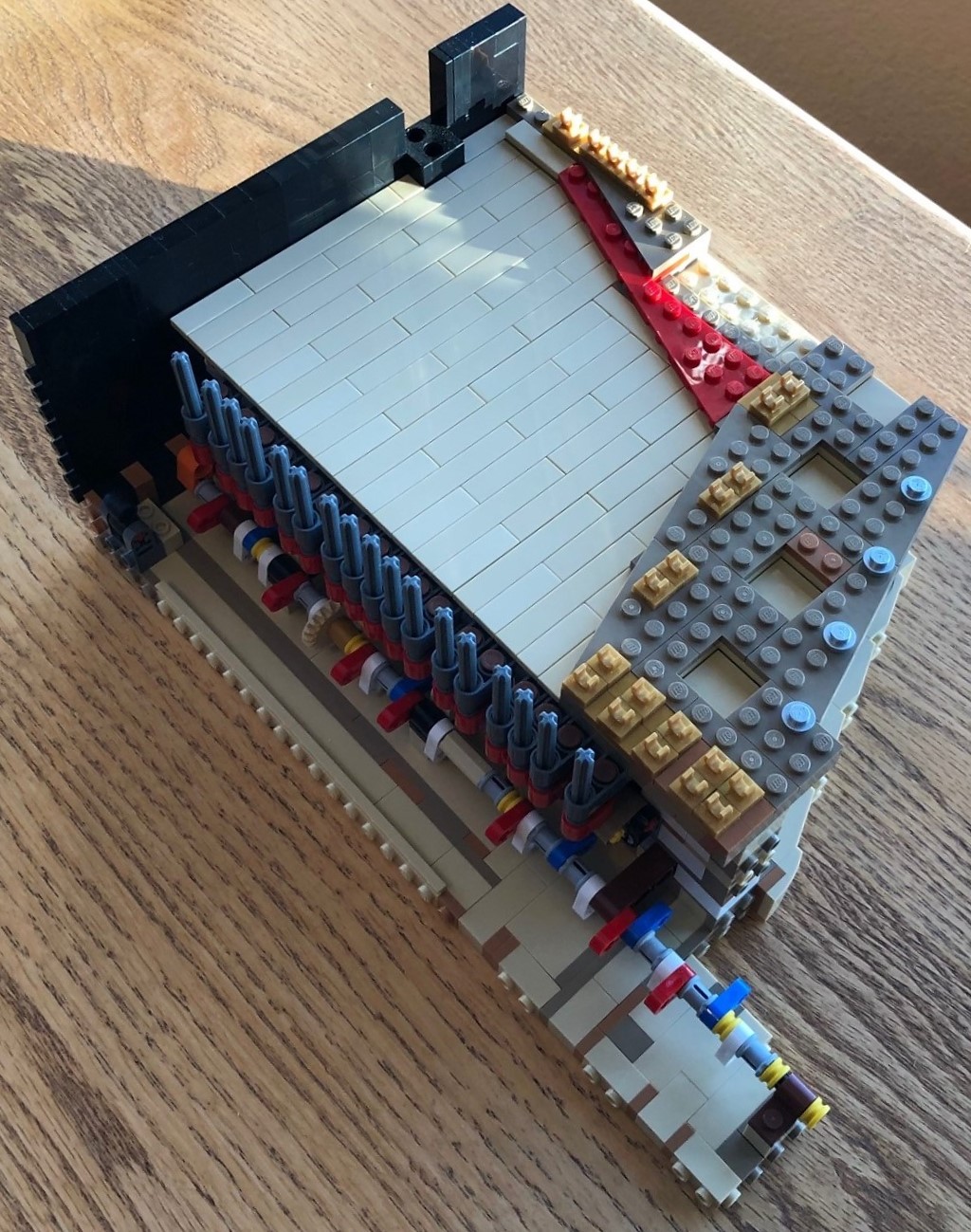 Today’s portion of the concert was legato or “smooth” (read about my hesitant warm-up in Let’s Make Music!), though I won’t go so far as to say “effortless”. The only real drama with Bag #4 – of 21 bags of pieces – was the one little piece that skitted off my desk and tried to escape the room. Caught the little bugger before he got too far.
All Bag #4 pieces assemble to a single structure: the light-colored “deck” you see here with the red pieces towards the top and the grey pieces to the right. Those little yellow grabbers will eventually secure the piano strings.
The second photo is a good look at the piano “mechanics”. This view would be as if you were sitting at the bench looking directly at the keys.
 Running Build Time: 4.2 hours. Musical accompaniment: Vivaldi’s The Four Seasons. Leftover pieces: 3
Conductor’s Notes: Mr. Instruction Manual included a couple extra pages today; pictures to show me how to “turn on” the piano by pushing a button on the battery pack. Once I did, the battery pack started flashing. Had to disconnect a cable to make it quit. Wish I knew what that was all about. Patience, maestro, patience.


 Life In A Word