
When America’s cities bred lifeless glass-and-steel skyscrapers in the 1960s, an architectural movement was born known as postmodernism. “Postmod” buildings were bold reactions to their dull and repetitive counterparts, using more distinctive materials and brighter colors. Perhaps no better example (or context) exists than in the city government offices of Portland, OR. Welcome to the Portland Building.
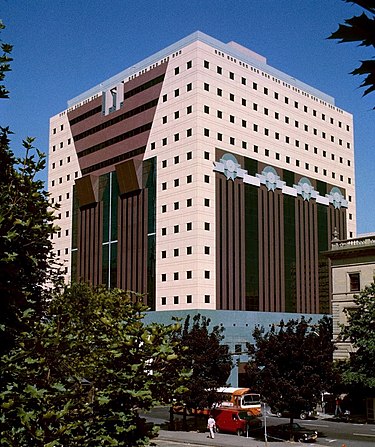
Every structure I’ve covered in my recent posts on architecture lands on the American Institute of Architects’ America’s Favorite Architecture list. Even Phillip Johnson’s Glass House – the one I have a love/hate relationship with – makes the cut. But not the Portland Building. This may be architect Michael Graves’ signature design but it’s also known as “the building we love to hate”.
Take a good look at the Portland Building photo and tell me what comes to mind. Christmas gift? Child’s transformer toy? Strawberry-chocolate cake? I suggest Pandora’s box. I studied the Portland Building in college because the construction was completed in 1982, in the third year of my degree. It was a landmark statement of postmod. It was also a disaster from the day its doors opened.

Architects don’t always consider the practical aspects of a building, and budgets sometimes compromise on essentials. As soon as the city’s employees moved in, they realized the tiny windows don’t bring in much natural light, and the lack of adequate ventilation made it something of a hot box. Of greater concern, the Portland Building ran into water infiltration and structural issues almost immediately. The building required the first of several remodels only eight years after its construction, even though the city commissioners would’ve preferred it demolished instead. Like Pandora’s box, the Portland Building seemed to be an endless font of bad news.

There’s not much to say about the Portland Building to entice you to visit (not even the rather bizarre 6.5-ton copper female poised menacingly above the entrance). The building is surrounded by blocks of nondescript skyscrapers, which makes the design all the more jaw-dropping when you see it in person. The only vote of confidence might’ve come from Portland’s mayor himself when it opened. He proclaimed the building “Portland’s Eiffel Tower… an emblem of the city which will draw the curious from around the world”.

The negative commentary is much more fun. A columnist from a local paper described the Portland Building as “something designed by a Third World dictator’s mistress’ art-student brother.” Architect Pietro Belluschi said “it’s not architecture, it’s packaging… and there are only two good things about it: it will put Portland on the map, architecturally, and it will never be repeated.” Travel + Leisure magazine called it “one of the most hated buildings in America”. Need I say more?

The Portland Building is a case study of noteworthy architecture, yes… but that may be its only upside. The difference between “attractive” and “atrocious” can be as wide as the Grand Canyon. There’s value in whether you “like” a building. There’s also a reason you won’t find many other postmodernist structures in Portland.
Now for the latest on LEGO Fallingwater…
____________________
 LEGO Fallingwater – Update #8 (Read how this project got started in Perfect Harmony)
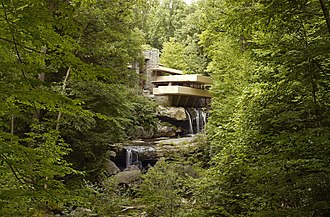
Today the off-model structure finally settled into the base, in a brisk twelve minutes of assembly time. 70 pages (or 77%, or 181 minutes) into the build, this is what we have:
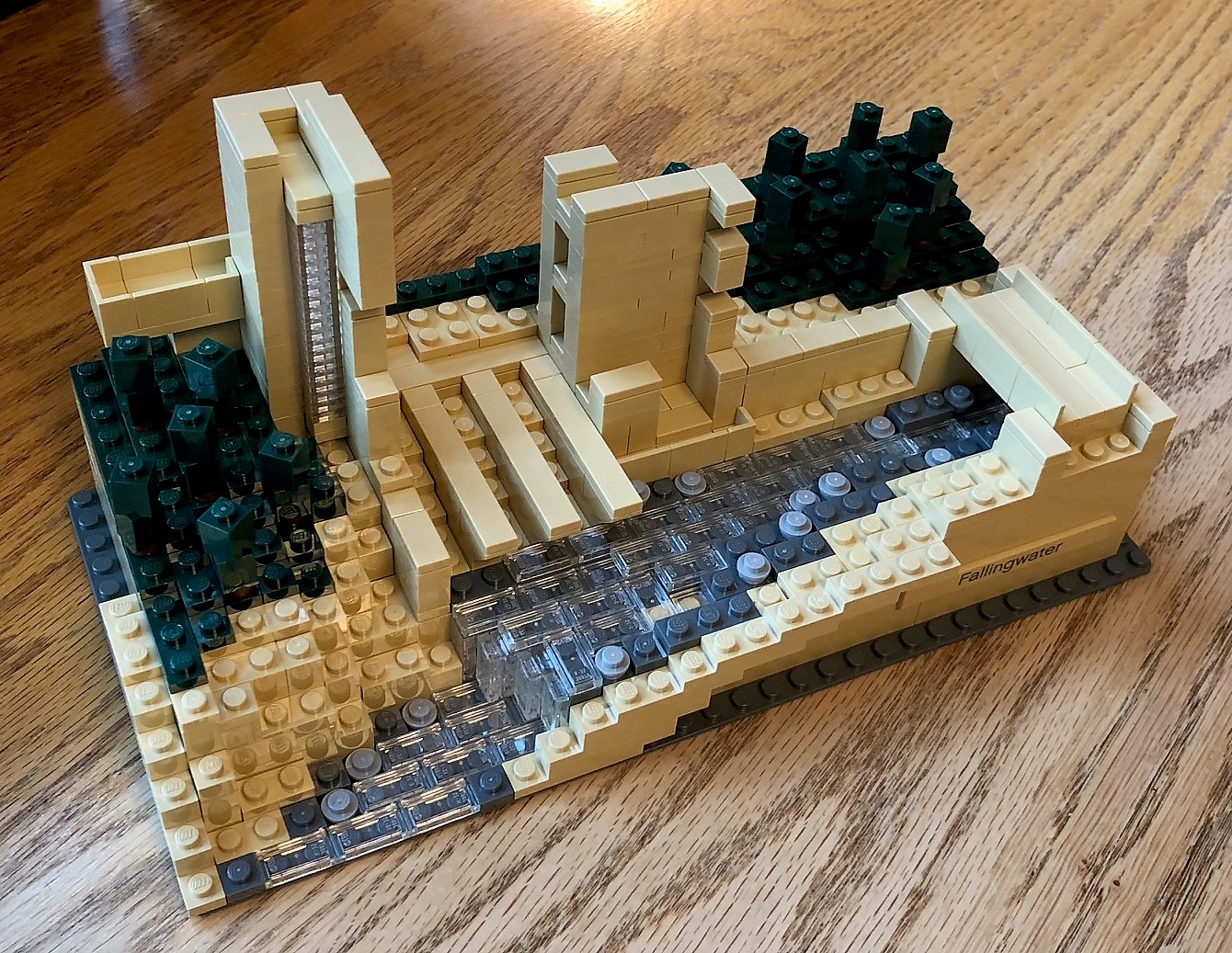 As you can see on the left, the house is starting to rise rather dramatically from the underlying landscape and water. Check out the photo above to understand the vertical glassed-in area that rises from the bottom of the house all the way to the top.
Boring as the build has been these last few weeks, I realize the underlying structure is necessary to support Fallingwater’s distinctive concrete balconies and stone chimneys. I also realize I have only two weeks remaining on this project. No wonder the piles of remaining pieces are dwindling! And rudimentary as those pieces may be, I expect the last two chapters to really bring the house into its fullest presentation.
Tune in next Thursday as construction continues! Now for another nod to Frank Lloyd Wright…
Taliesin West
Most of Wright’s life (and designs) took place in America’s Midwest, but at some point the architect visited Arizona and later created the winter getaway he described as his “desert utopia”. Taliesin West is a campus of buildings, constructed of local materials intent on blending in with the surroundings – rock, sand, redwood; even canvas for the roofs. The structures are low and horizontal, connected organically by walkways, terraces, and gardens. The furniture and decor were also designed by Wright.
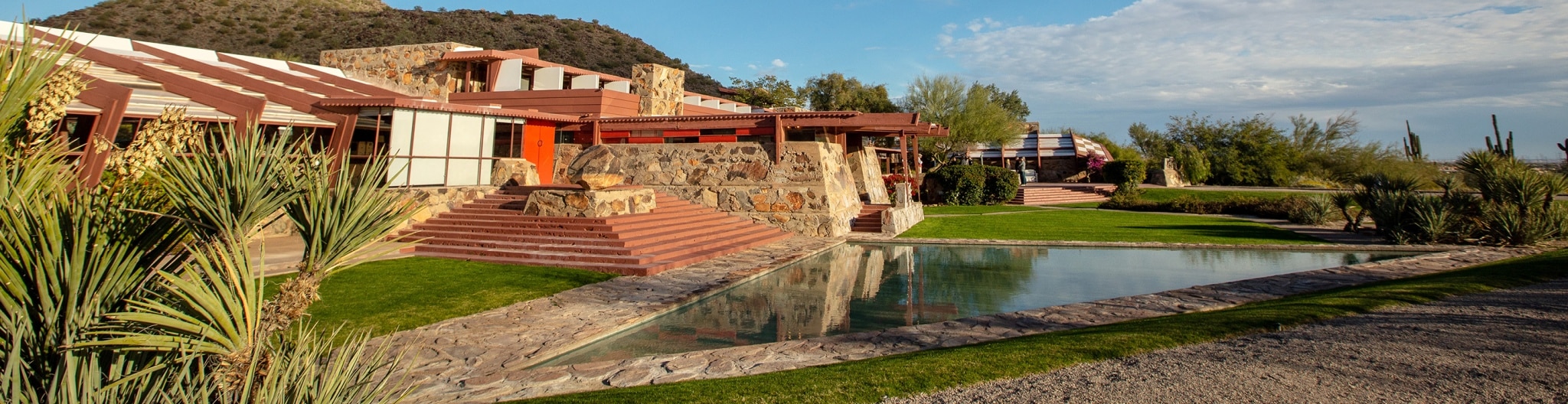
Is there a Taliesin East, you ask? Of course there is! Wright’s primary estate was built in the Wisconsin River valley on one of his favorite boyhood hills.
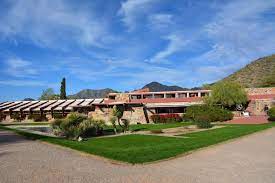 But over the years, Taliesin West has gained the most notoriety. What was once Wright’s winter residence, studio, and offices is now a National Historic Landmark and a museum to the man. Taliesin West serves as the home of the Frank Lloyd Wright Foundation and School of Architecture, and is open daily for tours.
Some content sourced from the Frank Lloyd Wright Foundation website, and Wikipedia, “the free encyclopedia”.





 Life In A Word