Games of the Travel Gods

Blondie is the trend-setting American rock band from the 1970’s. A blondie is also a rich vanilla dessert bar. But just for today, Blondie is the newspaper comic strip that, remarkably, still runs after 92 years. Blondie is the female lead and Dagwood is her food-loving husband. Which brings me to today’s topic. A Dagwood is a tall, multi-layered sandwich… the perfect image for my travel nightmare from last Friday.

It all started with a bridge.  Make that seventeen bridges.  As my wife and I were motoring mid-morning towards the Charlotte airport, en route to my niece’s wedding in Los Angeles, the Maps app colored the interstate yellow here and there.  No big deal; traffic slowed, then quickly started up again.  All of a sudden, middle of nowhere, we came to a complete stop.  Five minutes passed without movement.  Ten.  When I finally looked down at the Map app twenty minuets later, our section of the interstate was colored black.  Wait, black?  Never seen that color before.

My car is somewhere beyond the vanishing point

For future reference, Map app black means “not an option” (or better still, “you’re dead”).  Five miles of the upcoming interstate were closed off for nine days to repair all those bridges.  We didn’t “eye-spy” so much as a detour sign before we joined the monstrous backup.  When cars began leaking into the grass median and making U-turns, I sensed the presence of the travel gods, selecting a dawdling pawn for their vicious game.

Heading back the way we came, the first detour we encountered was the same idea as a hundred other drivers.  The off-ramp was backed up forever.  Instead, we continued miles further, finally exiting onto a two-lane highway to what can only be described as a drive through the backwoods of the back country of America’s uh… backside.  Tight little curvy roads sprouting driveways to nowhere, bars with bars on the windows, churches with desperate Easter pleas like “It’s not about the Bunny, it’s about the Lamb”, and one-stop-sign towns you really don’t want to stop in.  Eventually we emerged unscathed (physically, not mentally), flung back to a point on the interstate that wasn’t colored Map app black.

The travel clock ticks faster now.  When the travel gods remind you bags must be checked forty-five minutes before departure, beads of sweat start to pop.  The Dagwood sandwich gains another layer.

Our daughter (who I now refer to as “GPS Goddess”) expertly phone-guided us all the way into the Charlotte Airport hourly parking garage ($24 USD/day), where she offered a not-so-confident “you’ll make it” before hanging up.  And so we dashed, from one end of the garage to the other, down the elevator, across the lanes of buses and taxis, through the under-construction section of the terminal sidewalk, finally bursting through the sliding doors to the American Airlines self check-in kiosks to declare our victory.  Which was premature.

Just like the black of the Map app, I’ve never seen a self check-in kiosk dispense a piece of paper saying “See Counter Agent”.  Uh-oh.  Sure enough, we missed the deadline to check luggage.  Our bags were also too big to gate check or they would’ve pushed us through.  I thought we were done.

But at the ticket counter, I deflected phrases like “You can’t travel without your luggage, sir” or “We’re not finding any other flight options, sir” with “I have faith in you, American Airlines!” and “You can do this!”, and darned it they didn’t find an itinerary to get this “sir” (and his “ma’am”) to Los Angeles.  Through Boston.  Uh, sorry miss, isn’t Boston taking us in the wrong direction?  She told me not to argue.  Add another layer to the sandwich.
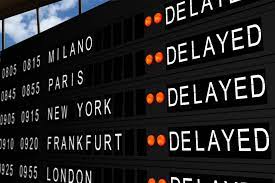
Cut to the Charlotte boarding gate.  Flight to Boston delayed.  Then again.  Then again.  In a phrase that sounds comical (just not at the time), the gate agent calmly informed passengers “the control tower can’t seem to locate our flight crew”.  But then they did, then we boarded, and suddenly we’re flying to Boston… knowing we have, oh, ten minutes to catch our connection once we land.

For the record, you can make a connecting flight in Boston in ten minutes.  You need five of those minutes to let the achingly slow passengers in front of you deplane.  You need the other five minutes to hustle down the concourse (ignoring the bathrooms that beckon for good reason), cursing the loudspeaker blasting your name with “Flight XXX to Los Angeles, this is your final call.  We’re about to close the doors”.

Which is exactly what the gate agents did, right behind us as we sprinted down the jetway, but not before shouting, “Don’t worry, your baggage has a much better chance of making the connection than you do!”  [Wrong.  Turns out only one of our bags made the flight.  The other would arrive (mercifully) the next morning, just in time to change into wrinkled formalwear before the wedding.]

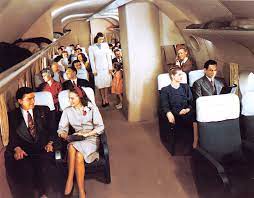
Hoping I looked more like the guy on the left

On the Boston-Los Angeles flight, sitting in the very last row (where you meet/greet every single passenger headed to the bathroom) I let out a slow breath and assessed the good and bad of our whirlwind journey.  The good: we’d make the wedding after facing a dozen trip-blocks.  The bad: the Boston-LA flight ended up having to go wide-right over Canada to avoid some nasty weather in the Midwest.  Add an hour to an already long, seriously turbulent flight.  We could’ve headed the other direction and made it to Ireland in less time.

In total, the travel gods played their game for twenty-one hours, leaving us bleary-eyed by the time we walked into the wedding venue the next afternoon.  (Hey, at least they got married.  After all, the wedding was on April Fools’ Day.  A no-show at the altar would’ve been just another layer on the sandwich.)

Here’s a little Blondie trivia.  Dagwood was the heir to the Bumstead locomotive fortune, but when he married Blondie the deal was off.  I didn’t know that.  I only knew about his namesake – the tall, multi-layered sandwich.  Otherwise I might’ve thought to take the train to Los Angeles instead.

Some content sourced from Wikipedia, “the free encyclopedia”.

First Class is now un-American

On our return flight from Denver last Saturday, the woman across the aisle coughed so many times I lost count before I had a sip of my complimentary beverage. Another woman ten rows back had a speaking voice so loud you wondered how she could hear herself think. And then there were the backpacks, so… many… backpacks. Nothing wrong with carrying your stuff on your shoulders, except when walking down the aisle and the slightest turn of the hips gives me a not-so-gentle whack as I sit in my aisle seat. Which pretty much confirmed what I already knew.  I should’ve flown First Class.

Heads up, weary travelers.  If your brand of travel abroad is a first-class seat, you’d better book one while you can.  American Airlines (AA) just announced they’re removing those premium seats in favor of several more in Business Class. Why? Because nobody wants them.  It’s not rocket science.  Airplanes need to be full (like, 97% full) or airlines don’t make money.  If a class of seat doesn’t interest a passenger the airline will find one that does.  Put the champagne on ice, flight attendants.

Even if dropping the very best seats makes good business sense, it doesn’t mean I’m happy about it.  I’ve never deliberately flown First Class but I still get to walk down their aisle on the way to the cozier confines of Cattle Economy.  As I do, I steal a glance to the left and to the right.  What are they wearing?  What are they drinking?  Most importantly, what are they talking about?  After all, these are America’s movers and shakers.

Except they’re not anymore, now are they?  Tell me who (or “what”) you see the next time you pass through First Class.  The domain of the rich and famous is now diluted with passengers who simply rack up enough frequent flyer miles.  Thus, next to the woman in the stylish suit with the glass of Pinot Noir, wrapping her important business call, you have the young tattooed character in tank top, shorts, and sandals, slurping a Rockstar energy drink while obliterating his latest Call of Duty foe.  No wonder these seats aren’t selling anymore.

My kids don’t believe me but there was an era when people dressed up to travel.  When I was young I wore a suit and tie on airplanes, as spiffy as a Sunday morning in church (although church attire has changed too, sigh…).  Instead of a palm-sized bag of peanuts in Economy, you still got something of a meal.  Flying was, back then, a classy step above other forms of travel.

Just because I can – and knowing American’s about to crash the party (poor choice of words) – I decided to book a first-class ticket to London for Thanksgiving.  Get me to jolly ol’ England the day before (so I can overcome jet lag before the big meal) and have me back in my own bed by Sunday night.  I know, I know, it’s practically Halloween already but guess what?  There are still plenty of first-class seats for my un-American Thanksgiving. They’re just a little – ahem – pricey.

My least expensive option on AA is $6,054, which includes two stops, choice of seat (but isn’t every first-class seat equally wonderful?), free baggage, and a full refund if I have second thoughts (which I will).  My most expensive option is $12,966, with identical terms as the first option except this ticket is nonrefundable.  Huh?  Whatever.  Even the least expensive option is more than my annual grocery bill.  Let’s not book this trip after all.  Let’s have turkey at home instead.

You can see where this is headed.  Next thing you know AA will get rid of First Class on all of its flights.  Then passengers will lose interest in Business Class so that’ll have to go too.  Premium Economy will be the last to fold, until all we’re left with is a planeful of Cattle Economy, every row and every seat.  But given the attire and attitudes of passengers these days, isn’t Economy a perfectly-fitting shoe?  As a friend described it, air travel these days is effectively a Greyhound bus with a couple of wings.

I just ran another itinerary on the AA website.  I can visit my son in Dallas over Thanksgiving, flying First Class, for just over $1,000 roundtrip.  That’s a bargain compared to London and I can get my turkey from a smoker (delicious!)  Maybe I’ll splurge.  After all, there may come a day when my grandchildren ask me, “What’s ‘First Class’?”

Some content sourced from the Fox Business article, “American Airlines ditching first class…“.

It’s All in the Cards

Back in the Boy Scouts, my troop-mates and I memorized statements designed to make us better young men. The Boy Scout motto was, “Be Prepared”. The Scout slogan: “Do a Good Turn Daily” (help others). The Scout oath – several sentences stated with a raised right hand (fingers forming the Scout sign) – included obedience to the twelve points of the Scout law. Recently I’ve been thinking about Point #2 of the Scout law, Loyalty; showing care for family, friends, and country.  But what about care for merchants?

Customer loyalty programs – those structured marketing ploys designed to tempt continued shopping at particular businesses – are standard retail procedure these days.  The use of plastic and punch cards, account numbers, or scanned apps is as common as pulling out your Visa.  I get suspicious when a merchant doesn’t have a loyalty program.  It’s all about the points, and the allure of discounts or freebies through accumulated spending.

American Airlines, credited with starting the first full-scale customer loyalty program in modern times (1981), had no idea its “frequent fliers” would become the trendsetters for countless programs to follow.  But the drive for customer loyalty started way before AA.  Anyone who remembers pasting S&H Green Stamps into collection books, clipping Betty Crocker coupons straight from the product box, fishing prizes from Cracker Jack caramel corn, or joining the Columbia House Record Club (“8 CD’s for a penny!”) has dipped their toe into the customer loyalty pool before.

I took a quick inventory of my own customer loyalty and the numbers surprised me.  I carry eight cards in my car.  I have another eleven apps on my phone and another ten on-line accounts.  That’s 29 unique programs, and over 30 if I include the couple of credit cards where my swipes eventually equal cash back.  For someone who rarely shops on impulse, that’s more attention to spending than I’d care to admit.

If I did a little spring cleaning, I’d likely reduce my loyalty programs by one-third.  Many sit gathering dust because I haven’t used the merchant or service in years.  Others accumulate points at a snail’s pace.  Fill my inbox with special sales alerts or saturate my voice mails with pleas to “buy now!”; it won’t matter.  I purchase on my own terms.

Here are two recent loyalty experiences; the reasons I chose this topic today.  Last September we took a weekend trip to Aspen, settling for a Westin hotel in nearby Snowmass (Aspen is over-the-top expensive to us commoners).  When I went to Westin’s website for the booking, I discovered their loyalty program (Starwood) was merging with Marriott Rewards (now Marriott Bonvoy).  Hallelujah – my Aspen getaway gets me points! But not so fast.  Logging into Marriott Rewards, the home page alerted me to the fact the program merge was still in progress, and a Westin stay might not result in Marriott points.  Long story short, I called the hotel, spoke to the front desk, and had them book the reservation for me instead.  Yep, you can still do it the old-fashioned way.  And you still get points.

My other recent loyalty experience involved Nicholas Mosse Pottery (Kilkenny, Ireland).  Mosse makes beautiful handmade plates and bowls and the like, and we’ve been collecting a few pieces at a time since visiting Ireland a few years ago.  Points for me (ha) for joining the Mosse loyalty program from the get-go.  Just this week they alerted me me to my quietly-amassed rewards.  I then purchased a $70 plate for virtually nothing.

My Mosse experience is the perfect example of my casual approach to customer loyalty.  I don’t keep track of points until they equate to something significant.  Sure, I favor certain products and services, but I’d still favor Marriott or Starbucks or Costco without their loyalty programs.  For someone who tracks every penny, there’s something very satisfying in the surprise of unexpected discounts.  That’s how it works best for me.

Here’s my advice.  Don’t let customer loyalty programs drive your spending habits.  If you do, the merchant “wins”, because you’re likely spending more along the way than whatever discount or freebie you end up getting.  Loyalty = showing care; yes, but with retail that should only mean preferring one store over another.  Despite what they’d have you believe, it’s not all in the cards.

Some content sourced from Wikipedia, “the free encyclopedia”, and from the Wall Street Journal article, “Inside the Marriott-Starwood Loyalty Program Turbulence”.

Bad Check

Last week I flew to Indiana for a conference, connecting briefly through Chicago O’Hare.  After finally touching down and exiting the tiny plane, I noticed a cluster of passengers right there in the jet bridge, waiting for luggage to be brought up the stairs.  I headed to the baggage claim area instead, where the rest of us watched the carousel lumber round and round.  The minutes passed interminably as the belt continued its relentless rotation; passengers leaving one-by-one with their bags.  Suddenly everything came to a grinding halt, and the carousel let out its big, mechanical sigh.  I found myself in the quiet and solitary confinement of an empty claim area.  My luggage?  Nowhere to be found.

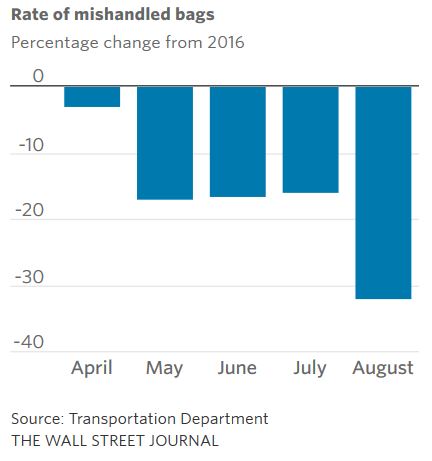
The airlines advertise a ton of performance statistics, but here’s a new one on me: rate of mishandled bags.  For every passenger who files a lost-luggage report, the carrier gets a ding.  That ding is well-deserved, representing the stress of lost luggage, the hassle of filing a report in one of those stuffy little offices, and the inevitable delay reuniting with your bag.  Not that it happens very often.  According to the following chart – part of a Wall Street Journal article – American Airlines reports a mere 2.8 incidents of lost luggage per 1,000 passengers.  But hold the phone, folks – there’s more to the losing than meets the eye.  Turns out American (and most other airlines) avoid a lost-luggage ding if they alert you to the “mishandled” bag.  Today’s smart tags make it easy to track the bag (even if it’s heading in a different direction than you are).  So that bit of information – proactively communicated in a text or email – avoids a bad stat.  And that’s why the chart below shows a dramatic improvement in August.  American Airlines started its proactive notification process the month prior.

I don’t choose my airline according to “rate of mishandled bags” (or any other statistic for that matter – it’s all about the ticket price), but I have observed the adjusted behavior of others.  Carry-on baggage is all the rage now, in brand-new shapes and sizes.  Look around next time you board a plane and count how many passengers violate the airline’s carry-on policy.  The person with the roll-y suitcase and oversized backpack is probably one bag over the limit.  The person with the valise slightly larger than the space “under the seat in front of you” probably should’ve checked it.  But chances are the flight attendant won’t make a fuss, at the risk of negative publicity.

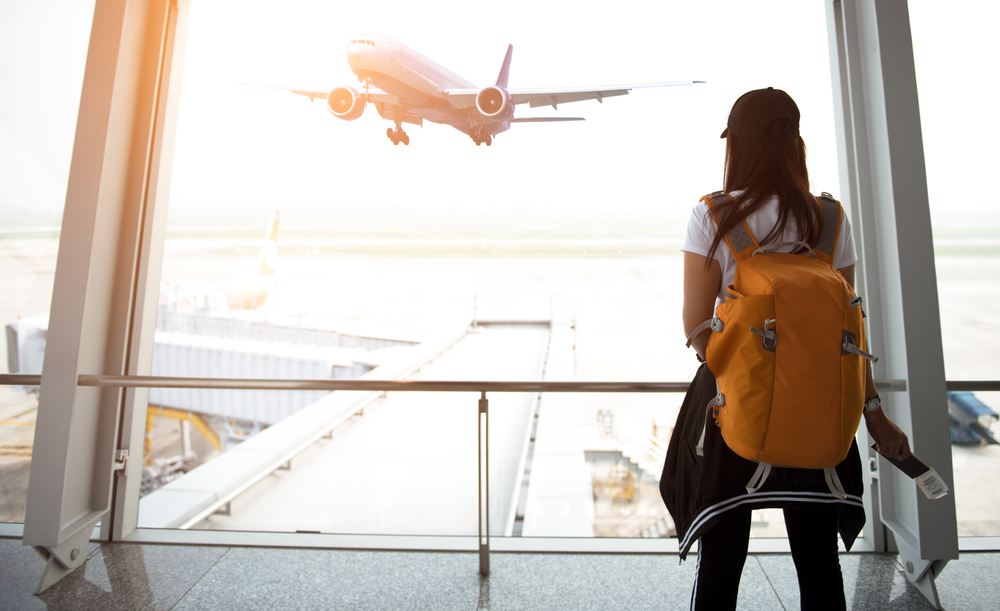
Speaking of backpacks, the oversized versions seem to be all the rage these days; far surpassing the number of “wheelies” and “over-the-shoulder’s” so common with past generations.  It’s like everyone’s back in high school again.

Here’s another trend.  Passengers carry-on instead of checking, knowing there isn’t enough room in the overhead bins.  Once the bins are full, they surrender their bags at the end of the jet bridge instead, for attendants to tromp down the stairs and into the belly of the plane.  After landing, the process works in reverse (thus the cluster of passengers on my recent flight).  But credit to these travel warriors; they avoid $50 of baggage fees, as well as smashing bags into overhead bins (which always brings to mind square pegs and round holes).

One more trend.  Airlines are shifting the baggage-check process into the hands of travelers.  At self-check-in, the kiosk now dispenses a bag tag along with the boarding pass.  You attach the tag to the bag.  You haul the bag to the belt, where – in some cases – you place the bag on the belt.  Congratulations – you’re an airline employee working free of charge.  You might even be helping the airline avoid a mishandled bag stat.

My own lost-luggage story had a happier-than-expected ending.  At the baggage service office, the attendant took my tag into the back, reappearing moments later with my bag.  Turns out my suitcase flew on another plane, arriving at my same destination before I did (explain that bit of magic, please).  Crisis averted, but instead I lost my excuse to go purchase a suitcase of new clothes.