Triple Booked

The Oxford University Press, a publisher for more than 700 years, churns out 6,000 physical titles a year despite today’s electronic alternatives. Oxford focuses on educational materials, including dozens of dictionaries. At one time the Press had the exclusive right to print the King James Version of the Bible. I know Oxford for one other reason, however: their 21-volume illustrated collection of the works of Charles Dickens.


I’ll bet you have a collection of something yourself, where the number of items in the lot goes beyond pure necessity. We have more Christmas ornaments than any reasonably-sized tree can hold. We have more mugs than we’ll ever use for coffee or tea. My brother seems to collect cars (or maybe he really does drive them all). Whatever feeds our need to collect also fuels our stubbornness to ever let these items go.

Such is the case with my Dickens collection. When I was in my twenties I got a mailer from Oxford Press advertising “a Dickens book a month”.  Must’ve been inexpensive back then, and somehow the collection spoke to me even though I’d never read a lick of Dickens.  Maybe I envisioned my future dwelling with shelves of classic literature (never happened). Several decades after I purchased the last Dickens I still haven’t read a page, but the books sure look nice all standing in a row.  I’ll never get rid of them.

This talk of Dickens and collecting is just a preface to my real topic today.  I’d like you to meet PixxiBook.  Maybe you don’t collect books (outside of those you purchase on your e-reader) but ask yourself: what if you could have your blog posts pressed into books worthy of your coffee table?  That’s what PixxiBook does, and they do it well.

PixxiBook is one of those I-wish-I’d-thought-of-it businesses.  The husband and wife behind the scenes did what most startups do: create a business based on a personal need.  “Tim and Sabrina” wanted to convert their travel blog into a book but realized the process takes more time and effort than most people are willing to invest.  So they designed a computer program to do the work instead.  Then they partnered with a printing press, aligned with WordPress and a few other blogging hosts, and a business was born.

I’m not sure whether Tim or Sabrina gets the credit, but here’s the marketing genius of Pixxibook (and the point where you’ll stop reading this post).  You can create your PixxiBooks from your blog now… and instantly preview the finished product.  No charge.  Just go to Pixxibook’s website, enter your blog’s URL, and watch the computer program crunch through your posts to create your books.  If you like what you see, you can purchase the real thing.  When my wife ordered my PixxiBooks as a 60th birthday present, they were printed and shipped so quickly I’d only written two new posts by the time I got them.  Seven years of weekly posts published in three elegant volumes.  Life In A Word is now a “triple-booked” anthology.

I wrote this one three years ago.

Earlier I mentioned your coffee table, and how PixxiBook is worthy of its surface.  Not quite true.  Some of you – especially you non-bloggers – are thinking, “Nobody’s gonna leaf through old blog posts, Dave”.  Hey, I agree with you.  Blog posts are read and digested, and then we move on to other things.  So why pay for books?
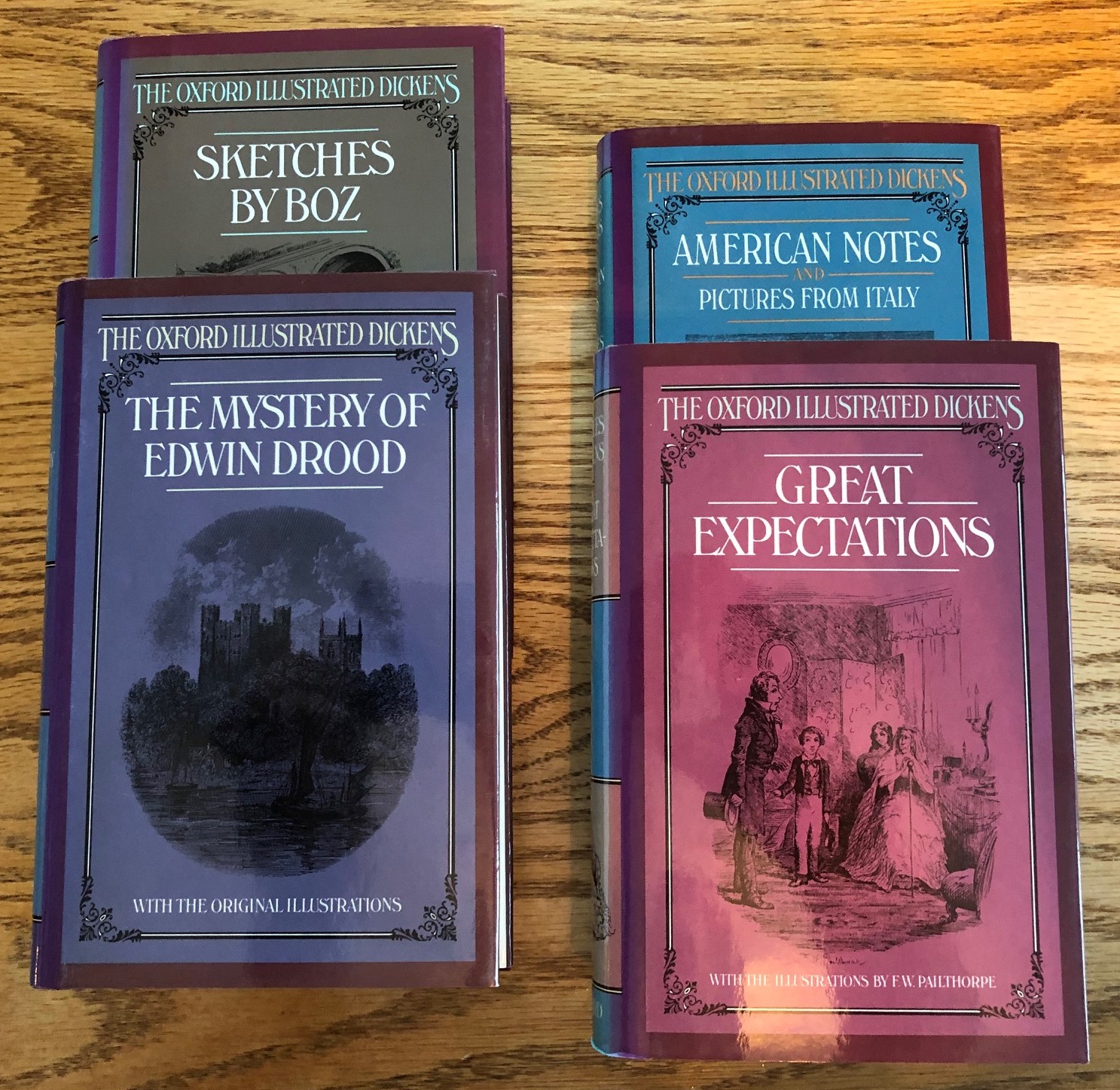
Go back to my Dickens’ collection for the answer.  Those Oxford Press gems are mine.  Not my wife’s, not my dog’s, not someone’s who we invite over for a dinner party.  Mine.  I can admire them from across the room, leaf through one every now and then, or maybe finally start to read Oliver Twist.  Doesn’t really matter what I do with them.  Just like my PixxiBooks.  They’re a nice collectible and worthy of my shelf space.  I’m never getting rid of them.

——————–

Lego Grand Piano – Update #4
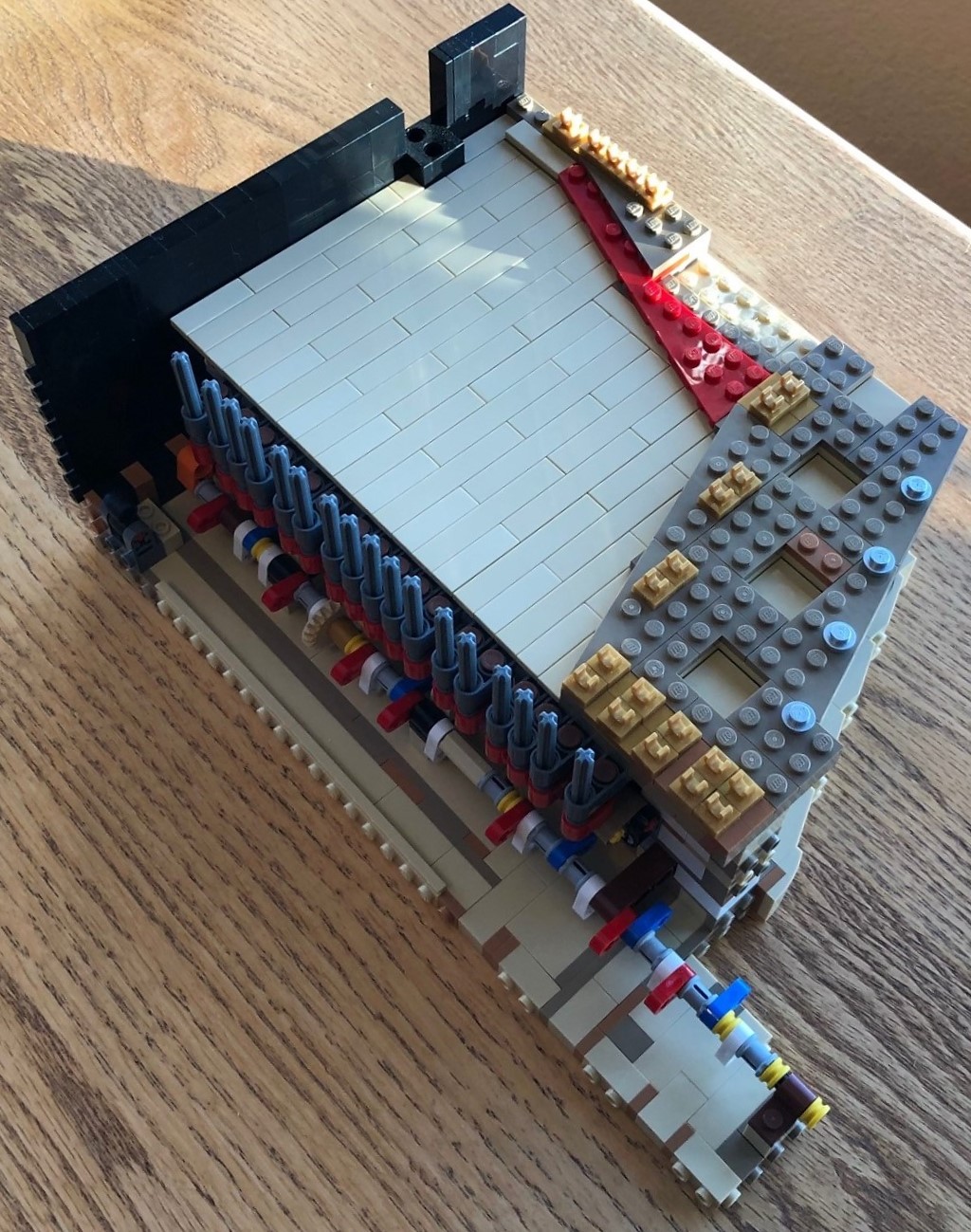
Today’s portion of the concert was legato or “smooth” (read about my hesitant warm-up in Let’s Make Music!), though I won’t go so far as to say “effortless”.  The only real drama with Bag #4 – of 21 bags of pieces – was the one little piece that skitted off my desk and tried to escape the room.  Caught the little bugger before he got too far.

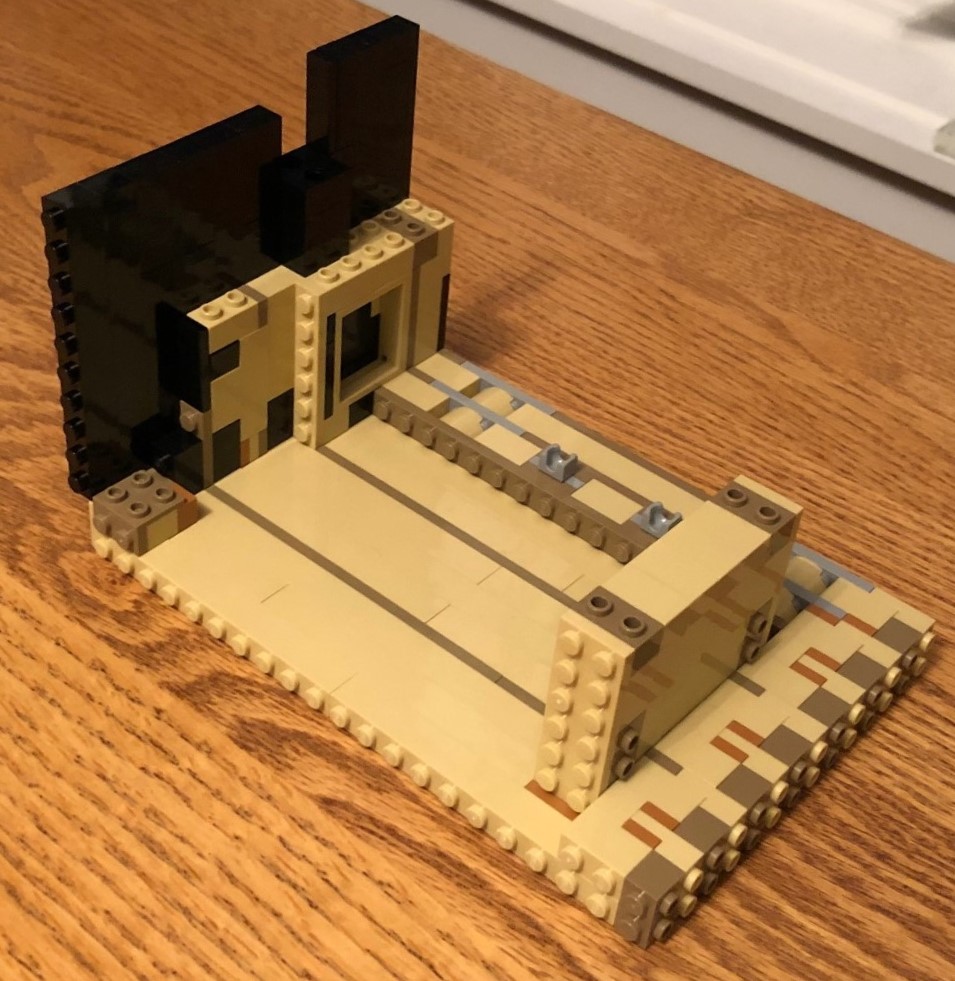
All Bag #4 pieces assemble to a single structure: the light-colored “deck” you see here with the red pieces towards the top and the grey pieces to the right.  Those little yellow grabbers will eventually secure the piano strings.

The second photo is a good look at the piano “mechanics”.  This view would be as if you were sitting at the bench looking directly at the keys.

Running Build Time: 4.2 hours.  Musical accompaniment: Vivaldi’s The Four Seasons. Leftover pieces: 3

Conductor’s Notes: Mr. Instruction Manual included a couple extra pages today; pictures to show me how to “turn on” the piano by pushing a button on the battery pack.  Once I did, the battery pack started flashing.  Had to disconnect a cable to make it quit.  Wish I knew what that was all about.  Patience, maestro, patience.

Just Off the Podium

This time of year I find myself doing a little cyber “spring cleaning”. I know, it’s not spring yet and I could simply busy an alcohol wipe on the keyboard or fog the monitor with Windex, but I’m talking about electronic purging here: files, emails, photos, and the like.  I even reset passwords.  When I’m done giving the Delete button a workout I pick up my laptop and hope for something more light-as-a-feather.  Nope, but at least my digital house is in order for another year.  Just like my blog.

The Winter Olympics start tomorrow, did’ja know? (You didn’t? Shame on you! Pay more attention!)  With the fifteen-hour time difference to Colorado I’ll be lucky to catch ten percent of the action, but I still seek out the good stuff.  Downhill skiing and figure skating are my favorites.  So much skill and grace there, with the occasional feel-good story thrown in for the heartstrings.  But skill and grace only matter if they amount to medals, right? We hang our hats on gold or silver triumphs, even bronze. As for the poor lass or lad in fourth place? Hardly a mention. Fourth place is swept harshly into the performance dustpan, to be dumped on a heap of lesser statistics seldom referenced again. Fourth place can be a mere hundredth of something from the medals podium. Inches. Seconds. Points.

“fodder”

Fourth place at the Olympics is an apt way to describe a lot of topics I consider for my weekly blog posts.  You see, part of my writing madness method is to cull interesting bits from my daily newsfeed; fodder for future posts.  I store these bits in an electronic folder and then pull back the curtain when I need a topic.  But not just any topic, loyal readers.  Heavens no, my topics don’t make the medal stand unless they successfully sift through five filters:

  1. Is the topic substantial enough for an entire post?
  2. Is the topic somewhat off the beaten path of “breaking news”?
  3. Is the topic worth a little more research (or as I like to call it, “continuing education”)?
  4. Is the topic an easy target for grins and giggles?
  5. Can I weave a personal memory or two into the topic’s fabric?

Take away just one filter and the topic isn’t a winner.  No medal… er, post for you, little news story.  Instead, the topic sits idle in the folder gathering cyber-dust until I decide it’s never going to make the cut.  Then I “Delete”.  Before I do this time, however, I thought you’d enjoy a smattering of the near misses; the fourth-place finishes if you will.  Here are ten interesting-but-not-quite-good-enough topics sitting just off the podium:

  • Asparagus.  A recipe for the healthy, non-cruciferous vegetable was published smack dab in the middle of an official Belgian law database, side-by-side with national legislation and royal decrees.  Food for thought?
  • Mercury (the planet).  A European-Japanese space probe passed within 124 miles of the Mercury’s 800°F surface on its seven-year mission, collecting images and sending them back to Earth.  Now that’s what I call “hot shots”.
  • Qantas.  Last May the airline offered a “flight to nowhere” for travel-starved Australians wanting a better view of the late-month supermoon.  Tickets ran upwards of $1,000 USD and sold out immediately.  Travel-starved indeed.
  • Cannabis.  If you live in Ontario, Canada, Uber Eats will be happy to deliver an order of recreational cannabis to your front door.  I’m sure this new service makes the country’s rampant illegal pot producers very happy.
  • Robots.  The world’s first living robots (or “xenobots”), each less than a millimeter wide, can now reproduce.  They could already move about, work together, and self-heal before this more disturbing evolution.  In a word, YIKES!
  • Style.  Billionaire heiress Ivy Getty got married last November at San Francisco’s City Hall in a wedding dress covered with mirror shards.  She referred to her dress as “… just like everything I could’ve dreamed of and more.” Really?  I don’t think I want to meet Ivy Getty.
  • Taco Bell.  The Bell now offers a monthly taco subscription for those who join their rewards program.  $10 gets you a free taco every day of the month.  The Bell saw a 20% increase in rewards program membership when they began offering the subscription.  Confirmed: we Americans are hopelessly addicted to fast food.
  • Bees.  May 20th is World Bee Day.  You can find a lot of interesting trivia about bees on the Web.  They communicate by dancing.  They use tools.  They get mad if they haven’t eaten in a while.  The more you learn about bees, the more you realize they’ll probably take over the world one day.
  • Contact Lenses.  A company has designed the first “smart” contact lens, capable of delivering real-time information to the eye.  The lens connects to your smartphone and generates an image similar to what you’d see on your screen.  So the next time you see someone with “eyes glazed over”, don’t be so sure they’re falling asleep.
  • Millennium Tower – A 58-story building in downtown San Francisco has been leaning to the northwest at a rate of 3 inches per year, for a total of 24 inches so far.  If I were one of the owners of the building’s 419 luxury apartments I wouldn’t be sleeping so well.  I say get ahold of engineers in Pisa, Italy.  Their world-famous leaning tower is predicted to remain standing for another 200 years.

Maybe one of these topics grabs your attention and you want to learn more.  Go for it.  In fact, write a blog post about it.  I’ll read your version of the story and maybe say, “Crud; missed a good one there.”  But probably not, because I didn’t consider the topic podium-worthy.  Now if you’ll excuse me, I’m off to watch the Olympics (fifteen hours after the fact).  I don’t want to miss those medal ceremonies.

——————–

Lego Grand Piano – Update #3

Today’s portion of the concert was difficult (read about my hesitant warm-up in Let’s Make Music!).  Bag #3 – of 21 bags of pieces – was smaller than the first two so I figured this step would go quickly.  Wrong.  Bag #3 contained tiny, tiny pieces and I don’t have nimble, nimble fingers!

The picture here is the “before Bag #3” while the picture below is the “after”. Notice the difference? There’s now a series of posts running upper left to lower right like a fence.  I can make the posts move up and down with my finger.  Inner workings of the piano keys!

Running Build Time: 3.3 hours.  Musical accompaniment: Mozart’s Clarinet Concerto in A. Leftover pieces: 2

Conductor’s Notes: I’m starting to get comfortable with leftover pieces.  I’ve ended up with a few after each bag so far.  Doesn’t mean I don’t go back and check my work to be sure I didn’t overlook a step.  Also, I couldn’t find a piece today.  I thought Lego forgot to put it in the box.  Took me three scourings of my Bag #3 pile of pieces (and a little sweat) before I realized it was sitting there right in front of me.  Utterly unnerving.

Beyond Words

Life has moments of joyful happiness, overwhelming sadness, breathtaking awe, and quiet gratitude. Also moments – a select few – where these emotions come together as a powerful force of transcendence. This was a week with one of those moments. As I reflect (and a gaze at the Pacific Ocean is the perfect way to do so), I realize the moment deserves my undivided attention. My complete focus. So I pause, lift my hands from the keyboard, and simply say…….. we’ll chat again next week.

I Just Turned 59.99589!

It may interest you to know there are real Memory Lanes in the bedroom communities of every American state. Look them up on Google Maps (I stopped searching after finding dozens.) Must be fun to be one of those residents and see the look on someone’s face when you give them your address.  No, I don’t know anyone who lives on Memory Lane, but me, I kind of do; one with no stripes or sidewalks. Mine is paved with sixty years of material, some of it worth a visit; other items best left alone.  All of this “Dave” stuff is somewhere between my ears and today it’s time for a big – okay, little – reveal.

59.99589.  If you’re reading this post the day it was published, I’ve just revealed my age to ridiculous exactness.  The 0.99589 amounts to 363 out of the past 365 days.  You could say I’m still in my late fifties (very late, Dave), but more accurately you’ll say I’m either sixty on the dot or a mere forty-eight hours removed from it.  Do I feel old now?  Of course not!  Er, until I calculate my age in months.  I’ve spent 720 of those bad boys.  For Pete’s sake, what have I been doing all my life?

Well, let me answer that question.  In fact, let’s make it a game because then you get to play too.  Think about the last sixty years (or in your case, however many decades you’ve been around).  Now let’s create a list – off the top of our graying heads – of up to ten significant world events in the timeframe of our years.  No, no, no; not the events you learned in the history books, but the ones with lasting, maybe even personal impact.  Here are mine, in no particular order:

  1. 9/11 (2001)
  2. COVID-19 (2020-???)
  3. San Francisco Bay Area earthquake (1989)
  4. Space Shuttle Challenger (1986)
  5. America’s war in Afghanistan (2001-2021)
  6. Apollo rockets (1961-1972)
  7. Colorado’s Black Forest wildfire (2013)

I don’t have enough time to explain my choices (after all, I only have forty-eight hours until I”m a “sexy-genarian”) but trust me; these seven came to mind in a heartbeat.  Now arrange them in chronological order to paint an interesting picture.  My childhood was inspired by Apollo rocket launches (courtesy of black-and-white TV’s); my young adult years by two disasters – the Challenger explosion and the devastating earthquake in the San Francisco Bay Area; and my adult years by big-bad-ticket items like terrorism, war, wildfire, and a global pandemic.  Sadly, not one of these events makes anyone’s “good list” (am I a product of headline news or what?). But that’s not to say my sixty years have been altogether bad.  Quite the contrary.

Now, here’s where the game gets more interesting.  Make a similar list as above, but include up to ten significant events of a personal nature.  These are the formative moments, where you’re not the same person after they happened as you were before.  Leave off relationships (including marriage) and having kids, because most of us have or will have those in common.  Let’s see now.  My eyes are closed, I’m in a thoughtful trance, and I’m typing, all at the same time (a man of many talents, no?) Okay, pencils down.  Here’s my “formative” list, also in no particular order:

  1. Corrective eye surgery (1977)
  2. I-survived-but-the-car-didn’t rollover (1984)
  3. Immersive year of studies in Rome, Italy (1982-83)
  4. Traded California’s coast for Colorado’s Rockies (1993)
  5. First job <McDonald’s> (1975)
  6. All things Boy Scouts (1973-1978)
  7. Architecture career ends, tech career begins (1993)
  8. All things basketball (1974-1979)

Again, I’d love to wax on about my choices but I’d turn 61 before I’d be done typing.  Instead, sort my formatives from earliest to most recent.  Notice anything?  All happened between the ages of 10 and 30.  My “clay was molded’ in a mere one-third of my lifetime.  Not really true, of course.  Ages 1-10 – none of us remember much of those.  But now I hear you saying, “So Dave, what have you been doing for the last thirty years?”  Well, you know the answer already  The same thing as most every other red-blooded American male.  Raising a family.  Making a living.  Loving my wife.  Loving my life.

I predict my sixties will be my greatest decade; just you wait and see.  I’ll witness another significant world event or two (maybe even a “good one”!)  I’ll break my thirty-year run of nothing and come up with at least one more formative experience.  I’ll write another 520 blog posts (and you’ll block a chunk of your calendar to read them).  But let’s be real; this is just musings about my sixties.  I’m only in my fifties. My account still shows a credit of forty-eight hours.

——————–

Lego Grand Piano – Update #2

The concert is underway! (read about my hesitant warm-up in the post Let’s Make Music!).  Bag #2 – of 21 bags of pieces – started out innocently enough, with big pieces and easy assembly.  My maestro-confidence overfloweth.

Suddenly things got v-e-r-y complicated in Mr. Instruction Manual.  Tiny, tiny pieces!  Mechanical components!  Cables!  Batteries!  Here’s last week’s build, and then below, this week’s additions for comparison.  Enlarge the second photo for a better look at the colorful, scary-looking “spindle”, running top left to bottom right.  I have no idea what it’s for but it connects to the gray/white motor (at least I think it’s a motor) just behind it. I count forty-five little Legos on the spindle, each required to be positioned exactly as you see them.  Almost walked off the stage when I was done with that step.

Running build time: 2.5 hours.  Musical accompaniment: Beethoven’s Piano Concerto No. 5 “Emperor” (three times through!)  Leftover pieces: 5 (Conductor’s note: Last week I only had 1 leftover piece.  5 = concern.  I need to double-check this week’s work before moving forward.  Safe to say you can’t go back and “repair” after the fact).

A Tale of Unwell Words

The symptoms started ten days ago. I was lying in bed, beginning Chapter 42 of Ruta Sepetys’ captivating WWII novel Between Shades of Gray when suddenly, a lower-case “a” popped out through my e-reader’s glass and just sat there on the surface. I casually brushed it away. Not two pages later, an entire “the” surfaced and slid sickeningly down the screen. I flicked that away too. But then a whole sentence coughed up and I knew I couldn’t ignore it any longer. A terrible thought entered my mind. Crud, my Kindle has COVID.

It’s not like my e-reader hasn’t been sick before.  One time it suffered a full reboot during the tense climax of Paula Hawkins’ The Girl on the Train.  Another time it simply powered down amid the juicy bits of an Alessandra Torre novel (which turned out to be a warning to me to stop wasting time on trashy novels).  But this recent bout had the makings of something more serious.  My Kindle has always been perfectly healthy.  I don’t even put a cover on it.  As for spitting up words and sentences?  Never.

Just to be safe, I got out of bed and quarantined my reader to the bathroom, closing the door softly behind me.  I didn’t want any of the real books on my bedroom shelves to get infected.  Early the next morning, I went to open the door to check on my little e-guy.  Only I couldn’t because the door wouldn’t budge.  I leaned in with a shoulder and it finally gave in, just enough so I could slip through.  Imagine my disgust when I saw the mess before me.  My e-reader barfed up at least four dozen books, piled all over the floor.  The poor thing’s screen looked paler than a Brightness of 2 and was uncomfortably warm to the touch.  The only image it could display was an Amazon Smile (encouraging, until I realized I was looking at it upside down).

It was time for professional help.  I threw on my clothes, tucked my e-reader-patient into the leftover cover of a previous model, and headed to the car.  But where to go?  Of course!  A brick-and-mortar Amazon Bookstore!  As soon as I walked through the door, an eager young lady (right-side-up Amazon smile on her nametag) came forward to assist.  I choked back tears as I explained the misery of the night before.  She opened my Kindle’s cover gently, took a knowing peek at the dimming screen, and said, “Okay, let me just confirm your extended warranty.”  I told her she wouldn’t find one, to which her whole demeanor changed.  Suddenly she didn’t want to help me at all, and backed away slowly.  I felt so… so… uninsured.  Last resort, she pointed me to a nearby display of gleaming new Kindles and said, “You’d be better off junking yours and buying a new one.”

I got out of there as fast as I could.  I mean, what sort of cruel, heartless person works at Amazon?  Junk mine and buy a new one?  Sorry, but all I could picture was my little e-reader flung carelessly into their alley dumpster; bookworms crawling all over it.  It felt like a scene from a modern-day Fahrenheit 451.

Without insurance, my only other option was the free-clinic library down the street.  A librarian is more of a specialist than an Amazon Bookstore employee anyway.  But the regulations on the library’s front door made me pause.  Yes, I keep my Kindle socially distanced from real books.  Yes, my Kindle wears a mask outside of the house (even if it’s an older cover).  But was my e-reader vaccinated?  Heck if I knew. I couldn’t tell you the last time it went through a software update. So I could see how this was going to go down already.  The librarian would check Settings and inform me my Kindle was several versions behind on its operating system. There’d be nothing she could do for me.  Dejected, I drove back to my house.

It’s been a few days now and my Kindle is still listless (er, book-less) but at least it seems more chipper after a dose of power.  It’s keeping down a few partial reads I’ve uploaded through “try a free sample”, as well as a Clippings doc in its library.  But don’t assume we’re out of the woods just yet.  I’m not ready to purchase any new books after that nightmare in the bathroom. I also neglected to mention my Kindle threw up its dictionary the night after I went to Amazon.  Talk about a loss for words.  I mean, dictionaries are bigger than almost any book, and a rich indulgence besides.  There’s nothing left in your stomach after you’ve lost your dictionary.

I’m gonna go glass-half-full here and say my little e-guy’s gonna be okay.  He’s up to a Brightness of 4 today.  He’s holding a fairly focused, slightly bold version of the Palatino font.  He retained my Ruta Sepetys novel and I’ve read some chapters without further hurled words.  I even cleaned up the mess of “read” books he left behind in the bathroom.  So learn from my experience, will you? Use an e-reader cover. Get a fresh software update. Keep the power boosted.  And for gosh sakes; keep a reasonable distance from the hardcovers and paperbacks.  E-readers are more susceptible to the bad stuff than you think.

Note: This is a work of fiction, pure and simple. Find nothing between the lines.

Lego Grand Piano – Update #1

The concert has begun! (my hesitant warm-up was captured in the post Let’s Make Music!)  Bag #1 – of 21 bags of pieces – assembles to this rather odd shape.  Imagine the keyboard running down the left side of the light-colored section, top left to bottom right. 

There were a couple of tense moments when I couldn’t find the right pieces because I’d already assembled them in the wrong places. Unassemble. Redo. All good.

Running build time: 60 minutes.  Musical accompaniment: Dvorak’s New World Symphony.  Leftover pieces: 1

Let’s Make Music!

At the request of several readers, I’ve decided to bring you along on the adventure of building the Lego Grand Piano my wife gave me for Christmas. I’m hoping this music-making journey amounts to a pleasing “concert” instead of an arduous one.  More akin to Beethoven’s Ode to Joy than Korsakov’s Flight of the Bumblebee. No matter how difficult this “piece” ends up “playing”, I can assure you of one thing.  It’s gonna take me a while; likely beyond when the snow stops flying in Colorado. 3,662 Lego pieces won’t snap together by my next blog post, nor the next one.  I’ll give brief updates at the bottom of my other topics as I progress. Movements if you will, instead of the entire piano concerto all at once.

And with a tap-tap-tap of the conductor’s baton, the performance begins!

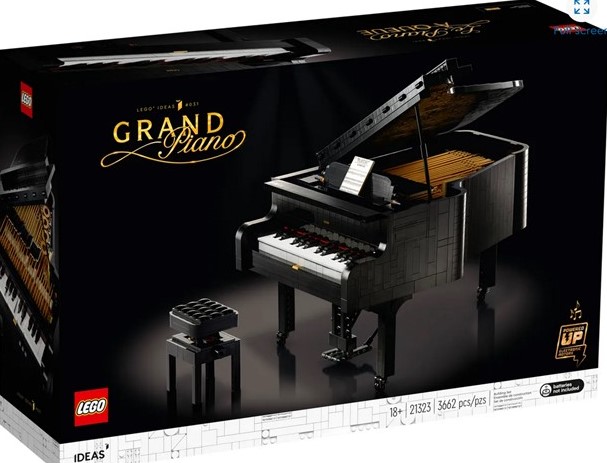
To start, we have an elegant 23″ x 15″ x 6″ cardboard box containing our unassembled piano.  The box advertises the piano in three languages: English (Grand Piano), French (Le Piano a Queue), and Spanish (Piano de Cola).  The box cautions I should be over the age of 18 and batteries aren’t included. Batteries? In a grand piano?  But I digress…

The photos on the sides of the box tease the finished product.  First and foremost, the piano really plays once I assemble the several thousand pieces.  I don’t mean “play” as in a hidden music box with a digital soundtrack but “play” as in pressing the piano keys.  And speaking of piano keys, Lego provides only 25.  A real piano has 88.  In other words, the beautiful music my grand piano plays will be more Chopsticks than Chopin.  Makes sense because my Lego Grand Piano is only 12″ wide and 14″ deep.  Suddenly my fingers feel fat.

When I remove that elegant box top, here’s what I see inside:

As expected, the Lego pieces are divided into small plastic bags. (On the left, that is. The right is a smaller box-within-the-box looking like a square piano. We’ll get to that in a minute.)

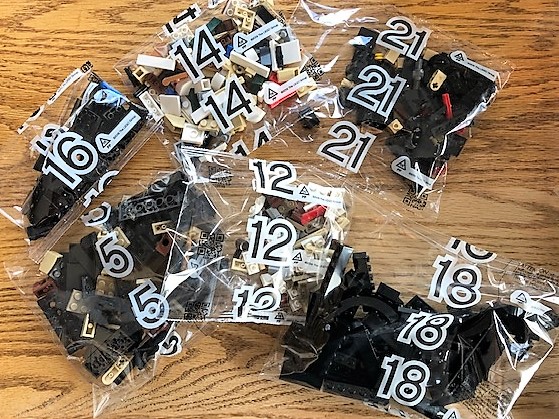
If I organize the bags so you can see them better, I come up with this:


The audience gasps, in awe of the complexity of the performance unfolding before them.

Okay, NOW I have concerns.  First, the bag numbers start with “10”.  Hey Lego, what happened to 1-9?  Second, Bag 5 showed up among the double-digits like an orphan looking for a family.  Pretty sure Bag 5 belongs securely in that black box to the right.  Maybe Bag 5 was trying to escape.

At this point in the show, the phrase “missing pieces” tickles the pianist’s brain (but not the ivories).

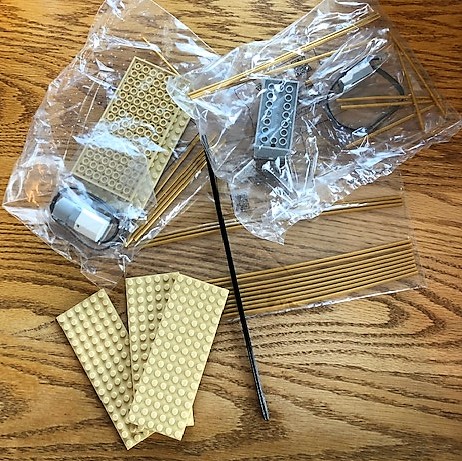
I also find the set of bags in the photo to the right.  I assume they pair with their partner-numbered bags when I get to that part of the concerto.  But maybe they don’t.  Maybe each of them is a little project unto itself.

Little beads of sweat populate the pianist’s forehead.

Yes, I’m nervous. I hastily put the bags back into the box (which suggests I’m already going backward with this project).  But I do want to see what’s inside that black piano-wannabe box to the right.  Have a look:


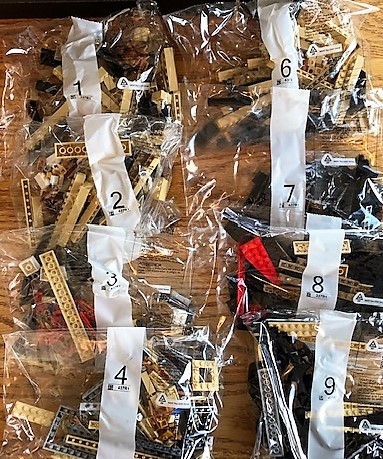
Well hello Bags 1-9! I also found a few more of those partner-numbered bags.  But check out the disarray in the photo on the right.  Here we have three more orphan bags and, shockingly, a few pieces that escaped their bags.  What’s going on here?

The audience shifts uncomfortably in their seats as the pianist hesitates.

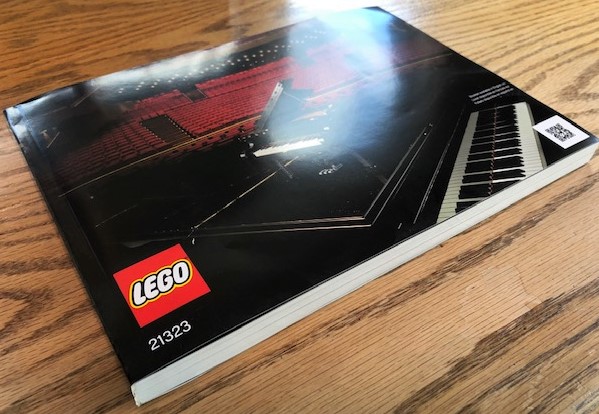
Finally, way at the bottom of the box, we have the pièce de résistance (Spanish: plato fuerte; English: main dish). Well hello, Mr. Instruction Manual.  Weighing in at a hefty 2.2 pounds and boasting 532 pages of mind-numbing steps, Mr. Instruction Manual is easily the heaviest item in the box.  He’s the equivalent of the phone book of a mid-sized city.  Furthermore, the plastic bag he came in included a little slip of paper shouting, “WARNING: To avoid danger of suffocation keep this bag away from babies and children.” Listen Lego, I’m not worried about babies and children; I’m worried about me.  I might be tempted to use that plastic bag to suffocate myself if I can’t complete my Grand Piano.

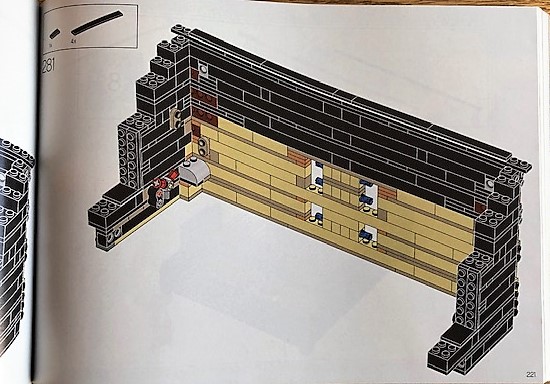
The pianist makes it this far into the performance without any faux pas’s (English: significant mistakes), but then I choose to open Mr. Instruction Manual to a random page. Terrible decision! Have a look:

Is this not an intimidating drawing? (Why yes, Dave, it is.) Does it look anything like a grand piano? (Why no, Dave, it does not.) Furthermore, you’re looking at Page 221, so we’re not even halfway through the build here.  I’m edging towards terrified, Lego.  Those pieces look small.  Those pieces look many.  And who’s to say the numbered bags make the one piece I’m looking for (amongst 3,361 of its plastic pals) any easier to find?

The pianist still hesitates, his hands shaking noticeably held just above the keyboard.

I wanted to finish this post with a photo of the first couple of pieces snapped together… I really did.  I wanted you to believe my music-making was officially underway.  But let’s be honest, my peek into the box where all those bags, orphans, and escaping pieces live, and the sheer size of Mr. Instruction Manual have me backing away from the keyboard (figuratively, followed by literally).  Sorry folks, tonight’s performance isn’t quite ready for prime time.  This pianist needs to change out of his sweat-drenched tuxedo into more comfortable clothing for now.  Let’s take an intermission, shall we?

The audience heads to the lobby.

Fantastic Plastic

On Christmas Day, any parent of small children will stifle a yawn, having built bicycles, dollhouses, and train sets the night before. After all, Santa doesn’t deliver unassembled toys. But hang in there a few years, Mom & Dad, because the building shifts from the giver to the receiver. Older kids want to create. In my generation it was Hot Wheels, Erector Sets, and Lincoln Logs. And one other toy surpassed all others for its ease of use and versatility. Lego.

This piano even plays!

My Christmas gift from my wife this year was a grand piano. Can you top that? Okay, so it wasn’t the kind worth five figures or special movers to get it across the threshold.  My piano measures a mere 12″ x 14″ and comes from the Lego “Ideas” collection.  When it’s finished it will have been built from 3,662 individual pieces.  I can’t wait to get started.

A grand piano made of Legos means the simple interlocking blocks I had as a kid have come a long, long way.  Lego Ideas sets are “products inspired by and voted for by Lego fans”.  The collection includes a typewriter, a ship in a bottle, the house from the Home Alone movies, and the apartment from the Seinfeld sitcom.  Every Ideas product involves thousands of Lego pieces to assemble.  Every Ideas product was also completely sold out for Christmas on the Lego website.

Fifty years ago, Lego was blessedly innocent.  All you had were small bricks in primary colors and if you were lucky, a paper set of instructions to create a simple house or a vehicle.  Otherwise, you just built whatever your imagination could come up with.  When my own kids were kids, Lego moved to product-specific sets like a T. Rex from Jurassic World or an X-wing Starfighter from Star Wars.  Sure, they looked cool when they were built, but I was always skeptical because the sets removed creativity from the experience.  You’d just follow the step-by-steps in the little booklet and voila – a T. Rex.  But call me a hypocrite because this sixty-year-old can’t wait to build his step-by-thousand-steps Lego Grand Piano.

Lego has an interesting history – too many chapters to cover here.  The numbers tell the story in a nutshell.  The Denmark-based company is considered the largest toy company in the world.  Their bricks have inspired movies, video games, building competitions, and eight amusement parks.  Their factories have been churning out little plastic pieces for almost 75 years.  And at last count, that pile of pieces surpassed 600 billion (or 75 Legos for every man, woman, and child on earth).

I didn’t expect to be a Lego fan as an adult but then came the Architecture series in 2008, cool buildings like the Taj Mahal, Eiffel Tower, and Empire State Building.  I just had to have one, so last Christmas my wife gifted me the 1,032-piece United States Capitol Building.  I didn’t clock how long it took to complete but I must’ve looked awfully confident in the assembly because now I’m staring down the more daunting Grand Piano.  Maybe my wife wants me locked down in my home office for the next several months?

To underscore the popularity of Lego these days, the Architecture series alone includes 50 buildings and cityscapes, with more coming out each year (the Taj Mahal was released just last summer).  These sets run anywhere from $50 to $250, with the discontinued ones setting you back three times as much.  Sure, I’d love a Lego version of Frank Lloyd Wright’s “Fallingwater” house, but I’m not going to pay $800 to a collector just to have one.

Lego “Church of Christ”

No discussion of Lego would be complete without a nod to custom creations.  Our local Scheels department store has a larger-than-life Denver Broncos football player made of Legos, posing front and center in the toy department.  The Church of Christ creation in the photo here didn’t forget seating for an 80-member choir (below the big yellow crosses).  And the biggest custom creation of them all?  A full-scale Lego replica of the previously-mentioned X-wing Starfighter, first displayed outdoors in New York’s Times Square.  Try to picture 5.3 million Lego pieces and 23 tons of “toy” in the shape of a fighter jet.  Or just check out the photos here.

Now that I’m done writing it’s time to break open the first bag of pieces to begin my Lego Grand Piano (and time for you to watch the ingenious stop-motion video below).  I’ll use the stopwatch on my iPhone to capture the hours I consume to complete it.  Er, days? Weeks?  I mean, Rome wasn’t built in a day.  Neither is a grand piano.  You might want to check in with me next summer to make sure I haven’t gone bats.

Some content sourced from Wikipedia, “the free encyclopedia” and the Lego.com website.

Fa-La-La Land Down Under

I have two nieces who, along with their families, call islands their homes. One lives on Hawaii’s Oahu, her house perched on the cliffs above Honolulu with sweeping ocean views to the west. The other lives in Brisbane, on the east coast of Australia. Sure, Australia isn’t really an island, though it is surrounded by water. By definition its landmass makes it a continent instead. But Australia does lay claim to a few islands off its shores.  Including one named “Christmas”.

Christmas Island’s picture-perfect “Flying Fish Cove”

Imagine living in a world so small you can walk from one end to the other in less than two hours.  Your fellow islanders are so few, your entire social life is like living in a college dorm.  Your diet consists of fruits, nuts, and crab.  Lots and lots of crab.  And the single contribution you and your island-mates make to the outside world is phosphorous from your underground mines.  That, in a crab shell, is life on Christmas Island.

The first time someone told me there was a “Christmas Island”, I was young enough to be watching Rudolph the Red-Nosed Reindeer every December on TV.  My favorite part of Rudolph’s story was the “Island of Misfit Toys”.  You remember, don’t you?  Rudolph was the reindeer-a non grata, mocked by the others because of his shiny nose.  Along with a couple other outcasts (Hermie, Santa’s elf who’d rather be a dentist, and Yukon Cornelius, the prospector who can never find silver or gold), Rudolph discovers the Island of Misfit Toys.  The island is a repository for unwanted toys.  As sad as that sounds, Rudolph’s island brings Christmas to mind much more than the little landmass I’m talking about today.

Palm trees (not pines) on Christmas Island

If you wonder why you’d ever visit Christmas Island, consider almost 65% of the island is a national park of unspoiled rainforest, with walking paths past 25 species of trees and 135 species of plants.  The only animals you’ll spy in the forest include the “flying fox” fruit bat, the recently introduced Javan deer, and the golden bosun (the island’s “official” bird).  Outside of the forest however, it’s impossible to miss the crabs.  Coconut crabs.  Red crabs.  Thirteen different species of land crabs, let alone those who prefer the ocean.  And here’s the best part.  Every year, one hundred million of them migrate from solid ground to water (to spawn), a sight mind-blowing enough to be called “one of the wonders of the natural world”.

Watch the following short video on the chaotic Christmas Island crab migration.  Makes you wonder how you can walk anywhere without getting “crabs”.  If this is something you simply must see in person, find your way to Perth on Australia’s western mainland, and book one of two weekly flights to Christmas Island courtesy of Virgin Airlines.  Your 3+ hours in the air will take you over nothing but the vast Indian Ocean.

It’s high time we addressed the most burning question about our little fa-la-la land down under.  Why is it named Christmas Island?  Here are popular theories.  One, “The rainforest is made up of nothing but evergreen (Christmas) trees.”  Two (for the geographically challenged), “The island is the closest landmass to the North Pole.”  And three “Christmas Island was the origin of the species diospyros virginiana, more commonly known as the sugar plum tree.”  The correct answer?  None of the above.  In the 1600s, European explorer Richard Rowe first set foot on the island, doing so on December 25th.  With no more creativity than a glance at the calendar, his discovery was dubbed Christmas Island.

Norfolk Island pine

I’ve got a much better “Christmas Island” for you.  Flip over to just off the east coast of Australia and you’ll find an even tinier landmass called Norfolk Island.  It’s about a quarter the size of Christmas, with the same number of inhabitants.  But Norfolk Island’s primary export is much more “Christmas” than phosphorous.  It is the evergreen Norfolk Island pine, a popular ornamental tree in Australia.  My wife and I found one at Home Depot a few years ago and bought it for her mother.  For small spaces, Norfolk Island pines make great Christmas trees.

“Christmas” looks a little like an Aussie Shepherd!

In defense of Christmas Island, there’s more going on within its shores than phosphorous and crabs.  Most of the residents live in the northern area of the island surrounding a coastal region known as Flying Fish Cove.  They speak one or more of five different languages.  There’s a high school and a public library.  There’s even a cricket club, which just celebrated sixty years in the game.  And most fitting to this time of year, twenty percent of the population call themselves Christians.  In other words, despite the uninspiring reason for its name, Christmas really does come to Christmas Island.

Some content sourced from Wikipedia, “the free encyclopedia”.

Christmas-Colored Glasses

The twenty-minute drive from my house to the gym is fairly nondescript. The streets are two-lane straight with a few turns and traffic lights along the way. Not much to look at on a winter’s morning. But the month of December brings about a miraculous change. With the car stereo belting out songs of the season there’s suddenly a lot to see through the windshield.  It’s as if I’m viewing the world through Christmas-colored glasses.

Maybe you’re like me when you’re on the morning drive.  You’re half-asleep, a little bit late, and the slightest miscue by another driver puts you in a bad mood.  I try to blank out the world around me by toggling my radio presets between news and sports.  It’s a wonder my lack of focus gets me to the right destination.  But Christmas music changes all that.  The happy tunes bring everything back to the crystal and clear.  They’re like a gift for the spirit.


Two radio stations in this part of Colorado switch over to Christmas music in December.  An adult contemporary station runs an endless loop of about thirty “holiday favorites” from Thanksgiving to New Years Day.  I’ll bet they play the Boston Pops’ version of “Sleigh Ride” and Mariah Carey’s “All I Want for Christmas” four or five times a day.  It gets old.  But they also play the best of Nat King Cole, Frank Sinatra, and Andy Williams so I forgive them. Then we have our Christian contemporary station.  Their round-the-clock Christmas playlist keeps it fresh, with more carols than pop songs.  They’re a little more in tune with the reason for the season.

Earlier this week I absentmindedly tuned back to one of my regular music stations.  Mistake. Their version of celebrating the season had people calling in to say why they deserved to be on “Santa’s naughty list”.  One caller said she babysat recently and told the misbehaving child Santa died of COVID.  Another said he slept with his ex’s sister and a week later slept with the sister’s best friend.  Seriously?  This is the spirit of the season?


Spotify plays its part on my drive, especially when radio stations bend to the inevitable commercials.  But not playlists.  Albums.  Spotify Christmas playlists just don’t cut it for me.  I have yet to find the perfect mix – you know, not too much of this, not too little of that.  I think Christmas albums by individual artists or groups do a better job of a “just right” playlist, which is why I’m peppering this post with three of my favorites.


Now then, let’s get back to those Christmas-colored glasses.  Exactly what did I see on my twenty-minute drive?  A lot more than I did before I tuned in to the season’s songs…

  • Children headed to school, laughing and singing as they walked.  I think we can agree; Christmas is all about children.  Or at least, one child.
  • Signs in front of churches advertising Christmas Eve services.  Most offer a 5pm, 7pm, and 9pm option, meaning lots of people are heading to church on Christmas Eve.  As we should be this year.
  • A lone tree at the end of a driveway decorated with just two ornaments.  What to make of it?  Maybe a senior citizen lives here, and two ornaments are all he or she can manage.  A reminder to gift to our local “Christmas for Seniors” program.
  • A third-story apartment and its tiny balcony decorated with garlands, wreaths, and lights.  Yes, all walks of life celebrate Christmas no matter the look of their “house”.
  • The sign at the gas station advertising today’s fuel prices.  Unleaded is advertised in red numbers, diesel in green.  How’s that for impromptu Christmas decor?
  • Our little town’s myriad Christmas decorations, covering trees, buildings, and lampposts, I may not always agree with the spending of our tax dollars but with this investment, they get it right year after year.

This is my personal mandate for the 2021 holiday season.  Take the rest of the month and listen to nothing but carols whenever you’re in the car.  You’ll don a pair of Christmas-colored glasses and be amazed at what you’ve been missing around you.  Believe it or not, the world looks pretty good right now.

Some content sourced from Wikipedia, “the free encyclopedia”.

O’ Come Let Us Adorn

There’s an older fellow in Egypt who wakes up every morning, throws on a flannel shirt and well-worn pants, and goes to his workshop behind the corrugated roll-up door of a small, industrial warehouse. Using ancient tools and techniques, he churns out hundreds of colorful, ornate, square cement tiles. He’s a true artisan, our tilemaker, carrying on his craft from many generations before him.  His product endures amid countless mass-produced ceramic and porcelain alternatives. Perhaps our tilemaker would feel more at home in Lauscha, Germany.  Lauscha is home to dozens of glassblowers, who still create colorful, ornate, Christmas ornaments by hand.

Lauscha “baubles”

Every December about this time, my wife & I bring home our Christmas tree (real, not artificial – see Is It Live or Is It Memorex? for that debate).  We take our tree through the same steps from start to adorned.  First, fresh-cut the trunk, set the tree into the stand, and fill with warm water (and one baby aspirin!).  Next, let gravity bring the branches down for a few days.  Then, bring out the ladder, top the tree with the angel, and string the lights generously down all sides.  Finally, adorn with ornaments.  Our collection is larger than the real estate of any Christmas tree we buy, so there’s always debate on which ornaments make the tree and which are re-relegated to the closet for another year of waiting.  In the end, we stand back and admire a pleasing mix of homemade, school-made, photo-framed, and collectibles.

You can never have enough ornaments, and the glassblowers in Lauscha would agree.  The process they use to create the simplest of glass balls is already beyond my artistic abilities.  For one, you must work fast because the molten glass cools in a hurry.  For two, you must have steady hands as you add color and detail.  Have a look at the following short video and you’ll learn a thing or two you never knew about making Christmas ornaments.  My favorite part of the process? “Silvering”.  Who knew the mirror-like aspect of a Christmas ball is painted on the inside of the glass?

Germans (and more people than I’d probably guess) refer to Christmas ornaments as baubles, which is ironic because Americans define a bauble as a “showy cheap trinket”.  Nothing produced in Lauscha, Germany is a showy cheap trinket.  Then again, Americans figured out how to mass-produce Christmas ornaments and the result is a generic, sometimes-plastic alternative to the real thing.  “Bauble” indeed.

The very first Christmas ornaments were anything but glass-blown baubles.  You had fruit, candy canes, pastries, strings of popcorn, and whatever else you could find around the house.  The Lauscha baubles then came along in the mid-1600s.  Short of the post-WWII years (when the German government used the glass factories for more important products) they’ve been making them ever since.

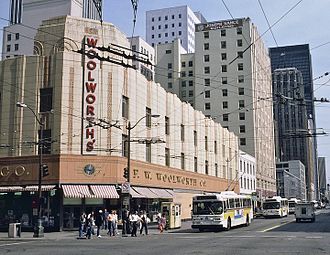
Credit Woolworth’s once-popular department stores for the proliferation of Christmas ornaments in America.  In the late 1800s, Woolworth’s started carrying the Lauscha baubles.  Soon after, they stocked mass-produced American-made versions, taking tree-decorating to a whole new level.  By the mid-20th-century, Woolworth’s was banking $25 million on Christmas decoration sales alone.

Hallmark “Keepsake Ornament”

Hallmark jumped on the bauble bandwagon in the 1970s.  Clever folks, those people at Hallmark.  Their original ornament collection was made available only for the current year, followed by a new collection the following year, and so on.  Today, Hallmark Keepsake Ornaments are so popular you have to join a club (just $49.95!) if you want to own their newest limited-edition ornaments.

As much as I’d like to add a Lauscha bauble or two to my tree, I prefer the more personal ornaments we hang instead.  A dozen or more of them were designed around primary-school photos of our kids (“art projects”, they called them).  Souvenir ornaments from favorite trips we’ve taken over the years.  Several more with imprinted dates, to remind us of special occasions like weddings, births, or passings.

Five years ago, I wrote my one and only work of fiction on this blog, a post about a Christmas ornament.  It seems fitting to include a link to The Best Branch on the Tree, assuming you haven’t followed me that long.  Because, you know, ornaments – er, baubles – have feelings too.

Some content sourced from Wikipedia, “the free encyclopedia”.