
Hello, I’m Veronica
The sky is not completely dark at night. Were the sky absolutely dark, one would not be able to see the silhouette of an object against the sky.


-
Just Beyond the Spotlight
34.9 million people (including most of Jamaica) watched on Monday night as Usain Bolt claimed track and field legend at the Olympics by winning the Men’s 100m. It was Bolt’s third straight gold medal in the event; remarkable considering he is eight years older now than when he won it the first time. Like Michael Phelps and swimming, the hype leading up to Bolt’s latest victory was justified. NBC covered every one of Bolt’s qualifying heats in prime-time, and delivered a good twenty minutes of back story before the final. Bolt will be a household name if he is not already.
The 100m run is one of several Olympic events I never miss. It is a wondrous display of athletic power, and I’m always on edge to see who will become the “world’s fastest human”. However, the prime-time Olympic spotlight need also shine on lesser known events and athletes. Herein lies the oft-overlooked beauty of the Olympics: it is these “others” that emerge with the most inspiring stories. They are not so much superstars, yet are still among the best at what they do. A few examples for your consideration:

Charlotte Dujardin of Great Britain rode to a gold-medal performance in Individual Dressage. Show Jumping may be the more popular Olympic equestrian event but Dressage is the more difficult (and defined as “the highest expression of horse training). Dujardin and her Dutch Warmblood horse “Valegro” floated through an almost magical routine, completing one spectacular movement after another. Dujardin and her mount were graceful, elegant, and significantly better – at least on points – than the silver medalist. And her story became even more poignant when I learned Dujardin was engaged to be married shortly after receiving the gold medal, while Valegro has earned his last championship (of many) and will be retired from the sport.

Sanne Wevers of the Netherlands leaped to a gold-medal win on the balance beam in Women’s Gymnastics. It was the first women’s gymnastics medal of any kind in her country’s history. Wevers’ routine featured several jaw-dropping maneuvers I’d never seen before, including several spins while balanced precariously on one foot. The judges were won over by Wever’s creativity and skill. American television tried desperately to keep the spotlight on our own athletes (who were favored to win), but Wevers was clearly the humble star this night. And her story was made even more poignant when the cameras turned to her twin sister Leika in the stands – also a member of the Dutch gymnastics team – as she reacted to Sanne’s upset win with tears of disbelief.
Molly Huddle of the United States ran what should have been a gold-medal performance in the Women’s 10,000m run. Except she didn’t win the gold medal. When a group of eight women broke away from the pack after several laps – most of them Kenyans and Ethiopians – Huddle broke away with them. After twenty-five laps Huddle crossed the finish line in sixth place, breaking the American record for the event by almost nine seconds. And her story was made even more poignant when I learned Huddle’s finishing time would have been good enough for the gold medal in three of the last four Olympics.
The Games continue for several more days. More superstars will be at their best on prime-time television. Just remember to look around and see what else is going on. There are wonderful stories just beyond the spotlight.
-
Beckons the Printed Word
I have a reading problem. Perhaps you can help me with it. I blame my mother of course. She was a voracious reader (feasting on those 700+ page romance novels) and raised my brothers and I to be readers too. Thus newspapers and magazines; hard-covered tomes and soft-covered easy reads; coffee-table books and cookbooks; news feeds, emails, texts; my ever-present Kindle e-reader; even instruction manuals for God’s sake – vie for my reading time and attention. Books reach out to me with invisible hands, fluttering their crisp pages and silently screaming “READ ME!!!”.
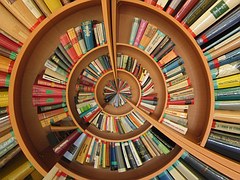
Once upon a time I had this under control. You see, in those first childhood visits to the school library you could only check out one book at a time. Read and return. Read and return. Eventually you earned the right to check out several at once. Small piles of books began to accompany me home.
Newspapers already lived in my house. My dad read the newspaper and nothing else, but in his day you had the morning paper and the evening paper. Then one day I noticed Time and Sports Illustrated arrived every week in our mailbox. More reading. And the ever-present World Book Encyclopedia (WBE) flew off the shelf for the many school assignments that demanded it. Here’s an early warning sign: sometimes I found myself leafing through the WBE for no reason at all.
Those innocent resources of yesteryear cemented the multi-tentacled reading monster that dwells in my house today. Our family room is loaded with coffee table books and the complete works of Dickens (which I really need to finish someday). Our kitchen cabinets are weighted down with ten cookbooks for every one that we actually use. Our bedroom has a wall full of books we simply can’t bear to part with – kind of like the clothes you swear will come back into fashion someday. Our nightstands have several put-you-to-sleep choices in their top drawers. And our home office is so loaded I’ve resorted to “stack” instead of “display”.
It’s a delicate balance, this fanaticism for reading. You have to limit your resources and then limit the time you give them. Thus do I only subscribe to one magazine and one newspaper. I follow 10-12 blogs and only those that publish weekly or less. At any given time I’m only reading one book of fiction and another of non-fiction. But beware that book of fiction. If it’s really good, all other reading is kept at bay until I’ve consumed the very last page. And then I have to scramble to catch up.
Amazon has created the ultimate temptation. Not only can you purchase unlimited free “sample reads”, but you can subscribe to a dozen newsletters advertising new authors or popular reads or “we think you might like this” options. It can turn into a feeding frenzy.
If there’s a rehab program to harness too much reading, I suggest the following as the first step. Stay out of bookstores. Keep battling the monster that has taken over your house instead.
-
Rings of Summer
Over the next two weeks, the world will be witness to the greatest gathering of athletes and sports mankind has to offer. The XXXI Olympiad -that’s 31st for you non-Romans – will be hosted by the city of Rio de Janeiro. (Just saying “Rio” reminds me of “FedEx” – it’s simply not the whole enchilada). I must admit I didn’t realize “Olympiad” refers to the four-year period between Olympic Games – not the Games themselves. Count backwards by fours and you’ll realize the first modern Olympic games was held way back in 1896.

You may say, non-sports-fan that you are, there is nothing seventeen days of sports competitions can do to stir your soul. But I urge you, put away the electronics and have a look, even if only for an hour or two. A moment will be there and you don’t want to miss it.
The first Olympic Games I remember well was 1976 in Montreal. As a fourteen-year old, I was captivated watching Nadia Comaneci – also fourteen (!) – as she won three gold medals and scored seven perfect 10.0’s in women’s gymnastics. I love this trivia item: the gymnastics scoreboard could only hold three digits, so Comeneci’s perfect scores were expressed as “1.0”. For anyone who watched, it was one of the most electrifying performances in any sport and in any Olympics. It was a moment to remember.
The second Olympic Games I remember well was 1980, but only because the United States boycotted the events due to Russia’s invasion of Afghanistan at the time (which is ironic given America’s involvement in that country today).
That brings us to 1984: the XXIII Olympiad in Los Angeles. I was a senior in college, working a summer internship in Southern California. I was witness to a city transformed. The Games were hosted in a revitalized Coliseum (the same venue where the Olympics were held in 1932). Ronald Reagan was President and opened the Games in person. Sports venues were spread across the city, and the coincidence of several competitions on Fridays caused most businesses to shift to 4×10 workweeks. American flags were everywhere. The Olympic spirit was alive and well in the City of Angels.
I distinctly remember the torch relay at the L.A. Games, passing through the neighborhood where I grew up; John Williams’ glorious musical composition at the opening ceremonies (where dozens of white grand pianos were played simultaneously); Mary Lou Retton’s golds in women’s gymnastics; and Carl Lewis’s golds in track and field. I also remember the women’s 3,000 meter run, highly-anticipated because America’s Mary Decker was racing South African sensation Zola Budd. The two collided mid-race, Decker went down, and she never finished the race (Decker’s anguished face as she lay on the track is one of the Olympics’ classic photos). There were moments in L.A.
Here’s one more Olympic moment which may surpass any I’ve mentioned above. It was the women’s marathon. I don’t even remember the city or the year or the woman who won the gold. But I do remember the woman who won the bronze. As she entered the stadium for the final meters of the race, she looked over her shoulder and saw… no one. The bronze was hers. She raised her arms in triumph as she finished that final lap, crying in apparent disbelief. The unbridled joy and tears on her face as she crossed the finish line is a moment I’ll never forget.
The Olympics. Rio de Janeiro. Starting tomorrow. Watch. A moment will be there and you don’t want to miss it.
-
The Aging of Independence
Ten years from now – this month – the U.S. will celebrate its 250th birthday. That’s remarkable to me considering I still have vivid memories of America’s bicentennial back in 1976. To put it another way, I’ve been witness to more than 20% of the entire history of the United States. We really are a young country, aren’t we?

Earlier this week my wife and I were driving back to Colorado from California, after a week of vacation at the beach. Passing through Utah we reached a small town called Cedar City. There’s nothing remarkable about Cedar City. It’s the home of Southern Utah University and almost 30,000 residents. But the name stirred a memory in the deep recesses of my brain. And then it hit me. Cedar City was part of a contest the Los Angeles Times newspaper sponsored when I was a teenager – a creative way of celebrating the nation’s big birthday.
The contest (if my vague memories serve me correctly) took place over fifty of the fifty-two weeks that year. Each week The Times published a trivia puzzle consisting of a jumbled American city name and a couple other facts you had to figure out about the locale or surrounding state. As the contest went on you realized The Times was picking one city from every state in the union. You cut out and completed each puzzle by hand, and at the end of the contest submitted the whole pile to The Times, to be included in a cash drawing. Our family’s World Book Encyclopedia – not the Internet that was still twenty years from reality – helped me with the research.
I didn’t win The Times contest but I know I learned a lot about our country in the process – including a few details about little Cedar City, Utah. Needless to say we are a remarkably diverse collection of states, towns and people; especially for a country so young.
America’s 150th birthday – the “sesquicentennial” – was honored back in 1926 when Calvin Coolidge was president. You can find Coolidge’s celebratory address to the people here. One passage in particular resonated with me: “Amid all the clash of conflicting interests, amid all the welter of partisan politics, every American can turn for solace and consolation to the Declaration of Independence and the Constitution of the United States with the assurance and confidence that those two great charters of freedom and justice remain firm and unshaken.” Powerful words then, but I wonder if today’s leaders would be so bold as to make the same statement? Look no further than the current presidential election: the Constitution and the Declaration are being called into question like never before.
Ten years from now the U.S. will celebrate its “sestercentennial” – fully 250 years of glorious independence. Philadelphia is already campaigning to be the host city for the national celebration. 2026 won’t be a presidential election year nor an Olympic year, but the fireworks and pageantry will surely be brighter. Let’s hope another decade brings not only renewed pride and optimism in America, but also a sense that we are – states, towns, citizens – “united” once more.
-
Some Kind of Wonderful
I was skimming the headlines yesterday when I noticed Anne Hathaway paying tribute to director Garry Marshall for her acting breakthrough in The Princess Diaries movies. Then I realized the tribute was because Marshall had died recently, at 81 from pneumonia. Something about Marshall resonated with me but I couldn’t put my finger on it (okay, I may have watched the Diary movies with my daughter). When I checked his credits it made more sense. I’ve been drawn to Marshall’s work longer than I ever realized. This guy was prolific.
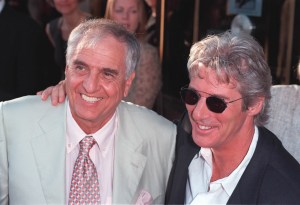
In the 1980’s, a burst of coming-of-age films hit the big screen. Today they’d still be considered cult-classics. I was particularly drawn to Sixteen Candles (1984), The Breakfast Club (1985), Pretty In Pink (1986), and Ferris Bueller’s Day Off (1986). The characters were about my age and dealing with the kind of teenage angst I could really relate to. As it turns out, John Hughes wrote every single one of these movies. He also wrote one of my all-time favorites (still to this day): Some Kind of Wonderful (1987). If you’re a guy and you’ve seen the movie perhaps you made the same connection. Like Eric Stoltz’s character I was madly in love with Lea Thompson, until I realized I was really in love with Mary Stuart Masterson.
In my obsession with John Hughes (and director Howard Deutch), apparently I overlooked Garry Marshall. Marshall entered my life early with The Lucy Show, The Dick Van Dyke Show and The Odd Couple in the mid-’70’s. My brothers and I watched what my dad wanted to watch in those days, so Marshall gets the credit for some fond father-son memories side-by-side on the family room couch.
By the early ’80’s Marshall had moved on to Mork & Mindy, Laverne & Shirley, and Happy Days. I’m sure I didn’t miss many episodes (and I can still hum the theme songs). Along with The Brady Bunch those were my go-to shows. Bit of trivia: Garry Marshall directed his sister Penny Marshall to fame in Laverne & Shirley.
Marshall solidified his influence on my life when he directed Pretty Woman in 1990. I was so taken by the movie in fact, that I mimicked a few scenes for my wife’s birthday a few years later. I woke her up with a handful of hundred-dollar bills, told her to go out and buy a nice dress for dinner; then showed up later in a limousine, standing through the sunroof in a tux with a bouquet of flowers. It was fun to play the part, but alas I am no Richard Gere.
Trivia again: Garry Marshall played a small role as a tour guide in Pretty Woman.
My wife and I took a chance on the movie Mother’s Day this past May – a light comedy with Jennifer Aniston and Jason Sudeikis (and Pretty Woman star Julia Roberts). Was it a great movie? No. But as it turns out it was the last film directed by Garry Marshall. That little fact gave the movie more substance. With Mother’s Day, Marshall managed to give me more than fifty years of television and movie memories.
Rest in peace Garry. Thanks for so many kinds of wonderful.


About Me
The sky is not completely dark at night. Were the sky absolutely dark, one would not be able to see the silhouette of an object against the sky.
Follow Me On
Subscribe To My Newsletter
Subscribe for new travel stories and exclusive content.
 Life In A Word