
Hello, I’m Veronica
The sky is not completely dark at night. Were the sky absolutely dark, one would not be able to see the silhouette of an object against the sky.


-
Flying in the Face of Reason
If you’ve traveled across the United States more than a handful of times, chances are you’ve passed through Denver International Airport (DIA). There aren’t many connecting airports in the Rocky Mountain states, so DIA gets most of the east-west air traffic. The sharp peaks of the main terminal roof fabric serve as the signature design element, symbolic of the nearby snow-capped mountains (and Native American teepees from Colorado’s history). DIA’s land mass of 52.6 square miles is twice the size of Dallas-Fort Worth (DFW), making it far and away the largest airport in the country. A “cutting-edge” automated baggage system became an infamous failure back when DIA opened, causing a 16-month delay and ballooning the budget by $2 billion.
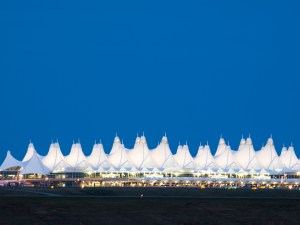
But enough about the facts. I’d rather focus on the conspiracy theories attached to DIA; the conjecture to make your airport experience a little more entertaining. Clearly, there’s more going on at Denver International than just takeoffs and landings.
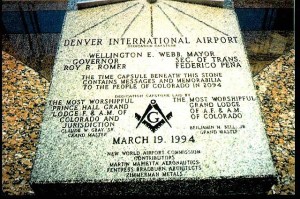
Let’s start with DIA’s biggest conspiracy of all. Remember the movie The Da Vinci Code with Tom Hanks; the wild-goose chase across Western Europe in search of the Holy Grail? Tom should’ve included DIA in his travels because the newest Illuminati headquarters is located several stories beneath the airport. The DIA dedication capstone inside the main terminal (and several cryptic words inscribed in the terminal floor) serve as hints, referring to funding from the “New World Airport Commission” (NWAC), a wholly fictitious organization (Google NWAC – you won’t find anything). As is the case with conspiracy theories, NWAC somehow associated to the Illuminati, including their efforts to establish a single all-powerful global government. Controlling America’s largest airport certainly helps. That $2 billion of budget overrun apparently built the headquarters – a complete working underground city.

NWAC also associates to NWO – or New World Order – a more believable conspiracy theory tied to world domination. NWO is said to be a resurgent Nazi group, so perhaps the Third Reich financed DIA as its future headquarters. At least you’ll find symbolism on the map: DIA’s runways are laid out in the shape of a swastika. (DIA prefers “pinwheel” as the more politically correct term.) So, if not the Illuminati, the Nazis are amassing under DIA. What say the rest of the world’s leaders? Crickets. They’re sitting back and letting the Nazis foot the bill. They see DIA’s “underground bunker” as a refuge for their own safety during the next apocalypse (a conspiracy theory of its own). They’ll pounce on the Nazi facility if/when they need to.


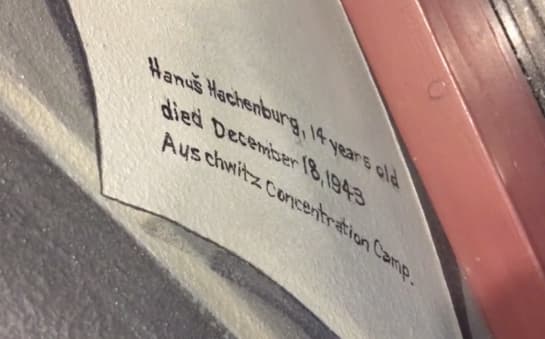
DIA contains a lot of artwork too, but the large murals in the baggage claim area are particularly disturbing. Titled In Peace and Harmony With Nature and The Children of the World Dream of Peace, some interpret them as anything but “peaceful”. The imagery suggests apocalyptic bio-warfare leading to mass chaos; step one of the NWO plan of world domination. Even if that’s not your interpretation, you won’t overlook the image of the ghostly Nazi soldier, or the epitaph from a child who perished at Auschwitz.
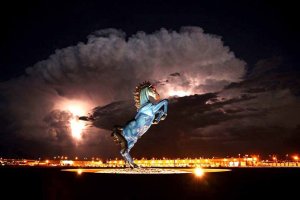
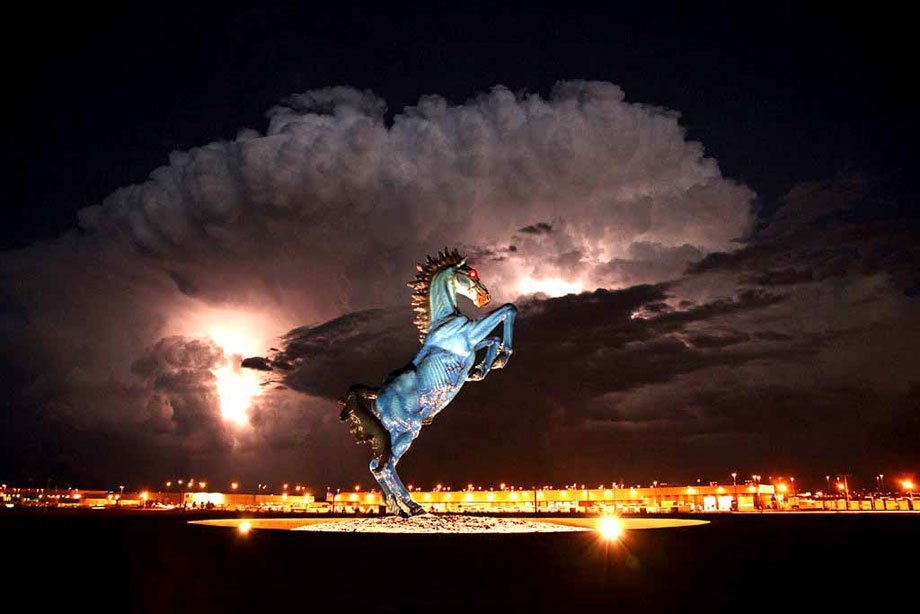
Here’s one more conspiracy theory. DIA has “Blue Mustang”, the 32-foot tall 9,000 lb. rearing horse as you approach the main terminal by car. “Blucifer” is solid blue with creepy red eyes, glowing day and night. Ask Luis Jimenez – the artist – why he chose blue and red, but he won’t reply to your email. He was killed during the statue’s construction when a piece fell on him and severed an artery in his leg. For this reason (and the bizarre colors), Blucifer is said to represent the Fourth Horseman of the Apocalypse, from the biblical book of Revelations. So, take comfort; Death awaits you at the door of DIA (or at least in the morgue supposedly hidden somewhere inside the facility).
For more details on Denver International’s conspiracy theories, check out the entertaining Buzzfeed article here, or the Business Insider article here. My favorite part of the Buzzfeed article: the comments that follow, where several way-too-serious types debate the legitimacy of the claims. To them I say, life’s too short. Let the conspiracy theories bloom, if for no other reason than we might grin a little more as we bear our oft-nightmarish airport experience.
Some content sourced from Wikipedia, “the free encyclopedia”.
-
Blame it on the Dutch
Last Saturday, after the umpteenth edition of dinner-and-a-movie with my wife (or in this case, movie-and-a-dinner), we arrived back home to a phone message from the restaurant, saying I’d left my credit card behind. I never make that mistake. Let me rephrase – since my wife reads this blog – I almost never make that mistake. Credit the restaurant for taking our phone number when we arrived, “just in case we need to contact you later”. Credit the very nice bottle of wine – empty by the end of the meal – for contributing to my forgetfulness (though not to my driving).

Hey, at least I paid the bill before I left my card behind. Because that’s what I do when it comes to nights out with my wife. The gentleman pays.
“The gentlemen pays” is up for judgment in the new world order. “Paying etiquette” – especially on first dates – has become a lot more complicated with modern social conventions (i.e. dating apps). As if first dates aren’t stressful enough already.
Whether the guy invites the girl out for a drink, or the guy invites the girl out for dinner, or even the girl invites the guy out for dinner, you’d be inclined to say he/she who does the inviting picks up the bill, right? I know I would, but it’s not that simple.

“A drink” (as in, the result of a swipe on the Tinder app) implies a quick meet-up, where one or both parties dance around the potential for a longer-term relationship. If this really is the agenda (and nothing else), I’d argue both parties split the bill. Could get awkward.
“A dinner” (as in, the result of a well-designed profile on the eHarmony app) implies a more serious stab at a relationship. In this case I’d argue the “inviter” pays the bill, not the “invitee”. Unless you’re in New York or San Francisco. Social convention in those cities leans towards both parties splitting the bill, since restaurant tabs flirt with the $200 mark. Not exactly disposable income for most young people. Could get awkward.
In “the girl invites the guy” (as in, the Bumble app, where only she can “make the first move”), I’d argue the girl pays. But what if the girl is “traditional”, and holds out on paying just to see if he’s a “gentleman”? Again, could get awkward.

If “who pays?” hasn’t been decided beforehand, the mind games really kick in with gestures to pay the bill, otherwise known as “the reach”. Some women do “the reach” to appear a team player (when in fact they have no intention of paying the bill). Some men interpret the woman’s reach as her wish to pay; in return, somehow “looking good by not falling into stereotypes”. Other men pounce on the woman’s reach as the perfect opportunity to suggest half and half.
Half and half is also known as “going Dutch”; a phrase with take-your-pick origins. The most common origin ties back to the 17th century Anglo-Dutch wars (also coining the phrases “Dutch treat” and “Dutch courage”). The more fitting origin however, comes from “Dutch door”; the farmhouse invention of two equal halves. A Dutch door is sometimes referred to as a “split door”. “Fits the bill”, wouldn’t you say?

Going Dutch is not as safe as it sounds. One time my wife and I met a couple in downtown Chicago, for a pricey meal atop the John Hancock tower. As we waited in the bar for our table, the husband knocked back several expensive drinks, followed by several more at dinner. Imagine my shock when the dinner bill was merged with the bar bill. The husband casually said, “let’s just split this, shall we?”
My daughter is a twenty-something, brand new to the dating scene in Los Angeles. As far as she’s concerned, forget everything I’ve discussed in the paragraphs above. She has one and only one rule: the gentleman always pays. Frankly, that’s just fine with me.
-
Go For a Drive
Imagine the conversation you’re having with your grandson several years from now, where you’re waxing nostalgic about a favorite car you used to own. You’re smiling into the details, remembering how your stylish sedan hugged the open highway curves at a crisp 75 mph; how the in-dash digital receiver cranked favorite tunes via smartphone; how the feel of the steering wheel leather gave you the perfect combination of comfort and control. Only then, your grandson interrupts you and says, “what’s a steering wheel“?
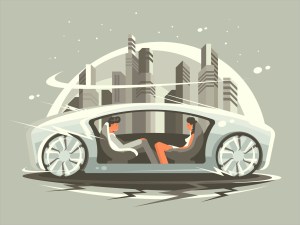
This week, the Wall Street Journal published a make-you-pause article titled “Your Next Car May Be a Living Room on Wheels”. The subject matter is the technological luxuries in a vehicle where “driving” is no longer necessary. Forward-facing seats rotate to face each other, perhaps around a central console. Touchscreens – to control the vehicle; cameras – to enlarge the outside views; movie screens – simply for entertainment; each of these appear on the window glass with simple voice commands. Microwaves, refrigerators and ice chests hide nearby for always-available snacking. In other words, the very definition of “car” gets turned on its ear. Your grandson won’t even know what a “dashboard” is.
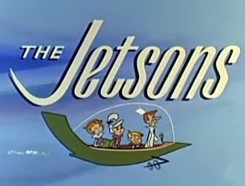
Your grandson won’t remember “The Jetsons” either – the Hanna-Barbera animated sitcom from the early 1960’s. In a mere twenty-four episodes, “The Jetsons” gave us a peek into a fascinatingly advanced world of the future. George Jetson and his family enjoyed luxuries only present in a 1960’s imagination, like robot housekeepers or in-home treadmills. The Jetsons lived in a high-rise apartment building floating in space. My favorite concept: the “aerocar”. There were no roads in George’s world, so he and his family bopped around in a airborne car. Per the illustration above, the aerocar is effectively a flying saucer with a transparent bubble top. I still hear the sound of its little engine.
At least George still drives, which is the premise of this post. No matter how advanced the mode of transportation, I want the option to navigate whenever my heart desires. If my family and I are heading out for a Sunday jaunt, I want to be able to steer us wherever the wind blows. Maybe that’s the provider in me, or maybe that’s just driving for the sheer enjoyment of it. We need our steering wheels.
Flying cars are closer to reality than you might think. Airbus, Uber and a handful of other companies have created concept “cars” that take-off and land vertically – no wings. No rotors either, like you’d see on a helicopter. Yet some models – like Airbus’s “Vahana” – are designed to be pilot-less. What fun is that? Who’s at the controls? Sounds like going for a ride in an oversized drone. Regardless, even with perfect technology the real hurdles with flying cars lie in regulating airborne travel. There must be rules. You’d better believe the environmentalists will have a seat at the table too.

In my childhood days at Disneyland, I was led to believe monorails were the future mode of transportation. I pictured vast elevated networks of elegantly formed concrete spreading out across the country, with graceful trains slithering along topside at impressive speeds. Alas, Disney’s monorail in Florida – at 14.7 miles – remains one of the longest of its kind. Only two others, in Japan and China, claim more riders. Monorails just never took.

Maglev (magnetic levitation) replaced monorails as the potential mass-transit solution of modern times. Magnets are super-efficient, providing both lift and propulsion towards a high-speed, low-friction, no-moving-parts solution. Assuming an aesthetically-pleasing design, even the environmentalists would be on board with zero-emissions engines. But there’s always a negative. In this case, costs of maglev are projected at $50-$100 million per mile. No wonder the few installations around the world travel very short distances.
Even if we mapped America with arteries of monorails or maglev, I’d still find dissatisfaction in the notion no one’s driving the bus. More to the point, I am not driving the bus. But at least we’re talking about mass-transit here; an option I chose willingly over my own car. If I’m not “licensed to drive” I’m happy to leave the controls to someone else.
Living rooms on wheels will be tough for me to swallow. The focus has shifted from enjoyment of the drive to enjoyment of the ride. Maybe I should’ve seen this coming when automatic transmissions became an option to stick-shift. Certainly it hit me over the head when Uber debuted its self-driving fleet. Sir, please step away from the controls.
Here is my futile plea for now: don’t take away my steering wheel. Let me have the option to play pilot. At the very least, give me a set of handlebars and a little weight-shift control.

Some content sourced from Wikipedia, “the free encyclopedia”.
-
Banner Birthday
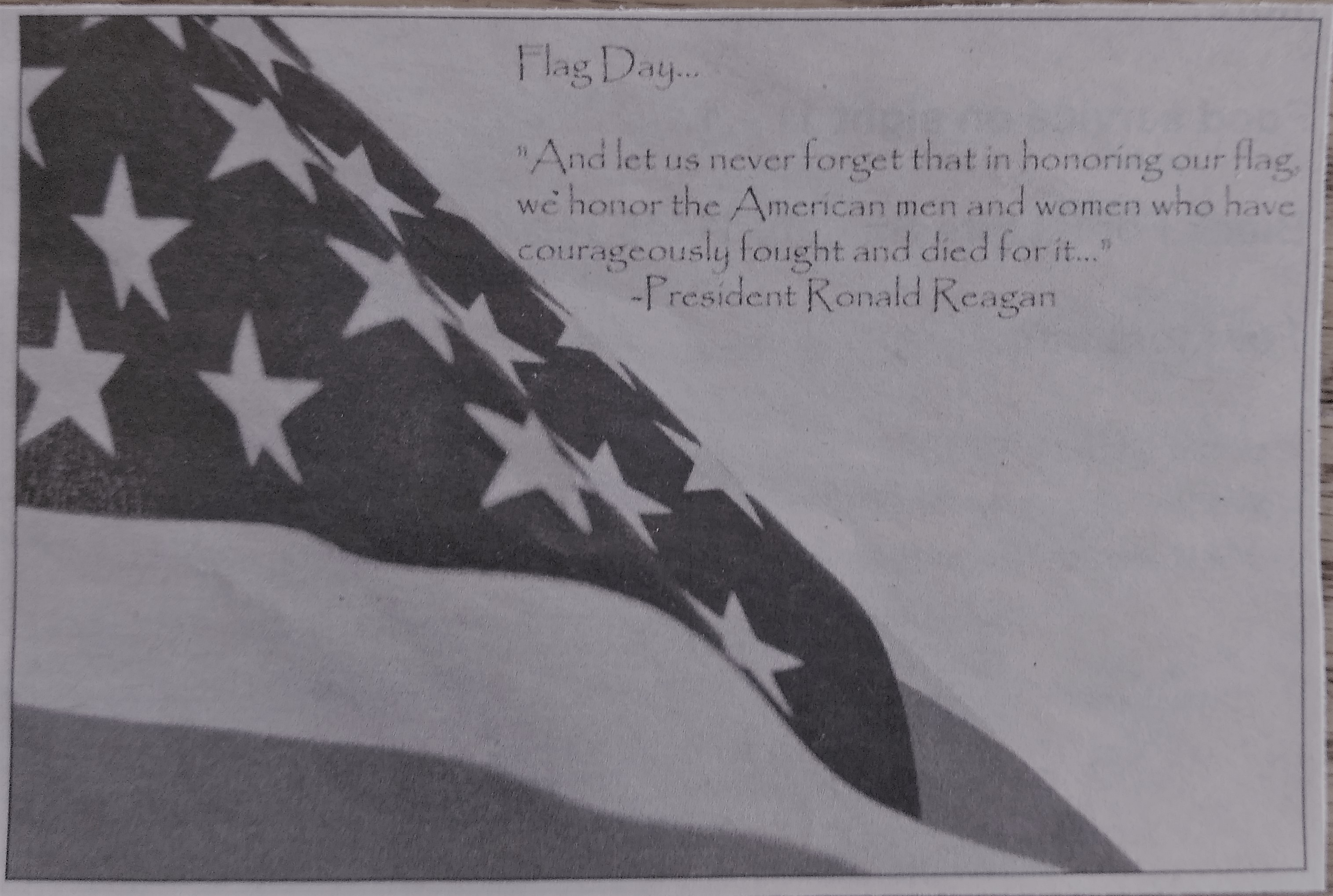
I unfurled my American flag off the back deck of our house yesterday. It’s a prominent location for the Stars & Stripes, where people passing by on the adjacent street can’t miss it. Then again, we live in a quiet neighborhood so I’d be surprised if many took notice. I’d be even more surprised if they knew why I was flying the flag. Perhaps you missed it too. Yesterday was Flag Day.

To be brutally honest, I’m not sure why America has a Flag Day. Oh sure, the history books tell us Flag Day commemorates the adoption of the U.S. flag, way back on June 14, 1777. One could argue there’s no amount of honor and celebration large enough for our country’s heritage and freedom. But Independence Day gets a whole lot more attention than Flag Day. Ditto Memorial Day and Veterans Day. At least those days are true “holidays” in the United States.
Flag Day was established in 1916, so what-do-ya-know that makes this year’s celebration the 100th anniversary. I didn’t see any parades or fireworks to commemorate the centennial, did you? Then again, I don’t think America fully embraces Flag Day. If we adopted our flag in 1777, why did we need another 140 years to give it a “day”? Flag Day isn’t even an official holiday in this country. The President has the discretion to decide if it should be celebrated in a given year. On that note, I don’t recall a proclamation from President Trump so maybe I should’ve kept my flag in the closet.

There’s further confusion about Flag Day. Congress didn’t put the commemoration into “law” until 1949, thirty-three years after Woodrow Wilson established the day. No states acknowledged Flag Day before 1937, when Pennsylvania became the first. Other states – notably New York – decided it made better sense to put Flag Day on a weekend, as in the second weekend in June. We can’t even agree on the date.
There’s history about Flag Day that precedes President Wilson, but it’s spotty. The earliest reference is 1861, when a citizen of Hartford, CT suggested the idea and the city put together a celebration. That didn’t take. I885, Bernard Cigrand of Waubeka, WI began a prolonged push for a U.S. Flag Day. After one local observance, he traveled around the country “promoting patriotism, respect for the flag, and the need for the annual observance”. Thanks to Cigrand, Wilson established Flag Day thirty years later. Cigrand is thus earned the title, “Father of Flag Day”.

Despite the facts, Flag Day still has me scratching my head. The “National Flag Day Foundation” celebrates – like New York – on the second Sunday in June, yet the Star-Spangled Banner Flag House in Baltimore and the Betsy Ross House in Philadelphia prefer June 14th (lending credence to “National Flag Week”). Parades and festivities take place around the country, but the discretion seems to be with the states as much as the President. Here in Colorado Springs, home of the Air Force Academy and several other military bases, Flag Day came and went without so much as a whisper.
Fifty other countries have a Flag Day so there is some legitimacy to the concept. But in many cases, those countries celebrate their independence as well. That makes a lot more sense to me. The flag is a connotation for liberty, so why not go with one holiday instead of two?
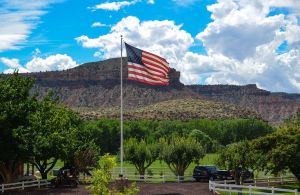
I admire the homes with the permanent flagpoles in the front yard, their owners pridefully raising the Stars & Stripes day in and day out. But Flag Day must be “just another day” to these people. Fittingly, americanflags.com describes Flag Day as “consistently overlooked yet universally beloved”. I’d agree with the first part of that statement.
With all due respect, I’ll continue to unfurl the Stars & Stripes on Flag Day, no matter how many people notice. If for no other reason, to echo the words of one of our most revered presidents:

Some content sourced from Wikipedia, “the free encyclopedia”.
-
To and Fro
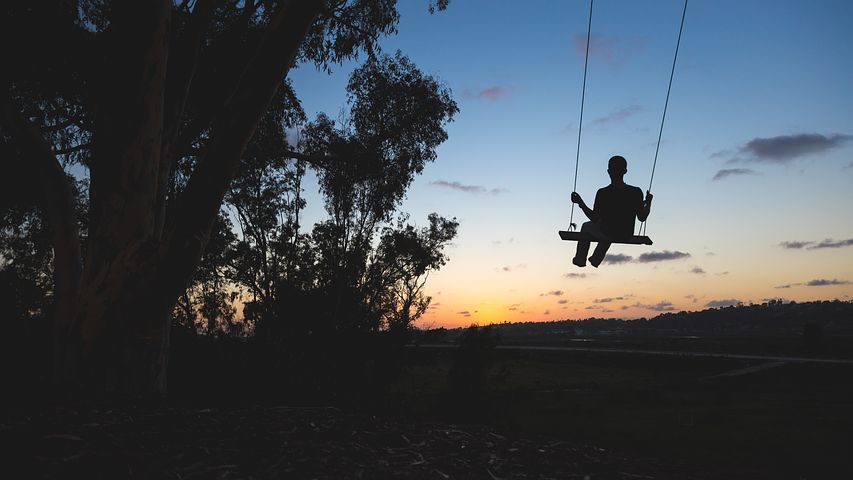
The band Lonestar penned a catchy tune back in 2003 called “My Front Porch Looking In”. The lyrics included the happy antics of the little family inside the house, implying the view “looking in” beat anything to the outside. That song enters my mind every now and then, especially with the view from my home office looking out over our property. Which got me to wondering, whatever happened to the front-porch swing?

Swings have withstood the test of time, in a world increasingly complex and sophisticated. The playground swings of my childhood – those chain-and-cloth contraptions suspended from a simple framework of iron pipes – are still in abundance in countless parks and schoolyards today. Just last week – as my daughter chose an apartment in a large complex in Los Angeles, I noticed the grounds were scattered with small open spaces, each with benches and fountains… and lots of swings.

I can still remember my early days aboard a swing. Once you figured out how to get your body to generate the momentum, there was no turning back from the addicting to-and-fro. The reckless objective was to see how high you could go – to the point where you’d almost fall out as you stared down at the sand from the sky above. If you really pushed it you could get high enough to cause the chains to lose their slack, resulting in a nasty jolt of the chains before you came plunging back to earth. Finally, there was the I-dare-you launch, where you completed the forward swing with a propel of the body skyward, then dropping to the sand. I often wondered if you could throw in a gymnastic somersault before you stuck your landing. Never tried it.

Just yesterday I passed a large carnival in a city park, with those bright, colorful thrill rides popping up higher than the trees. Sure enough, they had one of those massive swings, where a dozen or more riders are suspended in a circle and twirled up into space. That first rotation is a little unsettling, but I expect the rest is as relaxing as a merry-go-round.

Swings may still be in parks, but they seem to have gone missing from the front porch. Therein lies my favorite “swing memory”. My grandparents’ modest one-story house included a smooth concrete landing just outside the front door, facing a small lawn. On this spot lived one of those wonderful old mechanical porch swings. Picture a rocking couch really, with soft cushions and a cloth surround to keep in the shade and cool. Over time the swing developed a bit of a smell from years of rain and morning dew, but we kids didn’t care. Our feet easily touched the ground, creating the frantic engine of the to-and-fro. When two or three of us would sit side-by-side (arms folded so as not to – ewww – touch each other), we would rock the swing so hard it’s mechanics would protest as loudly as my grandmother. Sometimes we would lie down sideways and swing with just a push of the hands on the concrete.

No doubt, the appeal of the swing stems from those first few years of life, when all of us were rock-a-bye babies. Just watching or listening to the cadence of something going to-and-fro is almost as appealing as the physical feel. So when I see an adult on a swing, I’m not surprised. When I see the long line of rocking chairs at a Cracker Barrel restaurant, I’m not surprised. And when I find anything that goes back-and-forth, it gives me a sense of calm.

My front porch suddenly seems to be missing something. I should get a swing.











About Me
The sky is not completely dark at night. Were the sky absolutely dark, one would not be able to see the silhouette of an object against the sky.
Follow Me On
Subscribe To My Newsletter
Subscribe for new travel stories and exclusive content.
 Life In A Word