
Hello, I’m Veronica
The sky is not completely dark at night. Were the sky absolutely dark, one would not be able to see the silhouette of an object against the sky.


-
North Pole Vault
One of these days I’m going to visit Norway. The allure of Arctic glaciers, fjords, and waterfalls beckons me to snowshoe north of the Baltic Sea. My wife and I toured Denmark and Sweden a few years back, but if I were to choose only one of the Scandinavian countries it would be Norway. I must have a little Viking blood in me. In fact, my AncestryDNA results say I have about 14%.
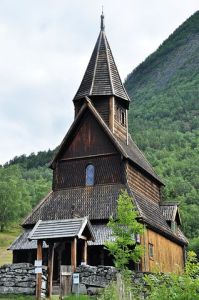
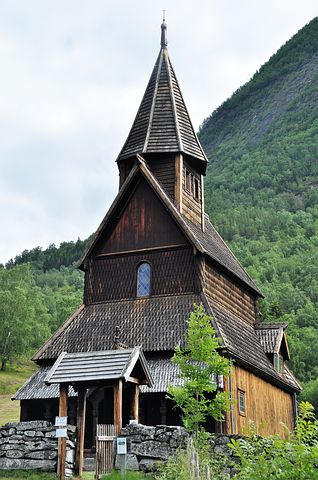
Besides its spectacular natural environs, Norway is known for hearty wooden structures that dot the land. Stave churches – quaint, timber-framed buildings from medieval times – can still be found in many of the villages. One of the most famous is likely the most recognizable structure in Norway – the Urnes church in Songnefjorden (above photo), built back in 1130 and still standing today.
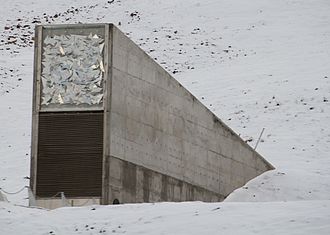
Here’s an even bolder proposition for my Norway expedition. After I make the pilgrimage to the Urnes church, I could hop a plane four hours to the north, to the island of Spitsbergen in the remote archipelago of Svalbard. I’m still in Norway but I’m a whole lot closer to the North Pole. And it is here, 430 feet above sea level, I would find what may become the future most recognizable structure in Norway: the Svalbard Global Seed Vault.
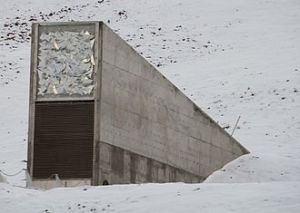
The Svalbard Seed Vault is exactly what it sounds like – a place to store seeds. Why would a country spend more than $9 million to build a seed vault? Because bad things happen in this world, putting our food supply at risk. After reading about Svalbard I learned there’s an entire network of seed vaults around the globe (including one right here in Colorado). These vaults contain food crop seed samples in the event the world “runs out” someday. But even the vaults themselves have no guarantees. The national seed bank of the Philippines was destroyed by fire, and the seed banks in Afghanistan and Iraq were lost to the ravages of war. That’s where Svalbard comes to the rescue.

Svalbard is the “seed vault for the seed vaults”. Think of it as a library. If one of the world’s vaults needs a replenishment of seeds (or some global crisis destroys the vault entirely), they “borrow” packets from Svalbard. Once more seeds are generated, a portion of them are returned to Svalbard to restore the library. Almost 900,000 food crop varietals are represented in Svalbard – by half a billion seeds. The facility is the size of a football field and all those seeds don’t even make it to the fifty-yard line. Plenty of room left for more.
Svalbard is likely the most secure seed vault on the planet because it’s buried four hundred feet inside a sandstone mountain, encased in the Arctic’s permafrost. Svalbard recently made the news when the vault flooded from snow melt and early season rain (that’s not supposed to happen – global warming anyone?) But the water didn’t make it any further than the vault’s entrance tunnel before it froze again. Sounds like all those seeds will be cold, dry, and undisturbed for a long time – just as the vault intends them to be.
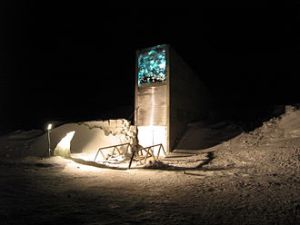
Here’s another reason to like Norway. Government-constructed projects exceeding a certain cost must include artwork. Svalbard was expensive enough, so the seed vault entrance is decorated with stainless steel, mirrors, and prisms, reflecting the polar light of the summer months. In the winter, the entrance is illuminated with greens and turquoises and whites through fiber-optic cables. With this installation we get to appreciate the “importance and qualities of Arctic light”. Pretty cool.
Sadly, if my Norway sojourn ever included the Svalbard Seed Vault, I wouldn’t get past the entrance. There’s no receptionist (nor any other staff members 0n-site). Instead the facility is monitored from a remote location around the clock. You have to pass through five levels of security to get to the seeds themselves. Tourists like me have no shot.
I won’t be getting to the Arctic anytime soon after all. As for Norway, I’ll have to be content with a visit to a Stave church or two. But I’m grateful for the Svalbard vault all the same. On that note, I think I’ll head over to Home Depot and buy a few seed packets for my summer garden.
Some content sourced from Wikipedia, “the free encyclopedia”.
-
Touched by Midas
We’re in the midst of America’s red-carpet season of horse racing; the trifecta otherwise known as the “Triple Crown”. Over the course of five weeks we’ll witness the fastest three-year old’s thoroughbred racing has to offer. The jewels of the Crown – the Kentucky Derby in Lexington, the Preakness in Maryland, and the Belmont Stakes in New York – showcase a combination of sport, fashion, and tradition like no other. Don’t miss the Belmont on June 10th; at a mile-and-a-half the longest of the jewels.

The service industry also has crown jewels. Apple, Starbucks, and Amazon deliver a customer experience just about as satisfying as the products they sell. FedEx is so reliable a delayed or lost package is not even a remote possibility. But let’s kick it up a notch and talk about the Ritz-Carlton Hotel Company. The Ritz-Carlton is such a renowned, decorated jewel of service excellence it deserves its own category. Only the Walt Disney Company could claim such preeminence.

My wife and I were fortunate to experience “the new gold standard” of Ritz-Carlton’s hospitality this past weekend. Celebrating our thirtieth wedding anniversary, we ventured into the Colorado Rockies for a couple of days of rest and relaxation at the Ritz in Beaver Creek, near Vail. Colorado is in “mud season” now – mid-May through Memorial Day – so mountain-town resorts deep-discount, befitting the budgets of mere mortals like us.
Pulling up to the Ritz, the valet offered us bottled water and whisked away our luggage and car. At the front desk we were assured a “lovely, quiet room far out on the north wing”. In the room itself the porter promptly stowed our bags and explained all the little details. With our modest room-service dinner our attendant produced a complimentary bottle of champagne and stack of those little pillow chocolates. Happy Anniversary!

But here’s where our story gets a little dicey. Sometime after midnight my wife and I woke to the sounds of a very nearby party. Turns out the room next door housed the groomsmen and a whole lot of guests from a wedding at the hotel. Blasting our sleepy ears: music, dancing, dozens of loud, happy voices, and… the unmistakable smell of marijuana. Thank you neighbors; my dreams were colorful enough already.
The next morning over room service breakfast, we voiced a carefully-worded complaint to the attendant who brought our tray. How many guests do you allow in a single hotel room? Is this a non-smoking hotel? Can you smell the still-pungent aroma of pot drifting under the doorway of the adjacent room?
Time for a taste of the Ritz-Carlton gold standard. Our attendant immediately comped our breakfast, assured us we would be moved to another room, and said to expect a call from the hotel manager. The manager told us another room was already being prepared and we would be moved at our earliest convenience. When the bellhop escorted us to the south wing, he was quick to note, “this is one of my favorite rooms in the hotel”.
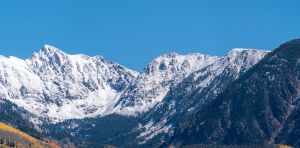
In fact, the room was breathtaking. The Ritz labels this one an “executive suite”, complete with large sitting room, fireplace, refrigerator, two televisions, two bathrooms, separate shower and bath, and a spacious outdoor balcony facing spectacular Vail Mountain. Safe to say, the remainder of our anniversary weekend was spent in unexpected luxury.
The gold standard of Ritz-Carlton service excellence is no secret. Early in their colorful history, the hotelier recognized no amount of luxury or elegance derives the same return as an attitude of “the customer is always right”. Every interaction begins with the thought, “The answer is ‘yes’! What is the question?” The hundreds of valets, bellhops, and concierges are trained as thoroughly as the management team, as they are the true face of the hotel. Thus are these employees always addressed as “Ladies” and “Gentlemen”. To add an exclamation point, the Ritz created a Leadership Center and Learning Institute, where thousands of managers from other companies train on the Ritz’s incomparable principles.

You can learn more about Ritz-Carlton’s brand of excellence by reading Joseph Michelli’s The New Gold Standard. You can also sign up for a session at their Leadership Center. My advice: stay at a Ritz hotel sometime (hopefully you have a “mud season”). Nothing explains the gold standard better than the Midas touch itself.
-
Game of Stones
Do you know the absurd story of the London Bridge? Built in 1831, the famous bridge lasted 130 years over the Thames River before overwhelming traffic demanded the construction of a new one. So, what did London do with the old one? They sold it. Robert McCulloch, an American oilman, paid over $2 million to have the bridge dismantled into pieces, shipped to the coast of California (through the Panama Canal), trucked across the desert to the edge of Arizona, and reconstructed in newly-established Lake Havasu City. Look at that photo below – that’s a lot of truckloads. Call him crazy but McCulloch recouped his bridge money by selling the surrounding desert properties to retirees. He also took several thousand bits of the bridge and put them in tiny glass bottles for souvenirs. I bought one of these bottled bits when I was a kid.
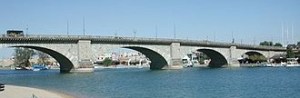
The London Bridge story came to mind this week after reading a Wall Street Journal article about Hawaii. It seems volcanoes are making their way to mainland America much the same way the London Bridge made its way to Arizona. Tourists to Hawaii’s Volcanoes National Park – the 500-square mile preserve on the Big Island – are stuffing lava rocks into their suitcases as souvenirs; some over a foot long. I’d like to see the size of the volcano you could build from all the lava bits stolen (yes stolen; helping yourself to rocks in a national park is technically illegal). That volcano would be hundreds of feet taller than the paper mache science project you assembled in your youth (baking soda + vinegar = lava flow!)

This rock-robbing in Hawaii is big business. How do I know? Because the real story here is the hundreds of rocks being returned to Volcanoes National Park. Park rangers claim they’re receiving mailings every day, each containing a) a stolen lava rock, and b) a letter of apology. Turns out – if you believe this sort of thing – taking lava rocks puts a curse on your life and bad things start to happen. In one case, a tourist claimed his sons began having behavioral problems, his marriage fell apart, and his mother died; all within a few months of bringing home a lava rock.

The Hawaiian Goddess of fire, lightning, wind, and volcanoes – Pele – is responsible for the curse. She is credited with creating the Hawaiian Islands in the first place. Her domain encompasses all volcanic activity on the Big Island, and she’s known for her power, passion, jealousy, and capriciousness. Yo, don’t take Pele’s rocks!
(Note: as I was reading up on “Madame Pele” I recalled the 2014 computer-animated short “Lava”. Remember the story, about two volcanoes who fall in love – “Uku” and “Lele”? Maybe Lele was Pele in disguise – casting her powerful curse from the big screen!)

My wife and I went to Hawaii on our honeymoon thirty years ago. We saw several volcanoes but never did we consider taking a lava rock home (loading up on pineapples and several boxes of chocolate-covered macadamia nuts instead). I mean really, what do you do with a lava rock: display it in your living room as if you own a share of Hawaii?
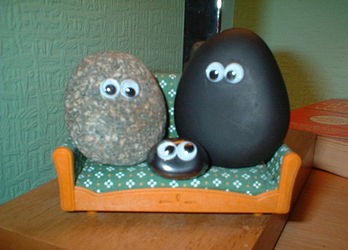
Perhaps these rock-robbers are the same peeps who fell for Pet Rocks in the 1970’s. If you weren’t around back then, Pet Rocks were smooth stones gathered from Mexico’s Rosarito Beach. They had cute painted faces and were sold as if live animals, in little boxes with straw beds and breathing holes. They included a lengthy training manual to “properly raise and care for one’s new Pet Rock”. (The easiest commands were “sit” and “stay”.) The Pet Rock phenomenon was as absurd as rebuilding the London Bridge, yet 1.5 million were sold for four dollars apiece in a six-month frenzy. Gary Dahl – “founder” of the Pet Rock – became an instant millionaire.

My conclusion on all this rock talk? Real people are as capricious as Hawaii’s fiery goddess. London Bridge inspired a nursery rhyme (“… is falling down…”) so we sing about rocks. Hawaii’s volcanoes inspired a Pixar story so we watch a movie about rocks. But stealing rocks inspired a curse, cast on all who dare to help themselves. No thanks, Pele. Put it in stone; if I must have a rock I’ll take my chances and invest in the $4 pet-friendly variety instead.
Some content sourced from Wikipedia, “the free encyclopedia”.
-
Refining Buy-Products
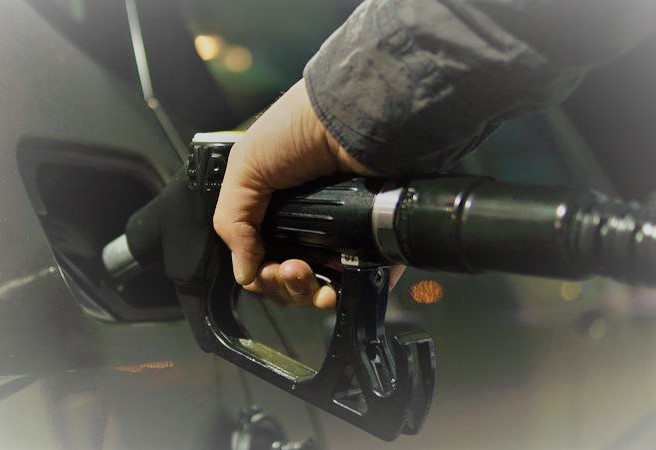
Let’s chat about your last visit to the gas station (assuming you don’t own a “plug-n-play” vehicle). Chances are you hit the pumps in the last week or so. If you’re like me you drove in and drove out, mindlessly fueling to be on your way again as fast as possible. But lately I’ve learned there’s more than meets the eye as you fill-er-up. We’re all unknowingly playing the great retail chess game known as dynamic pricing.
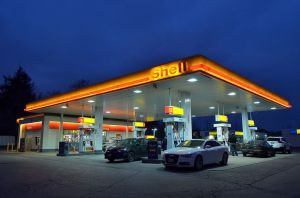
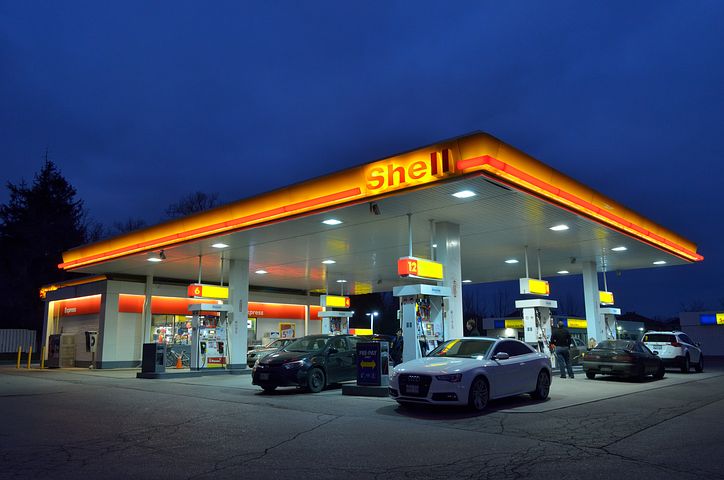
Here’s the drill. My local Shell station asks me a lot of questions before I get my first drop of unleaded (which makes me crazy but what choice do I have?) Cash or credit? Rewards Program number? Zip Code? Car Wash? Paper Receipt? All that info is “pumped” out of me (ha) up front. Even then I must choose the octane before I finally get what I came for.
Now here’s the rub. Every one of those data points feeds a Watson-like computer somewhere far removed from the gas station. Watson brews a big customer-transaction stew, mixing in time-of-day, day-of-week, gallons purchased, and even weather conditions. The result? The “optimal” price point, delicately balanced between a) what you the consumer are willing to pay and b) what the supplier wants to net. It’s a price-per-gallon computation that changes as many as ten times a day.
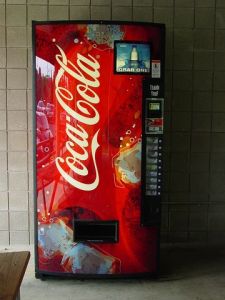
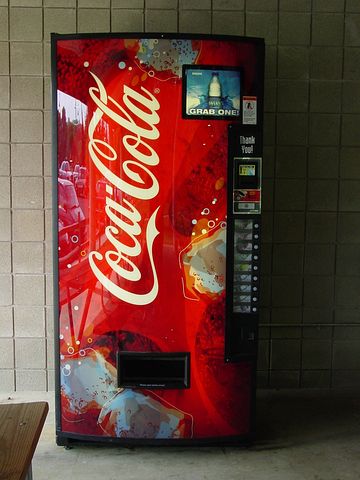
Coca-Cola may get the credit for the advent of dynamic pricing – with soft-drink vending (almost 20 years ago now). Coke added a heat sensor and a computer chip to their machines, and as the outside temperature increased so did the cost of a soda. Bad taste, and bad decision. Consumers figured out the game and raised a big stink. The running joke at the time – maybe not so funny today – was Coke would next install a camera to determine how much change was in your pocket. Pepsi seized the opportunity to lure the unhappy customers and Coke quickly dropped the techno-gimmick. But dynamic pricing took hold and never looked back.
Dynamic pricing is easier to digest when it targets times or situations where customers don’t notice or don’t even care. The better example is school supplies. Towards the end of summer your local Wal*Mart or Target will deep-discount pencils and paper and the like, often as much as 50%. Kids will flock to the sale and load up on everything they need. Parents will give their receipts an approving smile. But guess what? The store still wins. That’s because “impulse purchases” bagged up with the school supplies are priced slightly higher than usual, more than offsetting any loss from the sale.
Dynamic pricing is hardest at work in hotels (what rate makes sense to fill that empty room?), utilities (do you really need the air conditioning right now?), and outdoor sporting events (are you willing to watch your baseball team during that unexpected rainstorm?). And of course, any time you shop Amazon or Uber, dynamic pricing is asking the question, “how much do you really want that product or ride?”
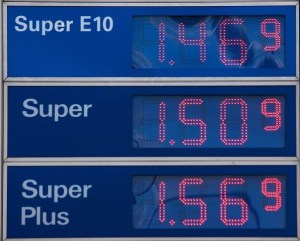
Let’s pull up to the pumps again. If you use “GasBuddy” or some other app designed to locate the lowest price-per-gallon, you’re winning the battle – but not the war. I wish I had GasBuddy the first time I filled up as a teenager. I crunched the numbers: forty years of driving; a tank of gas per week; eighteen gallons or so per tank. If I purchased at $0.03/gallon less each time I filled up, I’d have an extra $1,000 in my pocket by now.
Thanks to Watson and his endless algorithms however, GasBuddy isn’t much more than instant gratification. The suppliers are always one step ahead. Unless you keep an eye on prices (and a few gallons in your tank), you’ll inevitably purchase when your demand takes priority. Did you know gas is less expensive in the early hours of the day? That’s because commuters are more likely to fill up at the end of the day, when they unknowingly drive up demand. The computer is only too happy to adjust the price.

Maybe now you’ll leave the house a little earlier in the morning. Fill up on your way to work instead of on your way home later in the day. You will save a couple of cents per gallon if you do that. And good for you – you’re beating the dynamic-pricing game.
Just don’t buy a cup of coffee while you’re at it.
-
Down Goes The Flag
Lately it seems the American flag is more often at half-staff than not. When the flag is at full-staff I get lost in the surrounding scenery, with just a passing glance at the Stars & Stripes. But at half-staff the flag is an effigy of its prouder self. It might as well be illuminated with several of those Hollywood-style searchlights, as if to say, “something’s wrong with this picture.”
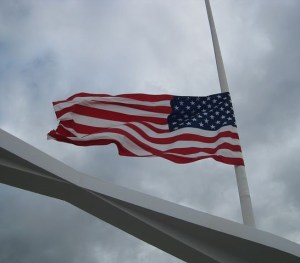
There is something wrong with this picture: I don’t immediately know the reason the flag goes to half-staff. There’s no accompanying billboard to tell me who or what we’re commemorating with this gesture. In fact, it wasn’t until I wrote this piece that I navigated to halfstaff.org (of course there’s a website), where you can learn why and when the red, white, and blue becomes more than just the unfurled symbol of America’s freedom.
Let’s get two misconceptions out of the way. One, the flag is not considered “half-mast” but rather “half-staff”. If the flag is “half-mast” you’re probably rocking and rolling on a ship at sea instead of standing on dry land (but the significance remains the same – respect, mourning, distress, or a salute). Two, the flag is not “raised to half-staff”. First it is raised to full-staff, paused, and then lowered to half-staff for the rest of the day. But unless you’re there at sunrise you’ll probably miss that little detail.

“Half-staff” dates to the century before America’s founding fathers. Today the President issues the request through executive order, and all government facilities (including schools and military bases) are expected to comply. Typically, we’re commemorating the death of a prominent government official, whether on the day of passing or the day of remembrance. And speaking of passing, the gesture of lowering the flag is said to make room for an “invisible flag of death” flying above. I kind of like that.
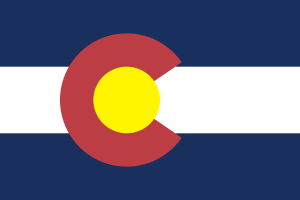
As if to play copycat, state, city, and other flags and pennants are expected to follow suit whenever the American flag goes half-mast. But state flags can go half-mast by their own right. Here in Colorado our state flag has been lowered more than twenty times in the past five years. Just yesterday our governor ordered half-mast, to honor the passing of Ray Kogovsek, a former Colorado lawmaker and U.S. Congressman.
The American flag is also flown at half-mast to acknowledge days or events in U.S. history. Thus, you can expect the raise-then-lower on Memorial Day, Pearl Harbor Remembrance Day (12/7), and what is now called Patriot Day (9/11). Also since 2001, the flag is flown at half-mast in conjunction with the annual National Fallen Firefighters Memorial Service.

Several similar gestures to half-staff – especially since the advent of social media – have emerged to enlighten us to those who suffer. Think about all those “Awareness Ribbons” (or bracelets), displayed on clothing and cars. Their meaning is linked to their color, as in the following examples: Blue – Drunk-driving intolerance; Pink – Breast Cancer awareness; Rainbow – Gay Pride and support of the LGBT community; White – Victims of terrorism or violence against women; Yellow – Support of U.S. troops (among a dozen other designations), but generally a symbol of hope.
Recently I’ve noticed houses in our neighborhoods with a single green light brightly illuminated next to the front door at night. As I discovered here, I’m seeing the “Greenlight A Vet” program, meant to “show America’s veterans the appreciation they deserve when, back home and out of uniform, they’re more camouflaged than ever.” You can even purchase and/or register your green light on the website as a show of solidarity. 9.3 million people have done just that. Four are right here in my zip code.

The green lights do catch my attention. As a civilian I don’t think our veterans get nearly the appreciation or respect they deserve, so “bravo” to the program. But the American flag doesn’t get the appreciation or respect it deserves either (a topic for another post). Thankfully, it’s hard to ignore the right-but-somehow-wrong image of the Stars and Stripes at “half-staff”.








About Me
The sky is not completely dark at night. Were the sky absolutely dark, one would not be able to see the silhouette of an object against the sky.
Follow Me On
Subscribe To My Newsletter
Subscribe for new travel stories and exclusive content.
 Life In A Word