
Hello, I’m Veronica
The sky is not completely dark at night. Were the sky absolutely dark, one would not be able to see the silhouette of an object against the sky.


-
Out of Sight
Jake Olson is a student at the University of Southern California. He’s a backup long snapper for the celebrated Trojan football team, and aspires to play golf on the PGA Tour after college. John Bramblitt is a budding artist whose work sells in more than twenty countries. He paints primarily by touch, claiming “different colors have different textures”. Christine Ha is an award-winning chef who never had a minute of formal training, yet developed a popular cooking blog and won the 2012 edition of the television show MasterChef. Why mention these three achievers in the same paragraph?
They are all legally blind.

Two weeks ago – unbeknownst to just about all of America – we “celebrated” White Cane Safety Day (WCSD). A national observance since 1963, WCSD was established by the National Federation of the Blind to remind the public about the significance of the white cane. In 1930, blind people were given the freedom to lawfully move about the U.S. on their own, provided they used the white cane to navigate their way. The implication is prior to 1930, blind people were either confined to their homes or could not move about without the assistance of another person. My parents explained the meaning of the white cane the first time I saw a blind person on the street, but it never occurred to me the cane signifies a legal status.

Seeing may be believing (as the saying goes), but blindness takes belief to an entirely different level. The people I mentioned above are just a few of the countless examples of accomplishments in all walks of life, minus the sense of sight. Surely you can name a blind person without resorting to Google. Ray Charles. Helen Keller. Andrea Bocelli. Stevie Wonder. Aldous Huxley. And those are just the famous ones.
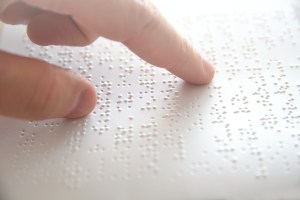
Speaking of the famous, I recall – somewhere in the piles of books I read as a teenager – the fictionalized biography of Louis Braille. Just as Irving Stone did for Michelangelo in “The Agony and the Ecstasy”, the author added fiction to fact to bring the story of the famous French educator/inventor to life. Braille’s blindness occurred in his youth: the infamous accident with the awl in his father’s workshop (surely inspiring the plea of parents, “Don’t play with that! You’ll put your eye out!”) Remarkably, at only fifteen years of age and already blind, Braille took the very same awl and developed a method of reading/writing for his counterparts virtually unchanged to this day. It reminds me of Beethoven, who lost his hearing in his early twenties yet somehow composed some of the world’s most famous symphonies and piano concertos. Belief at an entirely different level.

Convenient to my topic, a new movie debuts in theaters this week called “All I See Is You”. Starring Blake Lively and Jason Clarke, the story concerns a marriage where a blind spouse depends on her partner to see and feel the world around her. Dependent, that is, until a corneal transplant allows the woman to regain her sight. As you might expect, bringing vision to the blind is not all it’s touted to be. A similar story was told in 1999’s “At First Sight” with Val Kilmer and Mira Sorvino.
Christopher Downey is an architect who, shortly after training in the profession, lost his eyesight to a tumor wrapped around his optic nerve. No problem, apparently. Downey now produces drawings from a tactile printer – raised lines akin to Braille’s raised lettering system. As if you needed another example of belief.
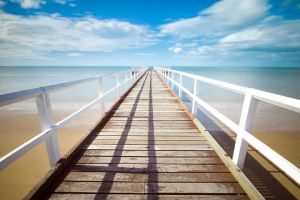
I used to yearn for “as far as the eye can see”, considering the eye doctor routinely issues me a prescription far less than 20/20. Thanks to these inspirational people however, it’s fair to say my vision is actually limited by my sight.
-
Pan-Pacific Keepsake
A year ago I wrote a piece called Athens of the South, a reference to the city of Nashville and its remarkable full-scale replica of the Greek Parthenon in downtown Centennial Park. The Nashville Parthenon is a leftover from the 1897 Tennessee Centennial and International Exposition. If you ever visit the ruins of the real Parthenon, you might want to add Nashville to the itinerary to see how the structure looked in its full splendor.

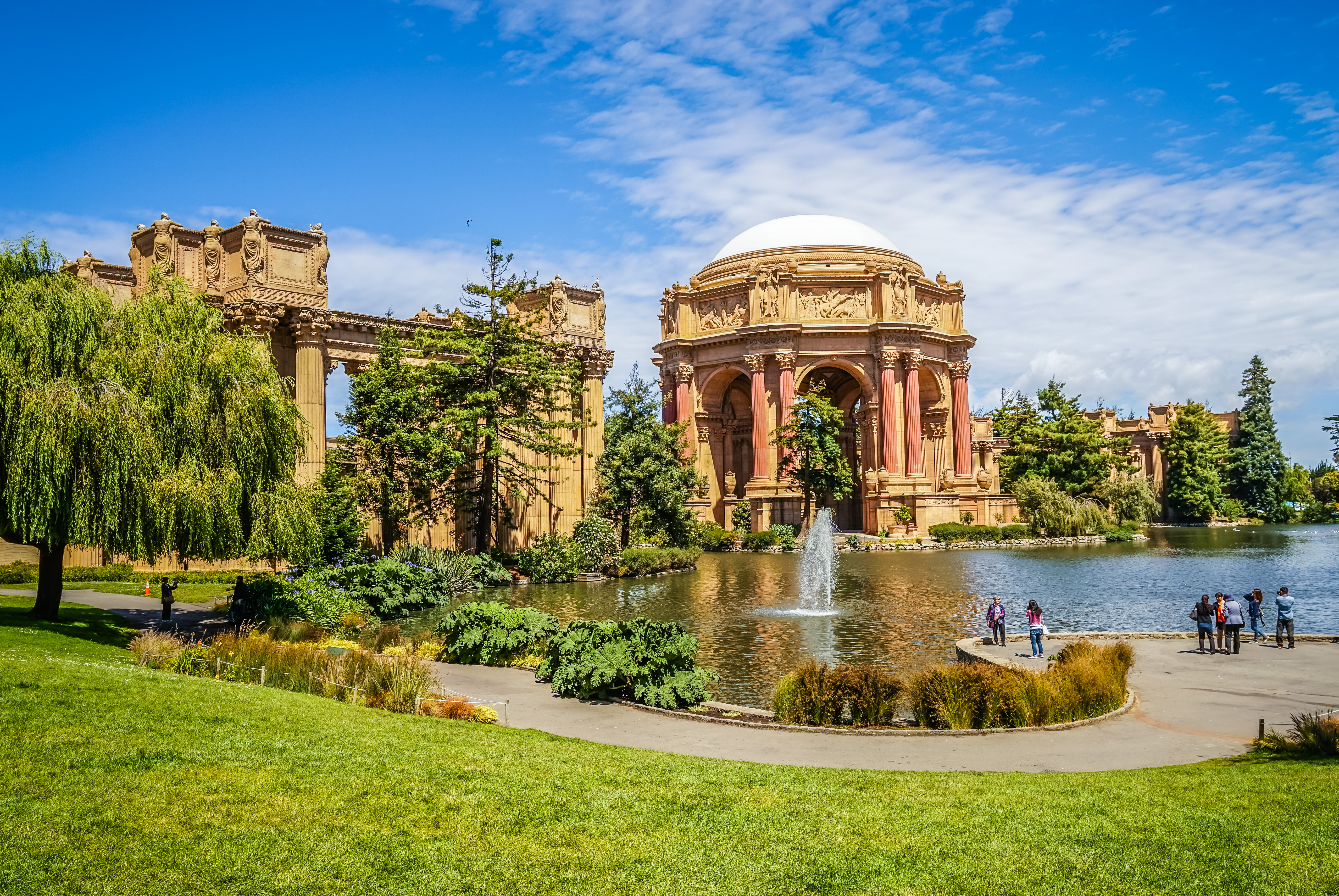
Shortly after my trip to Nashville, I traveled to San Francisco for my niece’s wedding. She chose a remarkable venue for her ceremony – outdoors under the dome of the elegant Palace of Fine Arts, near the Golden Gate Bridge in the Marina District. The Palace, as it turns out, has much in common with the Nashville Parthenon. Despite more popular attractions, both structures belong on the “must-see” lists of their respective cities.

The Palace of Fine Arts, like the Nashville Parthenon, is one of the few remaining structures from its World’s Fair; in this case San Francisco’s 1915 Pan[ama]-Pacific International Exposition. Typical of a World’s Fair, the Pan-Pacific showcased products, inventions, and cultures of the day, and remained open to the public for almost a year. The 600+ acres of San Francisco’s Marina District (where I rented my first post-college apartment) served as the Exposition’s central footprint, with the Palace on the west end and “The Zone” of amusements and concessions on the east (near Fort Mason). Even though the Pan-Pacific’s structures were designed from plaster and burlap – to literally fall to pieces after a year, a few have been preserved to this day. The Civic (Bill Graham) Auditorium is a Pan-Pacific structure in its original location. The Japanese Tea House was loaded onto a barge and shipped down the bay to the town of Belmont, where it still stands today as a restaurant. Two of the Exposition’s state pavilions (Wisconsin, Virginia) were relocated to nearby Marin County.

The Pan-Pacific Exposition – like the Tennessee Centennial – brimmed with remarkable structures, including ten exhibition “palaces” and the 435-ft. tall Tower of Jewels. Surely none of these were more elegant than the Palace of Fine Arts. My first visit to the Palace was back in the 1970’s, when it housed the Exploratorium, a kid’s-dream hands-on maze of exhibits showcasing the wonders of mechanics, physics, and chemistry. The Exploratorium filled the Palace’s Exhibition Hall for 44 years before moving to its current location in the Embarcadero. The Exhibition Hall was all about art for the Pan-Pacific, but it’s had several creative uses since, including tennis courts, storage of military trucks and jeeps, and a temporary fire department.

Let’s be honest though – the Exhibition Hall is not why you visit the Palace of Fine Arts; at least not anymore. You’ll be captivated by the glorious Roman/Greek-inspired structure of dome, rotunda, and adjoining pergolas instead. Take a walk between the colonnades to get a sense of its monumental scale. Have a picnic on the grassy shores of the lagoon. The Palace’s best photo opp: on the east side of the water under the Australian eucalyptus trees. Your view is uninterrupted, and mirrored in the water’s reflection. It’s a popular spot for wedding photos, as my wife and I discovered thirty years ago:
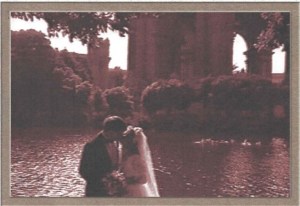
Personal connections or not, I like to think of the Palace of Fine Arts as a large-scale keepsake; a reminder of those simpler-yet-somehow-more-elegant days and generations gone by. Perhaps the Palace gazes forlornly to the east, seeking the grandeur and crowds of the 1915 Pan-Pacific International Exhibition. Perhaps she’s content to just watch over the parade of newlyweds on the far side of the lagoon. Either way, I’m glad she’s still around. Like the Nashville Parthenon, the Palace of Fine Arts is fine art.
Some content sourced from Wikipedia, “the free encyclopedia”.
-
Atlas Joins the Family
My wife and I embarked on an extensive remodel of our house a week ago. We’re rewarding ourselves for removing “college tuition” from the family budget (an expense we’ve battled for the last ten years). Our remodel aims to remove a bearing wall between the family room and kitchen, rewarding us with unobstructed views from the east-side entry to the west-side windows, and the glorious Colorado Rocky Mountains beyond. It’s a construction zone around here for the better part of two months. The master bedroom and the horse barn are our only refuge.

Removing a bearing wall usually requires a little structural re-engineering, and this project is no exception. We have two bedrooms and a bath upstairs which would come a-tumblin’ down like Jericho’s walls if we took sledgehammers to the studs. Rather, the work begins down under, below the pulled-back carpet of our finished basement. From the naked foundation we excavated a 42″ x 42″ block of standard concrete, to be replaced with several bags of the 5,000 PSI compression-strength variety. You need the heavy-duty stuff if you’re going to hold up a house.
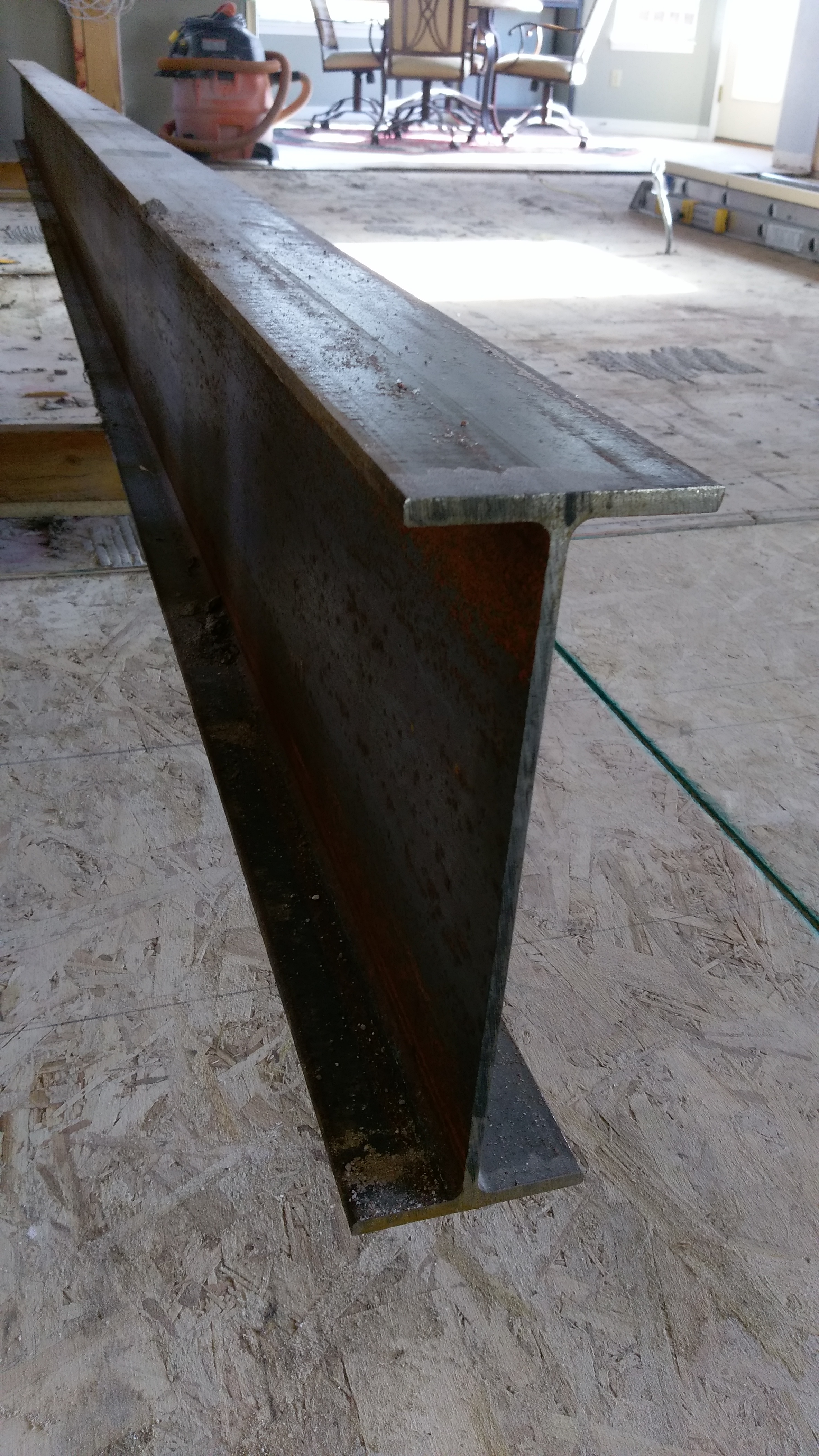
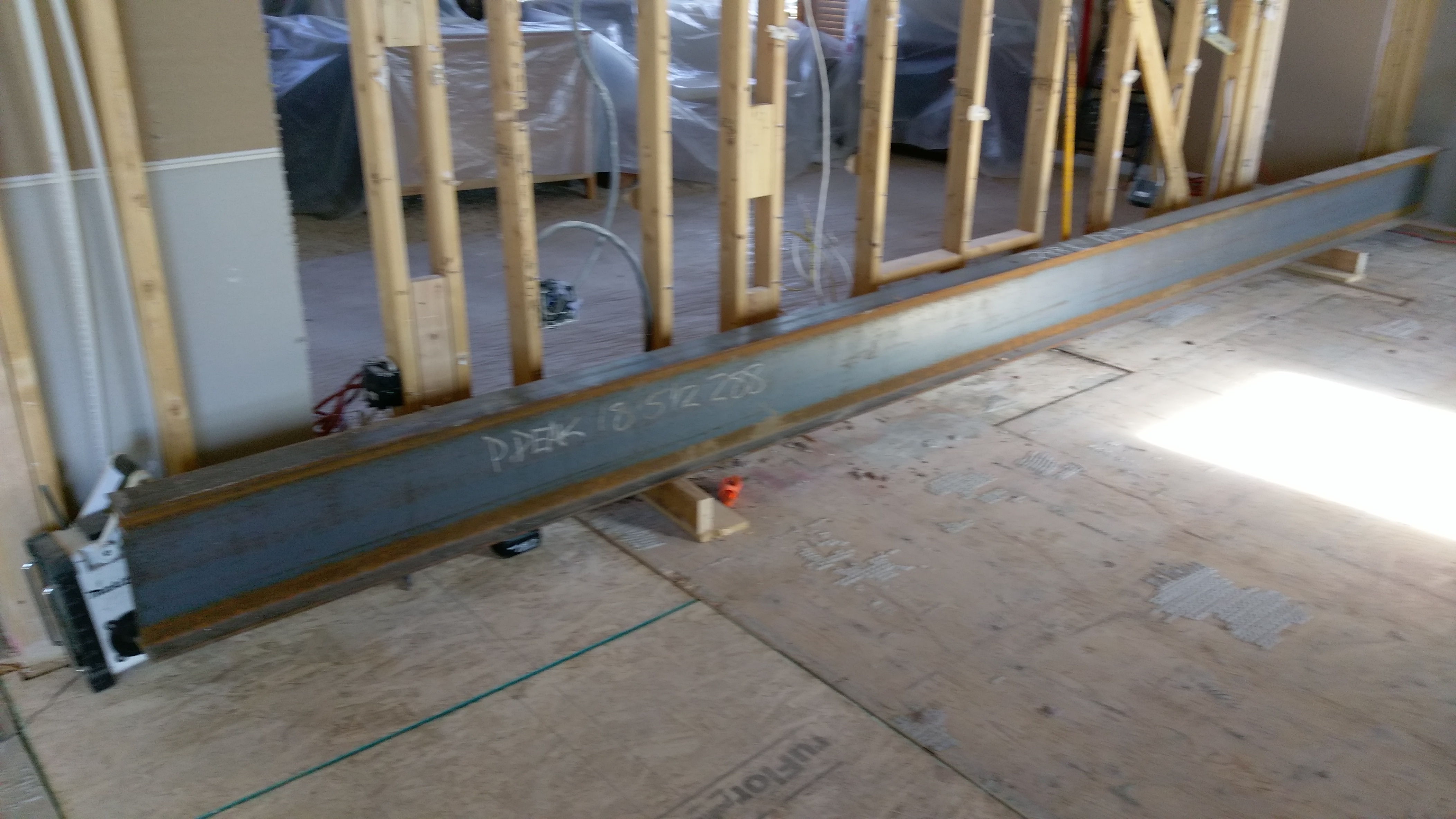
This super-strength basement footing will support a solid steel post, rising to the main floor and framing the north end of the new opening. The south end already has a post. And spanning the top of both, eighteen feet long and weighing in at an impressive four hundred pounds, is our new friend Atlas.
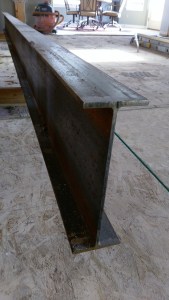

Atlas is a big, bad, beautiful, hot-rolled I-beam, formed from pure American steel. When this behemoth landed in our driveway last Friday my first thought was, “not very big”. Atlas would’ve smiled if he could, because he didn’t budge a millimeter when I made him pose for a photo. Or maybe he’s just a stubborn I-beam.

Atlas gets his name from the god in Greek Mythology, of course. Atlas and his brother Menoetius lost a war to the Olympians (never should’ve sided with the Titans, boys). Menoetius went to a dungeon of torment and suffering. Atlas went to the western edge of the world, forced to hold up the sky for all eternity. Several statues depict him holding up the earth, but in fact Atlas’s burden is the sky. One time, “clever” Atlas handed off the sky to a guy named Heracles with the promise to fetch him some golden apples. But Heracles realized it was a ploy to exchange the burden. When Heracles convinced Atlas to briefly hold up the sky again so he could “rearrange his cloak on his shoulders”, Heracles grabbed the golden apples and ran away. Not so clever for a Greek god. I hope our own Atlas is a little more accountable to his burden than his namesake.

Perhaps your first thought of “atlas” is a book of maps instead of a Greek god. Perhaps you’ve been to the Atlas Mountains in northwestern Africa. Maybe you’ve read all 1,168 pages of Atlas Shrugged, the 1957 dystopian novel by Ayn Rand. Did you know the Atlantic Ocean is named for Atlas? Ditto the fictional island of Atlantis? At the very least, you have an atlas on your person: the first vertebra supporting your head. Now you can add a new definition to the list. Atlas is an I-beam in a house in Southern Colorado.
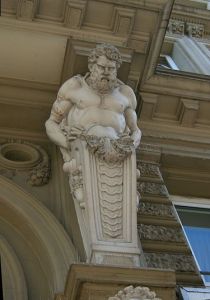
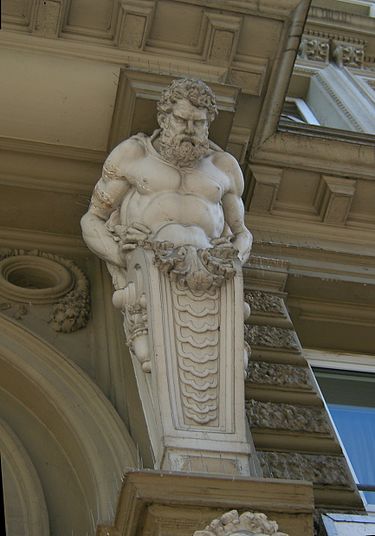
Final thought. After naming our I-beam, I was delighted to learn an atlas is also defined as “a support sculpted in the form of a man, which may take the form of a column, pier or pilaster”. No, I’m not about to sculpt my big, bad, beautiful, hot-rolled I-beam, but it’s nice to know our remodel has a bit of classical European architecture influence.
Some content sourced from Wikipedia, “the free encyclopedia”.
-
Refuge and Reassurance
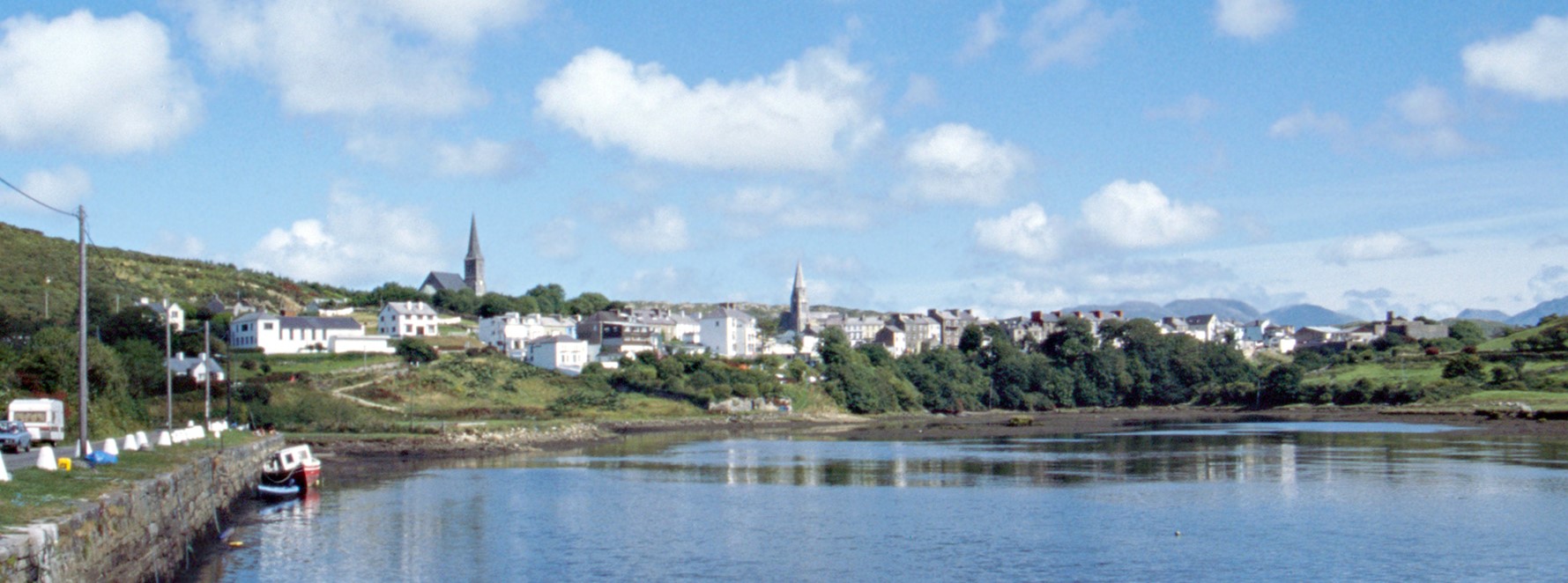
When the world goes off the rails like it did this week in Las Vegas, the very human reaction is fight or flight. Fight as in help to those who were impacted. Flight as in shelter; consolation from an incomprehensible tragedy. My own flight, in extreme instances like this one, sometimes takes the form of fond memories of a journey my wife and I made five years ago, to a remote village on the west coast of Ireland called Clifden.

For those who travel to Ireland, Clifden is rarely on the itinerary. It’s a four-hour cross-country drive from Dublin, and the final ninety minutes meander along a two-lane road through the forested expanse of Connemara National Park. Clifden has a modest history for all of its two hundred years on the map. The town evolved from farmers and fishermen who lived in the region, its commerce bolstered by the heir of a nearby castle. Like most towns in Ireland, Clifden suffered the blight of the potato famine and the onslaughts of rebels from the north. Its only claim to fame is the location of Marconi’s first wireless telegraphy station to the near south, broadcasting messages across the Atlantic to Nova Scotia in 1905. Today Clifden has 2,000 inhabitants, still looking the part of “two churches, two hotels, three schools, and 23 pubs” it boasted in the early 1800’s.
As my wife and I discovered, Clifden is the very definition of “off the beaten path”. We stumbled upon its welcoming neighborhood very much by chance. Our intended stop was Galway that day, but once in the city-center (and having survived a five-lane roundabout), we yearned for something smaller and less urban. Heading north along the coast and with dusk turning to dark, we experienced the thrill of the uncertainty of locating our as-yet-unknown destination.
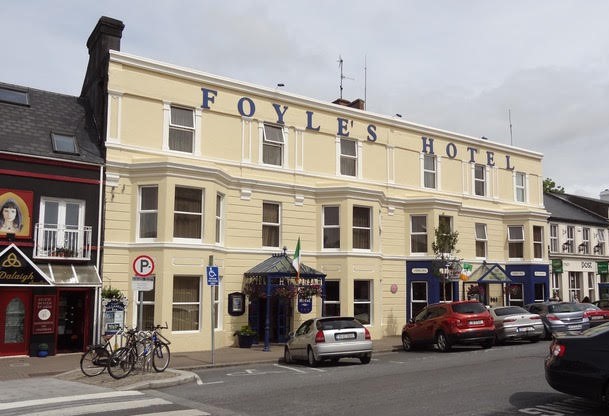
After a middle-of-the-road stop for a funeral procession (popular guy, judging from the dozens of people descending upon the nearby church), and then passing by the dignified Kylemore Abbey, little Clifden emerged from the coastal fog. We stopped into the first bed-and-breakfast we could find, but there were no rooms at such a late hour. Instead, we were directed to the larger/older Foyle’s Hotel a couple of streets away. What a blessing in disguise. Foyle’s was the perfect introduction to the charms of Clifden. A turn-of-the-century grand dame with wide hallways, creaking stairs, and no elevator, we felt like we’d stepped back in time a century or more. Dinner was served in an elegant main-level salon just off the reception area, soft music playing in the background. Our spacious room looked down on the center of town from one of the second-floor windows you see here.
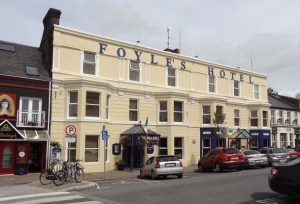
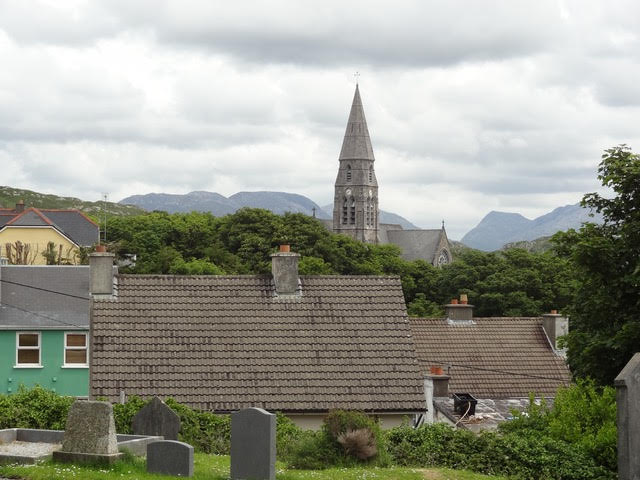
The next morning, we took to Clifden on foot, wandering its quaint, narrow, up-and-down streets. We stopped in at Walsh’s Bakery for breakfast, walking away with a few of the more tempting choices from the case. We then stopped in at St. Joseph’s Catholic Church, one of the two spires accenting Clifden’s modest skyline. We climbed to the higher part of town for a look down to the lazy harbor activity along the quay. More than any sight or sound, we simply embraced Clifden for what it was; a quiet seaside village; is inhabitants contentedly going about their business. In contrast to bright and busy Dublin, Clifden summoned a much-needed deep breath and a moment of halcyon reflection.
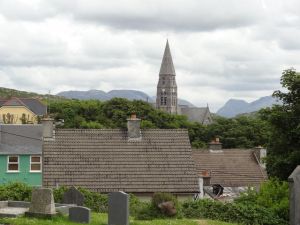
Perhaps our travels will bring us back to Clifden someday. But the more I consider the idea the less inclined I am to make it happen. Our idyllic experience was predicated on the chance decisions making our visit happen in the first place, the wandering road leading us to its cobblestone streets, and the saving grace of vacancy at the Foyle’s Hotel.
In Gaelic, Clifden means “stepping stones”. That’s a nice coincidence, since my fond memories seem to guide me back to a more content frame of mind. I keep the following illustration in my home office. With just a glance I can find reassuring refuge once again.

Some content sourced from Wikipedia, “the free encyclopedia”.
-
Game Over
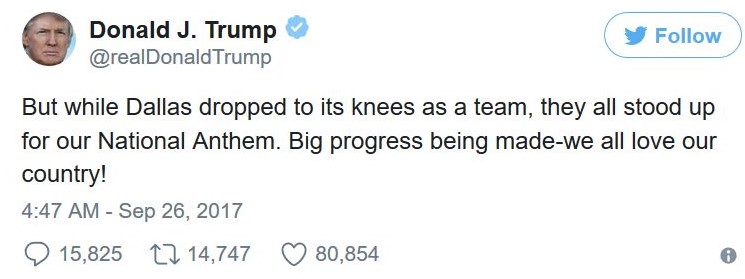
Tag the Dallas Cowboys with “politically correct” for their actions Monday night. The National Football League staged fifteen games last weekend – and thirty protests – but it wasn’t until the final contest Monday night where we saw something bordering on considerate. With the Cowboys, we witnessed unified “free speech” and regard for the American flag; neither action compromising the intent of the other.

If you missed Monday night’s game you would’ve been misled by Tuesday’s headlines, including, “Jerry Jones Leads Cowboys in Taking a Knee…”. Jones – the Cowboys’ owner, president, and general manager – did take a knee, but he did so alongside his players and coaches; a unified show of disagreement with President Trump’s comments. More importantly, Dallas knelt prior to the national anthem, so as not to confuse protest with allegiance to country. During the anthem, the team stood with arms locked together and helmets removed. I’m okay with that approach. Even President Trump is okay with that approach.
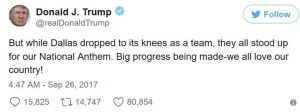
As for the other twenty-nine teams, it was myriad versions of disunity and disrespect before kickoffs. (NPR’s website lists them all here). Random players knelt during the anthem while other stood – a visibly mixed message. Owners and coaches stayed away for the most part, suggesting the same divisiveness alluded to by the President. The Pittsburgh “Kneelers”, Seattle Seahawks, and Tennessee Titans – in total contempt of country – stayed off the field entirely during the national anthem.

Athletes exercising their right to free speech in sports venues is a distraction and nothing more, at least to the average fan. The football field is simply not an effective platform for politics. I, along with millions of others, tune in to watch the game, so anything outside the action itself (i.e. commercials) is irritating. It’s the same reason I no longer watch awards shows; I don’t want the inevitable helping of political commentary along with the acceptance speeches. The day the same thing happens in movie theaters is the day I buy my last ticket. Sports and other entertainment venues should be escapes from the endless newsreel of the real world.
With the NFL, I’d argue the protests are not just irritating, but damaging. Based on the number of emails Sports Illustrated received from disgruntled fans after last weekend, viewership is already taking a significant hit. The NFL can’t afford to lose viewership. The league is having enough trouble dealing with losses of sponsorship, and lawsuits tied to chronic traumatic encephalopathy (CTE). Forget about viewers; one of these days the NFL might not have players.

Tyler Eifert, a tight end for the Cincinnati Bengals and a graduate of my alma mater Notre Dame, contributed one of the better player perspectives in his essay, “Why I Stand“. His words could’ve been mine when he said, “I am not questioning anyone’s reasons or rights to protest, but instead the method. This entire protest about raising awareness for racial inequality has gotten lost in the media and turned into a debate about whether to sit or stand for the national anthem… I stand because I love my country. I stand because I want to honor the people putting their lives on the line for me on a daily basis…” Tyler Eifert gets it. The American flag stands for the freedom allowing him to play football in the first place.
Kneeling in front of the flag (or absence from the field altogether) is trickling into other sports as well. Oakland Athletics catcher Bruce Maxwell became the first pro baseball player to join the anthem protests by taking a knee before his team’s game. The Minnesota Lynx joined arms on the court before the WNBA finals began on Sunday, while the Los Angeles Sparks returned to their locker room during the anthem. Even high-schoolers are kneeling. Until we see something more constructive, these actions have little merit.

NFL player protests will cease, especially if franchise owners enforce a league-sanctioned code of conduct they currently choose to ignore. The country is no less divided because of these demonstrations. Rockies baseball manager Bud Black says, “…for me to be arrogant enough to say that the other half of the country is wrong or that I’m definitely right, I think (that) is the wrong thing to do. … I’m proud to be an American. And I’m also thankful to have the First Amendment, so I see it both ways. I have my opinions, but that does not mean they are right, so I’ll keep them to myself.”
I wish NFL players would keep their opinions to themselves, at least on game days. Sports fans are switching off their televisions in record numbers, including me. I have better things to do with my Sunday afternoons.
Fade to black.











About Me
The sky is not completely dark at night. Were the sky absolutely dark, one would not be able to see the silhouette of an object against the sky.
Follow Me On
Subscribe To My Newsletter
Subscribe for new travel stories and exclusive content.
 Life In A Word