
Hello, I’m Veronica
The sky is not completely dark at night. Were the sky absolutely dark, one would not be able to see the silhouette of an object against the sky.


-
Venus and Her Deadly Sisters
Let’s begin with a quiz. Name a movie you’ve seen – any movie – where long after the fact you wished you’d never watched it. Not because it was a bad movie or a boring movie; rather because it left you with brain-burned images you’ll carry to the grave. I’ll give you a “pause” so you can come up with a movie.
[pause]
My own regret-I-saw-them movies are the following three: Fiend Without a Face (from the wonderful television series “Creature Features”, when I was a young and impressionable teenager), Deliverance, and Saving Private Ryan. If you haven’t seen those films, read the web synopses to understand where I’m coming from. Trust me; it’s safer than watching.

Recently, I’ve decided to add a fourth movie to my list: 2005’s War of the Worlds. Why recently? Because my wife decided to go all green-thumb on me in the last couple of weeks. She went to Home Depot and Lowe’s and purchased several plants for our recently remodeled home. She even ordered a few growee’s on-line (didn’t know you could do that). We have quite the conservatory now, from potted palms to fruit-bearing minis to fresh herbs. But the real reason for my fourth movie sits quietly on the kitchen window sill: three Venus Flytraps.

Venus Flytraps fall into the category of “carnivorous plants”; which, from an insect’s perspective, is entirely accurate. The organic mechanism of the Venus – called a “snap trap”, is frighteningly sophisticated. Pairs of hinged leaves lay open at the ends of delicate stalks, secreting a sweet smell to attract the bug. Once said bug steps on said leaves, hair-triggers activate a rapid closure, forming a capsule. The more the bug moves, the more the capsule hermetically seals, forming a “stomach” to allow digestion over the next one to two weeks. The capture itself takes less than a second. I wouldn’t have believed it if I hadn’t seen it with our own Flytraps. Venus #1 is still digesting the bug I placed on her leaves a week ago.
Besides the “snap”, carnivorous plants include four other delightful trapping mechanisms. “Pitfall” traps, as in pitcher plants, collect prey in a rolled-leaf container complete with a deep pool of digestive enzymes. “Flypaper” traps, as in sundews, utilize a glue-like substance all over their leaves to trap and starve their victims before digesting them. “Bladder” traps, as in bladderworts, create a vacuum inside a cavity sealed by a hinged door (I did say sophisticated, didn’t I?) Bladderwort victims trigger a surface hair and are literally sucked into the bladder, to be quickly digested. Finally, “Lobster-pot” traps, as in corkscrew plants, remind me of the Eagles’ Hotel California: thanks to their inward-pointing bristles, “you can check out anytime you want, but you can never leave”.

pitcher plant 
tropical pitcher Like my regret-I-saw-them movies, research on carnivorous plants should’ve stopped with the trapping mechanisms. Unfortunately, I kept reading and there’s more. Creature Features take note – these little guys are evolving. Pitcher plants used to get flooded by rain (compromising the digestion process), so they developed a flared leaflet to cover the opening. Sundews developed tentacles, which along with the flypaper help to trap their victims. Even more disturbing, larger sundews developed a symbiosis with a species of assassin bug. The bug eats the trapped insects while the sundew subsists off the insect feces (team effort!) Finally, some versions of monkey cups (which contain pitfall traps) consume small mammals and reptiles. Would you like another pause to consider that last bit of carnivorous plant trivia?

cobra plant (pitfall trap) Carnivores are defined by just two characteristics. They must exhibit an ability to attract, capture, and digest their prey; and, they must be able to absorb nutrients from the dead prey and gain a fitness advantage from those nutrients. Hello, War of the Worlds human-harvesting Tripods. Hello, exotic-but-pernicious Flytraps. Maybe I should consider moving to Antarctica? It’s the only continent on the planet where carnivorous plants cannot sustain themselves.

I know what you’ve been thinking since the very first paragraph. “Dave, the perfect regret-I-saw-it movie for you is Little Shop of Horrors.” No thank you, good reader. I’m familiar with the Shop plot, and Audrey the Venus Flytrap sounds like a full-sized combo-nightmare of everything I’ve described above. On that note, uh, hang on. I should check my kitchen window Flytraps. I swear they look a little bigger than the last time I checked.
Some content sourced from Wikipedia, “the free encyclopedia”.
-
Mechanical Wonders
A Wall Street Journal headline stopped me in my tracks today. In Guangzhou, China, you can now buy a car from a vending machine. Starting with a smartphone app, you book a test drive before you arrive. Once at the “dealership”, facial recognition software kicks the machine into gear, delivering your car-of-choice from an eight-story automated garage. If you’re happy with the test drive, you negotiate the purchase through the app – no haggling salesperson to be seen – and off you drive with a new car. I’d fly to China and take a test drive just to see the automated garage vend a car. That’s some cool technology.
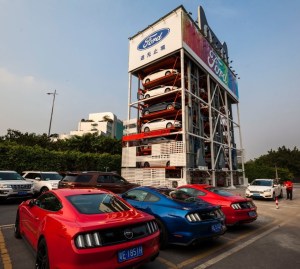
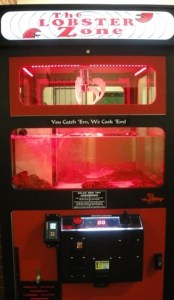
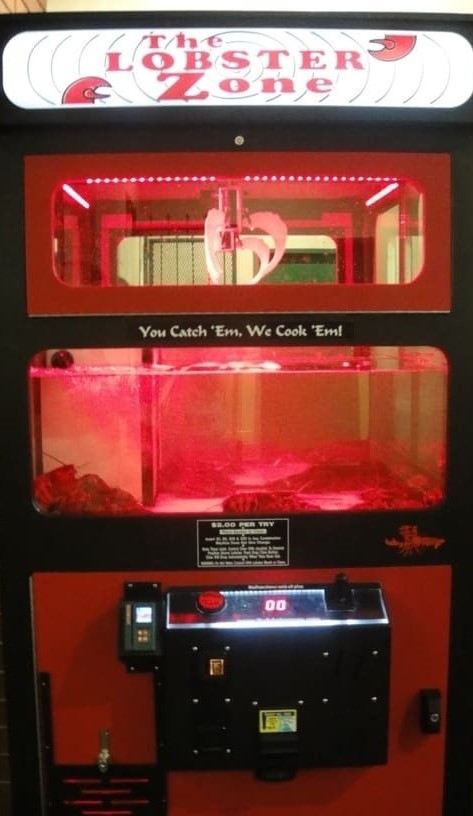
Photo by Aleksandar Plavecski Vending is more sophisticated these days than the plain-Jane cigarette and candy machines of old, of course. Airports dispense cell phones and other pricey electronics to travelers from vending machines. Food-truck-like boxes dispense made-to-order pizzas. A mall in Beverly Hills vends Beluga caviar from self-serve refrigerators ($500 a pop). Las Vegas’s “The Lobster Zone” is like one of those machines where you joystick the claw to your toy of choice, only here you’re plucking live lobsters from a tank. Finally, the cupcake company Sprinkles makes serious bank with its street-side “cupcake ATM’s”.

Speaking of bank, I used to collect mechanical banks when I was a kid. That sounds like a strange (nerdy?) admission – collecting toy banks – but that’s what kids did in the 1970’s. They collected things. Mechanical banks wouldn’t appeal to today’s youth for a couple of reasons. One, they’re battery-operated or “wind-up”, so you can’t control them with a phone or an app. Two, they work on the assumption you’re saving up nickels, dimes, and quarters for future purchases. Today’s kids seem less likely to save that way (if at all), and their purchases are with bills or electronic cash. Mechanical banks prefer coins.

My collection of banks – which disappeared years ago – is a good example of the limitations of what and how a kid could purchase back then. Almost all my banks came from the Johnson Smith Company, a manufacturer out of Chicago (“Since 1914!”) Johnson Smith sold endless novelty and gag gift items: x-ray goggles, whoopee cushions, joy buzzers, and those really annoying “chattering teeth”. They also sold mechanical banks; not the beautiful collector’s editions of old, but plastic, battery-operated cheapies, probably manufactured in China. Johnson Smith was the closest thing a kid in my day had to Amazon.

Because I lived in Los Angeles and Johnson Smith sold their mechanical banks in Chicago, the U.S. Postal Service was a lifeline; the critical link between my quiet suburban neighborhood and the Midwest’s biggest city. When I saved enough money, I’d stuff my bills and coins into an envelope, hand-address it, add several postage stamps (Mom helped with the calculation), and walk it out to the mailbox at the end of our driveway. Four to six weeks later, a small brown box would arrive from Chicago, addressed to me and containing my latest mechanical wonder.

Think about that for a second. Not only was I putting cash into a flimsy white envelope to be processed through the endless shipping and handling of USPS, but I was also leaving my hard-earned money out by the street, alerting the world to its presence with the little red mailbox flag. That same transaction today – with “1-click ordering” – takes a single keystroke or voice command and shows up on my doorstep in two days or less.
The irony of collecting mechanical banks is that you’re spending your hard-earned pennies on the very thing designed to keep you from spending them. Truth be told, my banks weren’t about saving money at all. Instead, they were entertainment in the form of plastic-and-battery-operated mechanics, watching coins go here-and-there before finally disappearing from sight.
I never lost my fascination for mechanics. I remember grade-school field trips to commercial bakeries, going behind-the-scenes to see how big vats of dough methodically evolved into sliced, packaged loaves of bread. My kids and I used to watch the Food Network’s “Unwrapped”, a half-hour tour through the sophisticated mechanics behind a product’s evolution, from individual ingredients, through various stages of assembly (and several conveyor belts), finally to the finish line: a brightly-wrapped ready-to-eat consumable.

Mechanical banks may be long gone, but even in today’s age of electronics I say we’re still fascinated by mechanics itself. It’s the reason we buy cars from vending machines or cupcakes from ATM’s. And it’s the reason I still haul my pocket change down to the bank, just to see the teller dump the lot into the coin-counting machine; the noisy, mechanical wonder that sorts, counts, and spits out a receipt just before gobbling up every last penny.

-
Personal Space
We’re in the midst of Holy Week (for us Christians), which for some means spending more than the usual amount of time in church. Starting with this past Sunday, most Christian denominations conduct a total of five church services unique to this week: Palm Sunday, Maundy Thursday, Good Friday, Holy Saturday, and Easter Sunday. Our Methodist church here in Colorado devotes an hour to each of these services (short by Catholic standards); some during the day, others at night. No matter how you slice it, Holy Week means a lot of time in the sanctuary.

The church sanctuary wasn’t always a welcoming place. Growing up in Los Angeles, my family and I belonged to a formal Methodist church, with a sanctuary I can only describe as intimidating (at least from a kid’s point of view). You entered the building from the back, where the doorway greeters beckoned you to a narrow narthex. So far, so good. But the imposing sanctuary lay just beyond, through a wall of soundproof windows and closed doors, with stern-faced ushers protecting its every entrance. The pews were hardwood and upright with thin cushions, thirty deep on either side of the main aisle, marching in perfect unison towards the steps of an even-more-intimidating white marble altar. The booming organ drowned out any conversation (which was always at a whisper anyway), and the soaring structure of the ceiling made a kid wonder when it would all come a tumblin’ down like Jericho’s walls.
The congregation of worshipers was a lot of “old folks”; the kind of people who thought kids belonged in “Sunday School” instead of the sanctuary (that is, neither seen nor heard). Hence as teenagers, my friends and I sat up in the balcony (at the back of the space, kind of like the last seat on the bus). You couldn’t always hear the pastor, but at least we didn’t feel the eyes of the disapproving adults down below watching our every move. From our vantage point they were just a bunch of suits and dresses, topped by a whole lot of gray hair.

“Sanctuary” took on new meanings as I grew older. The San Diego Wild Animal Park (now the “Safari Park”) opened its gates in the 1970’s and put a completely new spin on the concept of a zoo. Animals lived in wide open spaces instead of enclosures; broad, beautiful environments designed to mimic their natural habitats. Instead of pressing noses against cages or glass, visitors saw the animals from a distance, confined to the seats of a quiet tram circling the park. If I ever come back as a member of an endangered species (like the northern white rhino I mentioned last week), put me in the San Diego Safari Park. That’s what I call an animal sanctuary.

Also in the ’70’s, Hollywood produced “Logan’s Run”. The movie depicted a utopian society of the future, offering a wealth of pleasures and resources and good living… at least until you turn thirty. At thirty you reported to the “Carousel”, where you were assured a place in “Sanctuary” – the supposedly better hereafter. Logan and his friends decide to find Sanctuary before they turn thirty, and that’s where the curtain of the ugly truth is drawn back. I can still hear Logan fighting the controlling supercomputer as he moans “THERE IS NO SANCTUARY!” Logan’s world was seductive for sure, but it was the mystery of sanctuary that had me watching to the end.
Recently, sanctuary has taken on more puzzling associations. In the 1980’s, American thrash metal produced the band Sanctuary (but nothing in my research explains the name). Sanctuary Clothing is a line described as “…capturing the Los Angeles lifestyle… vintage styling with a handcrafted focus on detail…” Again, nothing about the name. The SyFy Channel’s Sanctuary ran for four seasons and explored gene therapy and cloning, and the “strange and sometimes terrifying beings” that emerged within the human population. Finally, today’s sanctuary cities appear to be anything but, as the political feud between the Fed and the state overshadows any sense of actual security.

My definition of sanctuary will always be that primary space for worship in a church; or to put it in broader terms, “a place of refuge or safety”. Whether that’s somewhere inside, worshiping in the pews as I’ll do tonight; or somewhere outside; say, walking on a quiet path in the forest, it’s more about a feeling than a location. Sanctuary is all about personal space.
-
Chump Change
This week’s headlines included a downer from the animal kingdom. The world’s last male northern white rhino passed away, leaving just two females to live out their days before the species goes extinct. How sad is that? Especially since the northern white’s demise is the result of the poaching of its horns – questionable behavior from we humans.

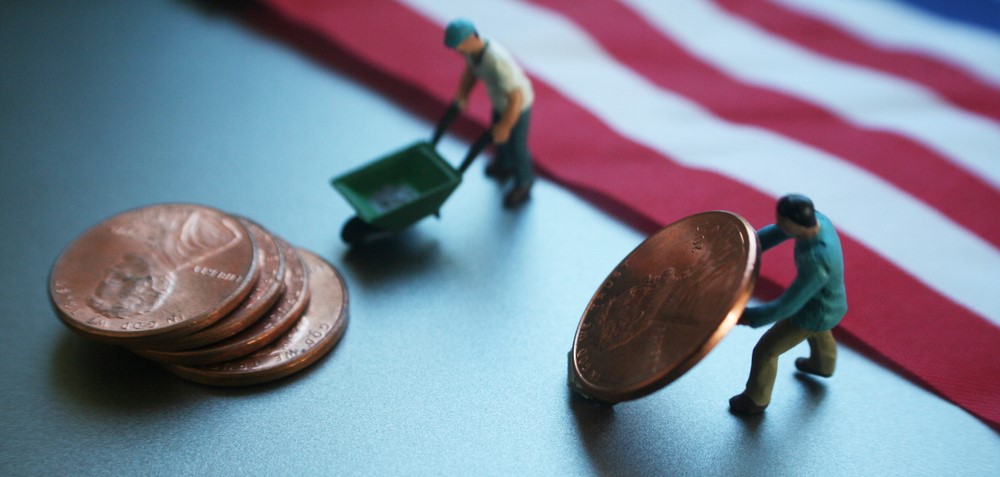
Speaking of questionable behavior, did you know the U.S. penny and nickel are also on the verge of obsolescence? It’s true, if you believe the arguments of those who say the one-cent and five-cent pieces have outlived their utility. Consider: 1) both coins cost more to mint than they’re worth; 2) a nickel today buys less than 20% of its worth in 1970 (a penny – less than 10%); 3) merchants routinely adjust pricing to avoid their use; and 4) the metals involved – zinc, copper, and nickel – have perfectly good uses elsewhere.
The prosecutions rests and the defense now takes the stand. Pennies and nickels should not go the way of the northern white. Consider: 1) Demand for the little guys is soaring; double what it was a decade ago; 2) The U.S. Mint “makes money” on its production of coins – fully 45 cents for every dollar’s worth (in 2017: a $400 million profit); 3) If zinc becomes too expensive (97.5% of the makeup of today’s pennies), a cheaper metal can be used for filler, and 4) eliminating pennies and nickels could threaten confidence in the U.S. dollar with a forced dependence on higher denominations.
I’ll get behind any of these arguments – pro or con – I just think they’re boring. Defending our little Mr. Lincoln’s and little Mr. Jefferson’s can be so much more creative. Take away pennies and nickels; then consider the following:

1) Penny loafers. No longer the classic men’s slip-on shoes with the cool name, including the cross strap and small opening at the center; the perfect size and shape for a penny. Add those Lincolns and you gave new meaning to the term “shoe shine”. You also had a built-in conversation starter, when the girl asked why you put coins in your shoes. You told her you were retro – back in the day a phone call cost a penny, and loafers were a convenient way to carry around the cost.

2) 99 Cent Only Stores. Fifty years of U.S. retail, with over 400 locations and thousands of products priced at “ninety-nine cents or less”, goes belly-up without the penny. How would a cashier make change on the dollar? They’d have to give you a nickel instead, and… oops, the nickel’s gone too. New math: buy something for $0.99, pay a dollar, and get a dime in change. Huh?
3) Girls named Penelope. They could no longer be “Penny” for short (or “Nickel”) because no one would understand what made the nickname so cute. You say you don’t know anyone named Penelope? Wait a few years. In 2008, Penelope was #2,222 on the list of girl’s names. This year it’s #573.
4) Your thoughts. They used to be “a penny for…”. Now you’ll have to pay at least ten times that much. Keep them to yourself.

5) Beatles hits. “Penny Lane” drops out of the Fab Four’s impressive list of #1’s. The quaint little street no longer exists in Liverpool, England. The barber never shows another photograph (of every customer he’s had the pleasure to have known). There’s no fireman with an hourglass (nor in his pocket a portrait of the Queen). You’re no longer there, beneath the blue, suburban skies.

6) Copper (+ zinc) floors. Okay, I didn’t even realize this was a “thing” until recently. Who ever said you had to spend a penny to give it value?
7) Your parent’s sayings. Out the window goes “If I had a nickel for every time I heard that…”, or “we didn’t have two pennies to rub together”, or “that costs a pretty penny”, or “penny-wise, pound-foolish”, and so on. Nobody would ever “nickel-and-dime” you again.
8) Derailed trains. Okay, a derailed train was just a childhood power trip, to heighten the suspense of flattening pennies on the tracks. The train rumbled on. The pennies sometimes got lost. Would a train flatten a dime or a quarter? Never tried it; wouldn’t expect a kid to sacrifice that much pocket change for cheap thrills.
These arguments are solid; not a bad penny in the bunch. We can’t let a subspecies like the U.S. penny or the U.S. nickel go extinct. Think twice the next time a cashier takes a penny out of the counter cup just so she can give you change in dimes or quarters. Think twice the next time you’re humming along with Billie Holiday:

Oh every time it rains
It rains pennies from heaven
Don’t you know each cloud contains
Pennies from heaven
You’ll find your fortune
Fallin’ all over town
Be sure that your umbrella is upside downSome content sourced from the Wall Street Journal article, “”Should the U.S. Retire the Penny and Nickel?”
-
Save the Bowl
Back in the 1980’s, Hollywood produced an awful movie called “The Stuff”. The story began with a couple of miners discovering a pasty-white goo pouring forth from the earth. Giving it a taste, they realized it was not only edible, but the more you ate the more you seemed to want. So, they package the goo, brand it “The Stuff”, and begin selling cartons to the masses. Turns out – besides tasting good – “The Stuff” melts your brain, turns you into a zombie, and leaves you with nothing but an insatiable appetite for more. That’s the entire comedy-horror plot, save for an FBI agent and a teen trying desperately to rescue the planet. “The Stuff” was like a light/airy “Invasion of the Body Snatchers”: no taste and little substance.

Even a “distasteful” movie can be a prophecy, however. Maybe you’re craving “The Stuff” after reading that paragraph. Guess what? It just may exist, disguised as the pint-sized “ice cream” products from Halo Top, Arctic Zero, Enlightened, and others. All available this very minute at your local grocery store! What are you waiting for?
Halo Top (HT) is – in one aspect – the dream dessert. Halo Top is a full pint of ice cream (per the label – four servings), engineered to be consumed straight from the container in one sitting, but with none of the guilt/gluttony associated with full-fat competitors. HT can’t hide its pride – the biggest lettering on the container is the calories (just 280 for the whole pint; 25% of Ben & Jerry’s), while elsewhere the packaging promotes immediate and total consumption with slogans like “save the bowl” and “stop when you hit the bottom”.

On the other hand, Halo Top is not dream-tasty. Some describe HT as “shaved ice” while others say it leaves a chalky aftertaste (hello, stevia). The chocolate-chip cookie dough has very little “dough”, and the cookies-and-cream has no cookies. Every review I found recommends time at room temperature to achieve a more ice-cream-like consistency. On a recent visit to the grocery store, I “hefted” one of these pints. It was hard as a rock, yet somehow so light/airy it felt like a little helium balloon, ready to ascend from my grasp.
Here’s the real wonder to me: none of the above gotchas stop consumers from filling their baskets with Halo Top pints. Last year’s sales were over $350 million, a 500% increase from the previous year. In the same time, “regular” ice cream sales increased less than 10%. As one consumer declares, it’s a brave new world of ice cream – quantity over quality.

What I find most disturbing about Halo Top and its peers is the manufacturer’s intent. They’re effectively encouraging you to clean your plate by design. Four servings make more sense than one because you should eat the whole pint. Whether you’ve already quenched your appetite is irrelevant; it’s about getting to the bottom of the container. Arctic Zero claims “…our love of ice cream runs deep, like eat-the-entire-pint-deep.” Enlightened even offers how-often guidelines. In their website FAQ’s, we’re told ice cream is not just for dessert: “Not at all! Low in calories, fat, and sugar, and packed with protein and fiber, Enlightened Ice Cream is truly good for you. It can be enjoyed at breakfast, lunch, and dinner… or anytime in between!”
Let’s translate the “more is better” concept to the movie theater. If we drop the guilt factor from junk-food concessions, we could sell popcorn in containers the size of trash cans. Soda could be hosed to each theater seat for hours of non-stop slurping (restroom logistics aside). String licorice could be coiled on floor-mounted reels. M&M’s could be the size of hamburgers.
We’ve just about come full-circle here. If all of us binge on Halo Top, honing our full-container consumption habits for breakfast lunch, dinner, “and anytime in between”, haven’t we created a modern-day version of “The Stuff”? All that’s missing is the magic ingredient in Starbucks and Chinese food that triggers “I want more”. As for me, I’ve never tried any of the products I’ve talked about today, nor do I intend to. I’d rather not become a zombie.

Some content sourced from the Wall Street Journal article “Can’t Stop, Won’t Stop…“.













About Me
The sky is not completely dark at night. Were the sky absolutely dark, one would not be able to see the silhouette of an object against the sky.
Follow Me On
Subscribe To My Newsletter
Subscribe for new travel stories and exclusive content.
 Life In A Word