
Hello, I’m Veronica
The sky is not completely dark at night. Were the sky absolutely dark, one would not be able to see the silhouette of an object against the sky.


-
A Pricey Drive down Memory Lane
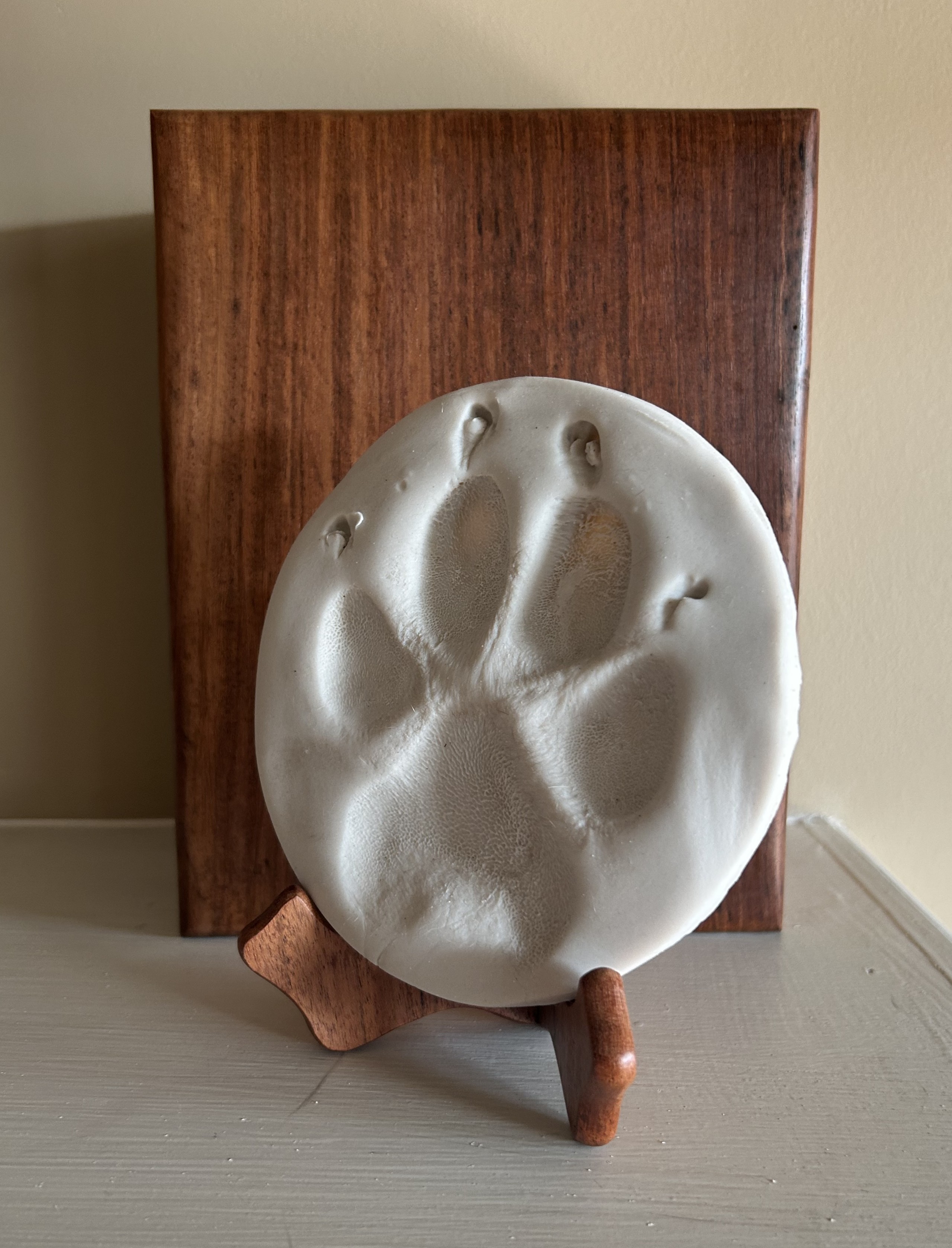
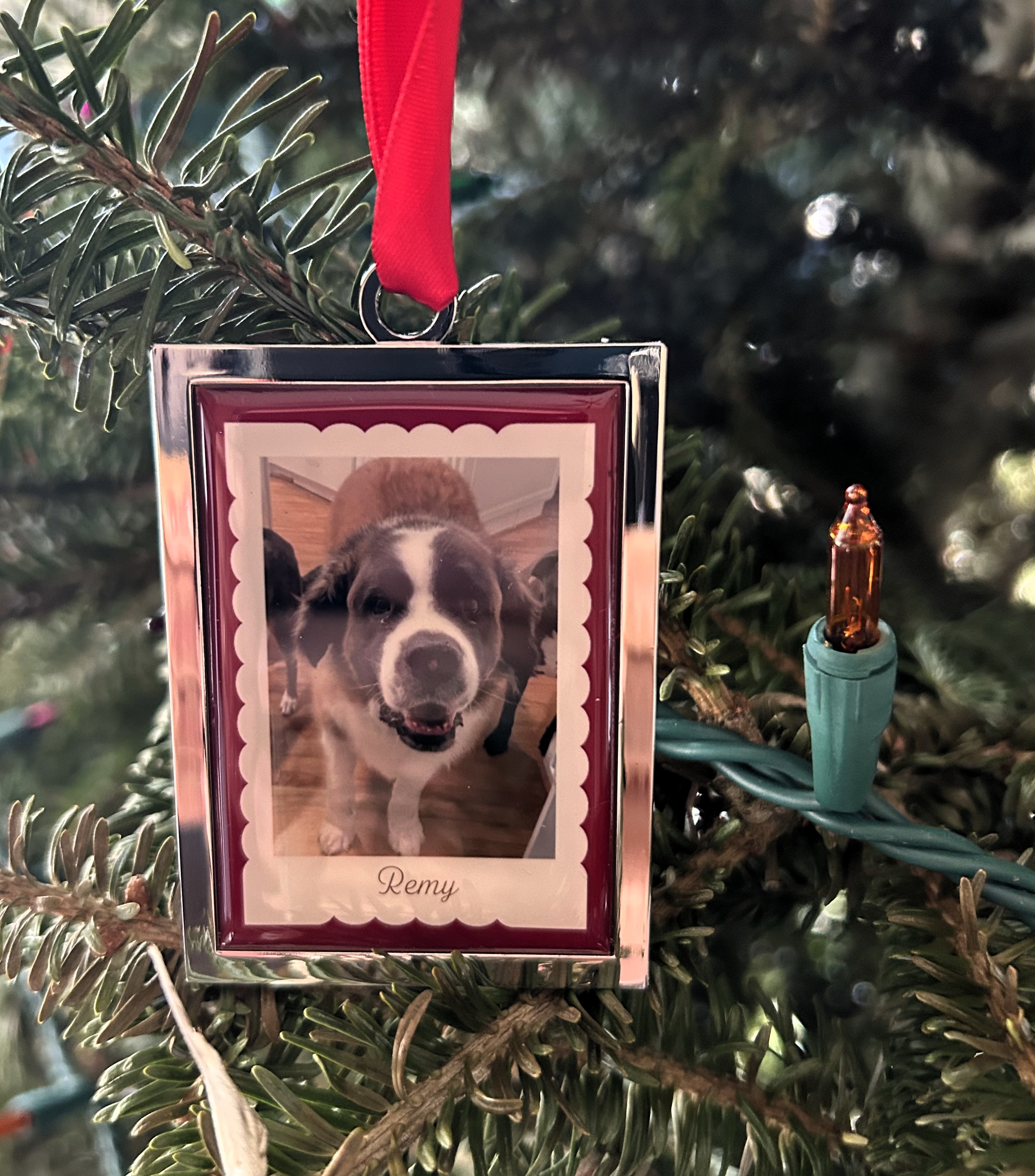
We sure love our pets, even long after they’ve moved on from this world. When we lost our Saint Bernard last September, after eleven memory-filled years together, we kept reminders of him around the house. Remy’s ashes now lie in a stately wood box up on the fireplace mantle. His leash still hangs by the back door, as if we’ll take him for another walk in the neighborhood. And the kids gifted us framed photos of our favorite moments with him. Having said all that, I never expected this under the Christmas tree…
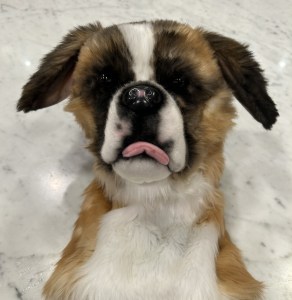 No, this isn’t our Remy. Well, okay, it is Remy but not in the “fur” (so to speak). Instead it’s a remarkably accurate likeness based on digital photos… and it serves as a head cover for one of my golf clubs. The double-takes I get on the driving range are priceless. Those puzzled expressions from other golfers beg the question, Wait, where’s the rest of the dog?
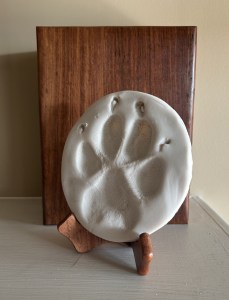 If these doggy head covers really get popular, I’d love to see future versions get a little animated. Along with the photos, send in an audio file of your dog’s bark. Then design the mouth to open and close on cue. Remy may have been a “gentle giant” but man he had a ferocious bark. Talk about a great way to say don’t touch my clubs!
If I had any concerns about the money my wife spent on my Remy head cover, I’ve gained some perspective to make me feel better. Forget about golf clubs for a moment. Did you know you can now have your car customized as a memorial to your beloved pet?
“Golden Retriever brown”, anyone? It’s safe to say I will never own a Rolls-Royce. Even if I had the money for one I can easily come up with a dozen ways I’d rather spend that much dough. But the car-as-your-dog thing is apropos for those who have way too much money in their paws. Consider, you’re already spending upwards of $500K on the car itself so why not put another $100K into it for personalization?

Your dog in the details The options for customizing your Rolls border on the ridiculous. You can choose the paint color to match your dog’s coat. You can have his image created in intricate wood veneer inlays between the seats. His paw prints – authentic reproductions of course – can be used to dot the pinstripes (which is nowhere near subtle with a paw the size of a Saint Bernard’s). And the possibilities with the leather seats are endless.
Candidly, when your world includes a Rolls-Royce the word “customization” really means anything you want. You begin in the lobby of a design studio, which is an unmarked ultra-secure building in downtown Manhattan. You’re escorted upstairs by an armed security guard. You then sit down to a team of consultants to fine-tune every little canine detail. Now walk away and let the Rolls-Royce crew create your personalized masterpiece. Time and money are no object so neither is negotiated. All that matters is having your dog in the details. And if you’re so inclined, those details can include real gold in the paint job.
As much as this makes for a good blog topic, I’m no fan of excess. If I’m spending six figures to embellish my vehicle with remembrances of my dog, I’ve lost all sense of fiscal responsibility. No thank you. I’ll limit my purchases to trinkets like this little framed photo ornament from Shutterfly. Okay, and head covers for my golf clubs.
 One of these days my wife and I will take down the wooden box of ashes and put away the photos of our beloved Remy. Even the golf club head cover is bound to deteriorate at some point. When all that happens, I hope I can still picture our good ol’ boy in my mind. Otherwise I might be telling myself, I should’ve bought a Rolls-Royce!
Some content sourced from the CNN Style article, “Want your Rolls Royce to match your pet Labrador?…”.
-
Fill ‘er Up
Several years ago at a banquet, I stood at the podium to introduce the evening’s guest speaker. After sharing some of her background and accomplishments, I went with the expected, “So without further ado, please welcome”…, and then I paused. And paused some more. I’d forgotten the speaker’s name. The silence, as the saying goes, was deafening. Eventually I found her name in my notes, but not without an uncomfortable gap in my speech. Perhaps a filler word would’ve smoothed things over.
 Do you use filler words? Actually, let’s make that question a statement. You use filler words. Every now and then in conversation you’ll throw in the occasional “uh”, “like”, or “so”. Filler words do exactly what their label implies: they fill up the awkward gap of silence created by a pause. Every one of us can recall an experience where we’ve left out filler words in a vain attempt to keep the polish on our speech, but it’s a no-win situation. If you go with the pause your audience looks at each other with one of those Is he okay? glances. If you go with a filler word you’re hinting you’re not completely on top of your material.
The parade of filler words is much longer than the commoners I mentioned above. The filler “uh” comes from its own family, including “um”, “oh”, “er”, and “ah”; tiny signs of reluctance to say whatever comes next. And speaking of next, how about “very”, “really”, and “highly”? These three are fillers disguised as words of emphasis but are usually superfluous. Then we have “You know…” and “You see…”, which seem to politely draw the listener into the conversation. But sorry, they’re also fillers, allowing a pause at the start of a thought. Finally (as if there’s an end to this parade), let’s add “I guess” and “I suppose”, both designed to soften a response when what you should go with instead is a confident “yes” or “no”.
I deliberately skipped one filler here because it deserves it’s own parade. “Like” sprinted to the front and center of casual English in the last couple of generations, taking up a lot of the spaces “uh” and his pals used to fill. Some people use “like” so often it starts to feel like every other word they’re saying. But make no mistake – every “like” is simply a mini-pause to allow the speaker to reboot their thoughts.
Watch out, because filler words can be contagious. I used to work for a company where it seemed every one of my teammates couldn’t start a sentence without the word “So”. Somehow “so” sounds a little smoother than “uh” but it’s basically the same filler. Before I knew it I caught myself also using “so”, as if it was the only way to start a sentence. At least “so” has a built-in bonus: you can drag it out for drama. So-o-o-o-o…
Filler words somehow sound better with a foreign accent. The Irish “um” sounds like the more pleasing ehm. Even throwing in a bunch of “you knows” in the Irish accent seems to work. And speaking of accents, Hollywood (or maybe just Los Angeles) brought us Valley Girl talk, which includes a weird form of attitude along with its own set of meaningless filler words like “totally”, “whatever”, and “as if” (think Cher from Clueless). Valley Girl talk has had a remarkable run considering its roots were in the 1980s. You still hear the words today.
The next time you call out a friend with Hello? Is anybody home? for not paying attention, consider they’re trying to avoid filler words by simply not saying anything. That’s harder to do than it sounds. Try speaking for a few minutes without filler words. It’s so difficult it’s birthed a string of funny videos on TikTok. As for me, I’ll keep using my fillers wherever I need them. Especially when I forget the name of a guest speaker.
Some content sourced from the CNN Health article, “Should you stop saying ‘um’? Here’s what the experts said”.
-
A Triumph in Travertine
LEGO Trevi Fountain – Update #8
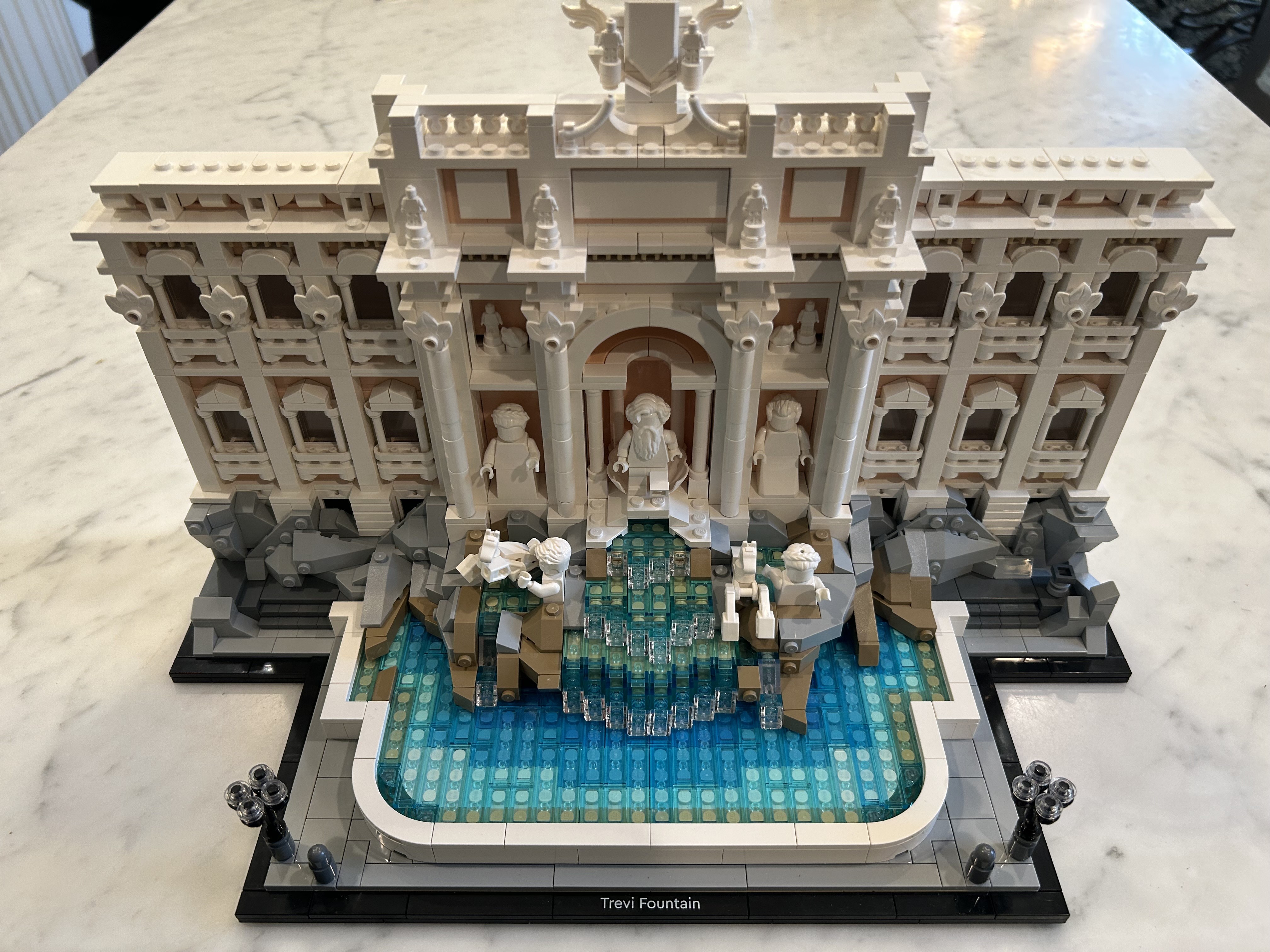
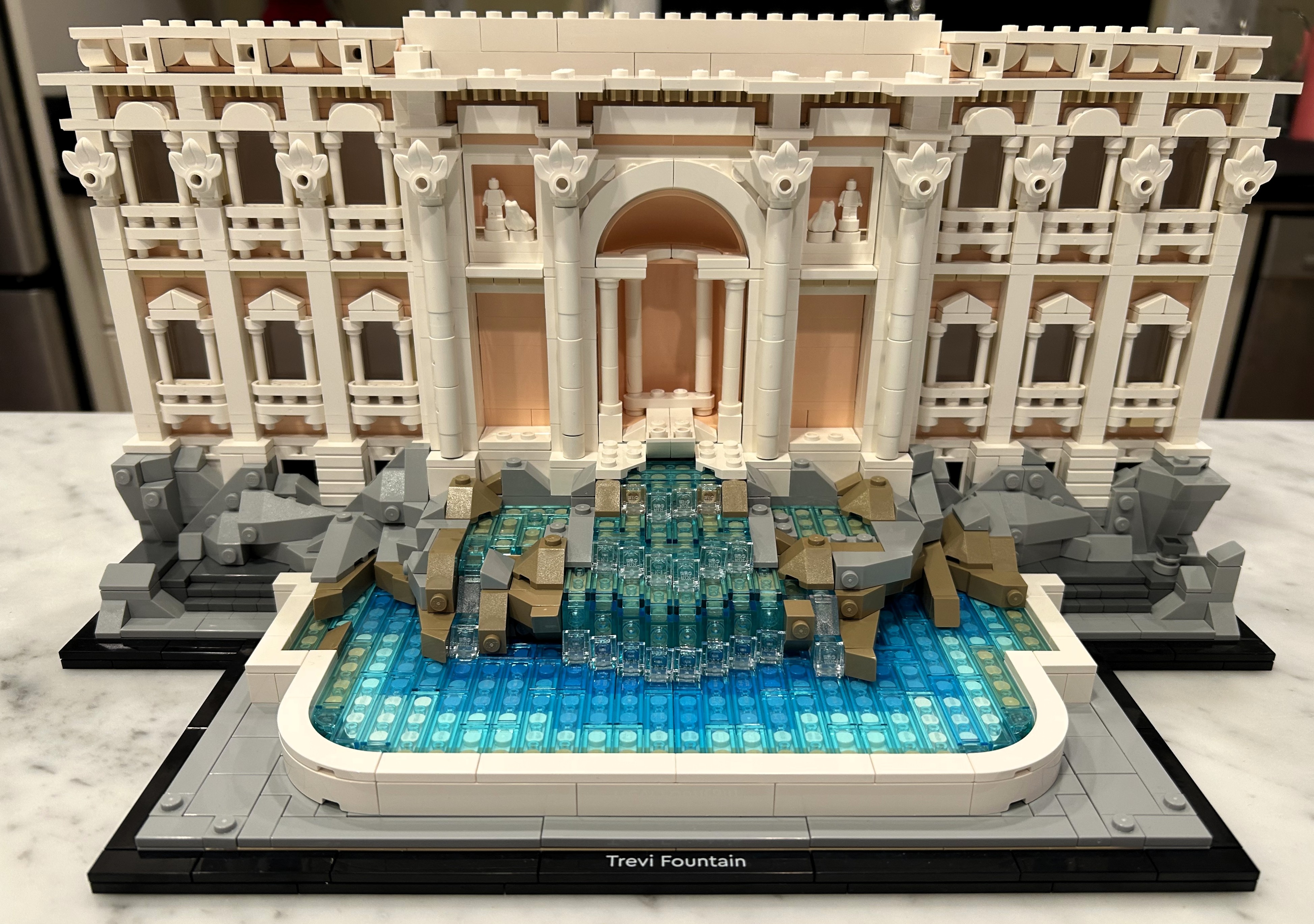
(Read about the start of this build in Brick Wall Waterfall)A little over two months ago we set out to do the impossible: construct one of the world’s great fountains in time for Christmas. Today, a day before our self-imposed deadline we put the very last piece of travertine in place. Okay, so this Trevi Fountain is made of LEGO and we’re nowhere near Rome but still, we’ve had a nice little adventure from start to finish.
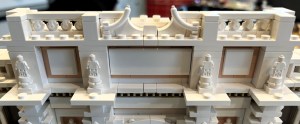 As is the case with many of LEGO’s models, the final pieces are meant for flourishes and ornamentation. Bag 14 – of 15 bags of pieces – focused entirely on the top center structure you see here. Everything was completed in a cool 23 minutes, finished off by the careful placement of those four tiny statues.
 Today’s musical accompaniment was fitting. I chose Gabriel’s Oboe, a short but beautiful instrumental some of you may recognize from Amy Grant’s “A Christmas to Remember” album. It was actually written by Ennio Morricone for the movie The Mission. I listened to it twice. Then I went with Luigi Boccherini’s Minuet from his String Quintet in E Major, which some of you may also recognize from movie scores. I listened to it thrice. Finally, I concluded with Vivaldi’s The Four Seasons (though of course, only with the “Winter” movement).
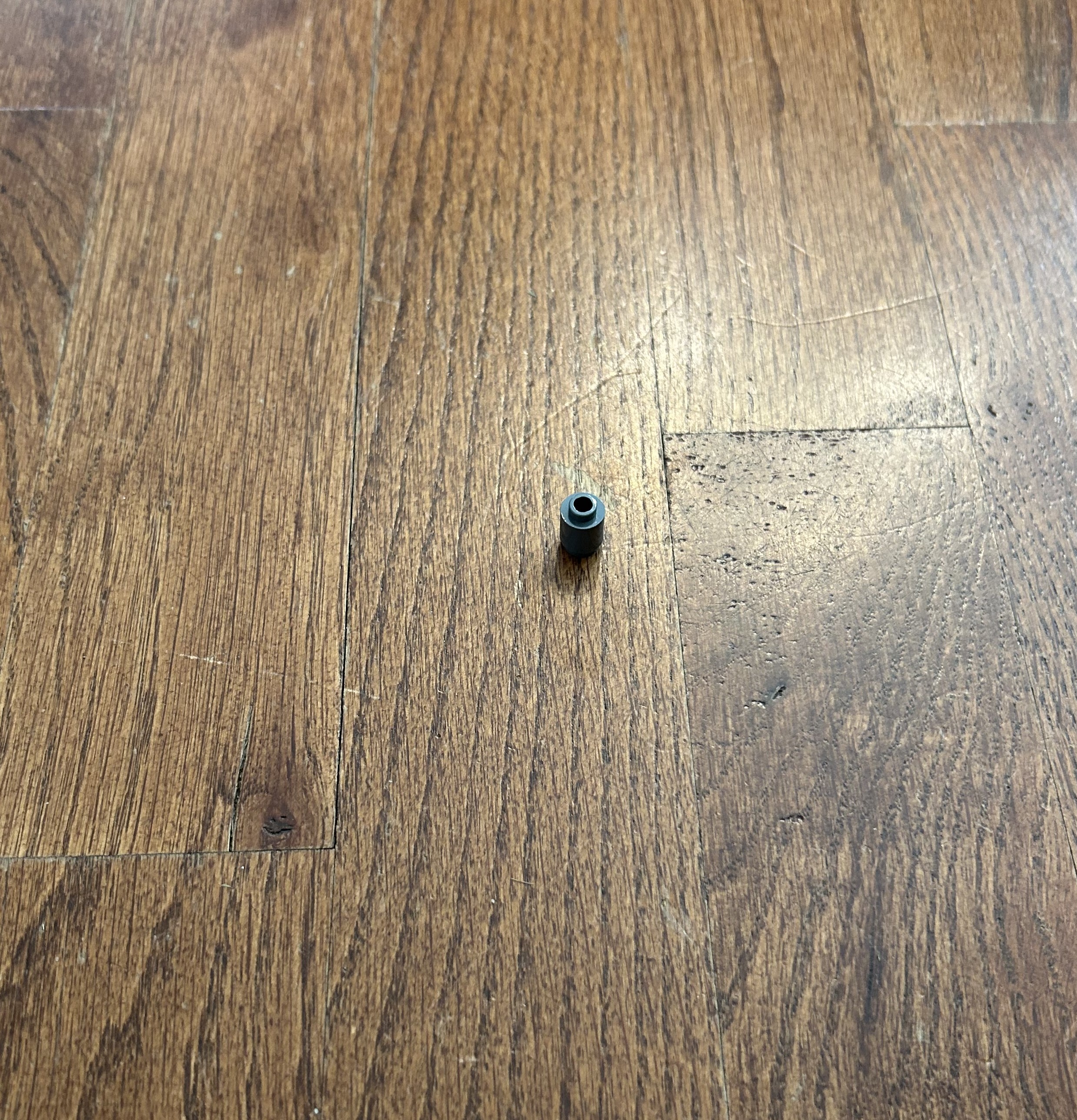
Gotcha! Bag 15 – the final bag of Trevi LEGO pieces – was an adventure from the get-go. Thirty seconds after spilling the pieces onto the counter I heard a tiny “tap tap tap” on the kitchen floor, the exact sound of a LEGO piece skittering away. Sure enough, way over by the frig, the little guy was standing there looking up at me with a devilish grin. He’d rolled way, way across my kitchen counter and dropped to the floor before attempting his escape. Again with the runaway pieces, sigh…
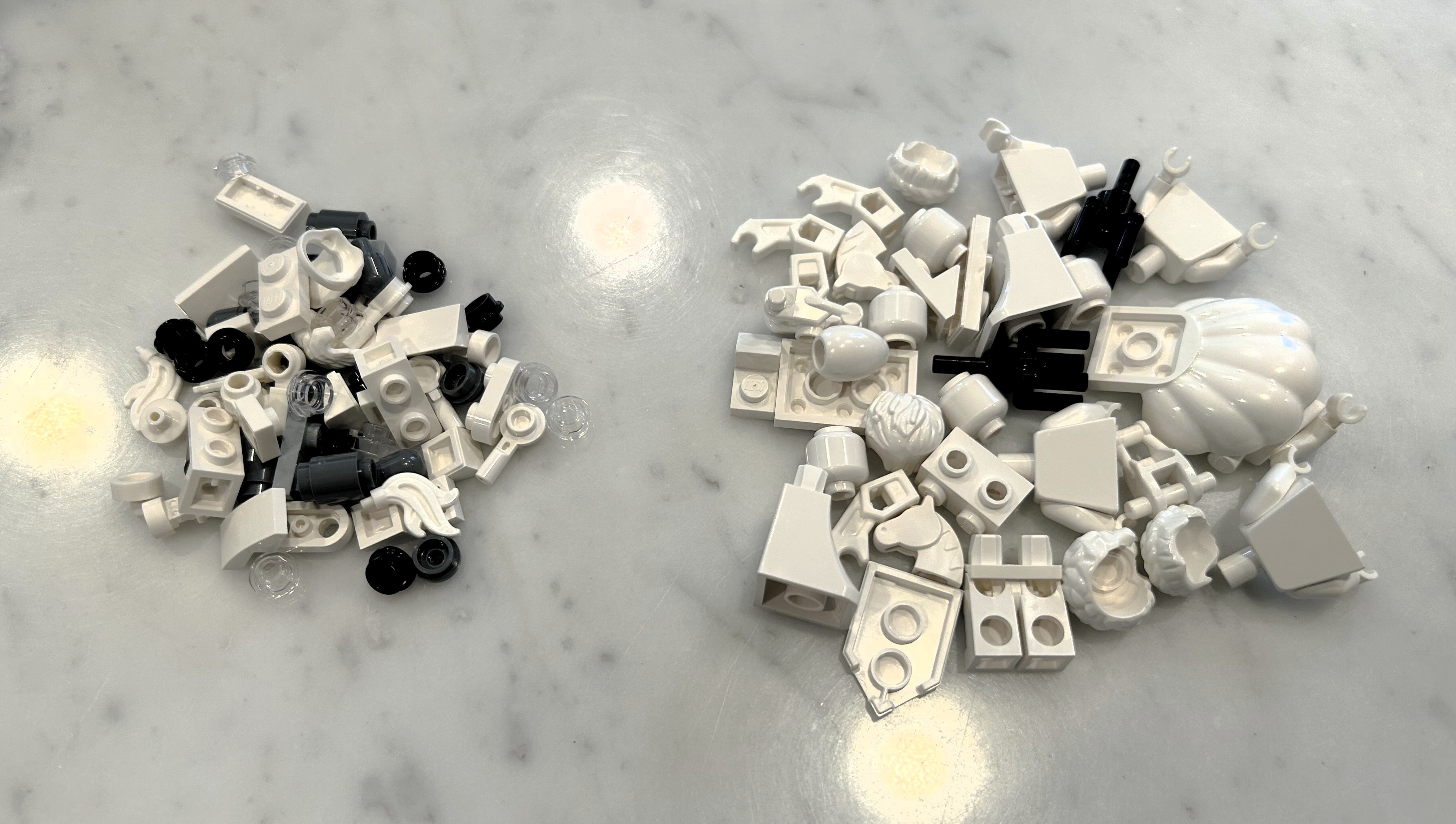
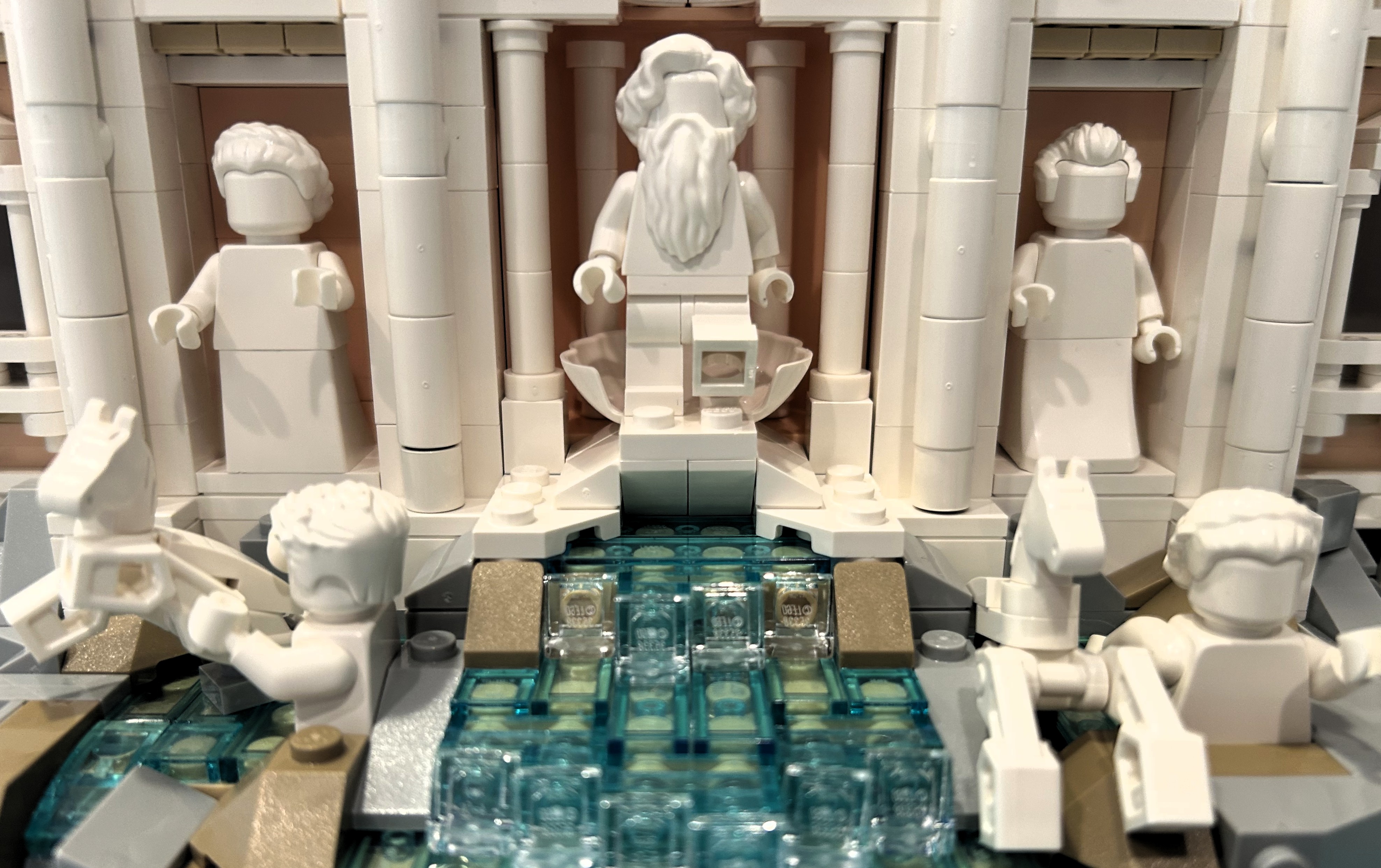
 The statuary of the Trevi is impressive and the LEGO equivalent is kind of fun. If you look carefully in the piles of pieces above you can see hairpieces, torsos, and horse heads. Fully assembled and installed, it’s quite the collection of humans and animals in and among the rushing waters.
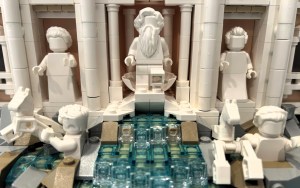 Finally, here’s an interesting coincidence of timing. In just over a month – for the first time in its history – you’ll have to pay $2 to see the Trevi up close. The fee is designed to reduce the overwhelming flow of tourists in front of the fountain. A fee just to see a fountain may sound nit-picky but a trial run showed it works well to reduce the chaos. Trust me: pay the $2, spend as much time front and center as they’ll allow you, and gaze upon one of the sculptured marvels of Ancient Rome. I think you’ll agree; the Trevi Fountain is a triumph in travertine.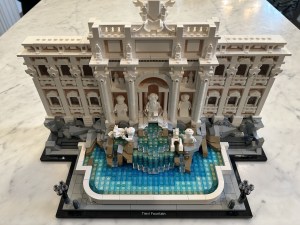
Click on the photo for more detail! Running build time: 7 hr. 48 min.
Total leftover pieces: 44
-
Caffè Companions
My wife made a batch of rolled sugar cookies last week, cut into traditional Christmas shapes like bells, wreaths, and stockings. It’s the first time in a long time for these cookies, inspired by the assistance of our young and attentive granddaughters. Though the cookies never donned their frosted/decorated costumes, they sure tasted great all by themselves. Kind of like the biscotti I’m giving up in 2026.
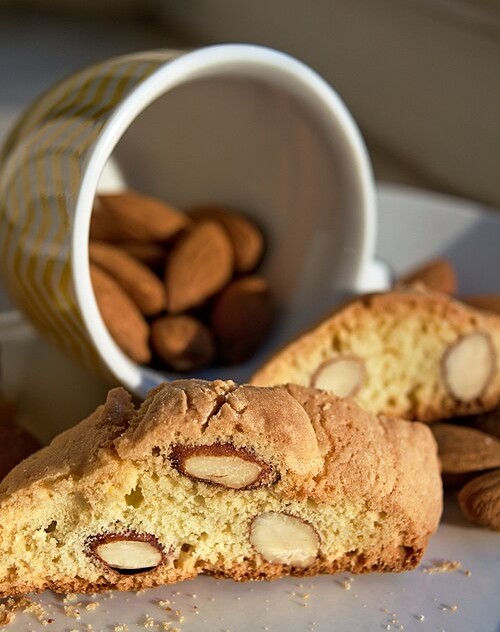
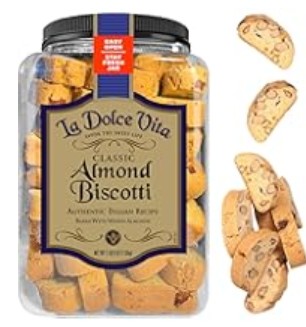
 Are you a fan of biscotti? They’re the small, oblong cookies that resemble tiny slices of sourdough bread. They’re hard and dry, with just a smattering of almonds or almond extract for extra flavor. Biscotti are meant to accompany a drink, just as two of them do every morning with my coffee. Biscotti ward off the nausea I feel when I down my vitamins on nothing but a cup of joe. Nice excuse for daily cookies, eh?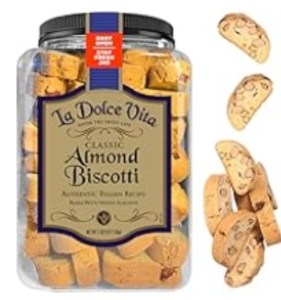
“Cantucci” (not biscotti) When the calculator (which doesn’t lie) reveals you ate over seven hundred biscotti over the course of 2025, you quickly come to your senses and declare a resolution for the coming New Year: Shift biscotti from “habit” to “occasional treat”. Yep, it’s time to cut down on carbs.
Before we seal the lid on the cookie jar however, biscotti deserve a little more attention to set the record straight. First and foremost, the pint-sized pastries I consume with my morning caffè are not technically biscotti; they’re cantucci. Cantucci contain ingredients like milk, butter, and flavorings, none of which are found in an authentic Italian recipe for biscotti.
 Here’s another distinction. Biscotti were never meant to be partnered with coffee. They were (and still are) served alongside a glass of sweet wine as a light Italian dessert. Americans pair cantucci with cappuccino at upper-crust hotels and coffeehouses. You’re supposed to dunk to make them softer (and take the edge off the coffee) but I prefer to eat them just the way they are.
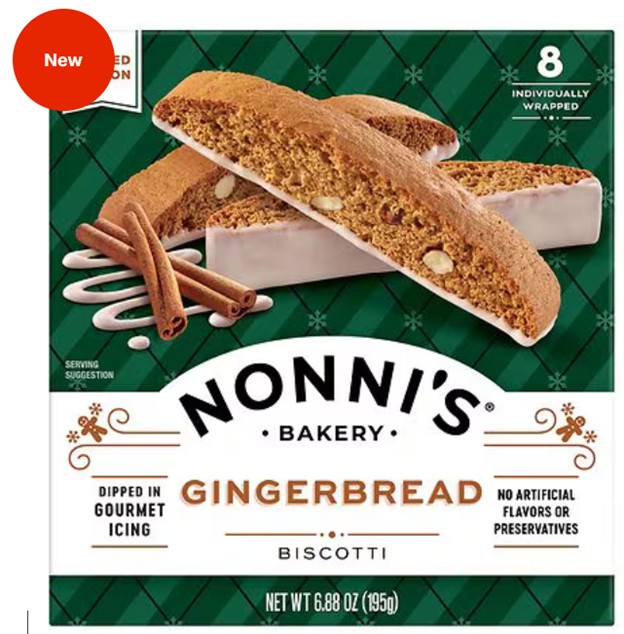
 Biscotti translates to… not “biscuits”, but “twice-baked”, which is exactly how they’re made. First baked as a full loaf; then baked again as individual cookies. Now then, another Italian translation for you: Nonni means “grandmother”. Nonni’s also means a brand of biscotti (whoops, make that cantucci) you’ll find in your grocery store… and in my pantry. The Nonni’s version is an unashamed dessert cookie, with a layer of chocolate, caramel, or lemon frosting to add to the appeal. My advice: Nonni’s need to be put on a hard-to-reach shelf else they’ll become a habit just like the ones with my morning coffee.
 In some Western European cultures biscotti are thrown into savory dishes, which I’m not going to get into because I find the idea unappealing. Biscotti are classy little sweet treats in my book – one of the two items in my “grown-up milk and cookies”. Alas, in 2026 it’ll just be “grown-up milk” for me… that is, as long as I stay away from my wife’s sugar cookies.
—————-
LEGO Trevi Fountain – Update #7
(Read about the start of this build in Brick Wall Waterfall)
Today we took a mini road trip, as I chose to build the fountain’s Bags 12 and 13 – of 15 bags of pieces – on the kitchen counter (instead of upstairs in the home office). Kind of fitting considering the counter is topped with white marble. Kind of annoying considering the laundry machine and dishwasher were running nearby the whole time, interrupting Arcangelo Corelli’s moving “Christmas Concerto” in G Minor.

Trevi statues are TINY! Maybe it was the change of venue but some strange stuff happened today. To begin with, I couldn’t find the very first piece in the build at all, until I looked closer at the instruction manual drawing and realized I was after a tiny statue. Once I found him I was off and running, though I found it sad that one of his companion statues ended up being a leftover piece.

Thought you should know: the back side of the LEGO Trevi is a sheer wall of white. Now for the strange stuff. I assembled a flat L-shaped piece on top of another flat L-shaped piece, only to discover they weren’t supposed to go together that way. No amount of fingernail dexterity could pry those two apart. Fortunately I found myself in the kitchen. Sharp knives everywhere! It took a careful pry without cutting myself but I finally got those two unmarried. Never let it be said building LEGO models isn’t a dangerous sport.

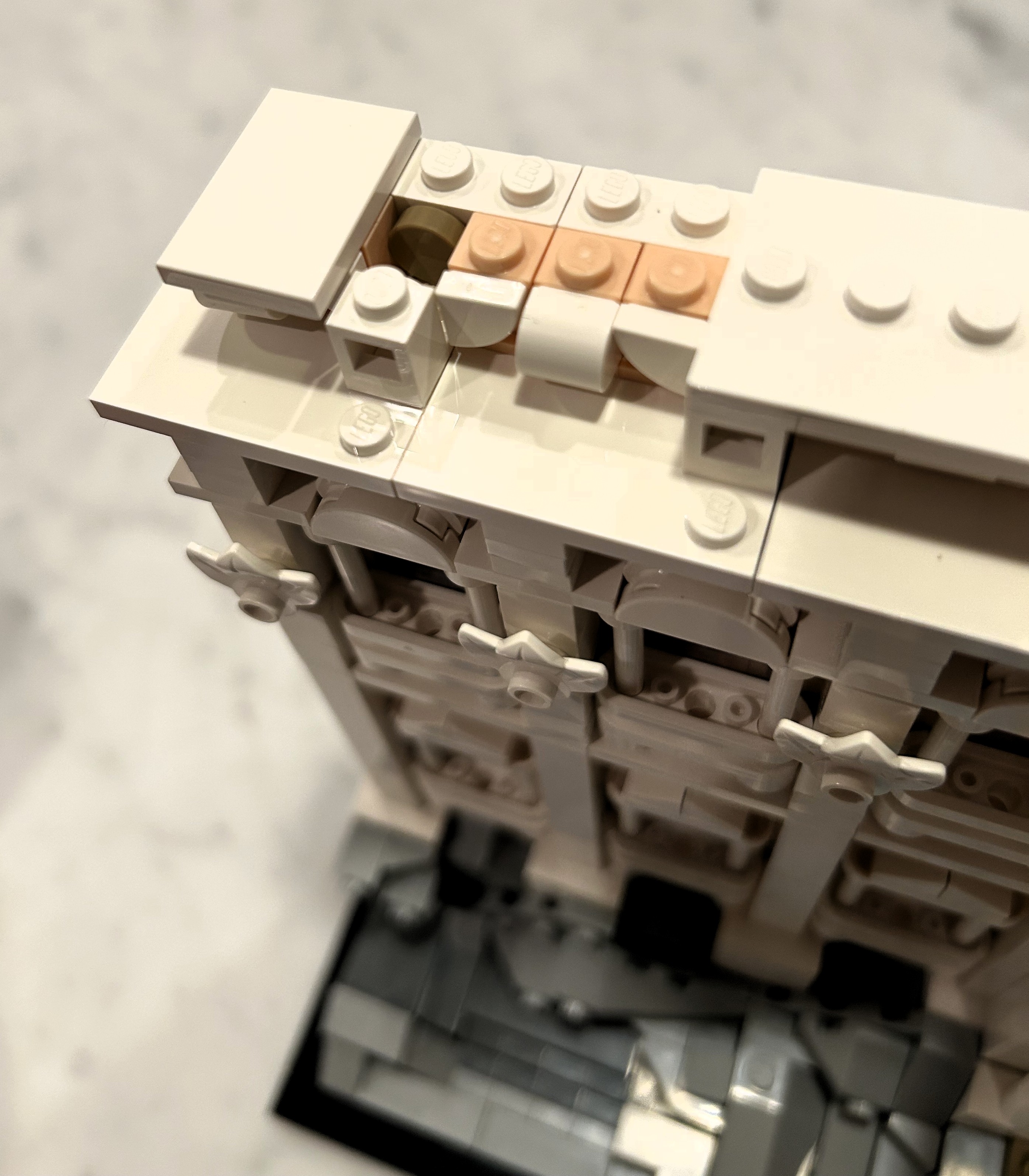
That little brown round one (nestled top left) was missing from Bag 13! More strange stuff. LEGO left a piece out of Bag 13. Okay, technically they left it out. “Technically” because in my growing pile of leftover pieces I found its twin. But considering LEGO never leaves out pieces, I had to wonder: Did the little guy just wander over to my leftover pile when I wasn’t looking? Or is he somewhere in the trash right now, along with the cellophane bag of Bag 13? Maybe he’s resting quietly on the kitchen floor just waiting to stub my toe? Who knows. I’m just thankful I had a “replacement” from my leftovers. And I don’t think I’ll be building LEGO models in the kitchen anymore.
Next week: The Trevi is completed!
 Running build time: 6 hrs. 52 min.
Total leftover pieces: 35 (including a lonely little statue)
Some content sourced from Wikipedia, “the free encyclopedia”.
-
Priceless Hatches
I’m enjoying a couple of soft-boiled eggs right now, my every-other-day breakfast entrée. The timer I use to prepare them sits right in the pot of water, indicating when the eggs are cooked to perfection. I pay a little more than average for my eggs, to producer Vital who advertises “pasture-raised – tended by hand by farmers who care”. On the other hand, if I wanted to pay a lot more than average I’d simply go to a rare goods auction and buy one from Fabergé.

“Gatchina Palace” Egg You wouldn’t have a Fabergé egg for breakfast, of course. No one would ever sink their teeth into a priceless work of art (well, maybe a banana), let alone one of only fifty that were ever created. One of the Fabergés – the “Winter Egg” – went under the auction block last week, with the winning bid confirmed in a mere three minutes. The buyer’s purchase of a single Fabergé for $30.2 million dollars is a new record; noteworthy considering how many times the eggs have changed hands in the last 140 years.
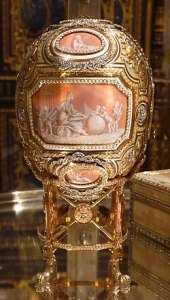
“Catherine the Great” Egg I can’t say why we Westerners even know about Fabergé eggs. Most hide in private collections or in museums you’ve never been to. The eggs were created in St. Petersburg, Russia in the late 1800s by jeweler House of Fabergé for the reigning tsars of the time. One or two eggs were produced every year as exquisite Easter gifts, from 1885 through 1917. Most are jeweled with diamonds and other precious gems, and hinge open to reveal delicate animals or scenes within.
The Winter Egg (1913) is described as “the most spectacular, artistically inventive and unusual” of all fifty Fabergés, which is quite a statement when any one of the eggs deserves the same praise. The Winter Egg took almost a year to design and create, and the value is evident in the details. 4,500 tiny rose-cut diamonds are married to a platinum snowflake motif to create the impression of a block of ice dusted with frost.
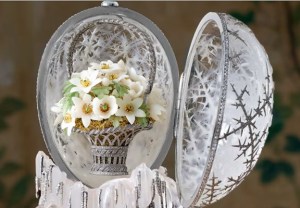
“Winter” Egg The Winter Egg hinges opens to reveal a hanging basket of wood anemones, made from white quartz and rare green “Tsavorite” garnets. I can’t imagine working with these expensive materials on such a small scale but maybe that’s because I don’t have the delicate fingers of a woman. The Winter Egg was designed and created by Alma Pihl, the only female jeweler in the House of Fabergé.
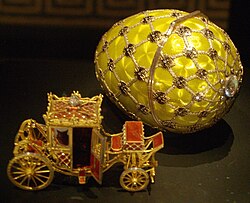
“Imperial Coronation” Egg On a cruise around the Baltic Sea several years ago, my wife and I were fortunate to spend a couple of days in St. Petersburg, touring Catherine Palace and Peterhof among the city’s other sights. When we returned to the ship we were greeted by a local jeweler, who offered replicas of the Fabergés (for less than $32M, thank goodness). We chose the Imperial Coronation Egg (1897), inspired by the color of Tsar Alexander III’s robe. The Coronation Egg houses a replica of the imperial carriage, made with gold and platinum and detailed with rubies and diamonds (the original egg that is, not ours).
 After learning a single egg can set you back $32M, I now look at my breakfast eggs a little differently. $10.99 a dozen? That used to be top of the heap. Now it’s just pocket change.
—————-
LEGO Trevi Fountain – Update #6
(Read about the start of this build in Brick Wall Waterfall)
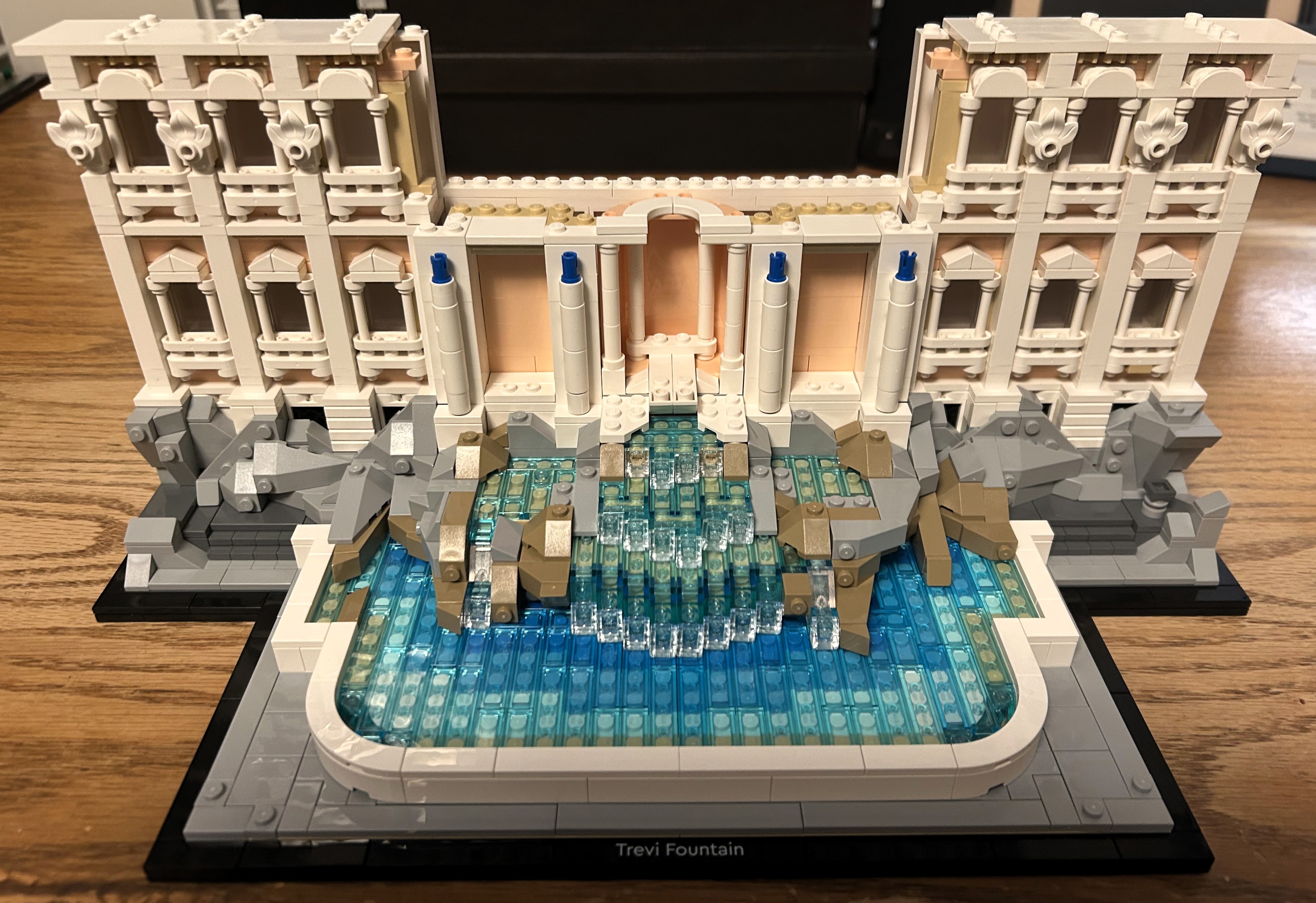
There’s a moment in every LEGO build where you look at what you’ve constructed and think, Hey, I’m almost done! That moment was today. Bags 10 and 11 – of 15 bags of pieces – brought the structure of the Trevi Fountain to new, practically finished heights. The tiny, tiny pieces I worked through (so many of them I was afraid to count) resulted in the uppermost level of the backdrop you see in the final photo.

Bag 10 From my magic hat of Italian composers I somehow chose Claudio Monteverdi for my musical accompaniment today. You don’t know Monteverdi and apparently I don’t either. Had I realized his contribution to classical music was mostly opera (hard pass) I would’ve reached into the hat again. Alas, I was subjected to Monteverdi’s L’Arianna “lament” – equal parts sorrow, anger, fear, and so on. Those singers sure didn’t sound happy as I snapped together LEGO pieces, but honestly who knows? I don’t speak “sung” Italian.

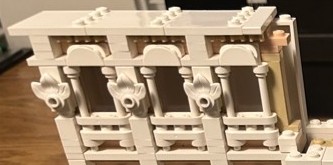
mirrored element Here’s an expectation with a symmetrical LEGO build. If you construct an element that goes on one side of the model you’ll be mirroring it on the other side before you know it. A hundred or more pieces went into the windowed wall you see here, and a hundred more went into its twin soon after. It’s repetitive yes, but at least you go faster the second time around since you just had practice.
 A word about the little devils in this photo. Because they’re cylindrical they can roll. Because they roll they can hide under something. Something like a LEGO instruction manual. Once again I was fooled into thinking I was missing pieces… until I thought to look under the manual. Sure enough, there they sat just smirking at me. So I promptly arrested and cuffed them, hauled them away, and now they’re jailed in the backdrop you see here, without possibility of parole.
 We’re just four bags of LEGO pieces from “turning on the water” of the magnificent Trevi. I’ll admit to peeking into the box at those upcoming bags. They are small, all four of them. Perhaps I’ll wrap the fountain construction in a single go next week. Even if not, conveniently, the final block of travertine would be laid the following week, just in time for Christmas. Now that’s what I call a gift!
Running build time: 5 hrs. 42 min.
Total leftover pieces: 32 (tiny, tiny pieces)
Some content sourced from the CNN Style article, “Faberge egg fetches record $30.2 million at rare auction”, and Wikipedia, “the free encyclopedia”.











About Me
The sky is not completely dark at night. Were the sky absolutely dark, one would not be able to see the silhouette of an object against the sky.
Follow Me On
Subscribe To My Newsletter
Subscribe for new travel stories and exclusive content.
 Life In A Word tv