
Hello, I’m Veronica
The sky is not completely dark at night. Were the sky absolutely dark, one would not be able to see the silhouette of an object against the sky.


-
Leave Me Alone
Helen Reddy was an Australian pop singer from the 1970s who would’ve been considered a pioneer of female empowerment (had there been such a term back then). Reddy’s hit I Am Woman leaned on the same pointed lyrics that made Madonna and Katy Perry so popular decades later. Though I Am Woman is Reddy’s most famous anthem, another of her chart-topping hits floats through my brain today: Leave Me Alone. It’s the song the residents of tiny Santa Maddalena di Funes should be singing in the streets of their picturesque mountain village.
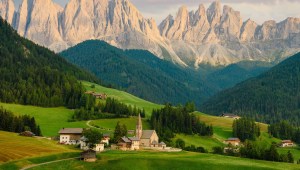
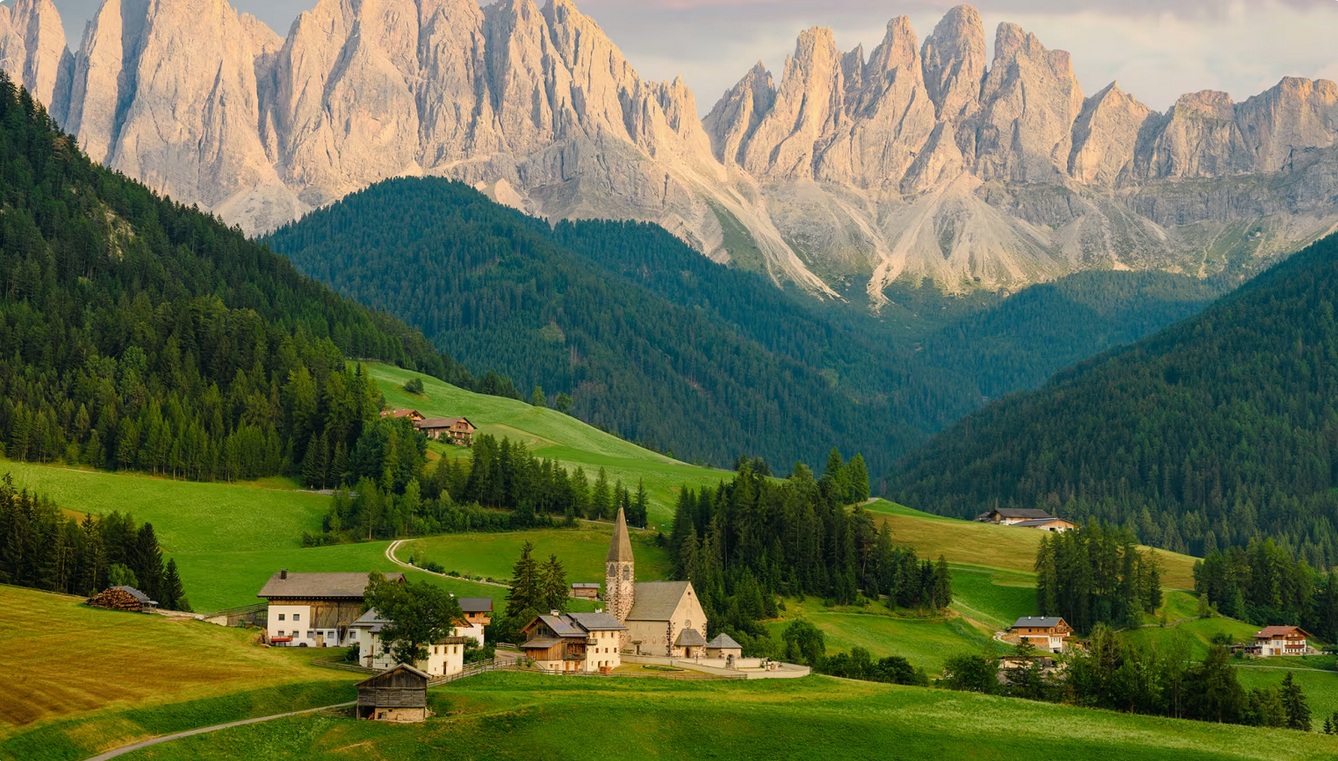
Santa Maddalena, Italy (Courtesy of Travel Wild/Stockphoto/Getty Images) If I asked you to describe a “village” – a term we Americans don’t use very often – what would that image include? Mine would start with a small cluster of buildings, both residential and commercial, surrounding a cobblestone town square. The buildings would look quaint and simple, like throwbacks to earlier times. Narrow roads would lead into the square from the more sparsely populated surrounds. You’d find a lake or two nearby, and clusters of trees here and there. In the background, foothills or majestic snow-covered mountaintops. And right in the middle of it all, a charming church or some other public building rising above the rest.
I’ve just described Santa Maddalena to a tee. This tiny, picturesque gathering, nestled on the eastern slopes of the Dolomite Mountains in Northern Italy, is the stuff of postcards and jigsaw puzzles. There’s not much to it but the setting speaks for itself. And the little church – St. John in Ranui – seems perfectly placed beside the more nondescript buildings. Santa Maddalena is so attractive it draws 600 visitors a day during the peak travel season.
February is not peak travel season in the Dolomites but the Winter Olympics are taking place just a couple hours from Santa Maddalena. No doubt some of those sports fans will make there way over for a selfie. And therein lies the problem. Tiny Santa Maddalena simply can’t handle hundreds of tourists. If they keep coming, the photo I led with really will be too good to be true.
Were it not for the Chinese, Santa Maddalena might still be relatively undisturbed. One of China’s mobile phone companies included an image of the village on its SIM card and suddenly its customers just had to know where to find Santa Maddalena. A 2013 iPhone iOS update included images of the nearby mountains, adding to the draw. Now village officials are considering the unthinkable: restrictions.
It’s a move similar to what’s happening for the first time at the Trevi Fountain in Rome. If you drive to Santa Maddalena you may now be stopped on the outskirts of town, where you’ll leave your car in (gasp!) a parking lot. If you want to walk through town, you’ll have to purchase a ticket. One enterprising resident added a turnstile at the edge of his fields so he can charge those who want to cross over. Suddenly I’m having visions of food trucks and souvenir stands. How sad.
The plight of Santa Maddalena reminds me of those once-a-year lists you find in publications like U.S. News & World Report, where towns across America are ranked according to so-called “quality of life” criteria. Whether the schools, the parks, the clean air, or feeling safe in the streets, your own little corner of the world might suddenly be declared a top-five place to live. And that, my friends, is the kiss of death. Now you’ve been discovered, and everyone has to see what the fuss is all about (or at least go visit for a selfie). The masses throng to your backyard and some never leave. A year or two later – surprise, surprise – you’re no longer “top-five”.
Credit the residents of Santa Maddalena: they’re coming up with creative ways to discourage “over-tourism”. In a particularly bold move, they’re going to require an overnight stay to be able to walk the streets, so that tourists actually give to the local economy instead of just taking that selfie. IMHO all they really need to do is continue to be known as “Santa Maddalena” on the web. You won’t find much if you search with those words. As for “Santa Magdalena?” That’ll get you there. Even if you’ll find a quaint village of people singing Leave Me Alone.
Some content sourced from the CNN Travel article, “Italian village restricts access to its Instagram-famous church”, and Wikipedia, “the free encyclopedia”.
-
A Ringing Endorsement
This time of year the choices for sports on television are few and far between. Sure there’s a lot of basketball being played, but the football season wraps up on Sunday (Super Bowl LX), baseball doesn’t get underway until April, and unless you have the time and patience to watch golf you’re gonna channel surf without catching decent waves. But it’s also something of an illusion, because the Winter Olympic Games kick off tomorrow in Italy. You did know the Olympics are about to get underway, didn’t you?
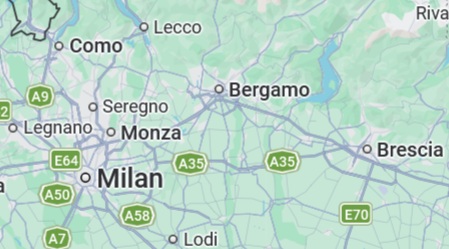
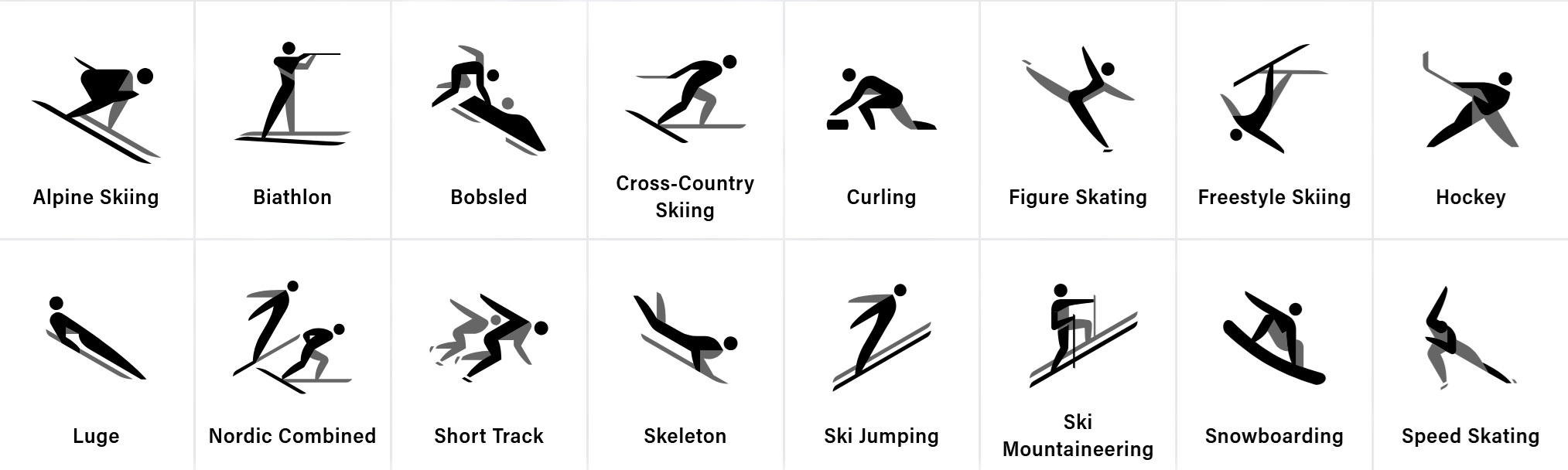
 The 25th edition of the Winter Games comes to your living room in the next two weeks, hosted in Milan, Cortina, and several towns in the surrounding Dolomite mountains. The natural venues of the region look spectacular, and no doubt the Italians will be worthy hosts to thousands of the world’s best athletes. We’ll be treated to sixteen different sporting competitions on snow and ice, from figure skating to bobsledding to ski jumping. Behind the scenes, you’ll get the usual inspirational stories, heartbreaking moments, and thrilling photo-finishes. I just hope you actually hear about any of it.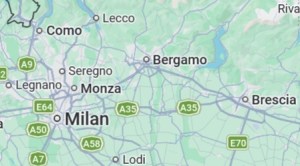
Just one section of the Games board ESPN.com, where I get my daily dose of sports, includes a list of “Top Headlines” at the beginning of their home page. Today, less than forty-eight hours before the opening ceremonies, there is nothing about the Games. No updates on the American athletes, no projections on when or where the U.S. will be at its most competitive, no “primer” to get you ready to sit down and watch… nothing. You have to scroll way down, past NFL-this and NBA-that before you finally get to anything about what’s going on in Northern Italy. Heck, even the Westminster Dog Show rated more press than the Winter Olympics today (which always begs the question, “Is a dog show considered ‘sports’”?)
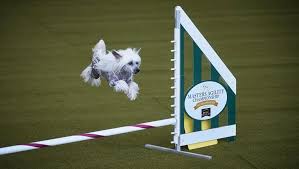
No, not these “Olympics” I’m glued to the coverage of the Olympics every time they come around (which is every two years, counting the Summer Games). Even with paid, professional athletes, the Olympics are the purest form of global sports competition we have left. The headlines – which will finally include the Olympics for the next two weeks – will speak more positive than negative, more jaw-dropping than ho-hum, with virtually no political undertones. How refreshing is that?
At least ESPN allots some space to the Games, however far down the page it may be. Have a look at any of the major news websites and you’ll be challenged to find similar coverage. Americans are too preoccupied with what’s going on in Washington, Wall Street, and the West Bank. It’s ironic that today’s lead news story is about the Olympics (though not really). Savannah Guthrie – one of the hosts of NBC’s television broadcast – pulled out to be with her family during the apparent abduction of her mother. My prayers are with her.

One month for just $10.99 Since you’ll be hard-pressed to find a primer, here are a few tidbits about the upcoming Games. There are 232 athletes on the U.S. Olympic team, the largest in our history of participation. There are 25 venues for the competition – in four clusters across Northern Italy – making it the most geographically widespread Winter Olympics in history. And for the next eighteen days, you’ll be able to catch all of the action (at reasonable times) on some form of NBC broadcasting, whether streaming or live television. You’ll even get your fill of curling, easily the most misunderstood Olympic sport of them all.
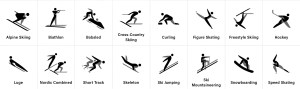
(click to enlarge) The Olympic Games, as the broadcasters are sure to say over and over, “transcend sports”. The world records, the stories behind them, and the individuals who train tirelessly for these moments deserve our attention. Team USA’s flag bearers this year are speed skater Erin Jackson and bobsledder Frank Del Duca. Think about it – both of these athletes chose sports where their moment of glory (or defeat) starts and ends in a matter of minutes. They are everyday people whose best-in-class performances are brought to the world but once every four years.
 Now go read all about it, or better yet… watch. Otherwise I’ll think you’re ignoring my ringing endorsement of the Winter Olympic Games.
Some content sourced from the NBC Olympics website, and Wikipedia, “the free encyclopedia”.
-
Seasoned Greeting
Back in my days in a corporate office, where the telephone was still the preferred means of communication, my peers and I developed a habit of answering calls without a greeting. The phone would ring and we’d simply answer with our name, like “John Smith…” and then wait for the caller to start the conversation. Whether this was an effort to be businesslike or a little intimidating can be debated. But it always felt awkward to me, like one of those greeting cards with nothing printed on the inside.
 Did you know the origins of “hello” go back six hundred years? We’ve led with one version or another of the greeting countless times for centuries. Take your pick from “hi”, “hiya”, “hey”, “howdy”, and even “hellaw” down here in the South: human nature demands something of an icebreaker before a conversation gets underway. The no-greeting business calls I mentioned above suggest this is not a conversation, this is business. Otherwise we need a starter word. Think about it. How awkward would it be to hug, shake a hand, or fist-bump without uttering a single word?
 The history of “hello” is dry and speculative but it’s safe to say most of us started using it as soon as we could speak. Then, inevitably, we either embraced the word as our greeting or moved on to one of its offspring. For me the preference was “hey”. I find myself using “hey” whether I’m meeting someone for the first time or they’re a long-time acquaintance. I tried “hey” on for size a long time ago and it suits me just fine.
 How “hello” reduced to “hi” is anyone’s guess, but it makes sense in the framework of the not-so-Queen’s English we use in America. A Brit saying “hi” doesn’t sound quite right. An American? Pretty much what we expect. A Brit can substitute “Good morning” or “Good evening” for “Hello”, while Americans just go with “Morning” or “Evening”.
 But even “hi” seems a little passé these days. I’m just as likely to get a Yo!, Sup!, or Hey-ya! from Millennials and younger. Furthermore, if you gave any of those generations the choice they’d rather greet you with a text than with their voice. That leads to a whole new approach to starting conversations. Who starts a text message with “Hello, Dave!” More likely it’s just “Dave…”, an emoji, or no greeting at all.
[Blogger’s note: My favorite instance of “hello” comes at the end of the movie Jerry Maguire. The line, “You had me at ‘hello’” has been recycled many times since but never as powerfully. Pretty much launched Renée Zellweger’s career in a single sentence.]
 Beyond “hello” itself, the inflections of the voice convert the greeting into something else entirely. We demand attention by saying He-LLO!!! We question attention by saying HELLO? (… “is anybody home?”). And if we say “hello” quickly we’re suggesting we don’t have time for the conversation that follows. A greeting can make a lasting impression inside of a single word.
We’ve lived in the South for a little while now, and in that time we’ve learned a new approach when it comes to greeting one another. When we’re introduced to someone for the first time we often exchange “hey” as the greeting. When we see someone we already know we go with “hey hey”. I’m still trying on “hey hey” for size. It feels a little forced to someone who grew up in the West. Give me a few more years.
 A decade or two from now a wholly new greeting will be out there; one we’ll never see coming (seriously, did you ever think “yo yo” would replace “hello”?) Maybe this new salutation will suit me or maybe I’ll flat out reject it. Either way, “hello” rests comfortably in my back pocket whenever I need it. Six hundred years of history suggests it’s not going anywhere in the next twenty.
Some content sourced from the BBC article, “‘Hullo, hillo, holla’, the 600-year-old origins of the word ‘Hello’”.
-
When I’m Sixty-Four
We’ve reached the time of year when we abide by an unwritten rule: It’s no longer appropriate to say Happy New Year! We’re well past the first week of 2026 so quit thinking the year is still “new” already. On the other hand, it’s entirely appropriate to say Happy Birthday! Today happens to be the birthday of yours truly, as it has been for the past sixty-four years. I now find myself squarely between “Early Sixties” and “Medicare Eligible”, which sparks a wide variety of thoughts. Including a song by The Beatles.
 Here’s a contradiction I wrestle with every birthday. I am celebrating 64 years but it’s actually my 65th birthday. If you don’t count the very first one (when you turn “0”) you’re effectively removing the first year of your life from the equation. 64 equals sixty-four years of my existence. But 64 also means my sixty-fifth birthday. Get it? I didn’t think so.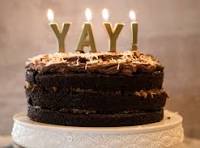
YAY for German chocolate cake! Birthday are traditionally celebrated with presents and cake, and both made their appearance yet again this year. I keep telling my wife and kids no presents, because in our sixties we finally learn we have almost everything we need (and need almost nothing we have). On the other hand, I will never turn down birthday cake, especially when the choice of flavor is mine to make. German chocolate – heavy on the coconut if you please.
My birthday is also the perfect reason to recall my late father. He was born the very next day (well, the very next day thirty-three years before). If my mother could’ve held on for another couple of hours Dad and I would’ve shared the same birthday. Not that I ever blamed her for choosing January 22nd. I’m sure the last thing she cared about back then was the clock. But at least she got a kind of two-fer in that Dad and I celebrated our birthdays together every year.
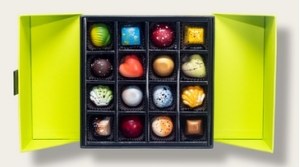
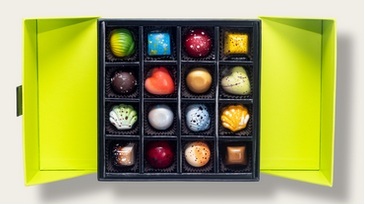
Love me some Norman Love Our financial advisor makes a nice birthday gesture every year with the colorful assortment you see here. These beautiful chocolates – handcrafted by Florida-based Norman Love Confections – are too pretty to eat. Having said that I can assure you the entire box will be empty by early February. Yes I realize this “gift” is really just me buying myself a birthday present, since it comes out of the profits of my own investments. But at least there are profits…
 My birthday is also a reminder I fall under the sign of Aquarius (barely). An Aquarius is described as intellectual, independent, and humanitarian. I happily embrace all three even if I regularly fall short in all three as well. On the other hand, Aquarius is the water-bearer. In the thirty-odd years my wife and I have been homeowners we’ve been plagued with every form of water disaster imaginable. Drips, leaks, mold, flooded basements, overflowing retention ponds – you name it. Would it surprise you to know an ice storm is headed our way in the next few days?
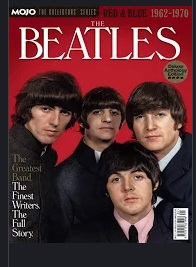 Finally we have The Beatles; or at least, Paul McCartney. McCartney, who turned 83 last June, wrote the merry tune When I’m Sixty Four when he was only fourteen. The lyrics include musings about his life fifty years on, but really the song’s just a silly rant about a time he couldn’t possibly foretell. (At least he thought to include “Dave” in the lyrics.) If I could meet McCartney in person I’d love to ask him, Hey, was it really like the song suggested nineteen years ago? Even if it wasn’t I’ll bet he’d take age sixty-four back in a heartbeat.
We make wishes when we blow out birthday candles (even at my post-middle-pre-senior age). Such was the case again this year on top of my German chocolate cake. What did I wish for? I’ll never tell, at least not unless the wish comes true. But I will admit to one distraction while I was huffing and snuffing those candles. There were only sixty-four on my cake. I’m thinking there should’ve been sixty-five.
-
Worthless Wardrobe Boxes
I’ve always liked the play on words of Men’s Wearhouse. If you’re familiar with MW you know they cover more ground than just formal wear. They’ve set aside an area for tuxedos and such, but they have other sections for dress shirts, accessories, and even shoes. It’s like walking through a miniature department store… which is probably why MW is destined for the dust bin sometime in the coming year.
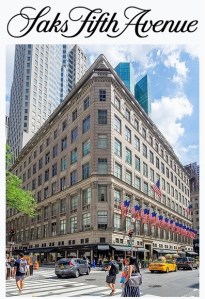 Just eighteen months after Saks Fifth Avenue acquired bankrupt Neiman-Marcus (for the “bargain” price of $2.65 billion) Saks itself filed for bankruptcy; just yesterday. The 2024 merger of these big-box luxury retailers (which included Bergdorf Goodman) never really came to fruition. Chalk it up to biting off more than they could chew, or more likely to the impact of the changing habits of consumers. Today’s shoppers want smaller, more specific brick-and-mortar options; that is, whenever they can drag themselves away from online purchasing.
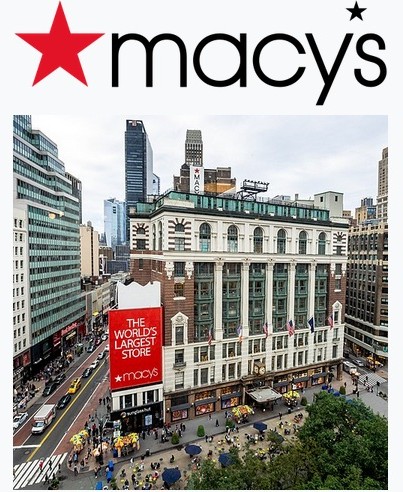
 The shuttering of department stores is not limited to the high-end verions, of course. Macy’s is in the process of closing 150 “underperforming locations”. JC Penny, Kohl’s, and Marshall’s are closing outlets here and there. Even Carter’s, the popular option for children’s clothing, is calling it quits on 150 locations. And Sears, which had almost 3,000 locations just fifteen years ago, is down to a mere five. Frankly, I didn’t know Sears had any locations anymore.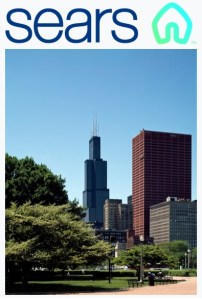
Chicago’s Sears Tower Sears (or the Sears, Roebuck and Co I remember as a child) was my family’s go-to-department store for just about anything. My brothers and I were outfitted in Sears-brand clothing. My mother purchased all kinds of items for her kitchen. My father built up his workshop with dozens of Craftsman tools. And of course, the Sears catalog was not only a kid’s dream-book of Christmas wishes, but its arrival in the mailbox was a sign Santa was on his way… not to your house but to the toy department at Sears.
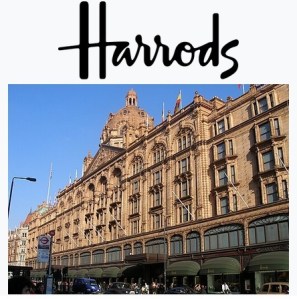 Like many other things in the States, department stores were based on the originals in Europe. Harrods of London has been around since 1849 and boasts of 1,100,000 square feet of selling space, making it the largest department store on the continent. Paris hosts several stores I’ve never heard of yet many have been around as long as Harrods. And Australia’s David Jones is considered the world’s longest continuously operating department store (since 1838!)
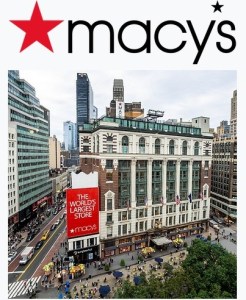 As you read this post – and if you’re Millennial or older – I’m sure a department store of your own experience comes to mind. Towards the East Coast: Gimbels, Hudson’s, or Wanamaker’s. Towards the West: May Company, Bullock’s, or Robinson’s. In Chicago alone: Marshall Field’s, Carson Pirie Scott, or Wieboldt’s. In Canada: Eaton’s. The list is endless, even as most of them are downsizing or closing altogether.
In deference to my former department store habits, I also prefer more specific retail these days. My shoes come from shoe stores. My shirts come from stores of particular name brands. But with shopping malls closing along with their aforementioned “anchors”, my stores of choice are now stand-alones or in outlet malls. Now that I think about it, outlet malls are kind of like outdoor department stores, aren’t they?
 I may be nostalgic for the department stores of my past, but I certainly understand why the concept has come and is about to be gone. We have more convenient, more tailored options these days. Which has me wondering about supermarkets. Supermarkets are also under the threat of the changing habits of consumers. No, I don’t expect a return to those wonderful merchant-driven street markets you find all over Europe. But we are getting more comfortable with placing orders ahead of time and having groceries delivered to our car or front door. In other words, enjoy shopping in “food warehouses” while you still can, because department stores are about to become nothing more than worthless wardrobe boxes.
Some content sourced from the CNN Business article, “Saks Global files for bankruptcy protection…”, and Wikipedia, “the free encyclopedia”.




About Me
The sky is not completely dark at night. Were the sky absolutely dark, one would not be able to see the silhouette of an object against the sky.
Follow Me On
Subscribe To My Newsletter
Subscribe for new travel stories and exclusive content.
 Life In A Word tv