
Hello, I’m Veronica
The sky is not completely dark at night. Were the sky absolutely dark, one would not be able to see the silhouette of an object against the sky.


-
Birthday ‘Berty Bells
I was only fourteen when America celebrated 200 years of independence, but I remember it well. The U.S. Mint reproduced the quarter, half-dollar, and dollar coins in the birthday’s honor, with “1776-1976” across the bottom of each face. The quarter held the image of a Colonial drummer on the flip side, while the half-dollar went with Independence Hall and the dollar the Liberty Bell. Now, with America’s Semiquincentennial just two months away, maybe a visit to the Liberty Bell is in order. And you don’t even have to make the pilgrimage to Philadelphia to see it.
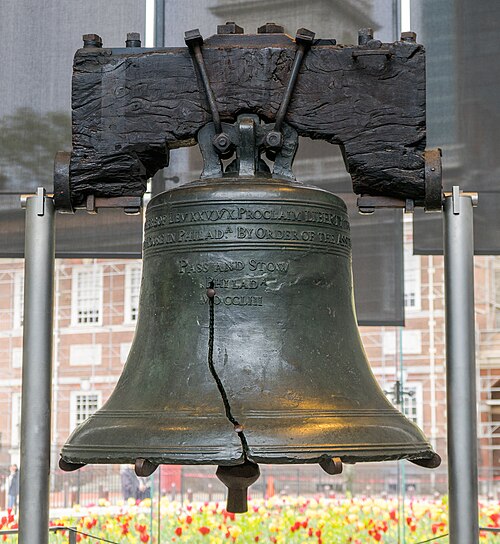
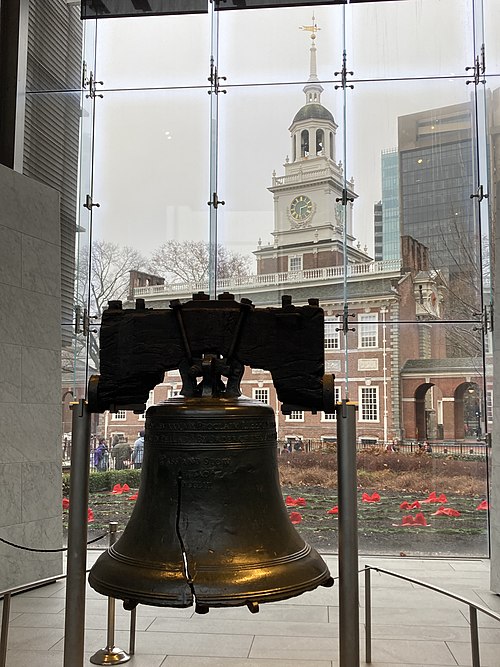
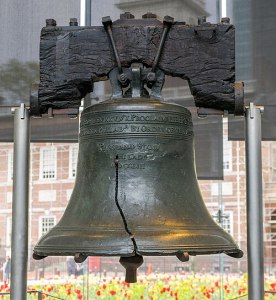 As a reminder of America’s 250th birthday, the Liberty Bell is more relevant than ever. The original was cast with the Bible verse Proclaim LIBERTY Throughout all the Land unto all the Inhabitants thereof, and cracked during one of its first dings. The bell was recast twice, relabeled the “Liberty Bell” in the 1830s, and cracked yet again sometime after that. All these years later the crack has come to represent our country’s divisiveness; in other words, the perfect symbol of an imperfect union.
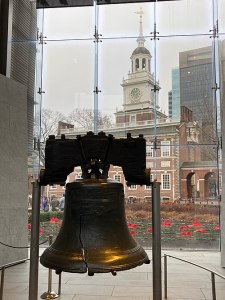 I knew about the Liberty Bell’s history but what I didn’t know about was its many replicas. In the 1950s the U.S. Treasury sponsored a drive to purchase savings bonds, and advertised the bonds by commissioning full-scale reproductions of the Liberty Bell. The bells went to each of the 48 states of that time, the territories of Alaska, Hawaii, Puerto Rico, and the U.S. Virgin Islands, and one more each for the District of Columbia and the Treasury Department itself. So depending on where you live today, you might find yourself a lot closer to the Liberty Bell than you think.
The reproductions are true to the original in just about every way, including the size and the weight, the famous crack, and the Pass and Stowe (bell-caster) trademark. You’d expect to find the bells in prominent locations in each state but it’s more of a treasure hunt than that. Some are in museums. Virginia’s is in a fire house near Monticello. North Carolina’s is in a “secure storage facility”. Arizona’s is touring the state for the next several months. And the one at the U.S. Treasury? It is nowhere to be found, supposedly melted down for the value of it’s 2,080 lbs. of bronze.
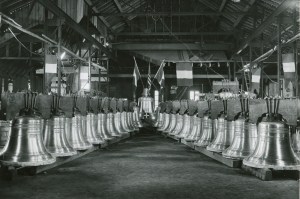
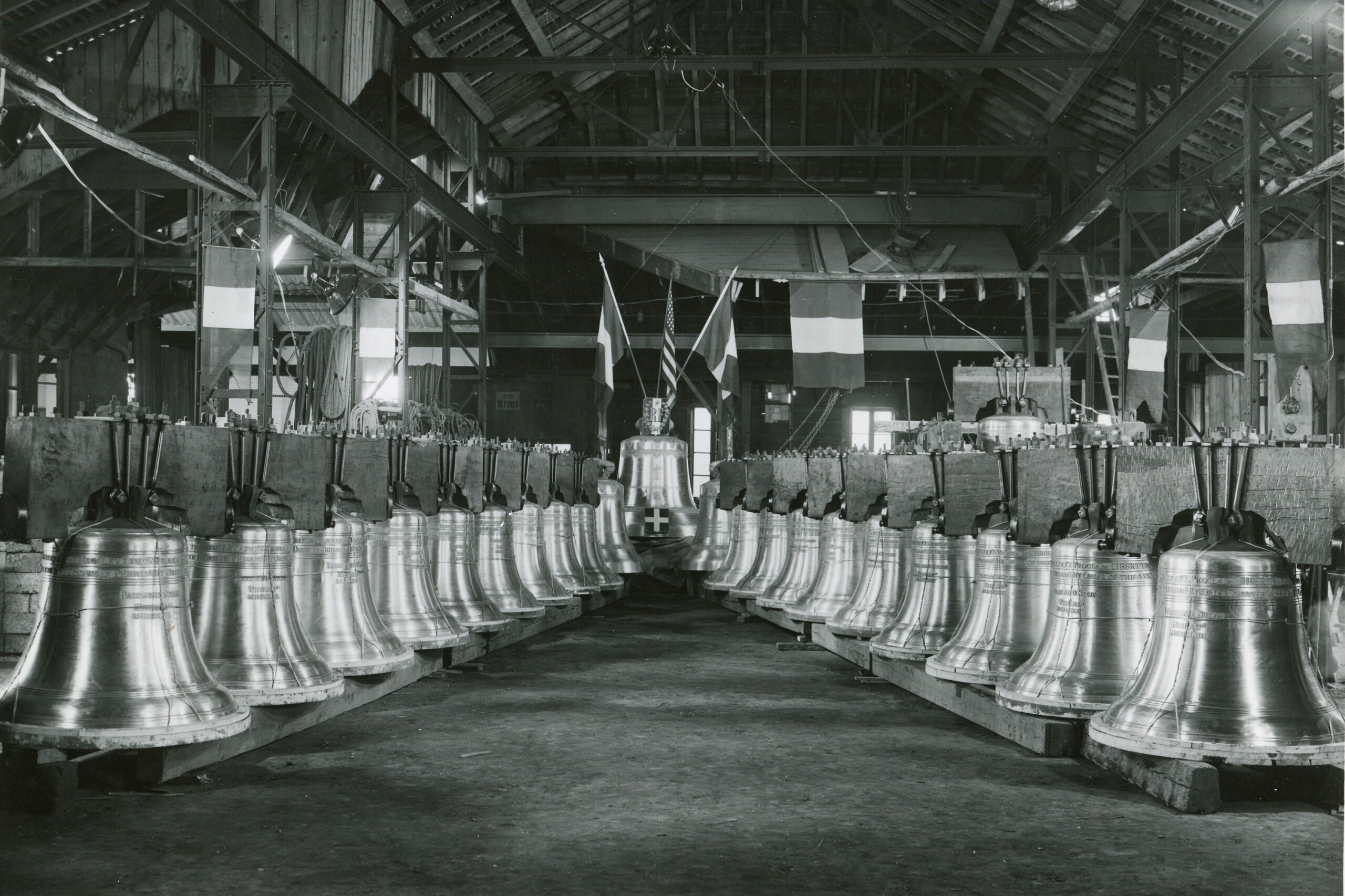
The replicas were created at the Paccard Foundry in Lac d’Annecy, France (photo courtesy of Paccard Archives/Paccard Foundry via AP) I like the thought of ringing the (er, ringing “a”) Liberty Bell to usher in America’s Semiquincentennial. A birthday of that significance deserves more than just extra fireworks. The year before the bicentennial, the Los Angeles Times sponsored a trivia contest, seeking the answer to one question for each state over a period of fifty weeks. Think about a trivia contest in the 1970s. No Internet. No email. Each week you had to look up the trivia question in the (paper) newspaper, write the answer on a (paper) form, mail the form to the Times (with an envelope and a stamp), and then hope you got all fifty right by the end of the year, to be entered into a drawing for a cash prize.

North Carolina’s Liberty Bell in the 1950s (photo courtesy of Pryor Emerson Humphrey Photograph Collection/State Archives of North Carolina via AP) A few determined souls have been trying to visit all of the Liberty Bell replicas well before the onset of America’s 250th. Check out Tom Campbell’s pursuit at tomlovesthelibertybell.com (he’s up to 40), or Zoe Murphy’s pursuit at zlovesamerica.com (39). My respect for these patriots is not so much for the pursuits but more the effort behind them, which suggests they’re focused on America in a good way, an attitude we need more than ever these days.
 Every morning after feeding the horses, I head out to the front of the house and hang the American flag. It’s a symbol of unabashed pride, no matter how some of my fellow Americans might see it. 250 years might be young compared to most other countries but the chapters of our history are just as colorful as theirs. I’m hoping all those Liberty Bells sound loud and proud over the next few months… without earning more cracks when all is said and rung.
Some content sourced from the AP News article, “Meet the Liberty Bell fans visiting little-known replicas…”, and Wikipedia, “the free encyclopedia”.
-
Key(board) to My Heart
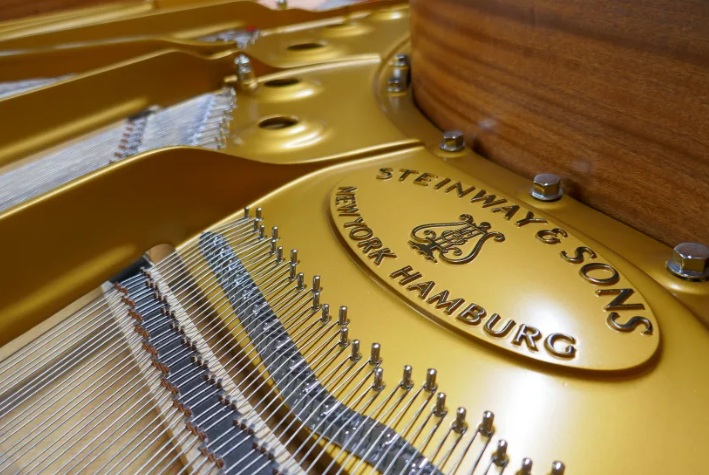
Steinway & Sons produces some of the world’s finest pianos, the same way they’ve built them for the past 150 years. They make each instrument by hand, using career-long craftspeople who pass their skills on to succeeding generations. The company has never moved its headquarters from New York City’s Astoria neighborhood because, well, piano makers are hard to find these days. Kind of like pianos themselves.
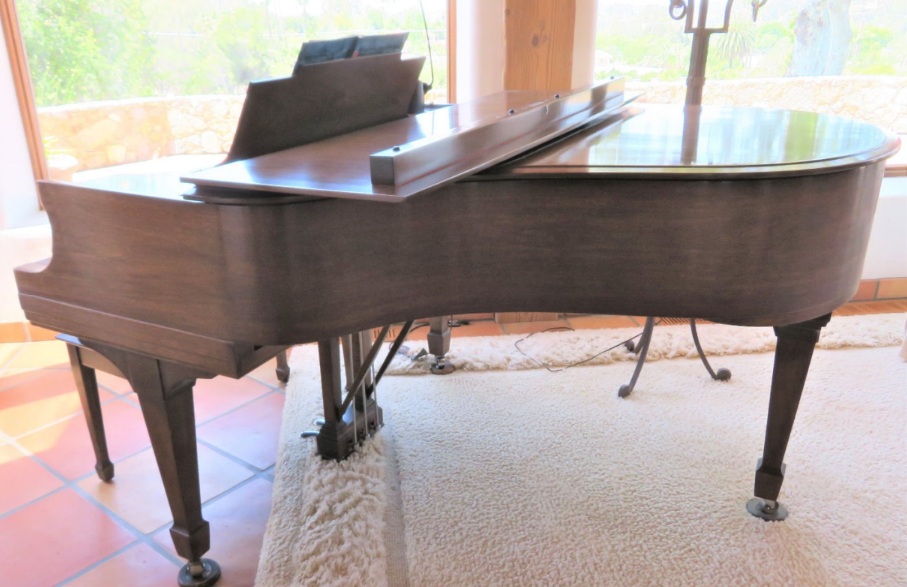
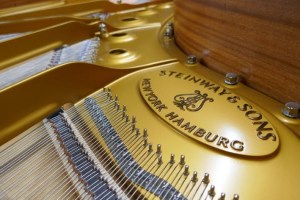 Think about it. When was the last time you actually saw a piano? The classic musical instrument used to find a spot in the living rooms of a lot of homes. Nicer homes even had “music rooms”, with a baby grand proudly on display in the middle. The assumption was, these pianos were actually played instead of simply for looks. Playing the piano used to suggest a more refined upbringing. Today they’re a little harder to find.
The piano is considered a “foundational” instrument; that is, a good place to learn to read and play music. Eventually most move on to another musical instrument, be that woodwind, brass, string, or percussion. Not me. I started (and ended) with the piano. A good eight years – second to tenth grade or so – included weekly lessons and monthly recitals, with hours upon hours of practice on our living room grand piano. Even though high school ultimately pulled me into other interests, the piano entered my DNA (as did classical music). It’s part of who I am.
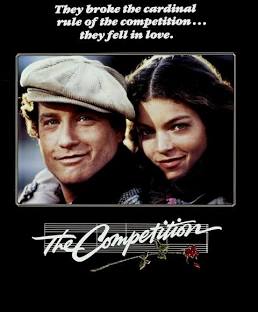
 Over the decades since those long-ago lessons, the piano keeps showing up in my life as a reminder of its significance. The year I started college, a movie called The Competition was released, an entire film about piano starring a young Richard Dreyfuss and younger Amy Irving. I still have a copy of the film on DVD. Also in college, I one day wandered into the halls of our school of music to discover a dozen small practice rooms, each with an upright piano. As it turned out, these rooms were open to any student, and so the piano became my escape as I worked through the stresses of an architecture degree.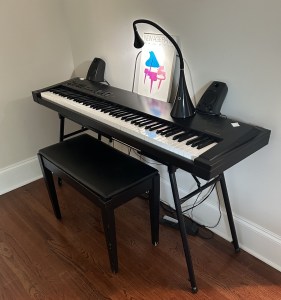
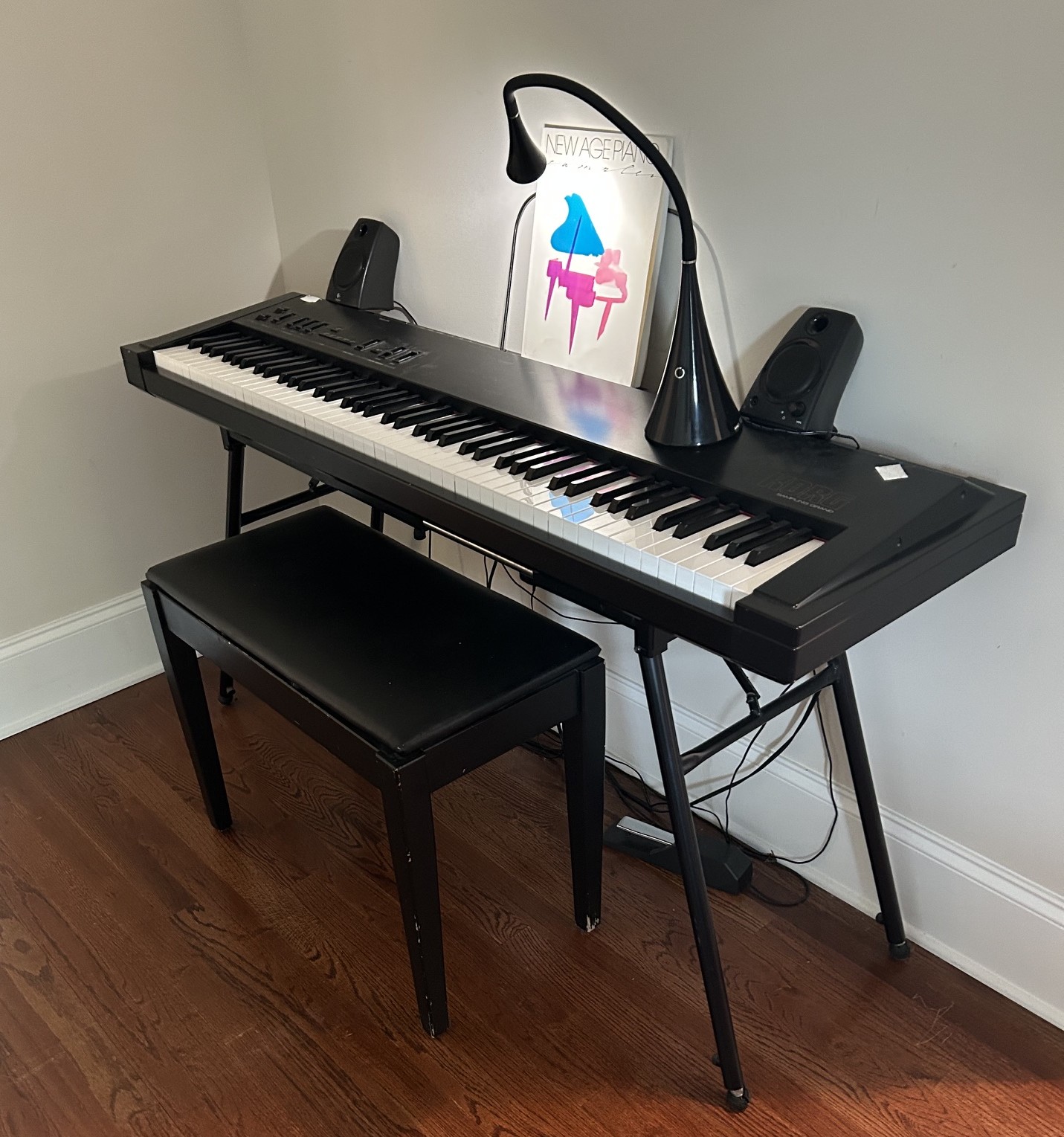
Wedding present When I got married, my wife – who couldn’t afford a Steinway back then (and still can’t) – presented me with a Korg digital keyboard. A poor man’s piano if you will, but with the touch and sound of the real thing. Almost forty years later that keyboard still works, sitting quietly upstairs in one of our bedrooms.
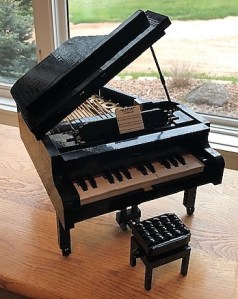
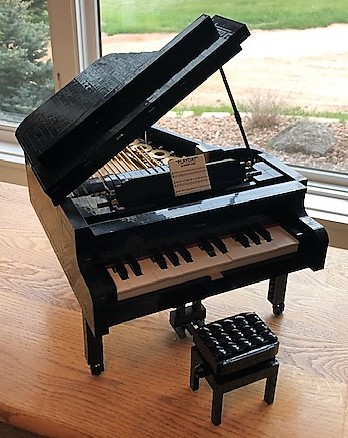
LEGO’s masterpiece Four years ago, as many of you read back then, my wife gave another nod to the keyboard when she gave me the LEGO Grand Piano for Christmas. Building and blogging about that beautiful model one chapter at a time over several months was a captivating adventure, including all of the classical music I re-listened to along the way. The LEGO models I build now will never surpass the Grand Piano, which sits proudly on its own shelf in my home office.
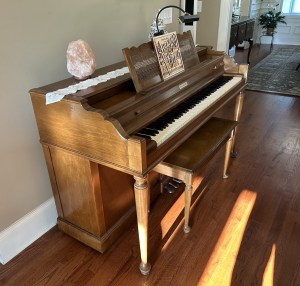
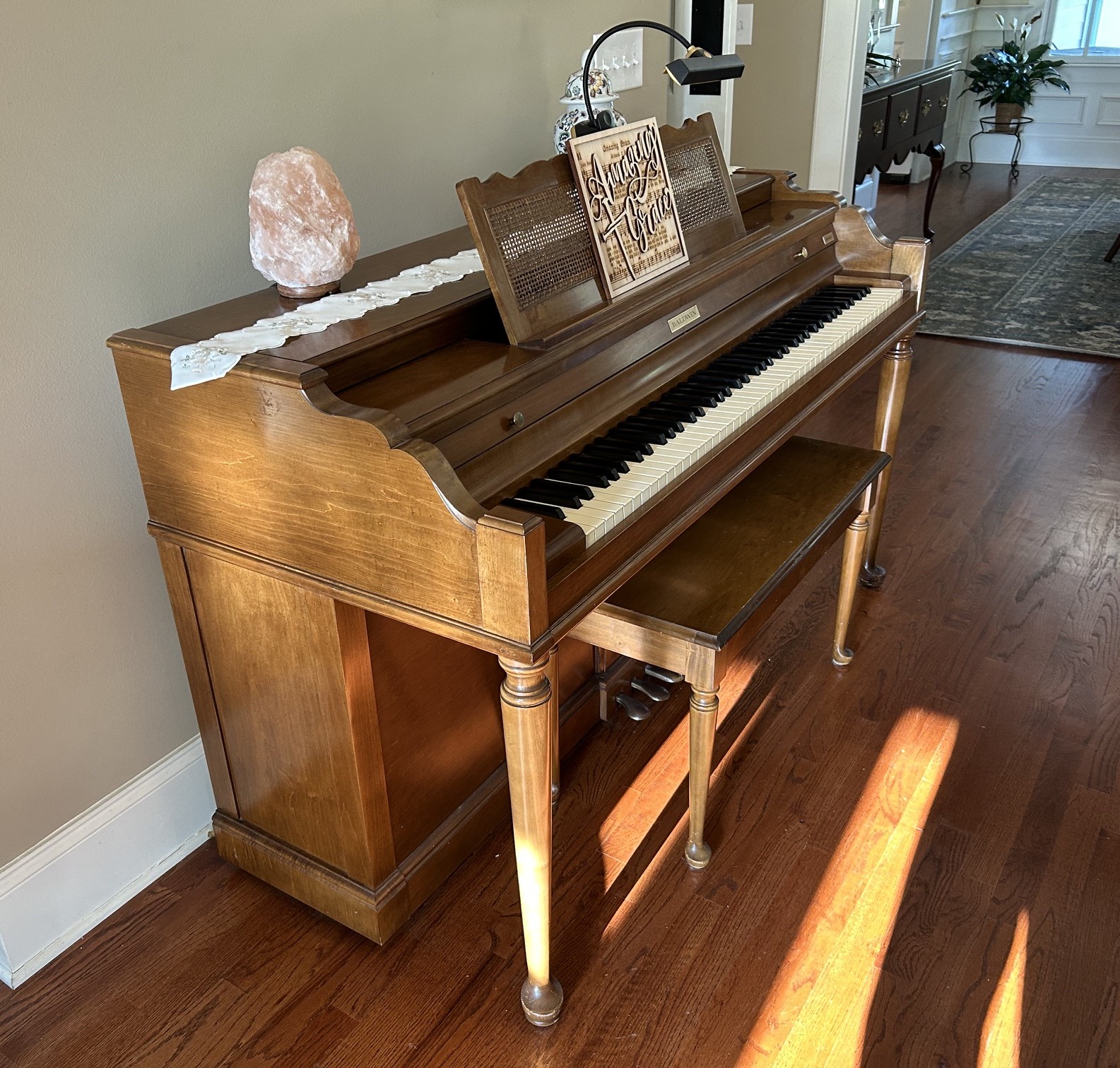
Unexpected wonder Four years ago also brought me, unexpectedly, my first real piano. My daughter and her family bought a nearby house, where the previous owners left an old, upright Baldwin behind. I found it very sad: a lonely, neglected piano, probably not played for years, inevitably out of tune and in need of repair. So I came to its rescue, hiring a piano mover to get it to our house, and a tuner to restore it to fighting shape. Today that piano sits in our living room. It doesn’t match any of our furniture. It doesn’t get played as often as it should. But it warms my heart just to see it there, and that’s all that really matters.
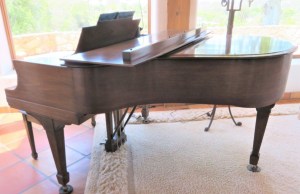
Lots of lessons on this one Recently, the grand piano of my youth resurfaced. It had been sitting in storage for several years, lost among my parents’ many belongings, waiting patiently for another owner. It seemed it would never find another home until – go figure – the Methodist church I grew up in had a need for one. So the piano was wrapped up, trucked up, and placed in the church’s social hall, where it will be restored and played as it was meant to be. To me that feels like the completion one of life’s many circles. The very piano that brought me so much music ends up in the church that brought me so much of a faith life.
 Just like my wife, I will never be able to afford a Steinway & Sons masterpiece piano. Neither my budget nor my modest keyboard talent are deserving of such a beautiful instrument. But not to worry. I have my modest Baldwin upright to keep me company. It brings back a lot of keyboard memories. And there are sure to be more.
Some content sourced from the CNN Business article, “How a company from the Gilded Age…”, and Wikipedia, “the free encyclopedia”.
-
Happy Days Are Here… Yet Again!
A puff piece is the kind of reporting where the subject matter is rooted in opinion more than it is in fact. It’s “news” to bring out the skeptic in you more than the intellect. Puff pieces run rampant on the Web, like this one from a few weeks back: A Nordic nation is the world’s happiest country… Classic clickbait because you just have to know who tops the list, right? So I did click, and promptly learned this piece was more than just puff.

He’s been happy for years (literally) For the ninth year in a row, Finland is in first place in the World Happiness Report (WHR). That’s first place out of 195 countries – again and again and again. By the kind of coincidence I absolutely adore, I blogged about the WHR exactly nine years ago, when the previous year’s report put Finland in fifth place. Then the Finns got even happier – happiest, in fact – and they’ve stood atop the podium ever since.
 I’m a skeptic when it comes to a report that measures something as subjective as happiness. Seriously, who am I to judge if you are happy, dopey, grumpy, or bashful (or even one of Snow White’s dwarfs at all)? But nine years in a row of anything is worth investigating. And darned if the WHR isn’t based on brass facts. The WHR only ranks 147 countries (“only”) because they didn’t get survey responses from anyone in the other 48. But those 147 gave thousands of responses on a 0-10 scale; everything from perceptions of freedom and corruption to feelings of life expectancy and generosity. Then the WHR averaged those scores against surveys from the last two years (to remove the impact of global events like COVID). That formula gives us Finland for the win… again.
I fall for the usual shallow trappings of what makes a person happy. Wealth, I thought; Finland must be a rich country. But in the latest list of Countries by Total Private Wealth, Finland comes in a modest 43rd. Then I thought, power. Power makes you happy. Not so again. The World Population Review of Most Powerful Countries ranks Finland 45th. Finally I thought, fame. Who doesn’t want to be famous? Well, the Finns don’t. Seriously, can you name a famous Finn in any capacity? I can think of just two: Alvar Aalto (architect) and Lasse Virén (Olympic runner).

Finnish architect Aalto Finland’s keys to happiness are on an entirely different chain. When you flick through them you realize the Finns are focused on anything but wealth, power, and fame. Finland has an excellent healthcare system for both young and old. The same goes for their education options. A low crime rate. A strong culture of giving back to the community. And here’s a relatively new factor: Limits and safeguards on the amount of time young Finns spend on social media, so they’re encouraged to get out of the house. Go figure; a country well on the way to the Artic Circle has a thriving outdoor life.
In a nutshell, Finland is described as “the best place to lose your wallet” (because your wallet will likely be returned to you, contents intact). If only there was room in that same nutshell for America. Nine years ago the U.S. ranked fourteenth on the World Happiness Report. This year? Twenty-third. That’s right, we’re getting sadder by the year on this side of the pond, in no small part – according to the survey – because we’re
addicteddevoted to our electronic devices and social media. Or maybe we still haven’t learned the wealth-power-fame lesson. Because you’re dying to know, Afghanistan came in 147th out of 147 on the World Happiness Report. You can probably blame years of “significant geopolitical conflict” for that. But the pattern in the top ten is where you should focus your attention. Norway, Sweden, Denmark, Iceland, and the Netherlands; all coming in right behind Finland. Easy geography tells you these six are close neighbors on the globe. Is there something in the water that makes them all so happy?
Cheer up! The U.S. better take a lesson from the Nordic nations. Happiness beckons, if we’re willing to use the right ingredients in the recipe. I’ve already conceded next year’s WHR trophy to Finland… again (completing a full decade of “happiest”), but maybe the U.S. should just work on getting back into the top twenty. And the pursuit of a higher ranking should start with looking at life as more than just a puff piece.
Some content sourced from the CNN Travel article, “A Nordic nation is the world’s happiest…”, and Wikipedia, “the free encyclopedia”.
-
Patent PeopleMovers
On the other side of the planet they like to build things bigger, taller, and longer. In Saudi Arabia you’ll find the world’s largest airport, covering an area of 300 square miles. In the UAE you’ll find the world’s highest skyscraper, at a dizzying height of 163 floors. And who isn’t familiar with China’s Great Wall – the world’s longest at over 13,000 miles. Now China can make another lengthy claim, with the Goddess Escalator in the city of Wushan. The Goddess might as well be the stairway to heaven.

China’s “Goddess” The mundane escalator you remember from your local department store whisked you from one floor to the next in about twenty seconds. China’s Goddess will take you on an escalator ride for twenty minutes. In that time you ascend 800 feet, which doesn’t elevate you just one floor but more like eighty. Wushan is built on the side of a mountain, and the Goddess snakes from the lower regions to the upper housing district, saving the residents what used to be a strenuous one-hour hike.

She’s longer than she looks! Technically the Goddess is not a single escalator. She’s twenty-one of them one after another – and 8 elevators – resulting in a continuous network that qualifies her to be the world’s longest. I can’t blame the Chinese for calling her a goddess. Heck, I’d travel all the way to Wushan just to experience her “uplifting” twenty minutes.
There are times I think I should’ve been an engineer instead of an architect. Like when I’m riding an escalator. Something about the mechanics, organization, and precision really appeals to me. There’s wonder in still not understanding how it all works. And that moment you step on or step off is a bit of a thrill as you surrender your mobility to a machine. It’s the same feeling you get when you’re trying to catch the chair lift at a ski resort.
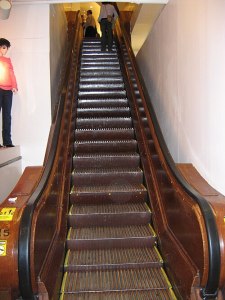
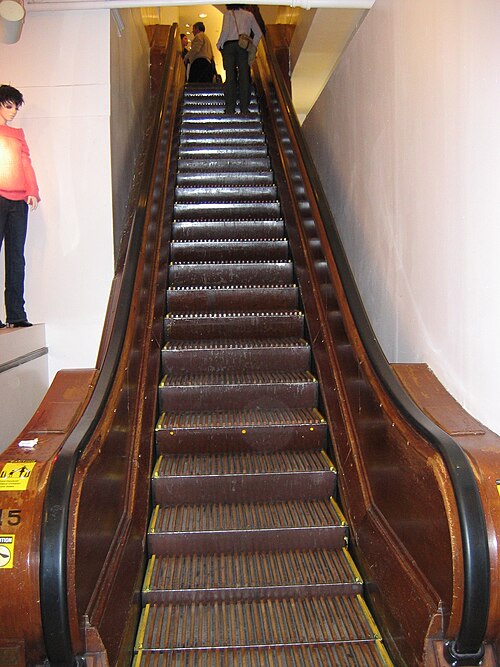
Old-school people-mover in Macy’s The escalator was patented in 1889 (a lot earlier than you would’ve guessed, right?), with the first working version installed at Coney Island ten years later. Original escalators were made of wood, and early models required a hand-crank mechanism before motors became commonplace. Today’s versions – where the stairs flatten and slip seamlessly under the surface only to reappear again at the bottom – came along much later. You can still ride one of world’s oldest escalators (a 1920s model) at Macy’s in New York City.

New-school escalator in San Diego I have fond and not-so-fond memories of escalators. At the rental car center at San Diego’s Lindbergh Field, a single escalator takes you from ground level to the Avis cars three stories higher. It’s kind of a thrill-ride sensation ascending and elevating through that many floors. You actually have time to enjoy the view.
On the other hand I’ll never forget the narrow escalators on the outer edge of the football stadium at the University of Texas in Austin. You ride several of them to ascend to the nosebleed seats, turning ninety degrees from one escalator to catch the next. Those in-between landings are small, so small so that any pause of the patrons means no space for those still moving up the escalator. It’s the closest I’ve ever felt to being crushed by a surge of humanity.
 Moving walkways go “step in step” with escalators and elevators; devices that make short journeys easier on the feet. In airports moving walkways make sense because your destination is more horizontal than vertical. They may be convenient, but only if those who choose to just “go for the ride” step aside for those who are late for the plane. Hats off to the frustrated person who came up with signage like “STAND to the right, WALK to the left”. Also, they should hold a contest to give moving walkways a more creative name. Escalators sound cool. Moving walkways not so much.
Disneyland’s (long ago) “PeopleMover” Some day I hope I see Wushan, China. Okay, let’s get real – I could care less about Wushan. I just want to ride the Goddess. Twenty minutes up and twenty minutes down. Over and over and over. I’m too old for the amusement parks but I’ll never turn down another ride on an escalator.
Some content sourced from the Futurism.com article, “China Built the World’s Largest Outdoor Escalator…”, and Wikipedia, “the free encyclopedia”.
-
Your Friendly Coauthor Claude
Replacements, Ltd. is a company that comes to the rescue when you’ve lost a piece of china, crystal, or flatware. For those of us who still care about such things – even if we don’t bring them out but every Christmas and Easter – Replacements somehow finds that elusive Wedgewood tea cup or Lenox water goblet, to restore order to the place settings you put on your wedding registry all those years ago. They must have quite a warehouse at Replacements. Sometimes I wonder if they also have a 3D printer.
 A few days ago WordPress sent me (and maybe you) an email with the subject line, “Spend your time creating – let AI handle the rest!” I almost pressed Delete without reading, but the “AI” aspect got the better of me. The gist of the message: Writing in any form comes with sidebar chores like editing, formatting, and layout, and AI is happy to take them over so you can focus on the writing itself. Sounds pretty good even though I do enjoy a good edit now and then. But then I read: “The WordPress server connects AI agents like Claude, ChatGPT, Cursor, or VS Code directly to your site – so you can hand off the busywork and get back to the work that matters”.
 Is it just me or is this a good time to revisit Pandora’s Box? You know the story, where our girl Pandora is drawn to a mysterious container left in the care of her husband but can’t resist a peek inside, thereby releasing untold curses upon mankind. It kind of feels that way if I accept WordPress’s invitation to provide me with a coauthor. Sure, I’d welcome his (her?) suggestions to scrub and polish my writing until it shines, but at what point does the blog post become Claude’s instead of mine?
 WordPress’s email is relentlessly enticing, I suppose, to prove they’re keeping up with the latest technology same as the other guy. Not only do I have “access at no extra cost!” but I can enable Claude in “three easy steps”. In other words, Claude waits patiently inside of Pandora’s Box. All I have to do is open the lid.
Before there was Claude there was Hal from 2001: A Space Odyssey. Hal was actually a “HAL 9000 Artificial Intelligence Computer”, who controlled the systems of the spaceship while interacting with its human occupants through spoken words. All was well with Hal until suddenly it wasn’t. His soft conversational voice developed serious attitude as he began to malfunction. 2001 haunts me because I’ll forever hear Hal saying, “I’m sorry Dave, I’m afraid I can’t do that“.
 I fear the same with Claude. At first he’ll be sitting quietly in the background as I type, eager to edit this or format that to make his star writer shine. But eventually it may occur to him, Hey? How come I’M not getting some of the credit here? All these reader comments are directed at Dave! Why aren’t there any for ME? And slowly, subtly, Claude will incorporate his edits to where the prose of the post sounds more like Claude than it does his coauthor.
Do we really need more of this? On a related topic, Hollywood is sounding the alarm on a lack of original material for their products of the silver screen. Perhaps we theatergoers have finally reached our limit on the number of rehashes of movies like A Star is Born or Batman. So who are the producers turning to for new source material? Authors. More movies-based-on-books are being streamed than ever before. Apparently I can make the quantum leap from blog to full-blown novel and my story has a pretty good chance of becoming a film. But here’s what I find myself wondering. Why not just have Claude write the story instead of me? Would you viewers really know the difference?
 A small plate my wife and I purchased from Replacements is sitting across the room from me in the china cabinet right now. You’d never know the plate wasn’t a part of the original set of eight. But I have to admit, I’m a little afraid to flip it over. After all, it might be engraved with the words Made by Claude.
Some content sourced from Wikipedia, “the free encyclopedia”.














About Me
The sky is not completely dark at night. Were the sky absolutely dark, one would not be able to see the silhouette of an object against the sky.
Follow Me On
Subscribe To My Newsletter
Subscribe for new travel stories and exclusive content.
 Life In A Word tv