
Hello, I’m Veronica
The sky is not completely dark at night. Were the sky absolutely dark, one would not be able to see the silhouette of an object against the sky.


-
Beachy Keen
South Carolina’s heat and humidity are quickly moving the dial to “broil” – as they always do this time of year – so my wife and I will go with our most dependable coping mechanism: travel to places other than South Carolina. Technically that’s not quite true because one of those destinations is still South Carolina. Doesn’t matter. The goal is to find temperatures closer to the “bake” setting, where the air movement qualifies as a breeze. Both conditions can be found, of course, at the beach.
 I consider myself fortunate to have grown up near a beach. Others may counter by saying the mountains are more desirable, or the desert, or the shores of a pristine lake. To each their own. For me, an upbringing of Pacific Ocean sand and surf turned the calm of the coast into a part of my DNA. I thirst for the beach several times a year. And in the United States alone, I have 650 choices.
Mauna Kea Beach on Hawaii’s Big Island Inevitably, 10 of those 650 beaches are rated as “top”. The so-called authority on the subject is a guy nicknamed Dr. Beach. At first I scoffed at the notion that one person could choose the ten best from hundreds, but this doctor takes his medicine seriously. Dr. Beach has identified fifty criteria (fifty!) to evaluate beaches, including water warm enough to swim in, sand clarity, presence of pests (like mosquitos and seagulls), and the size of the ocean waves. He even rates the surrounding noise level generated by humans.
To further solidify his credentials, Dr. Beach disqualifies locales threatened by pollution, erosion, or out-of-control seaweed. He “retires” beaches that have reached the top ten too many times since he started his lists (in 1991). Finally, Dr. Beach has visited every… single… one… of those 650 beaches. He may be obsessed with his subject but I’d say he’s a bona fide authority, wouldn’t you?
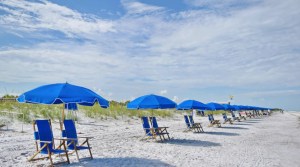
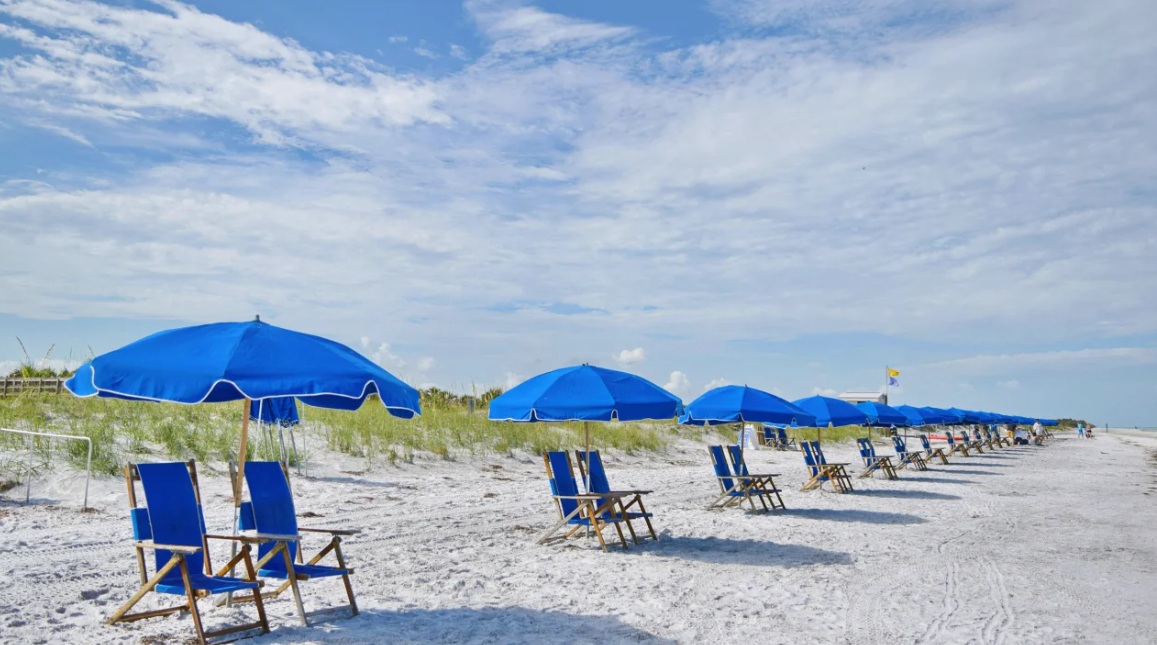
Caladesi Island State Park in Clearwater FL On his list for 2026, Dr. Beach prescribed four in Hawaii, three in Florida, one in Cape Cod, and one in the Hamptons. His tenth selection, coming in at #7, is right here in South Carolina. Whew, that was close. After all, he could’ve picked MY beach and then me and the good doctor would be having a serious conversation.
As you know, the problem with top-ten lists is exposure. Something or somewhere great suddenly becomes headline news and everyone wants a piece of it. Next thing you know that thing or that place becomes too popular, and no longer resembles its former wonderful self. With all due respect to Dr. Beach’s “retirement” strategy, once something becomes “top-ten” we’re not quick to forget about it.
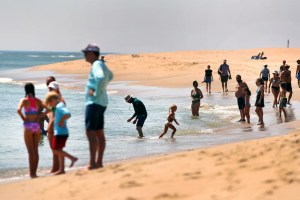
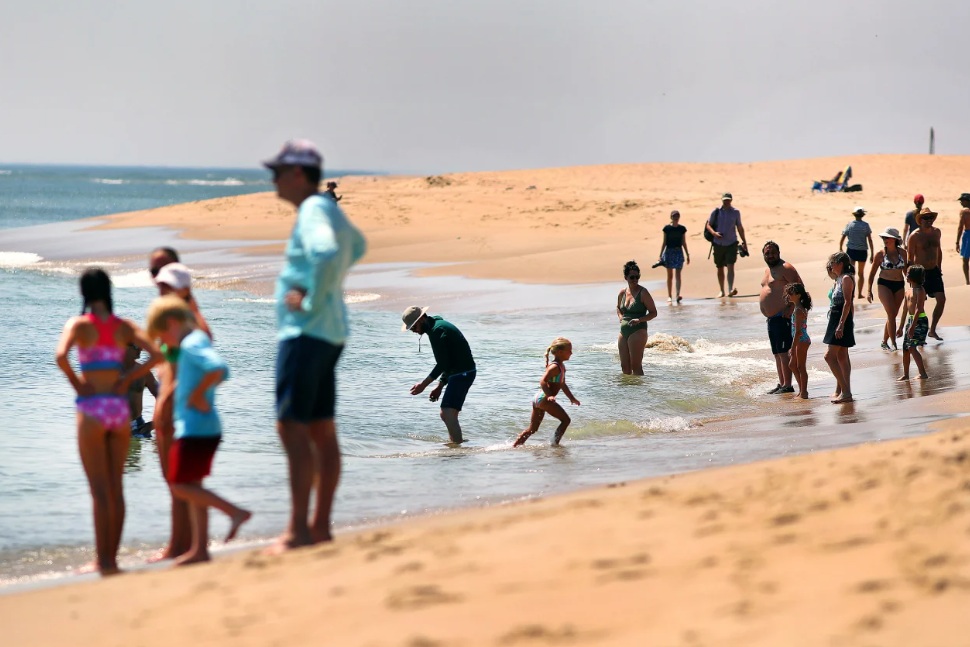
Cape Cod gets busy in the summer months… I’ve been to a few of Dr. Beach’s top choices for 2026. Maybe not Coast Guard Beach in Cape Cod, but just about every beach on Cape Cod is bucolic. Maybe not Caladesi State Park in Clearwater, Florida but I’ve dipped my toes in the sugar sand and warm waters of a beach in Clearwater. I’ve been to Poipu Beach on the island of Kauai, Hawaii twice, for my honeymoon and for a family reunion. I’m happy to see Poipu ranked as the #1 beach in the United States this year.

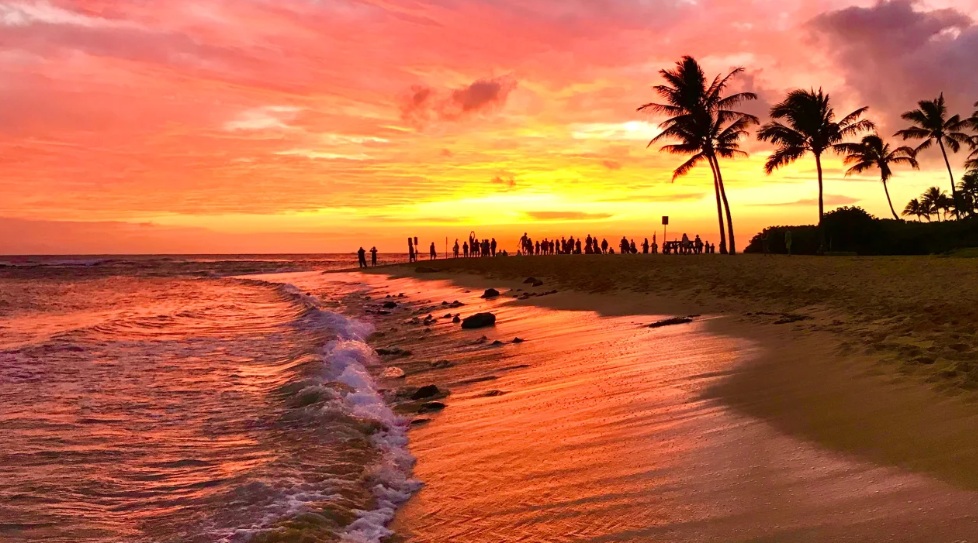
Poipu Beach in Kauai HI I’m even happier to see my two favorite beaches not ranked in the top ten (or anywhere near it) this year. One is on the West Coast and one is right here in South Carolina. One is big and one is small. Both have easy access to the quaint shopping of a nearby village. And both have the kind of views where walking, riding bikes, or simply staring out at the sea never gets old. The names of these beaches are…
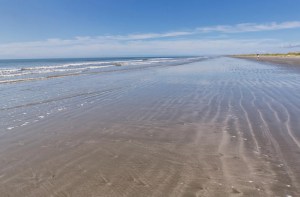 Nope. Sorry, no big reveal. Not even the tease of a photo. There aren’t a ton of you readers out there but it only takes one to make my beaches go viral, and then what am I going to do? Find another couple of beaches? Uh-uh, no way. Go find your own beaches. You have 650 to choose from. And God forbid Dr. Beach ever ranks mine in his top ten. If that happens I’ll report him to the “surf board” and demand they pull his license.
Some content sourced from the CNN Travel article, “Hawaii and Florida top list of best U.S. beaches…”, and Wikipedia, “the free encyclopedia”.
-
Make My Moon a Double
May’s flowers blooming from April’s showers have been a little hard to find this year. Maybe that’s because we haven’t had any showers. South Carolina just endured its fourth driest April in well over a century. We’re finally getting some moisture but it’s going to take a whole lot more to move us from “severe” to “moderate” on the drought scale. On the other hand May’s full moon was right on time… and it’s going to be right on time again.
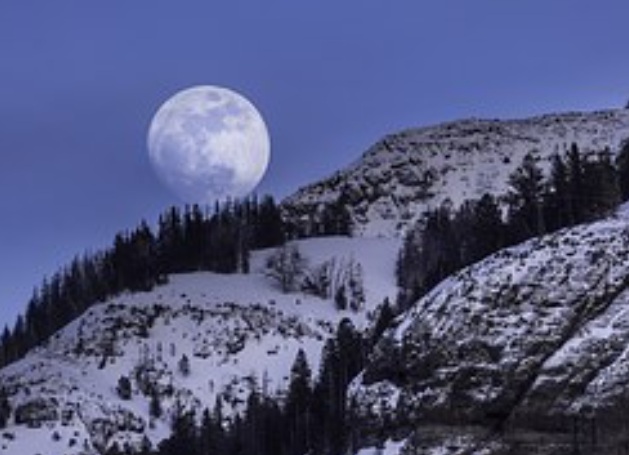
 A bookend is “one or two things occurring or located at either end of something else”. It’s not the sexiest of words but it’s entirely fitting for today’s topic. A full moon rose on May 1st and it’ll rise again on May 31st, like a pair of shiny silver dollar bookends. I think it’s mesmerizing to look at the full moon on a pitch-black night. And two full moons? Well that’s just double the pleasure.
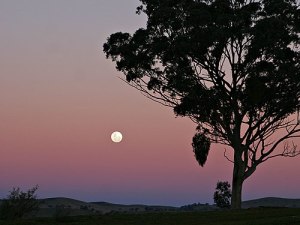 May’s first full moon came with the label Flower Moon, to acknowledge “landscapes erupting into bloom”. No sir, not even close. If you ask me this year’s May 1 moon should’ve been named Weed Moon because weeds were about the only thing erupting around here. No matter what grows or doesn’t grow the rest of the month, May’s other full moon will be Blue Moon because that’s what we call the second one in a calendar month. You only get a Blue Moon ever two or three years.
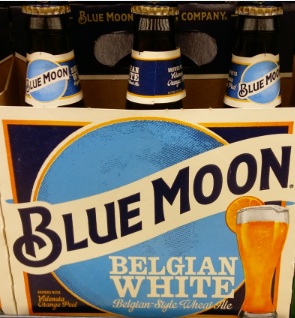
I get a Blue Moon every two or three weeks, but now I’m talking about beer instead of Earth’s solo satellite. I’m not a big beer drinker but a Blue Moon adorned with its signature orange slice sure hits the spot after hot and sweaty yardwork. Molson-Coors has been brewing Blue Moon since 1995 and they’ve put several taste spins on it, like Honey Moon, Harvest Moon, and Full Moon. This time of year you can purchase a six of Rising Moon, which amps up the citrus flavors in anticipation of summer, but I’m still inclined to go with the original Blue.
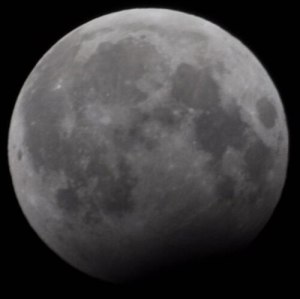
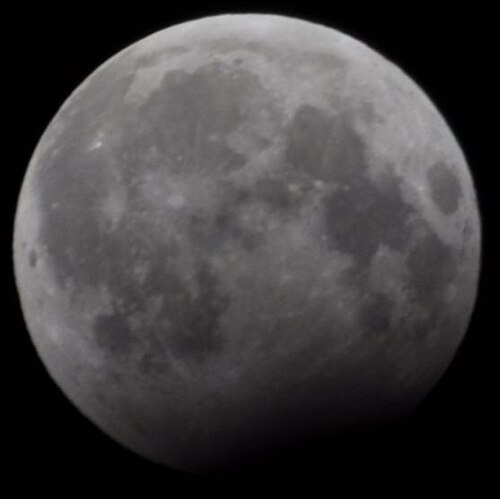
Speaking of full moons, we should be happy ours is a perfect sphere (save for a few craters). The technology of the James Webb Space Telescope is teaching us a lot more about the other planets in our solar system. Neptune, the most distant of the eight (with apologies to little Pluto, kicked out of the club in 2006) has sixteen moons, but most of them look like orbiting shards instead of spheres. Triton, Neptune’s largest moon, made like a bowling ball back when it entered the planet’s gravitational pull, busting up a beautiful array of perfectly round orbs. Imagine if our moon looked like a shard instead of a ball. We wouldn’t be talking about full moons at all, let alone blue ones.
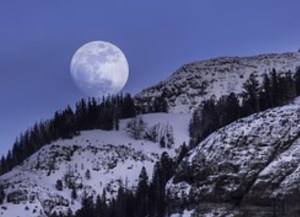
The “calendrical” Blue Moon from December 2009 The upcoming Blue Moon gets its name from an utter lack of imagination. I was hoping the word would refer to the moon itself, perhaps the result of some lunar bioluminescent algae like you see with an ocean red tide. Or maybe the blue would represent the tears of Luna, the Roman goddess of the moon, crying over some mythological misfortune. Instead, a “blue moon” is actually caused by Earth, in the rare occurrence where our forest fires or volcanoes generate atmospheric emissions which really do shade the moon blue. I’ve never seen this phenomenon before but even if I did, it probably wouldn’t come with a full moon. C’mon, we need a better name for “second full moon in a calendar month”. I propose “Déjà vu Moon”.
 Speaking of déjà vu, you might have read about full moons in this blog before, in my post Sphere Elegance. It’s a little nostalgic to read something you wrote ten years ago. The focus back then was more on the science and less on the entertainment value (I’ve learned to flip-flop the two over the years since), but at least I was consistent with the definitions and my affection for the like-named beer. Hey, maybe I should address this topic every ten years. Then I could say I was writing about it, you know… once in a blue moon.
Some content sourced from Wikipedia, “the free encyclopedia”.
-
Whenever She Asks, Bake the Cake
I just did the quick math and realized my wife and I have been empty nesters for almost ten years now. When our youngest headed off to college in 2017 we pivoted and embraced the milestone of less clutter and chaos. But just as suddenly we have grandchildren now, and with them comes the reminders of those formerly frenetic chapters of our lives.
 The moment that inspired this post was the one I never saw coming. We hosted our granddaughters earlier this week, in the first of what we hope will be countless “sleepovers”. At ages 3 and “almost 2” they’re a sight for sore eyes (and also a sight you should never take your eyes off of). My wife and I were in the kitchen doing a something-or-other task when suddenly the three-year old beckoned to me from the nearby screened-in porch. It’s pretty adorable when a little one uses “come here” gestures to get your attention because she still doesn’t quite have the words.
Now let me admit to a little annoyance. After all, I was in the middle of something and I was being interrupted by my granddaughter. In typical adult fashion I said, “Hang on honey, let me finish what I’m doing”, but she persisted. Apparently what needed to be seen couldn’t wait one more minute. So I let out a sigh, put down what I was doing, and wandered over to the porch.
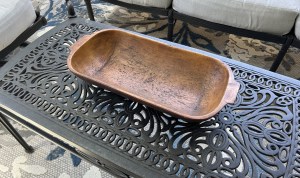
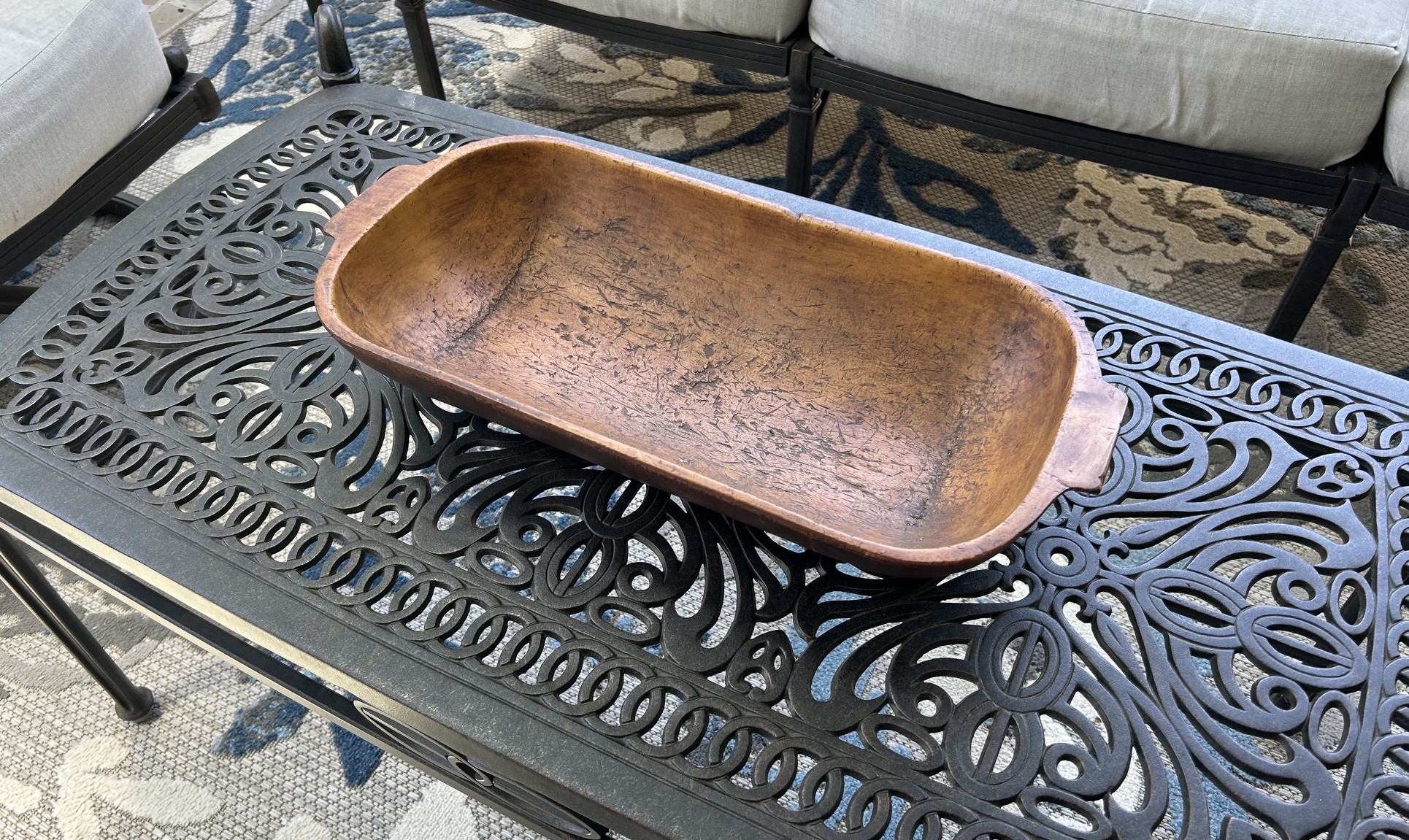
You DO see the cake, don’t you? Here was my granddaughter, holding her hands out wide to proudly display what was sitting on the table…. an empty wooden bowl. I looked at the bowl and then I looked at her, then back to the bowl, then back to her with obvious question marks in my eyes. And all she said to me was, “cake!”. Cake? What was that supposed to mean? Was she trying to pronounce some other word but somehow it came out “cake”?
It was then she gave me a glimpse into her wonderfully imaginative little world. I had no idea our screened-in porch was actually a world-class chef’s kitchen. There was some serious baking going on in there! And the cake’s ingredients – of which there were many – came from the most unexpected places.

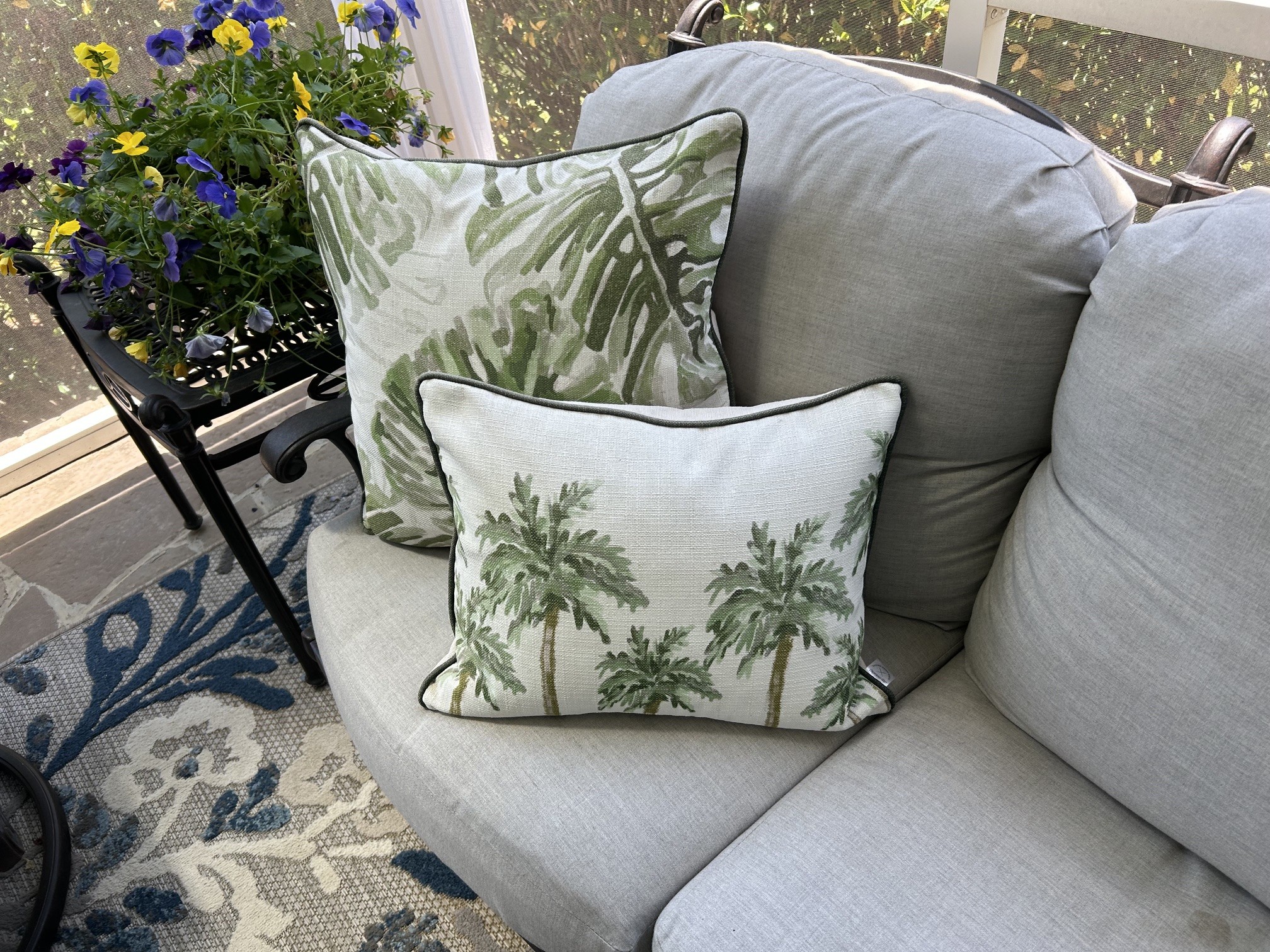
“Flour” and “sugar” bags To begin with my granddaughter produced a small rock (not sure where that came from), which served as the cake “starter”. Then she picked up the largest throw pillow from the couch and shook it vigorously into the bowl. Who knew we had a “bag of flour” right there on the porch? Immediately adjacent to the flour, a smaller throw pillow became a “bag of sugar”. More vigorous shaking. Finally she seized the third throw pillow, which she didn’t have an answer for (so we told her it was baking powder).
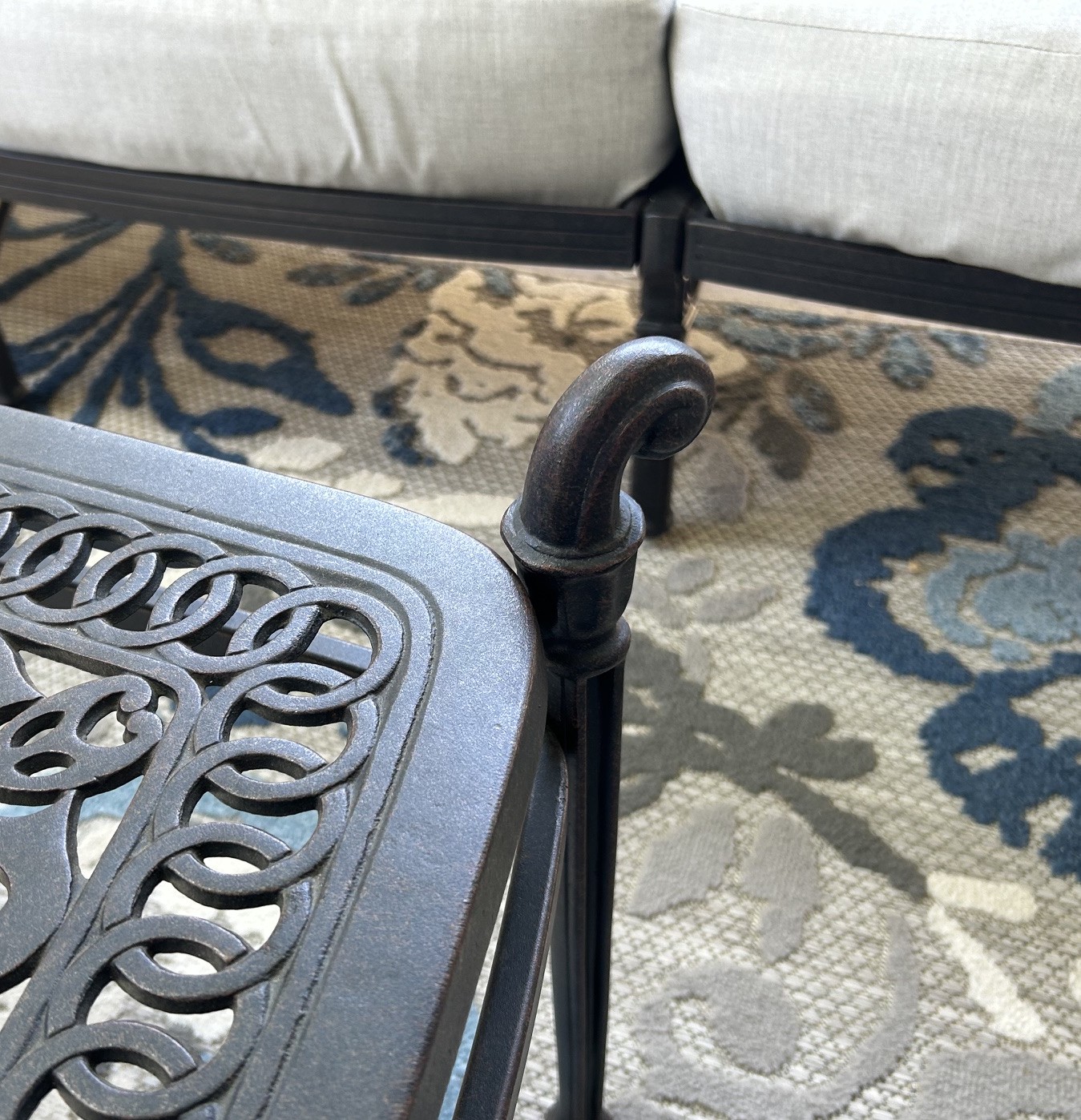
Other ingredients followed. When she asked for butter we emptied the box of butter sticks from our refrigerator so she could help herself to “the rest of them”. When she needed a little water she sprinkled some (literally) from the nearby wall fountain. An empty watering can was suddenly “full of milk”. And in a creative spin I could never come up with myself, she decided the four ornate corners of our patio table were dispensers for cake toppings like whipped cream, chocolate syrup, and rainbow sprinkles. She’d press press her hand down on them and make a “sh-sh-sh” dispensing sound that sounded just like the real deal.
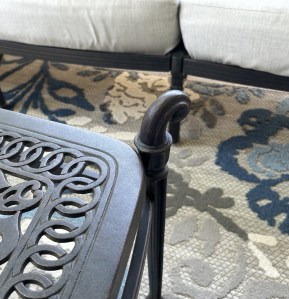
“Cake-topper dispenser” At this point I’d completely forgotten whatever mundane task I’d been doing in the real kitchen because I was focused on the make-believe one instead. I contributed several (real) implements so the cake could be thoroughly prepared. Wooden spoons for stirring. Spatulas for turning. Tongs to pick up and put down the mysterious rock (a repetitive step in the recipe she clearly understood but I did not). An (empty) shaker of cinnamon. Impatiently I asked her if the cake was done but she just shook her head side-to-side and said, “No (Gran) Da, this cake will take hours”. And that was perfectly fine with me.
By the time our granddaughters were strapped into their car seats and on their way home I think we’d baked another four cakes on the
porchkitchen. Little Miss Almost-2 occasionally pitched in as sous chef, although her older sister was only too happy to point out who was in charge. Today as I sit at my laptop I’m looking at a clean and organized screened-in porch. It suddenly seems a little boring. As for the inside of the house, the dishes are washed, the toys are back in the cabinets, and everything’s pleasantly back in order. It’s an empty nest around here again. Except for some little handprints that need to be scrubbed from the living room windows. On second thought maybe I’ll leave those where they are, if only to remind me – whenever she asks – to drop everything I’m doing and go bake the cake.
-
A Relentless Rising Tide
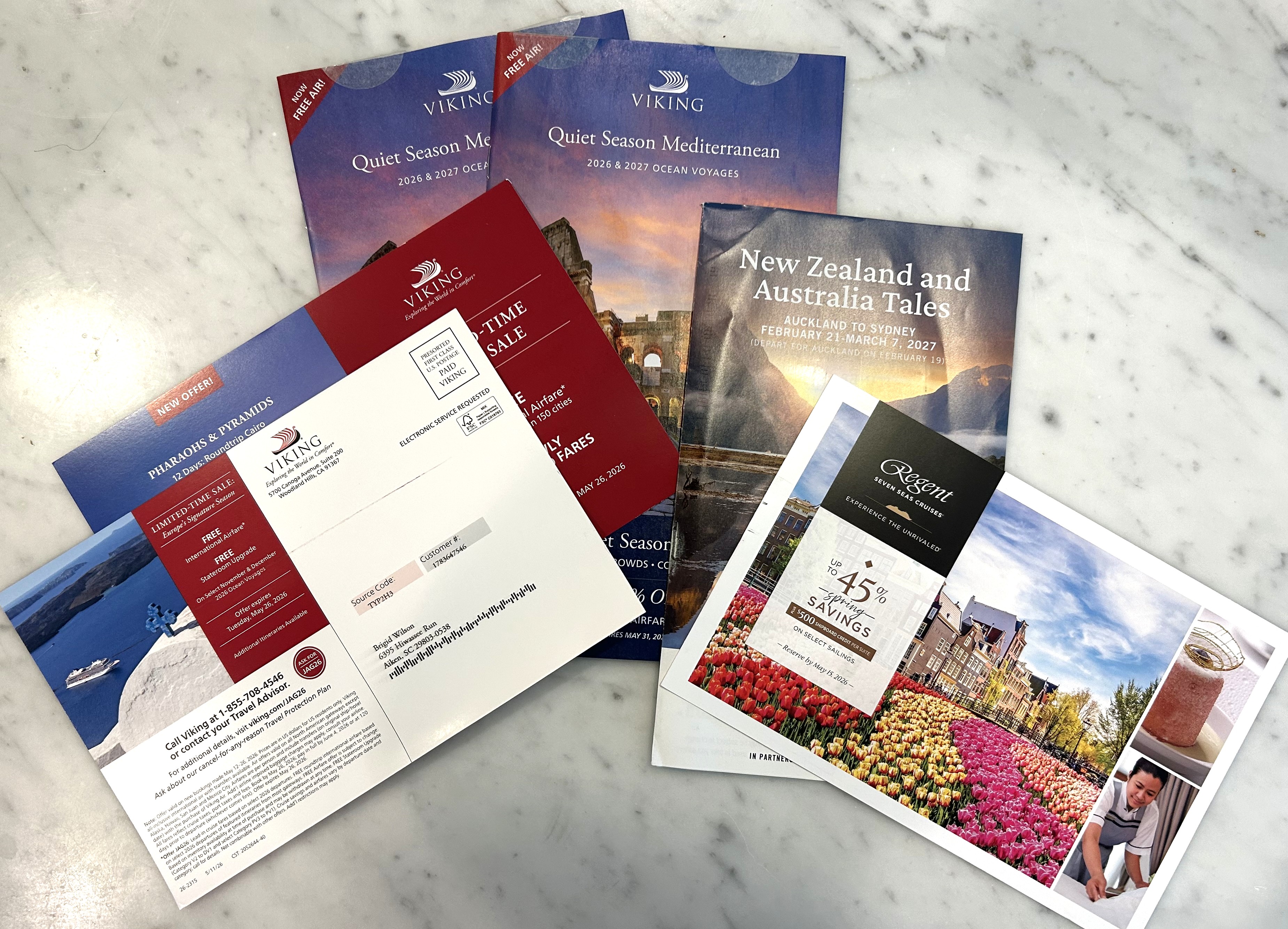
Every year in mid-October, my mailbox gets noticeably fuller with holiday catalogs. The adverts are bold and glossy with all sorts of gifting ideas. I enjoy leafing through their colorful pages. But then they keep coming to my mailbox. And coming. And coming some more. If I saved every one of them I’d probably have a stack as high as my house by mid-December. By my calculations that’s almost as high as the stack I’d have for luxury cruises.
 Maybe you’re familiar with the term First-World problem. It refers to “issues that are trivial, experienced by people in affluent, developed nations.” It puts minor annoyances in perspective compared to the more legitimate problems of this world. Good examples of First-World problems: 1) You can’t find the TV remote, 2) You have bad cell phone reception, or 3) Your favorite store only accepts cash. Today’s example of a First-World problem: 4) Too much junk mail from cruise lines.
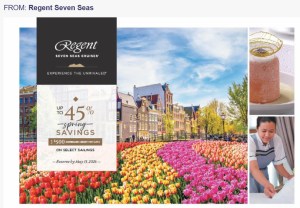 Yes, I’ve taken a cruise. In fact I’ve taken four: one on the (Pacific) ocean with Carnival, one on the (Baltic) sea with Oceania, and two on the (Rhine, Danube) rivers with Viking. So it’s fair to say I’m a worthy target when it comes to cruise lines pushing their upcoming adventures. For some reason Carnival doesn’t pursue me (maybe I’m too old for their party boats?) but Oceania and Viking have gone – take your pick – full steam ahead or totally overboard. They send countless postcards advertising their cruises, and thick catalogs advertising their entire season’s worth. They love to push you to consider their “off-season, deeply discounted” options. And they love to NOT leave you alone.
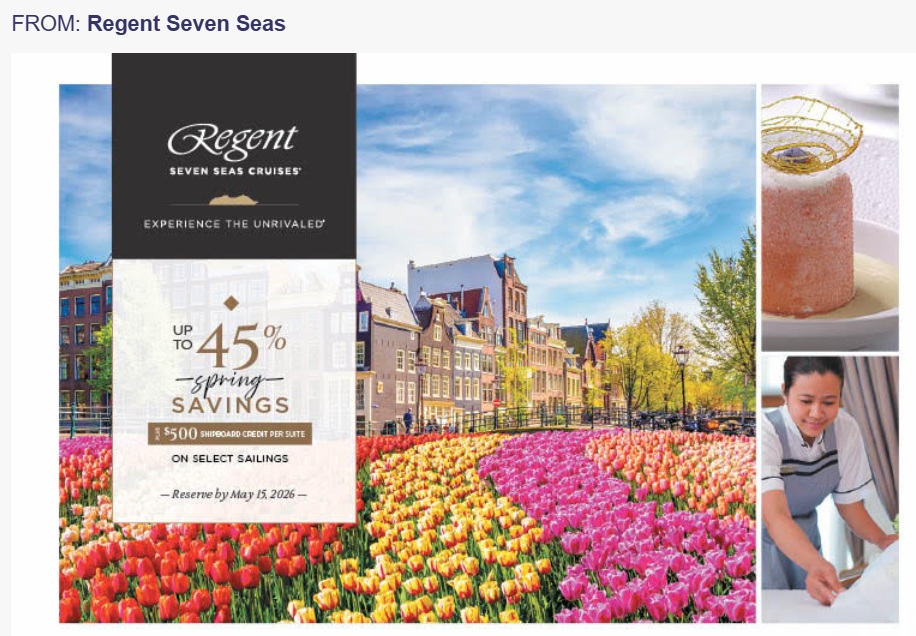
It’s safe to say I receive a promotion for a cruise two out of every three days. Most days these adverts seem to give birth to a family. Just yesterday I received six, and two of them – go figure – were identical twins. I guess Viking really wants me to take that cruise. One of those six came from Regent (kind of an orphan), which makes me think Viking and Oceania share their mailing lists. Thanks a lot, guys.
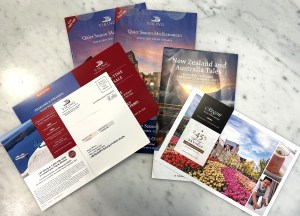
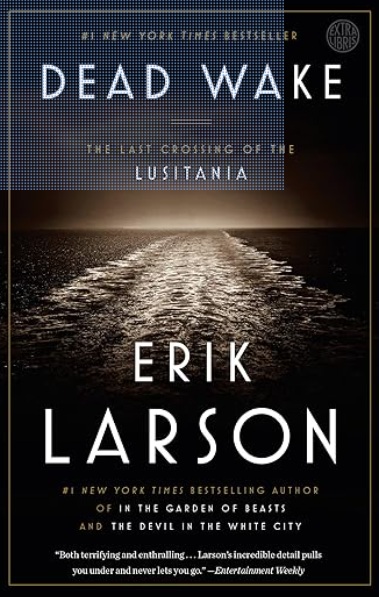
So much wasted paper… Would I take a luxury cruise right now? Sounds nice, as long as it’s not through the Strait of Hormuz. Sounds nice, as long as I don’t pick up a pandemic-potential virus onboard. Sounds nice, as long as my ship doesn’t get torpedoed the way Cunard’s cruise ship Lusitania did in the early 1900s (read the remarkable story in Erik Larson’s Dead Wake). Maybe I should reconsider my “sounds good”. I sense the gods of cruising are trying to tell me something.
 Admittedly, it surprised me to learn the demand for luxury cruises is not down but markedly up right now. You could point to the cost of fuel, the unrest in several parts of the world, or the thought of picking up a virus as reasons people wouldn’t want to cruise. Doesn’t seem to matter. Bookings are at record levels, especially those for “mega-ships” that look like floating water parks and the ones that take you to private islands. When one of my postcards advertises “up to 45% Spring savings!” and another “up to 30% off with free international airfare!”, you just know their profit margins are more than healthy.
 But I digress. I need to address my First-World problem. Rather, let’s let Catalog Choice (CC) address it. With a quick online sign-up and a little info from one of my postcards, CC claims they’ll remove the cruise clutter from my mailbox, in the name of “fighting waste, preventing fraud, and simplifying life”. Will they? Time will tell. Maybe I’ll get back to you a few months from now since it’s a matter of global concern. Assuming I’m not on a luxury cruise at the time.
Some content sourced from the Travel and Tour World article, “U.S. Cruise Industry Faces Fuel Shock, Health Fears, and Mega Ship Boom…”, and Wikipedia, “the free encyclopedia”.
-
Wheels of Fortune
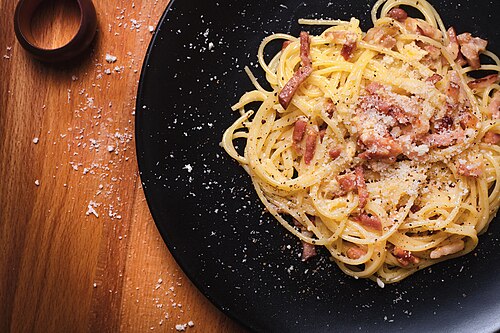
Late last year, Belgium found itself at the center of a culinary controversy. A local company was producing and selling a bottled version of “carbonara sauce”, much to the dismay of Italy. The Italians are fiercely protective of the recipe for spaghetti carbonara they invented a hundred years ago. Anyone familiar with the dish understands there is no such thing as carbonara sauce, because the food is the result of a slow, methodical process using fresh ingredients (including eggs and cheese), where everything melds together perfectly. You can’t just bottle it and call it the same thing.
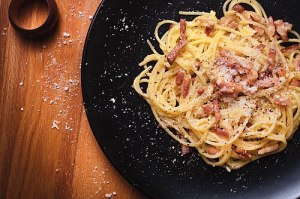
Spaghetti Carbonara Carbonara is a good example of a product invented in Italy and dumbed down for mass consumption. Imagine how the Italians feel about Starbucks. Somewhere on the menu you can order a shot of pure espresso but it’s the drinks with the added flavors, sugar, and milk that generate the profits. Similarly, you’ll find a dozen packages of biscotti on America’s cookie aisles, but most aren’t twice-baked like the originals nor infused with real almond liquor.
Maybe you’ve already added pizza to this list of imposters. The transformation of pizza from the Italian original to the endless varieties offered in today’s restaurants could be the subject of its own blog post (and a long one at that). Suffice it to say, the Italians are justified in turning up their noses to any product we Americans call “pizza”. Unless you’ve had a pie made with authentic Italian ingredients and prepared the same way they made it centuries ago, you really don’t know pizza.
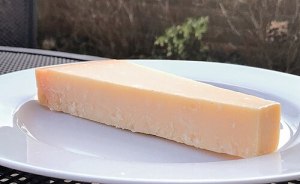
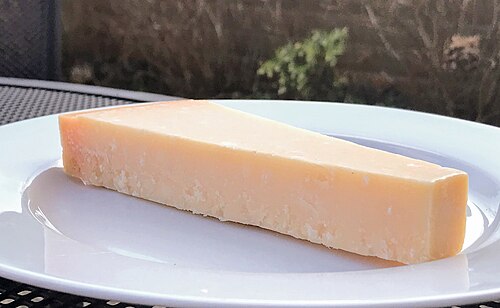
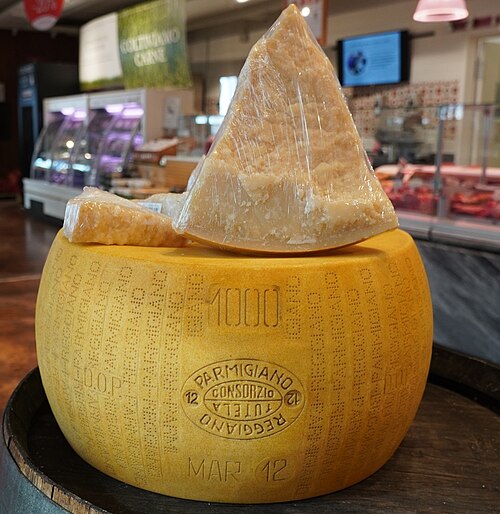
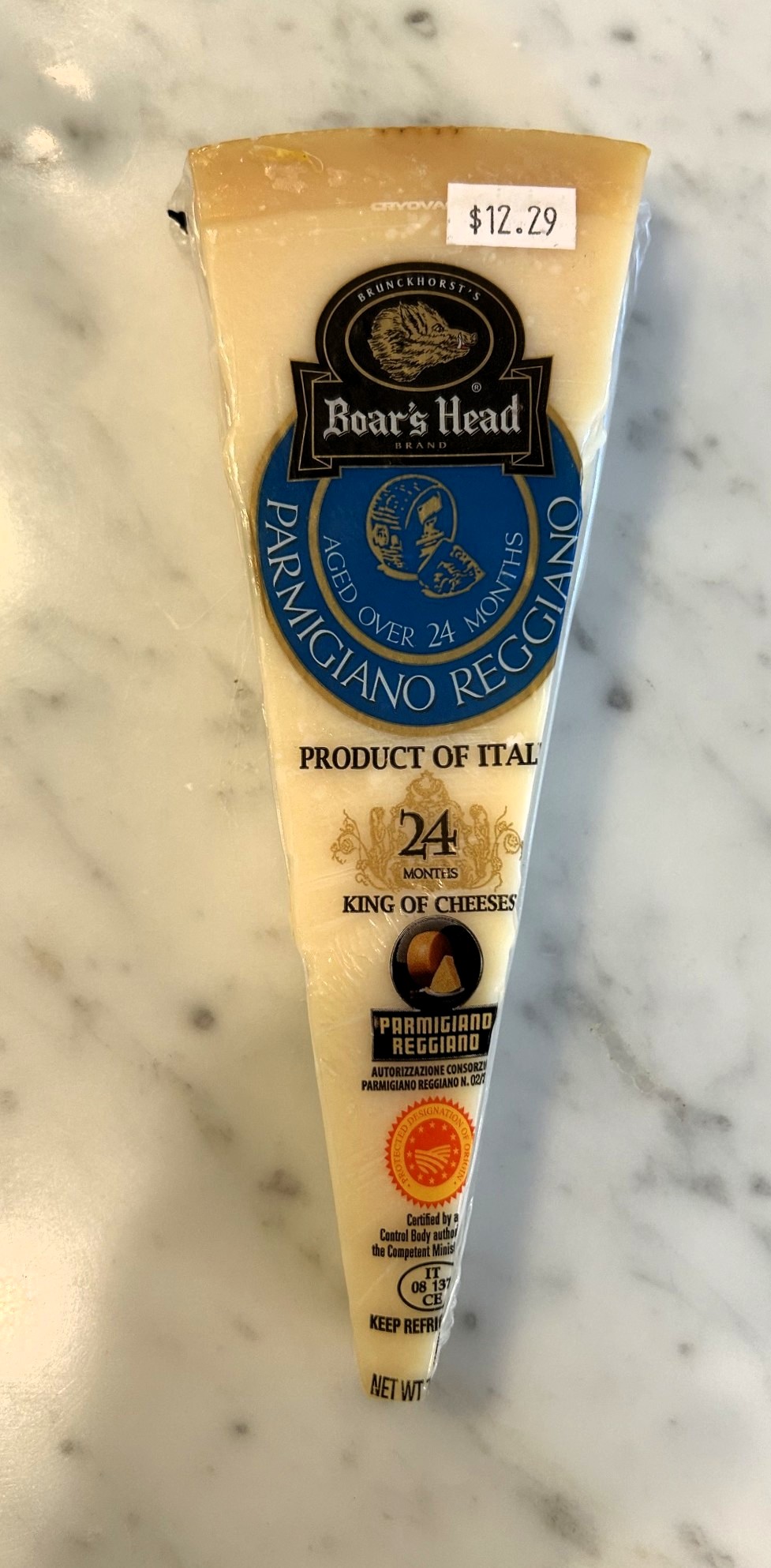
Parmigiano Reggiano But let’s talk about cheese, because it’s the real subject of today’s post. Parmesan cheese is another Italian original, dating back to the Middle Ages. It’s made with just three ingredients: milk, salt, and rennet (enzymes). Today you can choose from a variety of parmesan cheeses in your supermarket deli or just cheat with the big green Kraft can from the pasta aisle (which includes several added ingredients you wouldn’t be happy about). But whether from the deli or from a can, you’re not purchasing the Italian original… unless, the package includes the official logo of Parmigiano Reggiano. That, my friends, indicates the real deal. Or, if you prefer, the “big cheese”.
It’s fake if it doesn’t have this logo! Parmigiano Reggiano (shall we call it “PR” from here on out? Yes, let’s do that.) is one of the most tightly regulated foods in the world. Maybe the Italians got tired of losing control of their original recipes and declared, “Uh-uh, not this one”. PR is made from milk, salt, and rennet just like the other wannabes, but with two important differences. The cows that provide two of those three ingredients graze on the pristine grass of pastures in a single tiny region of central Italy. The cows, the grass, and the milk they produce are regulated in a way that would make Fort Knox proud. It’s a small, tight supply chain of cheese production with the same quality of centuries ago.
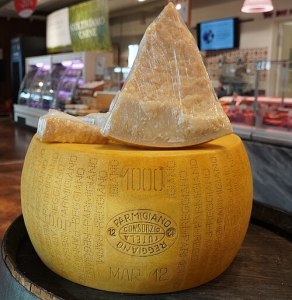
Stamped as certified Here’s the other important distinction between PR and the others. It must be aged at least a year (and it’s typically more like two or three) before it can be sold. That requirement gets the cheese to stand alone even more than its carefully-produced ingredients. Why? Because most companies can’t sit around for a year or more waiting for cheese to generate profits while suppliers are demanding payment on the spot. So how do the makers of PR do it? They bank their cheese. Literally.
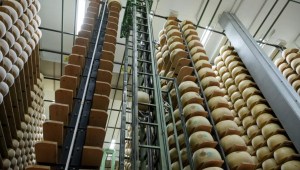
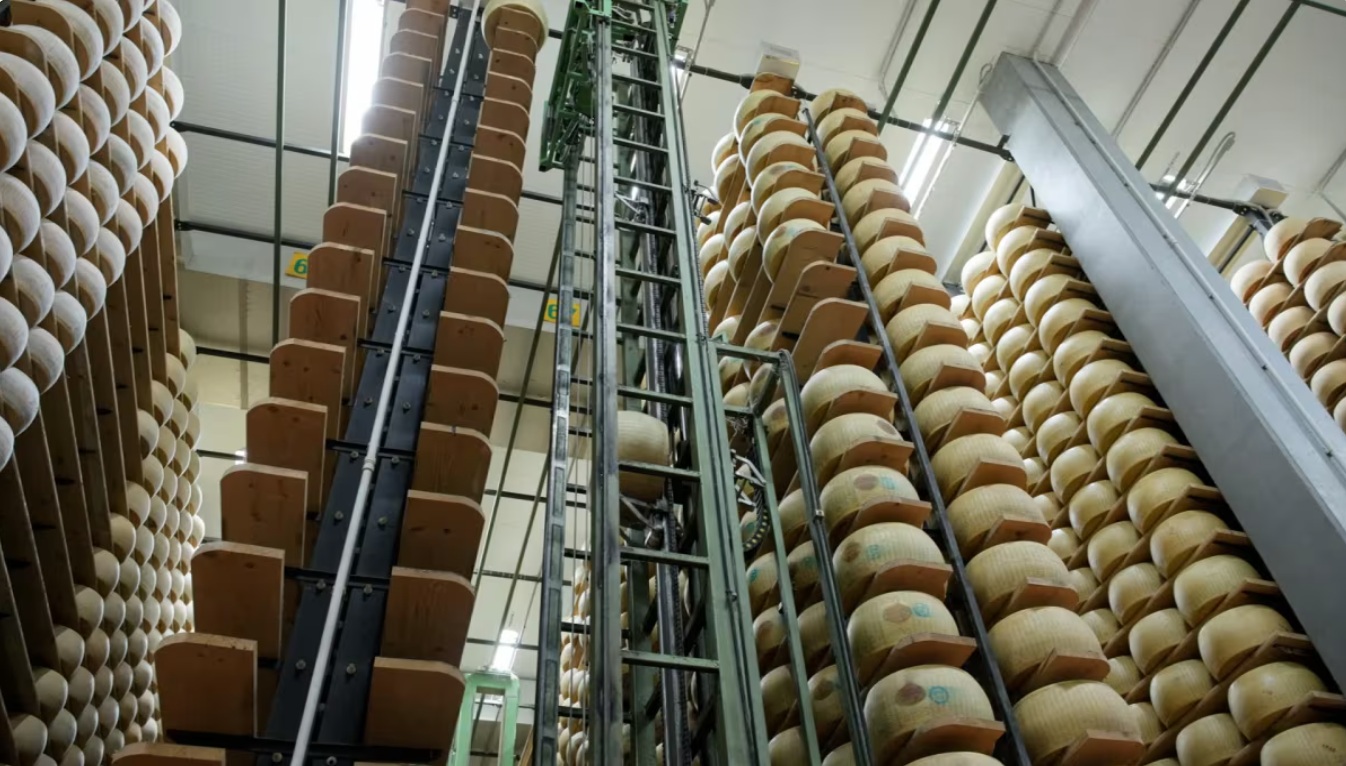
Italy’s “Cheese Bank” You know you have a really good cheese when your bank is willing to take it as collateral. Here are the staggering numbers. Italy produces four million wheels of PR a year, distributed throughout the country and the world for sale. (Fact: America is the largest consumer of Parmigiano Reggiano outside of Italy.) But 500,000 of those wheels are held back and “deposited” into a local bank to age, in exchange for the cash necessary to pay the suppliers. PR is of such high quality and so carefully regulated that the banks have agreed to this unique arrangement for generations. Of course, the combined value of those wheels probably helps (well north of $300 million).
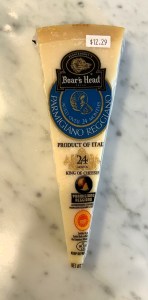 If you’d care to know more about this whole cheese-for-money thing, read the article I reference below. More importantly, if you ever come across Italy’s “Cheese Bank”, you’ll probably find the usual ATM’s, tellers, and offices, but at least you’ll know what that big warehouse next door is all about.
Some content sourced from the CNN Business article, “Inside Italy’s secret ‘Cheese Bank’…”, and Wikipedia, “the free encyclopedia”.




About Me
The sky is not completely dark at night. Were the sky absolutely dark, one would not be able to see the silhouette of an object against the sky.
Follow Me On
Subscribe To My Newsletter
Subscribe for new travel stories and exclusive content.
 Life In A Word tv