
Hello, I’m Veronica
The sky is not completely dark at night. Were the sky absolutely dark, one would not be able to see the silhouette of an object against the sky.


-
A Builder’s Half-Dozen
Considering the decimal system we Americans use for counting, it’s a little curious how many of our purchases come in sets of six. Soda cans and soda bottles comes in sixes. So do paper towels and toilet paper. Cube-like things have six sides. So do hexagons. Strum a guitar and six strings sing. Finally, let’s acknowledge sets of twelve where you only need half of them. A half-dozen eggs. A half-dozen doughnuts. Or for purposes of this post, a half-dozen LEGO models.
 Before I lay the cornerstone of the LEGO Neuschwanstein Castle I thought I should revisit the five LEGO models that preceded it; the ones that perch quietly in various places in my home office. Like Neuschwanstein, these models have sentimental value, which speaks to the primary reason I chose them out of all of the other LEGO possibilities. I mean, I could’ve built the 10,000-piece Eiffel Tower (for example) but would I have been inspired to do so? Hardly, since I’ve only seen it from a distance. Here then, my builder’s half-dozen:
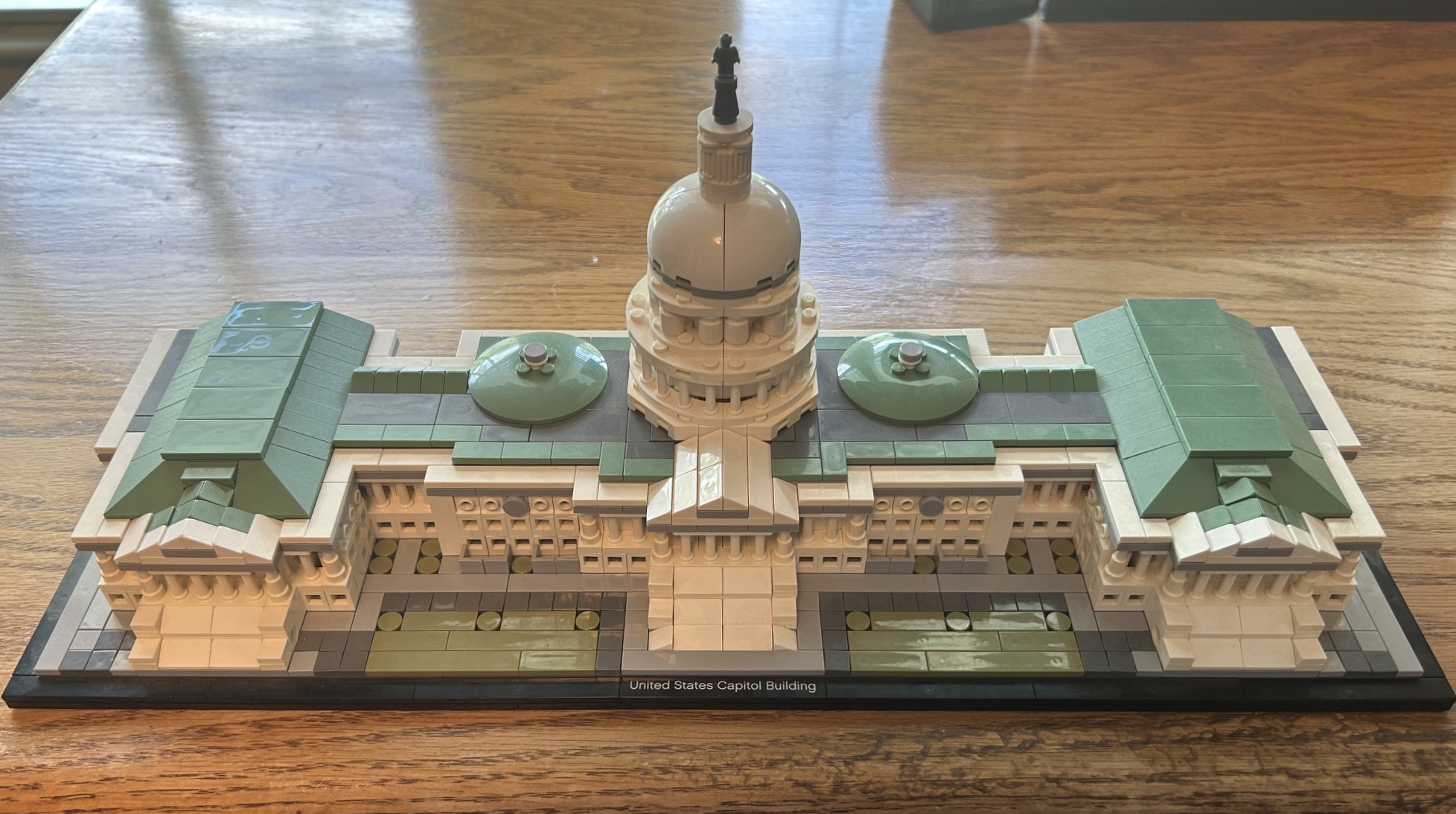
 U.S. Capitol Building – I can’t remember what year I purchased this one, my first LEGO build, but it was sometime before this blog even existed. At over 1,000 pieces, it was one of the more sophisticated models of the budding LEGO Architecture Series back then. The LEGO U.S. Capitol does have sentimental value. As a California kid my parents recognized the need to get my brothers and me to the East Coast for a dose of “real” U.S. history. That month-long driving trip through Colonial America is one of my fondest childhood memories.
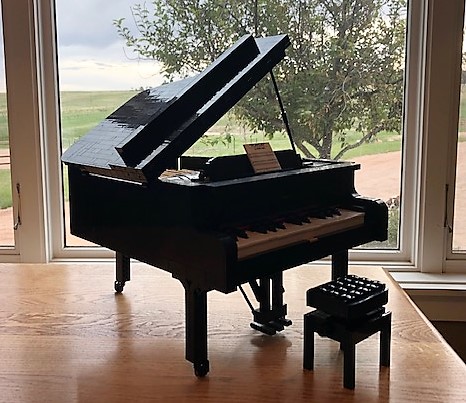
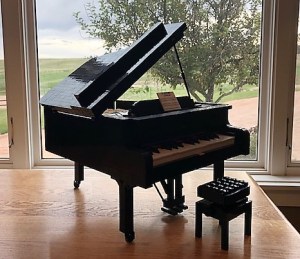 Grand Piano – You can read about this build starting with Let’s Make Music. It’s my one LEGO model outside of the Architecture Series but also my very favorite. Snapping together 3,662 LEGO pieces over several months allowed me to blog about my favorite pieces of classical music. The piano also brought back countless childhood memories of practice, lessons, and recitals at the keyboard. I may not play as much as I used to, but the LEGO Grand Piano reminds me that classical music will always be a part of my DNA.
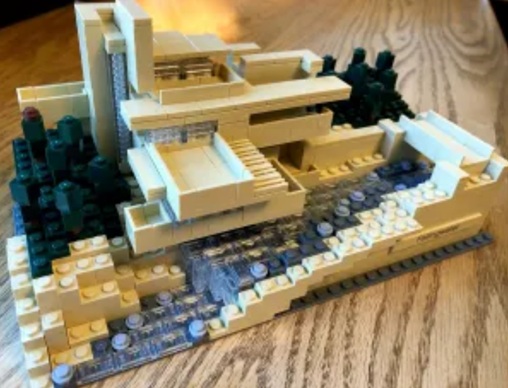
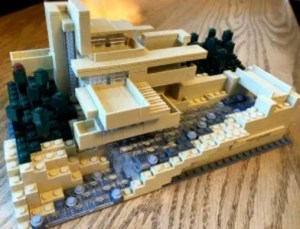 Fallingwater – Frank Lloyd Wright’s signature design is undoubtedly my favorite residential structure, especially the way the house blends seamlessly with the natural surrounds of Western Pennsylvania. Fallingwater speaks to my college degree in architecture as well. I built the spartan LEGO Fallingwater model in early 2023 (read about its construction – and my favorite works of architecture – in Perfect Harmony) and then made the long-overdue pilgrimage to Fallingwater itself in the summer of 2024. The experience was every bit as serene and dramatic as I had hoped. If you find yourself anywhere near Pittsburgh, take a little time to visit Fallingwater.
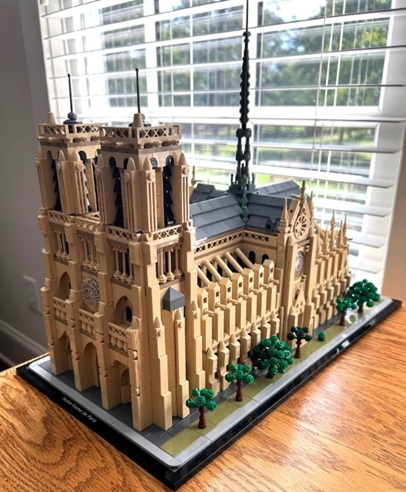
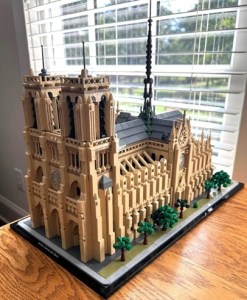 Notre Dame de Paris – The cathedral on the banks of the Seine River in Paris is the first of two LEGO models that harken back to my junior college year in Italy. During spring break I met my parents in Paris and took a whirlwind tour of the city. I didn’t climb the Eiffel Tower and I didn’t even visit the Louvre, but at least I spent a few moments inside the glorious sanctuary of Notre Dame. Forty years later I completed the LEGO version; my biggest build at 4,383 pieces (read about this adventure in Highest Chair). I still need to add the sophisticated lighting kit, which will give the church the dramatic illumination it deserves.
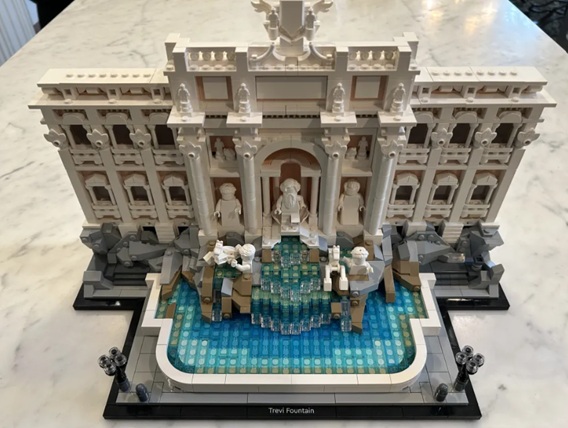
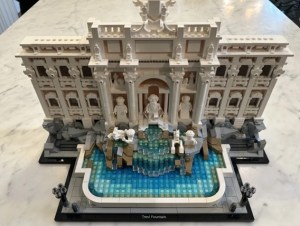 Trevi Fountain – LEGO offers several options to build a structure located in Rome, but the Trevi Fountain spoke loudest to me. I walked through its piazza many times during that college year, throwing coins over my shoulder with hopes of returning to the Eternal City one day (which still hasn’t happened). The Trevi is one of the smaller models of my LEGO half-dozen – less than 2,000 pieces – but it’s high on sentimental value. Read about the build in Brick Wall Waterfall.
 Neuschwanstein Castle – I shared a few details about King Ludwig II’s creation in last week’s Fit For a (Fairy Tale) King. The castle’s LEGO model is 3,455 pieces of stone, brick, turrets, towers, and trees, perched above LEGO’s version of the Bavarian Alps. I’ve often thought I should be building this one on top of a ladder to simulate the dramatic location. But the twenty-three bags of pieces and the hefty instruction manual will be challenge enough. I’ll be sharing the ups (and no doubt the downs) of its construction over the next few months.
 If you liken a builder’s half-dozen to that of a baker, we’re actually talking seven LEGO models instead of six. And that, my friends, is the convenient caveat for claiming Neuschwanstein Castle will be my final construct (convenient, caveat, claiming, Castle, construct… NICE Dave!). After all, LEGO will keep adding new models to its Architecture Series. I only have room to display six of them but I’m sure that won’t deter me when the seventh comes a-calling.
-
Fit For a (Fairy Tale) King
I was sorry to see the Germans bow out of the World Cup early, because I’ve had Deutschland on the brain lately. This month (seven years ago) my wife and I cruised down the Rhine River from the Netherlands to Switzerland, but it was pretty much all Germany in between. This month also signals full-on summer and more time in front of the barbeque. On our grill you’ll find German bratwurst as often as American burgers. But more than river cruises and brats, I’m thinking about castles. Not the kind made of sand on beaches, but the real ones made of bricks and stone on mountaintops. Like Germany’s Neuschwanstein Castle.
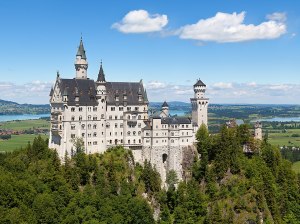
Neuschwanstein Castle You’re already familiar with Neuschwanstein; I’m sure you are. When 1.5 million people tour the castle every year – one of the most popular attractions in Europe – it translates to a lot of photos on Facebook. Also, Neuschwanstein includes all of the castle elements you remember from childhood fairy tales: towers, turrets, balconies, gatehouses, courtyards, dungeons, and (the intention of) more than 200 lavishly decorated rooms, built up to the highest of heights. There’s no surrounding moat, but Neuschwanstein gets along fine without one, perched on a hilltop in the middle of the Bavarian Alps.
Painting by Hubert Sattler (1904) Frankly, all this castle needs to complete its picture is a king and his court. Alas, Neuschwanstein never had a king – never – not even after its completion in 1892. Yes, the castle was designed by King Ludwig II of Bavaria, but here’s where the fairy tale falls to pieces. To begin with, Ludwig built the castle to escape the stresses of his primary palace life in Munich, so more than anything else it was meant to be a vacation home. Then, Ludwig copied most of Neuschwanstein’s architectural elements from nearby castles, so the design is pretty much a mashup of structures that came beforehand. Finally, and perhaps the saddest statement of all, Neuschwanstein was never completed – not even close. With only a throne room, a “Minstrels’ Hall” (a sort of tribute to the entertainment of the time), a drawing room, and a dozen other spaces, Neuschwanstein’s construction fell well short of its intended 200+ rooms.
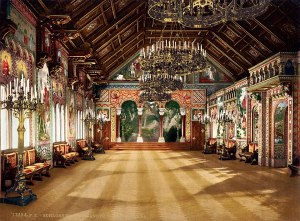
Neuschwanstein’s “Minstrels’ Hall” The whole idea of Neuschwanstein feels like a bit of a charade. Did Ludwig really intend to decorate and staff hundreds of rooms in a castle from which he didn’t care to lord over the surrounding land? Was he really just frittering away Mom and Dad’s money because he was bored in Munich and had nothing better to spend it on? And shouldn’t he have been focusing his time and energy on his royal responsibilities instead? No wonder he was often referred to as “The Mad King”.
Let’s forget about Ludwig. After all, this post is about a castle, not the king who never occupied it. For all of its lack of completion, originality, and use, Neuschwanstein is still a model castle. Most of you should recognize it from the castle designs it inspired: Disneyland’s Sleeping Beauty Castle and Walt Disney World’s Cinderella Castle. But I prefer another one of its inspirations.
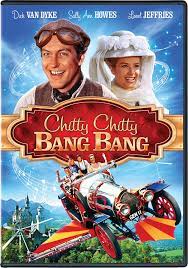 If Neuschwanstein is the ultimate castle, then Chitty Chitty Bang Bang (which I wrote about five years ago in Delicious Clicks) is the ultimate fairy tale. The story of the magical flying car, its inventor Caractacus Potts, the evil Baron Bomburst, the lovely Truly Scrumptious, and on and on, comes back to me like it was yesterday. Chitty Chitty Bang Bang was the first Ian Fleming book I ever read, well before anything James Bond. Yet it never occurred to me until this post that Neuschwanstein served as the story’s castle. The movie version includes several aerial shots (from the driver’s seat of a flying car, of course), and sweeping views of the surrounding countryside. Neuschwanstein has always had a familiarity about it. Now I know why.Someday I’ll make the journey to see King Ludwig II’s creation in person… but not before I build it myself here at home. Just when I thought I’d tackled my last LEGO project, along comes another one I simply can’t pass up. The LEGO Neuschwanstein Castle is 3,455 bricks of towers, turrets, and Bavarian Alps, boxed and bagged along with the usual paperweight instruction manual. I’m ready to don my crown and get started and as usual I’ll include small updates alongside my usual posts. When all’s said and built maybe I’ll even suspend a flying car overhead, so the castle looks more like a fairy tale than a mere vacation home for a mad king.
Some content sourced from Wikipedia, “the free encyclopedia”.
-
Hitting the Sweets Spot
My brother owns a vintage Ferrari – not as pricey as it might sound. One of his neighbors sold him the 1960s-era car for cheap, in far less than mint condition, and he spent years bringing it back to life. I’ve never had an interest in a Ferrari myself. However, if I change up just two vowels in the word (the “a” and the “i”), I come up with Ferrero. Okay, now you have my attention.
 Ferrero is a remarkable success story for a family business, especially considering its start as a modest pastry shop in a small town in northern Italy. Two brothers: Pietro with a love of creating new products and Giovanni a natural at networking, grew the business across the region over the years, but it wasn’t until they handed the reins to son Michele that Ferrero became a household name. Today, the “sweets-packaged food company” is one of the world’s largest, boasting an entire supermarket aisle worth of products.
Let’s start with Nutella (just like Ferrero did when they moved beyond pastries). Nutella was created as a spin on chocolate with the intent of making it more affordable. Add hazelnuts plentiful in local orchards and Ferrero came up with the butter-like confection the world knows so well today. That product all by itself would’ve been considered a success story, but since then Ferrero grew their sweets umbrella to a gigantic list… and one from which I’ve sampled way too many times.
 Begin anywhere you want by adding sugar and you’re probably talking Ferrero. How about Tic Tac? It’s a Ferrero product. I’d love to know how many (hundreds? thousands?) of boxes of Tic Tac I’ve consumed over the years, with the excuse I always had a breath mint nearby when I needed one. My choice was the standard white “Freshmint”, but there’s a flavor for everyone now, including the orange “Citrus”, pink and white “Strawberries and Cream”, and even brown “Dr. Pepper”.
Ferrero also commands a good share of the candy bars you’d find at your nearby 7-Eleven. Take your pick from 100 Grand, Baby Ruth, Butterfinger, Chunky, Oh Henry, or Crunch – they’re all Ferrero now. If you don’t recognize that last one, it’s because Ferrero (or actually Ferrara – one of their subsidiaries) reduced the word “Nestlé” to a really small font on the label. It’s true; a Nestlé Crunch bar may still be produced by Nestlé but it’s now licensed by Ferrero.
 Maybe you’re a fan of movie candy. You’ll also find Ferrero at the theater, whether you choose a box of Goobers, Raisinets, or Sno-Caps. Cookies instead? How about the Mother’s Cookies brand? Their pink/white “Circus Animals” and frosted “Taffy Sandwich” cookies still tug at my taste buds. Or maybe you go for those bite-sized Famous Amos chocolate-chip cookies. Amos may not sound Italian but he’s in the Ferrero family now.
 When I first met my wife she introduced to me to Fanny May “premium gourmet” chocolates. It was the first time my allegiance to See’s Candies was tested. Trust me, it’s hard to beat a Fanny May milk chocolate vanilla buttercream. For that matter, raise your game with a cherry-filled Mon Chéri or a gold-foiled Ferrero Rocher . Each of these indulgences – except See’s – are now Ferrero.
 Which brings me to the ultimate get. The list I’ve covered is not even half of the name brands you’ll find at Ferrero but last year they might’ve reeled in their biggest fish yet… Kellogg’s. Seriously, who among us hasn’t had a bowl (or a hundred bowls) of Kellogg’s breakfast cereal? When I was a kid there always seemed to be a box of Corn Flakes, Special K, or Raisin Bran in the pantry (none of which I was crazy about) and better yet Apple Jacks, Froot Loops, or Honey (Sugar) Smacks. You’ll find a lot more choices than those on the cereal shelves, and in every case you’re talking Ferrero as much as Kellogg’s.
 As much as I’ve enjoy Ferrero’s products, virtually all of them are past memories. I’ve moved on to more “adult” choices (translation: way less processed sugar). So I made myself a wager before I checked: There are no Ferrero products in my pantry. And then I promptly lost the bet – twice. I found a box of Raisin Bran (how’d that get in there?) destined to hit its expiration date sooner than the cereal bowl. And I found a box of Nonni’s, which are pretty darned tasty for an off-the-shelf brand of biscotti. I’m starting to think I took the wrong approach with today’s topic. Maybe my lead question was meant to be: what products aren’t under Ferrero’s umbrella?
-
Don’t Fence Me In!
Early on in the Christmas classic It’s A Wonderful Life, there’s a scene where George Bailey absentmindedly strolls back and forth on the sidewalk in front of Mary Hatch’s house, dragging a stick along her fence. Mary sees him from an upstairs window, leans out and yells, “What are you doing… picketing? It’s a great line, wordplay on her front yard fence.
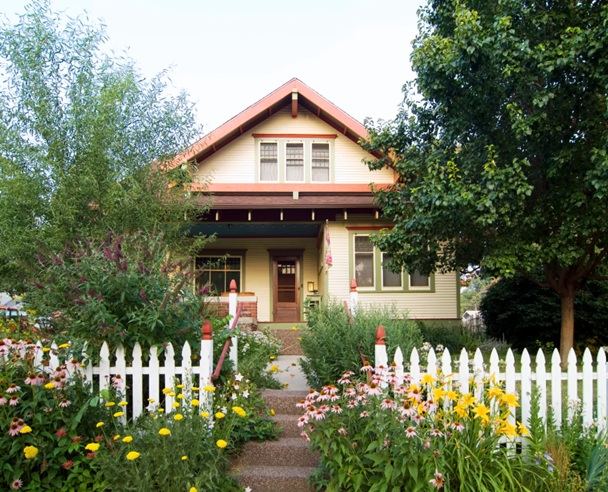
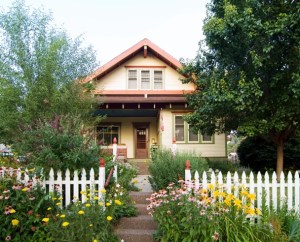 For generations, picket fences have stood hand-in-hand with the American houses immediately behind them. These quaint-looking property markers are considered symbols of middle class prosperity and an idyllic family life. Even the “American Dream” includes a white picket fence. But maybe no longer. The dream seems to have been updated. Americans no longer want pickets… they want walls.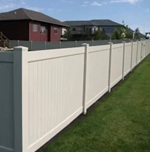
Privacy with plastic As much as I want to believe a high, solid fence is merely the mark of an eccentric neighbor, facts don’t lie. Suburbia is abandoning the picket fence in favor of taller, more robust barriers. A Connecticut fencing company used to fill 40% of its orders with pickets. How many orders have they had for the low white fences in 2026? Zero. Instead they’re filling a demand for panels of plastic (PVC) seven feet on a side, mounted between even higher columns. The welcoming American cottage is turning into the locked-down American fortress.
One could blame the abandonment of pickets on cost and maintenance. After all, wood needs to be kept dry and repainted to avoid rot, while PVC is less expensive and lasts a whole lot longer. Fencing companies tried switching out wooden pickets for plastic ones but apparently the open look isn’t “closed off” enough for today’s preference. There’s a concerning motive at work here. People no longer want to know what’s going on beyond their fences (or even more concerning, they don’t want you to know what’s going on behind them.)
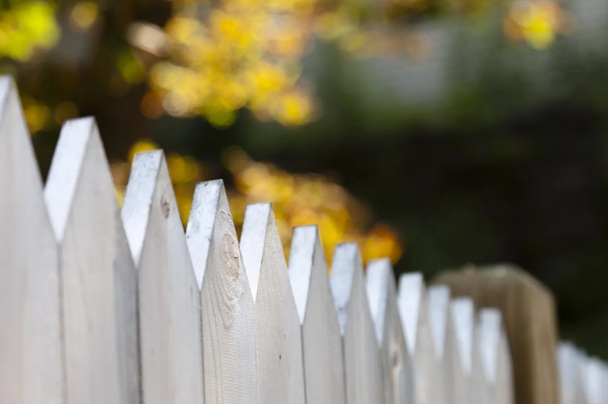
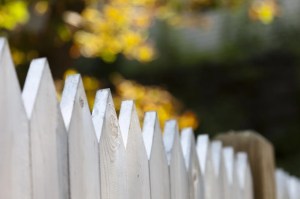 To each their own but I’m still a fan of pickets. They define a property yet don’t remove the “welcome” because they’re short and have gaps. You can easily chat up your neighbor whether you’re twenty feet removed or right up against the fence. As for the look, pickets don’t have to be boring, pointy stakes. They can be crowned with spades, spears, balls, crosses, fleur di lis (for you French-Americans) or whatever else your circular saw can come up with.
 A high, imposing fence is the last thing I’d want surrounding my property. Having said that, the first house my wife and I bought had one on three sides. We lived on a California postage-stamp, with both neighboring houses on minimum setbacks. Without the “privacy fence” we’d be looking from our windows right into theirs. It takes awhile to forget what you’ve seen when a neighbor doesn’t draw down the bathroom shade.
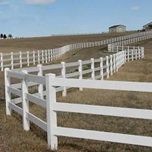
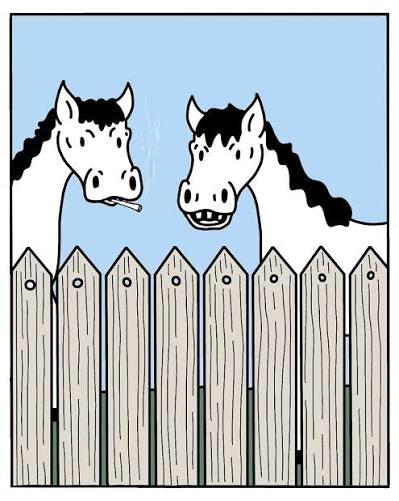
Three-board fencing Our next couple of houses had no fences at all. The properties were bigger so privacy was solved by distance instead of by division. As for the house we live in now, we’re surrounded by “three-board” fence consistent with the other properties in our community. Three-board is designed to keep horses in the pastures where they belong, but doesn’t wall you off from your neighbors. A three-board is anything but a privacy fence and that’s fine with me. I just wish it was made out of pickets instead.
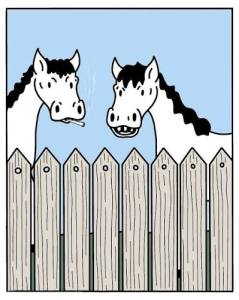 The math on a picket fence to replace my three-board is not what I’d hoped. Surrounding our five acres would take upwards of 1,000 pickets. Oof. There’s a lot “at stake” there, not to mention our horses would happily step over in pursuit of greener pastures. I’ll just stick with what I’ve got. There’s a wonderful life on the other side of my fence and I can still see it.
Some content sourced from the Pocono Record article, “Picket fence adds privacy, security with classic style”, and the U.S. Sun article, “Is the white picket fence completely dead?”
-
Best Feet Forward
Remember the scene at the end of Indiana Jones and the Last Crusade where Indy chooses from a dozen or more chalices in hopes of finding the Holy Grail? The correct cup turned out to be the most modest of them all. Starting this month, forty-eight soccer teams vie for their own Holy Grail (an entirely immodest cup), across sixteen venues jam-packed with thousands of delirious fans. This month, North America welcomes the madness that is the World Cup.
 Let me admit right up front, I am a sports fan but not a soccer fan. I’ve enjoyed the American version of football as long as I can remember but not so much the other version made popular by the World Cup. By the standards of a lot of sports, soccer can be described as slow, boring, and low scoring. But of course, any soccer aficionado will tell you there’s more to enjoying the game than meets the eye; much more. Maybe the 104 matches over the next six weeks will get me to agree.
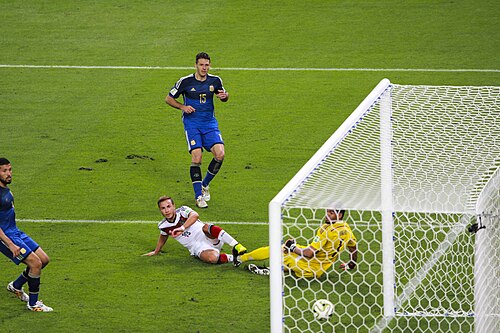
Defending champ Argentina I won’t waste this space on a primer on soccer; not even the complicated format of the World Cup competition itself. Your favorite browser or AI will be happy to fill in those fútbol blanks. Instead, I want to focus on what lies just outside of the Cup. You’ll find headlines and curiosities that wouldn’t have happened without this event, but are perhaps more interesting than the kicks on the field…
for instance…
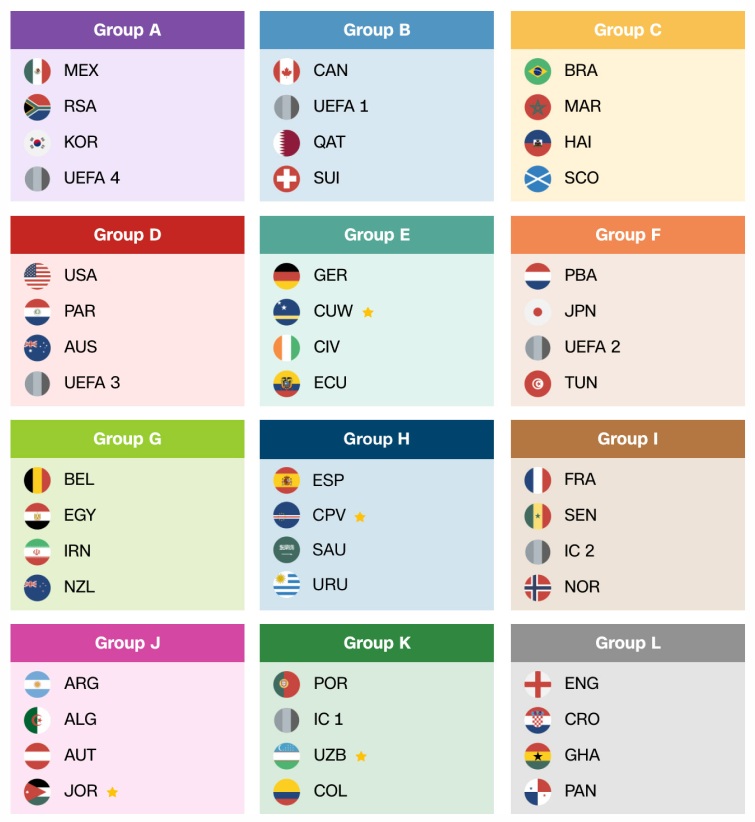
Trivia question: How many teams sought qualification to become one of the forty-eight participating in this year’s World Cup? I’ll give you a hint: We have 195 recognized countries in the world. Would you guess 150 teams? 125? 100? Sorry, you’re heading in the wrong direction (and it’s a trick question). There were over two hundred soccer teams when the qualifying rounds began almost three years ago. How that number was whittled to forty-five (plus one each for host countries Canada, U.S., and Mexico) would take way more words than I am allotted today.
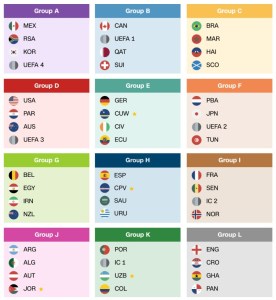 Here’s something less trivial. One of six teams is destined to hoist the Golden Ball trophy (worth about $10M all by itself): England, France, Spain, Portugal, Brazil, or Argentina. Maybe your sentiments lie with one of the host teams but the facts and the resumes don’t lie: Europe and South America have dominated professional soccer for decades. Baseball may be as American as apple pie, but we’re talking about a sport for the legs, not the arms. Having said that, you won’t have to wait long to get your first look at the Americans. We “kick off” against Paraguay tomorrow night.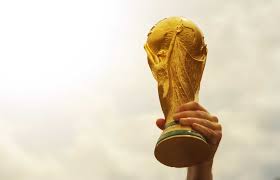
The Gold Ball goes to the winner If you’re looking for a longshot to win this thing (and I mean l-o-n-g-g-g-g-g-g shot), choose one of the teams from Curacao, Jordan, Uzbekistan, or Cape Verde. These countries are playing in the World Cup for the first time (and the World Cup’s been going on for a hundred years). To me, curacao is a liquor that tastes like Triple Sec. Jordan is a man’s name. Uzbekistan is somewhere in Asia surrounded by countries whose names I also can’t pronounce. And (Cape) verde means green in Spanish. Notice nowhere here am I saying anything about the talents of their World Cup soccer teams.
 Speaking of alcohol, it’ll be interesting to see how the fortunes of the beer, wine, and liquor producers are swayed by the World Cup. With sixteen stadiums and 104 matches, you’d expect a boost in drink sales big enough to create Niagara Falls. Unfortunately for them, the World Cup is hosted by a continent where drinking is descending to record low levels, with the younger generations promoting the idea alcohol “is bad for your health”. Maybe fans will raise a glass of milk to the winner like they do at the Indianapolis 500.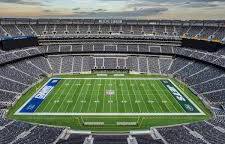
The final match will be held in New Jersey’s MetLife Stadium Like the receiving line at a wedding, I’d love to meet every one of the World Cup fans who make it to the final match in New Jersey’s MetLife Stadium. Why? These people must do some pretty remarkable things for a living. Even with the likelihood the host countries will not be represented, a ticket is projected to set you back between $15K and $20K. Fifteen thousand American dollars for three hours of sport. Throw in peripheral expenses and a family of five could easily spend six figures. It’s kind of nuts. No, it’s a whole bowl of nuts. And mark my words, every last seat in MetLife will be filled.
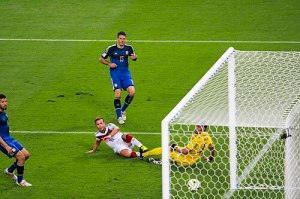
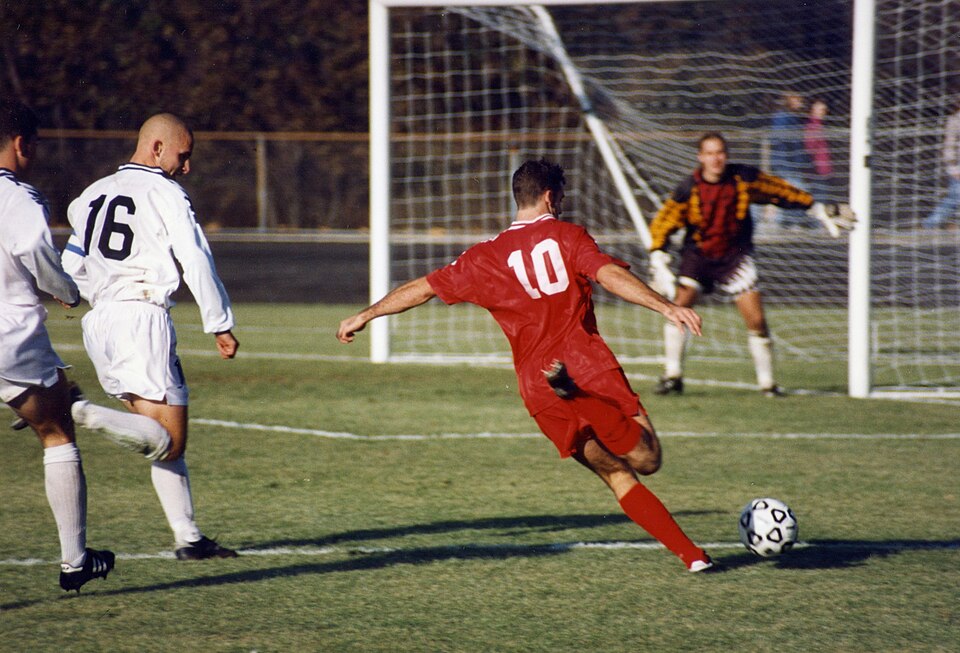
That could be me sprawled on the grass There’s a lot more to be said about the World Cup, and I’ll be tempted to keep you updated over the next six weeks. In the meantime I need to get back to my regular routine. Game #1 and #2 take place today and I have no intention of sitting down to watch. I may kick myself for my lack of attention but hey, now there’s a great way to describe my ability to play soccer.
Some content sourced from the CNN Sports article, “World Cup beginner’s guide…”, the CNN Sports article, “Who are the World Cup favorites?, the CNN Sports article, “The World Cup debutants…”, the CNN Sports article, “Why sky-high ticket prices have sent fans searching…”, and Wikipedia, “the free encyclopedia”.







About Me
The sky is not completely dark at night. Were the sky absolutely dark, one would not be able to see the silhouette of an object against the sky.
Follow Me On
Subscribe To My Newsletter
Subscribe for new travel stories and exclusive content.
 Life In A Word tv