
Hello, I’m Veronica
The sky is not completely dark at night. Were the sky absolutely dark, one would not be able to see the silhouette of an object against the sky.


-
Roof Rats
My granddaughter has a fancy starter piano with eight colorful keys. A flip of the switch and she can play musical notes, animal sounds, or hear the colors of the rainbow. She’s not even a year old so she pounds more than plays, creating a chorus of owls, frogs, birds, and rabbits. Those four I can handle. But every now and then she throws in a squirrel and the hairs on my neck stand at full attention.

Mr. Squirrel is on the far left Maybe you agree; it’s a little odd to include a rabbit in keyboard animal sounds (does a rabbit even make a sound?) Admittedly, the little piano trill conjures a furry friend with a twitching nose. On the other hand (paw?) the squirrel sound is a toneless gnawing burst, sounding very similar to the real squirrels who sharpen their teeth on my metal gutters. Whoever created this keyboard is having a good laugh at my expense. “Let’s see; I have the entire animal kingdom at my fingertips and I only need to come up with eight sounds. Let’s go with a squirrel!”

Breakfast is served! You sense my wrath already (and I’ve only logged a couple of paragraphs). But here’s the thing. I’m sitting here at my kitchen table, typing away, and I can’t claim full concentration because I’m expecting the sound of rodent enamel on metal at any moment. Words fail to describe it. Just imagine the grind of a dull hand saw… back and forth, back and forth on the gutter.
It’s not like the squirrels don’t have other nearby options for hanging out. We have fence lines dividing our pastures; convenient raceways when the squirrels dash to their trees and back. And about those trees: dozens of pines and oaks, with broad branches inviting a squirrel nest or ten. So why is one of them always attracted to the heights of my house?
 The battle began last spring. The squirrel scampered happily across the peaks and valleys of my roof, pausing occasionally to gnaw a shingle or a gutter. Eventually he discovered one of my vent pipes tasted pretty good too, and realized with just a bit of mouth work he could open up access to the inside. Now we have a problem. I pictured all kinds of mayhem inside my attic: droppings, nests, stolen insulation, chewed electrical wires. It was time to take action.
 My initial defense was a complete failure. The former owner left a full-size plastic owl behind – one of those bobble-head figures that looks remarkably lifelike. So I placed the owl close to the house and watched through the windows. Bobble bobble. The squirrels hesitated from a distance, eventually crawled cautiously closer, then pretty much made friends with my plastic predator. I checked Mr. Hoots recently and noticed his ears had been chewed off.
When yet another squirrel called “dibs” on my roof a few months later I knew it was time to get serious. Looked into my options and dropped a few bucks on a Crosman “American Classic” bolt action pellet pistol, a variable-pump long-barrel that looks more intimidating than it shoots. You drop in the ammo, pump a few times, and the compressed air blasts the pellet to kingdom come.

harmless Now then, here’s why my pellet gun was about as effective as the bobble-head owl. One, my shaky hands have the gun pointing everywhere but directly at an annoying squirrel. Two, I’m old enough to need readers to align the sight at the end of the barrel. And three – and here’s the kicker – the impact of the pellet is nothing more than a gentle nudge. Seriously, these squirrels have so much fur and fat they could probably take a dozen pellets while pawing their little noses at me.

smug It’s a humble exchange – the squirrels and me. The first time I shot anywhere near one of them, I kid you not – he ducked. He was poised on my roof line staring down at me, wondering what the heck I was about to do, when suddenly BLAM! and my little pellet went whistling harmlessly over his head. Then came the ducking move and the amused stare, as if to say, “Missed me!”
So why do I still fire off a pellet every time a squirrel goes gnawing on my gutter? I think it’s one of those false senses of accomplishment. I take the shot, the shot misses, the squirrel relocates to the other side of the roof, and all goes quiet for another hour or two. Yep, I showed him.
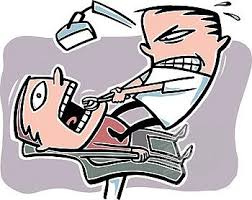 So the battle rages on. There will be future chapters to share in this space, and… and… and right on cue, there goes the hand saw again. Gnaw gnaw gnaw. Time to holster my American Classic and take my best shot again. Oh wait, hold the phone – heh – it’s just my granddaughter playing her little animal sounds over in the living room. I think I’ll go teach her a little something about dentistry and extract a piano key.
-
Where’s Wendy?
The 96th edition of the Academy Awards came and went last Sunday without much fanfare. Mercifully, Monday’s reviews were more about who won, instead of tabloid headlines like wardrobe malfunctions or acceptance speeches gone wrong. I only watched the opening monologue, and not because I cared about what Jimmy Kimmel had to say. Rather, I wanted to see if I could spot a seat filler.
 Back in my days as a mid-level manager in corporate America, dozens of resumes came across my desk for prospective employees. Their sections on “previous experience” sometimes caught my eye, if only for the really strange stuff people do with their time. Innovation Sherpa. Hacker. Direct Marketing Demigod. Happiness Hero. I wouldn’t sign up for any of those “jobs” but hey, at least they come with a paycheck. The only compensation a seat filler gets is a free ticket to the show.
Seat fillers are out there… somewhere… If the title isn’t self-evident, a seat filler is someone who attends a televised event (like the Academy Awards) and stands in the shadows of the outside aisles until a “real” attendee gets up to get a drink, use the restroom, socialize, or whatever. The seat filler then dashes over to occupy the seat until the person returns, so the panning cameras give the television audience the impression the event is always filled to capacity.
I could spend several hundred words talking about the myriad ways live TV manipulates a viewer’s perception (flashing “APPLAUSE!” signs come to mind) but seat fillers may be the most absurd of all. Thousands upon thousands of people apply for these opportunities, with only a handful chosen for a given event. As if remaining nameless among the Hollywood elite isn’t humbling enough, seat filling is last-minute employment with all expenses paid by… you.
 Imagine opening the email. Congratulations! You’re going to the Grammy Awards! There’s the good news. The bad news is, now you have to book an expensive flight and hotel, buy or rent a dress-code-worthy tux or formal gown, and plead for last-minute approval from your employer for a few days off. Assuming you do make it to the Grammy Awards, you’re subject to a strict set of behaviors. Surrender your ID and smartphone. DON’T walk on the red carpet. DON’T talk to celebrities (unless they talk to you first). And plan on being on your feet for hours, in a covert location where you can’t even see the show, waiting for the command from the Manager of Seat Fillers to “fill that seat!”
As one filler described the experience, maybe there really is a breathless kind of rush when you plop down next to someone like Taylor Swift or Beyoncé. But let’s get real here; celebrities see a seat filler coming from a mile away. How many of them are going to engage with a smile, let alone a word of acknowledgement? Even if you did manage to exchange a sentence or two, you’re going to ask yourself, “Why did I say that to Taylor?” for the rest of your days.

HURRY! She’s not in her seat! Without your phone, you won’t be able to capture your seat-filling fifteen minutes of fame. You’ll be lucky if you nab a copy of the event program (which can be purchased online anyway). Seat filling is a the very definition of “anonymous”, and it’ll be hard to convince your friends and family you were even there. Unless the TV camera points your way at just the right time, of course.
As for my careful study of the Academy Awards audience on Sunday night, it seemed like a fun game at the time. Pause the picture when the camera pans the people, then walk up to the screen and play a sort of “Where’s Waldo?” (or Wendy) to spot the seat fillers. But I quickly realized the error of my ways. I can’t even recognize the actors. They’re either the too-old versions of the ones I remember (sorry people, the Botox doesn’t help) or they’re the too-young versions of actors I’ve never seen in anything at all.
 Suffice it to say, I will never be a seat filler. If I ever go to an awards show it’s because I’m a “real” attendee who deserves to be there (in other words, another lifetime). In this life, I’ll consider more appealing employment prospects for my retirement. Beverage Dissemination Officer. Golf Ball Diver. Professional Sleeper. Hey, at least those pay.
Some content sourced from the Business Insider article, “I was a seat filler at last year’s Grammys…”, and Wikipedia, “the free encyclopedia”.
-
String Instrument
March is looking decidedly mundane, if the first five days are any indication. I’m still recovering from my St. David’s Day festivities on the 1st (more about that here) so I suppose it’s all downhill until April. Even so, the laundry is washed and folded, the dishes are done and put away, and it’s grey and rainy outside, so what could I possibly have to talk about today? Why, dental floss, of course!
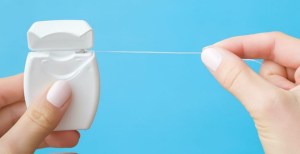 Floss is even more mundane than my March to-date, yet there I stood, dwelling on the little nylon spool as I spun out another 18″ this morning. Snap off a length, wind tightly around the fingers, and commence the see-saw journey between and around each of your 28 pearlies (32 if you still have “wisdom”). It’s like you’re playing the smallest string instrument in the orchestra, and all you can contribute is the occasional enamel squeak.
 Why do I wonder about floss? So you don’t have to! On the list of all activities considered “morning routine” you’re probably way more invested in brushing your teeth, washing your face, or even throwing on deodorant. Flossing is the one where you stare into the mirror thinking, “Why can’t I text while I do this?”
Floss. Looks weird and sounds weird, but it’s nothing more than a silky strand, at least in its original form. Then Johnson & Johnson came up with the nylon alternative – much easier to manufacture in large quantities – and today’s product was born. Waxed or unwaxed. Mono or multi-filament. Tape or picks. Whatever your weapon against plaque and gingivitis, we’re all participating in pretty much the same activity.

“Candy Floss” Candy floss is just another name for cotton candy. Meat floss is a dried, fluffy version of Chinese pork (appropriately named “yuk”). Floss is also an embroidery term, a town and river in Germany, and an awkward dance move where the arms swing rapidly behind and in front of the body. But none of those are the first to come to mind when I say “floss”, right?
Here’s what I want to know. Why hasn’t someone made flossing more convenient in the 125+ years we’ve all been doing it? Seriously, I’m picturing those little scrubbing bubbles zooming all over the porcelain of your bathtub, leaving it squeaky clean. Couldn’t we have a similar product we swish around in our mouths? It’d be like a dose of Pop Rocks, where you have a few moments of crackling and hissing in your mouth, followed by a rinse and spit. Bye-bye plaque, no nylon required.
 I didn’t manage to “habit” flossing until about age 25. Before that I was too busy accumulating cavities. I’m still trying to perfect the see-saw technique after all these years. Scrape each tooth instead of just snapping up and down between them. Rewind the floss a few times on your fingers so you’re not using the same inches on all of your teeth. Floss before you brush. Finally – the tough one for me – make flossing part of your evening routine, not your morning.
“Moon Graphite Grey Clean Slide” Here’s the math (because I just have to know these things). If I’ve really flossed every day since my mid-twenties, I’ve used over four miles of the stuff (or 20,000+ ft). At 18″ per cleaning that’s countless little lengths. But here’s another way to look at it. A typical dispenser of floss contains 55 yards, meaning in almost forty years I’ve only purchased 128. You could probably fit those dispensers into a single shoebox. And at $1.29 per dispenser, the whole box only sets you back $165.
 Until someone invents those edible scrubbing bubbles, I’ll keep filling up shoeboxes with empty floss dispensers. My product is Reach; yours might be something more exotic like “Grin Fine Flosspyx” or “Boca Ela Mint”. No matter how fancy the name, it’s just a piece of nylon string. And until my March gets more exciting you’ll find me in front of the mirror each morning (er, evening), playing my little string instrument.
Some content sourced from Wikipedia, “the free encyclopedia”.
-
First-Name Basis
It’s only Tuesday as I type, but I’ve already cleared my calendar for Friday. After all, I have a very important day ahead of me. So important in fact, I need to organize a parade, raise a flag, and prepare unique dishes for the expected throng of adoring fans. But why am I wasting words on the details? You already know we’re celebrating Saint David’s Day in a few days, don’t you?
 They’ll be celebrating in Wales, at least, just as they do every first day of March. You’ll find my cathedral there too, way down in the southwest corner of the country. Well, St Davids Cathedral, I mean. And the funny thing is, he’s not the David you’re thinking of, the one from the Bible who took down Goliath as a boy and became king as a man. This David helped to spread Christianity throughout the UK, united the Welsh people against a warring England, and performed several miracles. David’s a big deal in Wales.
David’s parade (not Patrick’s) St. Patrick’s an even bigger deal, of course. At least Patrick rates a celebration in the U.S. But admit it, you’re not celebrating Patrick’s spread of Christianity throughout Ireland, nor his miracle of removing all snakes from the land. You’re thinking more about what garment of green to wear, four-leaf clovers, beer, and maybe, just maybe, this is the year you participate in your local St. Paddy’s Day 5k.

Nice cathedral, Dave This business of saints is interesting to me because, well, it’s not as defined as I was led to believe. The rules and processes to put “Saint” in front a first name are a little vague. Suffice it to say, you need to be a model citizen, as well as a teacher, person of influence, and someone who cares little for the material goods and comforts of this world. I know a lot of people who fill this bill, but add in “wonder worker” or “source of benevolent power” and the list drops to zero.
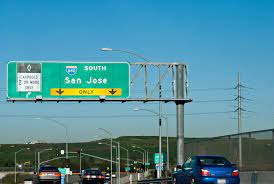
Do you know the way to… ? Saints are also on my mind because I grew up in California and, well, they’re all over the place out there. Francisco to the north. Diego to the south. Barbara somewhere in the middle. My childhood home was right down the street from Monica. My brother lives in Fernando’s valley. 99.9% of the state’s residents think of those as “places”, but firstly they were people. You’ll find “San’s” and “Santa’s” all over the Golden State.
Saints get a little watered down when you consider the Catholic Church’s take on them. More than 10,000 have been recognized over time. Even more to the point, Catholics acknowledge anyone making it to heaven to be a saint. I’d hope that count is way more than 10,000 by now. Maybe it’s the reason we have patron saints: the cream of the crop, the ones regarded as “heavenly advocates of particular nations, families, or people”. My patron saint isn’t David by default, but I sure like his name.

Eat Welsh Rarebit when you celebrate on Friday (grilled cheese on toast, zero rabbit) Admittedly, my mind wanders somewhere other than historical figures when I think of saints. Our dog is a Saint Bernard, one of those gentle giants you picture with a brandy brandy around the neck. A few years ago we went on a cruise, with a stop in the Baltic Sea port of Saint Petersburg. “St. Elmo’s Fire” is a luminous phenomenon caused by an atmospheric electric field. (also a pretty good movie from the 1980s). And so on.
 You can read a bit more about Saint David and his cathedral in one of my very first blog posts: unsung. You’ll discover that his town of Pembrokeshire – the smallest
 kingdomenclave in the UK – is right across St. George’s Channel from the Irish town of Kildare, where you’ll find St. Brigid’s Cathedral, my wife’s namesake. The blog post is really about Brigid but at least David gets a mention towards the end. Even if you don’t “read a little more”, remember, Friday’s the big day. Parades, flags, and fun food, all for a darned decent guy. Makes me blush anytime somebody says, “Dave, you’re a saint.”Some content sourced from Wikipedia, “the free encyclopedia”.
-
Teeny-Weeny Towns
My daughter forwarded a video about a suburb of Knoxville known as Safety City. In this little town you’ll find roads and traffic signals, businesses and shops, but no cars. Sidewalks are for pedestrians while streets are reserved for bicyclists and other “non-motorized vehicles”. Everything in “SC” is an easy walk, whether to the post office, football stadium, movie theater, or dinner at Applebee’s. Oh, and I almost forgot to mention… everything in Safety City is miniature.

Safety City in Knoxville Safety City is a novel concept because it reduces the real-life aspects of a town down to a dimension children can relate to. And relate they do. Entire classes bus over to Safety City to experience vehicular, pedestrian, bicycle, and fire safety at a young age. So much more effective than traffic school on a blackboard!
I’ve always been a fan of miniatures; a feeling hearkening back to my childhood. Anyone who read Gulliver’s Travels knows “miniature”, as in the inhabitants of the (literally) small town of Lilliput. Anyone who ever held a snow globe imagined those little places and figures inside the glass coming to life.

Diorama I wonder if grade-school children still make dioramas. What a cool concept for a kid. Within the confines of a shoebox you create a miniature world of your liking: buildings, people, animals, trees, etc. Then you cut a peephole in the center of one end of the box and cover the open top with tissue paper. When you look through the hole you see your little diorama world, with the light filtering through from above. It gives your creation a startling sense of reality.

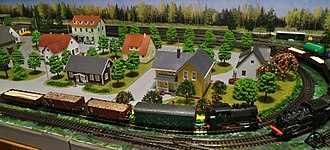
“HO”-scale model railroad Model trains certainly fueled my interest in miniatures. I remember several friends who collected the popular “HO”-scale sets (1:87, or about 2″-high trains). They could buy so many accessories (endless tracks, buildings, trees, and figures) they could create an HO-scale world big enough to fill a two-car garage. Go figure, the only train set I ever owned was the “G”-scale, where the train’s a good 8″-10″ in height. Not so miniature.
 Speaking of model trains, one of my favorite episodes of the old television series The Twilight Zone was called “Stopover in a Quiet Town”. A couple wakes up in a strange house after a night of partying, can’t get the phone or the lights to work, and find the refrigerator stocked with plastic food. They walk outside, only to discover the surrounding town is utterly still – no people, no sounds, no movement. Then the train whistles and pulls into the station, so they hop aboard, hoping to be taken back to somewhere familiar. But the train merely travels in a wide oval and returns to the same station where it picked them up. As the couple steps off the train, the giant hand of a child reaches down to grab them, while a mother’s voice can be heard saying, “Be careful with your pets, dear…” Twilight Zone indeed.
Replicas of miniature cities can be found everywhere, whether Knoxville’s Safety City, Disneyland’s Storybook Land (viewed from canal boats), or Legoland’s Billund Resort, Denmark’s largest tourist attraction outside of Copenhagen. There’s even a “top ten” of the world’s miniature cities, including “Miniaturk”, 122 famous buildings of Turkey in a park-like setting in Istanbul; “Tobu World Square” in Japan, which showcases the world’s UNESCO world heritage sites in the presence of 140,000 miniature people, and The Museum of Roman Civilization (which I’ve seen myself), a remarkable recreation of ancient Rome’s “Golden Age” thirty-six years in the making.

Legoland Maybe all this talk of miniatures has you thinking of the recent trend of tiny homes. Those are an entirely different concept; not at all “miniature”. A tiny home is like a full-scale house with most of the air sucked out of it. The components are still full-scale but the spaces are decidedly smaller than normal. Tiny homes kind of look like shoeboxes to me. Maybe we should add peepholes on the ends so we can watch the inhabitants try to make a living in their cramped quarters.
Some content sourced from Wikipedia, “the free encyclopedia”.










About Me
The sky is not completely dark at night. Were the sky absolutely dark, one would not be able to see the silhouette of an object against the sky.
Follow Me On
Subscribe To My Newsletter
Subscribe for new travel stories and exclusive content.
 Life In A Word