
Hello, I’m Veronica
The sky is not completely dark at night. Were the sky absolutely dark, one would not be able to see the silhouette of an object against the sky.


-
You Can Say That Again
When I was a kid, I remember (or was told) I used creative pronunciations for common words. Instead of cinnamon I’d say cimm-anin. Instead of spaghetti it was bis-ketti. The library was the lie-berry. Maybe back then my excuse was in just learning to talk but I can’t play that card as an adult. So when someone says Feb-YOU-air-ee instead of Feb-ROO-air-ee, or Shur-BERT instead of Shur-BET, I tend to wince.
 We’ve made it to the time of year where we reflect on the previous one, and we do so in year-in-review lists. “Most Influential People of 2024”. “Best Television Shows of 2024”. “Significant World Events of 2024”. And how about this one? Most Mispronounced Words of 2024. Thanks to Babbel, maker of language-learning platforms, the hard audio evidence doesn’t lie. Babbel came up with ten words people mispronounced over and over last year.
 I could print Babbel’s list here, but it’d be a waste of your time so I’ll just hyperlink it instead. Eight of the words I never ever used in 2024 (and never will), and the only reason I spoke the other two was because they’re the last names of politicians featured in 2024 headlines. To be honest, the list made me question Babbel’s approach to learning languages. Are these the words promoting a budding English speaker’s proficiency?
 Babbel also listed mispronounced words from other languages, including one of my favorites: espresso. Not sure how we Americans get that one wrong time after time, but we do. Maybe the myriad “ex-” words in the English language have us saying EX-presso but the concentrated coffee drink sounds exactly as it reads: ES-presso. Keep that in mind and your next Italian barista will be happy to serve you.
 As long as we’re speaking Italiano let’s get another one right – al dente. When you want your pasta cooked just right; “not too soft but firm to the bite”, you describe it as ALL den-tay, not ALLA dawn-tay. I only know this because I learned Italian when I was in college. If I didn’t know better myself I’d probably go with AL dent.
Notre-Dame de Paris As long as we’re talking foreign language mispronunciation, let’s correct another one. Notre-Dame de Paris, the medieval Catholic cathedral in the middle of Paris (and the middle of the River Seine), can be mispronounced so many ways it’s almost as devastating as the fire from which it was resurrected. On the surface it sounds something like NOH-tur daym day PEAR-iss, which is “English-French” at its absolute worst. In actual French it sounds like this: NOH-tr dam due PAH-ree, where the two “r”s almost sound like “l”s.
You never saw it coming but today’s language lesson is a segue to the topic I’ll be covering for the next several weeks and months. Notre-Dame de Paris is a magnificent structure and a renowned work of architecture. It’s also a new model created by the good people at LEGO. And speaking of good people (great, actually), my wife put that LEGO model under the Christmas tree for me this year.
 For those who enjoyed the long journey of my building the LEGO Grand Piano (which I chronicled in Let’s Make Music!), and the shorter journey of the LEGO Fallingwater House (Perfect Harmony), I’ll be at it again as I attempt to rise Notre-Dame de Paris from the “ashes” of 4,383 plastic pieces. Won’t you join me on this foray into all things FRON-says? (That’s “French” for those of you who mispronounce it.) You’ll learn about the world’s cathedrals along the way, many of which took hundreds of years to construct. Let’s hope my own build of Notre-Dame de Paris is a whole lot shorter than that.
Some content sourced from the CNN World article, “These are the most mispronounced words of 2024”, and Wikipedia, “the free encyclopedia”.
-
Choc’ Full and Wheat Thin
Chocolate aficionado that I am, the recent headline of the possible buyout of The Hershey Company instantly grabbed my attention. Hershey has been around for well over a hundred years; the American brand most associated with chocolate (no matter what you think of their products). But one detail caught my attention even more than the chocolate. Mondelez, the purported buyer of Hershey, also makes Wheat Thins snack crackers. Suddenly this announcement is downright riveting.
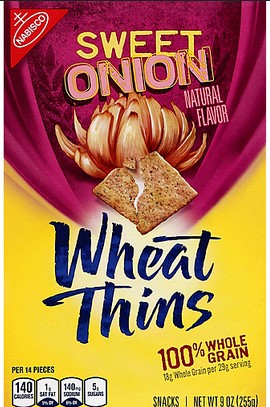
 If you don’t have a box of them in your pantry right now, you’re at least familiar with Wheat Thins. The flat, square, unashamedly crunchy crackers have been around forever (that is, if 1947 is the same as forever). Wheat Thins are packaged in the bright yellow box with the distinctive red Nabisco logo in the upper corner. The box top encourages you to “Open for 100% Awesome” and boy do I ever. I sometimes wonder whether Nabisco has baked more Wheat Thins or Oreos over the course of their respective existences. As a kid I would’ve hoped that winner would be Oreos. These days I nosh more like an adult and prefer the ultimate snack cracker.
Imposter crackers Here’s where you come at me with your own “ultimates”. Maybe your pantry is stocked with Cheez-it crackers instead of Wheat Thins. Maybe “everything sits on a Ritz” in your house. Or you like Premium saltines because they’re, well, saltier. Are you’re one of those inexplicables who actually prefer table water crackers? You must’ve really liked communion wafers as a kid. Nothing says “Styrofoam” like the taste of a table water cracker.

Frequent companion Wheat Thins was (were?) introduced to my palate at a very young age. My dad was obsessed with them. I can’t think of a time I entered our pantry where the big yellow box wasn’t present. My dad would eat them right out of the box instead of bothering to pair with cheese or dip. My dad was never one to talk with food in his mouth, but I swear I can still hear him holding conversations with my mother while simultaneously crunching a mouthful of Wheat Thins. Apparently obsessions are hereditary.
Wheat Thins are described as “100% Whole Grain”, which is a sly way to throw you off the canola oil, sugar, cornstarch, and other garbage you’ll find on the ingredients list. Admittedly there were several years where I strayed from Wheat Thins. At the time our pantry morphed into a collection of decidedly more healthy options, and many, many boxes of Wheat Thins gathered dust on grocery store shelves. We indulged in almond, baked, and organic wheat crackers instead, as if any of them held a candle to Wheat Thins.

King of snack crackers I can’t say exactly when they made their comeback, but suddenly Wheat Thins is a pantry staple again. Probably because I missed their “indescribably delicious taste”; a spot-on advertisement because I can’t describe what makes a Wheat Thin so delicious. Whatever the attraction, the recommended serving size of “16 pieces” is laughable. Heck, I grab that many in one handful. On that note, I’m eternally grateful to Nabisco for creating a “Party Size” box of Wheat Thins (and I’m perfectly content to be the only one at the party).

Wrong, wrong, wrong! To be clear, we’re only talking about the “original” here. I was horrified to learn there are over twenty spins on the taste of Wheat Thins, including “lime”, “chipotle”, and (gag) “dill pickle”. Then Nabisco went completely off the rails and created sweet versions of Wheat Thins, including “honey” and “lightly cinnamon”. Those last two have been discontinued because, c’mon, did they really think the king of sweet crackers – the graham – could be dethroned?
Like a lot of food products I was raised with, Wheat Thins are not as “original” as they claim to be today. They just aren’t. I can’t say how many of them I’ve eaten in my life but let’s go with a billion, shall we? That makes me an unquestionable Wheat Thins expert. And I’m here to tell you the taste may be the same but the consistency is suspect. Wheat Thins are a little crunchier these days than they used to be. If they’d just let me into their factories I bet I could figure out exactly which ingredient they swapped out (in the interest of profit margin, of course).

If I were you (wait… reverse that; if you were me), keep an eye on Mondelez. You know them by their former name: Kraft Foods. Mondelez is quietly consuming the entire snack aisle. Chips Ahoy, Triscuit, Sour Patch, Toblerone, Dentyne, even Tate’s Bake Shop (another “thin” delight) all belong to this foody conglomerate. Hershey Kisses (and Reese’s Peanut Butter Cups!) may soon join the list. But if someday we all wake up and finally realize these products are terrible for us, I hope the one cracker Mondelez is still making on the day it closes its doors is Wheat Thins. I’m not sure I can live without them.
Some content sourced from the CNN Business article, “Hershey’s stock explodes higher on report Mondelez offered to buy it”, and Wikipedia, “the free encyclopedia”.
-
Recycled Airbags
As I build the beginnings of this week’s blog post (three “b”s already for those keeping count) my screen distracts me with alerts for Cyber Monday deals. Laptops at 30% off retail. E-readers at 25% off. DNA tests at 70% off (which begs the question: do we really care about our ancestry anymore?) Cyber Monday is a sort of second chance for those who shunned the big box stores the Friday after Thanksgiving (good decision). But here’s what I wonder today. Why endure Black Friday or get distracted by Cyber Monday when you can shop through lost luggage any day of the year instead?
 I’ve finally found a reason to visit Alabama. A six-hour drive due west of my keyboard puts me in the little town of Scottsboro, of which an entire block is consumed by a business known as Unclaimed Baggage. UB is exactly what you think it is: deep-discounted personal belongings made available to you by the traveling misfortunes of others. Think of UB as one person’s trash becoming another person’s treasure only, of course, the original owner had no intention of throwing it away.
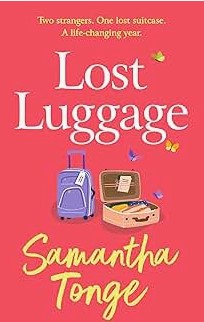
“Where’s my owner?” Unclaimed Baggage is the kind of entrepreneurial enterprise I wish I’d thought up myself. Consider the end-to-end process. You and your luggage start at Point A, but sadly one of you doesn’t make it to Point B. The airline (or the bus or the train) spends several months trying to reunite the two of you. Failing that, they compensate for the loss (sometimes). But what of your bag if it turns up later? Dump it into a “Dead Luggage” office? Actually, yes, and then Unclaimed Baggage comes a-calling.
 Here’s an encouraging stat: 99.5% of lost luggage is reunited with its owner. You wouldn’t think Unclaimed Baggage could make a business of the leftovers. But those leftover are, on average, 7,000 items every day. No wonder Unclaimed Baggage needs a city block to house all that it sells. And the best part of the business? UB never knows what it’s going to get because the airlines don’t (or aren’t allowed to) open the bags. It reminds me of the show where bidders vie for contents of storage lockers without being able to raise the roll-up doors beforehand.
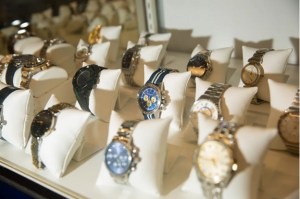
The most expensive item UB ever sold was a Rolex watch for $32,000 (50% of retail). Visit the store today and you can purchase a diamond ring for $20,000 that surely appraises for more. Some items are so strange they’re relegated to an area known as the “Museum Gallery”. Wigs. Shark teeth. A funeral casket key (?) Items considered “unsaleable”, and items where you have to wonder why they were on an airplane in the first place.

Treasures from chestssuitcasesWhen I first learned about Unclaimed Baggage I thought, they have something of mine and I want it back! No, I’ve never lost luggage. Rather, I’m the passenger who keeps forgetting the little things in the seat back pocket right in front of him. Reading glasses. E-readers. A rather expensive pair of noise-cancelling headphones. Somehow my stuff gets left behind despite the pointed announcement from the flight attendant: “Please check in and around your seat for personal belongings, as you will not be allowed back on the aircraft after you deplane.” Sigh…
Unclaimed Baggage has at least one example of an item unintentionally returned to its original owner. At UB’s annual ski sale (which earned an LOL from me; I mean, just how many skis are left at baggage claim?), a shopper purchased ski boots for his girlfriend. When he brought them home, she discovered initials on the inside of the boots – hers. The airline had already compensated her for the lost boots so effectively, she re-owns her boots at a deep discount.
Time is cheap at Unclaimed Baggage As you might expect, a good percentage of shoppers at Unclaimed Baggage are the same ones who troll garage sales and eBay for items they have no intention of owning. They simply relist their wares online for purchase (and profit) from others. It’s another enterprising way to make a buck but it’s not my cup of tea. I’m the shopper who shows up at sales well after the best items have been picked over.
Unclaimed Baggage has cornered a lucrative market. I don’t think they have any competition for the business of repurposing lost luggage. I will say this: I’m less likely to leave my stuff on airplanes now that I know about UB. I mean, do I really want some stranger buying my stuff for way less than I paid for it myself?
 Final thought for the day. Why don’t they call it Unclaimed Luggage? Baggage? Luggage? Bag? Lug? Who the heck added two words into the English language when we only needed one? The Oxford English Dictionary estimates we use 170,000 words these days. I’m here to say that’s one too many.
Some content sourced from the CNN Travel article, “US travelers lose millions of suitcases every year…”, and Wikipedia, “the free encyclopedia”.
-
Minuscule Marvels
For Christmas this year I’m putting a small ornament into my wife’s stocking. It’s a miniature of… well… let’s just leave it at “a miniature” in case she reads this post. But I know she’ll love this ornament and promptly hang it on our tree for the remainder of the season. Why will she love it? Because it’ll spark fond, romantic memories. But she’ll also love this ornament because she can’t help loving something that’s a little, well, little.

Ornaments are little One of my bucket list items – still to be fulfilled – is a trip to the south of France for a taste of those wonderful wines created from Burgundy or Bordeaux grapes. Maybe you hope to make the same trip some day so I’ll let you in on a little secret. If your trip only allows a visit to Paris, you can still visit a vineyard… right in the middle of the city. Most people visit the neighborhood of Montmartre to see the Sacre Coeur cathedral but most don’t know about the tiny vineyard just steps away. Clos Montmarte produces wine on a single acre, from 2,000 vines forging a connection to the long-ago rural times of the region. Compare an acre to the wineries in Bordeaux, with vines covering an average of fifty times that much property.

Harvesting the grapes at little Clos Montmartre Clos Montmarte wines probably aren’t award-winning. Who knows if I’d even care for the taste of their reds or rosés. But does it really matter? I love the thought of a teeny-tiny field of grapes right in the middle of Paris. I love how the grapes are harvested by locals and transported to the cellars of the nearby Town Hall to be pressed and turned into wine. The whole operation is appealing to me because it’s quaint and because it’s small.
 This affection for itty-bitty things must hearken back to our childhoods. Who among us didn’t spend countless hours of playtime with (take your pick) little dolls, little cars, little houses, or scaled-down trains? When we played at the beach we built little castles. When we played in creeks we made little boats out of sticks or leaves and watched them flow with the water. Tea parties meant tiny cups and plates on tiny tables.
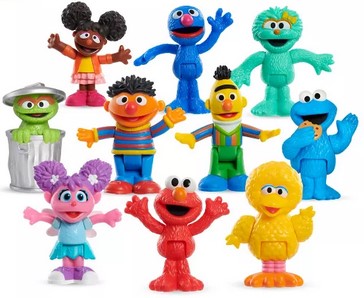
My granddaughter’s little favorites In today’s world the toys might be different but the attraction to small things remains. It fascinates me to watch my (little) granddaughter choose her favorite toy from among dozens: a set of ten two-inch high Sesame Street characters. She stands them up all over the house. She hides them and then finds them. She always seems to have one or two in her hands. Even though my granddaughter doesn’t speak in complete sentences yet, she probably has complete thoughts as she considers tiny Big Bird. You are a lot smaller than me and that’s why I like you so much.
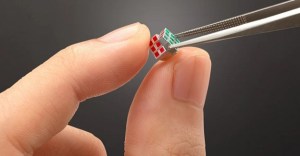
Wee little cube If you include Japanese toymaker MegaHouse in this year’s Christmas purchases, maybe you’ll go for their world’s smallest operational Rubik’s cube. You can’t get one until next April, but picture this: the minuscule marvel is one 1,000th of the size of the original. Pull out your metric measure to confirm it; a single face of the wee cube measures only 5mm from side to side. Best throw a pair of tweezers into the Christmas stocking along with the cube. There’s no way you’ll be able to rotate the Rubik’s colors with fingers alone.
Would I want the world’s smallest operational Rubik’s cube, you ask? Heck yeah! Consider, the faces of a traditional Rubik’s cube contain a 9×9 grid. Then someone went and created a miniature Rubik’s cube with 2×2 grids. I thought, how very cute. I just had to have one so my original would have a little buddy. My cubes are hanging out together on my home office shelf as we speak. And they’re asking for an even littler buddy for Christmas.

Rubik’s “Mini” So let’s summarize the pint-sized products we’ve covered today. I already have the ornament for my wife in-hand (soon to be in-stocking). I won’t put a bow on a bottle of Montmartre wine this year because I want the chance to see the tiny Paris winery for myself first. And you probably thought I sprung for one of MegaHouse’s pee-wee Rubik’s cubes (and a pair of tweezers). Sadly, no. I don’t have the $5,300 it costs to buy one (minuscule marvels aren’t cheap!) Thankfully, my wife will be happy with an adorable little ornament for $15 instead.
Some content sourced from the CNN Travel article, “The secret vineyard in the middle of Paris…”, and the CNN Style article, “This is the world’s smallest Rubik’s cube…”
-
Overblown Air
When you travel to Colorado, you should pack a few things you might not think to bring. A reusable water bottle will be your constant companion since it’s high and dry in the Centennial State. Lip balm will be your pocket pal. Your wardrobe should be designed in layers since Colorado’s weather is so unpredictable. And finally, for the lack of air in the Rockies, don’t forget to bring a can or two of oxygen.
 Canned oxygen? For the longest time I thought this was the biggest scam on earth. There was a time you could find “oxygen bars” at Colorado ski resorts – high altitude establishments where you’d pull up a stool and choose from a menu of “airs” to augment your oxygen intake. Watching those suckers – heh – with their mouths attached to transparent hoses had me picturing a guy on the other side of the wall furiously working the plungers of bicycle pumps. But forget oxygen bars. Now you can take a hit from your very own can instead.
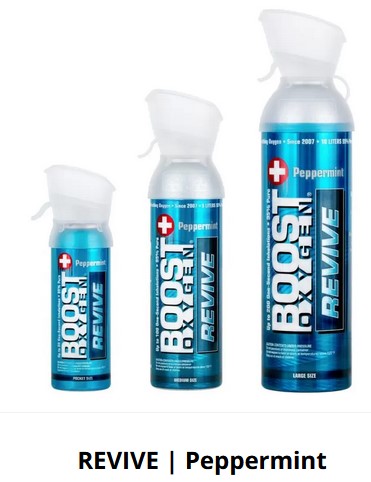
 Boost , a popular brand of canned oxygen, has been around for a while since its humble beginnings through Shark Tank. In Colorado you’ll find Boost products in every market, drug store, gas station, and airport concession. Boost is advertised as “95% Pure Supplemental Oxygen in lightweight, portable, and affordable canisters for health, recovery, natural energy, and athletic performance”. That’s an impressive string of words to describe nothing but canned air.
First-timers will react to Boost with a well-defined smirk. Gag gift for the relatives back home? Stocking-stuffer? After all, you’re paying $10 for a can of… well, nothing. Yes, Boost comes in flavored varieties like lavender or eucalyptus menthol but in the end, it’s just air. And watching someone take a hit of Boost is just like the goofball in your kitchen who tips the can of whipped cream directly into his mouth. Even the sound of escaping compressed air is the same. Just no whipped cream.
 Naturally this is the point where I admit I’m a canned-air convert. Never thought I’d see the day I’d actually need a “boost”. But last January as I was moving belongings out of our Colorado house, I came to a breathtaking realization: I was no longer acclimated to the thin air of the Rocky Mountains. Climbing a set of stairs had me huffing and puffing. Lifting a box made my heart go pitter-patter. For some reason I’d thought to add a can of Boost into my suitcase, so what do you know? Compressed air to the rescue. Every now and then I’d blast the can into my mouth and darned if it didn’t clear my head and help me breathe. I was no whipped-cream junkie but rather a bold astronaut, seeking the occasional hiss of his supplemental oxygen.
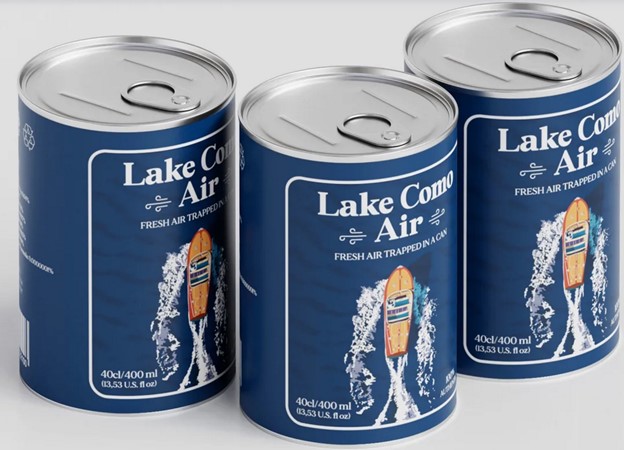
 For all its success, the legitimacy of a product like Boost is sullied by similar products having no health benefits whatsoever. On your next trip to Italy, head up to Lake Como in the far north for a look at the pristine waters and nearby snow-covered Alps. While you’re there you can purchase a can of “Lake Como Air” for $11. Lake Como Air claims no value other than “something original, provocative, and fun”, or “… a tangible memory you carry in your heart”. Really? I have lots of tangible memories from Italy and they didn’t cost me a dime.
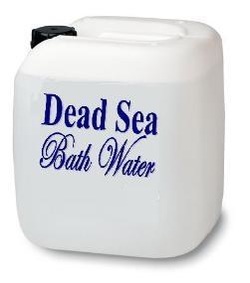 On your next trip to Israel (which best not be anytime soon), head over to the Dead Sea for a look at the biggest, saltiest resource of natural minerals in the world. You can float in the Dead Sea without even treading water. And no surprise, you can “purchase” the Dead Sea in small containers. The so-called manufacturer claims its consumption “contributes measurably to feeling better and to looking wonderful and healthy”. Huh. Not sure about you but I like to think I feel better and look healthy just by drinking from the tap at my kitchen sink.
 The list goes on and on. Holy dirt from New Mexico. Healing waters from right here in western South Carolina. Rocks from outer space. I mean, seriously, when are we going to stop paying for natural elements we can help ourselves to just by stepping outside our front doors? Yeah, probably never. That train left the station for good the day someone decided to bottle water. Now we have canned air as well… and it’s a good thing. Turns out, I’ll never take another trip to Colorado without a little Boost in my suitcase.
Some content sourced from the CNN Travel article, “Cans of ‘fresh air’ from Lake Como on sale to tourists in Italy”.












About Me
The sky is not completely dark at night. Were the sky absolutely dark, one would not be able to see the silhouette of an object against the sky.
Follow Me On
Subscribe To My Newsletter
Subscribe for new travel stories and exclusive content.
 Life In A Word tv