Your True Love’s a Nut Job

Each Christmas season (which translates to every waking moment from Thanksgiving to the New Year), I’m fascinated we still sing “The Twelve Days of Christmas”. I feel like a character in the Dickens world of Scrooge and Tiny Tim as I labor through the verses (ditto “Here We Come A-wassailing”).  I should sing with an English accent.  More to the point, I question the TDoC lyrics.  What other context do we have for turtle doves and calling birds?  What’s with the gold rings?  Don’t we owe it to ourselves to understand more about a carol we’ve been singing for over two hundred years?

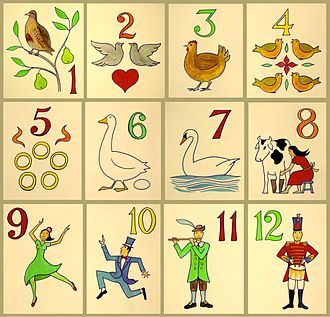
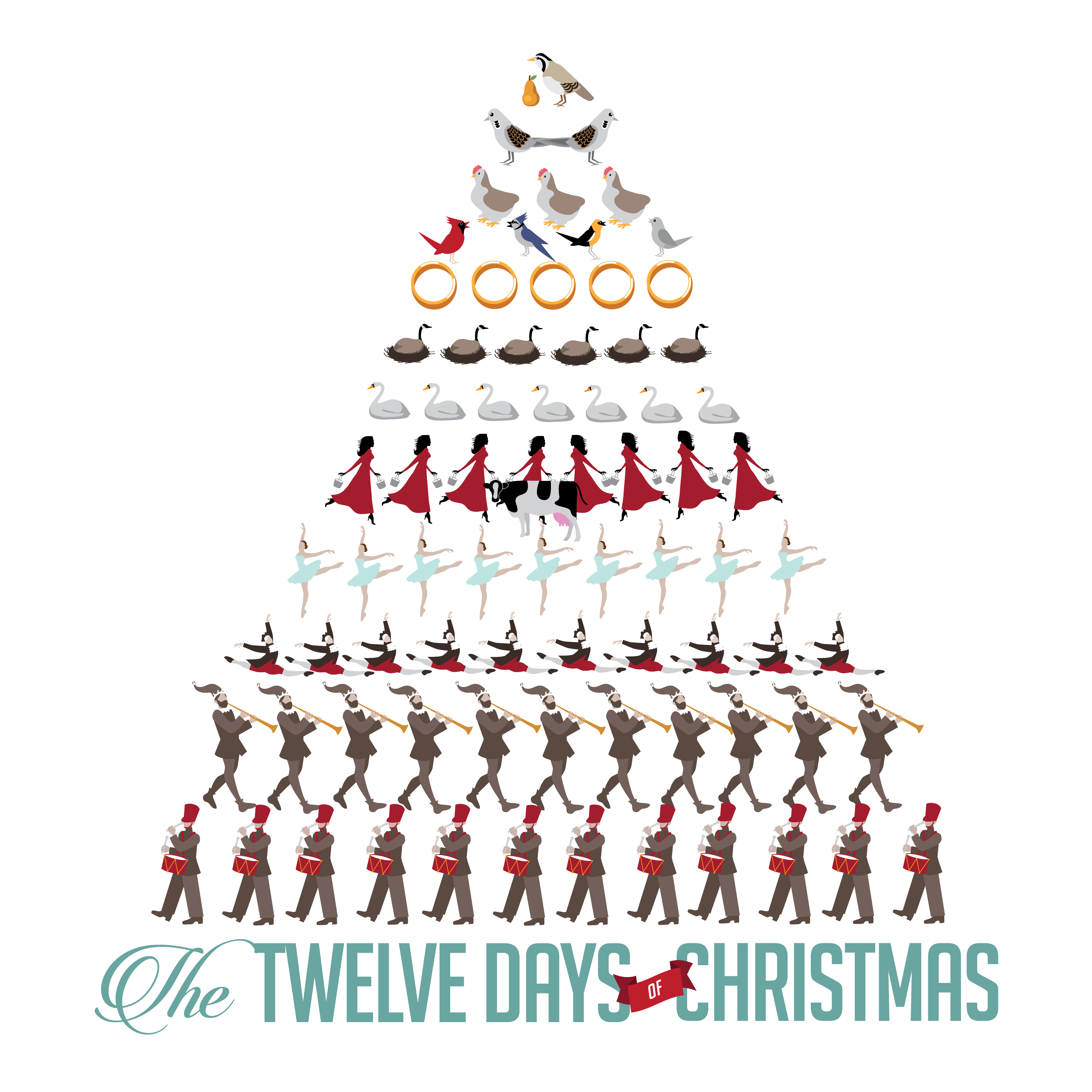
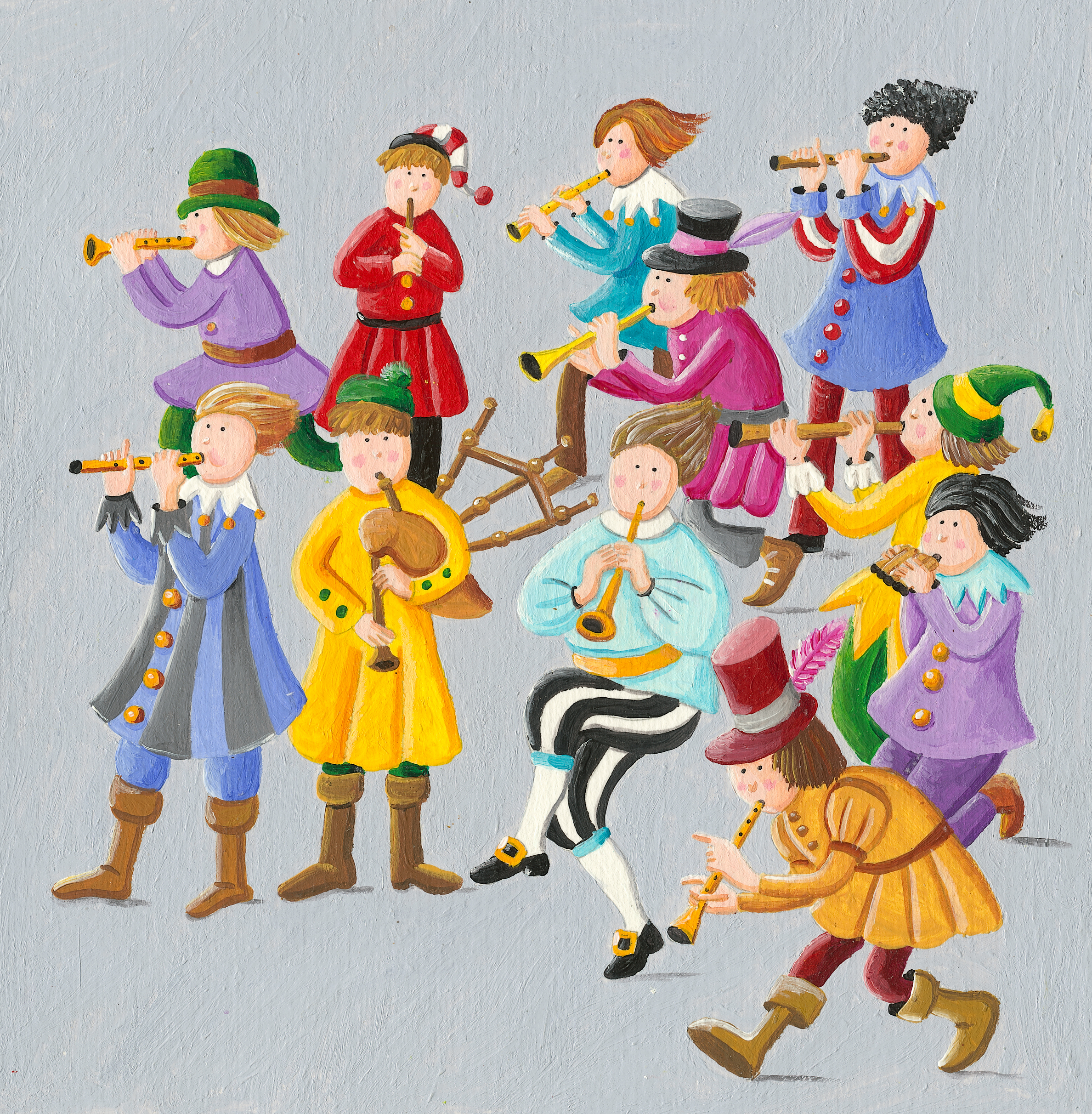
Depending on the source, “The Twelve Days of Christmas” was either a) written as a children’s book – which eventually morphed into a song, or b) “code” for memorizing elements of Christian religion at a time when faith could not be openly practiced.  I prefer the latter.  For example, the two turtle doves represent the New and Old Testaments of the Bible, while the four calling birds represent the gospels of Matthew, Mark, Luke, and John.  The six geese represent the days of creation (“and on the seventh day He rested”), while the eleven pipers represent the faithful disciples of Jesus Christ.  “My True Love” is Jesus himself.  Clever, no? (see here for the full “code”).

Wikipedia claims “the exact origin and meaning of the Twelve Days song are unknown…” so perhaps we should just leave it buried in the past.  But I can’t do that.  TDoC is so much more fun if you take the literal approach to the words.

The title is innocent enough.  “The Twelve Days of Christmas” equals Christmastide, a season of the liturgical calendar in most churches.  Christmastide begins on December 25th and lasts until January 5th (the day before the season of Epiphany).  Twelve days.  That’s even more celebrating than Hanukkah.  Fine with me – our family likes to drag out Christmas as long as possible.

Beyond the title however, “The Twelve Days of Christmas” descends into total chaos.  Consider the structure of the carol.  TDoC is a “cumulative” song, which means you add the previous verse to the one you’re singing – just like all those animals in “Old MacDonald Had a Farm”.  By the twelfth verse you’re singing about everything, and you’re totally exhausted.  Some people solve the length by having a different voice for each gift.  That’s great for the partridge in a pear tree singer, but kind of sucks for the drummers drumming singer (who only gets one chance to shine).  Make sure you have a solid voice for the partridge in a pear tree.

Speaking of the gifts, let’s do some analysis.  Other than the rings, your true love has an obsession with birds.  He or she is gifting you an aviary on six of the first seven days.  Doves, hens, swans, and more.  Not only that, you’re getting pear trees and God knows how many eggs from those a-laying geese. (Note: pears and eggs make great Christmas gifts).

The final five days, your true love gifts you a bunch of workers and merrymakers for the estate you apparently have.  You’ll gain a herd of cows (what else are those maids a-milking?) and you’ll have a some dancers and a band making quite the ruckus on your front lawn.  The neighbors may complain.  C’mon, you say: how much noise can eleven pipers make?  Eleven?  So you forgot about the aggregate of a “cumulative” song, did you?  Your true love actually gave you twenty-two pipers by the time January 5th arrives… and twelve drummers, thirty-six dancers and thirty guys who like to jump.  And don’t look now, but your twelve pear trees are swarming with 184 birds.  Maybe you don’t have any pears after all.

Sorry, but if this is your true love’s idea of Christmas giving, he or she is a nut job (or at least an animal hoarder).  Here’s my advice: run.  Take your forty gold rings and date one of those lords or ladies instead.

American Tune-Up

Each of the fifty United States is represented by more than just a flag. America’s state symbols include animals, birds, trees, flowers, and songs. As a kid growing up in California I memorized these items, and years later I’ve still got them.  The “Golden State” has the Grizzly Bear, the Valley Quail, the Redwood, the Poppy, and “I Love You, California”.  Imagine my interest then, when Brooklyn Magazine took an updated stab at the state songs, publishing “The Musical Map of the United States”.

Image courtesy of Brooklyn Magazine, October 2016

Brooklyn Mag’s map is more than meets the eye (see here).  It’s not a collection of easy ditties you and I might come up with: Beach Boys for CA, John Denver for CO, Frank Sinatra for NY.  Instead, it’s a broad spectrum of lesser-known tunes, attached to the states by writers who chose them.  Read their stories and listen to their song choices.  It’s like 50+ blogs in one, plus a playlist if you want to shift the whole shebang to your smartphone.

Here’s a sampling of the Map’s creativity.  The writers chose Kenny Knight’s “America” for Colorado, a “dusty, country rock gem” with lyrics befitting its patriotic title (even if the song itself twangs along modestly).  For California, the writers needed two songs – Joni Mitchell’s “California”, and Dr. Dre’s “The Next Episode”.  The former artist is Canadian; the latter raised in the gangland streets of Compton near Los Angeles.  You’ll find Mitchell’s folk music as appropriate as Dre’s rap for such a diverse state.

As I studied the Map, I realized each of us possesses our own musical geography, accumulating map dots as we move through life.  My own map began on the 8-track player of my father’s Cadillac in the 1960’s, crooning along with Perry Como as he claimed, “the bluest skies you’ve ever seen (are) in Seattle”.  By the 1970’s, I’d moved on to a hard-earned collection of 45-rpm records (“singles”), focusing on Top 40 bubble-gum one-hit wonders like Paper Lace’s “The Night Chicago Died” and Terry Jack’s “Seasons in the Sun”.  Also in the 70’s – courtesy of my brother’s extensive LP collection (and a stereo capable of a sonic boom) – I mapped to all kinds of rock, including Emerson Lake, & Palmer, The Eagles, Elton John, and Linda Ronstadt.

By the 1980’s, I’d graduated to cassette tapes and the easy-listening music of John Denver, Olivia Newton-John, and Barry Manilow (to which some would say, two steps forward three steps back).  Later in the ’80’s, I embraced compact discs with a budding affection for country music (Alabama), continuing to this day (Thomas Rhett).

Throw in a handful of downloads from my kids (Katy Perry, Meghan Trainor), sprinkle the whole mess with classical symphonies and concertos – a carryover from childhood piano lessons – and you have my musical map.  I’ll bet yours is wildly different.

Even the world of sports has a musical map, as Steve Rushin wrote in an excellent piece in this week’s Sports Illustrated (“Cheer and Trebling”).  You can’t hear the whistling of “Sweet Georgia Brown” without thinking Harlem Globetrotters, just as you can’t make it through baseball’s seventh inning without singing “Take Me Out to the Ballgame”.  You won’t leave Yankee Stadium without Sinatra’s “New York, New York”, just as you won’t hear John Williams’ spectacular “Fanfare” without thinking Olympic Games.  Moments of silence at sporting events are literally reserved for the dearly departed.  Otherwise it’s all marching bands, pipe organs, and loudspeaker instrumentals.

My now-home state Colorado has a set of symbols like California.  The “Centennial State” has the Bighorn Sheep, the Lark Bunting, the Blue Spruce, the Columbine, and John Denver’s “Rocky Mountain High”.  But the song could just as easily be Katharine Lee Bates’ “America the Beautiful”, inspired by the Rocky Mountain peak I can see as I type.  The song could also be Kenny Knight’s “America”.

You listen.  You choose.  There are no right or wrong answers here.  Remember, even Google Maps gives you several options as you navigate your way.

All That Glitters

Audrey Hepburn will always be one of my favorite actresses.  Her grace, beauty, and acting – especially her comedic roles – combined for an enchanting big-screen presence.  I’ve only seen a handful of her movies but it didn’t take many to fall in love with Audrey’s delightful characters.  Eliza Doolittle in My Fair Lady (which premiered shortly after I was born).  Sabrina Fairchild in Sabrina.  Hap in Always (her final film).  And perhaps my favorite role, the quirky Holly Golightly in Breakfast at Tiffany’s.

In the opening scene of Breakfast at Tiffany’s, Holly gazes into the New York City Fifth Avenue store window and famously observes, “Nothing very bad could happen to you there.”  Holly’s probably right, but that’s not to say something very bad couldn’t happen to Tiffany’s itself.  Sales and profits are down significantly over the last two years.  Cartier and David Yurman steal market share from the ultra-wealthy.  As detailed in a recent Wall Street Journal article, Tiffany & Company is resorting to pedestrian strategies to restore its cachet.  And those strategies are so not Tiffany’s.

The first sign of Tiffany’s troubles might have surfaced last February, when the company debuted its first-ever Super Bowl ad.  I’m not sure what tarnished the Tiffany’s image more: a television commercial stuffed between plugs for beer and tortilla chips, or Lady Gaga as its newest sponsor.  Apparently, that’s an appeal to the Millennial generation (as if young people shop at Tiffany).  No offense, but Ms. Gaga is no Audrey Hepburn, as Zales is no Tiffany.  There’s a bit of a stain on the robin’s-egg blue.

The one and only time I visited Tiffany’s New York City location was two years ago with my family.  Despite our touristy dress we were greeted warmly by the security guard as we passed through the grand polished brass-and-glass doors.  Once inside, after a nervous glance at the showcases of diamonds (as if we could afford anything whatsoever), we were politely redirected to the fifth floor to “more affordable offerings”.  I took no offense, as I was only hoping my daughter could snag one of the famous blue boxes as a souvenir.  Turns out she purchased a Tiffany’s gold ring for several hundred dollars while my wife and I settled for a set of Tiffany’s ceramic mugs.

As satisfied as we were with our purchases, I have to admit gold rings and ceramic mugs removed a bit of the Tiffany prestige.  I more associate Tiffany’s with priceless diamonds and silver – befitting royalty.  In fact, that’s where Tiffany’s got its start: almost two hundred years ago as a purveyor to the Russian imperial family.  Tiffany’s also brings to mind its trademark advertisement, showcasing a single piece of jewelry against the silhouette of a couple embracing – a refined, iconic portrait of elegance.  Audrey Hepburn, not Lady Gaga.

Today you can purchase Tiffany ceramics, as well as Tiffany leather goods, paper products, watches, fragrances, and even a limited-edition cell phone.  You can find over 300 Tiffany shops in 22 countries around the world.  I thought Tiffany was more of the “Rome-Paris-London-New York City” kind of retailer, complete with stern, immobile security guard at each front door.

Admittedly, some of my first associations with “Tiffany” were far removed from diamonds and gemstones.  Tiffany Darwish was a flash-in-the-pan American singer in my late teens (her only real hit: a retread of Tommy James and the Shondells’ I Think We’re Alone Now).  I developed an affection for Tiffany lamps  – the stained leaded-glass variety – when I studied the Craftsman style of architecture in college.  And it’s hard to get the lyrics to Big Blue Something’s singular hit out of my head; especially the lines: “And I said, ‘What about Breakfast at Tiffany’s?’  She said, ‘I think I remember the film.’  And as I recall, I think we both kinda liked it.”

Tiffany & Co. recently ousted its Chief Executive in search of a new one, with hopes of improving both sales and image.  To the new leader in search of new answers, I say look back to the Golden Age of Hollywood for guidance, when the Tiffany blue was truly iconic.  As Holly Golightly would say, nothing very bad will ever happen to you there.

Some content sourced from Wikipedia, “the free encyclopedia”.

Band of the Leader

Last week at church I was pleasantly surprised to see a brass quintet accompanying the organist.  Trumpets, tubas and French horns are typically reserved for the Christmas season services but there they were – a small group of our members – playing along with the hymns of the day.  It somehow made the service more meaningful.

80-credence

At President Trump’s inauguration I was pleasantly surprised to see a small band accompanying young Jackie Evancho as she performed America’s national anthem.  It was the first time I’d heard Jackie sing, and I thought her performance of “The Star-Spangled Banner” was flawless.  Perhaps some of you know Jackie as the singer from “America’s Got Talent”.  For me, her most recent performance lent credence to her status as “the youngest solo artist ever to go platinum”.  Jackie also performed for former President Obama at the Lighting of the National Christmas Tree, suggesting a refreshing lack of political persuasion in her decision to sing.

But back to the band – the “band of the leader” as it turns out.  Shortly after Jackie finished America’s anthem one of the inauguration commentators labeled the accompanying musicians “The President’s Own”.  That phrase stuck with me the rest of the day.  Thanks to my curiosity and an in-depth article on Wikipedia I now know more about this talented group.  In brief:

  • “The President’s Own” is formally called the “United States Marine Band” (USMB).  It is the oldest of the United States Military Bands, established in 1798.
  • The USMB became “The President’s Own” in 1801, after a performance for then president John Adams.  Later that year Thomas Jefferson requested a performance at his own presidential inauguration, and the USMB has performed at every inauguration since.  Counting President Trump’s that’s a total of fifty-three inaugurations.
  • The USMB has 130 members but typically performs with only 42.
  • The USMB performs about five hundred times a year, including state funerals and dinners, and arrival ceremonies for visiting heads of state.
  • The USMB’s most common performance is fifteen-minute “patriotic openers” for large events, including the playing of “Marine’s Hymn” (official hymn), “Semper Fidelis (official march), and “The Star-Spangled Banner”.
  • The USMB’s most famous director – back in the late 1800’s – was John Phillip Sousa, who composed “Semper Fidelis”, “The Stars and Stripes Forever”, and other famous march music.
  • USMB members serve a four-year contract as active duty enlisted Marines.  They are not required to complete the training of a typical Marine and are therefore never involved in combat missions.
  • Without a musical instrument in his/her hands, you could still recognize a USMB member by the lyre on their uniform rank insignia (replacing the normal crossed rifles).

I love the historical significance of “The President’s Own”, one of many uniquely American elements linking our current leaders to our Founding Fathers.  I also love the pomp and circumstance – bands, parades, fireworks and other “fuss” designed to accentuate our country’s most important moments.

Speaking of President Trump’s inauguration and the unquestionable divide of the people over his first week of actions, I found the words of the following quote spot-on.  Perhaps you can imagine “The President’s Own” playing in the background as you read, somehow making the words even more meaningful:

“We were a country that has been snoozing. Now we are alert. Whether it’s negative or positive, energy has risen. People are engaged. They’re studying. They are thinking more. And I think that’s good. You can’t get that without someone being bold enough to say things people don’t agree with.” —Hall of Fame running back Jim Brown to the Wall Street Journal.

Some content sourced from Wikipedia, “the free encyclopedia”.

Hooked on Classics

If I am to believe certain lists, there are over forty different genres of music in the world today. The more common ones come to mind quickly: “Rock”, “Pop”, “Hip-Hop”. But now we have “Industrial” and “Tex-Mex” as well.  Indeed, definitions of music are becoming as diverse as the cultures from which they took flight.

Among music genres – the list of which inflates to hundreds if you include sub-categories – “Classical” looks a little lost. Classical music’s definition is broad and complicated, but most of us would acknowledge its “golden age” as the time frame between the lives of Bach and Beethoven (effectively, the 18th century). The volume of symphonies and concertos and sonatas created in that period is so vast, even those with no interest cannot deny a familiarity with the genre’s most famous compositions.

67-genre-1

The absence of orchestras (or music programs altogether) in today’s schools and universities is a tragedy.  Attendance at classical music concerts is down.  Even classical radio stations lack the advertising revenue to survive, depending instead on the generosity of their donors.  But here’s the good news: the genre still finds its outlets.

Consider the movies.  Year after year Hollywood produces fairly forgettable films, yet certain scenes are worth the watch if only to hear the accompanying classical music.  Some examples:

1) Ocean’s Eleven (2001). Danny Ocean’s gang of thieves finally completes the heist at the Bellagio Hotel, and gathers outside at the fountains for a moment of reflection.  The enchantment of that scene is as much about the fountains as it is in the soaring strings of Claude Debussy’s mesmerizing “Clair De Lune”.  Watch and listen here.

2) If I Stay (2014). Chloe Moretz’s character Mia performs “The Swan” (from Camille Saint-Saens’ “Carnival of the Animals”) on solo cello at a community concert, and the music continues through several more scenes.  “The Swan” is elegant and lullaby-soft.  Listen here (performance by Yo-Yo Ma).

3) Somewhere in Time (1980).  Christopher Reeves’ character’s obsession with the lovely Jane Seymour leads to a desperate time-travel effort to find her in her youth.  When the couple is finally reunited (in his dreams, of course),  we are treated to Sergei Rachmaninov’s powerful “Rhapsody on a Theme of Paganini”.  This scene would be nothing without Rachmaninov.  Listen here.

67-genre-2

Hollywood once created an entire movie about classical music.  The Competition (1980) – an early film in the careers of Richard Dreyfuss and Amy Irving – explored the rigors of the real-life Van Cliburn International Piano Competition.  Watch the movie and you’ll hear excerpts of Beethoven’s Piano Concerto No. 5 and Sergey Prokofiev’s Piano Concerto No. 3.  Listen to the glorious Prokfiev piece from start to furious finish and you’ll wonder how anyone can play the piano with that kind of speed and dexterity.

Even a child’s story can be uplifted by classical music.  In the stage production of “You’re A Good Man, Charlie Brown” Schroeder plays Beethoven’s “Moonlight Sonata” on his toy piano while Lucy accompanies him in song.  The lyrics are creative and work surprisingly well for a sonata created over 200 years ago.  Watch and listen here.

This post would not be complete without a begrudging nod to the album “Hooked on Classics”, created and performed in the 1980’s by Louis Clark and the Royal Philharmonic Orchestra.  “Hooked” is a mash-up of familiar classical pieces, attached to an annoyingly robotic drum track.  It’s a ten-minute audio nightmare for anyone who truly respects the genre.  Remarkably, the title track made it to #10 on the Billboard Hot 100 in 1982 (alongside Joan Jett’s “I Love Rock ‘n Roll” and Journey’s “Don’t Stop Believin'”).  If you must listen, go here.

67-genre-3

My campaign for the survival of classical music stems from years of childhood piano lessons, including a teacher who demanded strict adherence to the genre.  Thus I didn’t practice “Twinkle Twinkle Little Star” or “Frere Jacques”, but rather Bach’s “Solfeggietto”, Beethoven’s “Ecossaises”, and Albert Ellmenreich’s “The Spinning Song”.

Listen carefully the next time you’re at the movies.  Lend an ear to the classical strains of an orchestra or philharmonic.  Flip the radio dial to something instrumental every now and then.  Classical music lives, and still deserves a prominent place among the music genres.

Humble and Kind

This week’s list of “Hot Country Songs” – according to Billboard – includes Tim McGraw’s Humble and Kind; an easy waltz with timeless lyrics. A glance at other songs on the list finds the more typical topics of country music: fishing, hunting, lost love, found love, even t-shirts.  But Humble and Kind digs a whole lot deeper.  It’s a virtuous dose of substance in a music genre that often settles for less.

43 - virtuous 1

Humble and Kind sings about several examples of doing the right thing, like holding doors for others and minding your manners.  But the following verses are more insightful and are my favorites:

When the dreams you’re dreamin’ come to you,                                                                  When the work you put in is realized,                                                                                        Let yourself feel the pride but,                                                                                              Always stay humble and kind.

Don’t take for granted the love this life gives you,                                                              When you get where you’re goin’ don’t forget turn back around,                                       And help the next one in line,                                                                                                Always stay humble and kind.

Humility and kindness are virtues by definition.  If you time-traveled back to 400 AD, you’d meet the Roman Christian poet Aurelius Prudentius (great name).  “Aury” came up with the “Seven Heavenly Virtues” and the list remains unchanged to this day.  The first five are Chastity, Temperance, Charity, Diligence, and Patience.  The last two are Humility and Kindness.  If you lived your life according to the list, the pearly gates would swing wide when you arrive.  But let’s be real – how many of us can check the boxes next to all seven virtues by the time we climb that final staircase?

43 - virtuous 2

Humility (Latin: humilitas) is not thinking less of yourself; it is thinking of yourself less.  Kindness (Latin: benevolentia) is charity, compassion, and friendship for its own sake.

Ponder the final words of those definitions for a second.  It’s not so much what you do (or don’t do) but more what your intentions are.  Don’t show me things you’ve done that qualify as “humble” and “kind”.  Instead, consider whether you had a hidden agenda with your actions.  And that’s the kicker with the virtues game – it’s not only how others judge you but also how you judge yourself.  Still think you can check the boxes?

Humble and Kind inspired a pay-it-forward movement you can learn more about at http://stayhumbleandkind.com .  You’ll find all kinds of inspiring entries on the website – over eighty in the four months since the song was released.  Click on any of the photos and you’ll get the story behind the good intentions.  You can even request small printed cards that say #StayHumbleAndKind – meant to be left behind after you complete your acts of anonymous goodwill.

Ironically, some of Tim McGraw’s biggest country hits are about fishing (“Don’t Take the Girl” – 1994), love (“Just to See You Smile – 1997) and t-shirts (“Something Like That – 1999).  But like our virtuous Roman Christian Aury, Tim and his writers step it up to poetry every now and then.  Humble and Kind made it to #1 on Billboard’s “Hot Country Songs” last month.  This week’s list has it at #4.  Frankly, I hope it hangs on for awhile and gets a ton of airplay.  The world can learn a lot from its seemingly simple words.

Some content sourced from Wikipedia, “the free encyclopedia”.

Practice-Makes-Perfect Memories

Classical music has been one of my constant companions since childhood. Piano lessons initially mandated by my parents (but ultimately demanded by me) cemented a love for the timeless sonatas and symphonies of the master composers.  I built up a stock of memorized pieces – my very own repertoire.  I was “hooked on classics” at an early age.

people-316500

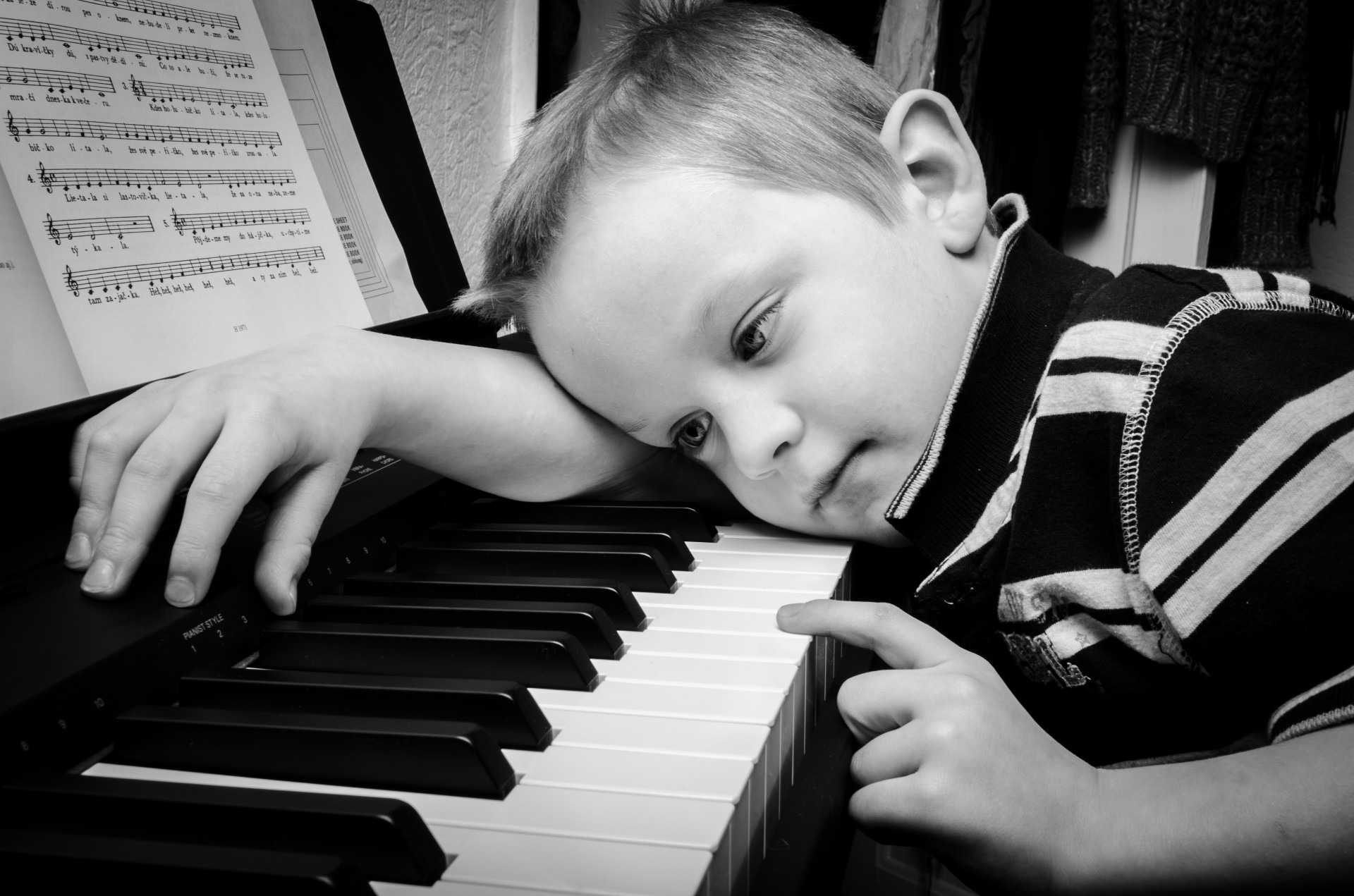
In 1947, a children’s audio story was created for Capitol Records called “Sparky’s Magic Piano”.  Sparky was a little boy who hated to practice the piano but benefited from an active imagination.  One day Sparky’s piano starts talking to him, and declares if he simply runs his hands across the keyboard he will make beautiful music.  Instantly Sparky is playing with the accomplished skills of a concert pianist, effortlessly churning out Rimsky-Korsakov’s “The Flight of the Bumblebee”, Beethoven’s “Moonlight Sonata”, and Mendelssohn’s “The Spinning Song”.  Sparky’s piano teacher and parents want to show the world this wonder, so they book a series of concerts across the country.  But in one of those performances, Sparky suddenly loses his abilities and can’t play a single note.  He demands the music from his magic piano but nothing comes.  He looks out to his waiting audience in horror… and wakes up from a dream.

Virtually the entire story of “Sparky’s Magic Piano” is in his imagination, but the moral-of-the-story ending has Sparky practicing with renewed focus and hopes of some day becoming a great pianist.  Also, the story aged well, as I first heard it twenty-five years after it was created and still loved it.

“Sparky’s Magic Piano” resonates for several reasons.  It inspired me with wonderful piano compositions at an age when I wanted to play outside instead of practice.  My piano teacher helped me learn “The Spinning Song” and the first movement of the “Moonlight Sonata” (alas, the “Bumblebee” is reserved for only the most accomplished of pianists.  Watch this performance as proof: http://www.wimp.com/fastgirl/ )

Also, whenever I hear the classical music from Sparky’s story I’m instantly transported back in time to my grandparents’ house.  Besides the children’s stories and toys (enjoyed decades earlier by my own father), my grandparents owned a few audio stories.  Their copy of “Sparky’s Magic Piano” was on “45’s”: those 7-inch records that contained a single song on each side.  Sparky’s story required six or seven 45’s (both sides), which meant you had to flip or change the discs every 3-4 minutes to hear the entire story.

Thanks to Sparky I will always remember childhood time with my grandparents.  I can picture myself sitting cross-legged on their floor in front of the living-room “hi-fi” (the size of a small refrigerator back then), listening to Sparky’s story with a focus broken only by the need to flip the discs.  Fittingly, that living room also contained an old, out-of-tune, upright piano, which I was allowed to play every now and then.

Remarkably, “Sparky’s Magic Piano” is still available today.  You can buy a copy for a couple dollars on Amazon Music or iTunes.  Have a listen to a story that was created almost seventy years ago.  Thanks to your iPod you won’t even have to get up to change the discs.  And if you can endure the corny dialogue, you may find yourself captivated by the repertoire of wonderful piano music – truly “classical”.

abstruse

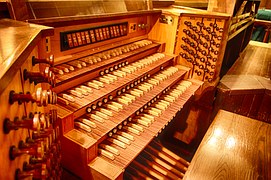
You’re probably typing on your keyboard as you read this.  But imagine you have a handwritten document sitting upright in front of you and you’re simply copying the words one keystroke at a time.  Now imagine you have several keyboards at your disposal, each on top of the next like stair steps. Your hands move up and down the stairs, finding just the right key for each letter.  Finally, imagine one more keyboard beneath your feet, which you occasionally depress like the gas pedal of a car.  This my friends, is but a hint of what it takes to play a church organ.  It’s a complex, hard-to-grasp skill requiring an absurd amount of focus.  It’s abstruse.

24 - abstruse

The Basilica of the Sacred Heart at the University of Notre Dame is scheduled to receive a brand new organ; the first note to be played during the Christmas holidays in December 2016. This is the fifth organ in the 165-year history of the Basilica and as you would expect, the most impressive. The instrument will boast four keyboards (five if you count the one beneath the feet) and almost 5,200 pipes.  The pipe diameters are as small as a pencil and as large as a ship’s smokestack.  Listen for the shrill tone of a tin whistle or the booming alert of a departing cruise liner – this organ can duplicate both.  It can even duplicate the soprano, alto, tenor, baritone and bass sounds of the singing human voice.

An organ of this complexity and size – it will soar to almost four stories in height – is taking several years to construct.  But most remarkably, it is being assembled in the modest workshop of Paul Fritts & Company, in the outskirts of Seattle, by a grand total of six craftsmen.  The University chose this group because its founders were trained back through several generations, dating to those who built the most prominent cathedral organs in Western Europe.

Next spring Fritts & Company will host an open house in their workshop, to show off the nearly completed Notre Dame organ.  Then next summer when the University’s campus is relatively quiet, the organ will be shipped from the West Coast to Northern Indiana to be assembled in time for that first performance a few months later.  Can you imagine the responsibility of the drivers of those several flat-beds, trucking so many handmade components over the mountains and across the plains to their final destination?  They should have a police escort to clear the highways.

When I was in middle school I took organ lessons for a brief time, learning on a modest instrument in the loft of the small chapel of our Methodist church.  There were only two keyboards for the hands and a small keyboard for the feet.  I found it overwhelming to play with hands and feet at the same time.  To further complicate the skill – and this is true of most organs – there are a few milliseconds of delay between the time a key is pressed and the sound is issued (thanks to the mechanics of opening and closing the organ pipes).  So you’re playing the music a moment before you actually hear it.

I did perform in public once.  Every year our Methodist leaders would allow the church youth group to conduct the Sunday services – from the sermon to the bible readings to the music.  Our organist “rigged” the sanctuary organ for me so it felt more like playing that small chapel organ.  A little less abstruse, if you will.  Regardless, that was the end of my career as an organist.  Two hands on the single keyboard of a piano (with little else for the feet and brain to worry about) is more than enough for me.