Peanuts and Pumpkins

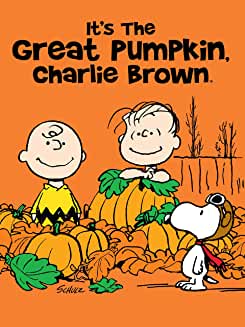
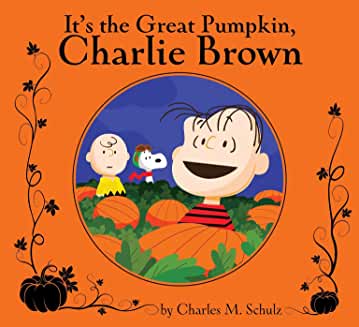
Three years ago, New York Magazine’s website Vulture ranked all forty-five Peanuts animated television specials from worst to best, including a paragraph on each one to justify its ranking. I wouldn’t have guessed Charlie Brown, Linus, and Lucy appeared in fifteen television specials let alone forty-five. But let’s be honest; only two Peanuts adventures have had any staying power: It’s the Great Pumpkin, Charlie Brown (#2 on Vulture’s list), and A Charlie Brown Christmas (#1).

Maybe I’ll weigh in on the Christmas special in a couple of months, but with Halloween on the horizon I need to speak to the runner-up. It’s the Great Pumpkin, Charlie Brown first aired on television in 1966, so those who were alive back then (me) have the chance to see it for the 56th time this year. But maybe not? The networks stopped showing Great Pumpkin two years ago.  Other than PBS in select locations, you’ll have to buy the DVD or subscribe to Apple TV+ to watch Charlie Brown get another rock in his trick-or-treat bag.

Writing about a Peanuts special dates me – there’s no question.  But it’s still worth the words.  The Peanuts gang was the comic strip of my youth.  I remember the anticipation of the Sunday morning newspaper and the “funnies” pages.  Charles M. Schulz and his Peanuts characters always got the first slot.  When the specials debuted in the mid-60s, it was a big deal.  It’s the Great Pumpkin, Charlie Brown only showed up once a year, in mid-October.  We didn’t have DVRs (let alone streaming) back then, so watch it live or you’d miss it.  Peanuts specials were always the hot topic of conversation at grade school the next day.

After so many watches, Great Pumpkin becomes an interesting study.  You pick up on the little things, the ones which would implode under the weight of today’s social media scrutiny.  Right out of the credits, Linus & Lucy head to a patch to pick out a pumpkin.  On the way, Linus picks up an apple among the fallen leaves, takes a single bite, and tosses it into a trash can. (Unnecessary waste!).  In another scene, Lucy stabs a pumpkin with a giant knife as she begins carving (Children with weapons!).  Then Linus looks on in horror and says, “I didn’t realize you were going to kill it!” (Violence!)

Great Pumpkin touches on other themes to sink today’s children’s shows, including bullying, teasing, and casual use of words like “stupid” and “blockhead”.  Charlie Brown is the butt of several jokes, including Lucy pulling the football away just as he tries to kick, and the girls using the back of his head to draw a pumpkin carving design.  Yes, I laughed at these scenes when I was a kid, but only because I wasn’t that kid (and because it was the 1960s humor).

Here’s an oddity with Great Pumpkin.  You’d think a short animation would be a continuous story.  Not so.  Great Pumpkin jumps awkwardly between disconnected scenes, from carving pumpkins to trick-or-treating to a Halloween Party.  The middle minutes shift randomly to Snoopy acting out his costumed “World War I Flying Ace” in the middle of France.  It’s as if Great Pumpkin didn’t have enough Halloween material to fill a half-hour, or at least needed an excuse to include Snoopy in the story.

Finally, “the Great Pumpkin” itself is completely akin to Santa Claus, but for a different holiday.  Linus writes a letter to the Great Pumpkin to say he’s looking forward to the arrival on Halloween night and hoping for lots of presents.  The Great Pumpkin visits pumpkin patches the way Santa Claus visits houses.  There’s even a mention of “pumpkin carols”.  You’re left wondering why this figment of Linus’ imagination wasn’t a little more unique.

If you haven’t watched It’s the Great Pumpkin, Charlie Brown, I probably haven’t given you reasons to rush to your television.  It’s simple and disjointed, and the animation doesn’t win the show any awards (even in the 1960s).  But just like A Charlie Brown Christmas, the characters are endearing, and the story has a pretty good message.  I’ll probably find myself looking for it again next year.

Some content sourced from Wikipedia, “the free encyclopedia”.

Sweet Nothing

Cleveland, Ohio sits proudly on the south shore of Lake Erie but has long been considered one of the least desirable locales in America. Shuttered steel mills, miserable weather, and a floundering economy don’t paint a pretty picture. But Cleveland does have an upside. It hosts the iconic Rock and Roll Hall of Fame. Hundreds of thousands flock to its international film festival. And the Cleveland Browns – long the doormat of professional football – just completed their first winning season in over a decade.  Alas, music, movies, and sports don’t erase mistakes… not when a city lays claim to a “holiday” called Sweetest Day.

Tape a big round target to my computer monitor and hand me a bazooka, because I’m about to blow the Sweetest Day bullseye into bits you’ll need a microscope to see.  The redeeming qualities of this celebration amount to little more than sweet nothings. I mean, how bad is it when your holiday is not only labeled a “Hallmark”, but popular opinion says it’s the worst of that lot?

A Hallmark Holiday.  By definition it’s a celebration with no more substance than a push to buy a greeting card.  Boss’s Day (Oct. 16th).  Administrative Professionals’ Day (April 27th).  Teacher Appreciation Day (May 3rd).  There’s even Clergy Appreciation Day (Oct. 10th).  Sweetest Day lands at the very bottom of this feathery-light pile.  Please, can we just leave it buried there?

“Hallmark Holiday”

It wasn’t always this way with Sweetest Day.  Wait… YES IT WAS.  Did you know we celebrated the 100th anniversary of the original Sweetest Day last Saturday?  But I’m getting ahead of myself.  The better question I should ask: Do you even know why we celebrate Sweetest Day?

No, I don’t celebrate Sweetest Day, but many of you in the “Great Lakes Region” do (eight midwestern U.S. states plus the Canadian province of Ontario).  For the rest of us, here’s the debatably sincere back story.  In 1921, twelve Cleveland candy company executives pooled their surplus product and gave away 20,000 boxes of candy “to newsboys, orphans, old folks, and the poor”, and literally manufactured a holiday in the process.  In the hundred years since, Sweetest Day has morphed from free candy for strangers to “… a day to share romantic deeds or expressions and acts of charity or kindness.”  With all due respect Cleveland, why do we need a “holiday” for romance or charity?

This is all your fault, Cleveland

When I first learned about Sweetest Day all I could come up with was Valentine’s Day 2.0.  I mean, how convenient, right?  We have the big day of romance in February so why not a little one (a really little one) in October?  Defenders of Sweetest Day say the two celebrations aren’t anything alike.  I agree.  Valentine’s Day was a Christian feast day designated over 2,500 years ago and celebrated throughout the world today.  Sweetest Day was a gimmick designed to sell candy (and cards) exactly 100 years ago and celebrated throughout… the Great Lakes Region.

Several failed attempts were made over the years to solidify Sweetest Day on the October calendar.  In 1922 the name was changed to “Candy Day” to see if it would generate more buzz (nope).  In 1927 they tried to make it Sweetest Week (nope again).  And in 1937, to make it more nationally accepted, they tried to advertise Sweetest Day on par with Mother’s, Father’s, and Valentine’s Day (this effort sponsored by, drum roll please… the National Confectioner’s Association).

None of this spinning of wheels stood in Hallmark’s way.  The greeting card company produces over 150 designs for Sweetest Day.  American Greetings joined the card party to make another 180.  Can you blame them when so many Great Lakes Region people are willing to buy?

All of my bazooka-blasting brings me to a fitting conclusion concerning Wikipedia (where I often find reference material).  Every Wikipedia article gets a rating of “quality” and another of “importance”, using a scale not so different from the one you had in grade school.  Wikipedia’s article on Sweetest Day – published seventeen years ago – gets a quality rating of, uh… has not yet received, and an importance rating of, uh… has not yet received.  In other words, nobody at Wikipedia cares enough to even rate the article.

Here’s an idea.  How about we just delete the Wikipedia article? (as one employee proposed two years after it was published).  For that matter, how about we just delete Sweetest Day?  I have my bazooka at the ready.

Some content sourced from Wikipedia, “the free encyclopedia”.

Coup de Grâce

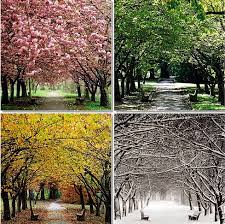
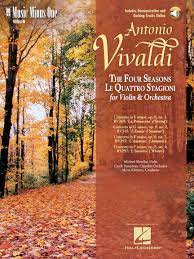
On my green and pristine back lawn, a solitary fallen leaf lies captive among the blades, a sure sign of the coming fall. A summer lengthened by oppressive heat is mercifully at its end. Fellow bloggers eagerly write about crisp mornings, cool nights, and college football games. But here’s a better nod to the upcoming season, a beckoning more sublime than anything “pumpkin spice”. Have a listen to Antonio Vivaldi’s violin concerto “Autumn”, from his best-known work, “The Four Seasons”.

Sure, I could bore you with the details of a classical composition written over four hundred years ago. “The Four Seasons” was cutting edge for its time because the music reflected real-life events: singing birds (“Spring”), soft breezes (“Summer”), and icy paths (“Winter”).  But today’s post is not really about “Autumn” and its drunken dancers.  It’s about the performance of the piece by Frederieke Saeijs.

Ms. Saeijs

I’d never heard of Frederieke Saeijs before I watched the eleven minutes of her violin solo in the video above but I must confess, I’m absolutely smitten.  Frederieke (pronounced exactly like it reads, unlike her last name), is Dutch by birth but worldly in every other respect, including her education, performances, and teaching.  Her list of accomplishments and awards suggests there is nothing further she can achieve with her instrument… and she’s only forty-two.

But I digress (and can you blame me after seeing her photo?)  Let’s get back to this performance of “Autumn”.  Here is what I found so captivating.  First, Frederieke’s eyes and her movements with her violin are unabashedly expressive as she plays, clearly one with the music.  She is a picture of grace with her slender frame, elegant hairstyle, and striking purple gown.  In other words, you could watch this video on mute and still be impressed.  But please don’t.  You need to hear the music, even just a few minutes of it.  I admit to distraction by some other things on my computer screen yet I kept coming back to this performance until I’d completed all eleven minutes.

If I haven’t yet persuaded you to spend a few minutes with Frederieke, consider this.  She plays the entire piece from memory (which, in ‘Autumn’s more furious moments, is mind-boggling).  Also, her performance – as well as those of the smallish orchestra around her – is captured from a dozen different angles.  This was a busy production, both in front of and behind the camera.

I kept waiting for something – anything – to bring this performance back to earth so I could describe it as less than perfect.  Except for a cough in the audience minutes from the end, I don’t see how the concerto could’ve been purer.  Seriously, have you ever wondered how a soloist of this caliber avoids a sneeze or a cough, or even slips a little on her high heels?  Perhaps this explains why Frederieke is a world-class violinist and I am not.

Finally, if you made it to the end of this performance like I did, you’ll find it interesting the video concluded before the audience applause (and standing ovation, no doubt).  I say “good call” to whoever posted the video.  The silent fade-to-black conclusion only makes the performance more powerful.

Mr. Vivaldi

A coup de grâce is defined as “a decisive blow”, and further, “one delivered mercifully to end suffering”.  I love the double meaning here.  The season of autumn delivers a merciful end to the suffering of a hot summer.  More to today’s topic, Ms. Saeijs’ violin performance speaks of force and grace as one.  In other words, she offers you a most sublime welcome to fall.

The poem which inspired Vivaldi’s “Autumn” concerto includes the line, “… And (by) the season that invites so many, many…”  After watching today’s video I feel very much invited.  I suggest you raise a glass of hot cider to the calm of fall.  While you’re at it, give thanks for the breathtaking talent of Frederieke Saeijs.

Some content sourced from Wikipedia, “the free encyclopedia”.

Five High

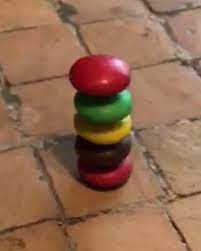
Last Thursday, my brothers and I took an overnight train from Northern California to Northern Oregon as part of an every-other-year reunion. The trip, which would take eleven hours if you drove from San Jose to Portland instead, took twice that long on the Amtrak Coast Starlight. But the meals come with the ride and everyone gets a bed and a hot shower, so it’s a cozy way to watch the world go by. In hindsight, for all the time sitting and staring out the window, we could’ve been stacking M&M’s. Just five of the colorful candies one atop the other would’ve landed my brothers and me in the Guinness Book of World Records.

Sounds easy, doesn’t it?  Buy a bag of plain M&M’s (you’ll have zero chance with the peanut variety), count out five, and let the stacking commence.  You’ll get to a tower of two quickly.  You’ll get three one atop the other with time and patience.  But that’s the proverbial end of the line, my friends.  You won’t make it to four.  If you did, you’d join the two co-holders of the former world record.  Last January, Will Cutbill, a twenty-something British engineer, pushed the record to a stack of five.

The “original” M&M’s

The history of M&M’s suggests it’s only appropriate a Brit broke the stacking record.  M&M’s were copied (and somehow uniquely patented) from British-made Smarties, the first candy where a hard-shelled coating protected the chocolate inside from melting.  Here’s another interesting M&M’s factoid.  The first “M” is for Forrest Mars, Sr., the founder of the Mars candy company.  The second “M”?  Bruce Murrie, the son of the president of Hershey’s Chocolate.  No, the companies didn’t join forces to create M&M’s.  During the wartime years of the 1940’s Hershey had a monopoly on rationed chocolate so Mars was forced to use them as their supplier.  Today, M&M’s have evolved to a “fully Mars” product.

It’s safe to say Will Cutbill wouldn’t have broken the M&M’s stacking record without the pandemic.  He was in the middle of the UK’s third lockdown earlier this year when he pondered a lifelong dream of getting into the Guinness book.  He also had a bag of M&M’s in his hand at the time.  Practice led to more practice, and as you’ll see in the video here, the record-breaking moment came as a happy, unexpected surprise.

Marawa Ibrahim – Most hula hoops spun simultaneously

Maybe you’re thinking what I’m thinking.  Why can’t one of us become a world record holder as well?  As I type, I’m munching on Triscuit wheat crackers.  I just built a stack of five on my desk.  What if I went to the store and bought several more boxes, then stacked all those crackers to the ceiling of my double-height living room?  Wouldn’t I and my Triscuits join the Guinness book as well?

Eliud Kipchoge – Fastest marathon

Not so fast, record-setting wannabes.  As you should expect, Guinness has a tried-and-true process, not only to establish world records but to decide if they’re worth pursuing.  You must submit a formal application (even if attempting to break an existing world record).  Your attempt must be deemed ethical (ex. no killing of animals).  Your attempt mustn’t be harmful to the participant (ex. excessive consumption of alcohol).  Your record must be deemed environmentally friendly.  Finally, Guinness must approve the process by which your record will be adjudicated (which in Cutbill’s case included a video instead of an in-person judge). Oh, and unless you’re willing to contribute several thousand dollars to speed things up, plan on a year or more to complete the process.

Mya-Rose Craig – Most northerly climate protest

Now you know why the Guinness book hasn’t grown to a ridiculous number of pages and entries.  The content is regularly reviewed against cultural, societal, and environmental standards.  Records even slightly in question are removed.  For example, Guinness used to list the “largest fish on record” of a given species.  Then people started overfeeding fish just to break the record.  Guinness realized this kind of manipulation was not only cruel but potentially a source of litigation, so they removed the entries.

This quick dive into the pool of Guinness World Records has me thinking my brothers and I made the right choice in not challenging the M&M’s stacking record.  We’d be better off drinking a Guinness than breaking one of their world records (yes, the beer and the book come from the same family).  Besides, how would we stack five M&M’s on a rocking, rolling passenger train anyway?  Nope, not interested in breaking world records today.  But if you don’t mind, I’ll get back to stacking my Triscuits now.

Some content sourced from CNN Business video, “Good luck breaking this deceptively tough world record”, the Guinness World Records website, and Wikipedia, “the free encyclopedia”.

Shelf Life

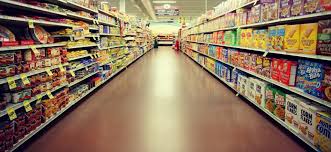
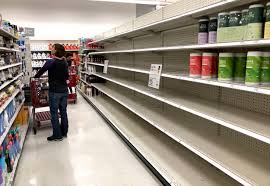
The rural neighborhood I live in hosts a Nextdoor electronic newsletter, allowing residents to post online for all sorts of reasons. (Loose animals are a frequent topic.) Today, however, one thoughtful neighbor said to look beyond first responders and hospital staff for a moment and acknowledge other workers deserving of the spotlight: grocery store employees. Talk about people we take for granted. After all, they’re keeping an eye on 20,000 different products on the shelves of the average U.S. supermarket.

I had to double-check that number to believe what I was reading.  Nielsen, the research and ratings firm not only confirmed the number but said U.S. grocery stores experienced a 4.5% decline in 2020 (so more like 18,000 products).  Shouldn’t surprise us, especially with global supply chain interruptions.  And it’s easy to remember the most popular products missing in action.  Bath tissue, cleaning wipes, and canned soup, for example.  Others however, you probably didn’t notice.  Bumble Bee, the tuna maker, reduced its product count from 300 to 225.  Progresso Soup (a personal favorite), dropped its canned choices from 90 to 50.

Now, guess what?  Bumble Bee is not only back to its 300 products but adding new ones regularly.  Progresso is back to its ninety soups and doing the same thing.  So much for the “death of variety”, huh?  And speaking of variety, did I say ninety soups from a single manufacturer?  I’d be lucky if I could name twenty-five (“tomato”, “chicken noodle”, “clam chowder”, uh, uh…)  No wonder soup gets so much real estate on supermarket shelves.

J.M. Smucker is taking a similar tack.  They make a dozen varieties of peanut butter and two dozen more of jelly but last year you had to go without “Simply Jif”, “Reduced Fat”, and “Omega 3” versions of both.  Today, not only are their PB&J’s back but Smucker has introduced “Jif Natural Squeeze” and a smaller snack version of their popular “Uncrustables” frozen sandwiches.  It’s as if the pandemic was a small speed bump en route to ever-increasing variety.

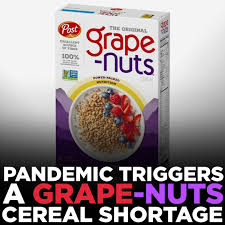
Post Grape-Nuts cereal (which earned solo attention from me in “Ever Eat a Pine Tree?“) disappeared entirely in 2020.  For a while there you couldn’t find any version of the tooth-shattering cereal on the shelves.  But now the gravel is back, and Post is making a bold move to “apologize” for last year’s inconvenience.  If you paid $10 or more for a box of Grape-Nuts from November 2020 to March 2021, Post will issue a partial refund for the “unreasonable” portion of the cost.  You need your receipt, of course.  Clever marketing there.  How many people keep their grocery store receipts from six months ago?

Speaking of bold moves, here’s one I think we should sustain; a sort of pandemic silver lining.  At many hotels “housekeeping” has been reduced to the time between stays instead of every day.  My wife and I recently spent four nights in a Marriott hotel and at no time did housekeeping enter our room.  Instead, we gathered up dirty towels and exchanged for new ones at the front desk.  We emptied our own trash.  We made the mini soap/shampoo/conditioner bottles last.  It was hardly an inconvenience.  It was also nice to know our room was undisturbed the entire time.

Similarly, dropping grocery store product totals from 20,000 to 18,000 was subtly a good thing.  We were forced to simplify our pantries and go more back-to-basics.  We cooked more.  We ate more whole foods (instead of fast foods).  Let’s hope those habits remain, even while consumer goods manufacturers crank out ever-more variety.

There’s a newish bad habit driving grocery store shelf life however; one bound to stay a while.  The percentage of snack/junk foods you’ll find is higher than pre-pandemic days.  Why?  Because working from home drives the demand.  Accordingly, you’ll find 10.9% more salty snacks on the shelves, 11.5% more energy drinks (including PepsiCo’s caffeine-laden Mountain Dew Rise), and 14.8% more pastry items.  And (most disturbingly), you’ll find 79.2% more pre-mixed cocktails.  Whoa now.  Somebody might want to post on Nextdoor for the invention of a web-based sobriety test.  They’ll make a fortune.

Some content sourced from the CNN Business article, “These foods disappeared from grocery stores last year…”, the CNN Business article, “The Grape-Nuts shortage is over…”, and Wikipedia, “the free encyclopedia”.

Sliced With Love

In ten months’ time, my daughter will be getting married. The planning of this event is sure to inspire an occasional post on this blog. My daughter is so laser-focused on the details of her big day it’s as if her hospital crib should’ve been labeled “Wedding Planner” instead of “Kelly”. Let’s pluck one item from her list today.  Or rather, taste one item.  Let’s talk about wedding cake.

Are you a fan of this grandiose dessert?  Do you revel in the wedding ceremony and the reception, but secretly count down the minutes ’til the big white cake is sliced and served?  Twenty years ago you’d be guaranteed a piece of wedding cake.  Today, the after-dinner options run the gamut.  A cupcake from a tower.  A cookie from an endless table.  Strawberries from a chocolate fountain.  Petit fours or truffles.  Cream puffs.

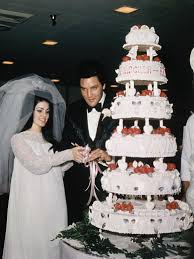
That’s some veil… er, CAKE!

Given all those temptations, I still choose wedding cake.  Why?  Because it’s not just any cake.  Wedding cake is heavy and layered and full of frosting.  It’s sinfully delicious.  Furthermore, wedding cake makes a statement, one much bigger than the generic desserts you find in the supermarket bakery.  Consider, wedding cake is:

  • white.  “Well of course it is, Dave, but so are a lot of other cakes.”  Yes, but in this case, white means pure and refined (as with the bride’s dress).  Makes that bite of cake just a little more special.
  • tiered.  It’s like several cakes in one.  Stacked with columns or not, cake tiers create an elegant display (and serve a lot of people, avoiding a cake the size of the American flag).  Don’t even think about a taste of the uppermost layer.  It’s (supposed to be) reserved for the bride & groom to enjoy on their one-year anniversary.
  • topped.  Sure, a kid’s cake can have a doll or a dump truck, or some other toy on its surface.  Birthday cakes are dotted with candles.  But only wedding cakes have true “toppers”, typically a miniature bride & groom.  These days you don’t see wedding cake toppers so much.  I’m okay with that (even though I liked the little Precious Moments couple atop our own cake).
  • fondant-ed.  Fondant is like edible wallpaper.  It’s a smooth, dense, shiny layer of sugary frosting you can roll out like cookie dough, to perfectly costume the cake, or to create flowers and other three-dimensional objects.  Fondant seems to come out of the closet just for wedding cakes.  My take?  Fondant looks a lot better than it tastes.  In other words, I’m not really “fond” of it.
  • a statement.  Think about it.  At a wedding you’re celebrating what is, at least for now, the most important day in the lives of the bride & groom.  It’s not as if this occasion happens once a year or on holidays.  It happens once.  Sit back and admire your plate for a second.  That’s an important slice of cake you’ve got there.
Gotcha!

Here’s a happy-ending wedding cake story for you.  When my wife & I got married, our hotel not only hosted the reception, but also created the wedding cake.  As we dashed away to our honeymoon they assured us they’d keep the top layer in their refrigerators.  But when we returned, there was no top layer to be found anywhere.  Maybe a waiter got a little hungry one night or something.  Anyway, without skipping a beat, they perfectly recreated our top layer at no extra charge.  One year later we enjoyed our anniversary with cake after all.  How did it taste?  Just like you’d expect a one-year-old piece of cake to taste.  We threw the rest away.

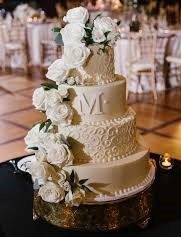
Our cake (w/ fondant latticework!)

Here’s a slice of wedding cake trivia.  It’s technically called “bride’s cake”.  Sometimes you find two cakes at wedding receptions.  The darker, shorter, more modest-looking dessert; he’s called a “groom’s cake”.  He’s meant to acknowledge more manly tastes.  Accordingly, a groom’s cake is often alcohol-infused.  Or covered in chocolate.  Or shaped like a football.  But no matter how you slice it, the bride’s cake wins out with the bigger, bolder statement.  Hmmm… guys, is there an underlying message at work here?

A groom’s cake

Heads up as I close this post.  There’s a reason I chose wedding cake as today’s topic.  This week, you and the $300 you’ve been saving for a rainy day could win a slice of Princess Diana’s wedding cake.  It’s up for auction as we speak.  It’s forty years old, wrapped in plastic and packed into an old cake tin.  One of a kind, right?  Not really.  Charles and Diana had so many guests at their royal celebration they required twenty-three wedding cakes.

No wonder there’s still a slice left.

Some content sourced from the CNN.com article, “A slice of Princess Diana’s wedding cake is going up for auction”, and Wikipedia, “the free encyclopedia”.
Behind the Wheels

Every summer when my wife and I head to the West Coast for a little sunshine and sand, the only intentional exercise we get is a walk on the beach or a dip in the ocean. So this year we decided our vacation equation needed to get behind the wheels. We skipped the flight, racked the bikes onto the back of the SUV, and drove 1,100 Utah/Arizona/Nevada desert miles to bridge the gap between Colorado and California. Now the Pacific Coast sun shines above, the Pacific Ocean waves crash below, and the bikes… well, the bikes just beckon to be ridden every day.

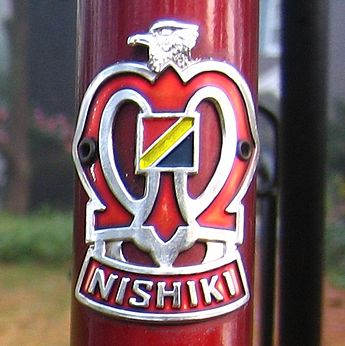
It’s already happened, as I suspected it would.  When we took our first pedal tour around this little seaside town, I saw him for a few fleeting moments.  He was a younger, thinner, blonder version of me.  He was seated confidently behind the drop handlebars of a white Nishiki Regal ten-speed, focused solely on the road in front of him.  He was dressed in Converse tennis shoes, ballcap in place of a bike helmet, white socks halfway to the knees.  When this kid wasn’t body surfing, playing basketball, or working the evening shift at McDonald’s, he was logging mile after mile on his bicycle, in search of driver’s license freedoms, even if he wasn’t old enough to have one.

My fleeting companion is the “me” of forty-five years ago.  In most respects it’s a long period of time.  In others we could be talking about last week.  Bicycling was serious thread in the fabric of my childhood.  It was a way to leave the familiar behind, to pursue esoteric wonders beyond the streets I grew up on.  Bicycling asked the questions, “Where would you like to go?” “Why?”  “And how far?”  At fifteen years old, the answers were limitless.

The Schwinn “Lemon Peeler”

My love of cycling began at a young age (and continues today in weekly spin classes at the gym).  I still remember the very first hand-me-down bike my brothers and I shared – a small blue two-wheeler with no gears, the kind you had to pedal backward to brake.  From there I graduated to a glam Schwinn Lemon Peeler Sting Ray, the all-yellow beauty with the fenders above fat tires, sporting the signature banana seat.

But my Nishiki Regal ten-speed brought bicycling to a whole new level.  I bought it myself: months of hard-earned allowance and odd-jobs cash plunked down for the biggest purchase of my young life.  The Nishiki granted me access to the more sophisticated language of bicycling; terms like “chain stay”, “saddle”, and “derailleur”, even if I couldn’t afford the Raleigh or Motobecane imports more deserving of those words.

Also, the Nishiki meant bike maintenance became a labor of love instead of a chore; a bonding afternoon with friends.  The shade of my dad’s carport colored our “workshop”, where we dismantled, fine-tuned, and reassembled over and over; my friends and I exchanging tools and advice for each other’s spare parts.  I still remember the final touch when the Nishiki was all back together: the pristine white finishing tape wrapped carefully around those drop handlebars, signifying it was finally time to ride.

I was never far behind…

One story of me and my Nishiki will always stand out.  It was all about beating the school bus home.  When the bell rang after my final class, I’d sprint to the rack, jump on my bike, and launch into the six-mile trek back to my house.  The bus meanwhile, needed several minutes to load its passengers, not to mention dozens of stops before it would’ve dropped me.  It was always a neck-and-neck battle as I’d pass the bus and then it’d pass me.  Most times I’d lose the race by mere seconds, easing up on the pedals in exhausted frustration.  But every now and then I’d get the victory.  Did some of my friends deliberately take their time exiting the bus, knowing I was in hot pursuit?  Maybe.

In 1979, a few months after I turned seventeen, a wonderful little film called Breaking Away won the Academy Award for Best Picture.  The movie centered around four friends, bicycling, and Bloomington, Indiana’s “Little 500” bike race, but it was mostly about coming of age.  Learning life’s lessons while putting the miles on the pedals.

Little wonder Breaking Away‘s lead character was named Dave.

[Note: If anything about this post resonates with you, be sure to read Steve Rushin’s Sting-Ray Afternoons.  The author’s childhood is set in Minnesota, but the growing-up memories are remarkably similar to my own.  Even the kid on the cover looks a little like me.  Steve and I could’ve been brothers.]

Some content sourced from Wikipedia, “the free encyclopedia”.

Gadgets… Be Gone!

The defining elements of the 1970s included disco music, bell-bottom pants, and really big sunglasses. You had block-long lines at gas stations thanks to the “Energy Crisis”, President Nixon’s resignation because of Watergate, and the long-overdue wrap of the Vietnam War. People preferred their clothes and cars in bright colors, their hair shaggy. I don’t remember much of this stuff, since I was only a budding teenager. But I’ll never forget my very first audio cassette tape deck.

90 minutes of songs in your pocket

You’re seeing obituaries in the news these days for noteworthy people of the 1970s.  Fifty years ago these people were generally in their thirties or forties; a reasonable age to invent something.  So it didn’t surprise me to read about Lou Ottens, who died in March at the age of 94.  Ottens was an engineer for the Philips Corporation.  Never knew him, never heard of him, but I’m forever grateful he invented the compact cassette audiotape.

[Millennials, roll back the clock on music media.  From your digital subscriptions, pass through Blu-Ray and DVD, then compact disc (CDs), until you finally land in the 1970s and the compact cassette audiotape.  If you made it to long-play (LP) vinyl records you went a little too far.]

Cassette tapes were a sensation in the 1970s because not only were they pants-pocket-portable, they were recordable.  Me and my cassette deck spent many an afternoon capturing Top-40 hits off the local FM radio station (Barry Manilow!  Helen Reddy!)  Then I’d store my precious cassettes in their little suitcase, which could hold twenty or thirty inside plastic cases.  Add in the invention of the Sony Walkman at the end of the decade (the first handheld cassette player) and you’ve got a broad overview of 1970s music media.

1970s chic

I did have a Walkman somewhere along the way, but the better memories come with my tabletop cassette deck (like the one shown here).  It lived on the desk in my bedroom, with its square speaker and giant pushbuttons, a precursor to today’s boom box.  It ate the occasional cassette tape with relish, and background noise always accompanied recordings off the radio, but my tape deck was still fairly state-of-the-art for the 1970s.  It only weighed a couple of pounds including the four C batteries.  The pop-out handle made for easy carry.

Lou Otten’s passing speaks to how many inventions, no matter how novel or cutting-edge, are sooner or later kaput.  Like the wax occupants of Madame Tussauds, you know your useful life has passed when you’d be better off in a museum.  So how about a few more inventions from my childhood years – once useful but now “almost gone”?

1960s

  • magnetic stripe card (smartphones are saying, “move over”)
  • plasma display panel (PDP)
  • handheld calculator (just ask Siri now)
  • 8-track cartridge (whoa, that’s ancient history)
  • Liquid Paper
Soon to be kaput

1970s

  • Pong (one of the earliest arcade video games)
  • floppy disk (removable computer file storage)
  • portable GPS device
  • cell phone (audio calls, nothing else)
  • videocassette recorder/player (VCRs)
“Floppy” file storage

I was just as curious to check out the decades of my parents’ childhood.  What inventions from their formative years are no longer?

1930s

  • Polaroid photography (in its original form)
  • IBM electric typewriter
  • coin-operated parking meter (now accepts credit cards)
  • drive-in movie theater (making a COVID-era comeback, perhaps?)
  • twist-tie (now built into your kitchen trash bag)

1940s

  • aerosol spray can (can we at least agree, these need to go?)
  • Slinky and Silly Putty (not today’s child’s toy of choice)
  • atomic bomb (let’s just pretend these are obsolete, shall we?)
  • lp phonograph record
  • jukebox
Early-model boombox

Last summer I went through a few neglected boxes in the garage and found a few of my old audiocassette tapes.  I keep a still-kicking boombox in the garage (for AM radio baseball games), with a dusty cassette tape player in the middle.  One afternoon I popped in one of those old tapes, pressed PLAY, and behold: John Denver was alive and singing again.  The music was as crisp and clear as 1970.

So give it up for Lou Ottens.  Not only did he design audiocassette tapes, he designed those little guys to last!

Some content sourced from the Hackaday.com article, “RIP Lou Ottens, Developer of the Compact Cassette and More”, and Wikipedia, “the free encyclopedia”.

Tale of the Little-Dog

When my son and his wife visited with their daughters last week, the consensus for dinner was hamburgers and hot dogs on the grill.  These choices were noteworthy in that I honestly can’t remember the last time I ate a hot dog.  Sweet Italian sausage?  A couple of times a month cut up into a stir-fry of vegetables.  Beer brats?  Also delicious, hot off the grill with a little mustard.  But a hot dog is child’s play by comparison.  Or should I say, a “dachshund sausage”?

It’s true.  The Germans, who by all accounts can take credit for the invention of the hot dog (five hundred years ago!) nicknamed their frankfurters “dachshunds” – or “little-dog” sausages because, well, they looked exactly like the dog breed.  The only history Americans claim is the re-nickname “hot dog”.  Even the hot dog bun – which really took hold at the Chicago World’s Fair in 1893 – points back to the Germans, who always ate their sausages with bread.

Are hot dogs a staple in your diet, or like me are they simply a distant memory?  If they weren’t hot off the grill in the backyard or at a summer picnic, perhaps you had one at a baseball game (but not so much football or basketball, go figure).  You’ve probably also seen hot dogs on the midway at carnivals and county fairs.  Wherever you get your franks today, they’re just not as likely to come from established restaurants.

In the 1970s, America seemed to have hot dog stands on every corner.  The most popular of these was the distinctive drive-thru Der Wienerschnitzel’s, but you also had – at least from my California-based memory – Pup ‘N’ Taco, Ben Franks, Tail o’ the Pup, and the walk-up Hot Dog on-a-Stick booths you’d find at amusement parks.  Today’s retail hot dog is at a Sonic Drive-In or the food court at Costco.  If you live anywhere near New York’s Coney Island, you can also include “Nathan’s Famous”, or at least the annual hot dog eating contest of the same name.

A hot dog may be “a cooked sausage eaten in a long, soft piece of bread”, but its secondary meanings are less definitive.  “Hot Dog!” is something you used to say when you were VERY happy about something else (“used to”, meaning sixty or seventy years ago).  A “hot dog” is also a person “who makes fast, skillful movements in skiing, snowboarding, or surfing to make people notice them”.  That last definition still stands.

Speaking of “used to say”, we also used to sing about hot dogs, didn’t we?  Oscar Mayer’s jingle convinced us we should BE hot dogs (so everyone would be in love with us).  But the better song came from Armour, which asked us what kind of kids eat Armour hot dogs?  Per the lyrics, “…fat kids, skinny kids, kids that climb on rocks… tough kids, sissy kids, even kids with chicken pox…”  Today’s version of the Armour jingle would probably be censored just for using the word “kids”.

“I wish I had a million dollars. HOT DOG!” (Courtesy of Paramount Pictures and “It’s A Wonderful Life”)

Hot dogs will always be a childhood memory more than a dietary preference in my book.  My mother, raising five hungry boys, developed several dinner recipes when time and ingredients were in short supply.  These included canned baked beans and weenies (two ingredients = dinner!), and a truly odd creation from the Betty Crocker cookbook made up of hot dogs, mashed potatoes, and cheese (three ingredients!).  Whether it tasted good or not – I honestly can’t remember – dogs, mash, and cheese conveniently covered the protein, carb, and fat categories, all in one broiler-blasted casserole.

The Oscar Mayer “Wienermobile”

My most vivid childhood hot dog memories are not the dinners mentioned above.  Instead, I can’t forget snacking on raw hot dogs from the refrigerator (which sounds awful now, but hey, I was a kid).  My mother was faithful to the Oscar Mayer brand so I ate a lot of their hot dogs raw.   Speaking of Oscar Mayer, here’s the better memory.  They built a motorized advertisement which to this day may be the coolest vehicle on wheels.  The “Wienermobile” cruised the streets of Los Angeles, stopping every now and then in a parking lot so you could view it up close.  The driver handed out tiny plastic replicas of the vehicle, appropriately labeled “Weenie Whistles”.

(Courtesy of Walt Disney Pictures and “The Santa Clause”)

Let me conclude with a solved hot dog mystery.  Your grocery store sells most brands in packages of ten.  They also sell hot dog buns but in packages of eight.  Why?  Because hot dogs weigh about 1.6 ounces, which makes a package of ten a convenient sale of exactly one pound of meat.  On the other hand, hot dog buns are baked in trays of four, which work best with conveyor belts and processing.  An odd number of buns – trays of five – is a model of inefficiency.  So until one or the other manufacturer changes their standard, you’ll always have leftovers for snacks.  Or better yet, for your dog.

The hot dogs I served my granddaughters last week were comically advertised as healthy: no fillers, no preservatives, and so on.  They weren’t very good.  Maybe the worst part of a hot dog is what makes it taste so good?  Or maybe hot dogs have simply lost their appeal to me?  No, wait, that can’t be true.  Anything my granddaughters ask me to eat has instant appeal.

Guess I haven’t eaten my last little-dog sausage just yet.

Some content sourced from the National Hot Dog and Sausage Council (NHDSC) website, and Wikipedia, “the free encyclopedia”.
Springtime Rings

My daughter drops little hints on our phone calls recently, teasers to suggest her boyfriend will soon pop the proverbial question. If he does propose, her left hand will be adorned with an engagement ring and she’ll become – literally – a marked woman. She might as well sport a little neon sign on her ring finger blinking, T-A-K-E-N.

While my daughter gets excited about her potential Ring by Spring (Hallmark Channel movie, March 2014), I glance down now at the gold band I’ve been wearing for the last thirty-four years.  My wife and I decided a plain ring wasn’t enough of a statement for wedded bliss so we chose one with seven inset diamonds across the top.  Now that I think about it, those seven gems might as well broadcast M-A-R-R-I-E-D.

My ring

Over the years, I’ve grown fond of the string of bling inside my ring.  It’s a unique setting and the diamonds draw compliments.  But credit to my wife, there’s purpose behind the glitter.  She gives me her coy smile and declares, “When you’re walking down the street by yourself, the woman with her eye on you a block away will easily know you’re married”.  A block away?  That’s pushing it, but my diamond shine certainly does seem to advertise M-I-N-E.
Speaking of the opposite sex, Irwin Shaw, a playwright and author from the early 1900’s, wrote a short story that seems appropriate here.  It’s called The Girls in Their Summer Dresses.  Shaw puts us on the streets of New York City on a beautiful day, where a married couple is going for a walk.  The husband keeps getting distracted by every pretty girl passing by and his wife calls him out on it.  Their conversation over drinks after – and his closing thought – make for an interesting perspective on marriage.  You can read The Girls in Their Summer Dresses here.

Claddagh ring

I can’t talk about my daughter’s forthcoming engagement ring and my own circle of gold without including a ring of my wife’s.  No, not her wedding band (though it’s a beaut’) but rather a Claddagh ring she’ll receive from Ireland in the next few days.  As we learned when we visited the Emerald Isle (and also from the Hallmark Channel – As Luck Would Have It, April 2021), the Claddagh ring includes symbols of love (heart), friendship (clasped hands), and loyalty (crown).  Wear the ring facing one way to show you’re single and looking for love.  Wear the ring the way my wife will, to show you’re already “captured”.

“Eternity” ring

So there’s one more ring for love out there in jewelry shops (and it’s not a “promise ring”, which doesn’t count for much of anything).  Ever heard of an eternity ring?  It’s a band of precious metal with little gems all the way around the circle, to symbolize “never-ending love”.  Talk about a bauble.  Women describe it as “cumbersome”, and rumor has De Beers came up with the concept to justify a large purchase agreement with Russia for small diamonds.  My wife will never get an eternity ring from me.  Our vows included a nod to her wedding ring as “a forever sign of my love and fidelity”.  See?  I’ve got “never-ending” covered already.

My newsfeed included a recent wedding proposal in Atlanta, where the groom-to-be took his bride-to-be on a helicopter tour of the city, then promptly dropped to one knee on top of the skyscraper they landed on.  When he popped the question he opened a box of five engagement rings.  Seriously?  I hope the guy my daughter will marry is way more decisive than that.  Commit to just O-N-E, son, kind of like you did when you chose my daughter.

Some content sourced from the CNN.com article, “Man tops off helicopter proposal with five engagement rings”, and Wikipedia, “the free encyclopedia”.