A Pricey Drive down Memory Lane

We sure love our pets, even long after they’ve moved on from this world. When we lost our Saint Bernard last September, after eleven memory-filled years together, we kept reminders of him around the house. Remy’s ashes now lie in a stately wood box up on the fireplace mantle. His leash still hangs by the back door, as if we’ll take him for another walk in the neighborhood. And the kids gifted us framed photos of our favorite moments with him. Having said all that, I never expected this under the Christmas tree…

No, this isn’t our Remy. Well, okay, it is Remy but not in the “fur” (so to speak). Instead it’s a remarkably accurate likeness based on digital photos… and it serves as a head cover for one of my golf clubs. The double-takes I get on the driving range are priceless. Those puzzled expressions from other golfers beg the question, Wait, where’s the rest of the dog?
If these doggy head covers really get popular, I’d love to see future versions get a little animated.  Along with the photos, send in an audio file of your dog’s bark.  Then design the mouth to open and close on cue.  Remy may have been a “gentle giant” but man he had a ferocious bark.  Talk about a great way to say don’t touch my clubs!

If I had any concerns about the money my wife spent on my Remy head cover, I’ve gained some perspective to make me feel better. Forget about golf clubs for a moment. Did you know you can now have your car customized as a memorial to your beloved pet?
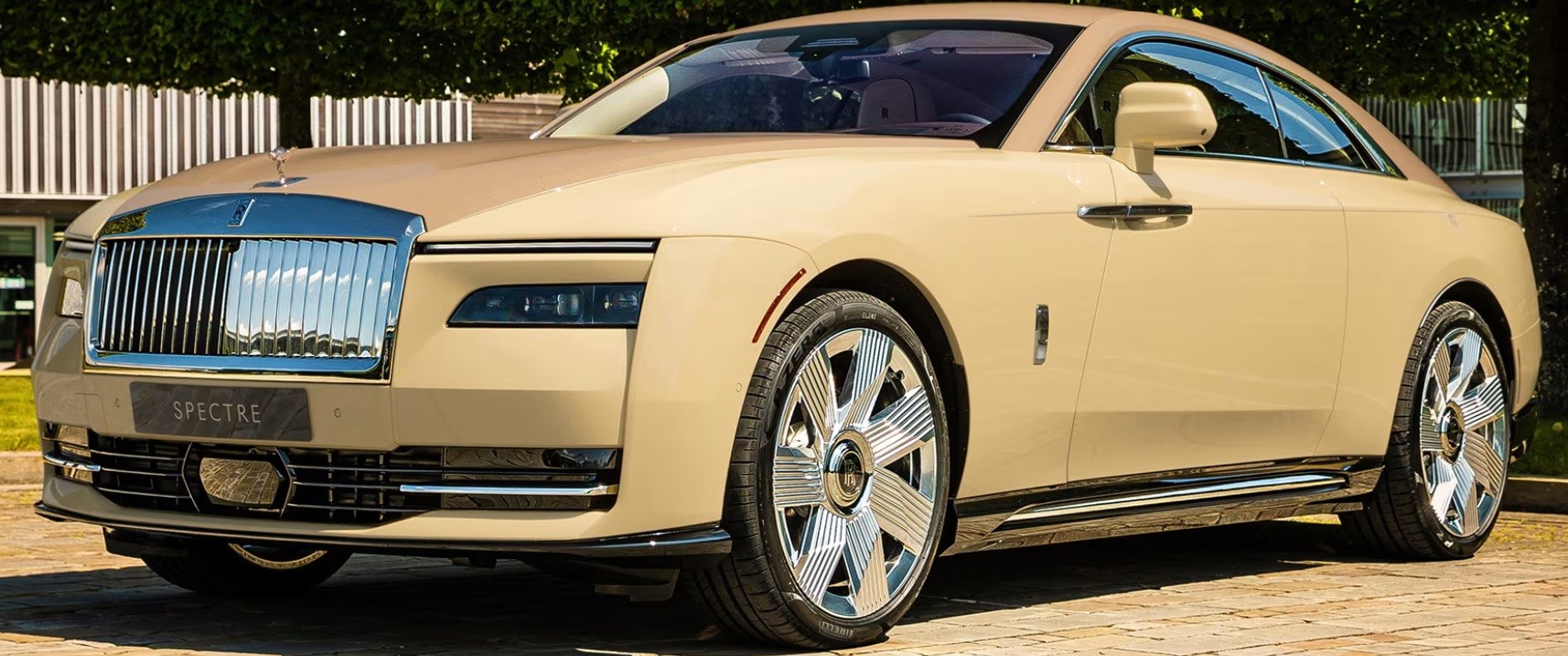
“Golden Retriever brown”, anyone?

It’s safe to say I will never own a Rolls-Royce.  Even if I had the money for one I can easily come up with a dozen ways I’d rather spend that much dough.  But the car-as-your-dog thing is apropos for those who have way too much money in their paws.  Consider, you’re already spending upwards of $500K on the car itself so why not put another $100K into it for personalization?

Your dog in the details

The options for customizing your Rolls border on the ridiculous.  You can choose the paint color to match your dog’s coat.  You can have his image created in intricate wood veneer inlays between the seats.  His paw prints – authentic reproductions of course – can be used to dot the pinstripes (which is nowhere near subtle with a paw the size of a Saint Bernard’s).  And the possibilities with the leather seats are endless.

Candidly, when your world includes a Rolls-Royce the word “customization” really means anything you want.  You begin in the lobby of a design studio, which is an unmarked ultra-secure building in downtown Manhattan.  You’re escorted upstairs by an armed security guard.  You then sit down to a team of consultants to fine-tune every little canine detail.  Now walk away and let the Rolls-Royce crew create your personalized masterpiece.  Time and money are no object so neither is negotiated.  All that matters is having your dog in the details.  And if you’re so inclined, those details can include real gold in the paint job.

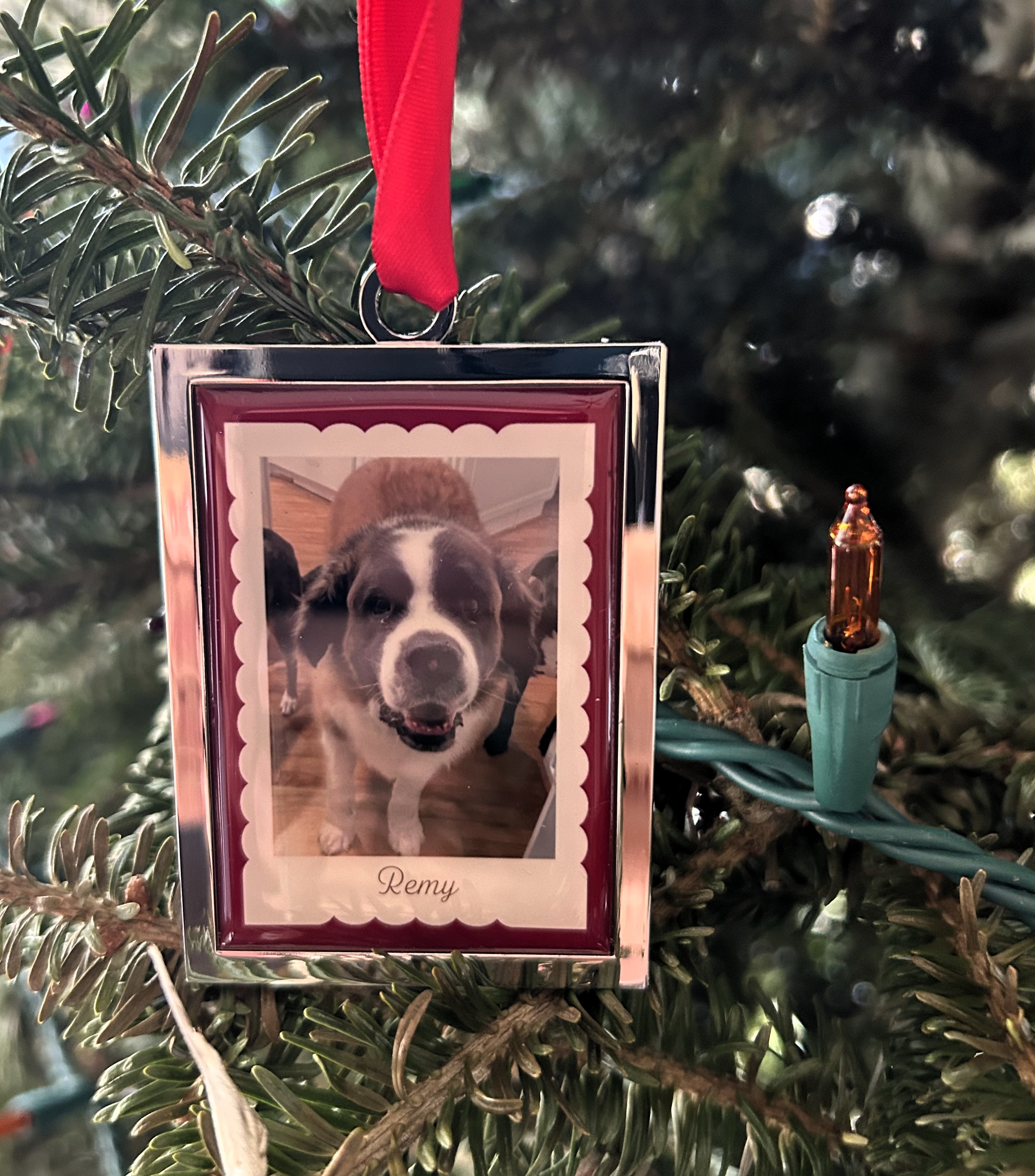
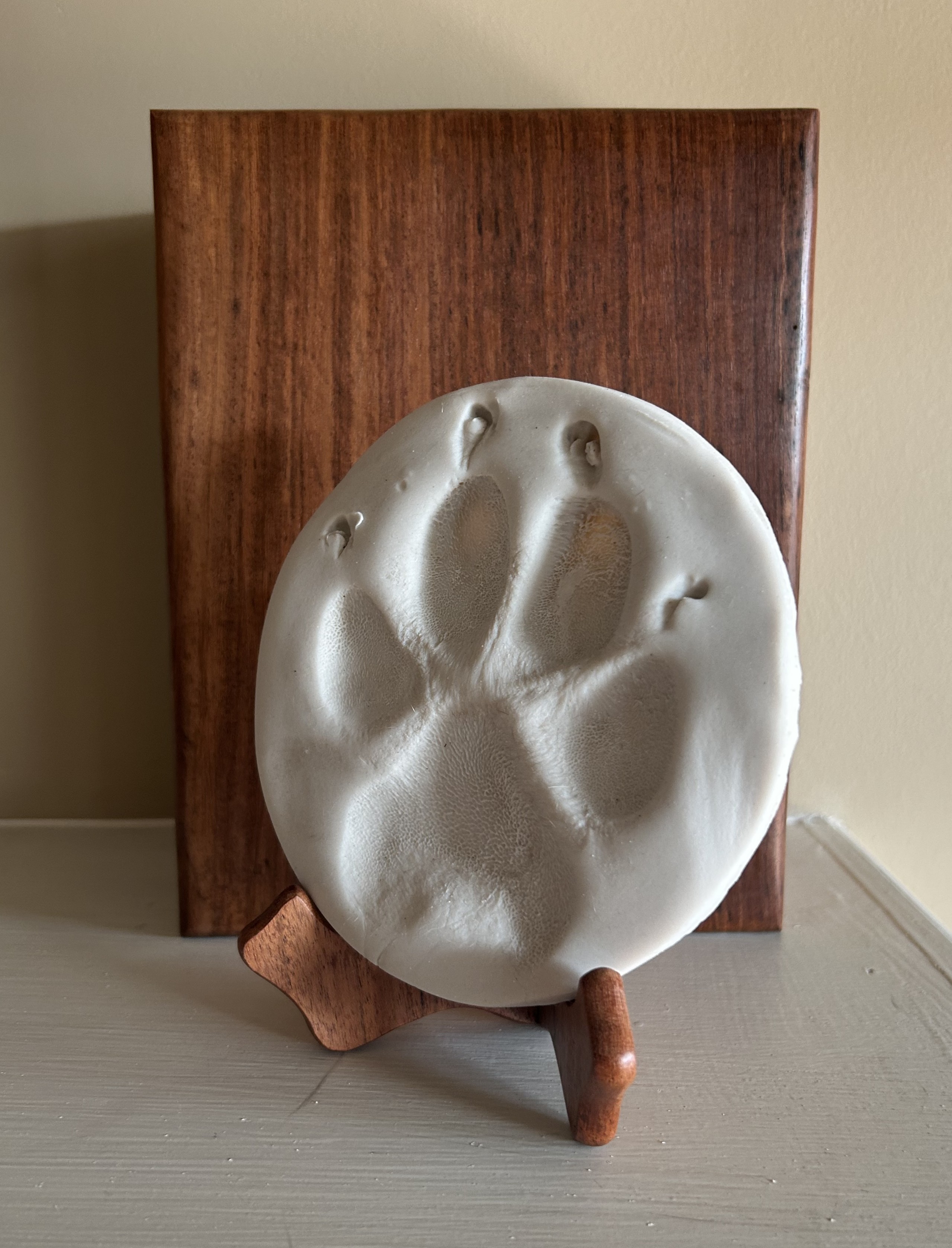
As much as this makes for a good blog topic, I’m no fan of excess.  If I’m spending six figures to embellish my vehicle with remembrances of my dog, I’ve lost all sense of fiscal responsibility.  No thank you.  I’ll limit my purchases to those little framed photo ornaments from Shutterfly or wood cuts like this one. 

One of these days my wife and I will take down the wooden box of ashes and put away the photos of our beloved Remy.  Even the golf club head cover is bound to deteriorate at some point.  When all that happens, I hope I can still picture our good ol’ boy in my mind.  Otherwise I might be telling myself, I should’ve bought a Rolls-Royce!

Some content sourced from the CNN Style article, “Want your Rolls Royce to match your pet Labrador?…”.

Where The Buffalo Roam

In southwestern Alberta, Canada, there’s a historical landmark curiously named “Head-Smashed-In Buffalo Jump”. It’s the former location of a vast communal bison trap. Thousands of years ago native hunters would drive herds of the roaming animals over the plains and then right over the adjacent cliffs, in what is described as “the single greatest food-gathering method ever developed in human history.” The buffalo aren’t running in this part of Canada anymore. They’re no longer running in Boulder, Colorado either.

In case you missed it, the American college football season kicked off last Saturday… in Dublin, Ireland.  Kansas State played Iowa State in a converted rugby stadium in front of a sell-out Guinness-filled crowd.  A roving reporter took to the streets to ask locals what they knew about the American game and the answers were wonderfully ignorant.  How many points is a touchdown? (“4?”)  Name any American college football team (“Yankees?” “Dodgers?”)  And then my favorite: What is Kansas State’s mascot? (“A tractor?”)  Not a bad answer if you ask me.  I’d guess there are more tractors than wildcats in Kansas.

Ralphie’s run

Speaking of wild things, let’s get back to Boulder.  The University of Colorado (CU) boasts one of the few live animal mascots in college football: a full-grown snortin’ stompin’ buffalo named Ralphie.  Before each half of the home games Ralphie is released from her trailer on the sidelines (yes, Ralphie is a “her”) to run a horseshoe lap around the field at full speed, before her five handlers corral her back into the trailer.  It’s the stuff of rodeos, and more than a few handlers have eaten dirt in the process (but at least they earn a varsity letter for their efforts).

Ralphie is actually the sixth live buffalo to represent CU since the mascot was selected in 1934.  But Ralphie VI – aka “Ember” – has a singular distinction.  She’s just not into the run.  Whereas her five predecessors ran for at least ten seasons each, Ember decided to call it quits after just three.  The University officially called it “indifference to running” and cut Ember from the team so she could spend the rest of her days roaming in pastures.  Maybe Ember’s thinking she’s going to go over a cliff every time she runs.  Can you blame her for hanging it up?  No word on whether Ralphie VII is up for the task.

At least CU has a ferocious mascot, one a fan would associate with the Colorado surrounds.  Like Texas’s Longhorn or Florida’s ‘Gator, you want a mascot that speaks to your particular locale and does so with a confident puff of the chest.  But instead, a lot of America’s college football mascots have you thinking either lightweight or what the heck is THAT?

Don’t mess with Texas!

Cases in point.  If I pull up this year’s top college football teams, I guarantee I’ll find several to underscore my point.  And I am right.  Ohio State’s mascot is a buckeye (which is a tree, and not a very ferocious one at that).  Georgia’s is a bulldog, described as “loyal, gentle, and affectionate”.  Oregon’s is a duck (A duck!)  Alabama is known as “the Crimson Tide”, which was a reporter’s colorful spin on a long-ago game played in the mud (and not a mascot at all).  Finally, Arizona State’s is a Sun Devil, which better belongs on Saturday morning cartoons than Saturday afternoon football fields.

On the other hand, you have the Penn State Nittany (Mountain) Lions, the Michigan Wolverines (don’t mess with wolverines), the South Carolina Gamecocks (don’t mess with those either), and the Miami Hurricanes (not an animal, but points for ferociousness and local flavor). Any one of those deserves to stand side-by-side with a live buffalo.

Notre Dame’s leprechaun

As much as I’d like leave this topic with Ember the Buffalo and her chest-thumping buddies, I sheepishly include one more: my beloved alma mater Notre Dame.  We at Notre Dame are the Fightin’ Irish, because our football teams (at least those from the early 1900s) showed “the grit, determination, and tenacity characteristic of Irish immigrants”)  That all sounds great until you see our mascot: a leprechaun who looks like he’s taking a break from the Lucky Charms cereal box.  Is there anything less ferocious and less “state of Indiana” than that?

NOW we’re talking!

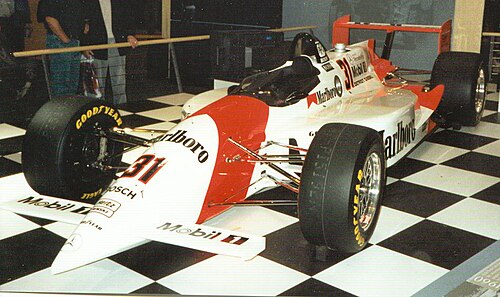
If it were up to me, Notre Dame’s mascot would be an open-wheeled, open-cockpit IndyCar (VROOM! VROOM!), the kind they race every year at the Indianapolis 500 just four hours south of campus.  An IndyCar toughs out a jigging leprechaun by a mile, not to mention an indifferent buffalo who’d rather roam than run.  I still say, good on you for choosing to head out to pasture, Ember.  I wish the Notre Dame leprechaun would tag along.

Some content sourced from the Athabasca University Press article, “Imagining Head-Smashed-In”, the CUBuffs.com article, “Ralphie VI retires”, and Wikipedia, “the free encyclopedia”.

Tripping on Trips

I should pay more attention to the actual cost of things. A movie ticket is fifteen dollars… until you add in concessions, preferred seating, and online processing. A dinner out can be reasonable… until you add in the taxes and tip. And rental car companies add so many fees to the base rate it’s like you’ve just been bumped to a new tax bracket. With that in mind let’s visit the airport today, or more specifically, getting to the airport.

How do I get here?

Flying is expensive; always has been.  But it’s easy to overlook the cost of the airport itself.  Maybe you already know, a portion of the ticket you just bought goes to a landing fee (LF) – what the airline pays the airport for the privilege of pulling up to the gate.  Maybe you also know another portion goes to a passenger facility charge (PFC), which supposedly goes to improvement projects in the name of airport safety and security.

I don’t trust PFCs.  I think they really go to things like art exhibits, children’s play areas, pet relief areas, and smoking lounges.  I mean really, how much less would that plane ticket be if all you had for an airport was a ticket counter, some security and restrooms, and a gate to board your plane? 

You pay dearly for this space

The airport needs more than LF’s and PFC’s to pay its bills, of course.  It’s the reason you pay so much for parking.  I mean, think about it.  Once the parking garage is built it requires little to operate.  Mechanical systems and a few employee salaries yes, but certainly nothing in the neighborhood of say, $30/car/day.  Which brings me to my current conundrum.

By taxi? Cost-prohibitive

Most of you don’t have the following challenge.  When you fly, you’re close enough to the airport to where you can get a ride from a friend or take mass transit.  Me?  I have a choice of three major airports here in the South… but each of them is a two to three hour drive from my house.  Which begs the question, how does Dave get from his house to the airport and back for the least amount of money?

  1. Simple but Expensive.  Dave drives his car to the airport, parks, and drives his car back to his house after he gets back.  Works for short trips but what if I’m gone for three weeks (starting next Saturday)?  Parking at Atlanta-Hartsfield is $30/day (and that’s long-term). Throw in a tank of gas for the car and I’m north of $700 just for the airport to/from.
  2. Simpler but Even More Expensive.  This idea unexpectedly sent me in the wrong direction (financial, not travel).  I put in for a quote for car and driver from a service right here in our little town.  They got back to me almost immediately.  Little did I know my car is a limo and my driver wears a tuxedo.  My wife and I can “sit back and enjoy their ride” for $520 each way.  Gratuity not included.
  3. Slightly Less Expensive.  Here’s a fun option/comparison.  Drive to nearby (tiny) Augusta Regional Airport and fly to Atlanta.  The two round trip tickets plus parking?  Less than the cost of the drive and parking at Atlanta. If flights out of Augusta were ever on time I might actually consider it.
  4. Clever But… Drive to nearby (tiny) Augusta Regional Airport, rent a car, drive to Atlanta, and return the car.  Repeat the procedure in reverse when I return.  No.  The rental car companies want $300+ for Augusta to Atlanta.  Multiply that by two to get back home.
    By shuttle? “Cozy”
  5. Less Expensive but More Cozy.  We have shuttle services nearby; van companies where you share the ride to the airport with strangers.  $200 gets us the trip to Atlanta and back.  Okay, but now we’re driving our car just to get driven by a van just to get flown in a plane.  Seems like a lot.  And you leave when the shuttle service says you leave; not when you really want to.

Five solutions in and I still haven’t made it to Atlanta with any sense of fiscal satisfaction.  I’m starting to think I should just skip the airplane and drive all the way to our destination.  Or ride my bike with a pile of luggage on my back.  But wait!  There’s always 6. Entirely Less Expensive.  Convince local son-in-law to drive us to Atlanta (and back).  He can’t charge me more than the options I presented here, can he?  Er, not if he doesn’t read this blog post first.  I better call him… stat.

Up, Up and Away Birthday

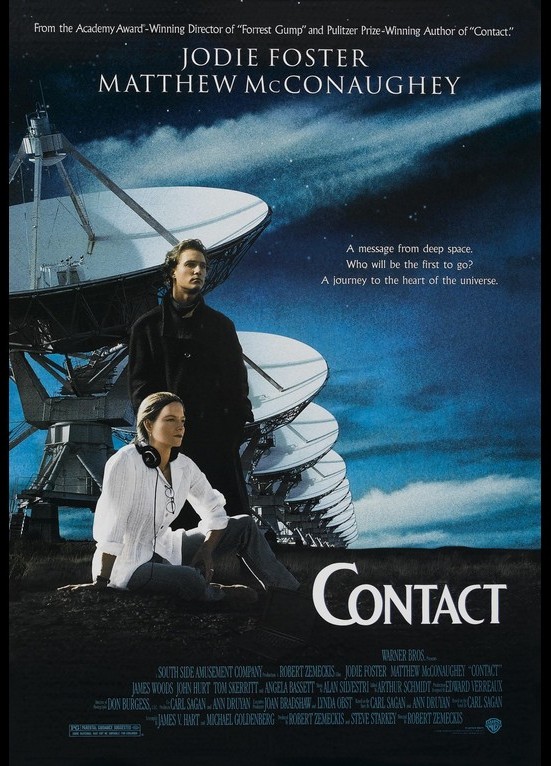
One of my favorite lines from the science-fiction classic “Contact” (starring a young Jodie Foster and and even younger Matthew McConoughey) comes from one of the lesser-known characters. Foster’s Dr. Arroway discovers a communication stream from beyond Earth, while an anonymous millionaire funds the spaceship capable of traveling to the source of the signal. The donor then turns to Foster’s character with a smirk and says, “What do you say, Dr. Arroway… wanna take a ride?”  This year, the same question was posed by the (good) people at Goodyear.

Wingfoot Two is a “semi-rigid airship”

In a nod to my advancing age, the Goodyear Blimp turned 100 on Tuesday (or I should say, one of the Goodyear Blimps).  “Pilgrim”, Goodyear’s dirigible based in Akron, Ohio, took it’s first flight on June 3, 1925.  Now Goodyear can claim a hundred years of lighter-than-air travel, even if this noteworthy form of transportation never made it to the masses.

To be clear, Goodyear started with rubber, and then tires.  They manufactured tires for bicycles and carriages back in the day as well as horseshoe pads and poker chips, before Pilgrim first took to the skies.  Sure, you’ll find their products on vehicles everywhere but what comes to mind when I say “Goodyear”; tires or blimps?

The Goodyear Blimp of my childhood

I choose blimps.  I grew up just thirty minutes from Goodyear’s blimp airbase in Carson, CA.  The blimp I saw back in the ’60’s and ’70’s was named something like “Puritan” or “Reliance” or “Defender”, because Goodyear honored the sailboat winners of the America’s Cup.  Not today.  Thanks to a public naming contest the blimp down the street from my childhood neighborhood is named “Wingfoot Two”.  (I prefer the America’s Cup names instead.)

Maybe you also choose blimps because you drive on Michelins or Firestones.  More likely it’s because you’ve seen a blimp buoyant over the Super Bowl or other sporting event.  And speaking of football, if the Goodyear Blimp sets down on the field it covers 80% of the yardage.  That’s one big balloon.

“LZ 129 Hindenburg”

Goodyear’s flying machines of my childhood were literally balloons filled with helium, without any of the technology of today to make them easier to steer.  Coincident with middle-school history class, whenever I’d see the blimp I’d think of Germany’s Hindenburg, the Nazi propaganda passenger dirigible that, like the Titanic, is best known for its final flame-filled disaster, on approach to Lakehurst Naval Air Station in New Jersey in 1937.  Perhaps we should be thankful Goodyear never promoted its blimps as a form of mass transportation.

Also in my childhood, blimps offered a far more romantic image in the movie Chitty Chitty Bang Bang, where a colorful zeppelin traveled here and there over the fictional country of Vulgaria, carrying the villainous Baron Bomburst and his crew.  (And here’s my opportunity to distinguish between terms.  A zeppelin has more of a cylindrical shape, while a blimp looks more like a sausage.  A dirigible? Just a general term for an airship.)

Speaking of sausage, it was inevitable someone would open a sub sandwich shop named after the aircraft.  The Blimpie franchise (“America’s Sub Shop”) began in the 1960s, spread to locations around the world, and enjoyed a good fifty years of success.  Today most of the helium has left their balloon.  There are only about 25 Blimpie stores left in the U.S. (compared with almost 20,000 Subways).  IMHO Blimpie’s was the better product, at least the version I remember from the 1990s.

Oh how I wish I could’ve concluded this post with another wanna take a ride?  You and I missed the boat, er, airship on that opportunity.  Goodyear held a contest at the start of 2025 and leading up to Pilgrim’s birthday, where three lucky passengers won a blimp ride.  I say “lucky”, when in fact my fear of heights takes away any personal appeal to float up, up, and away.  No worries, because now I’m thoroughly distracted by hunger pangs.  Think I’ll hunt me down a “blimp sandwich”.

Some content sourced from IMDb,  “the Internet Movie Database”, and Wikipedia, “the free encyclopedia”.

My Unforeseeable Future

In the not-so-distant year of 2062, forecasters predict we will have perfected the invention of “nanofabricators” – machines capable of producing food, clothing, electronics and such, not from assembly-line parts but from the very atoms of those parts. It’s a mind-blowing concept: technology that creates virtually anything by manipulating the structure of raw materials at the molecular level. Too bad I won’t be around to see it.

Is it making your dinner?

When you reach your mid-sixties, the harsh reality is that predictions of what life on Earth will look like in the future focus on a period of time beyond the years you’ve been given.  The experts tend to look fifty years ahead or more, so, sorry Dave, you just won’t be here when all these wonders take place.  It’s a little strange to think about a world without you in it.  Sure, you can also imagine the years before you were born, when your parents and grandparents were living life without you, but those were simpler times devoid of the technology we take for granted today.

Driver’s license not necessary

Consider self-driving cars. Fifty years ago I was a teenager and couldn’t wait to get my driver’s license (the very definition of “freedom” back then). But had you told me, “Hey Dave, you’re not going to need that little card in fifty years because cars will drive themselves”, I would’ve given you a strange look and accused you of watching too many science-fiction movies. Yet here we are.

I hit on this topic today because I’m still processing the fact we have humanoids who can run half-marathons (my post from last week).  When the world’s technology exceeds your expectations, you push the pause button and wonder if you’re getting left behind (or just getting old).  Am I suddenly more inclined to believe those fifty-year forecasts?  You bet I am.  And nanofabricators are just the tip of the inventive iceberg.

Ping-pong partner

Nanobots (does everything in a post-Dave world start with “nano”?) are in the works as well.  A nanobot is a robot so tiny you might not be able to see it with the naked eye.  I was introduced to the concept in Michael Crichton’s sci-fi novel Prey.  Imagine a pile of nanobots sitting in the corner of a window in your house.  Once a day those nanobots spill out over the glass like a wave, consuming any dirt or other matter like little vacuums.  Perfectly clean windows!  Of course, “Prey” takes the technology in a more sinister, out-of-control direction and a bestseller is born.

[Blogger’s note: You’ll find “nanobot” in your favorite online dictionary. At least in some lab environment out there, nanobots are already here.]

With Prey in mind, Hollywood isn’t helping us to embrace these fifty-year forecasts.  Virtually every movie (or book) about yet-to-be-here technology takes the concept in a not-so-nice direction. (The Terminator comes to mind.)  The fact is, nobody’s going to buy a ticket just to watch a happy application of future tech on the big screen.  Something always has to go “worng” (to quote Westworld).

I hope you’ll be around in fifty years to see and experience some of the wonders our forecasters predict today.  Brace yourself: you’ll have a “wearable” of some sort (watch, eyeglasses, implant).  One of you will have bionics in a limb or organ that wasn’t functioning properly.  Some of you will live up in space or deep down in the ocean instead of on terra firma.  It’s a wonderous world I’ll never get to see, but I’ve made peace with it.  At least I won’t be around in 2182, when Asteroid Bennu (we name asteroids?) will be on a collision course with Earth.


LEGO Notre-Dame de Paris – Update #14

(Read about the start of this “church service” in Highest Chair)

The service is rapidly coming to a close. I sense the inevitable benediction and dismissal of the congregation as our work on LEGO Notre-Dame de Paris wraps up. The remaining pieces in Bag 28 brought the cathedral’s bell towers to an even (if not finished) height, while Bags 29 and 30 – of 34 bags of pieces – added more detail to those towers, as well as some elegant structure above the transept doorways.

Bell tower detail

We worked high off the ground today; quite a bit higher than the roof line of the cathedral. My shaking fingers had a sense of vertigo as I added the little drainpipes, railings, and such you see here. I imagined one of those towering mechanical cranes dropping the LEGO pieces into place until, of course, I remembered I was working in the thirteenth century. The word “crane” hadn’t even been invented yet.

Again with the missing pieces.  For the first time since I laid the cornerstone I thought I threw a piece away, along with the plastic bag it came in.  I searched in vain on my office desk, only to decide I’d be going through the garage trash later on.  Then lo and behold, just as I was completing today’s build, there sat the missing piece right in front of me as if to say, “What the heck is wrong with you?  I was right here in plain sight!”

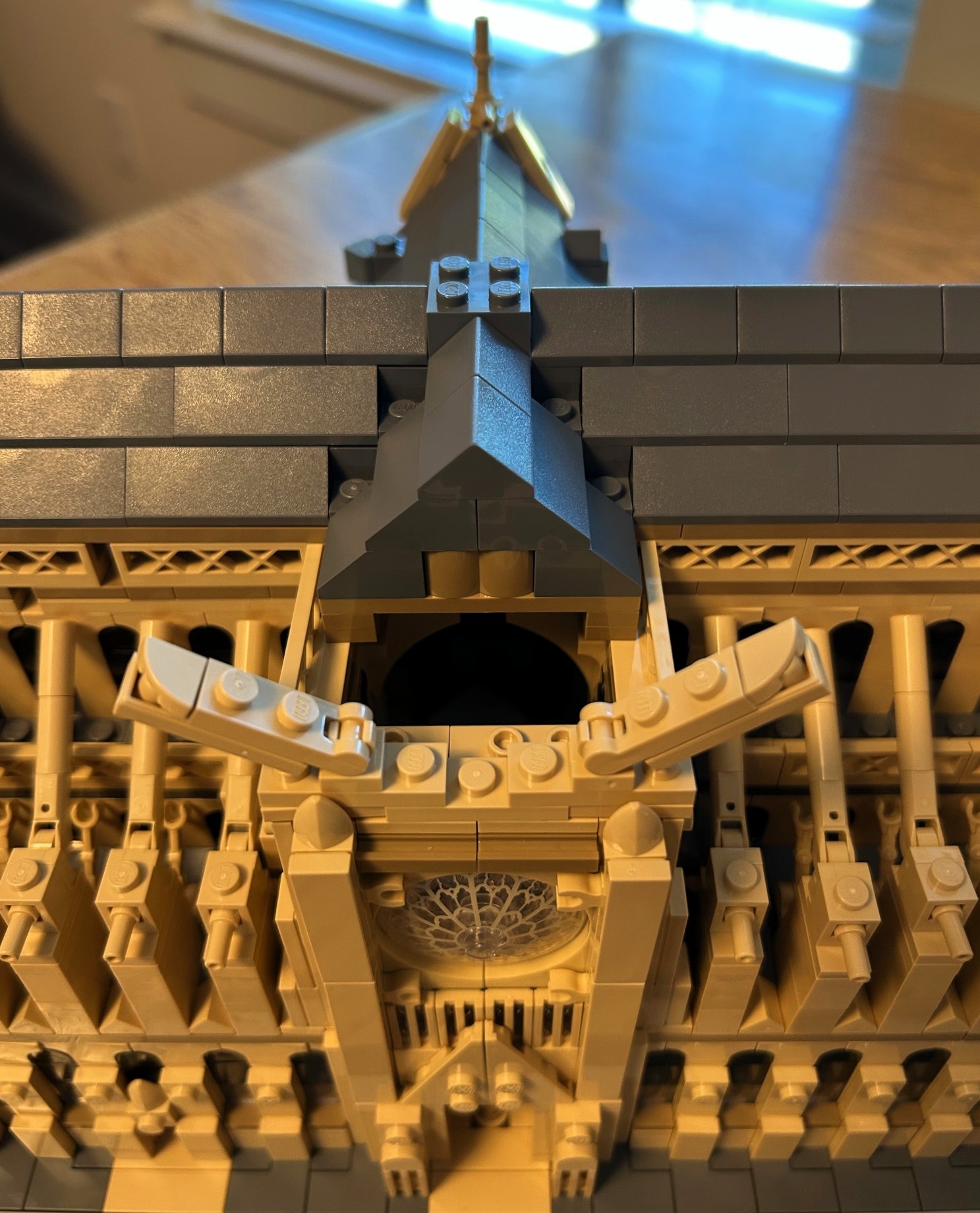
My hat is off to LEGO’s engineers today.  Look at the process above where I completed the structure above the transept doorways.  Those two long LEGO pieces in the first photo are designed to hinge open, simply to allow easier placement of the central cap piece in between.  Then you close those long pieces around the cap like a hug and voila – second photo – the transept is complete.

Our work really is almost done.  Just four small bags of pieces remain – two for the top structure of the bell towers (and a little ornamentation around the cathedral roof), and two for landscape elements to soften the edges of the model.  Don’t walk out of the sanctuary just yet.  The final product includes a surprise!

Running build time: 13 hrs. 58 min.

Total leftover pieces: 40

Some content sourced from the FutureTimeline.net website, the CNN Science article, “Near-Earth asteroid Bennu could hit Earth in 157 years…”, and Wikipedia, “the free encyclopedia”.

(Not) Making Cents

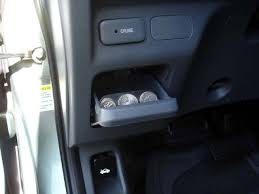
The other day when I drove into town I felt a sneeze coming on, so I reached into my car’s pull-out coin drawer and grabbed a handkerchief. If I’d wanted a breath mint for my mouth or an eye drop for my contacts I’d reach into the same place. But I wouldn’t find quarters, dimes, nickels, or pennies anywhere in there.  Come to think of it, someday soon I won’t find pennies anywhere at all.

You probably caught the headline in your news feed.  The population growth of U.S. pennies is about to come to a grinding halt.  Our country will no longer mint shiny new “Lincolns” for the first time since their debut in 1787.  Two hundred years and change (ha) is a darned good run for a coin but the penny appears to have been done in by compelling arguments.  One, the production cost is three times the face value.  And two – and perhaps most humiliating – the penny’s face value has descended into, well, obsolescence.

There was a time not so long ago when I wouldn’t pass up a lost penny lying in the street.  In addition to “free money” there was the old adage find a penny pick it up, and all day long you’ll have good luck.  Today you’d better settle for just the luck because you can’t buy anything for pennies anymore.  You’d be better off using them for more practical purposes like checking your tire tread depth or turning screws.  My brother and his wife turned thousands of their pennies into a beautiful, copper-colored floor for their kitchen.

Losing their shine

Speaking of copper (I’m easily distracted today) I had no idea pennies are no longer made of copper.  They’re primarily zinc because of the rising cost of metals (yet they still cost three cents apiece?)  You’d assume quarters, dimes, and nickels were made from an alloy of silver, lead, or aluminum, but – go figure – those coins are primarily copper.

Enough with the facts.  I’m bummed to see the penny put out to pasture.  Along with it goes a ton of childhood memories.  You could roll pennies into coin wrappers and enjoy the thrill of exchanging the whole lot for paper bills at the bank.  You could drop them into handheld banks for untold savings (and my banks were delightfully mechanical).  Finally, you could walk into any 7-Eleven or drug store, hit the candy aisle, and find several “penny candy” choices.  A chunk of Bazooka bubble gum, hard candies, or licorice whips could be purchased for just a few cents back then.

Three cents each… a long, long time ago

Practically speaking I’m on board with the penny’s retirement, because I can’t recall the last time I involved a cent in a financial transaction.  If something costs $9.99, are you telling me you’d reach into your pocket and pay the $9.99 in cash and coin?  Nope, you’d more likely hand over a ten-dollar bill and then what happens?  You get a penny in return.  What are you supposed to do with that?

Certain sayings will have to head out to pasture as well.  An expensive item can no longer be described as “a pretty penny”.  “A penny saved is a penny earned” literally has no value.  A frugal person should now be described as a “quarter-pincher” (in case the nickel and dime are also on life support).  And “pennies from heaven” certainly don’t describe good fortune anymore, even if the song of the same name will continue to be sung.

Do you have one of these?

For my money, I hope car manufacturers continue to include coin drawers in their dashboards.  I keep important things in there and I’d prefer not to change my ways.  Then again maybe I should keep a few pennies in the drawer, if only for my childhood memories.  Those will always have value.


LEGO Notre-Dame de Paris – Update #5

(Read about the start of this “church service” in Highest Chair)

I decided to have my lunch today while working through Bag 8… of 34 bags of pieces.  That was a mistake.  I reached for a LEGO piece, grabbed a little block of cheese instead, and Notre-Dame de Paris almost had cheddar in its walls. I immediately vowed food would go nowhere near the assembly ever again.  It’s unnerving enough putting in the real pieces.

As I worked on the uppermost level you see here I used a little too much force, and a piece in the level below loosened and scampered down into the sanctuary.  I shook, rattled, and rolled the entire cathedral trying to get it out but to now avail.  Just before admitting defeat, the little devil finally emerged (he must’ve gone to confession).  And here’s where I learned an unnerving truth: re-assembling pieces long after you’re supposed to can be near impossible.  I had to tear down an entire wall to get the piece back in place.  We’re working in close quarters here, people.

“LEGO lever”

Today is also a good chapter to point out the tool to the right.  It’s a “LEGO lever” (my words), designed to easily remove a piece from a place it wasn’t meant to go.  I didn’t need my lever through the first seven bags, but today?  Half a dozen times.  My mind’s eye was off just a hair and I kept assembling pieces a quarter or half-inch off from where they were supposed to go.  LEGO lever = life saver.

Pasta noodles?

Bag 8 started slow and repetitious but finished grand and confident.  In fact, I was so full of myself after the mere forty-five minutes of construction, I boldly plunged into Bag 9.  Mistake.  I mean, look at the pieces in this photo!  Are these LEGOs or the little bits of pasta you find in your chicken soup?  Seriously, we may be almost a quarter of the way through the bag count but the pieces are shrinking.  Some Sunday soon the parishioners will look to the heavens and be burned by the giant magnifying glass above them.

Running build time: 4 hrs. 22 min.

Total leftover pieces: 17

Some content sourced from the CNN Business article, “Trump instructs Treasury to halt penny production”, and Wikipedia, “the free encyclopedia”.

Parts Party

I’ve always been fascinated – mesmerized even – by the mechanics of assembly line manufacturing. A product takes form from a single part, then moves down the line to where another part is added. Then another part, another, and another, until at long last the completed product presents itself at the very end for packaging. Assembly lines are becoming more and more automated, which begs the question: When will humans be removed from the process altogether?

“The Rouge”

On a recent trip to Detroit with my brothers, we were lucky enough to snag tickets to a tour of the Ford River Rouge Complex, where the F-150 truck (gas engine) is mass-produced. Ford has over 65 manufacturing plants worldwide but I think “The Rouge” is the only one you can tour. And boy is it worth it. You walk away with a lot more admiration for a fully-built F-150 than when you first set foot in the building.

The tour begins on the bridge at the lower left

Ford doesn’t allow you to take photos inside The Rouge (and they keep a close eye on visitors) else I’d include a few here. The tour starts with a couple of promotional videos in comfortable theaters, followed by an elevator trip to the top of the visitors center for a look down at the vast campus. Then things get serious. You put away your phones, listen to the rules and regulations about behaving inside the factory, and off you go.

Ford F-150

Here are the eye-popping numbers. The F-150 travels the length of a four-mile assembly line as it grows from parts to finished product. That line includes over two hundred stops to add parts (which aren’t really stops because the truck is always being pulled along). A fully-functioning F-150 rolls off The Rouge assembly line every 52 seconds, which translates to a remarkable 650 new vehicles per ten-hour working shift. And finally, the whole process is far from automated. 6,000 workers assemble the vehicles, each a specialist in the given part, calibration, or inspection the truck demands.

Of course, an F-150 has far more than two hundred parts. Some of those assembly line stops are for the installation of major components. The entire dashboard, for example, or most of the engine are installed in a single stop. But you also have workers who do nothing more than take a rubber mallet and pound on rear taillight covers. Think about it.  Can you imagine hammering on taillight covers 650 times a day?  It’s mindless, it’s repetitive, and you have to wonder about the toll it takes on the human body.

Cereal-making “back in the day”

Assembly line work can be more fun and less repetitive than building cars.  My family and I visited the Kellogg’s (cereal) factory in Battle Creek, Michigan in the early 1970s.  The smell of cooked corn flakes might’ve turned a kid’s nose but the tour was the next best thing to Willy Wonka’s.  You’d don a Kellogg’s paper hat and read the colorful brochure story about how “this little kernel went to Kellogg’s… first it was milled… then it was flavored…”.  Then you’d walk the assembly line of breakfast cereal, from cooking all the way to box filling.  The best part was at the very end, where you’d get free samples of all your Kellogg’s favorites, and postcards so you could brag about the place to your friends.  Alas, like many manufacturing facilities, safety and espionage concerns brought an end to the Kellogg’s tours in the mid-1980s.

At least I could watch assembly lines on TV after that.  How It’s Made was my kind of show.  The Canadian documentary spent years creating virtual factory tours so viewers could see the ins and outs of manufacturing processes.  In a single episode you’d watch the dizzying mechanics behind the creation of everything from candies to clothing to cars.  How It’s Made kind of gave you access where access wasn’t allowed.

Speaking of no access, the electric-engine version of the Ford F-150 – the “Lightning” – is produced in a plant where no tours are permitted (back to the espionage thing).  Instead, you watch a short video of the process after you’ve completed The Rouge tour.  How are the two F-150 assembly lines different?  Several thousand humans.  The Lightning production is almost entirely automated, with robotic machines hovering over the vehicles as they come together.  Our tour guide said the assembly line is eerily quiet, since a robot doesn’t require a banging mallet to add on a taillight cover.

For all my fascination with assembly lines and automation, I wonder whether “loss of humanity” is really the way to go.  All those jobs at The Rouge would disappear.  Machines would be one step closer to taking over the world.  Suddenly “handmade” sounds better than ever.

Some content sourced from the Michigan Blue article, “Visiting the Kellogg’s Factory”, and Wikipedia, “the free encyclopedia”.

 

Apple Pie meets Maple Syrup

On a visit to Detroit with my brothers last weekend, I was surprised to discover just how close the city streets are to the edge of the United States. Walk out of Detroit’s downtown Renaissance Center through the south doors (yes, I did just say “south”), cross Atwater Street, and you’ll find yourself standing on the edge of the Detroit River staring at Canada on the other shore.  Almost has you thinking in metric, “eh?”

Canada is south of the U.S. – who knew?

Here’s something I probably learned in middle school and promptly forgot: the border between Canada and the U.S. runs right through the middle of Lake Erie (and the Detroit River). It’s as if Americans and Canucks had a long drawn-out discussion about who deserved the lake more, and then clinked glasses of Budweiser and Molson with, “Okay, you get half and we get half”.  The same thing happened with three of the other four Great Lakes (America somehow got all of Lake Michigan) and that’s why – at least in Detroit – Canada lies to the south.

The view of Canada from Detroit

Not that you’d know it’s Canada, mind you.  Aside from the giant red and white flag billowing on the far shore, the streets, buildings, cars; everything looks exactly the same as America.  You might as well be looking at Saint Paul from Minneapolis.  And Windsor (the Canadian town you see) is so close you might as well swim for it.  The Detroit River is only a mile wide at this juncture.  I kind of wondered what would happen if I did swim for it.  Would a flurry of border patrol boats appear out of nowhere to haul me in?

Instead, my brothers and I kept it legal and drove across the Ambassador Bridge (there’s the Detroit-Windsor tunnel if you prefer).  It felt a little strange to hand over passports just to go to dinner.  And once we sat down at our Windsor table we were greeted with a hearty “Happy Thanksgiving!”  Thanksgiving?  Had we gone through some sort of time warp?  Oh, right – Canada celebrates Thanksgiving in October.

The view of Detroit from Canada

Naturally we asked our server how Canadians celebrate Thanksgiving.  She thought about it for a moment and said, in her wonderful Inland North accent, “Oh, y’know, we gather with our families and have the meal.”  That’s it?  Not even an embarrassingly-large, dozens-of-dishes, eat-’til-you-burst meal?  Just food with family?  But in fact, Canadian Thanksgiving is pretty much the same as “down south”.  Explorers crossed the ocean, landed safely in the New World, established a settlement, held a feast of thanks, blah-blah-blah.

Pumpkins make sense for Canadian Thanksgiving

Despite our server’s succinct description, the Canadian Thanksgiving meal includes most of the dishes we enjoy on this side of the Detroit River (including turkey).  Canucks also celebrate with parades, Oktoberfests, and other festivals.  There’s even a “Thanksgiving Classic” courtesy of the Canadian Football League.  Makes me wonder if the Detroit Lions somehow found a way to play that football game along with every (U.S.) Thanksgiving Day game since 1934.

Ambassador Bridge

As we crossed back over the bridge after dinner, two thoughts entered my mind.  One, the waterfront houses on the Canadian side of the Detroit River have a view of the United States all day long instead of seeing their own country.  That seems a little odd.  And two, I wondered whether goods and services in Windsor (or beyond) would be worth leaving the U.S. for, instead of just purchasing the same in Detroit.  You’d have to pay the bridge/tunnel toll both ways for a little Canadian Bacon (or backbacon), which might compromise the benefit.  You’d most certainly run out of pages for the stamps on your passport.

Earlier I said something about “almost” thinking in metric.  No, you really do have to think in metric in Canada.  As soon as we crossed over the Detroit River, our car’s GPS changed directions into kilometers (clicks) and meters.  Suddenly the next turn was “100 meters” away instead of “300 feet”.  Believe me, it’s a little disorienting watching the meters count down (slower) than the feet you expect.  After several bottles of wine at dinner (liters?), at least we could still navigate back to the bridge.  Otherwise this post might be coming to you from “up north”.

Some content sourced from Wikipedia, “the free encyclopedia”.

For Whom the Road Tolls

Because we raised our kids in Colorado, vacations to visit our extended families were often by airplane, since my relatives were in California and my wife’s were in Florida. It was the rare trip where we could see any of them by taking the car. So when my wife and I drove from South Carolina to Pennsylvania recently to visit my brother and his wife, we were reminded of what makes travel by car different than by plane. Toll roads, for instance.

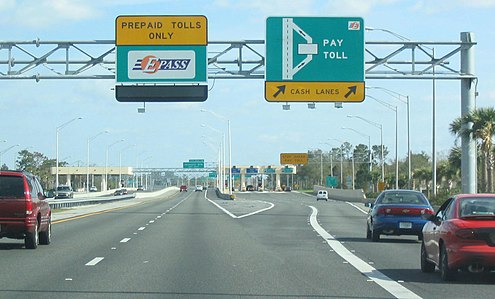
Take your pick of payment

I have memories of toll roads my kids will never have. They’re old enough to remember passing through the booths and handing coins or bills to the collector. But they won’t remember the unmanned alternative, which was to toss exact change into a big plastic basket, listen to the coins process through the mechanics below, and hope/pray the gate to the toll road would raise. That automated approach seems almost quaint compared to today’s electronic alternatives.

I say alternatives (plural) because yes, that’s what we have with today’s toll roads. It confounds me. Why in heaven’s name haven’t we developed a painless, seamless, and most importantly, nationally coordinated approach to toll road payments? To some extent (nineteen states) we have a solution – E-ZPass, which by subscription and sticker allows convenient passage.  But even E-ZPass is not a perfect system.

Not so E-Z

For the rest of the country’s tolls – and for most of our round-trip drive between South Carolina and Pennsylvania – we have the clunky alternative. You pass through a now-unmanned (“un-personned?”) toll booth, where a camera grabs your license plate with a noticeable flash. Then, somewhere down the road (ha) a paper bill arrives in your mailbox. By my count I have four or five of these bills coming my way. It’s been ten days since we’ve returned home and I have yet to receive even one.

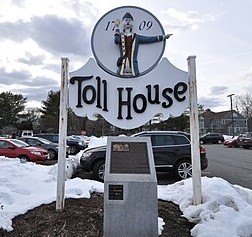
The cookie recipe is still on the back of the package

[Trivia detour:  Nestlé’s famous Toll House chocolate chip cookies aren’t named after toll booths but rather for an inn in Massachusetts where baker Ruth Wakefield came up with the recipe.  Wakefield and Nestlé struck a deal in the 1940s: her recipe printed on their bags in exchange for a lifetime supply of chocolate.  How very “Willy Wonka”, eh?]

Here is my unequivocally efficient approach to paying tolls across our many-highway’d nation. When you first get a driver’s license, you also sign up for a bank account-linked program which allows seamless paying of ALL tolls across the land – roads, bridges, tunnels, whatever – through a single readable sticker on your windshield. If you somehow don’t pay the tolls because of say, “insufficient funds”? Well sorry, your driver’s license doesn’t get renewed until you settle up at the DMV.

A $3 toll gets you through Baltimore’s Harbor Tunnel

My system is so logical it’s probably the reason I’ve never been pegged for a government job. In Colorado and elsewhere they almost have it right with the E-ZPass system – a sticker linked to a bank account. The problem is, they hold a minimum balance in a middleman (middle person?) account to guarantee payment of tolls.  I object, your honor. Why should Colorado have forty-odd dollars of my hard-earned money at all times when they can just settle up unpaid tolls whenever I renew my license?

Warning: cash-cow crossing

Then again, I have a beef with the tolls themselves, and that is, they pay for far more than the maintenance of the roads. You can’t tell me $10 per vehicle per crossing of the Golden Gate Bridge (GGB) is needed just to maintain the bridge. Here’s the jaw-dropping math for you.  112,000 cars cross the GGB every day.  That’s over forty million cars per year.  That puts the annual toll-taking at over four hundred million dollars.  $400M for bridge maintenance?  Sorry, fair traveler, you’re voluntarily lining the coffers of California (and San Francisco) every time you cross. “If I’m elected” (as we’ll hear countless times in the next two months), I’ll limit toll-taking to whatever it costs to maintain the bridge, road, or tunnel.  Not a dollar more.

On our return trip from Pennsylvania, I was amused to pass through one toll both with an actual human toll-taker. Those cordial people are still out there, collecting cash one car at a time. The woman in our instance happily returned us $19.25 on a $20.00 bill (and who’s happy to do that anymore?).

Time to bake cookies!

I was also amused… no, “gratified” is the better word; to pull into the parking lot of a South Carolina “rest area” shortly before we got home, for the use of a perfectly safe, clean, toll-free restroom on a toll-free highway. Maybe rest areas and their restrooms are the reason tolls cost more than the maintenance of the roads? Probably not. That would equate to a logical explanation for a government expenditure, which is an oxymoron.

Some content sourced from Wikipedia, “the free encyclopedia”.

Dave meets “Evy”

Renting a car at the airport used to be so hassle-free. You’d book the vehicle online, walk or bus to the parking lot, and bypass the counter by signing up for the company’s free membership program. All of that still happens, so what’s the difference today? You never know what vehicle you’re going to get, even if you choose the make/model ahead of time. And if you’ve never driven an electric vehicle (“Evy”) before, renting one is a real adventure.

Blame it on my laptop keyboard.  As I pecked my way through a recent Avis reservation, I inadvertently chose “Mystery Car” instead of “full-size sedan”.  Mystery car?  What the heck does that mean?  It means more flexibility for the rental car agency.  “Mystery car” means Avis gives you whatever it feels like giving you from its leftover inventory.  Maybe you get what you wanted.  Maybe you get a luxury vehicle for even less.  Or maybe you get Evy like I did.

I admit, I am not with the times of the latest vehicle technology.  I couldn’t tell you the first thing about operating Evy, let alone how she works under the hood.  So there I stood in the Avis parking lot, faced with the prospect of my first miles behind her wheel.  The rental companies should put a beginner’s guide on the driver’s seat for people like me.  I mean, imagine my hesitation (panic?) when I pushed Evy’s start button and nothing happened?  Something happened, of course.  The engine “started”; it just didn’t make any noise.  Yep, this was going to be a different kind of ride.

My first issue with Evy (or at least, the Genesis I rented) is the inexplicable need to make the dashboard wildly different than a conventional vehicle.  You don’t find the basic needs (ex. headlights, windshield wipers) where you expect to.  I actually considered talking to the vehicle instead of pushing random buttons, especially after my seat suddenly firmed up and vibrated when my I let my posture slip a little (“driver safety feature!”)  Seriously, all I’m asking for is dashboard buttons and levers where I expect them to be.

Once I found a modicum of comfort with Evy, the real challenge dawned on me: I have to recharge her before I go back to the airport.  And this, my friends, proved to be a challenge worthy of reality TV.  Those who already know Evy are welcome to say, “Oh c’mon Dave, it’s not that hard!” but truth be told, my charging station experience was just as daunting as the first time I pulled up to a gas pump as a teenager.

Credit Genesis, you can look up the nearest charging station right there on the dashboard.  The search gave me a choice of three.  The first station was in an Urgent Care clinic parking lot… and wasn’t working.  I’ve read that 15% of EV charging stations don’t work so now I’m a believer (EV Charging Flaw #1).

The next charging station option was in a McDonald’s parking lot.  When I arrived, both slots were occupied (EV Charging Flaw #2 – not enough to go around).  I have no problem waiting in line at gas stations but charging Evy takes a lot longer.  So I chose to drive another mile to the third option, a charger in a bank parking lot.  Nope.  No station to be found from one end of the lot to the other.  Genesis needs to update its locator software.

So back to McDonald’s I steamed went (and not for a Happy Meal, mind you).  The charging stations were still occupied, which begs the question, where do you form a line?  If I parked behind either car I’d be blocking their exit.  I’d also be blocking the McDonald’s drive-thru lane.  The only option was the parking space adjacent to the charging stations, with hopes of quickly maneuvering into an available charger before the next person pulls up (EV Charging Flaw #3).

This story only gets worse from here, so let’s keep it brief.  Once a station was finally available, I pulled in only to realize I had to face the car the other way for the charging cable to reach (EV Charging Flaw #4).  Then I tapped my credit card on the charger, only to find you have to download an app to make the station work; no cash or credit accepted (EV Charging Flaw #5).

Fifteen minutes later (because that’s what it takes when you only have one bar of wireless service – grrrrr) I got the app installed, the charging cable connected without electrocution (in pouring rain), and ta-dah… NOTHING!  Nada!  Zilch!  No “PRESS HERE TO CHARGE” or some other obvious way to get things started.  Instead, by the good graces of my EV-knowledgeable brother over the phone, I learned I had to zoom in on the tiny app map, identify the McDonald’s location of my charging station, and tap it (EV Charging Flaw #6).  Suddenly Evy’s gods smiled down on me through the thunderstorm and declared “Charge”.

To say I was giddy to make it back to the airport a day later without a dead Evy is an understatement.  To say I was the target of a sick joke when my very next Avis rental – same day, different airport – was a hybrid is undeniable.  But hey, at least a hybrid gives you the option of gasoline, so you get to fuel up the “old-fashioned way”.  Which brings me, humbly, to declare Dave Flaw #1:  Get to know Evy very, very well before your life – or at least your transportation – depends on her.