Keeping Score at the Grocery Store

In the chaos of the supermarket a few days before Christmas, milk, eggnog, and a package of those Li’l Smokies sausages fell into our shopping cart. These items don’t usually find their way into our frig but the year-end holiday meals somehow demanded them. If the market wasn’t so frantic I would’ve also whipped out my phone to see if these purchases deserved my dollars. After all, just about everything we use in the kitchen (and bathroom) these days has a little numeric value lurking just below the surface.

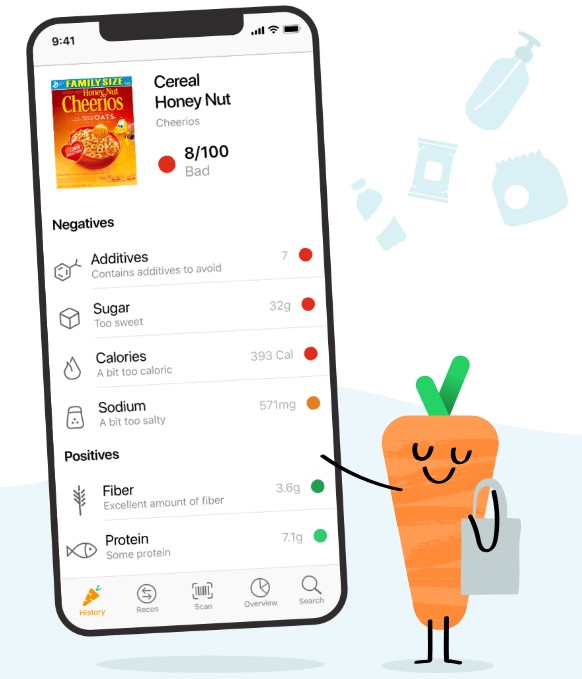
Nacho Cheese Doritos are now a “5” in my world.  You might say pretty good! until I tell you that’s on a scale of 1-100.  But let’s say you choose Blue Diamond’s Almond Nut-Thin Crackers instead.  The number skyrockets to 84.  A roll of Wint-O-Green Life Savers earns a 28 while a box of Tic Tac Freshmints doubles the number.  Nature Valley Granola Bars? 51. Heinz Ketchup? 33.  And in the ultimate insult to products considered “food”, perfectly round Nabisco Oreos earn a perfectly round 0/100.

What’s with all the tallying, you ask?  The numbers are simply the output of a little smartphone app called Yuka, which joined my personal parade of subscriptions last May.  In the words of its young French founders (Julie, and brothers Francois and Benoît), Yuka “deciphers product labels and analyzes the health benefits of foods and cosmetics”.  Plain English: Scan the barcode of anything in the supermarket and Yuka tells you whether to buy it or not.

Candidly, it wasn’t the numbers that sold me on Yuka.  Rather it’s this: the app is completely ad-free because brands cannot pay Yuka to advertise their products.  In other words, the numerical ratings I’ve shared are generated objectively, using common perceptions of the health benefits of ingredients.  Yuka has rocked the small space known as my kitchen pantry.

Never is this overhaul more evident than with “cosmetics”, Yuka’s catch-all for everything you find in the bathroom.  In the last eight months I’ve swapped out my deodorant, mouthwash, shaving cream, shampoo, and face wash for items with better Yuka numbers.  Five products I used every day and purchased for years just went flying off my medicine cabinet shelves, replaced by other products that are healthier on and in me (including Aveeno’s facial cleanser, which earns a perfect 100).

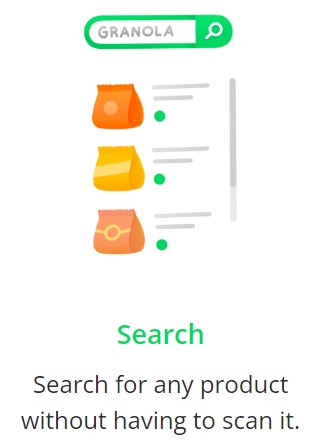
Yuka (the name is a nod to Yucatán) is about more than scan-and-score.  You can also simply search on products, mining a database of five million entries.  Even if a product isn’t in the database you can enter the ingredients from the label and Yuka will give it a number.  And if that number is lousy (like it is for your Oreos or my L’il Smokies) Yuka will point you to a list of alternatives with better numbers.  Again, Yuka doesn’t recommend one product over another; it just presents the numbers for you to consider.

In a nod to the healthy habits of Europeans (who favor fresh foods), Yuka’s founders realized its app was most popular in America, where we are so fond of packaged products.  So they packed up their French offices and French families and moved to the middle of Manhattan – temporarily – to better connect with their target audience.  Eventually they’ll head back home but not before Yuka is sure to land on the smartphones of millions of Americans.

Here’s one more aspect of Yuka I appreciate: the founders take time to communicate with their users.  In the eight months I’ve subscribed, they’ve sent me twelve emails with interesting articles about healthy eating, healthy “cosmetics”, and the entertaining evolution of their little company (which includes a dog as an employee).  They also sent me a fun video of their first few days in New York City.  And just last week I received a year-end recap of my app use (93 products scanned with an average score of 46).  No advertisements and no product pushes.

The subscriber version of Yuka is $15/year (you can try a more limited version for free), which includes the convenient scan-for-a-score feature.  Furthermore, your subscription dollars are what keeps Yuka in business, instead of funding manufacturers who’d like nothing more than to push their products on you.  That’s just one of the reasons I now keep score at the grocery store.

The Give-and-Get Machine

This Christmas season, by tidy coincidence, our family’s Twelve Days of Christmas will give to us six family members, Five Gold Rings, four restaurant dinners, three neighborhood gatherings, two Christmas concerts, and a downtown parade of horses, dogs, and Santa. As if that’s not enough “get” this year, we’ll also have a couple dozen presents under the Christmas tree… most processed through the Give-and-Get Machine.

I’ll get to the Machine in a minute but let’s start with the exception.  In early October I walked into a local retailer, picked out a gift for my wife, and handed over a credit card.  In exchange, the clerk handed over my purchase in a small paper bag.  I took it home, wrapped it myself, and – two months later – placed it lovingly under the Christmas tree.  If you’re thinking, Man you went to a lot of trouble, Dave – I sure hope your wife appreciates it, then you, my friend, are a product of the Machine.

What is the Give-and-Get Machine?  It’s technology’s approach to gifting.  When you choose to give a gift this year, nine times out of ten you’ll plop down on the couch, open your laptop, and navigate to your favorite e-commerce website.  If you don’t know what to give, you can choose between “Last Minute Deals” or “Top Picks for You” (based on previous spending).  Once you decide, you’re probably less than five clicks from the finish line, especially if your recipient is in your “Address Book” and you’ve already stored your personal information.  Add to shopping cart, choose delivery address, confirm purchase, and you’re done.  But wait!  You can also add gift wrapping and a message for a few more pennies.  Well now, aren’t you the savvy gift-giver!

The convenience of the Give-and-Get Machine is undeniable.  After all, my purchase in October meant a one-hour roundtrip drive, to a shop where I may or may not have found something.  Add another fifteen minutes once I got home to wrap the gift and add the To:/From: tag.  You, meanwhile, accomplished the same “task” in maybe ten minutes, with a mug of hot chocolate and a few keystrokes from the comfort of your kitchen table.

“Task” is the operative word in the last paragraph.  Gifting should spring from the heart instead of the Task app of your smartphone, right?  Gifting should be a choice, not a chore.  Perhaps those of us who default to the easy-out Give-and-Get Machine are missing out on the real meaning of Christmas.

Admittedly, the Give-and-Get Machine includes some really nifty apps.  If you’ve ever used Gift Hero (“The Best Wish List Ever”) you know what I mean.  GH is the perfect solution for the family that exchanges gifts but has reached the age (or proximity) where no one knows what to get each other.  On GH each of you creates wish lists and the lists are shared with everyone else.  Once you choose a gift from another GH list it’s marked as “taken” to avoid duplicates.  Most gifts are hyperlinked to merchant websites for easy purchase, and you can add notes like color, size, and quantity.  Also, GH blocks you from knowing what has been taken from your own list by whom, so the element of surprise remains.

There’s an endless debate with apps like GH.  I mean, let’s be honest, it’s easy to skip any and all effort to be thoughtful about what somebody wants for Christmas when you have their list right in front of you.  On the other hand, you avoid the occasional embarrassing face-to-face exchange, where the recipient insists I love it when in fact they really don’t, and will probably regift it next Christmas.

Ultimately, the almighty dollar may be the decider between a gift from a store or the Give-and-Get Machine.  My wife and I found a nice assortment of books and toys for our Colorado granddaughters this year, at stores we visited both near and far.  We wrapped them all up, put them in a large box, and drove down to the post office.  The clerk measured the box and its weight and informed me the shipment “had to go by plane” instead of anything cheaper.  The cost was more than my annual subscription to Amazon Prime.

Maybe I shouldn’t be so critical of the Give-and-Get Machine after all.

It’s Thanksgiving Season (#4)

Well now, I told you the Thanksgiving season would fly by didn’t I?  Those 23 days came, went, and BAM! here we are – Thanksgiving Day itself.  Good thing you kept a Gratitude Calendar like I asked you to.  You did keep one, didn’t you – the list of things you’re grateful for this season?  No, you can’t have my list (who are you, that kid who copied off of others in grade school?) but I will let you read it:

  1. WordPress, which allowed me to schedule this post ahead of time so I can spend Thanksgiving Day focused on much more important things.
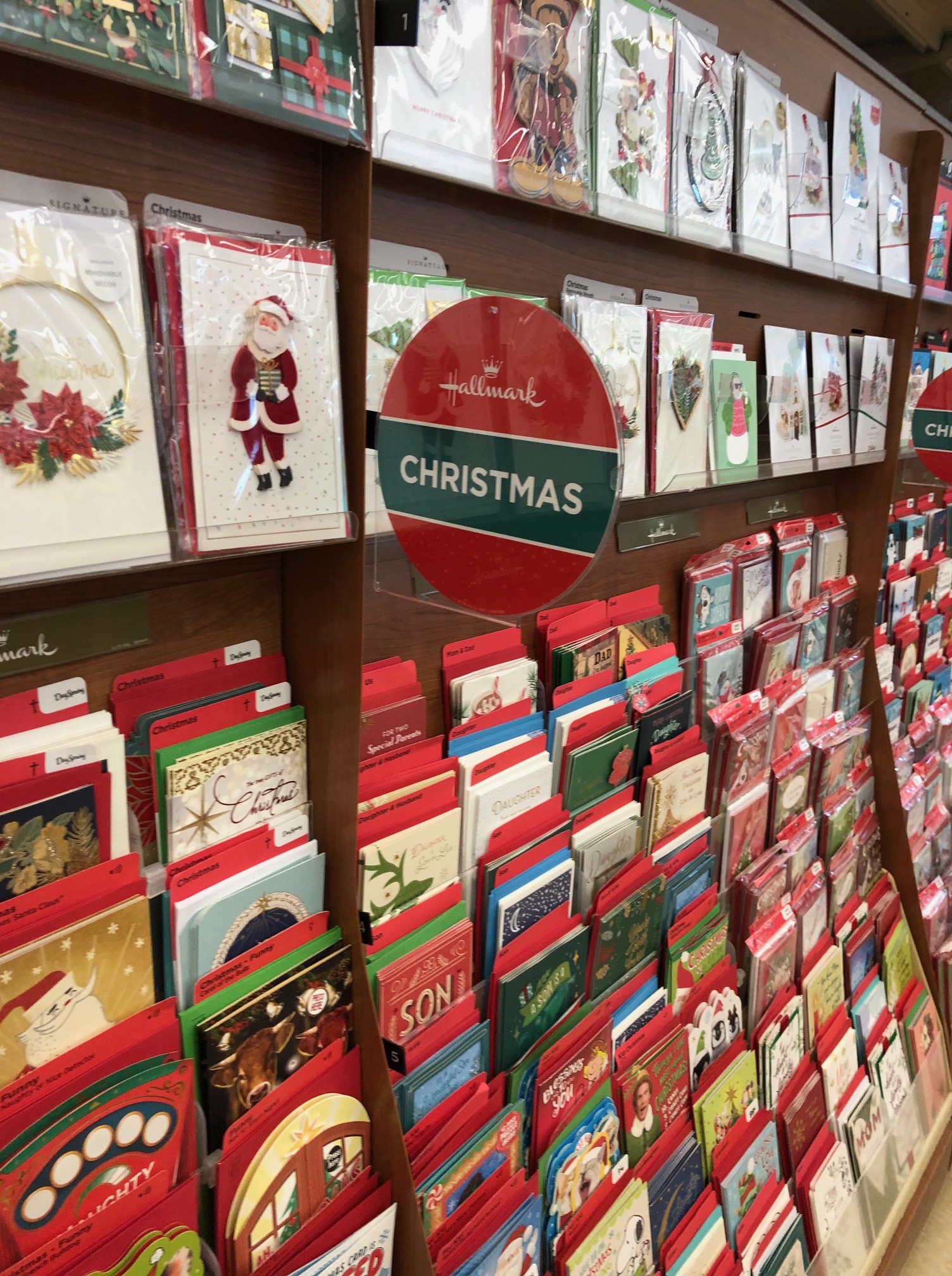
  2. Thanksgiving cards, purchased for family and friends before the torrent of Christmas cards pushed them off the shelves.
  3. Our son, visiting this weekend all the way from Colorado.
  4. Witnessing my beloved alma mater face Clemson on the football field (even if Notre Dame “didn’t show up”).
  5. Today’s extra hour of sleep, even if I couldn’t manage to sleep for an extra hour.
  6. Babysitting my granddaughter, even if she produced what I’d politely call a “blowout”.
  7. Making it to the car dealership safely on a suspect front left wheel.
  8. Repair of that wheel by mechanics who know a lot more about fixing cars than I do.
  9. A perfectly still morning with the dog and a cup of coffee before easing into the day’s activities.
  10. My mother, who was born on this day 95 years ago.
  11. My body, which allows me to continue the regular, rigorous workouts I enjoy.
  12. My wife, my endless source of love and laughter.
  13. The quiet, peaceful, safe community I live in (and utterly take for granted).
  14. A long-awaited rain shower, and hopefully the first of many.
  15. The many entertaining blog posts from my “online family”: those I faithfully follow and who faithfully follow me.
  16. The family and friends who keep us tied to our former years in Colorado.
  17. A perfect fall day in Colorado, allowing me to accomplish the many things I had on my agenda.
  18. The reunion of my wife’s family with her mother (a gathering that hasn’t taken place in over ten years).
  19. A visit with my Colorado granddaughters, and the opportunity to walk my eldest to kindergarten the following morning.
  20. A visit with my best buddy and his wife, and the realization our relationship will stay strong no matter the time or distance.
  21. The countless workers in the airline industry who make travelling safe, including the singing traffic cop at the airport crosswalk.
  22. The simple comforts of being back at home 
  23. My brothers and their families, who I will truly miss this year as they gather together in Williamsburg, VA.

And… that’s enough for today.  You should be focused on family and friends anyway, not blog posts.  Wait – one more thing – a throwback term to mix in with your Thanksgiving spread: requital (with the middle part of the word pronounced like “quite”).  A requital is a return or a reward for an act of kindness.  Here’s how Beethoven used it back when he was still making music: As a slight requital of your kind souvenir, I take the liberty to send you some variations, and a Rondo with violin accompaniment.  Fancy, huh?  Now, go impress your guests around the table by using your new word.

Oh, and if you didn’t keep a calendar of things to be thankful for? Seriously, what are you waiting for?  C’mon, get grateful already!

It’s Thanksgiving Season (#3)

Earlier this week the first Christmas card arrived in the mail.  For heaven’s sake it’s not even November 25th, people.  Then we stopped by Chick-fil-A and my wife asked if they had their Peppermint Chip milkshake, which of course they did because it’s “Christmas season”.  Finally, we’re seeing strings of colored lights and decorations on houses already.  Am I losing the battle of the Thanksgiving season with a full week still to go?  Maybe I need a different tack with my campaign.

Let’s talk about Thanksgiving dishes today.  Are yours made of pottery, wood, metal, or glass?  Oh, you thought I meant food.  Well, yes, I do, but somehow we’ve stretched the definition of “any container used at the table” to also mean what’s in or on that container.  So let’s talk about that.  Have a favorite dish at Thanksgiving?  Of course you do; everybody does.  In fact, the better question is, if your Thanksgiving “dish” is a “favorite” then why don’t you serve it all year round?

Here are my three favorite Thanksgiving dishes for your consideration:

Stuffing.  Nine out of ten Thanksgiving stuffing recipes never made it into the bird in the first place.  Okay so I made that up, but I find it funny when a food that is “inside” by definition was never, ever inside.  Whatever.  Stuffing used to be that little pile of gently-spiced spongy material sitting benignly aside your helping of turkey.  I’d ignore it or push it around a little but most of this autumn pillow fluff never made it onto my fork.  Then I met my wife.  You could hibernate for an entire holiday season on my wife’s stuffing recipe.  It starts with ground sirloin and pork sausage and a whole lot of butter.  It ends with a ton of seasonings and spices, including sage and something called “parsley” (more on that later).  Forget the turkey… if a food ever deserved to be called “main course” it’s my wife’s stuffing recipe.

Cranberry sauce.  Is there a more wasted food on earth than cranberry sauce?  Seriously, this poor little enhancement sees the light of day only once a year, where it sits on your plate for the length of the meal before being scraped mercilessly into the kitchen trash.  How many people really make the perfect Thanksgiving “bite” – a combo of turkey, stuffing, and cranberry sauce?  Not many.  I think cranberry sauce was created to brighten an otherwise autumn-colored “dish”.  Chateaubriand has its Béarnaise sauce.  Lamb has its mint jelly.  Turkey seems to acknowledge cranberry sauce as a garnish at best: something ornamental instead of “food”.

worthless

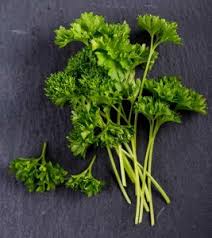
Speaking of garnishes, can we all agree parsley is the perfect example of one?  Yes, you’re adding color to the plate, but don’t you always wonder what you’re supposed to do with those little green trees?  Just like the colorful toothpicks you sometimes find holding your sandwich together, parsley is the first thing you remove (at least cranberry sauce rides out the plate for the entire meal).  Parsley is transported from wherever it invaded your plate (and what the heck is it doing in my wife’s stuffing, anyway?) to your bread plate, where it lays until its ultimate demise.  The relevance of parsley to the Thanksgiving meal (and to any “dish” for that matter) remains a mystery.  One I don’t have time for in this post.

Mince pie (AKA “heaven on earth”)

Mince pie.  We conclude my favorites with the most underappreciated, over-carb’d dessert of them all.  Mincemeat pie really did include meat back when the Pilgrims were celebrating Thanksgiving with swans and seals, but eventually someone (who deserves a medal) thought to remove the meat and add a whole lot of sugar to the chopped dried fruit, distilled spirits, and Thanksgiving spices.  The result is a pie that is scrumptious in some books (mine) and a veritable construction material in others (everyone else’s).  Seriously, this stuff is a brick.  It’s like pecan pie – or concrete – only ten times as dense.  And don’t forget to soften the blow with a little brandied hard sauce on top.  The spiked whipped cream is so good my wife skips the pie and has a dollop of the sauce instead.  But if you ask me, she’s missing out on the real dessert.

Your Thanksgiving dinner will no doubt include a favorite “dish” or two this season (glass? metal?) which should also make you wonder why you don’t eat it more often.  Is it because the Thanksgiving season is special, and you don’t want to dilute the magic by having your favorites year-round?  Yes, I think that’s the reason.  Thanksgiving deserves its own “dishes”… and it’s own season.  So c’mon, get grateful already!

Some content sourced from the Delish article, “50 Traditional Dishes You Need For The Ultimate Thanksgiving Menu” (mince pie is conspicuously absent from the list).  The parsley rant is a loving shout-out to my sister-in-law. 

It’s Thanksgiving Season (#2)

So here we are, nine days into the Thanksgiving season already.  Didn’t the time positively fly  (even with the extra hour last Sunday)?  Have you already booked your travel to visit loved ones later in the month? Have you already made pumpkin pie (because you can never have enough pumpkin pie, so why wait until Thanksgiving Day)?  Whatever you’ve done for the past nine days, I’ve already hinted at the three “F’s” of Thanksgiving: food, family, and friends.  Now let’s add a fourth.

Not football.  Not fun runs.  The most important Thanksgiving “F” is full; as in “full of thanks”.  You are thankful this season, aren’t you?  If you joined my bandwagon from last week’s post, you already have nine reasons (or nine people) to be thankful for.  Keep that list going until the big day, band-wagoner.

Now that you know the four (not three) “F’s” of Thanksgiving, let’s visit five facts you probably don’t know about the holiday.  Here’s a morsel for your taste buds: the very first Thanksgiving feast probably included lobster, deer, swans, and seals.  PETA and I struggle with those last two, but the list stands to reason because we’re talking pilgrims and Indians on the coast of Massachusetts, four hundred years ago, making merry for three straight days.  Those flavorful “entrees” were abundant back then, with nary a turkey to be found.

Too cute to eat!

Remember last week’s mention of Abraham Lincoln making Thanksgiving a holiday?  That was in 1863, declared as every last Thursday in November.  Seventy-odd years later, Franklin D. Roosevelt moved Thanksgiving Day one week earlier to extend the shopping season during the Great Depression.  But some states pushed back on Roosevelt’s pushback so in the 1940s you had several years with multiple Thanksgiving Days (more turkey for everyone – hooray!)  Eventually the compromise was made as we know it today: one Thanksgiving Day, the fourth Thursday of every November.

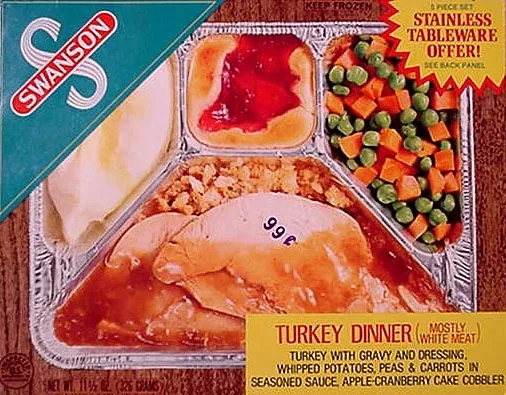
My wife and I love dinner in front of the TV, don’t you?  But have you actually eaten a TV dinner?  You know, the frozen full meal in a box, with the tiny portions of generic food in the partitioned aluminum-foil tray?  Well, you can thank Thanksgiving for TV dinners.  Swanson overestimated the demand for turkey one year, and in a totally give-that-person-a-raise move, converted 260 tons of leftover turkey into 5,000 hand-packed dinners, complete with dressing, gravy, peas, and sweet potatoes, at a mere $0.98 a pop.  A year later they’d sold ten million of them.  Voila – the birth of the TV dinner.

Trivia question: What teams always play football on Thanksgiving Day?  Trivia answer: the Dallas Cowboys and the Detroit Lions.  Better trivia question: What teams first played football on Thanksgiving Day? Answer: Yale and Princeton way-y-y-y back in 1876.  I didn’t even know football was a sport in 1876.  As for games played on Thanksgiving Day, I would’ve guessed they started like, a hundred years after that.

If your Aunt Betty spends a little too much time at the holiday punch bowl and thinks it’s funny to start gobble-gobble-gobbling at your kids, you might want to remind her females don’t gobble.  Er, female turkeys that is. The signature Thanksgiving sound is reserved for the males of the species.  Female turkeys have been known to purr and cackle instead.  This is good information for your Aunt Betty (the purr , not the cackle).

Pay it “backward”

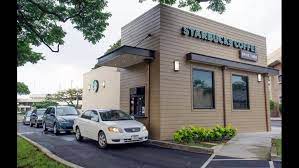
Okay, enough what-you-didn’t-know fun for today.  Let’s wrap with another nod to being thank-full (or, if you will, having “gra-attitude”).  I love this time of year because Starbucks gives away free coffee.  Okay, so they’re not really giving away free coffee.  Instead, drive-thru patrons continue the seasonal tradition of paying for the car behind them (and driving off quickly so as to remain anonymous).  I go to Starbucks more often just to participate (as payer, not payee).  So, for whatever you are grateful for, share that happy feeling with the people behind you in line.  Not a patron of Starbucks?  Doesn’t matter; any drive-thru will do.  So c’mon, get grateful already!

Some content sourced from the October 2023 Town & Country Magazine article, “14 Surprising Facts You Never Knew About Thanksgiving”, and Wikipedia, “the free encyclopedia”.

It’s Thanksgiving Season (#1)

Listen carefully… hear the clock a-tick-tick-ticking?  Better hurry up!  You’re already a day (or more) into the Thanksgiving season and you have so much to do!  “No Dave”, you correct me, “Thanksgiving’s just one day (or at most a long weekend) way-ay-ay at the end of the month… I still have plenty of time to prepare!”  No you don’t.  Junk that perception, online friends, because the times they are a-changin’.  I, blogger Dave, hereby decree Thanksgiving to be three weeks… and the season’s already underway.  So c’mon – get grateful already!

It’s fitting I’m writing this post on Halloween, “… the conclusion of spooky season…” as Lyssy in the City referred to it.  And isn’t it true?  Just like Christmas, the air goes out of the holiday balloon the very next day.  Cinderella’s carriage turns back into a pumpkin at midnight (ironically).  There is no “residual” spooky season on November 1st.  Halloween died the night before.

Retailers are determined to steamroll Halloween and Thanksgiving with the Christmas season, of course.  The artificial trees and decorations were available for purchase at Costco and Lowes this year before the Halloween candy even colored the shelves.  As I said in Third-Wheel Meal two years ago, Thanksgiving is fighting an uphill battle between the ever-expanding seasons before and after.  It’s like a sandwich with two massive pieces of bread but not much in between.

Thanksgiving is not just another holiday in my book; it’s a uniquely American holiday.  It’s the one we’ve been celebrating in the U.S. for 160 years thanks to the persistence of one Sarah Josepha Hale (who also wrote “Mary Had a Little Lamb”). Hale, along with Abraham Lincoln’s stroke of the presidential pen, made sure the holiday was “permanent… an American custom and institution”.  Gives this juncture in the holiday season a little more respect, wouldn’t you say?

Day-by-day gratitude

Like an Advent calendar, I propose we take twenty-three days to be grateful for what we have.  Open the little cardboard door on any given morning of November and the question will always be the same: What are you thankful for today?  Surely you can come up with twenty-three things.  Or how about twenty-three people?  Wouldn’t it be something if you told one person how grateful you are to have them in your life… every day until Thanksgiving Day?

Already on the shelves, sigh…

As with Christmas, it’s not the wrapping; it’s the gift inside.  Thanksgiving goes way deeper than turkey and football.  If you’re planning a trip to America and don’t know much about Thanksgiving, VisitTheUsa.com is not helping my cause.  The website reduces Thanksgiving into turkey and pie, Turkey Trots, parades, football, the pardoning of a single turkey, “shop ’til you drop”, and the travel challenges of a four-day weekend.  Really?  That’s the meaning of America’s Thanksgiving?

It’s not about this…

Maybe it would help if moviemakers and songwriters joined my cause.  I mean, think about it.  Halloween movies come to mind without much thought (with some, like A Nightmare on Elm Street, approaching ten sequels).  Hallmark churns out Christmas movies faster than you churn out Christmas cookies.  But are there any movies about Thanksgiving?  Well, yes actually, just this year we have Thanksgiving (the movie).  But please, don’t seek out the trailer.  This garbage has nothing to do with gratitude and everything to do with gratuitous violence.

or this…

I was going to make the same case for music. Halloween has you dancing to “Thriller” and “Monster Mash”.  Christmas has you “Rockin’ Around the Christmas Tree”.  There is no “Thanksgiving carol”.  But then I remembered Amy Grant’s “‘Til the Season Comes ‘Round Again” (my wife’s favorite).  It’s a song about Christmas, make no mistake, but you could argue there’s a little Thanksgiving dressing mixed into the first verse:

Come and gather around at the table
In the spirit of family and friends
And we’ll all join hands and remember this moment
‘Til the season comes ’round again

Get what I’m saying?  Take the next three weeks and find the true meaning of Thanksgiving.  Like Halloween, the treats will still be there on November 23rd.  Like Christmas, you’ll still have the stress of travel and getting things done.  Those holidays are about finding your inner child.  This one’s about finding your inner adult.  So c’mon – get grateful already!

Some content sourced from Wikipedia, “the free encyclopedia”.

Mom-and-Pop Music

Flip through the chapters of my life and you’ll find a bookmark at 1975. It was the year I became a teenager. It was the year I started middle school. But most importantly, 1975 was my first foray into Top 40 music. In those days, punk, funk, disco, and metal were just getting started; all too progressive for a kid taking his first dip into the pool of radio rock. Instead, my preference was to chew on something a little sweeter. Like bubble gum.

In the 1970s, I was way too young to witness the birth of rock and roll.  I also missed the advent of pop music.  But I was right on time for a musical genre known as bubblegum.  Bubblegum siphoned off pop music’s more catchy, upbeat tunes and marketed them to children and adolescents.  And what better way to market theses songs than kid TV?  Anyone who ever watched The Partridge Family, The Monkees, or the cartoon rock of The Archies on Saturday mornings enjoyed bubblegum music.

As for 1970s Top 40, it’s easy to look back on those weekly lists and find bubblegum.  “Love Will Keep Us Together” (Captain & Tennille), “Laughter In The Rain” (Neil Sedaka), and “He Don’t Love You, Like I Love You” (Tony Orlando and Dawn) are just a few examples from fifty years ago.  Like most things back then, music was more innocent.

Having said that, bubblegum wasn’t even specific enough to define my own tastes.  The industry standard Billboard Magazine generates a Hot 100 list at the end of every year based on sales and radio plays.  It’s fun to go through the 1975 list and recognize just about every song.  But I was looking for three names in particular and – no surprise – all of them made the list with multiple entries.  Hello again, John, Olivia, and Barry.

John Denver was only 53 when he was tragically killed piloting a single-engine plane above California’s Monterey Bay, yet he managed to create over twenty-five years of gentle hits before that.  When I first heard his voice he’d already landed top-ten’s like “Leaving on a Jet Plane” (from the movie Armageddon for you younger readers), “Take Me Home, Country Roads”, and “Rocky Mountain High”.  One of Denver’s biggest hits, “Annie’s Song”, was a love song to his first wife.  Another, “Calypso”, paid tribute to the late ocean explorer Jacques Cousteau.  I purchased most of Denver’s albums (cassette tapes!) with a good chunk of my meager teenage savings.

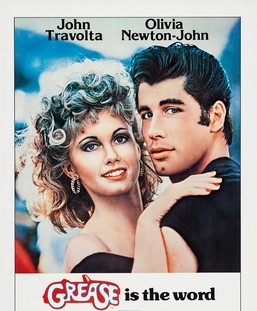
I was an Olivia Newton-John fan well before 1978’s Grease became a Hollywood phenomenon.  Newton-John and her sweet Australian accent were an instant teenage crush, with songs like “If You Love Me, Let Me Know”, “Have You Never Been Mellow”, and “I Honestly Love You”.  Then Grease came along and good-girl-turned-bad Olivia turned my teenage heat up several notches.  A testament to Newton-John’s popularity came in the form of 100 million records sold, fifteen top-ten singles, and four Grammy awards.  To this day, the soundtrack to Grease remains one of the world’s best-selling albums.

Barry Manilow and his music are more of a confession than the two we’ve already visited with.  It wasn’t at all cool to admit to liking Manilow’s “adult contemporary” music back then.  His hits were better suited for your parents, like “Mandy”, “This One’s For You”, and “Even Now”.  “Copacabana” was a dance number you couldn’t get out of your head.  “I Write the Songs” spoke to my inner-musician wannabe.  Manilow’s talents on the keyboard certainly captured my attention as I pursued the piano myself.  Unlike Denver and Newton-John, I purchased every Barry Manilow album as soon as it hit the shelves.  Somewhere in my attic I still have a boxed CD collection of his best work.

Like him or not, what is remarkable about Manilow is his enduring popularity.  He has been ensconced in Las Vegas for years now.  He just completed his 600th performance at Westgate’s Resort & Casino (an achievement which prompted this post), breaking a record held by Elvis Presley.  The one time I saw him in concert – at an outdoor venue in the Bay Area – I knew every song he performed.  Sure, almost all of his audience members are now graying at the temples, and his popular music is from five decades ago (!) but you still have to give him props.  The man has staying power.

Do I still listen to John, Olivia, or Barry?  No, but I can sing entire songs from memory.  There’s nothing like the music of those three to take me back to my teenage years.  Call it adult contemporary if you want, but this guy will always think of it as “Pop” music.

Some content sourced from The Atlantic article, “It’s Okay to Like Barry Manilow”, and Wikipedia, “the free encyclopedia”.

Living On The Edge

The state line between South Carolina (SC) and Georgia (GA) follows the twists and turns of the Savannah River. You know you’re heading into one state or the other whenever you cross the water. Driving from our part of South Carolina into nearby Augusta, GA is interesting. The interstate loops Augusta by starting in SC, touches a bit of GA, goes back to SC for a few miles, then continues into GA again as it follows the river. It’s an example of my life on the edge.

In California, W means “water”

Growing up on the coast of California, it never occurred to me the geography of my younger days was limited to only three of the four cardinal directions.  If I headed north I’d leave the urban stretches of Los Angeles for the more rural towns of the the central coast.  Head south and I’d parallel the beaches all the way to San Diego.  The only thing east of the city seemed to be the endless Mojave Desert.  As for the last of the four directions?  Not an option, at least not without a boat, plane, or a whole lot of swimming.  Horace Greeley would’ve never told me to “Go West, young man”.

South Bend sits where the yellow and red come together at the very top of Indiana.

In my college years in South Bend, IN, I was a fifteen-minute drive from the line where the Central and Eastern time zones meet.  Back then you didn’t touch your clock for Daylight Savings, so half the year you were the same time as Detroit while the other half you were Chicago.  It was confusing, but not as confusing as someone who lived on one side of the line and worked on the other.  Imagine leaving the house at 8:00am, driving an hour, and arriving at the office at… 8:00am?  It’s a neat trick, pulled off by a lot of those who live on the edge of a time zone.

Raising our kids in Colorado Springs, we always knew which direction we were heading because the line of the Rocky Mountains lay immediately to the west.  Those peaks rose up like the Great Wall of China, just daring you to push through.  Sure, we drove the interstates into the Rockies for skiing, hiking, and such, but day-to-day we were down at the base, literally living on the edge.  Like California, we had one less cardinal direction at our disposal.

Grays Peak, on Colorado’s Continental Divide

The Rockies conceal another important edge, known as the Continental Divide.  The Divide is elevated terrain separating neighboring drainage basins.  Plain English?  The north-south line from which water flows either west to the Pacific Ocean or east to the Atlantic.  I always wanted to stop somewhere flat on the Divide and pour out a bottle of water.  Let’s see if it really flows both ways from the line, right?  It’s an experiment that to this day remains unconducted.

Football is a game of lines and edges

Football, one of my favorite spectator sports, is all about lines and edges.  One team faces the other, on an imaginary line defined by where the referee places the ball.  Cross that line before the ball is snapped and you’ll be flagged with a penalty.  Advance the ball ten yards past that line – to another imaginary line – and your team is awarded more play.  The sidelines of the field might as well drop off to a bottomless void.  Catching a pass outside of that edge is not allowed.  Running the ball outside of that edge brings the game to a halt.  But catching or running across the lines at end of the field?  That rewards you with a score.

$50 gets you a spot on “The Edge” sky deck

For all this living and playing on thresholds, maybe I should visit one of New York City’s newest high-rise attractions.  One hundred floors above the sidewalk, The Edge is billed as “the highest outdoor sky deck in the Western Hemisphere”.  Jutting out from its host building, The Edge allows unparalleled views of the city below, because the surrounding walls are solid glass, as is a portion of the deck floor itself (yikes!) If Spider-Man is your thing, you can go even higher by scaling the outside of the remaining floors of the skyscraper.  I have to say, this sort of thing draws a “fine line” between entertainment and, well, insanity.

I won’t be going to The Edge… ever.  I’m not good with heights, so anything above a pedestrian Ferris Wheel just isn’t my cup of tea.  Nope, leave me behind, comfortably grounded, where crossing the Savannah River from one state to another is plenty adventurous.  That’s my definition of life on the edge.

Some content sourced from Wikipedia, “the free encyclopedia”.

Tuesday’s Child

Passing through another anniversary of the events of 9/11 this week, I was touched by a YouTube short of U.S. Marines demonstrating the proper method of folding the American flag. The video includes gentle background music but no words, lending reverence to the ceremony. Folding the Stars and Stripes the right way is not only a nod of respect to our nation’s banner, but also an example of (flag) etiquette.
 
One of my favorite memories of my late mother was her ability to gently but effectively prod her sons to behave properly.  She would sometimes say quietly, “Mind your manners”, which meant two things.  One, something in our current behavior wasn’t in sync with how she raised us; and two, we would get a talking to later.  “Please” and “thank you” barely scratched the surface of how my brothers and I were expected to carry ourselves back then.
 
I’ve always thought of manners and etiquette as one in the same, but the former is a subset of the latter.  Etiquette is “the set of norms of personal behavior in polite society”, while manners are simply behaviors deemed “good” or “bad”.  An example of both is the way we drive our cars.  We’re taught the rules of the road, also known as “driving etiquette”.  But when we blatantly ignore those rules by, say, refusing to let a car merge onto the interstate in front of us, we’re letting bad manners get the better of etiquette.
 
Manners always remind me of a book my grandparents encouraged us to read whenever we visited: Gelette Burgess’ 1903 classic The Goops (and How To Be Them).  Here’s an example of Goop behavior in Burgess’ poetry, simply titled “In Table”:
 
Why is it Goops must always wish
To touch each apple on the dish?
Why do they never neatly fold
Their napkins until they are told?
 
Why do they play with food, and bite
Such awful mouthfuls?  Is it right?
Why do they tilt back in their chairs?
Because they’re Goops!  So no one cares!
 
My mother probably labeled us Goops at one time or another, because my brothers and I were all about fingering our food or talking with food in our mouths or rocking back in our chairs.  It’s a wonder we developed any manners at all.  Maybe it’s because our mother’s parenting was fueled by a finishing school of sorts: her college sorority, where a premium was placed on etiquette.
 
Alpin Videmanette
Finishing schools, designed to “teach young women social graces as preparation for entry into society”, are something of an outdated concept now, at least in America.  You can still find a few “charm schools” in Europe, such as Switzerland’s prestigious Institut Alpin Videmanette – (whose teenage graduates included Lady Diana Spencer).  The Institut teaches young women to cook, make dresses, speak French, and even ski, but at its core, the curriculum is an education in etiquette.
 
Emily Post

The undisputed authority on etiquette, Emily Post, wrote several books and newspaper columns on the topic.  In the America of her lifetime (1872-1960) Post’s first etiquette book became a bestseller because it catered to “the country’s exotic mix of immigrants… eager to fit in with the establishment”.  I suggest most of Post’s etiquette is as relevant today as it was back then… and a lot of us could use an extensive refresher.

Always pass them together!
Besides the Goops, etiquette reminds me of an old poem teaching children the days of the week. “Monday’s Child” goes like this:
 
Monday’s child is fair of face,
Tuesday’s child is full of grace,
Wednesday’s child is full of woe,
Thursday’s child has far to go,
Friday’s child is loving and giving,
Saturday’s child works hard for a living,
And the child that is born on the Sabbath day, Is bonny and blithe, and good and gay.
 
Google tells me I was born on a Monday.  Darn it, so close.  If I was Tuesday’s Child I’d be defined as “… agreeable, refined, and polite in manner or behavior.”  In other words, demonstrating a solid understanding of etiquette.
 
The next time you’re standing on an escalator, step to the right to let those in a hurry pass by.  The next time you play golf, stay out of the line of sight when your opponent putts.  The next time you’re at the movies, don’t utter a word until the final credits roll.  And the next time you fold the flag, do it the way the Marines do. After all, you’d rather be credited with following the rules of etiquette than perceived as having bad manners.
 

Some content sourced from Wikipedia, “the free encyclopedia”.

(Not far from) Madding Crowds

Last night, the University of Nebraska women’s volleyball team played the fourth match of their 2023 campaign. College volleyball doesn’t get much coverage sharing seasons with (American) football, but this match made the sports headlines for several reasons. One, it was played outdoors. Two, it was played in Nebraska’s massive Memorial Stadium (normally a football venue). And three – most notably – the Huskers brought home the straight-sets win in front of 90,000 riotous fans… at $25 a ticket.

Volleyball instead of football

I know what you’re thinking.  How do you get 90,000 people to cough up $25 for a college volleyball match?  Well, it helps to throw in a country music concert for starters.  Then add a second match to double the volleyball (Nebraska-Kearney vs. Wayne State).  Finally, most importantly, let fans know they just might break the regular-season attendance record for a women’s volleyball match… the same attendance record that volleyball rival Wisconsin stole from Nebraska just last season.

Memorial Stadium on any given Saturday

It fascinates me to read about sports competitions played in front of massive sold-out stadiums, weekend after weekend.  Nebraska has filled those same 90,000 seats for every Husker football game for the past sixty years (making the venue the “third-largest city in Nebraska” for several hours each Saturday).  Michigan’s Wolverines compete in the largest college stadium in America – 108,000 seats – with every seat taken more often than not.  And like Nebraska’s volleyball match last night, my fascination is not just with the number of fans but also with how much they’re willing to pay.  I’m in the market for tickets for my beloved Notre Dame; the football team headed to nearby Clemson later this season.  Unless I’m looking for a nosebleed I’ll be paying north of $450 no matter where I sit.

My weekends are busy so I’m lucky to watch a football game on TV, let alone attend one in person.  Yet every Saturday (and Sunday with the NFL) you have tens of thousands of fans gladly opening their wallets and purses to do just that.  It’s a loud, colorful thread (rope?) in the fabric of American society.

Denver’s “Coors Field”

Major League Baseball (MLB), with an average of 45,000 seats per stadium, is even more confounding to me.  In an endless spring-summer season of 162 games, half are played at the team’s home stadium.  The majority of those seats are taken by season ticket-holders.  With an average ticket price of $36 you’re handing over $3,000 for the season before you’ve even seen the first game.  Besides, who has the time to watch so many baseball games (mostly at night)?  Do what my friends back in Colorado do: split the season ticket in half with another fan and sell most of the tickets to family and friends.  You’ll make a small profit and still go to as many baseball games as you can stomach.

My appetite for baseball games is about two a season; that’s it.  Frankly I enjoy sitting outside in the summer air beside a friend as much as I do the game itself.  Otherwise, keep me far from those madding crowds.  The investment of time, money, effort (and sometimes hassle) to watch a game in person is almost always won over by the convenience, commentary, and cameras of television.

San Diego’s “Rady Shell at Jacobs Park”

Of course, this is sports we’re talking about.  If the topic was music and concerts, my post would take on a decidedly different “tone” (heh).  Tempt me with a chart-topper from the 1980s – Billy Joel comes to mind – and I’d give up the time and money to see a live performance.  Even better, dangle classical concert tickets in front of me, such as the San Diego Symphony at its cozy waterfront bandshell, or a summer concert in the outdoor gardens of Vienna’s Schönbrunn Palace (see below video).  Classical concert crowds are not nearly as madding as those for sports.

Nebraska is a five-time national volleyball champion

About that regular-season attendance record for a women’s volleyball match.  Wisconsin set the bar with an impressive 16,833 fans last season by filling its basketball arena.  Nebraska’s official tally last night was 92,003 fans… more than five times as many (on a Wednesday night, no less).  Way to crush those rival Badgers, Husker Nation.  That’s what I call a madding crowd.

Some content sourced from the ESPN article, “How Nebraska volleyball plans to pack Memorial Stadium”, and Wikipedia, “the free encyclopedia”.