
Last night, the University of Nebraska women’s volleyball team played the fourth match of their 2023 campaign. College volleyball doesn’t get much coverage sharing seasons with (American) football, but this match made the sports headlines for several reasons. One, it was played outdoors. Two, it was played in Nebraska’s massive Memorial Stadium (normally a football venue). And three – most notably – the Huskers brought home the straight-sets win in front of 90,000 riotous fans… at $25 a ticket.
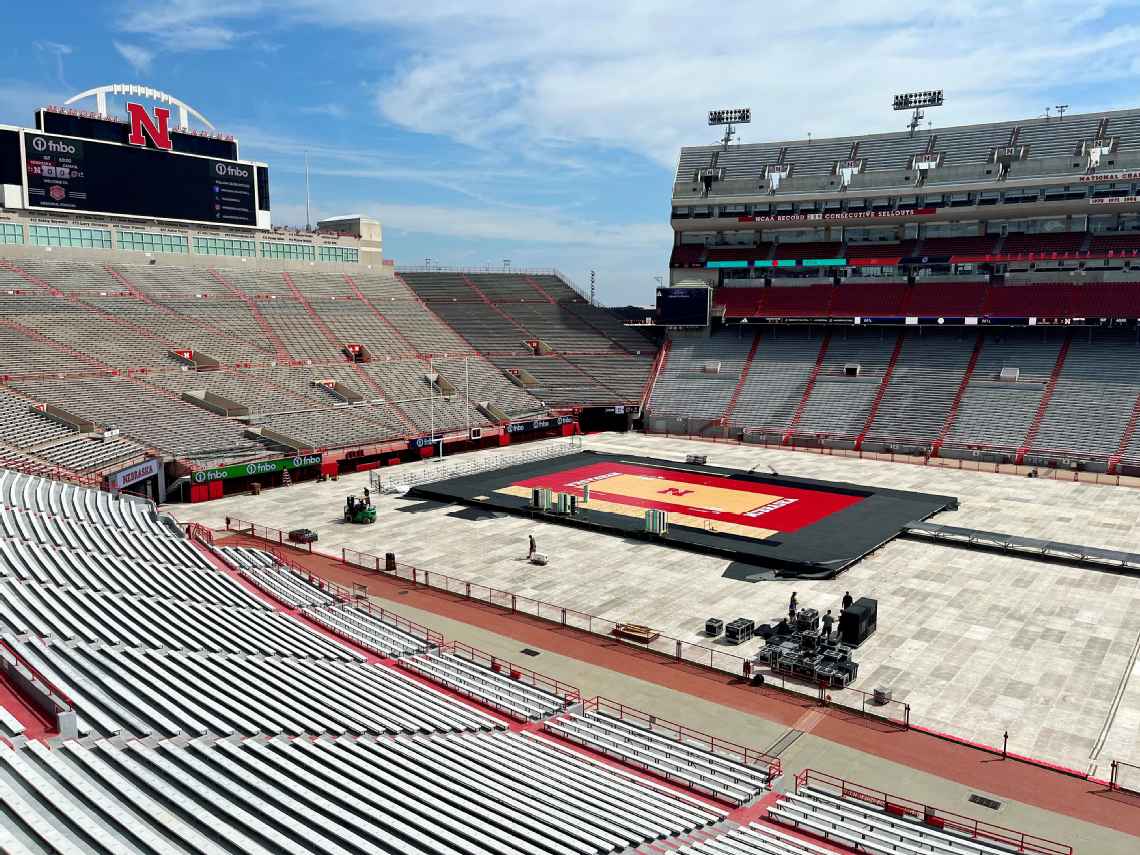
I know what you’re thinking. How do you get 90,000 people to cough up $25 for a college volleyball match? Well, it helps to throw in a country music concert for starters. Then add a second match to double the volleyball (Nebraska-Kearney vs. Wayne State). Finally, most importantly, let fans know they just might break the regular-season attendance record for a women’s volleyball match… the same attendance record that volleyball rival Wisconsin stole from Nebraska just last season.

It fascinates me to read about sports competitions played in front of massive sold-out stadiums, weekend after weekend. Nebraska has filled those same 90,000 seats for every Husker football game for the past sixty years (making the venue the “third-largest city in Nebraska” for several hours each Saturday). Michigan’s Wolverines compete in the largest college stadium in America – 108,000 seats – with every seat taken more often than not. And like Nebraska’s volleyball match last night, my fascination is not just with the number of fans but also with how much they’re willing to pay. I’m in the market for tickets for my beloved Notre Dame; the football team headed to nearby Clemson later this season. Unless I’m looking for a nosebleed I’ll be paying north of $450 no matter where I sit.
My weekends are busy so I’m lucky to watch a football game on TV, let alone attend one in person. Yet every Saturday (and Sunday with the NFL) you have tens of thousands of fans gladly opening their wallets and purses to do just that. It’s a loud, colorful thread (rope?) in the fabric of American society.

Major League Baseball (MLB), with an average of 45,000 seats per stadium, is even more confounding to me. In an endless spring-summer season of 162 games, half are played at the team’s home stadium. The majority of those seats are taken by season ticket-holders. With an average ticket price of $36 you’re handing over $3,000 for the season before you’ve even seen the first game. Besides, who has the time to watch so many baseball games (mostly at night)? Do what my friends back in Colorado do: split the season ticket in half with another fan and sell most of the tickets to family and friends. You’ll make a small profit and still go to as many baseball games as you can stomach.
My appetite for baseball games is about two a season; that’s it. Frankly I enjoy sitting outside in the summer air beside a friend as much as I do the game itself. Otherwise, keep me far from those madding crowds. The investment of time, money, effort (and sometimes hassle) to watch a game in person is almost always won over by the convenience, commentary, and cameras of television.

Of course, this is sports we’re talking about. If the topic was music and concerts, my post would take on a decidedly different “tone” (heh). Tempt me with a chart-topper from the 1980s – Billy Joel comes to mind – and I’d give up the time and money to see a live performance. Even better, dangle classical concert tickets in front of me, such as the San Diego Symphony at its cozy waterfront bandshell, or a summer concert in the outdoor gardens of Vienna’s Schönbrunn Palace (see below video). Classical concert crowds are not nearly as madding as those for sports.

About that regular-season attendance record for a women’s volleyball match. Wisconsin set the bar with an impressive 16,833 fans last season by filling its basketball arena. Nebraska’s official tally last night was 92,003 fans… more than five times as many (on a Wednesday night, no less). Way to crush those rival Badgers, Husker Nation. That’s what I call a madding crowd.
Some content sourced from the ESPN article, “How Nebraska volleyball plans to pack Memorial Stadium”, and Wikipedia, “the free encyclopedia”.




 Life In A Word