
In southwestern Alberta, Canada, there’s a historical landmark curiously named “Head-Smashed-In Buffalo Jump”. It’s the former location of a vast communal bison trap. Thousands of years ago native hunters would drive herds of the roaming animals over the plains and then right over the adjacent cliffs, in what is described as “the single greatest food-gathering method ever developed in human history.” The buffalo aren’t running in this part of Canada anymore. They’re no longer running in Boulder, Colorado either.
 In case you missed it, the American college football season kicked off last Saturday… in Dublin, Ireland. Kansas State played Iowa State in a converted rugby stadium in front of a sell-out Guinness-filled crowd. A roving reporter took to the streets to ask locals what they knew about the American game and the answers were wonderfully ignorant. How many points is a touchdown? (“4?”) Name any American college football team (“Yankees?” “Dodgers?”) And then my favorite: What is Kansas State’s mascot? (“A tractor?”) Not a bad answer if you ask me. I’d guess there are more tractors than wildcats in Kansas.

Speaking of wild things, let’s get back to Boulder. The University of Colorado (CU) boasts one of the few live animal mascots in college football: a full-grown snortin’ stompin’ buffalo named Ralphie. Before each half of the home games Ralphie is released from her trailer on the sidelines (yes, Ralphie is a “her”) to run a horseshoe lap around the field at full speed, before her five handlers corral her back into the trailer. It’s the stuff of rodeos, and more than a few handlers have eaten dirt in the process (but at least they earn a varsity letter for their efforts).
 Ralphie is actually the sixth live buffalo to represent CU since the mascot was selected in 1934. But Ralphie VI – aka “Ember” – has a singular distinction. She’s just not into the run. Whereas her five predecessors ran for at least ten seasons each, Ember decided to call it quits after just three. The University officially called it “indifference to running” and cut Ember from the team so she could spend the rest of her days roaming in pastures. Maybe Ember’s thinking she’s going to go over a cliff every time she runs. Can you blame her for hanging it up? No word on whether Ralphie VII is up for the task.
At least CU has a ferocious mascot, one a fan would associate with the Colorado surrounds. Like Texas’s Longhorn or Florida’s ‘Gator, you want a mascot that speaks to your particular locale and does so with a confident puff of the chest. But instead, a lot of America’s college football mascots have you thinking either lightweight or what the heck is THAT?

Cases in point. If I pull up this year’s top college football teams, I guarantee I’ll find several to underscore my point. And I am right. Ohio State’s mascot is a buckeye (which is a tree, and not a very ferocious one at that). Georgia’s is a bulldog, described as “loyal, gentle, and affectionate”. Oregon’s is a duck (A duck!) Alabama is known as “the Crimson Tide”, which was a reporter’s colorful spin on a long-ago game played in the mud (and not a mascot at all). Finally, Arizona State’s is a Sun Devil, which better belongs on Saturday morning cartoons than Saturday afternoon football fields.
On the other hand, you have the Penn State Nittany (Mountain) Lions, the Michigan Wolverines (don’t mess with wolverines), the South Carolina Gamecocks (don’t mess with those either), and the Miami Hurricanes (not an animal, but points for ferociousness and local flavor). Any one of those deserves to stand side-by-side with a live buffalo.

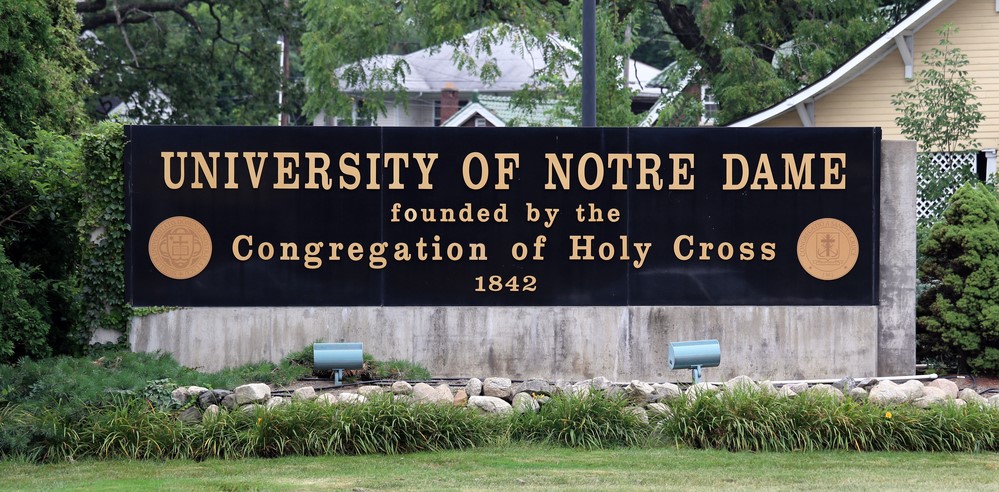
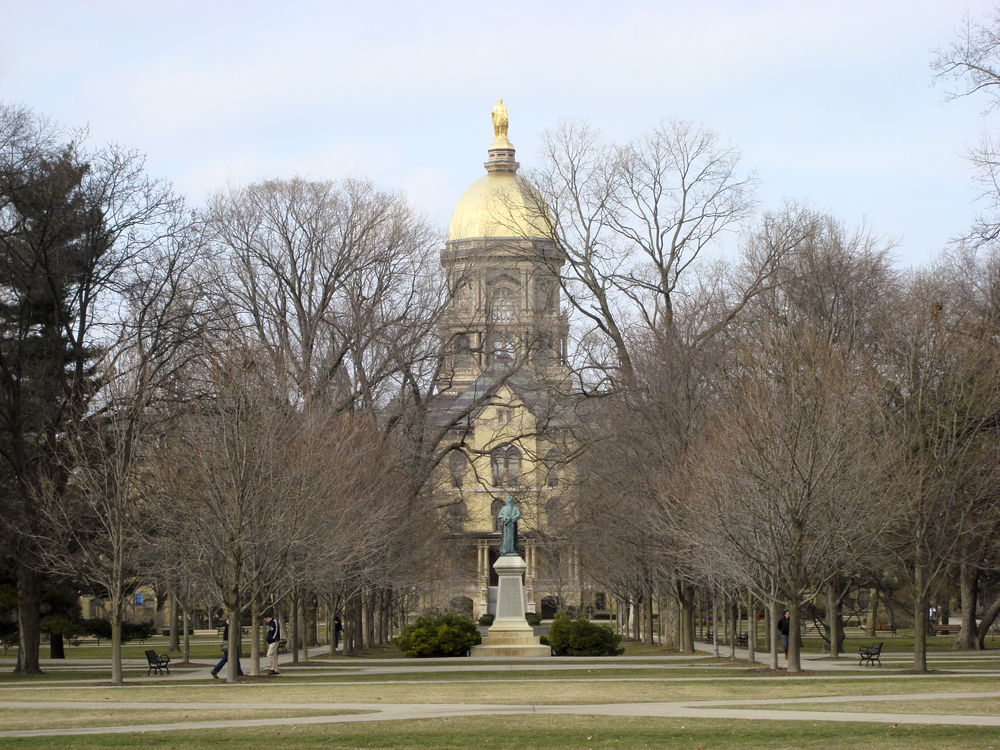
As much as I’d like leave this topic with Ember the Buffalo and her chest-thumping buddies, I sheepishly include one more: my beloved alma mater Notre Dame. We at Notre Dame are the Fightin’ Irish, because our football teams (at least those from the early 1900s) showed “the grit, determination, and tenacity characteristic of Irish immigrants”) That all sounds great until you see our mascot: a leprechaun who looks like he’s taking a break from the Lucky Charms cereal box. Is there anything less ferocious and less “state of Indiana” than that?

If it were up to me, Notre Dame’s mascot would be an open-wheeled, open-cockpit IndyCar (VROOM! VROOM!), the kind they race every year at the Indianapolis 500 just four hours south of campus. An IndyCar toughs out a jigging leprechaun by a mile, not to mention an indifferent buffalo who’d rather roam than run. I still say, good on you for choosing to head out to pasture, Ember. I wish the Notre Dame leprechaun would tag along.
Some content sourced from the Athabasca University Press article, “Imagining Head-Smashed-In”, the CUBuffs.com article, “Ralphie VI retires”, and Wikipedia, “the free encyclopedia”.


 Life In A Word