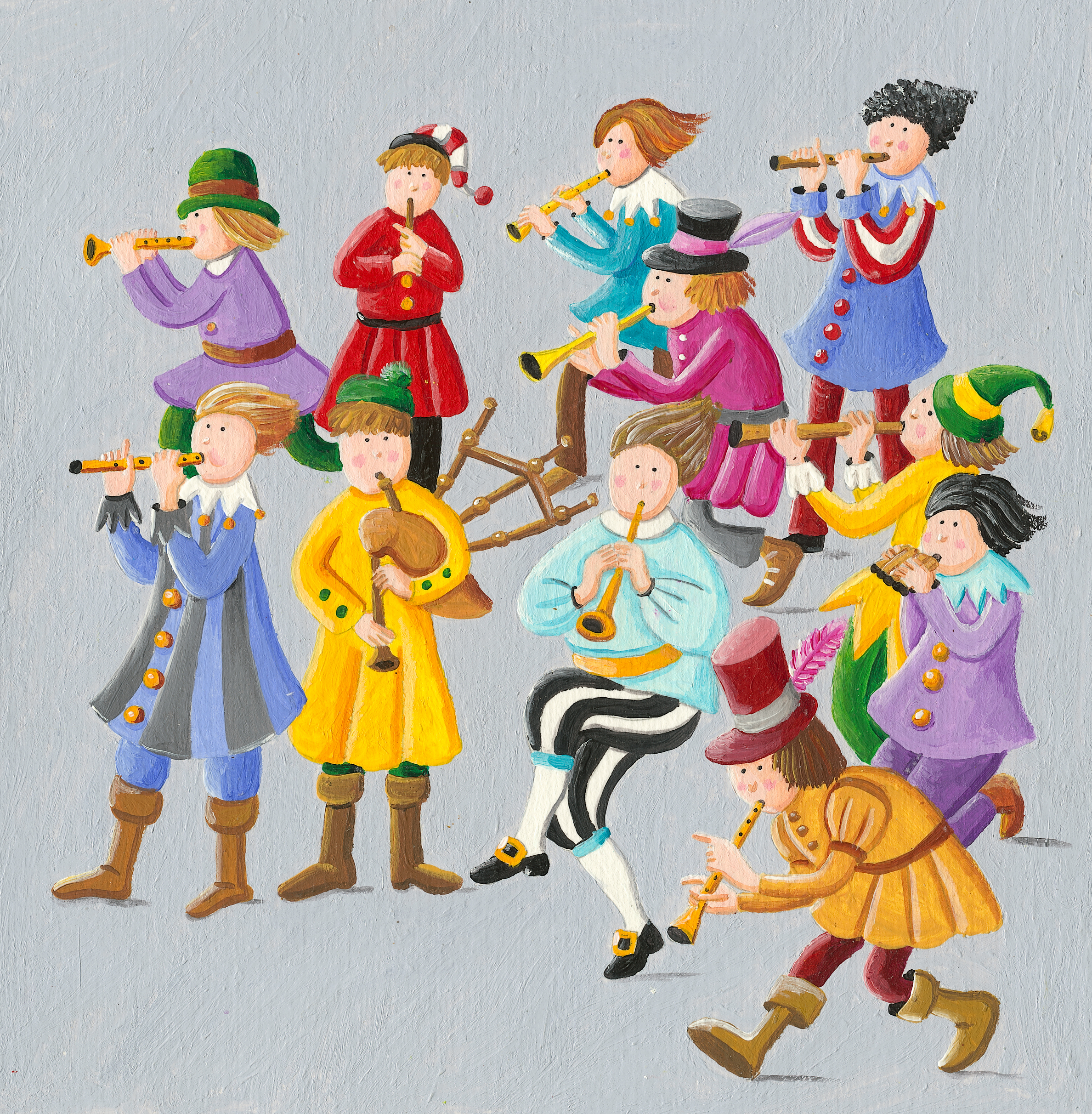
The Give-and-Get Machine

This Christmas season, by tidy coincidence, our family’s Twelve Days of Christmas will give to us six family members, Five Gold Rings, four restaurant dinners, three neighborhood gatherings, two Christmas concerts, and a downtown parade of horses, dogs, and Santa. As if that’s not enough “get” this year, we’ll also have a couple dozen presents under the Christmas tree… most processed through the Give-and-Get Machine.

I’ll get to the Machine in a minute but let’s start with the exception.  In early October I walked into a local retailer, picked out a gift for my wife, and handed over a credit card.  In exchange, the clerk handed over my purchase in a small paper bag.  I took it home, wrapped it myself, and – two months later – placed it lovingly under the Christmas tree.  If you’re thinking, Man you went to a lot of trouble, Dave – I sure hope your wife appreciates it, then you, my friend, are a product of the Machine.

What is the Give-and-Get Machine?  It’s technology’s approach to gifting.  When you choose to give a gift this year, nine times out of ten you’ll plop down on the couch, open your laptop, and navigate to your favorite e-commerce website.  If you don’t know what to give, you can choose between “Last Minute Deals” or “Top Picks for You” (based on previous spending).  Once you decide, you’re probably less than five clicks from the finish line, especially if your recipient is in your “Address Book” and you’ve already stored your personal information.  Add to shopping cart, choose delivery address, confirm purchase, and you’re done.  But wait!  You can also add gift wrapping and a message for a few more pennies.  Well now, aren’t you the savvy gift-giver!

The convenience of the Give-and-Get Machine is undeniable.  After all, my purchase in October meant a one-hour roundtrip drive, to a shop where I may or may not have found something.  Add another fifteen minutes once I got home to wrap the gift and add the To:/From: tag.  You, meanwhile, accomplished the same “task” in maybe ten minutes, with a mug of hot chocolate and a few keystrokes from the comfort of your kitchen table.

“Task” is the operative word in the last paragraph.  Gifting should spring from the heart instead of the Task app of your smartphone, right?  Gifting should be a choice, not a chore.  Perhaps those of us who default to the easy-out Give-and-Get Machine are missing out on the real meaning of Christmas.

Admittedly, the Give-and-Get Machine includes some really nifty apps.  If you’ve ever used Gift Hero (“The Best Wish List Ever”) you know what I mean.  GH is the perfect solution for the family that exchanges gifts but has reached the age (or proximity) where no one knows what to get each other.  On GH each of you creates wish lists and the lists are shared with everyone else.  Once you choose a gift from another GH list it’s marked as “taken” to avoid duplicates.  Most gifts are hyperlinked to merchant websites for easy purchase, and you can add notes like color, size, and quantity.  Also, GH blocks you from knowing what has been taken from your own list by whom, so the element of surprise remains.

There’s an endless debate with apps like GH.  I mean, let’s be honest, it’s easy to skip any and all effort to be thoughtful about what somebody wants for Christmas when you have their list right in front of you.  On the other hand, you avoid the occasional embarrassing face-to-face exchange, where the recipient insists I love it when in fact they really don’t, and will probably regift it next Christmas.

Ultimately, the almighty dollar may be the decider between a gift from a store or the Give-and-Get Machine.  My wife and I found a nice assortment of books and toys for our Colorado granddaughters this year, at stores we visited both near and far.  We wrapped them all up, put them in a large box, and drove down to the post office.  The clerk measured the box and its weight and informed me the shipment “had to go by plane” instead of anything cheaper.  The cost was more than my annual subscription to Amazon Prime.

Maybe I shouldn’t be so critical of the Give-and-Get Machine after all.

The Twenty-four Days of Christmas

The Christmas season seems to begin a little earlier each year. Stores decorate and start their sales around Halloween. Lights go up on houses well before Thanksgiving, while Christmas cards show up in mailboxes by Black Friday.  The longer the season though, the more abrupt the conclusion. Be honest; who among us sings Christmas carols (or watches Hallmark movies) on December 26th?  Not many.  We worry and scurry for weeks about a single day – then suddenly it’s over.  Here’s a better approach.  Let’s focus instead on the one, true Christmas season preceding the day. Let’s focus on Advent.

For most Christians, Advent refers to the twenty-four days before Christmas (not to be confused with the song-famous Twelve Days, which come after Christmas).  Advent begins four Sundays before December 25th.  The word literally means “coming”, as in the (first coming) birth of Jesus at Christmas, and the (second coming) reappearance of Jesus at the end of time.  If you’re looking for the season’s theme song, go with “O Come, O Come Emmanuel”.  It’s the one, true Advent carol.

Once upon a time Advent included fasting, penance, and daily prayer, but today the season seems to be nothing more than a countdown.  Even in Sunday church services, the four candles of the Advent wreath are lit as the four Sundays pass by – a weekly countdown to the Christmas candle in the center. Here’s a more efficient idea.  Let’s add another ball in Times Square; one that takes twenty-four days to drop instead of sixty seconds.  Might save a lot of wreaths and calendars.

Speaking of calendars, maybe a countdown is enough to signify a season.  Advent calendars are all the rage these days.  I had one when I was a kid; the flat, cardboard kind with twenty-four numbered doors of varying shapes and sizes.  Oddly, the doors were never arranged numerically, as if the calendar was made more appealing by having to search for a given day.  Not so oddly, each door fronted a bit of chocolate.  As if waiting twenty-four days for Christmas wasn’t hard enough, Advent calendars forced a kid to wait twenty-four hours to “open” each piece of chocolate.  A test of patience.


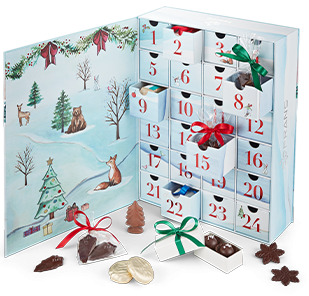
If cardboard and chocolate don’t catch your attention, perhaps you’d prefer a more elaborate version of an Advent calendar.  Consider Fran’s Chocolates of Seattle (above left), which produces its annual calendar fronted by an original watercolor.  Add in twenty-four delectable chocolates in twenty-four drawers, and this calendar sets you back $175.  Or how about Liberty London’s “Beauty Advent Calendar” (above right), which includes twenty-four wellness products – many of them full-size – like probiotic deodorant, essential oil candles, and skin bronzer?  This one sets you back $275, with the price justification you can re-gift whatever items are not to your taste.

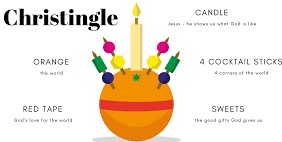
Lest you think a fancy (or not) calendar is the only way to acknowledge Advent, I can’t close without mentioning the Christingle.  I don’t remember creating one of these as a kid.  A Christingle is made up of an orange, a candle, a bit of red ribbon, and four sets of dried fruits or sweets, skewered on cocktail sticks.  It’s a strange-looking assembly, but the Christingle gets an “A” for symbolism.  The orange represents the world.  The candle represents Jesus as the light of the world.  The red ribbon represents God’s love (or Jesus’ blood).  The fruits/sweets represent the gifts God gives us, and the cocktails sticks represent the four corners of the globe.  Lots going on in one sort-of-neat package.

Austria may lay claim to the biggest Advent calendar in the world!

If you’re reading this post before December 1st, you have the entire twenty-four days of Advent ahead of you.  Twenty-four days to slow down and appreciate the meaning of day twenty-five.  Sounds more like a season than a single day, doesn’t it?  Mark your calendar then.  Advent is here.

Some content sourced from Wikipedia, “the free encyclopedia”.

Your True Love’s a Nut Job

Each Christmas season (which translates to every waking moment from Thanksgiving to the New Year), I’m fascinated we still sing “The Twelve Days of Christmas”. I feel like a character in the Dickens world of Scrooge and Tiny Tim as I labor through the verses (ditto “Here We Come A-wassailing”).  I should sing with an English accent.  More to the point, I question the TDoC lyrics.  What other context do we have for turtle doves and calling birds?  What’s with the gold rings?  Don’t we owe it to ourselves to understand more about a carol we’ve been singing for over two hundred years?

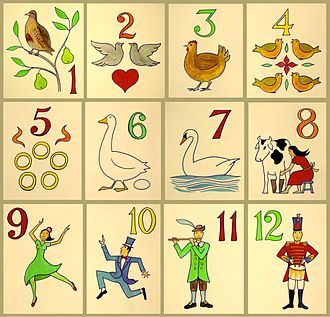
Depending on the source, “The Twelve Days of Christmas” was either a) written as a children’s book – which eventually morphed into a song, or b) “code” for memorizing elements of Christian religion at a time when faith could not be openly practiced.  I prefer the latter.  For example, the two turtle doves represent the New and Old Testaments of the Bible, while the four calling birds represent the gospels of Matthew, Mark, Luke, and John.  The six geese represent the days of creation (“and on the seventh day He rested”), while the eleven pipers represent the faithful disciples of Jesus Christ.  “My True Love” is Jesus himself.  Clever, no? (see here for the full “code”).

Wikipedia claims “the exact origin and meaning of the Twelve Days song are unknown…” so perhaps we should just leave it buried in the past.  But I can’t do that.  TDoC is so much more fun if you take the literal approach to the words.

The title is innocent enough.  “The Twelve Days of Christmas” equals Christmastide, a season of the liturgical calendar in most churches.  Christmastide begins on December 25th and lasts until January 5th (the day before the season of Epiphany).  Twelve days.  That’s even more celebrating than Hanukkah.  Fine with me – our family likes to drag out Christmas as long as possible.

Beyond the title however, “The Twelve Days of Christmas” descends into total chaos.  Consider the structure of the carol.  TDoC is a “cumulative” song, which means you add the previous verse to the one you’re singing – just like all those animals in “Old MacDonald Had a Farm”.  By the twelfth verse you’re singing about everything, and you’re totally exhausted.  Some people solve the length by having a different voice for each gift.  That’s great for the partridge in a pear tree singer, but kind of sucks for the drummers drumming singer (who only gets one chance to shine).  Make sure you have a solid voice for the partridge in a pear tree.

Speaking of the gifts, let’s do some analysis.  Other than the rings, your true love has an obsession with birds.  He or she is gifting you an aviary on six of the first seven days.  Doves, hens, swans, and more.  Not only that, you’re getting pear trees and God knows how many eggs from those a-laying geese. (Note: pears and eggs make great Christmas gifts).

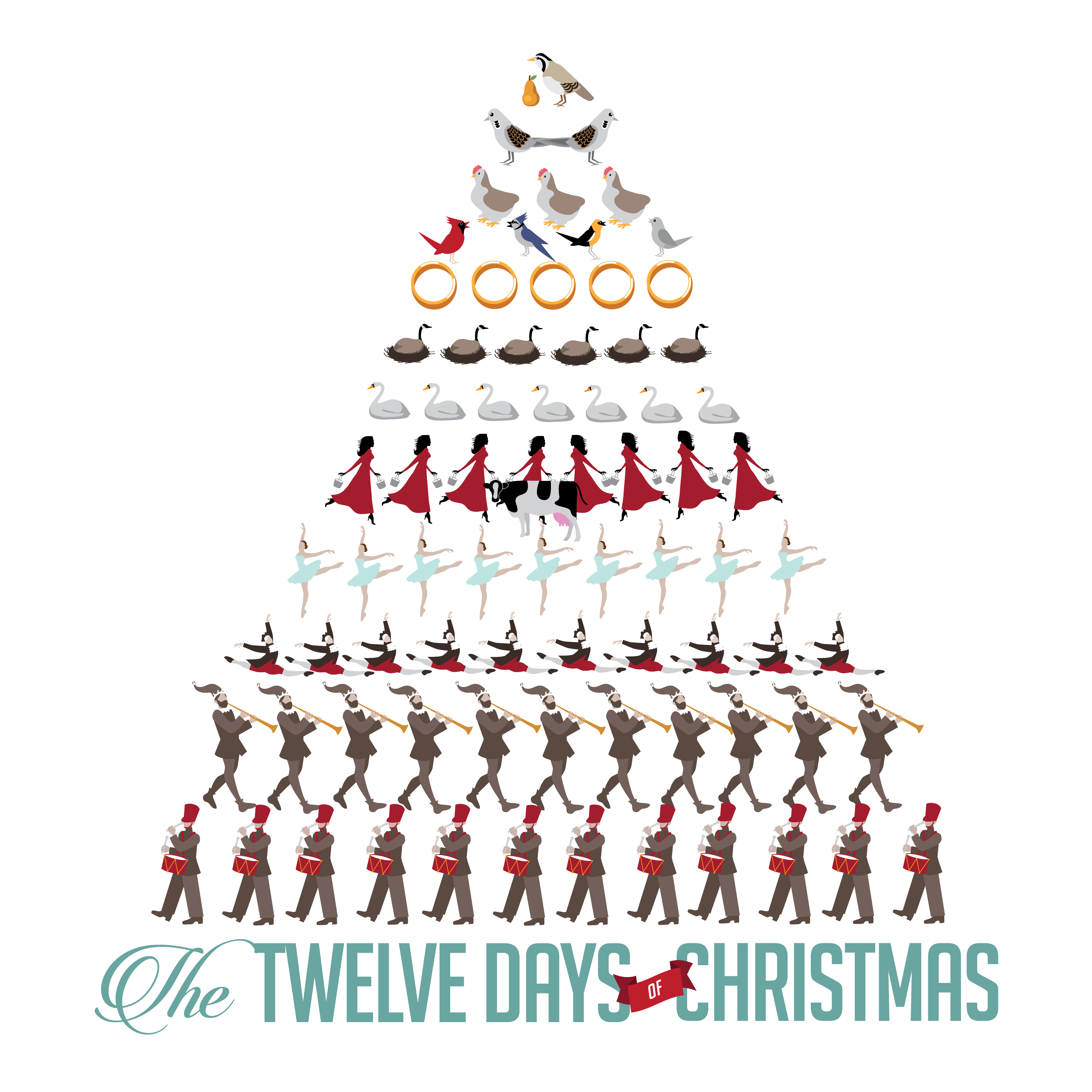
The final five days, your true love gifts you a bunch of workers and merrymakers for the estate you apparently have.  You’ll gain a herd of cows (what else are those maids a-milking?) and you’ll have a some dancers and a band making quite the ruckus on your front lawn.  The neighbors may complain.  C’mon, you say: how much noise can eleven pipers make?  Eleven?  So you forgot about the aggregate of a “cumulative” song, did you?  Your true love actually gave you twenty-two pipers by the time January 5th arrives… and twelve drummers, thirty-six dancers and thirty guys who like to jump.  And don’t look now, but your twelve pear trees are swarming with 184 birds.  Maybe you don’t have any pears after all.

Sorry, but if this is your true love’s idea of Christmas giving, he or she is a nut job (or at least an animal hoarder).  Here’s my advice: run.  Take your forty gold rings and date one of those lords or ladies instead.