Keeping Score at the Grocery Store

In the chaos of the supermarket a few days before Christmas, milk, eggnog, and a package of those Li’l Smokies sausages fell into our shopping cart. These items don’t usually find their way into our frig but the year-end holiday meals somehow demanded them. If the market wasn’t so frantic I would’ve also whipped out my phone to see if these purchases deserved my dollars. After all, just about everything we use in the kitchen (and bathroom) these days has a little numeric value lurking just below the surface.
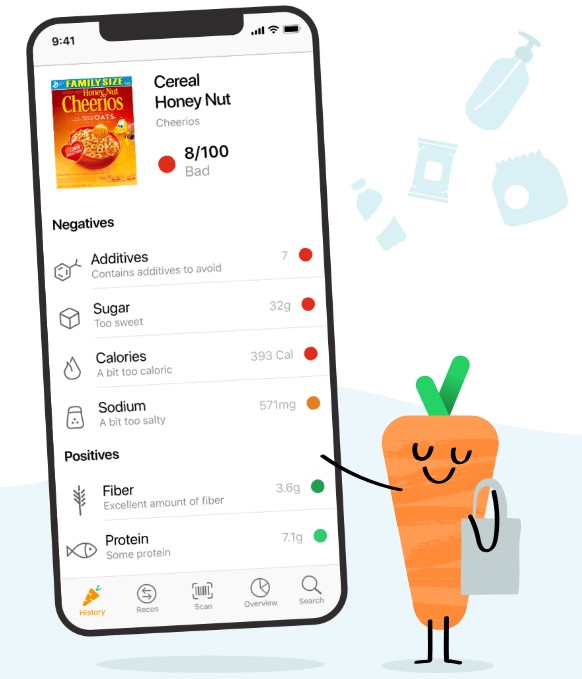
Nacho Cheese Doritos are now a “5” in my world.  You might say pretty good! until I tell you that’s on a scale of 1-100.  But let’s say you choose Blue Diamond’s Almond Nut-Thin Crackers instead.  The number skyrockets to 84.  A roll of Wint-O-Green Life Savers earns a 28 while a box of Tic Tac Freshmints doubles the number.  Nature Valley Granola Bars? 51. Heinz Ketchup? 33.  And in the ultimate insult to products considered “food”, perfectly round Nabisco Oreos earn a perfectly round 0/100.

What’s with all the tallying, you ask?  The numbers are simply the output of a little smartphone app called Yuka, which joined my personal parade of subscriptions last May.  In the words of its young French founders (Julie, and brothers Francois and Benoît), Yuka “deciphers product labels and analyzes the health benefits of foods and cosmetics”.  Plain English: Scan the barcode of anything in the supermarket and Yuka tells you whether to buy it or not.

Candidly, it wasn’t the numbers that sold me on Yuka.  Rather it’s this: the app is completely ad-free because brands cannot pay Yuka to advertise their products.  In other words, the numerical ratings I’ve shared are generated objectively, using common perceptions of the health benefits of ingredients.  Yuka has rocked the small space known as my kitchen pantry.

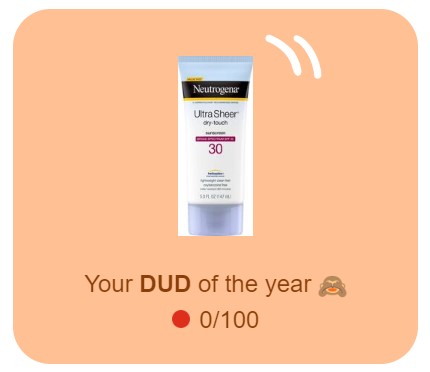
Never is this overhaul more evident than with “cosmetics”, Yuka’s catch-all for everything you find in the bathroom.  In the last eight months I’ve swapped out my deodorant, mouthwash, shaving cream, shampoo, and face wash for items with better Yuka numbers.  Five products I used every day and purchased for years just went flying off my medicine cabinet shelves, replaced by other products that are healthier on and in me (including Aveeno’s facial cleanser, which earns a perfect 100).

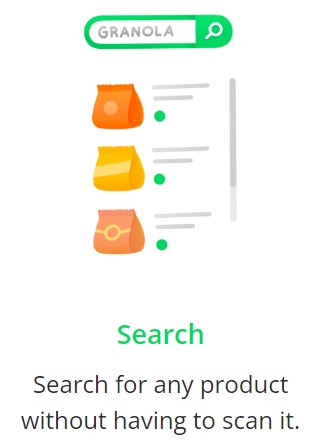
Yuka (the name is a nod to Yucatán) is about more than scan-and-score.  You can also simply search on products, mining a database of five million entries.  Even if a product isn’t in the database you can enter the ingredients from the label and Yuka will give it a number.  And if that number is lousy (like it is for your Oreos or my L’il Smokies) Yuka will point you to a list of alternatives with better numbers.  Again, Yuka doesn’t recommend one product over another; it just presents the numbers for you to consider.
In a nod to the healthy habits of Europeans (who favor fresh foods), Yuka’s founders realized its app was most popular in America, where we are so fond of packaged products.  So they packed up their French offices and French families and moved to the middle of Manhattan – temporarily – to better connect with their target audience.  Eventually they’ll head back home but not before Yuka is sure to land on the smartphones of millions of Americans.
Here’s one more aspect of Yuka I appreciate: the founders take time to communicate with their users.  In the eight months I’ve subscribed, they’ve sent me twelve emails with interesting articles about healthy eating, healthy “cosmetics”, and the entertaining evolution of their little company (which includes a dog as an employee).  They also sent me a fun video of their first few days in New York City.  And just last week I received a year-end recap of my app use (93 products scanned with an average score of 46).  No advertisements and no product pushes.

The subscriber version of Yuka is $15/year (you can try a more limited version for free), which includes the convenient scan-for-a-score feature.  Furthermore, your subscription dollars are what keeps Yuka in business, instead of funding manufacturers who’d like nothing more than to push their products on you.  That’s just one of the reasons I now keep score at the grocery store.

Smooth Moves

This morning after a workout at the gym, I set up at the locker room sink for a shave. A few sinks down, I noticed a guy shaving his entire head. That takes some talent, because you can’t see all that real estate in the mirror. He headed in all directions with the blade – up and over the summit and back down the slopes, until he had a clean-shaven dome. Used to be – a guy shaved his head for religion, or the military, or maybe he’s just extreme into swimming or cycling.  Not anymore; the male shaved head is just another man in the crowd these days.

This person isn’t me, but you get the idea.

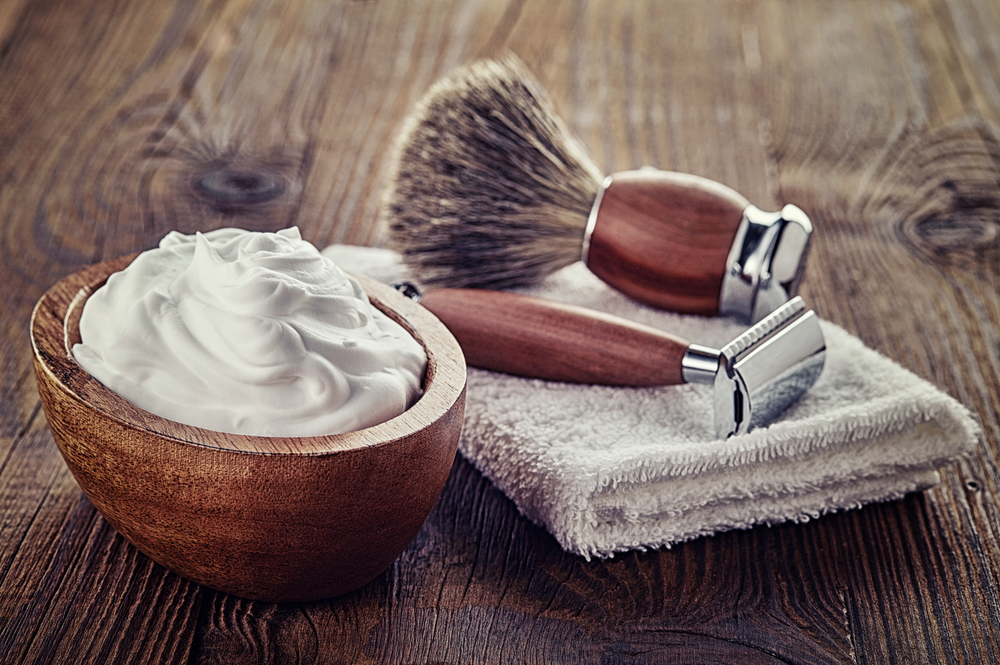
Shaving is one of those things we guys do almost absentmindedly.  We each have a unique routine – no one is exactly the same as another.  There aren’t guidelines so much as common sense: a good shave needs hot water, a substantial cream, and a sharp blade (or an electric).  A guy who shaves daily is probably changing his blades once a week (though my friend two sinks down surely changes more often).  The creams come in a hundred different varieties.  Over time I’ve found one that works better than others, but again that’s just me.

Some guys shave in the shower.  I can’t do that – not unless I install a mirror.  If I’m not seeing myself I’m gonna get cut, or at least miss several spots.  Earn yourself enough razor burn, and technique takes on a whole new importance.

A man in his fifties (me) shaving daily has come to the sink 15,000 times since he first picked up a blade.  That’s enough times to develop technique, and also to be somewhat absentminded about it.  And therein lies the simple pleasure of shaving: the five minutes I need from start to finish is a great ponder moment.  Sure, you’re staring yourself in the mirror and you have some sense of what you’re doing, but you’re actually thinking about other stuff.  What am I going to accomplish today? Was that a decent workout or could I have done better?  Is that a grey hair?

(Note: women probably identify with shaving as a ponder moment too, but I’ll let a female blogger weigh in on that.  Better her experience than my own presumption.  Kind of like saying I know what it’s like to be pregnant.)

15,000 shaves got me thinking – why do guys do this at all?  It had to start somewhere, didn’t it?  Picture a caveman waking up one morning and seeing his beard dragging on the ground.  Maybe he stumbles on it a few times.  Maybe he throws it over his shoulder like a tie, but it still gets in the way.  So he takes a sharp rock and lops it off.  Voila: the very first shave.

Nope, not me either.

When did “real” shaving get started?  How about 3000 BC?  Go back that far and you’ll find the birth of personal hygiene.  Shaving was crude in those days – as you would expect – just shells or sharp tools to make the cut.  Straight razors (basically a pocket-knife on a larger scale) came along in the 18th century and were the method of choice for the next two hundred years.  Then Gillette invented the safety razor – the disposable cartridge blade – and the straight pretty much disappeared (save for a few men’s salons today).

straight razor

Shaving doesn’t have many myths, but the big one claims the practice promotes faster hair growth.  Not true.  Shaving gives the appearance of thicker hair (but only because you’ve lopped off what used to be a tapered hair).  Faster-growing hair has everything to do with aging, and nothing to do with shaving.

No doubt as I type, someone is inventing an easier way to shave.  Perhaps a potion for the face, dissolving all visible hair in mere seconds.  Or how about an army of nanobots – tiny, industrious mowers working together to make all desired surfaces smooth and clean?

I don’t think I’d be up for either of those options. No matter how perfect the shave might be, I’d hate to give up my ponder moment.  Questions need to be asked; decisions need to be made.  Nope; not ready to put down the blade just yet.

Some content sourced from Wikipedia, “the free encyclopedia”.

Wee Wardens of Wash

Let’s wage a debate where the arguments “against” easily beat the arguments “for”, but we’re so stubbornly “for” we wage the debate anyway. Sound like politics?  Not today. Race relations? No way, José. Pepsi vs. Coke? Maybe another time. Today we’re putting a much hotter topic on the table: shampoo. More specifically, hotel shampoo.

Last weekend my family and I stayed at a Fairfield Inn – a low-end entrée on the Marriott hotel menu.  Fairfield’s are fine by us – clean and basic overnight accommodations, (with a free breakfast that actually digests).  In this instance, we entered the lobby to the smell of freshly-baked help-yourself chocolate-chip cookies.  That was a nice surprise.  After check-in, we made our way around the corner to the elevators, and on up to our third-floor rooms.

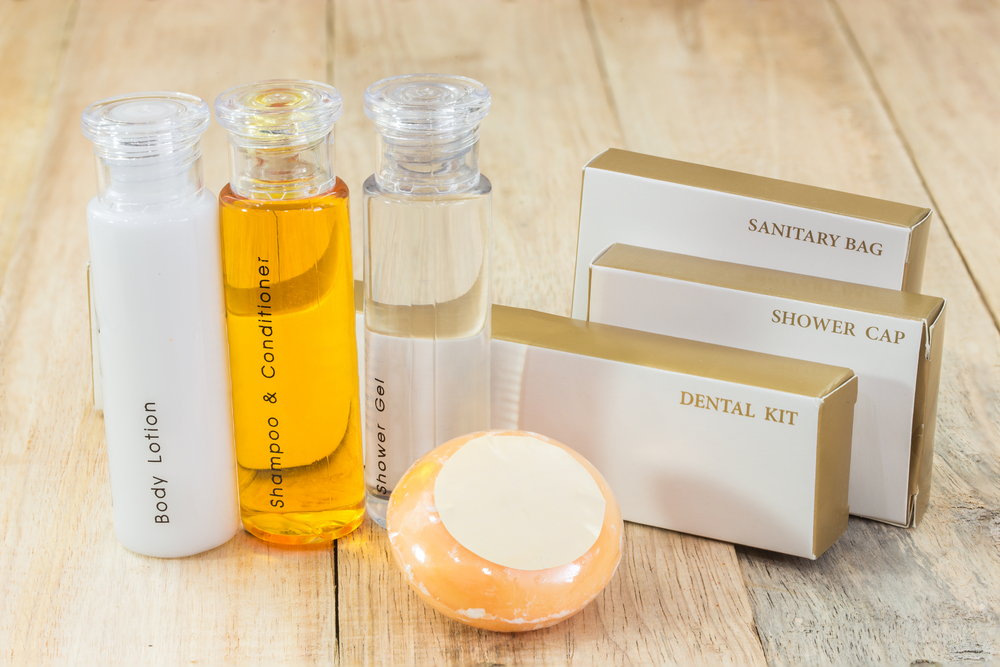
Let’s pause here for a quick survey.  What’s the first thing you do when you enter a hotel room – check out the view?  Channel-surf the TV?  Flop on the bed?  Not me. I head to the bathroom to check out the small “freebies” on the counter.  Chances are I’ll find (at a minimum) soap for the sink, soap for the shower, boxed tissues, makeup-remover wipes, and maybe even a tiny cloth to polish shoes.  Also for the taking: shampoo, conditioner, and body-wash bottles, lined up like little dominoes just waiting to take the plunge into the nearby shower.  But guess what?  Those little soldiers of sanitation are about to go MIA.

In the next few months, according to a Wall Street Journal article, many of America’s hotel bathrooms will drop “little bottles” in favor of shower-wall bulk dispensers.  In today’s environmentally-conscious world, you have to wonder why it hasn’t happened sooner.  Consider the arguments against these little grime-fighting gunners.  They create tons upon tons of plastic waste.  They get thrown away half-full – so effectively waste on top of waste.  The moment you need them is the moment you’re already wet in the shower (and they’re still over on the counter).  Finally, for anyone who requires reading glasses – hello, me – little bottle labels are impossible to decipher while you’re standing under shower spray. Raise your hand if you’ve ever put body wash in your hair.

More arguments against.  Bulk dispensers keep the shampoo in the hotel and the bottles out of the landfills.  They give you as much or as little product as you need.  Bulk dispensers can easily be refilled by housekeeping (though picture the short-straw employee who has to decant the contents of the leftover bottles into the dispensers).  Finally, bulk dispensers eliminate five billion little bottles a year.  Okay, that last argument is pretty much the only one you need.  And yet…

This change brings me pain.  Staying at hotels won’t be the same without my wee wardens of wash.  My singular argument for?  I’m all about personal touch; the little things that make you go, “wow, I feel special”.  Those little heroes of hygiene do that for me.  So do chocolate-chip cookies.

To add fuel to the fire, I expect hotels to eventually remove everything else from the bathroom counter.  You’ll find nothing but a faucet, towels, and TP.  While they’re at it, they’ll eliminate the logo pens, the paper pads, the stationery, and even the bedside clock-radio’s.  Cleanse the room of anything moveable.  Why do this?  Because hotels know they can condition you to bring your own stuff.  And before you say, “Dave, that’s a stretch”, consider the airlines.  It wasn’t that long ago the ticket agent checked you in, printed your boarding pass, and slapped the luggage tag on your suitcase.  Pretty soon you’ll be flying the plane.

Truthfully, I can do without my little defenders of disinfection, as long as hotels don’t take away my elbow room.  But that’s already happening, isn’t it? Blame Japan for the “little room” concept.  America is now a breeding ground for “capsule hotels”.  Capsules give you nothing more than a bed-closet and a down-the-hall community bathroom.  They’re described as “cheap, basic, overnight accommodations”.  Wait, wait, wait – isn’t that the same definition I gave our Fairfield Inn?  One of these days someone will say to me, “Wow, the Fairfield. Y’all stay nice.”

In the meantime, rest in peace little marines of clean.  Your work is done.  Time for the big boys to take over.