Do-Re-Mi… Oh My!

Salzburg, Austria, a day-trip destination from our recent Viking River Cruise, is a popular draw for tourists.  On most days you’ll find more internationals roaming Salzburg’s Old Town than you’ll find Austrians themselves.  The compact city is famous for its historic buildings: churches, palaces, and fortresses dating back 1,000 years or more.  Mozart was born here.  But try as they might, Austrians will never be able to separate Salzburg from what attracts many to its streets: The Sound of Music.

I can think of only one movie we forced our kids to sit down and watch while they still lived under our roof.  Close to Christmas one year (an arbitrary connection because of the lyrics of “My Favorite Things”), the five of us spent three hours together in front of our not-so-big-screen TV watching the somewhat true story of the von Trapp family.  I’ve lost track of the number of times I’ve followed Maria, the Captain, and those seven engaging children as they outwit the Nazis.

For all of the movies I’ve watched in my life (and I’ve watched quite a few), The Sound of Music stands alone.  I’d describe it as a jewel you display in an elegant glass box on the shelf, taken down every once in a while to appreciate up close. The Sound of Music is a feel-good story – if not accurate – produced in 1965 at the end of the Hollywood’s Golden Age.  It remains the most successful movie musical of all time (adjusted for inflation), but I question whether today’s movie-goers would appreciate it as much as I do.
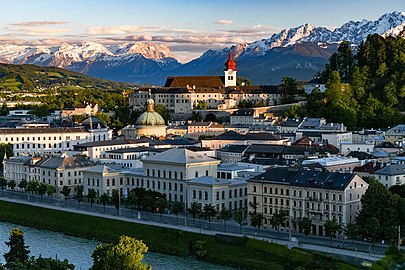
Salzburg, Austria

Most tours of Salzburg include references to buildings and locations included in The Sound of Music.  Our own tour – cut well short because of the flooding of the Danube – was a brisk walk around the Old Town, with only an occasional mention of the movie.  What surprised me was not how little of The Sound of Music was actually filmed in Salzburg (most was done on sound stages back in the States) but rather the Austrians’ utter disdain for the movie.
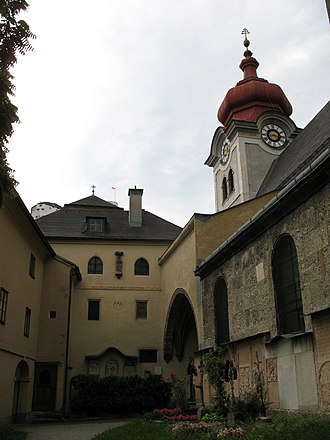
Salzburg’s Nonnberg Abbey

Consider, when it was first released The Sound of Music was only twenty years removed from the end of WWII.  The Nazi overtones of the film didn’t sit well with citizens of Austria and Germany.  Reviews (and box-office receipts) were not favorable in either country.  Coupled with the liberties the producers took with the story, you can see why Salzburg residents don’t exactly “Climb Ev’ry Mountain” to claim the movie as their own.

You’ll find endless trivia about The Sound of Music at IMDB.com and elsewhere.  Most facts are meant to point out discrepancies between the film and the actual story.  Here are fifteen of “My Favorite Things”:

1) Julie Andrews was cast as Maria, of course, but only because Audrey Hepburn declined the part.  Hepburn also denied Andrews the opportunity to play Eliza Doolittle in the movie version of My Fair Lady.  Each played the opposite role in the original stage adaptations on Broadway.

2) Andrews kept getting knocked off her feet in the famous opening scene where she sings and spins in an Alpine meadow.  She couldn’t keep her balance because the hovering helicopter used to film the scene generated too much wind.

Not as easy as it looks!

3) Andrews’ hair was meant to be worn longer but a bad color job forced the pixie cut, which Andrews kept for most of her acting career

4) Christopher Plummer was not a fan of The Sound of Music.  He reluctantly agreed to the part of Captain von Trapp and regretted every moment on set, especially those with the children.  He described working with Julie Andrews as “being hit over the head with a big Valentine’s Day card, every day”.  He nicknamed the movie The Sound of Mucus.  Much later he acknowledged the film’s worldwide success, as well as the Oscar-nominated talent of Andrews.

5) Plummer regularly drowned his acting sorrows in Salzburg bars and restaurants.  As a result his outfits needed to be resized towards the end of filming to accommodate his added weight.
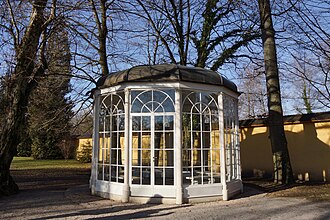
The gazebo (moved from its original location). The interior scenes were filmed In a much larger stage set reproduction.

6) The von Trapp children are Rupert, Agathe, Maria, Werner, Hedwig, Johanna, and Martina… not Liesl, Friedrich, Louisa, Kurt, Brigitta, Marta, and Gretl.  Also, none of the nine leads are Austrian (which certainly didn’t help the appeal of a film based in Salzburg).

7) Auditions for the parts of the von Trapp children included the four eldest Osmond brothers (not Donny), Kurt Russell, and Richard Dreyfuss.

8) Kym Karath, who played Gretl, the youngest of the von Trapp children, created her fair share of challenges.  She had a cold during much of the filming.  She almost drowned in the scene where the boat overturns in the lake because she didn’t know how to swim.  And she ate enough sweets on set to where her weight was too much for Christopher Plummer.  As a result, in the final scene walking over the Alps, Plummer is carrying a stand-in actress instead of Karath.

9) Nicholas Hammond, who played Friedrich, was not a natural blonde so his hair was bleached for the movie.  The coloring process caused some of his hair to fall out, which is why you see him wearing a “Tyrolean Traditional Alpine” hat when he’s seen singing “Do-Re-Mi”.

10) The day after the real von Trapp family left Austria (by train to Italy and then to the U.S., not on foot over the Alps to Switzerland), the Germans shut down all of Austria’s borders.

Salzburg’s Schloss Leopoldskron, where lakefront and garden scenes were filmed

11) The real Maria von Trapp is on screen at the beginning of the movie.

12) The real Maria also claims, if you can blieve it, her own personality was livelier than Andrews’ on-screen version.

13) The real Maria taught Julie Andrews how to yodel.  Watch the lesson here.

14) The film’s production demanded 4,500 extras, including those in the sold-out theater for the music festival.  The audience sings “Edelweiss” as if they know the song, but only because they spent time beforehand learning the words.

15) Despite the aforementioned Austrian disdain, The Sound of Music is played nonstop on the televisions of most Salzburg hotels.

Maybe all of this trivia changes your opinion of The Sound of Music.  Not mine.  There are countless reasons this film includes the tagline, “The Happiest Sound In All The World”.  The Sound of Music will always be that jewel in a glass box, waiting patiently to be enjoyed once more.  Suffice it to say, I’ll never say “So Long, Farewell” to the adventures of the von Trapp family.

Some content sourced from the Internet Movie Database (IMDb), and Wikipedia, “the free encyclopedia”.
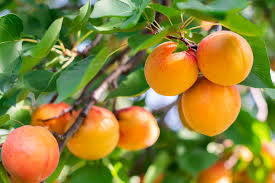
Monk Fruit

Let’s talk about apricots. If you read my last post, apricots are the last topic you’d expect in a series about a Viking River Cruise.  But fate played a hand when our ship only got a taste of the Danube River (while others were literally underwater), so I suppose we needed to satisfy our appetites on something else instead.  Like apricots.

Apricots are petite and peach-like

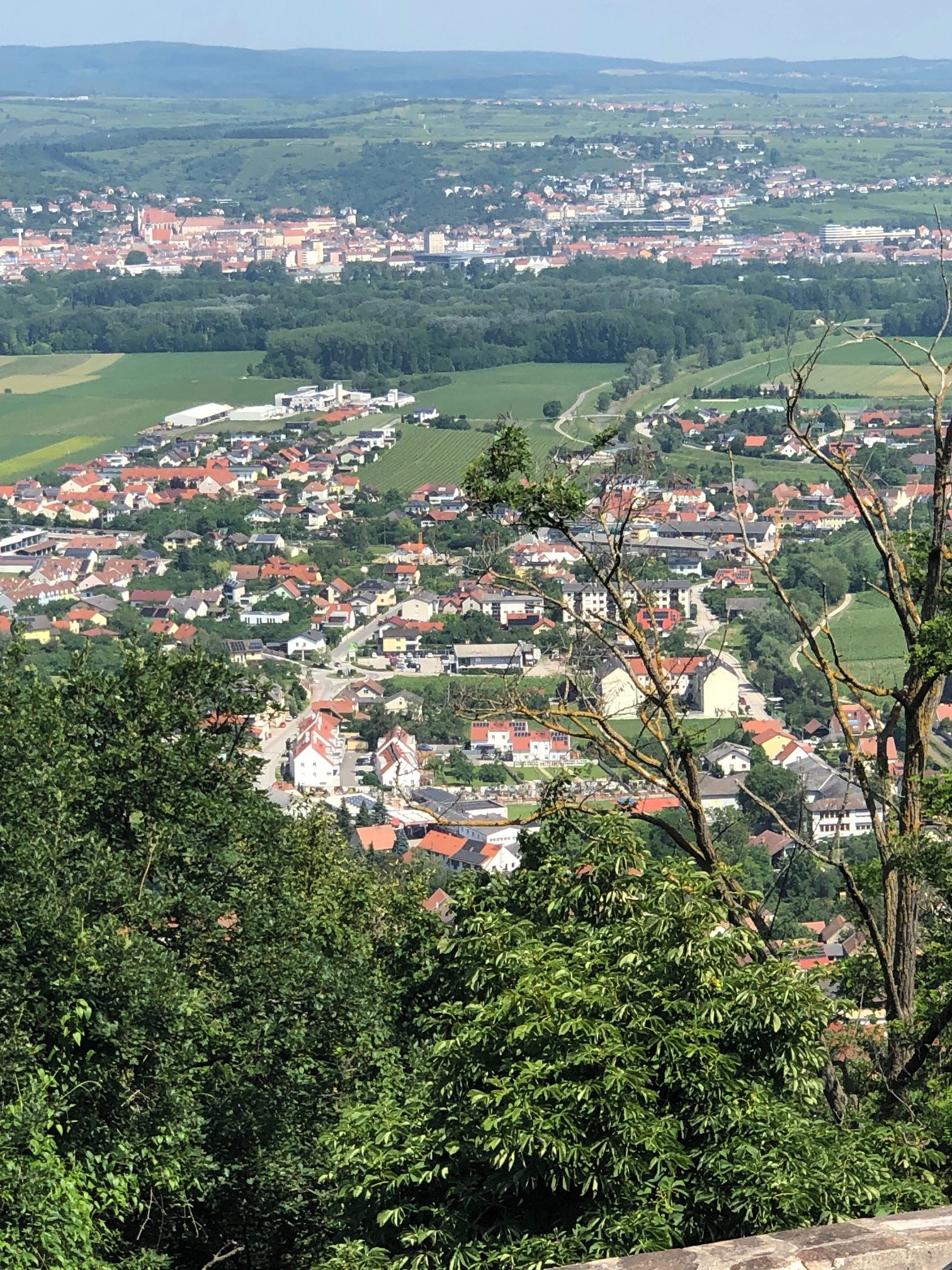
I don’t associate apricots with Austria at all (how about all the “a” words in that sentence there, huh?)  Austria is more about snowy Alps, Mozart, and the hills coming alive in The Sound of Music.  So it was something of a surprise to find myself on a hot, sunny day, standing in an apricot orchard in Krems, Austria. Almost floating above this little riverside town, you’ll find the fruit trees on the property of a Benedictine monastery known as Göttweig Abbey.

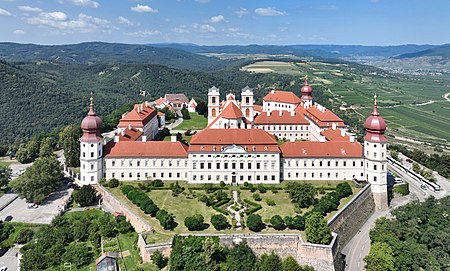
Göttweig Abbey, near Krems, Austria

Göttweig is an impressive complex of buildings, and even more impressive for its lengthy history.  The Abbey was built in the 1100s, rebuilt larger after devastating fires in the 1500s and 1700s, and survived relatively intact after the Nazi occupation of WWII.  Its library contains 150,000 books and papers, and its main structure houses the largest Baroque staircase in Austria.  But who cares about all that, I hear you saying.  Tell me about the apricots, Dave!

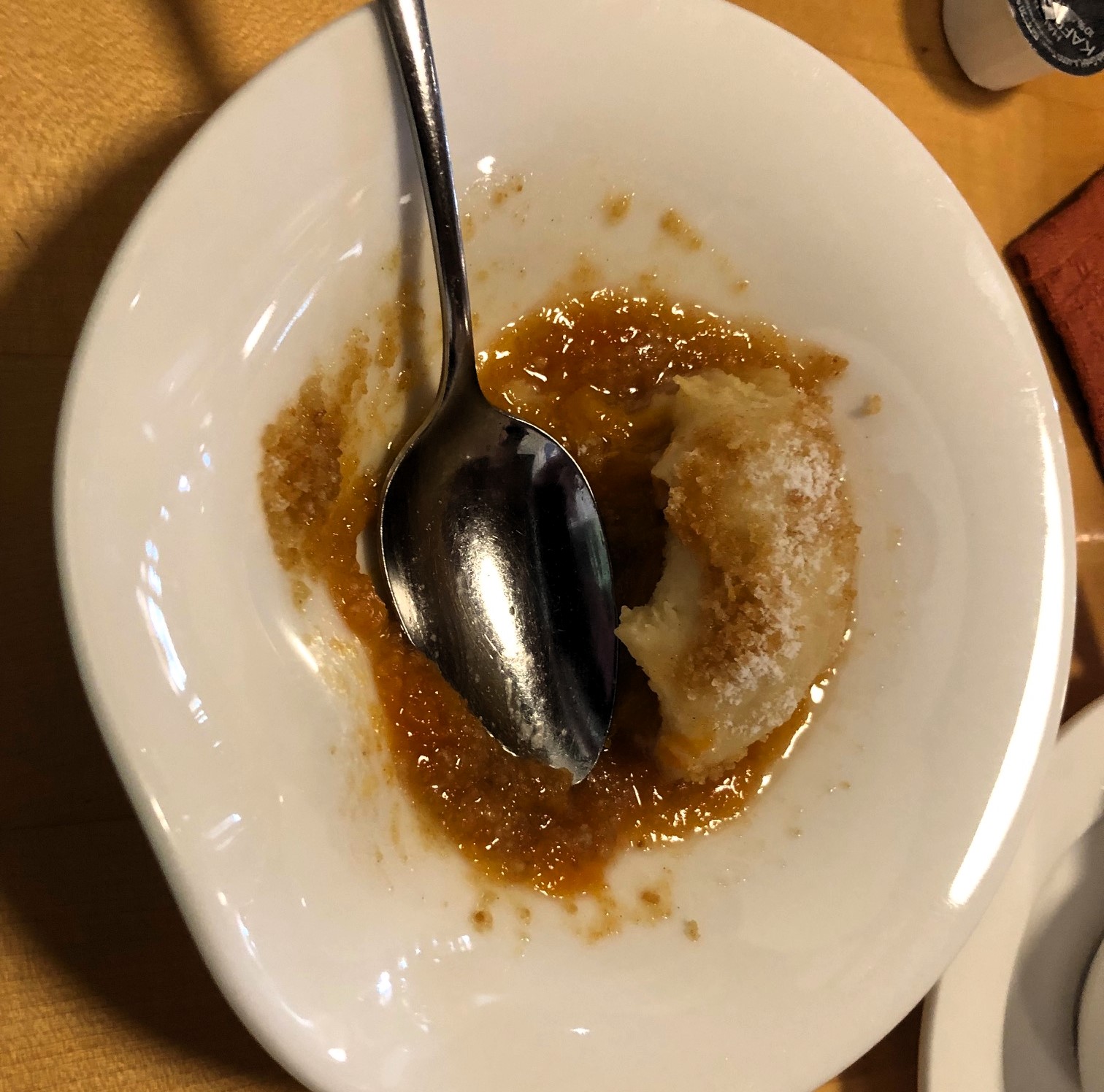
The last of my apricot dumpling

Let it be said; Göttweig brought apricots back to life for me.  The Abbey tour starts in its apricot orchard, where we saw the trees up close, on the verge of harvest time.  The tour ended with a short class on making apricot dumplings (unquestionably as scrumptious as they sound: a whole pitted apricot wrapped in puff pastry, topped with vanilla-apricot sauce, served hot).  And the gift shop… oh my, the gift shop.  Shelf after shelf of everything apricots, from syrups to jams to cookies to candy.  Even better, you’ll find a tasting bar for several varieties of Göttweig apricot wine and brandy (also available for purchase, of course).

The Abbey’s apricot orchard

When the tour took us to a little theater for a short film on Göttweig’s history, one of the monks (at least, I think he was a monk) served us apricot juice in tall glasses as a refreshment.  It was the proverbial nectar of the gods… and I time-traveled to my childhood instantly.  My mother served apricot juice at breakfast occasionally, and I remember never really caring for its sweet/tart taste.  Guess I’ve grown up since then.  This juice was so delicious my wife and I are already in hot pursuit for a bottle here in the States.  Not something you’ll find in your ordinary grocery store.

[Blogger’s note: Don’t take “Göttweig” for a spin on Google Translate.  Our tour guide said they’ve never known the meaning of the word.  Google Translate doesn’t either (but its guess is a little ironic).]

The Abbey’s main entrance

Here’s a strange word you should associate with apricots: drupe.  It’s another word for stone fruit; as in, fruit where the flesh surrounds the pit.  So apricots are drupes, as are cherries, peaches, nectarines, and plums.  Even dates join this pit-y party.

Here’s another word you should associate with apricots: orchard.  There’s nothing more frustrating with the English language than two words with essentially the same definition.  So it is with orchard and grove.  Technically there’s a difference.  If your apricot trees are planted in neat rows with the intent of commercial production, you have an orchard.  If you’re walking through the forest and come across a natural stand of apricot trees, you’re in a grove.  But c’mon, if all that is true then why do we say “apple orchard” but “orange grove”?  Sigh…

Not quite ready for harvest

I wouldn’t care if I had an orchard or a grove as long as I had apricot trees.  I’m not really a peach or plum fan, but man I love the taste of apricots.  As a kid I also loved them dried, because they were so sweet they might as well have been candy.  But the adult version of me chooses the fresh fruit instead.  And now the juice.

The views from the Abbey are spectacular

Some of you more adventurous (and/or Christian) souls may be interested to know Göttweig Abbey lies on one of the routes of the Camino de Santiago, the soul-searching network of the Way of St. James.  A tall glass of apricot juice would be most refreshing along the 1,100-mile pilgrimage to the coast of Spain.  Of course, you don’t need to walk that far for the taste of apricots.  Just mosey down to your local grocery store, because they’re in season now.  Maybe you too will discover newfound appreciation for “monk fruit”.

Some content sourced from Wikipedia, “the free encyclopedia”.

In-Spired Music

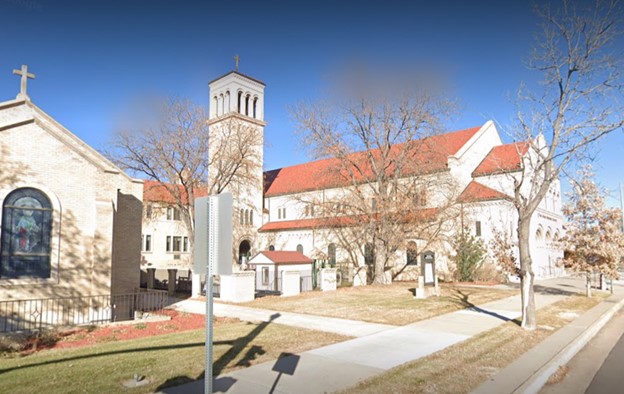
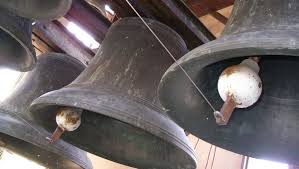
Last Friday, I walked out of the downtown salon where I get my monthly haircut to the makings of a beautiful late winter afternoon. A few cars motored by on the street, yet nobody blared the horn or blasted the radio. Pedestrians kept their conversations to a low tone.  Songbirds made melody, willing the next season to an early debut.  Above all (literally), the nearby Methodist church bells rang out the hour of the day from the steeple, followed by a cheerful rendition of… “The First Noel”?

Found the culprit on Google Street View!

Last time I checked Christmas was well over two months ago.  Decorations are boxed and returned to the closet, lights are taken down, and Starbucks no longer offers my seasonal favorite Chestnut Praline Latte.  Yet here I was, a block from a downtown church in March, with happy steeple bells daring me to burst into Christmas song. 

Talk about a case of bats in the belfry.  You think I’d pause for such a strange moment.  Instead, I simply took in this carol of the bells with a smile, got behind the wheel, and went on my “merry” way.

So it is with church bells, especially the ones in steeples big enough to broadcast their melodies for miles around.  I find church bells comforting, so much so they can play anything they choose and I’ll be happy to listen.  Even a tune that sounds so three-months-ago.

The church I grew up in, on the far west side of Los Angeles, had a tall steeple with bells.  If you pulled up to the parking lot within ten minutes of the start of the service, the bells were making music.  More importantly, they were telling you (as they’ve done for centuries in older churches) it’s time to get yourself inside for worship, buddy.  I didn’t watch every episode of Little House on the Prarie but I watched enough to remember the steeple bells summoning the people of the small town to church.  Believe me, you didn’t want to be the last parishioner in Walnut Grove to pass through the sanctuary doors, earning a steely-eyed stare-down from Rev. Alden.

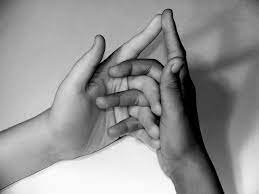
Here’s another memory from childhood church.  In “Sunday School” they taught us how to lace our fingers together, tips pointing down, palms face-to-face below, and thumbs side-by-side in front.

Church! Steeple! Doors! PEOPLE!

[Go ahead, I’ll wait while you make your little “church”.]

Then you’d look at your hands and say, “Here’s the church…” (now raise your two index fingers into a point), “Here’s the steeple…”, (now separate your thumbs a bit), “Open the doors…”, (now flip your hands over and wiggle your fingertips), “… and see all the people!”  That little ditty was clever enough to recollect all these years later, the moment I heard “The First Noel” from the downtown steeple.

At least in America, the appeal – ha – of steeple bells is probably because you don’t hear them all that often (unless your neighbor is a church).  Most modern churches can only afford the structure of the steeple, not the complicated mechanism of the bells within.  Just like train crossings, today’s “bells” are often an electronic equivalent, and so realistic you can’t tell the difference.  But you can with steeples.  If the church was built in the last fifty years, the steeple bells probably don’t ring true (ha again).

Charleston, South Carolina is known as the Holy City because you’ll find over four hundred churches in its rather compact downtown streets.  You can’t look in any direction in Charleston without seeing a steeple, and many of them are hundreds of years old.  That means bells; hundreds and hundreds of bells.  Take a walk in Charleston on a Sunday morning and you’ll be “treated” to the overlapping competition of steeple bells.  They’re summoning you to church, of course (but which one, exactly?)

The Sound of Music has a brief but charming steeple scene in the movie, just before or after Maria weds Captain von Trapp at Mondsee Abbey.  The camera points to the very top of a steeple, where the abbey bells are visible just below the cupola.  In the era of the story, steeple bells were rung by hand.  In this scene, the “ringer-boy” is shown holding on for dear life as he clings to a rope, the weight of the bell dragging him up and down like a pogo stick.  The moment always makes me laugh.

One of these days you’ll be walking down the streets of your own town and church bells will ring.  Stop for a second and give them a listen.  You’ll probably hear a melodic hymn.  You might even be gifted with an “unseasonal” Christmas carol.  Doesn’t really matter.  Those big, happy bells make beautiful music no matter the tune.

——————–

Lego Grand Piano – Update #9

(Read about how this project got started in Let’s Make Music!)

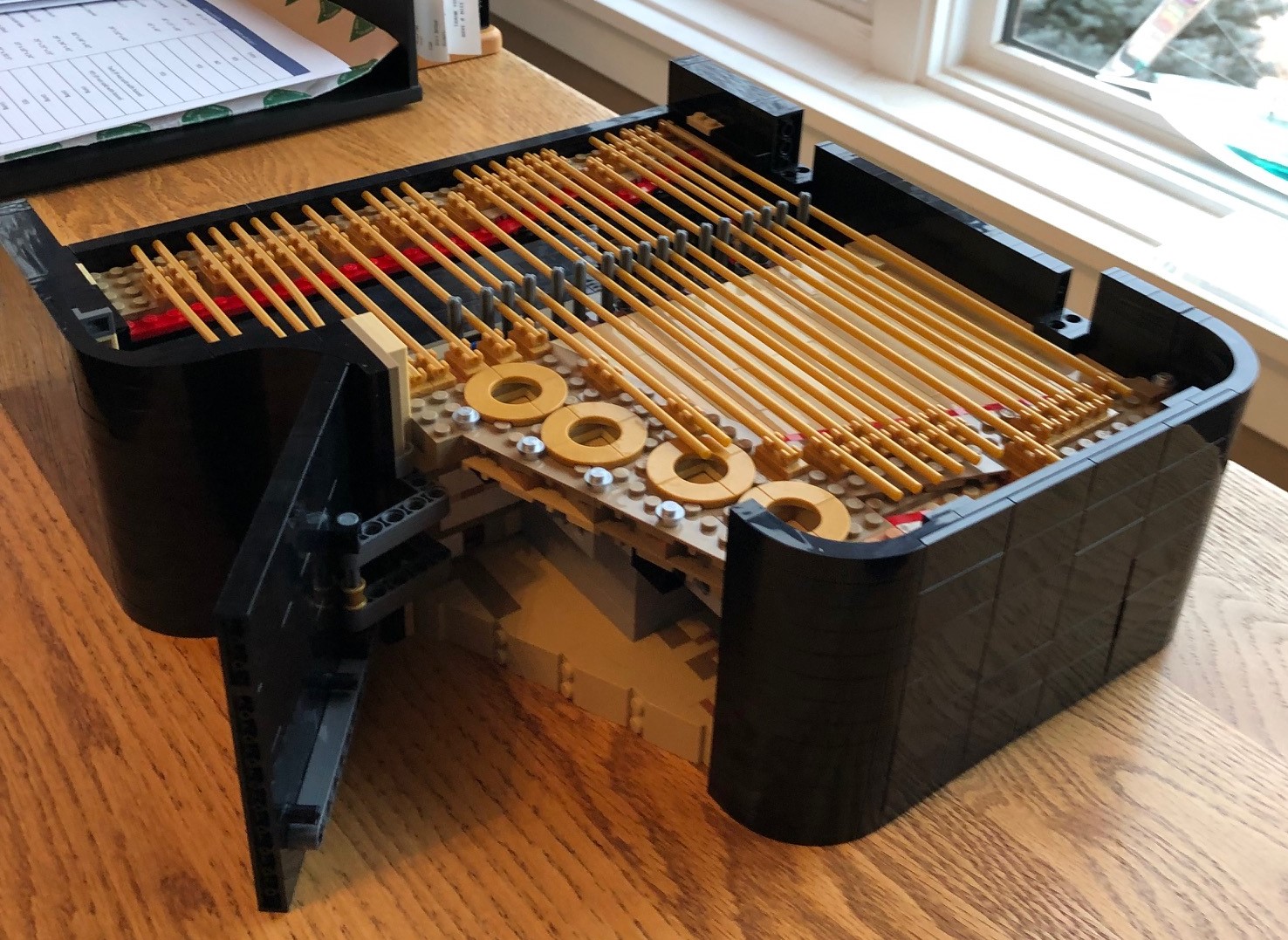
We are closing in the piano’s insides now, as you can see by the almost complete black frame in both photos. Bag #9 – of 21 bags of pieces – contained a good chunk of the frame curves, including the graceful “S” you can see just beyond the right side of the (future) keyboard.

Mendelssohn’s Piano Concerto No. 1 was just about the perfect length for today’s build, with a couple of hold-your-breath moments where pieces from previous builds snapped off and skittered away. They’re back where they belong now,

Running Build Time: 7.5 hours.  Musical accompaniment: Mendelssohn’s Piano Concerto No. 1 in G-Minor. Leftover pieces: 2 (tiny unnecessary extras for the frame).

Conductor’s Note: We have a hinged trap door built into the frame now, for access to the battery pack and on/off switch.  When it’s closed, the frame is seamless and you’d never know the door was there.  They have clever people at Lego.