
In the chaos of the supermarket a few days before Christmas, milk, eggnog, and a package of those Li’l Smokies sausages fell into our shopping cart. These items don’t usually find their way into our frig but the year-end holiday meals somehow demanded them. If the market wasn’t so frantic I would’ve also whipped out my phone to see if these purchases deserved my dollars. After all, just about everything we use in the kitchen (and bathroom) these days has a little numeric value lurking just below the surface.
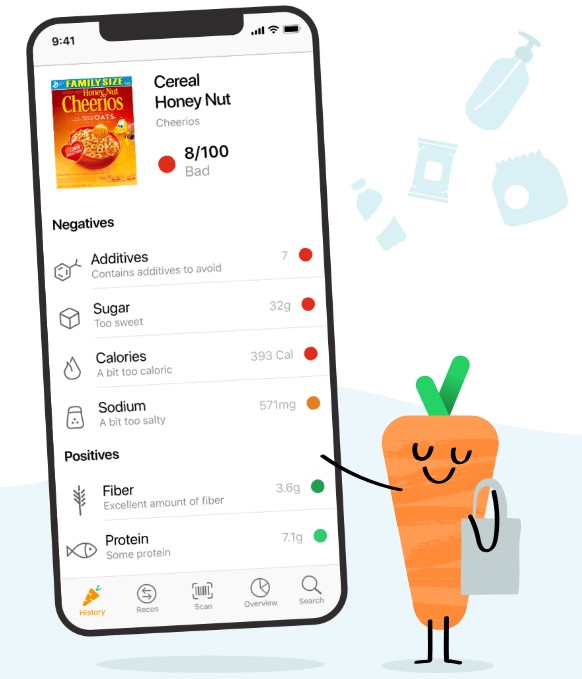
Nacho Cheese Doritos are now a “5” in my world. You might say pretty good! until I tell you that’s on a scale of 1-100. But let’s say you choose Blue Diamond’s Almond Nut-Thin Crackers instead. The number skyrockets to 84. A roll of Wint-O-Green Life Savers earns a 28 while a box of Tic Tac Freshmints doubles the number. Nature Valley Granola Bars? 51. Heinz Ketchup? 33. And in the ultimate insult to products considered “food”, perfectly round Nabisco Oreos earn a perfectly round 0/100.

What’s with all the tallying, you ask? The numbers are simply the output of a little smartphone app called Yuka, which joined my personal parade of subscriptions last May. In the words of its young French founders (Julie, and brothers Francois and Benoît), Yuka “deciphers product labels and analyzes the health benefits of foods and cosmetics”. Plain English: Scan the barcode of anything in the supermarket and Yuka tells you whether to buy it or not.
Candidly, it wasn’t the numbers that sold me on Yuka. Rather it’s this: the app is completely ad-free because brands cannot pay Yuka to advertise their products. In other words, the numerical ratings I’ve shared are generated objectively, using common perceptions of the health benefits of ingredients. Yuka has rocked the small space known as my kitchen pantry.

Never is this overhaul more evident than with “cosmetics”, Yuka’s catch-all for everything you find in the bathroom. In the last eight months I’ve swapped out my deodorant, mouthwash, shaving cream, shampoo, and face wash for items with better Yuka numbers. Five products I used every day and purchased for years just went flying off my medicine cabinet shelves, replaced by other products that are healthier on and in me (including Aveeno’s facial cleanser, which earns a perfect 100).
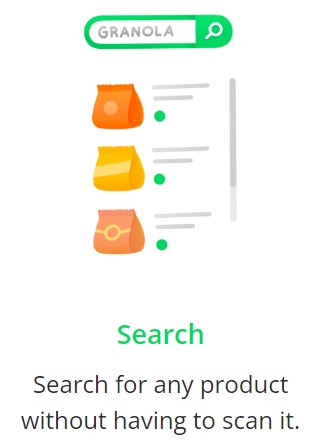
Yuka (the name is a nod to Yucatán) is about more than scan-and-score. You can also simply search on products, mining a database of five million entries. Even if a product isn’t in the database you can enter the ingredients from the label and Yuka will give it a number. And if that number is lousy (like it is for your Oreos or my L’il Smokies) Yuka will point you to a list of alternatives with better numbers. Again, Yuka doesn’t recommend one product over another; it just presents the numbers for you to consider.
In a nod to the healthy habits of Europeans (who favor fresh foods), Yuka’s founders realized its app was most popular in America, where we are so fond of packaged products. So they packed up their French offices and French families and moved to the middle of Manhattan – temporarily – to better connect with their target audience. Eventually they’ll head back home but not before Yuka is sure to land on the smartphones of millions of Americans.
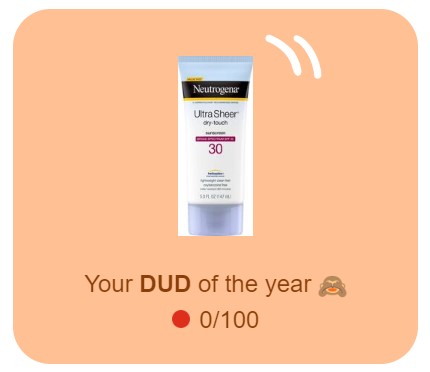 Here’s one more aspect of Yuka I appreciate: the founders take time to communicate with their users. In the eight months I’ve subscribed, they’ve sent me twelve emails with interesting articles about healthy eating, healthy “cosmetics”, and the entertaining evolution of their little company (which includes a dog as an employee). They also sent me a fun video of their first few days in New York City. And just last week I received a year-end recap of my app use (93 products scanned with an average score of 46). No advertisements and no product pushes.

The subscriber version of Yuka is $15/year (you can try a more limited version for free), which includes the convenient scan-for-a-score feature. Furthermore, your subscription dollars are what keeps Yuka in business, instead of funding manufacturers who’d like nothing more than to push their products on you. That’s just one of the reasons I now keep score at the grocery store.
 Life In A Word