The Times of Sand

I’ve often thought the airport is the best place to people-watch. With downtime while you wait for your flight and the close proximity to others, it’s inevitable you’re going to look around. Every kind of person can be found at the airport (sporting every size, shape, fashion statement, stress level, and age). Travelers are unknowingly entertaining to those who watch them. But today let’s explore perhaps an even better venue where people do their thing: the beach.

As I type today, a sweeping look at the sandy shore beyond my patio shows me (in no particular order): A mother and daughter in animated conversation with a lifeguard; a group of teenagers (male) playing an aggressive form of beach four-square called Spikeball; another group of teenagers (female) sprawled on beach towels in giggly conversation; a father dragging his young son through the shallow waves on a boogie-board; a surfer wiping out in the not-so-shallow waves further out; and an ambitious child shoveling dirt out of a divot of sand as if digging to China.
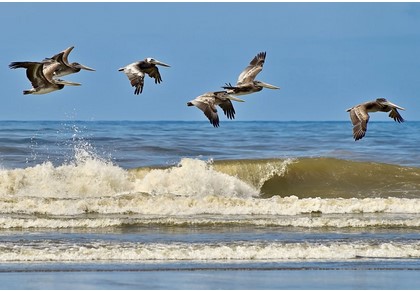
I look away for a second and then look again: A pack of aggressive seagulls pecking away at someone’s leftovers aside their abandoned beach chair; that same lifeguard sprinting into the water to rescue a struggling swimmer; an older couple having a (clearly) not-so-happy conversation at the water’s edge; a jogger attempting to put in the miles while dodging the less active in his way; and a paused beach volleyball game where the players can’t determine if the ball hit the (sand) line or not.
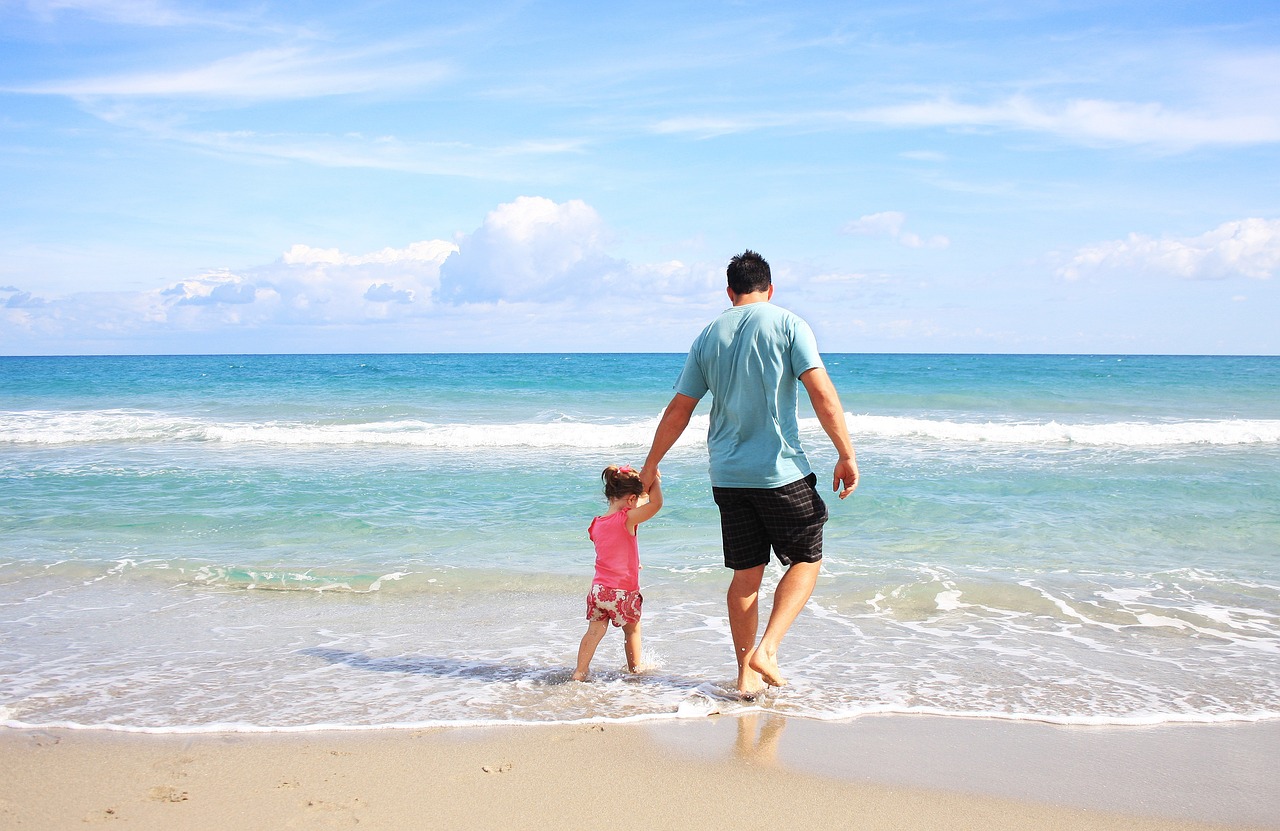
It’s a rare treat when I can create a blog post from the goings-on on right in front of me, but the beach allows me to do just that.  More to today’s point, an active beach like this one changes character throughout the day.  In other words, there are the sands of time and then there are the times of sand:

  • Dawn: Seagulls, sand, and surf.  The beach at its most peaceful and pristine.
  • Early morning: Serious runners at the shore (unlike the casual joggers later in the day); an Asian elder performing a standing form of meditative yoga; a surf camp for pre-teens to the north; a lifeguard training camp for teens to the south; a pickup truck clearing the trash from the evenly-spaced cans.
  • Mid-morning: The gradual arrival of the masses (and all they bring with them).  Also the arrival of the lifeguards, with bright cones marking the “no-man’s land” for emergency vehicles, flags indicating the adjacent street number so people know where to find you, and more flags to mark the beach’s “surf zone” versus “swim zone”.
  • Midday: Everything I observed at the start of this post (and so much more).
  • Mid-afternoon: The gradual departure of the masses, and (hopefully) all they brought with them.  Also the departure of the lifeguards, signing off with a megaphone farewell to those who remain behind.
  • Early evening: The ritual of the sun-worshippers, who simply must remain behind to witness the (West Coast) sunset.  There’s nothing like a setting sun to bring a person to a focused standstill.
  • Dark: An umbrella of stars, a rhythmic ribbon of white foam as the waves crash to shore, and an occasional party of two out for a romantic stroll at the water’s edge.

Trust me, it’s easy to be mesmerized by the times of sand if you watch them long enough.  They’re the reason I never make progress with my latest “summer read”, and the reason I can abandon my electronic devices for hours at a time.  Frankly, it’s a wonder I was able to turn away from the sands long enough to bring you this blog post today.

Jack Be Quick

If the lazy days of summer sap your get-up-n-go, here’s an idea. Find a friendly donkey (not a stubborn one). Halter him and attach a solid lead rope – at least fifteen feet worth. Saddle your jack with thirty pounds of gear, including a pick, a shovel, and a gold pan.  Finally, don your running shoes and head out to Fairplay, CO. $50 gets you into the World Championship of Pack Burro Racing.  Welcome to the state sport of Colorado.

Pack burro racing seemed a little ridiculous to me… until I dived into the details.  For starters, its origin is as legendary as the Greeks and the marathon.  Back in the strike-it-rich days, two Colorado gold-miners hit it big in the same location, and supposedly raced back to town (burros in tow) – first miner to the claims office wins.  Here’s another detail: pack burro racing really is a marathon – 28-30 miles up and back with your donkey, making the halfway turn at an elevation of 13,000 ft.  My favorite rule?  No riding.  However, the runner may push, pull, drag, or carry the burro.  Carry the burro?  A thousand pounds of ass?

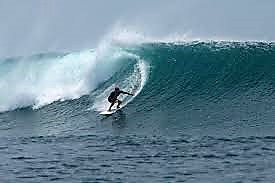
Capitals, flags, songs, and birds – of course – but I never knew states had official sports, until recently, when California considered its options.  If your first choice for the Golden State is surfing, California’s state assembly agrees with you.  The Wall Street Journal reports the assembly just passed the “bill”, and now the tiff moves to the state senate.  I say tiff because a host of other Cali residents say not so fast.  Those who don’t live near the beach choose skateboarding.  Why skateboarding?  Because surfing is already the state sport of Hawaii.  They also say skateboarding is essentially surfing on wheels.  Maybe.

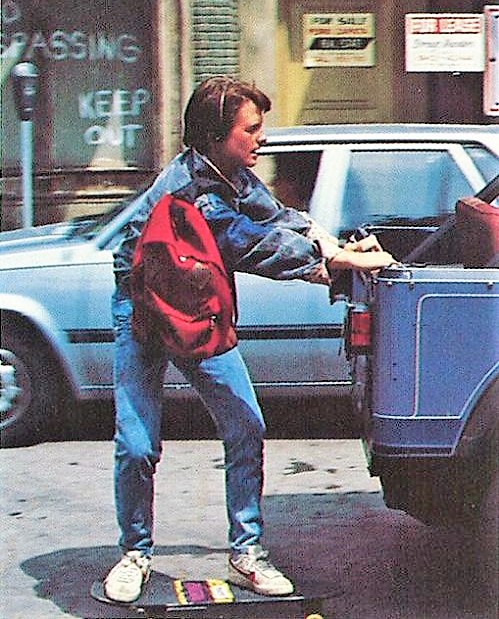
I grew up in California, but neither surfed nor skateboarded.  Still, I deserve a vote.  I did my share of body-surfing, so know what it’s like to catch a wave.  I did my share of bicycling, so know what it’s like to cruise on wheels.  You can put yourself in either camp, but arguments abound for both.  As one state assemblyman said, “Hawaii may have invented surfing, but California ‘mainstreamed’ the sport”.  Others say, “Surf ranches” and their wave machines bring the sport to the inland areas of the state.  On the other side of the aisle, skateboarding is a sport enjoyed by the masses just about anywhere.  And skateboarding really was invented in California, evolving from crude combinations of roller skates and wooden produce boxes.  Marty McFly should get a vote too.

By coincidence, surfing and skateboarding will join the Olympics in 2020.  The lighting of the torch in Tokyo will surely reignite the debate in California, no matter which sport is chosen.  Or maybe the state will still be arguing one over the other, instead of dealing with – ahem – more important issues of government.

Only a handful of U.S. states claim a sport in their list of symbols.  Some make sense, as in Alaska (dog-mushing), Minnesota (ice hockey), and Wyoming (rodeo).  Others have me saying, “What the heck?”, as in Maryland (jousting), and Delaware (bicycling).  I don’t live in Maryland or Delaware.  Maybe they banned every other sport in those states.  Of course, Marylanders and Delawareans probably feel the same way about Colorado and its pack burro racing.

Admittedly, Colorado could wage a healthy state-sport debate of its own.  The Rocky Mountains alone inspire a half-dozen seemingly better options.  If on water, go with river-rafting or kayaking.  If on snow, go with skiing or snowboarding.  If on land, go with hiking or mountain biking.  Yet none of those acknowledge the state’s rich lore of gold-mining.  None of them combine a human activity with an equestrian one.  Come to think of it, Colorado has enough runners and horses to win the debate, gold-mining legend or not.

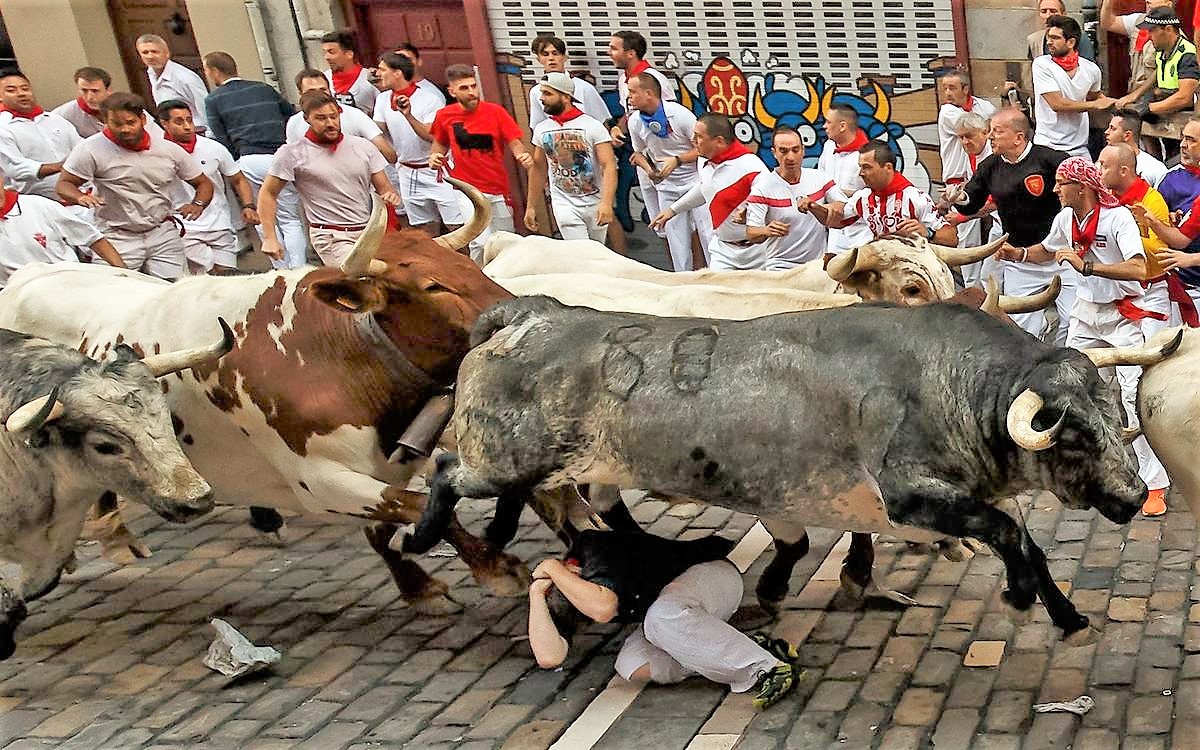
According to the Western Pack Burro Association (“Celebrating 70 Years of Hauling Ass”), Colorado’s pack burro racing series still has several to go this year.  The first three are considered the “Triple Crown”, but I can still catch the remaining action in the towns of Leadville, Buena Vista, and Victor.  It’ll be like the running of the bulls in Pamplona!

Some content sourced from Wikipedia, “the free encyclopedia”.

Discount Me Out

It happened again week before last, and I couldn’t help but wince.  My dentist handed over the bill for my six-month cleaning and it came with a 5% discount. The same thing happened the week prior, when the sprinkler guy came out for my annual winterizing.  5% discount.  Listen, I’m all about saving money (I have a little Scrooge DNA in me), but not when the rate reduction is followed by the words… senior citizen.  Senior citizen?  People, that’s for old people.

To soften the gut punch, I went looking for a gentler, kinder description on Wikipedia.  Blew up in my face.  Type “senior citizen” into the Wiki search box and you’re redirected to “old age”.  Ouch.  Not only that, “old age” defines as “ages nearing or surpassing the life-expectancy of human beings, and is thus the end of the human life cycle“.  Really?  Just hit me while I’m down, why don’t you?  Cue “Amazing Grace” and start shopping caskets.

As if to sympathize with my predicament, Wikipedia lists several alternatives for “senior citizen”.  Senior. Older Adult. Retiree. Pensioner. Elder.  Elder?  Why not just grow the long white beard and parade around the house in undies and dressing gown?  I can’t even cackle, let alone vigorously shake a cane at little kids.  I’m starting to think Wikipedia is for old people.

(Note to self: drop annual contribution to Wikipedia.)

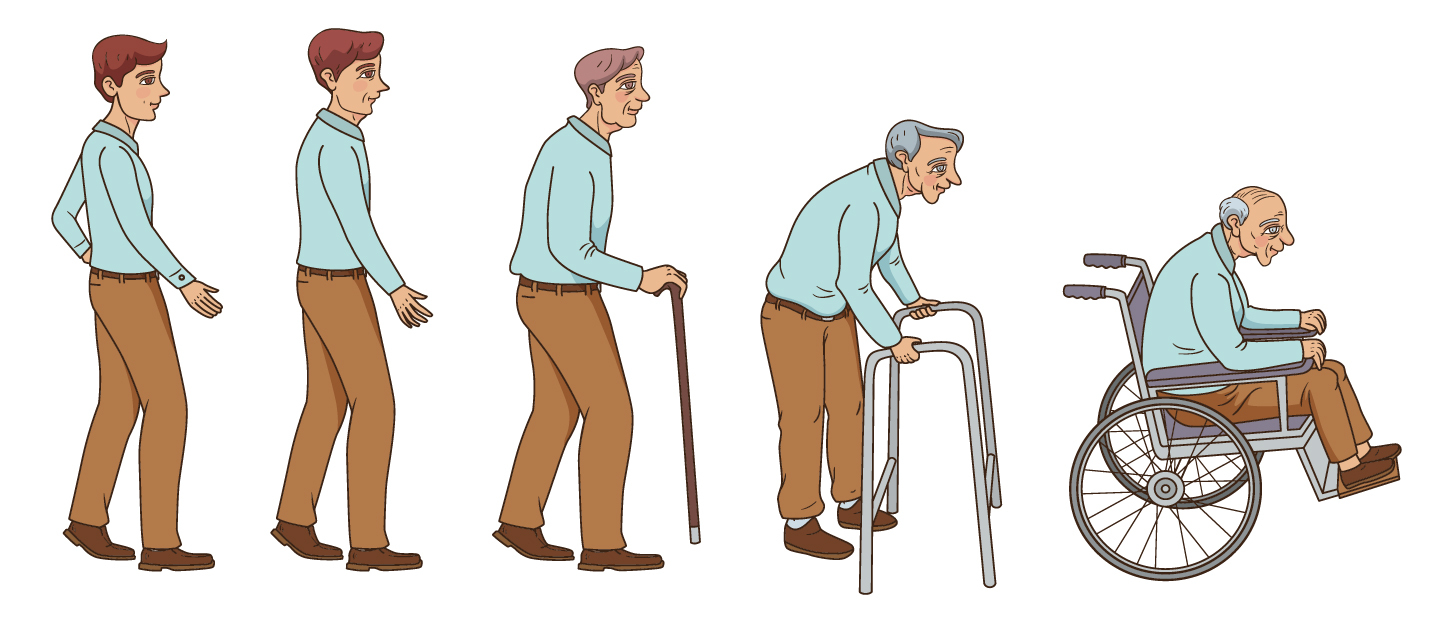
As an infant or a kid or a teenager, it’s painfully obvious which of those classifies you.  Various stages of awkward.  You dream of advancing to the next level.  A kid longs to be a teenager.  A teenager longs to be an adult.  Your twenties, thirties, and forties are described as “your best decade”, for reasons subtly designed to make peace with growing older.  But age fifty is where the whole lexicon falls apart.  Fifty is as soft as “approaching middle age” or as harsh as “eligible to join AARP”.  You’re still a decade or more from the traditional age of retirement, yet you’re basically undefined.  Then again, “undefined” redirects to “limitless”.  Hey, maybe this isn’t so bad after all.

My son and his wife are expecting their first child, which means my wife and I need to come up with new names for ourselves.  Grandma & Grandpa?  Heck no – those are for old people.  Let’s go with Geema & Geepa instead.  Or Nana & Papa.  Oma & Opa?  Gigi & Gigo?  We’re getting cuter as the list goes on.  And “cuter” typically redirects to “younger”.  Now we’re talking!

Segue to a recent article in Sports Illustrated.  Laird Hamilton is my new hero.  He’s 53 and still one of the most recognized big-wave surfers on the planet.  He’s been at the top of his game for decades and shows no signs of stopping.  Hamilton pioneered the tow-in technique, allowing surfers to catch faster-moving waves than would be possible paddling by hand.  All in search of an adrenaline rush Hamilton can’t seem to shake “well into middle age”.  As he puts it, “I’m not going to fall victim to what I’m supposed to do at any certain age.  We subject ourselves to… social pressure – ‘Oh, this is how old you are now, this is the only thing you can do'”  Hamilton never wants to grow up.  I’ll bet he takes his senior citizen discounts and tears them up into little bits for the fishes.

Tell you what.  I’m planning on living for an entire century; the full one hundred.  If you’ll grant me that stretch, I can claim I’m now in the middle of the first decade following the midpoint of my life. In other words, fifty-something.  To put it most optimistically, I’m only halfway-and-change to the great hereafter. I have no intention of growing up; not yet.

“Senior citizen” – ha!  That’s for old people.

Some content sourced from Wikipedia, “the free encyclopedia”, and Sports Illustrated’s “Wild Man of a Certain Age“.