
Our town, like so many others, offers the choice of grocery shopping at a national-brand market or at one with a more local vibe. We spend our dollars at Publix (1,300 stores across eight Southeastern states) but also splurge at The Fresh Market (161 stores) when we’re after something a little more unique. Having said that, our town lacks another popular market and it begs the question: What is the appeal of Trader Joe’s?
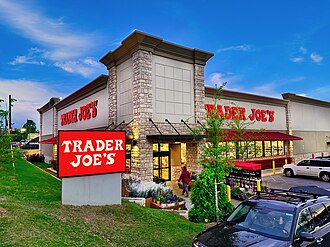
This post was originally headed in a different direction. Trader Joe’s made the headlines because of its popular cloth “mini-tote” bags; so popular they were reselling on eBay for $500. That led me to think, America has an obsession with miniatures and let’s make that today’s topic. But no, I can’t get Trader Joe’s itself out of my mind, so let’s walk through their aisles for a few minutes.
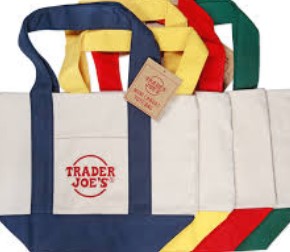
The cloth bags are a great place to start. Did you know Trader Joe’s was the first grocer to offer reusable shopping bags, beginning in 1977? The trend didn’t catch on with other stores for another fifteen years. Even better, “TJ’s” encourages use by refunding you $0.05 per bag or entry into a weekly raffle for a $25 gift card.
The above paragraph was brought to you by the food-and-drink enthusiast website Tasting Table. Their 25 Facts About Trader Joe’s… is a convincing sell, maybe getting you to dash over to your nearest TJ’s for a look inside. But a company’s commitment to sustainability isn’t enough to draw me in over and over. There must be something else at play.
 Maybe it’s more about TJ’s “revolving door of new products”. They frequently discontinue one product in favor of another, so what you find on the shelves is constantly changing. They limit certain items to seasons (right now you’ll find pumpkin-spice everything). And their product line is impressively diverse for a medium-sized grocery store, which probably attracts more than your run-of-the-mill shopper.
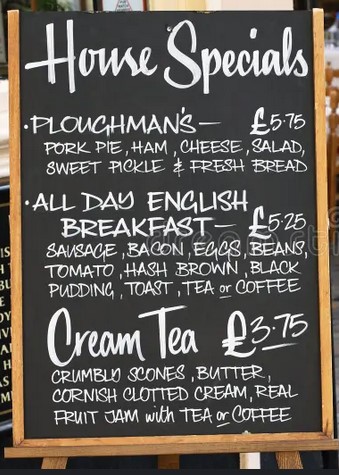 I suppose you could make the same argument for a restaurant. Shaking up the menu is a good idea every now and then (hence “specials”). Leave the core set of entrees alone but occasionally introduce new ones to see if they’ll take. Yet it’s not a perfect analogy for Trader Joe’s. My impression is, nothing on TJ’s shelves is safe for the long haul because all products are under constant scrutiny.
How about “affordable prices”? Here’s where I take my hat off to TJ’s. The advertised price of a given product at Trader Joe’s is the one-and-only price. No discounts, coupons, gift card offers, special promotions, or even online ordering to cloud the cost to the consumer. And since 80% of what TJ’s sells can only be purchased at their stores, price-shopping the competition is a waste of time.
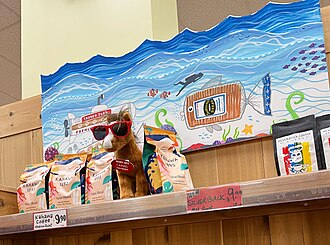
TJ’s probably draws in young families because the shopping experience is fun. The nautical theme is apparent in its decor, as well as on its “crew member” uniforms. A stuffed animal hides somewhere in the store – find it and win a prize. And a bell rings (again, the nautical thing) to alert employees to open new check-out lines or answer customer questions. I like that approach a whole lot more than simply announcing the need over a loudspeaker.
You can try a lot of things at Trader Joe’s (Costco on steroids?), you can call the store ahead of time to reserve popular items, and you can usually get a refund on anything you regret buying (regardless of reason, proof of purchase, or the amount of the product you’ve consumed). What I highlight in italics here is impressive for a grocery store yes, but it still doesn’t make me a return customer.
At the end of the day (or a list of “25 Facts…”) I go to a grocery store because it carries the items I need. To put it another way, I am brand-loyal and fairly routine in what I buy. Perhaps that is the genius of Trader Joe’s. It draws people in again and again because, well, they want to be more creative in the kitchen. Try out new things. Emerge from the doldrums of the same thing on their plates every other week. And who can argue with variety as the spice of life?

Maybe, collectively, 25 facts explain Trader Joe’s success. Or maybe someone from out West will chime in and solve the mystery. After all, California was the birthplace of Trader Joe’s (Pasadena), and the number of stores in the state has ballooned to over 200. There should be plenty of TJ’s experts out there to explain what the fuss – er, repeat business is all about. Then, just then, I might get into my car to drive the hour and change it’ll take me to get to my nearest location.
Some content sourced from Wikipedia, “the free encyclopedia”.




 Life In A Word