Renaissance Man

In the second movement of Antonin Dvořák’s New World Symphony, the orchestra settles down as the English horn begins its soft, wailing solo. You’ve heard this famous lullaby in one version or another, but never more powerfully than in the “Largo” movement of Dvořák’s symphony, with the strings and woodwinds providing the sweeping background (~45 seconds into the following video). It’s one of my favorite classical pieces, and my performance is flawless every time I play it.  Play it in my head, that is.

I’ve developed a satisfying habit over the years which you might share (or at least, be willing to try).  Think about something that interests you, or an activity in which you like to participate.  Over time you’ve developed a fair understanding of your subject, though your level of knowledge and skill would never qualify you as a professional.  But what if it did?  What if you suddenly had the smarts or the talent to find yourself among the world’s best?  Wouldn’t your life be wildly different?

My years of piano lessons never propelled me anywhere close to the ranks of “professional” or “best”.  I never even advanced beyond the piano’s foundation to pursue an instrument like the English horn.  To do so would’ve meant a wholly different direction in life.  More practice and lessons instead of time spent with friends or years in the Boy Scouts.  A different college or at least a different degree.  Competitions.  Travel.

Music eventually gave way to an interest in sports and soon I found myself on the basketball court more than in front of the piano keyboard.  I’d practice endlessly at our backyard hoop, imagining myself making game-winning shot after shot.  I did play a couple of years of JV ball in high school and went to college games at nearby UCLA.  But my skills never developed to the varsity-, let alone college-level.  Was I infatuated with basketball at the time?  Yes, but I also knew early on I’d never be one of the greats.

You’re starting to see a pattern here and it continued in college.  I studied architecture (“I’ll be the next Frank Lloyd Wright!”) but only spent the first few years of my career in the field.  I had a good run with info technology companies (“Bill Gates!”) but never developed the level of expertise to be labeled a “techy”.  I write these weekly blog posts (“John Grisham!”) but have no plans for the next Great American Novel.

Here’s my point, and maybe you never saw it coming.  I find all of this dabbling and dreaming incredibly satisfying.  My interest in a subject or activity wanes well before it becomes an obsession, and then I simply move on to the next thing vying for my attention.  Why do I behave this way?  Two reasons.  First, I prefer to be a jack of all trades (or a master of none, if you will), not a virtuoso.  Second, more importantly, I am far too content with my life as it is to ever be tempted by the sacrifices necessary for the pursuit of singular success.

Michelangelo’s “David” 🙂

There’s a complimentary phrase for people like me: Renaissance Men.  We hearken back to the great thinkers and artists who came along just after the Middle Ages; Leonardo da Vinci and Michelangelo, for example, with “unquenchable curiosity” and “feverishly inventive imaginations”.  Mind you, I can’t paint like da Vinci or sculpt like Michelangelo, but my curiosity and imagination may run just as rampant.  The modern Renaissance Man, in a nutshell, has “broad interests” and “superficial talents”.  Me to a tee.

Playing in my head

The next time I hear Dvořák’s “New World Symphony”, I’ll think about playing the English horn.  Maybe I’ll sign up for lessons and eventually get good enough to play the “Largo” movement.  Maybe then I’ll join the local orchestra so I get the chance to perform in front of a live audience!  Yeah… probably not. Long before my much-anticipated stage debut, some other activity will vie for my attention and off I’ll go.

Some content sourced from Wikipedia, “the free encyclopedia”.

Child’s Play

When I dove into piano lessons at the tender age of six, I learned the piano is “foundational”; a good place to start if your future destination is another musical instrument. The piano teaches concepts like keys, chords, and “Do Re Mi” in a straightforward way. My son learned about foundational instruments when he started the sax – it’s best to spend time on the clarinet first (the fingering is easier). But today I want to talk about real foundational instruments; the ones I dabbled in even before the piano. I can think of at least six (and one honorable mention).

My granddaughters – ages 2 and 4 – already attend weekly music classes (which brings me no small amount of joy).  They’re learning to sing and play simple rhythm instruments like drums and tambourines.  So I shouldn’t have been surprised this past weekend when the older one pulled out a kazoo and began “playing” for me.  Not a formal song or even a melody; just a handful of notes from what is technically a wind instrument.

Let’s call the kazoo Child’s Play (CP) #1.  The kazoo starts my list of six because it’s undoubtedly the easiest to play.  You simply hum into the mouthpiece and the kazoo takes care of the rest.  The kazoo’s buzzing sound is utterly annoying and after a few seconds you wish it would just stop (unless your granddaughter’s playing, of course).  The kazoo rides a fine line of the definition of a musical instrument.  To be honest, I’d rather just hear a person hum.

CP #2 – Triangle.  The triangle has often been described as “having no musical function and requiring no skill to play”.  A brutal (and fair) description to be sure, but consider this: the triangle is the only instrument on this list to earn a spot in a formal orchestra.  You’ll find the little guy in the orchestra’s percussion section (alongside the drums and other rhythm instruments).  The triangle also outclasses the kazoo since it’s cast from fancy metals (ex. beryllium copper, brass, bronze).

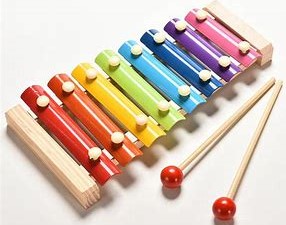
CP #3 – Xylophone.  The xylophone tops the triangle because it’s a percussion instrument that can also carry a tune.  There’s nothing more inviting to a small child than a set of colorful bars you can whack with mallets, and they make music!  Sure, you can hum “Twinkle Twinkle, Little Star” on the kazoo but it’s much more fun banging it out on the xylophone.  The xylophone gave birth to the vibraphone (an electronic version) and the marimba (a wooden version), both of which generate rich, warm, beautiful-sounding notes.

CP #4 – Recorder.  The recorder ranks a close second to the kazoo on the annoyance meter.  A child can pick up this woodwind instrument (the cheap plastic kind, not the fancy wooden one), blow into it, and instantly produce a note.  The same child then realizes he can change the note by covering/uncovering the recorder’s holes.  Now he can produce many notes.  And what’s wrong with many notes?  It just sounds like so much wailing.  Watch the video (if you can stand it) and tell me if you don’t agree.

CP #5 – Harmonica. The harmonica, another wind instrument, is also known as the “French Harp” or “mouth organ” (I prefer the former) and it comes in all shapes and sizes.  A child will find his first harmonica in the same section of the toy store as the kazoos and recorders – where you find anything made of cheap, colored plastic for less than a dollar.  Here’s what a child learns about the harmonica very quickly: he can fake it.  If you hum into the harmonica instead of just blowing, you’ll create a pretty good imitation of what it’s supposed to sound like.  You won’t fool anyone who really knows the harmonica but as a kid (that would be me), you thought it was pretty cool to whip out your harmonica and pretend you could play it.

CP #6 – Autoharp.  The autoharp made its first appearance at my elementary school choir classes.  It was the coolest instrument I’d ever seen.  It’s like playing the guitar (pick and all), only you press down bars to create the chords instead of using your fingers.  One kid would be chosen from the choir to strum the autoharp while the rest sang.  Playing the autoharp wasn’t cool, but being chosen to play it?  That was pretty special.

CP Honorable Mention – Hand Flute.  The hand flute is a fancy name for whistling through two fingers or through the hands.  I can’t remember when I learned to whistle (with just the lips) but I was certainly inspired by my dad, who gave the family a distinctive two-note greeting every time he walked through the door after work.  But I never learned to whistle through my hands.  The hand flute not only sounds cool (a lower note than a mouth whistle, like the cry of a nightingale) but it looks like you have a built-in musical instrument when you “play”.

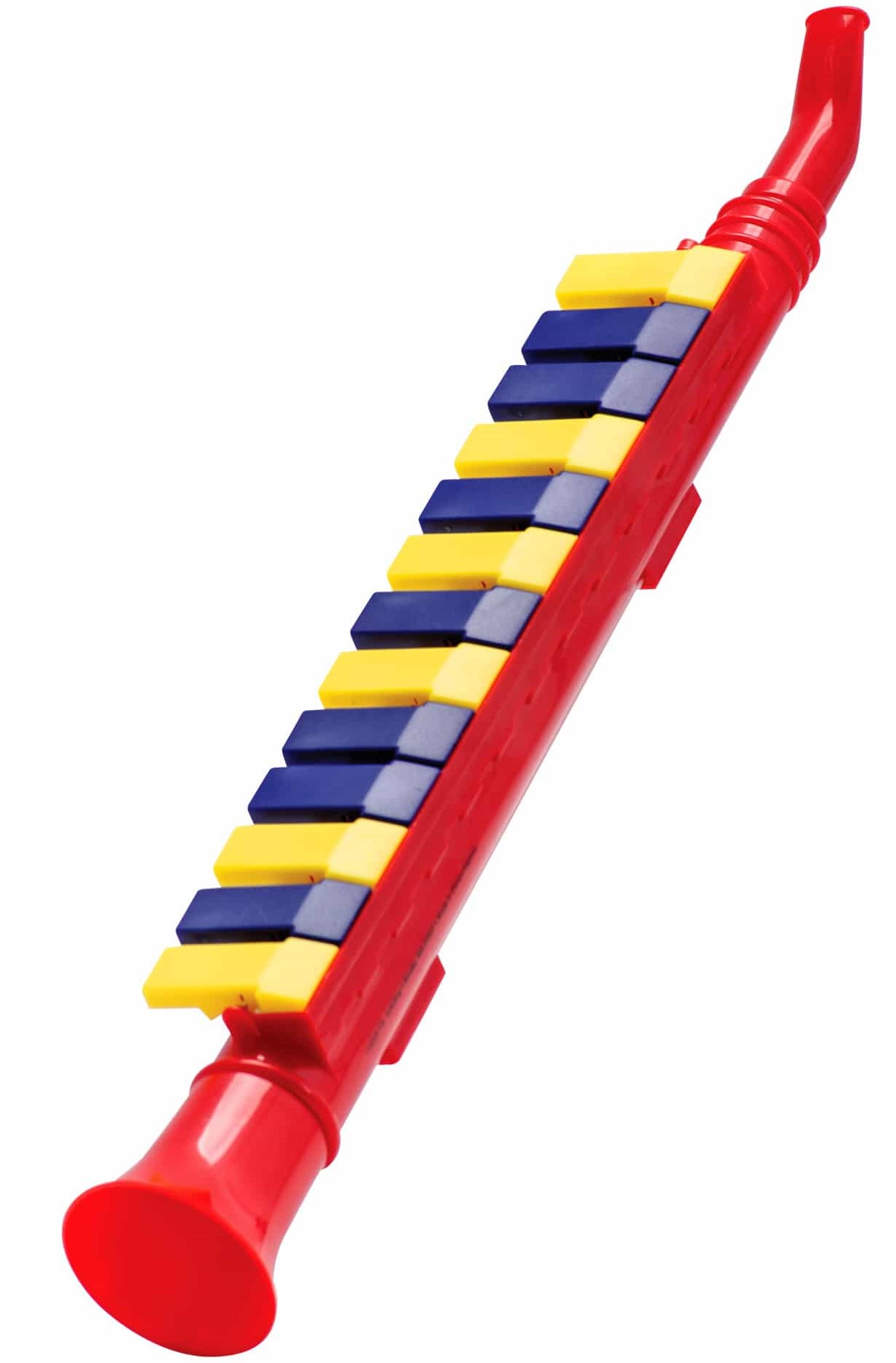
Wrapping up this topic suggests I pick a favorite instrument from the list above, but the choice is impossible.  Each one is bonded to special memories from a long time ago.  If I had more space here I’d add others to the list (like the tricky piano horn).  Instead, let’s just agree the foundation of my piano play is a team of smaller, less-appreciated musical instruments.  Child’s play?  Hardly.

Some content sourced from Wikipedia, “the free encyclopedia”.

Finishing on a Low Note

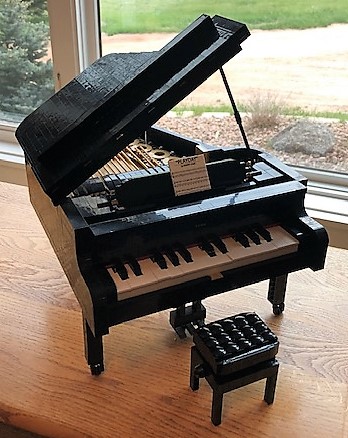
I usually associate “finishing” with sporting events. Think about the finish line of a car race, the eighteenth hole of a golf tournament, or the ticking seconds of the clock as a football game runs out of time. In these scenarios, the finish can be a tense, hold-your-breath moment, triggering a burst of euphoria if your favorite takes the win. So it comes as a bit of a surprise to reflect on the completion of my Lego Grand Piano. Tense? Hardly. Held my breath? Not at all. Euphoria? Anything but. No, this finish feels a little forlorn.

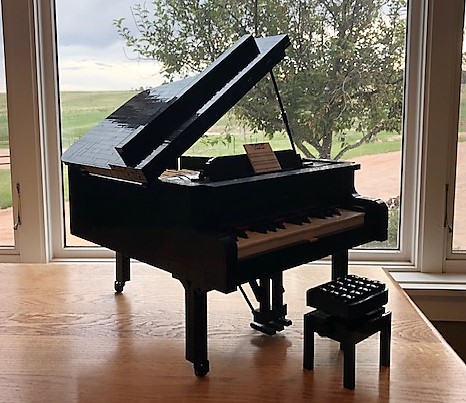
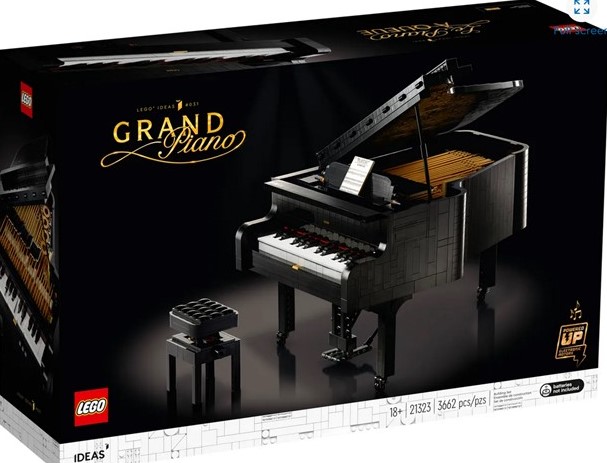
Three thousand, six hundred, and sixty-two tiny pieces ago, I began the assembly of Lego’s Grand Piano, just about the closest gift to “perfect” my wife has ever given me.  Piano is inextricably connected with my childhood – hours upon hours of practice and playing and determined progress at a tender age, eventually succumbing to other temptations of time.  Piano introduced me to commitment, skill, and patience, even frustration and disappointment.  My parent’s big, black grand sat patiently in our living room, beckoning me to play every time I passed by.  The instrument was always perfectly tuned and sparklingly clean, thanks to my mother’s weekly persistence with a dust cloth.  I can still hear her sweeping the eighty-eight keys from one end to the other – a delightfully musical moment.

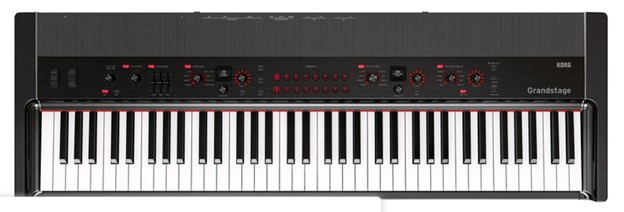
Korg’s “Sampling Grand” keyboard

Believe it or not, the Lego Grand Piano is the second gift of a piano from my wife.  On our wedding day in 1987, she presented me with Korg’s “Sampling Grand”, an electronic keyboard with weighted keys and surprisingly realistic sound, much less expensive than the real thing.  Thirty-five years later, the Korg still plays like a champ and still earns a spot in our living room. (Unlike the Lego version, the Korg was already assembled when I got it.)

The start-to-finish journey of my Lego Grand Piano has been a more enjoyable ride than I expected.  When I opened the box last Christmas, I remember my jaw dropping a little, not only because I never saw the gift coming but because of the sheer complexity of the project staring up at me from the box  That’s a complicated-looking instrument, I thought.  That’s a ton of pieces, I also thought.

The unopened Lego box sat on my home office desk for a couple of weeks, looking elegant without even being touched.  My curiosity eventually got the better of me and I finally had a look inside.  Talk about intimidating.  A 500-page instruction manual awaited, along with forty-odd individual bags of pieces.  Even though this was a twenty-one-step journey, some steps involved “sub-bags” of tiny, tiny pieces, grouped separately so as not to escape!  Was I really brave enough to dive into this mess?

Contents of the box

The first chapter – shared with you readers on January 6th of this year (a date we Americans wish to forget) – spoke to my hesitation when I wrote an entire post about building the piano without actually building anything.  I just poked around the box and marveled at the contents and felt pretty good about even opening up the box.  But I did get started seven days later, and the subsequent journey was wholly satisfying and something of a weekly escape.

Leftovers

At first, I made several mistakes as the piano began to take shape.  Since the pieces are small it’s easy to place them backward, or even mistake one for another.  I also fretted when extra pieces remained after a given section of the build. (For the record, there were 38 extra pieces when all was said and done.  I can fit all of them into the palm of my hand.)  There were at least two instances where I had to disassemble several pieces to get back to the point where I’d done something wrong.  Those moments were utterly unnerving and confidence-shattering (take your pick).

[Author’s Note: After weeks and weeks of building the Lego Grand Piano, it only now occurs to me I’m describing one type of keyboard while typing on another. Don’t you just love the coincidence?]

So let’s finish this post by revisiting “finishing”.  What should be a moment of triumph feels a tad sad instead.  After the first few weeks, the build of the Lego Grand Piano became a weekly treat, accompanied by some of my favorite classical music.  Many stages were mini-surprises, not knowing what section I was building until the last piece was in place.  And of course, sharing the progress with all of you was also fun.  One reader admitted she would first scroll to the bottom of a post before reading my weekly topic.  She couldn’t wait to find out how the piano was coming along.

So, here we are now, finally done.  Next week’s post will feel a little empty without a reference to the Lego Grand Piano.  By total coincidence, my daughter got married this past weekend, also the end of a journey (months of planning and all).  My son just turned 30 yesterday, the finish line of his 20’s.  And soon, my wife and I will point our cars east for our move to South Carolina, the finish of our days in Colorado.  To be finished is to be sad?  You bet it is.

I’ll dive into another Lego build one of these days, I promise.  Maybe I’ll even take you along for the ride again.  In the meantime, I’ll flip the hidden switch and play the piano every now and then.  I’ll also find an acrylic box in which I can display this magnificent project.  After all, with my mother’s good habits in mind, I don’t want it gathering dust.

——————–

Lego Grand Piano – Update #21

(Read about how this project got started in Let’s Make Music!)

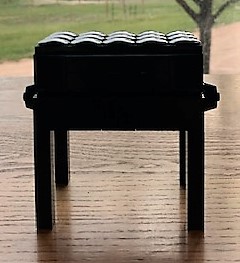
The finále of the Lego Grand Piano assembly, as expected, was the build of the pianist’s bench and the placement of the sheet music onto the stand.  Bag #21 – of 21 bags of pieces – was bigger than I expected.  I mean, a bench is a seat with four legs, right?  Not according to Lego.  This bench raises and lowers with the little dials you see on the sides, to accommodate the height of our fictitious pianist.


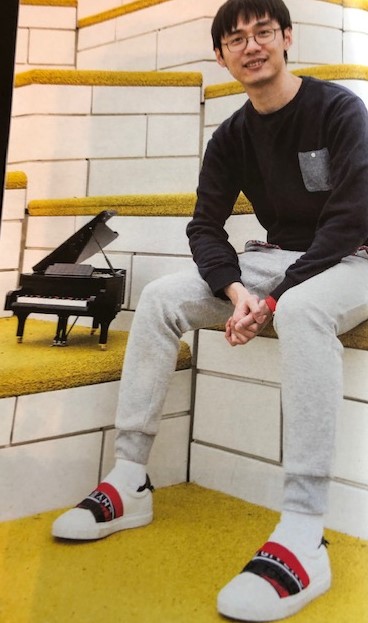
Let’s give credit where credit is due.  The Lego Grand Piano was designed by the guy you see below, Donny Chen, a 33-year-old piano teacher and tuner from Guangzhou, China.  No surprise, Donny’s passions are the piano and Lego.  He’s a lot smarter than I am, evidenced by this quote: “I’ve always seen toys as something to be imagined, not just played with”.  Me, I just played with toys.

[Pianist’s Note: The Lego Grand Piano DOES play, I know it does.  I just have to figure out two things.  One, how did I manage to disconnect the cable to the sound box buried deep within the piano frame?  Two, how the heck am I going to get it reconnected?  That’ll take more time than I have today and is part of why I “finished on a low note”.  But I’ll share a concert with you when you least expect it – I promise. “Stay tuned”.]

Donny Chen

Running Build Time: 14.0 hours.  Musical accompaniment: Jarratt and Reedman’s Hooked on Classics. Leftover pieces: 1

Conductor’s Note: Apologies to the purists but I just couldn’t resist this somewhat tongue-in-cheek accompaniment to the final chapter of the Lego Grand Piano.  Hooked on Classics is a top-ten Billboard Hot 100 hit from 1981, a mashed-up perversion of bits of the world’s most recognized classical pieces… overlaid on a drum track.  It was recorded by Louis Clark and the Royal Philharmonic Orchestra and bred several spin-offs (ex. Hooked on RomanceHooked on Classics came along just as I was wrapping up my childhood piano “career”.  I much prefer the originals of the several classical pieces in Hooked but maybe this peppy number is your cup of tea.  Have a listen:

Some content sourced from Wikipedia, “the free encyclopedia”.