
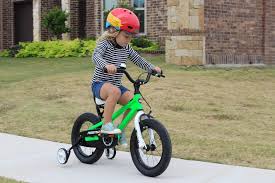
My wife and I live in the kind of neighborhood where we can just hop on our bikes and go for a ride, straight from the driveway. The streets are quiet and flat, giving us time for conversation and reflection. A bike was such a focal part of my childhood that it’s easy to go back to those long-ago days in my mind. But I was too young to remember the year (or years) my bike had training wheels. Whoever invented training wheels made a lot of money getting kids comfortable with “big bikes”. Come to think of it, you could say the same about landlines and smartphones.
 Smartphones are a blessing as well as a curse, aren’t they? On the one hand they’re always “on” and always eager to provide the instant information we crave. On the other hand they seduce and consume us, to where our social life is more often with an electronic device than it is with other humans. I’m sure I could find plenty of studies explaining why the “ding” of a text creates a hankering to read the message immediately (no matter how unimportant).
 There are a dozen reasons why my smartphone is my “go-to” but a dozen more where I should be saying, “go away”. I’ll never forget the time we saw Lady A in concert. A family of five sat in front of us, with three pre-teen girls giddy to get the live performance started. But when the concert finally began, they popped up their phones and recorded the entire show start to finish. Someone forgot to tell them to enjoy the moment.
Here’s another example. You’re at a restaurant enjoying dinner with your significant other, when another couple across the room catches your eye. They’re facing each other, their dinner plates untouched in front of them. Their heads are bent low as if in quiet conversation. But in fact, both are on their phones and not saying a word to each other. Someone forgot to tell them to enjoy the moment.
 I’m grateful I was raised in a generation without smartphones. The memories I have of landlines are not only nostalgic but includ plenty of teaching moments for a child. In my early years (the ones with a single digit) I was never allowed to answer the phone. In fact, the only time I was allowed to even speak on the phone was when my mother would hand over the receiver and say “Here, talk to Grandma while I finish making dinner”.
 When my parents deemed me old enough to answer the phone, I learned to answer formally (as in “Hello? Wilson Residence.”) because there was no such thing as Caller ID. I also learned how to engage in conversation, instead of just listening to the person on the other end of the line. Finally, I learned that everything comes at a cost, because eventually my father installed a separate landline for his five sons, and charged them for those hours-long calls to girlfriends and such.
Landlines may be few and far between these days but they’re making something of a comeback, at least for parents who see them as “training wheels”. Call me old-fashioned but a landline requires a person to a) Drop what they’re doing to answer the call, b) Have one-on-one conversation with no texts or emojis, c) Give the call their full attention (speakerphones aside), and most importantly d) Develop the communication skills a person needs in the “real world”.
 I’m told there’s a resurgence of cell phones out there that do nothing more than allow for voice calls. They’re like a landline in your hand, without the temptations of texting, emailing, social media, and everything else that puts a voice call in last place. And they still give a child the option to dial Mom, Dad, or even 9-1-1 in an emergency. For those taking this approach to teach their kids how to get comfortable engaging in conversation (let alone speaking like an adult) I say “smart phone”. And “smart parents”.
Some content sourced from the CNN Health article, “Landline are ringing in homes again…”.

 Life In A Word