
My late father had a habit I always admired. He’d send personal notes of thanks to those he felt deserved his gratitude. His notes were not smartphone texts, emails, or Word documents. They were handwritten sentiments on heavy card stock, his name elegantly embossed across the top. Why did these notes capture my admiration? Because I’ve forgotten how to write them myself. Or more to the point, I’ve forgotten how to write.
 America’s Common Core Standards – the guidelines by which most states create curriculums for school grades 1-12 – no longer include cursive writing. Students still learn to write block letters, but the flowing, looping mannerism of cursive has pretty much been left behind. Instead, typing is more Common Core, and probably taught in a grade much sooner than my own middle school years. Frankly, the only remaining argument in favor of cursive writing might be for the signature of one’s name.

Even handwritten signatures have fallen by the wayside. Ever heard of an Autopen? It’s a mechanical hand, designed to hold a pen and duplicate one’s signature over and over. The Autopen is popular with politicians who want their handwritten signature on countless memos and letters, but without the added task of actually signing them.
I have a sort of Autopen myself but it’s more of a stamp. I sent my handwritten signature to a company and a few weeks later I received a stamp in return. When used with just the right amount of pressure it’s the spittin’ image of the one I’d sign with my own hand. It’s something of a writing “crutch”.
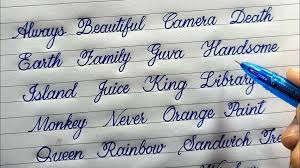 The hard truth is, over the years my cursive has devolved from “Dave, you have beautiful handwriting” to “Uh, what is that supposed to say?” I can’t even read my own writing anymore. To add to this misery my hands shake a little, which means my formerly elegant loops and curls are now jiggly, scribbly lines. Filling out the tip, the total, and the signature on a restaurant receipt is now a legitimate challenge in legibility.
It didn’t occur to me until recently that my illegible handwriting is simply the product of no longer writing by hand. I’ve always believed this degradation was the result of aging fingers, hands, and the associated muscles required for cursive writing. To a certain extent this is true. But more importantly, my writing muscles just don’t remember what to do anymore.
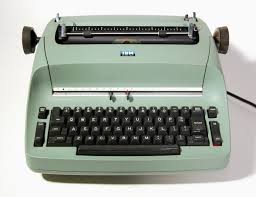
The first day I walked into typing class was likely the first day my cursive writing went downhill. The manual typewriter, followed by the electric typewriter, followed years later by the computer keyboard ensured I could create quick and perfectly legible documents in myriad fonts. Cursive writers average only 13 words a minute. Typists? 40, 60, sometimes as many as 80 words a minute.
But the pursuit of writing efficiency comes at a somewhat alarming cost. You lose the connection between mind and matter. Cursive writing is slow-w-w, which translates to more focus on what you are writing about as you form the letters. Typing feels more like a sprint to the finish, to get your thoughts through the keyboard as quickly as possible. Think of cursive as “in your own words”, while typing is “verbatim”.
Here’s an interesting experiment for you bloggers to consider. Write your next post in cursive before you take to the keyboard. See if your “voice” doesn’t sound a little more thoughtful than the one from the keyboard. Now here’s an experiment for me. What if I were to spend ten minutes a day trying to restore my handwriting? Would it eventually be described as “beautiful” once again?
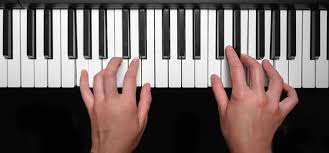 Side note: I’ve somehow retained the dexterity of playing the piano, even though I don’t sit down to the keyboard very often. I’ve noticed my fingers hover over the piano the same way they do over the computer keyboard. Maybe this is muscle memory at work, no matter what the fingers are doing?
 Someday it wouldn’t surprise me to see a famous quote, penned in beautiful flowing cursive, framed and displayed as artwork in a museum. The piece would bring us back to simpler days, back to the times when a physical hand put deep thoughts on physical paper. Of course, the question then would be, will anybody still be able to read cursive?
LEGO Notre-Dame de Paris – Update #3
(Read about the start of this “church service” in Highest Chair)

There were moments in the build today where I would’ve preferred to be laboring on the real cathedral. Bags 4, 5, and 6 – of 34 bags of pieces – were loaded with some of the tiniest pieces I’ve ever seen in a LEGO set. As I spilled out one of the bags a determined little square tile dashed away to the deep, dark recesses underneath my desk. If it weren’t for my phone’s flashlight I might never have rescued him.

We built a lot of round, structural columns today. I’ve never seen a step in a LEGO instruction manual asking for 48 identical pieces, but there I was, stacking them in my hand as I counted, “33, 34, 35…”. Those 48 pieces assembled to the 24 columns you kind-of sort-of see here.

We also reinforced, filled in, and rose to new heights the curving east end of the cathedral. This assembly brought new levels of frustration, in that the installation of some pieces caused others to promptly dislodge. Indeed, at one point a very tiny piece skittered onto the floor of the cathedral (hidden within those 24 columns) and the only way to get him out was to rock the whole assembly back and forth in my hands the way you would a marble maze.

I need to do a better job of taking photos as I build, because the fruits of my labor are already being covered up by the higher structure of the cathedral. Maybe it was no different with the artisans of the real Notre-Dame de Paris, who crafted in very small spaces knowing almost no one would ever see the detail of their work. At least I have a camera. Back then they’d have to make a painting of what they created just to show off their accomplishments!
Running build time: 2 hrs. 50 min.
Total leftover pieces: 11 (!)
Some content sourced from The Guardian article, “Signature moves: are we losing the ability to write by hand?”
 Life In A Word