
As I build the beginnings of this week’s blog post (three “b”s already for those keeping count) my screen distracts me with alerts for Cyber Monday deals. Laptops at 30% off retail. E-readers at 25% off. DNA tests at 70% off (which begs the question: do we really care about our ancestry anymore?) Cyber Monday is a sort of second chance for those who shunned the big box stores the Friday after Thanksgiving (good decision). But here’s what I wonder today. Why endure Black Friday or get distracted by Cyber Monday when you can shop through lost luggage any day of the year instead?
 I’ve finally found a reason to visit Alabama. A six-hour drive due west of my keyboard puts me in the little town of Scottsboro, of which an entire block is consumed by a business known as Unclaimed Baggage. UB is exactly what you think it is: deep-discounted personal belongings made available to you by the traveling misfortunes of others. Think of UB as one person’s trash becoming another person’s treasure only, of course, the original owner had no intention of throwing it away.

Unclaimed Baggage is the kind of entrepreneurial enterprise I wish I’d thought up myself. Consider the end-to-end process. You and your luggage start at Point A, but sadly one of you doesn’t make it to Point B. The airline (or the bus or the train) spends several months trying to reunite the two of you. Failing that, they compensate for the loss (sometimes). But what of your bag if it turns up later? Dump it into a “Dead Luggage” office? Actually, yes, and then Unclaimed Baggage comes a-calling.
 Here’s an encouraging stat: 99.5% of lost luggage is reunited with its owner. You wouldn’t think Unclaimed Baggage could make a business of the leftovers. But those leftover are, on average, 7,000 items every day. No wonder Unclaimed Baggage needs a city block to house all that it sells. And the best part of the business? UB never knows what it’s going to get because the airlines don’t (or aren’t allowed to) open the bags. It reminds me of the show where bidders vie for contents of storage lockers without being able to raise the roll-up doors beforehand.
The most expensive item UB ever sold was a Rolex watch for $32,000 (50% of retail). Visit the store today and you can purchase a diamond ring for $20,000 that surely appraises for more. Some items are so strange they’re relegated to an area known as the “Museum Gallery”. Wigs. Shark teeth. A funeral casket key (?) Items considered “unsaleable”, and items where you have to wonder why they were on an airplane in the first place.

When I first learned about Unclaimed Baggage I thought, they have something of mine and I want it back! No, I’ve never lost luggage. Rather, I’m the passenger who keeps forgetting the little things in the seat back pocket right in front of him. Reading glasses. E-readers. A rather expensive pair of noise-cancelling headphones. Somehow my stuff gets left behind despite the pointed announcement from the flight attendant: “Please check in and around your seat for personal belongings, as you will not be allowed back on the aircraft after you deplane.” Sigh…
Unclaimed Baggage has at least one example of an item unintentionally returned to its original owner. At UB’s annual ski sale (which earned an LOL from me; I mean, just how many skis are left at baggage claim?), a shopper purchased ski boots for his girlfriend. When he brought them home, she discovered initials on the inside of the boots – hers. The airline had already compensated her for the lost boots so effectively, she re-owns her boots at a deep discount.

As you might expect, a good percentage of shoppers at Unclaimed Baggage are the same ones who troll garage sales and eBay for items they have no intention of owning. They simply relist their wares online for purchase (and profit) from others. It’s another enterprising way to make a buck but it’s not my cup of tea. I’m the shopper who shows up at sales well after the best items have been picked over.
Unclaimed Baggage has cornered a lucrative market. I don’t think they have any competition for the business of repurposing lost luggage. I will say this: I’m less likely to leave my stuff on airplanes now that I know about UB. I mean, do I really want some stranger buying my stuff for way less than I paid for it myself?
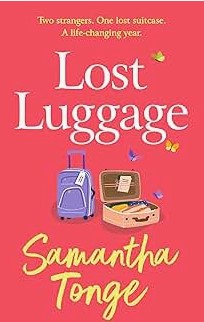 Final thought for the day. Why don’t they call it Unclaimed Luggage? Baggage? Luggage? Bag? Lug? Who the heck added two words into the English language when we only needed one? The Oxford English Dictionary estimates we use 170,000 words these days. I’m here to say that’s one too many.
Some content sourced from the CNN Travel article, “US travelers lose millions of suitcases every year…”, and Wikipedia, “the free encyclopedia”.



 Life In A Word