Christmas Customs Crisis?

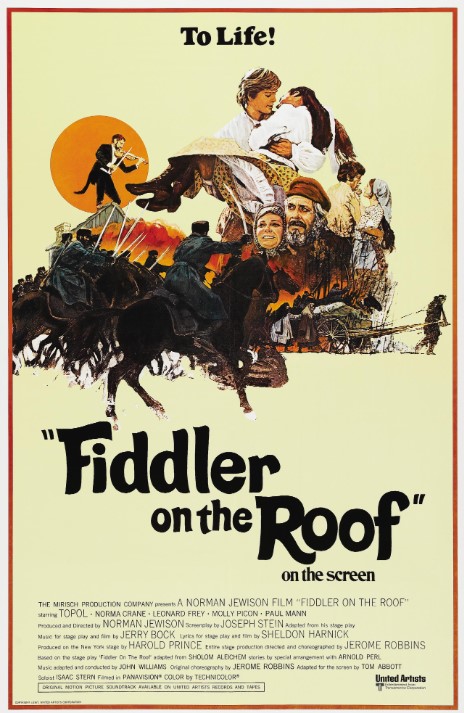
In the 1971 movie Fiddler on the Roof, the musical numbers are familiar even fifty years after the fact. Songs like “Matchmaker, Matchmaker” and “Sunrise, Sunset” play in my head in the voices of those long-ago performers. But it’s the opening number – “Tradition” – I hear most clearly, in the robust voice of actor Topol. The lyrics, covering the expected roles of father, mother, son, and daughter, speak to maintaining things as they always were. Which brings me to Christmas, and my family’s somewhat threatened traditions.
The easy way out here would be to list mine and ask you for yours.  We’d probably have some traditions in common and others we’d be hearing about for the first time.  Instead let me ask, are any of them robust enough to make it through the long haul?  As fast as the world is changing, you have to wonder what Christmas celebrations will look like ten and twenty years from now.  Seriously, do you expect hard-copy Christmas cards in the 2030s?  (Will you even have a mailbox?)

The Christmas tree is a good place to start.  As I’ve blogged about before, our tree is always real (versus artificial), purchased from a nearby lot after choosing the best fit for the house and budget.  This year however, I admit to a pause when I saw the price tags on the branches.  I swear the cost of Christmas trees doubled from 2022.  Economics says it’s a case of supply and demand, but in this case both are declining.  Tree farms surrender to developers.  The preference for artificial trees has risen steadily over the past fifteen years (to 77% of us now).  So less trees and less demand.  My 2030 Christmas may include an artificial tree whether I like it or not.

Christmas dinner faces a similar challenge.  The beef tenderloin we prefer for our celebration is a once-a-year luxury but it’s about to become a never-a-year purchase.  Even at a big box like Costco a trimmed tenderloin sets you back $40 a serving.  You start to wonder if burgers wouldn’t be just as satisfying simply for the money saved.  Even better – snacking throughout the day, and then your Christmas dinner appetite will be satisfied by a few side dishes and dessert?

Christmas (Eve) church already faced its toughest test (COVID) but did it really survive?  I remember the service we attended in 2020… from the “comfort” of our car with the preacher and the choir at the edge of the church parking lot.  The next two Christmases brought parishioners back indoors… but in far fewer numbers.  I admit to getting comfortable with “laptop church” every now and then, but Christmas Eve will be in person as long as there are sanctuaries and services.

Christmas carols may be the one tradition where serious change is in order.  Maybe you heard; Brenda Lee’s 1958 version of “Rockin’ Around the Christmas Tree” hit #1 on the Billboard Hot 100 this year .  That’s “staying power” (maybe staying a little too long) but it also suggests we’re not creating enough new music.  And how many versions of “Baby It’s Cold Outside” are we going to make before we decide not to change the lyrics but rather to ditch the song once and for all?  Bing Crosby, Nat King Cole, and Karen Carpenter will always have a place on Christmas playlists. The rest are getting old and it’s time for more “new”.

Christmas lights don’t leave much room for debate.  Not only will they be shining brighter than ever in the 2030s, they’ll be holographic, animatronic, and experiential.  Instead of a drive-thru Christmas display, the display will probably drive through you.  You’ll also have the option of enjoying your neighbors’ displays from the comfort of your living room (using the “mixed reality” headset you got for Christmas).
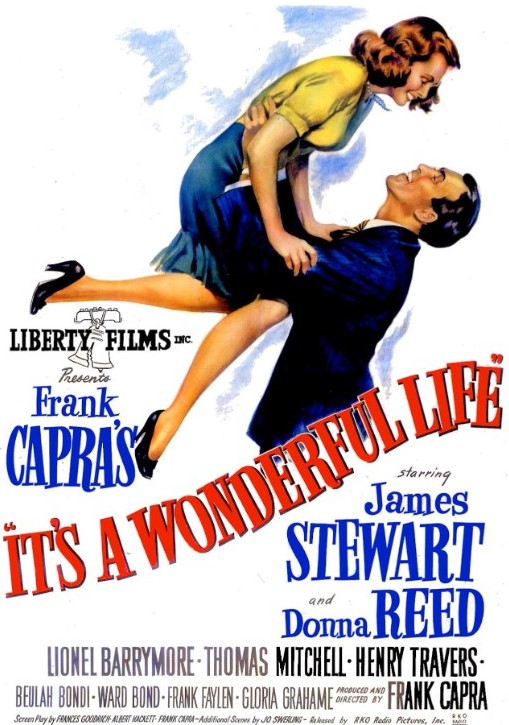
Finally, Christmas movies have pretty much run their course because you can only spin so many stories around the holiday (and anything on the Hallmark Channel doesn’t qualify as a movie).  Having said that, I’ll go to my grave watching It’s A Wonderful Life every December.  Even if there are no Christmas cards, tree, or dinner, and I’m tortured with yet another version of “Baby It’s Cold Outside”, I know I can always find tradition and the true meaning of Christmas alongside Jimmy Stewart, in a little town called Bedford Falls.

Merry Christmas!

Some content sourced from Wikipedia, “the free encyclopedia”.

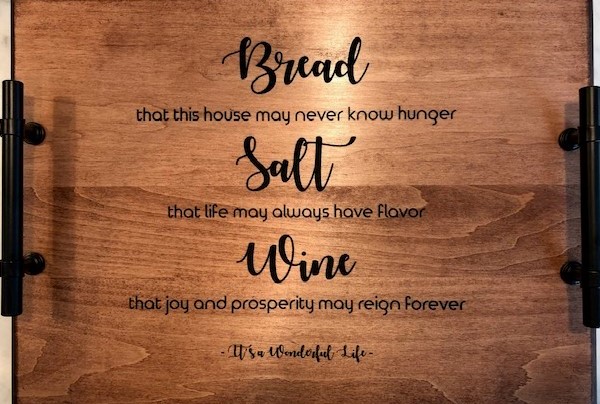
Bread, Salt, and Wine

As the endless loop of Christmas-cookie-cut Hallmark movies beckons yet again this year, the tried-and-true season classics struggle for air time and our time.  If it weren’t for streaming you might not be able to watch A Charlie Brown Christmas anymore.  You’ll have an easier time finding Miracle on 34th Street (but maybe not the 1947 original).  On the other hand, you should find It’s A Wonderful Life right there in your online library or movie collection.  You do have a copy of the greatest Christmas movie of all time, don’t you?

CNN Entertainment recently posted a list of “Hollywood’s stars’ favorite Christmas movies”, which is wrong on so many levels.  I’m not saying an actor can’t be an authority on movies.  Some of those interviewed have been in Christmas movies themselves.  No, it’s more about the concept of ranking Christmas movies.  It’s a futile attempt to place one above another, when the truth is each of us already has a favorite.  I may be trying to sway you to my favorites today, but deep down I know you have yours and they’ll never change.  Until a better one comes along, that is.

CNN’s list – or anyone’s for that matter – includes movies I struggle to associate with Christmas.  Home AloneThe HolidayYou’ve Got Mail?  Sure, each of these takes place during the season but they’re not really Christmas movies.  Strike them from the list, please.

How about The Santa Clause, Rudolph the Red-Nosed Reindeer (the 1964 stop-motion original), or How the Grinch Stole Christmas (Boris Karloff or Jim Carrey, you choose).  Okay, now we’re starting to get somewhere.  With each of these films you can at least claim a story about Christmas.  They even include pretty good messages about the spirit of Christmas.  Just not THE message.

A Charlie Brown Christmas still gets me at the end when the Peanuts gang sings, “Hark! The Herald Angels Sing”.  The Polar Express asks us to just “Believe”, which I would if I could get past its creepy animation technique.  And Love Actually is a collection of feel-good rom-com stories where viewers tend to choose just one as their favorite (again with the rankings).  But none of these films dig much below the surface of the reason for the season. 

[For the record, I’ve never been a fan of “A Christmas Story”.  I think it’s a cult classic with a bizarre sense of humor.  One or more of you will disagree, which means you’ll be happy to know about HBO Max’s follow-up film featuring Peter Billingsley (again) as very grown-up Ralphie.]

Okay, I’ve stalled long enough.  I could take on another dozen so-called classics and explain why they don’t belong on any “best list” of the season’s movies.  Instead, let’s cut to the chase and cover the three films whose stories illustrate the meaning of Christmas:

A Christmas Carol.  The Charles Dickens classic has been recreated on film more times than I can count (and most versions are pretty good) but it’s hard to top the 1938 original.  Maybe it’s because Dickens’ ghosts really scared me the first time I saw them (even in black-and-white).  More likely it’s because Reginald Owen so perfectly portrays the remarkable transformation of Ebenezer Scrooge from mean and miserly to giddy and grateful.

Miracle on 34th Street.  Again we have several versions here, but none better than Edmund Gwenn’s turn as Kris Kringle in the 1937 original (for which he won an Academy Award).  Also, I’ll watch any movie with the lovely Maureen O’Hara, and Natalie Wood is adorable as sweet, innocent Susan Walker.  But above all, “Miracle…” is about believing.  C’mon, you remember the scene… all those bags of letters to Santa being dragged into the courtroom…

It’s A Wonderful Life… is, simply put, in a Christmas class all by itself.  When critics describe this film as, “The holiday classic to define all holiday classics…”, you know you’ve got something special.  If you’ve never seen It’s A Wonderful Life, kindly put down your electronic device and spend the next two hours with George Bailey in his little town of Bedford Falls.  Talk about the meaning of Christmas.  I won’t give it away, but the final scene where Mary drags George down the stairs to see “the miracle” is the message of the entire movie.

Maybe you don’t agree with my top Christmas movies (comments, please!), but you should at least admit to an underlying concern.  All three of my choices were produced over fifty years ago.  Fifty years!  Am I suggesting there hasn’t been a more meaningful Christmas movie made in the last half-century?  YES, I AM!  Seriously, Hollywood, you can do a whole lot better than Elf.

If you’ve spent any time watching the Hallmark Channel this season (and… sigh… a ranking of those Christmas movies can be found here), you owe it to yourself to also watch at least one of the three movies I highlight above.  Hopefully you’re watching them again, not for the first time.  After all, as we learn in It’s A Wonderful Life, there’s much more to bread, salt, and wine than just the title of a blog post.

Some content sourced from the CNN Entertainment article, “Tom Hanks and more stars share their favorite Christmas movies”, and IMDb, the Internet Movie Database.

Patriot State

Back when my wife and I lived on the West Coast, we had a neighbor who planted a “victory garden” in their front yard.  The houses on our block were small and close together, so the postage-stamp spaces in front allowed for modest landscaping at best.  There we were, nineteen neatly-mowed little lawns and one wildly out-of-control victory garden.  One of these things was not like the others.

Thankfully, victory gardens carry more significance than the presence of hippies next-door (who knows what was in that garden).  Victory gardens were originally planted during World War I to reduce pressure on the public food supply.  The gardens were also considered a morale booster for citizens supporting the war effort back home.  In that context, it’s nice to see an occasional victory garden around my neighborhood today.

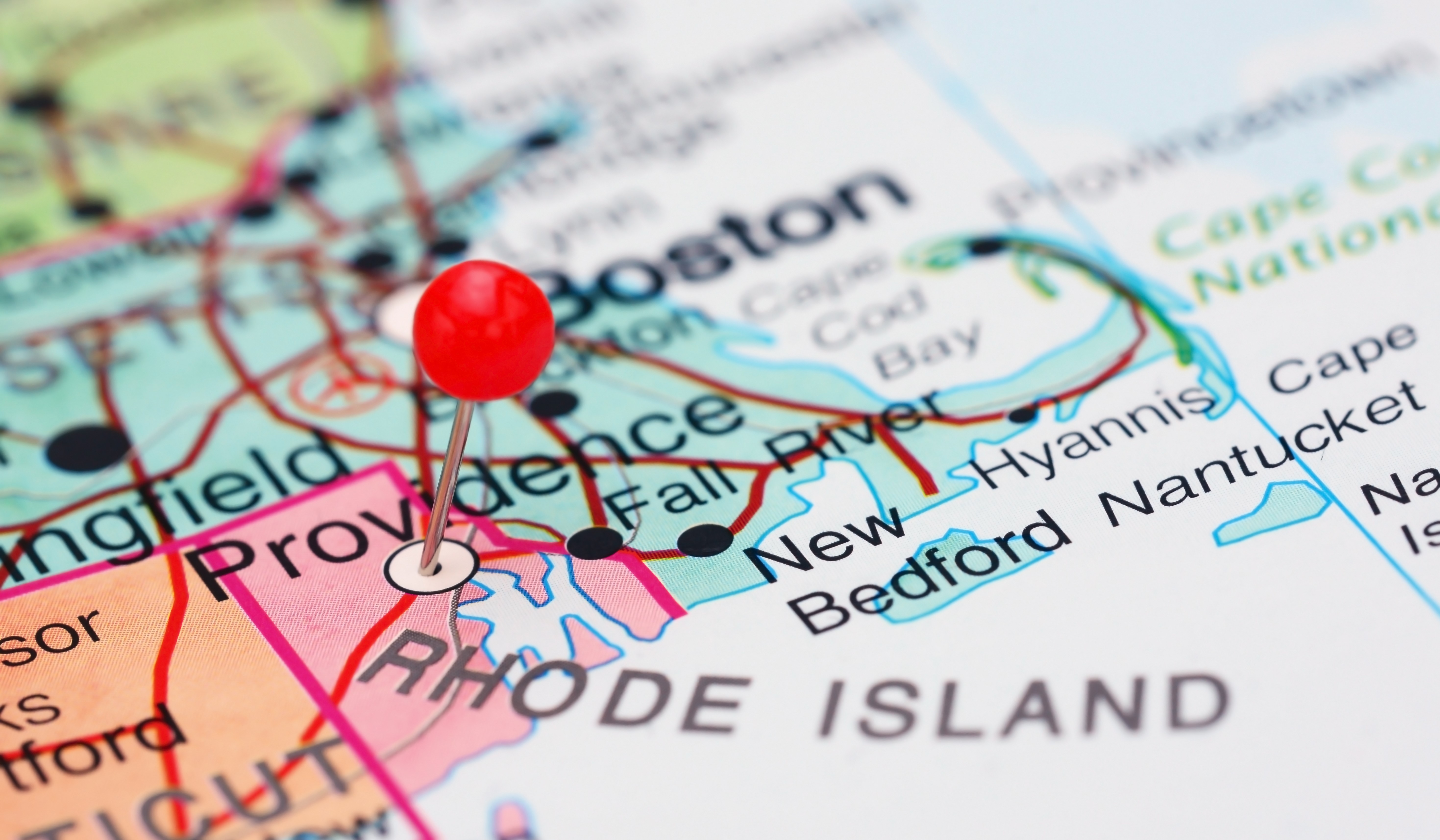
Three days ago – the second Monday in August – the United States celebrated Victory Day, commemorating Japan’s surrender to the Allies at the end of World War II.  On second thought I shouldn’t say “United States”, because forty-nine of fifty states ignore V-Day altogether.  The only state still recognizing Victory Day?  Small but steadfast Rhode Island.  Since 1975, when Arkansas dropped its “World War II Memorial Day”, Rhode Island stands alone.

“The Ocean State” has good reason to continue its jubilant celebrations.  92,000 of its residents served in WWII alone (more than 1 in 10), and almost 2,200 were killed.  Rhode Island is the smallest U.S. state in size and the eighth-least populated, yet the proportion of participants in “The Good War” was far higher than most other states.  Perhaps that’s because Rhode Island hosted several armed encampments.  Perhaps that’s because of patriotism born from the first of the thirteen colonies to declare independence.

Victory Day was originally labelled V-J Day or “Victory over Japan Day”.  President Truman declared the holiday shortly after the atomic bombs dropped in Hiroshima and Nagasaki.  The original V-J Day was September 2nd, 1945 (marking the formal end date of WWII), but revised to August 14th to recognize the actual day of Japanese surrender.  V-J Day came shortly after V-E Day (“Victory in Europe” Day), signifying Nazi Germany’s formal surrender to the Allies the previous May.

Victory Day became infinitely more famous when Life Magazine published Albert Eisenstaedt’s photo of an anonymous sailor and nurse celebrating the moment of Japanese surrender in downtown New York City.  Today a massive statue of the “Unconditional Surrender” (more affectionately referred to as the “Kissing Sailor”) can be seen in San Diego’s downtown waterfront, adjacent to the USS Midway aircraft carrier.

Thirty-six countries besides the United States celebrate some form or another of a Victory Day.  Why not our other forty-nine states?  Are we (as in the recent events in Charlottesville) determined to erase the nice/not-so-nice history defining the freedoms Americans enjoy today?  Victory Day recognizes the triumph of good over evil, not the Confederate brand of freedom.  Note a critical detail as well: Japan struck first, in its late-1941 assault on Hawaii’s Pearl Harbor.  America was not the aggressor.

Maybe someday I’ll get to Rhode Island so I can a) witness the celebration of Victory Day, and b) thank the residents for keeping a most important moment in U.S. history alive.  In the meantime I’ll count on George Bailey every Christmas to remind me, immortalized in the movie “It’s A Wonderful Life”.  George was deaf in one ear so he couldn’t serve in WWII alongside his brother Harry.  Instead he stayed on the home front, running “paper drives… scrap drives… rubber drives.”  And, “… like everybody else on V-E Day, he wept and prayed… on V-J Day, he wept and prayed.”

Some content sourced from Wikipedia, “the free encyclopedia”.