
Remember the scene at the end of Indiana Jones and the Last Crusade where Indy chooses from a dozen or more chalices in hopes of finding the Holy Grail? The correct cup turned out to be the most modest of them all. Starting this month, forty-eight soccer teams vie for their own Holy Grail (an entirely immodest cup), across sixteen venues jam-packed with thousands of delirious fans. This month, North America welcomes the madness that is the World Cup.
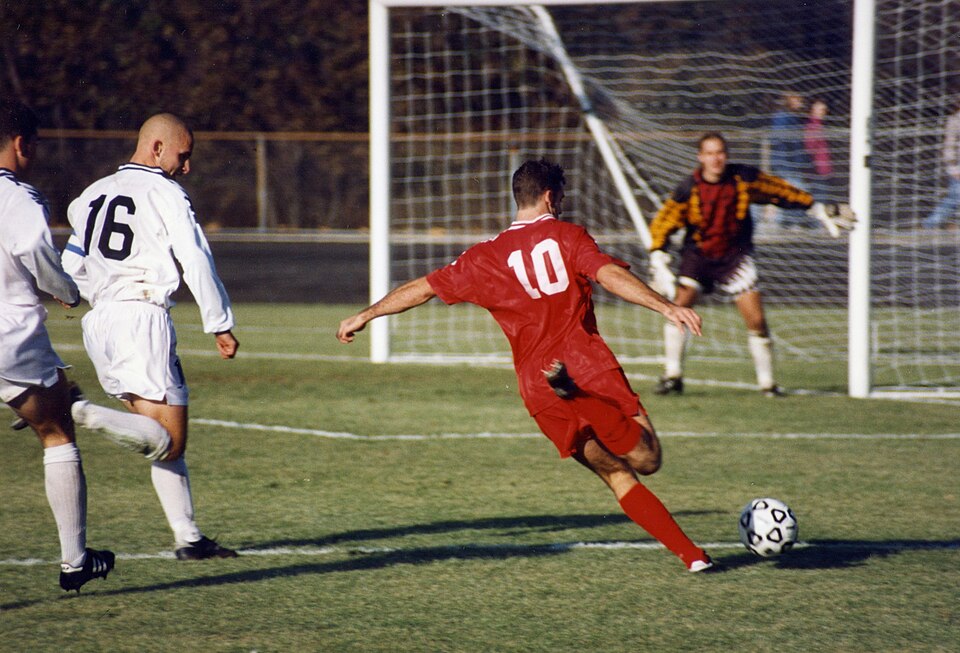 Let me admit right up front, I am a sports fan but not a soccer fan. I’ve enjoyed the American version of football as long as I can remember but not so much the other version made popular by the World Cup. By the standards of a lot of sports, soccer can be described as slow, boring, and low scoring. But of course, any soccer aficionado will tell you there’s more to enjoying the game than meets the eye; much more. Maybe the 104 matches over the next six weeks will get me to agree.
I won’t waste this space on a primer on soccer; not even the complicated format of the World Cup competition itself. Your favorite browser or AI will be happy to fill in those fútbol blanks. Instead, I want to focus on what lies just outside of the Cup. You’ll find headlines and curiosities that wouldn’t have happened without this event, but are perhaps more interesting than the kicks on the field…
for instance…
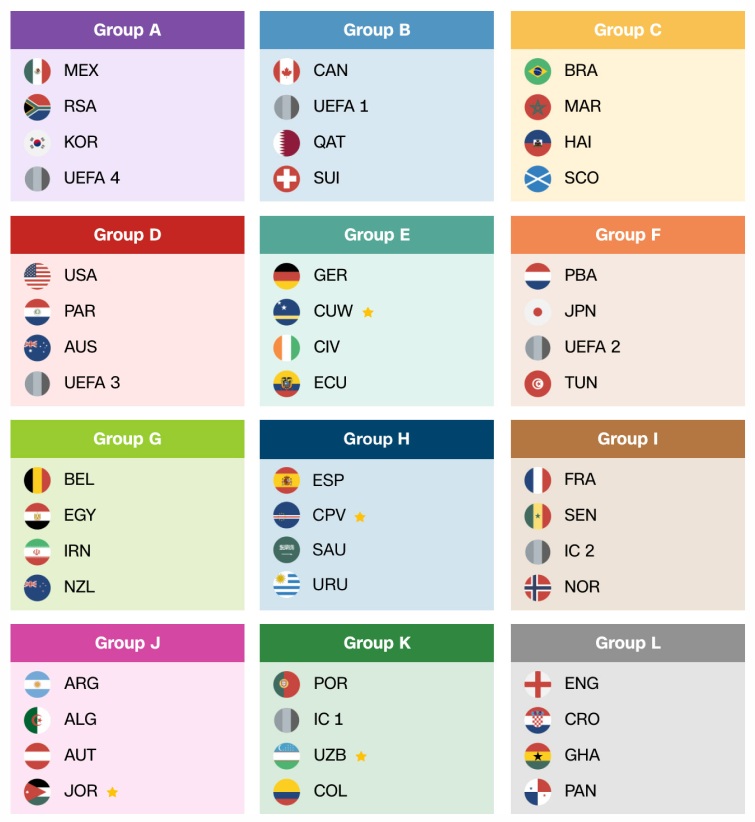
Trivia question: How many teams sought qualification to become one of the forty-eight participating in this year’s World Cup? I’ll give you a hint: We have 195 recognized countries in the world. Would you guess 150 teams? 125? 100? Sorry, you’re heading in the wrong direction (and it’s a trick question). There were over two hundred soccer teams when the qualifying rounds began almost three years ago. How that number was whittled to forty-five (plus one each for host countries Canada, U.S., and Mexico) would take way more words than I am allotted today.
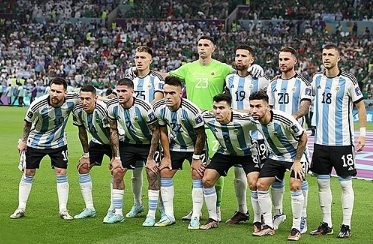
 Here’s something less trivial. One of six teams is destined to hoist the Golden Ball trophy (worth about $10M all by itself): England, France, Spain, Portugal, Brazil, or Argentina. Maybe your sentiments lie with one of the host teams but the facts and the resumes don’t lie: Europe and South America have dominated professional soccer for decades. Baseball may be as American as apple pie, but we’re talking about a sport for the legs, not the arms. Having said that, you won’t have to wait long to get your first look at the Americans. We “kick off” against Paraguay tomorrow night.
If you’re looking for a longshot to win this thing (and I mean l-o-n-g-g-g-g-g-g shot), choose one of the teams from Curacao, Jordan, Uzbekistan, or Cape Verde. These countries are playing in the World Cup for the first time (and the World Cup’s been going on for a hundred years). To me, curacao is a liquor that tastes like Triple Sec. Jordan is a man’s name. Uzbekistan is somewhere in Asia surrounded by countries whose names I also can’t pronounce. And (Cape) verde means green in Spanish. Notice nowhere here am I saying anything about the talents of their World Cup soccer teams.
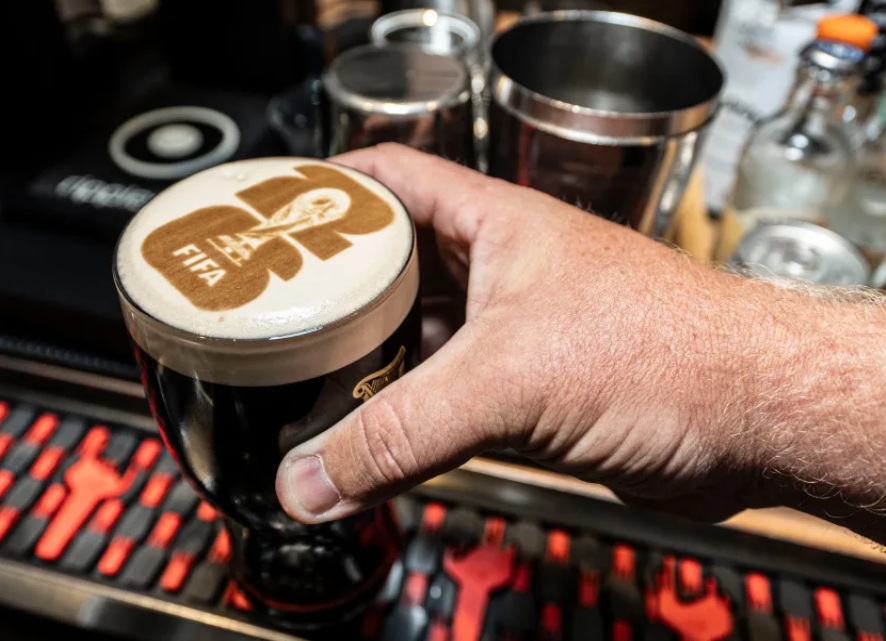 Speaking of alcohol, it’ll be interesting to see how the fortunes of the beer, wine, and liquor producers are swayed by the World Cup. With sixteen stadiums and 104 matches, you’d expect a boost in drink sales big enough to create Niagara Falls. Unfortunately for them, the World Cup is hosted by a continent where drinking is descending to record low levels, with the younger generations promoting the idea alcohol “is bad for your health”. Maybe fans will raise a glass of milk to the winner like they do at the Indianapolis 500.

Like the receiving line at a wedding, I’d love to meet every one of the World Cup fans who make it to the final match in New Jersey’s MetLife Stadium. Why? These people must do some pretty remarkable things for a living. Even with the likelihood the host countries will not be represented, a ticket is projected to set you back between $15K and $20K. Fifteen thousand American dollars for three hours of sport. Throw in peripheral expenses and a family of five could easily spend six figures. It’s kind of nuts. No, it’s a whole bowl of nuts. And mark my words, every last seat in MetLife will be filled.
There’s a lot more to be said about the World Cup, and I’ll be tempted to keep you updated over the next six weeks. In the meantime I need to get back to my regular routine. Game #1 and #2 take place today and I have no intention of sitting down to watch. I may kick myself for my lack of attention but hey, now there’s a great way to describe my ability to play soccer.
Some content sourced from the CNN Sports article, “World Cup beginner’s guide…”, the CNN Sports article, “Who are the World Cup favorites?, the CNN Sports article, “The World Cup debutants…”, the CNN Sports article, “Why sky-high ticket prices have sent fans searching…”, and Wikipedia, “the free encyclopedia”.

