Berry Expensive

When it comes to fruit, berries top the list of my favorites.  I’ve always been a fan of grapes, apples, and pears – probably because I ate a lot of them when I was a kid – but over the years I’ve come to appreciate berries as much for their taste as for their healthy benefits.  Now don’t ask me to choose a favorite berry because I’d struggle between strawberries, blueberries, and raspberries.  And where-oh-where would I rank pineapples?
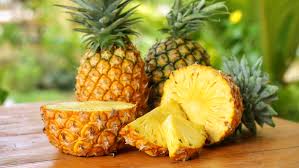
That’s no berry blunder I just made there.  Pineapples – go figure – are a berry.  I meant to start this post from a wholly different angle but I couldn’t get past this juicy tidbit of trivia.  As a pineapple plant grows, the individual flowers fuse together to create a cluster of “berries”, which go through an extraordinary evolution to end up as the cohesive pineapple you and I know and love.  Grow one in your garden sometime and watch it happen.  For the most part, all you have to do is slice off the top of the fruit and plant it.

I could’ve guessed pineapples fall among nature’s sweetest fruits.  In fact, on a list of the top ten the pineapple rates second-sweetest of them all (only mangoes contain a higher concentration of fructose).  For perspective, grapes, cherries, and strawberries are further down the list and each of those are plenty sweet.  We might as well be talking about candy here instead of pineapple.
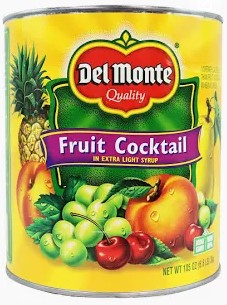
I do love pineapple, and I’m guessing part of the appeal is the nostalgia of childhood eats.  My mother liked to serve pineapple chunks on top of cottage cheese as a side salad.  She occasionally broke out a can of Del Monte “Fruit Cocktail”, a concoction of pineapple and other fruit pieces submerged in a sickly-sweet syrup.  My mother also baked whole hams with pineapple rings dotting the surface.  I won’t claim baked pineapple tastes as good as a fresh slice, but the slightly-burnt taste comes to memory like it was yesterday.

There was a pineapple upside-down cake or two in my childhood but I was never really a fan.  Fruit belongs in pies if you ask me (hence my dislike of Easter hot cross buns and Christmas fruitcake).  Admittedly, he or she was a clever soul who realized fruit could be nestled into the top of a cake if placed at the bottom of the pan first (followed by the cake batter, followed by a flip of the pan after baking).  And who knew: prunes, not pineapples, were the first fruit to grace upside down cakes.

My favorite pineapple story comes from our honeymoon.  Through a travel agent we booked several days at an all-inclusive resort in Hawaii.  The first morning we ordered fresh pineapple from room service.  It was so delicious we ordered more every morning thereafter, enjoyed on our private balcony as we gazed out to the Pacific.  But at check-out, my jaw dropped when I saw every one of those (overpriced) breakfasts on my bill.  I promptly asked the hotel manager to look into it and he goes, “Oh, that all-inclusive package your travel agent booked was discontinued years ago.  You have to pay for the breakfasts now.  Might want to take her back an updated brochure”.  Whoops.

Del Monte’s “Rubyglow” pineapple

Speaking of pricey pineapple, a new spin on the tropical fruit will set you back almost $400.  Say that again, Dave.  Okay, you’ll pay $400 for a pineapple if you really want to.  One of Del Monte’s unique “Rubyglow” pineapples costs that much (and yes, I did say one).  Those who have already indulged say the only difference is the lack of bitter aftertaste you get with a regular pineapple.  Otherwise, you’re paying more for the distinctive look (and the fancy box) than you are for the fruit inside.  My first thought when I saw the photo: the Rubyglow looks like pineapple and ham all in one food.
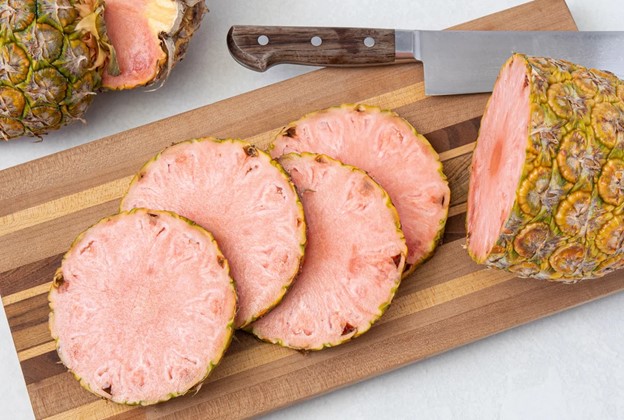
At the start of this post I was stuck on “berry”.  Now I’m stuck on “berry expensive”.  $400 for a piece of fruit is bonkers.  I’ll never pay it.  For my hard-earned dollars I’ll take forty overpriced piña coladas instead.

Some content sourced from the Medium.com article, “Top 10 Sweetest Fruits”, the CNN Business article, “$400 for one pineapple: The rise of luxury fruit”, and
Wikipedia, “the free encyclopedia”.
Rolling in the Isles

With the world “opening up” again, my wife and I often talk about places we’d like to visit. Some of them are more accessible now that we live near the East Coast. One in particular is further away. But coincidence or not, the five locales tempting the travel bug in me have one thing in common.  Every one of them is an island.

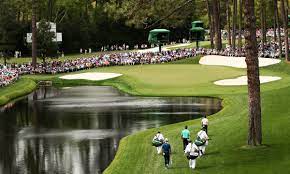
#16 at The Masters in Augusta, GA

Let’s get my first choice out of the conversation straight away, because it kind of stretches the definition of “destination” and “island”.  I want to go see a round of The Masters golf tournament in Augusta, Georgia.  If you’re not into golf you won’t understand the fuss, but trust me, when you’ve watched this competition on television every April since you were a kid, the place becomes a shrine of sorts.  The Masters never played into our decision to move to South Carolina, but the course is suddenly only forty-five minutes from my new front door.  So why is it an “island”?  Have you been to Augusta?  The Masters is like finding a bright green emerald in a bowl of gravel.  Let’s just say it would be complimentary to describe the rest of Augusta as “plain vanilla”.

There are no bad photos of Hawaii

Now for the real islands.  The first two fall on a lot of must-see lists: Hawaii and Ireland.  Hawaii is no less appealing even though South Carolina makes it three hours further than from where I used to live.  I’ve only seen “The Islands” on my honeymoon and on family trips (decades ago) so I know this time around would be decidedly more adventurous.  Not that I want to bungee-jump into a volcano or anything; rather just take a closer look at all Hawaii has to offer.

Ho-hum… just another town in Ireland

As for Ireland, it feels a lot closer when you live up against the East Coast.  If I had x-ray vision I might see the Blarney Stone from these parts.  My wife and I celebrated our 25th wedding anniversary with our first trip to the Emerald Isle, where we saw a lot of Dublin and only a wee bit of everything else.  We tossed a coin into the Trevi Fountain to be sure we’d go back, and… oh wait, right… that’s Rome.  Anyway, something we did in Ireland back then – whatever it was – instilled the yearning to go back someday.  And we will.

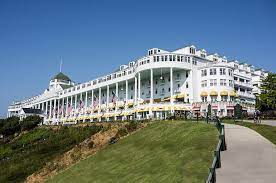
Mackinac Island’s Grand Hotel

Island #4 – Mackinac – sits neatly between the two peninsulas of the state of Michigan. The “Crown Jewel of the Great Lakes” has been on my must-see list ever since I watched Somewhere in Time in college in the 1980s.  Yeah the movie’s a little corny, but it’s utterly romantic and it stars Jane Seymour, so cut me some slack.  More importantly, Somewhere in Time shows off Mackinac’s Grand Hotel in all of its past/present glory.  No, I can’t afford the stay at the Grand (rooms start at $500/night) but I’ll settle for one of the B&B’s on the island and spend my money on other stuff instead.  Like a horse-drawn carriage tour with my wife (Mackinac has no cars).  Or a round of golf on the only course in the country where the trek between the front nine and the back is, again, by horse-drawn carriage.  Or a brick of Mackinac’s famous fudge.  Whatever the draw, I’ll endure two connecting flights, a couple hours of driving, and a quick ferry ride, just to experience Mackinac’s throwback delights.

I’ve saved the best for last (well, at least, I think it’s the best).  If I ever make it to France, I’m heading straight to Mont-Saint-Michel.  “St. Michael’s Mountain”, which I’ve blogged about here, first captured my imagination when professional sandcastle builders (yes, there are such people) built a replica on the beach where I grew up, and again when I studied architecture in college. 

Mont-Saint-Michel
The beach-sand version

The whole island setup is just so remarkable: nothing but a walled village of shops, restaurants, and other structures, connected by cobblestone streets ascending up, up, up to the Romanesque church and abbey at the pinnacle.  Only 29 residents at last count.  The surrounding tides ebb and flow, so at times Mont-Saint Michel is an island and at other times not so much.  And about that abbey on top.  The first cornerstone was laid in 1023, making Le Mont 1,000 years old this year.  All that time and I’ve never ever seen it?  Mon dieu.

One of Ireland’s many Aran Islands

If I make it to my five “islands”, I might have to add just one more.  Ireland is paying people almost $100k for the “gift” of an island off the western coast of the country.  There are twenty such islands.  The catch: you have to refurbish whatever structures you find and you have to live there.  Shelter yes, but food, water, power, and fellow humans are maybe’s.  Yeah, I won’t be rolling with any of those isles.  Let’s just start with that golf course down the street from me, shall we?

Some content sourced from the CNN Travel article, “Ireland will pay you $90,000 to move to a beautiful island home”

Fa-La-La Land Down Under

I have two nieces who, along with their families, call islands their homes. One lives on Hawaii’s Oahu, her house perched on the cliffs above Honolulu with sweeping ocean views to the west. The other lives in Brisbane, on the east coast of Australia. Sure, Australia isn’t really an island, though it is surrounded by water. By definition its landmass makes it a continent instead. But Australia does lay claim to a few islands off its shores.  Including one named “Christmas”.

Christmas Island’s picture-perfect “Flying Fish Cove”

Imagine living in a world so small you can walk from one end to the other in less than two hours.  Your fellow islanders are so few, your entire social life is like living in a college dorm.  Your diet consists of fruits, nuts, and crab.  Lots and lots of crab.  And the single contribution you and your island-mates make to the outside world is phosphorous from your underground mines.  That, in a crab shell, is life on Christmas Island.

The first time someone told me there was a “Christmas Island”, I was young enough to be watching Rudolph the Red-Nosed Reindeer every December on TV.  My favorite part of Rudolph’s story was the “Island of Misfit Toys”.  You remember, don’t you?  Rudolph was the reindeer-a non grata, mocked by the others because of his shiny nose.  Along with a couple other outcasts (Hermie, Santa’s elf who’d rather be a dentist, and Yukon Cornelius, the prospector who can never find silver or gold), Rudolph discovers the Island of Misfit Toys.  The island is a repository for unwanted toys.  As sad as that sounds, Rudolph’s island brings Christmas to mind much more than the little landmass I’m talking about today.

Palm trees (not pines) on Christmas Island

If you wonder why you’d ever visit Christmas Island, consider almost 65% of the island is a national park of unspoiled rainforest, with walking paths past 25 species of trees and 135 species of plants.  The only animals you’ll spy in the forest include the “flying fox” fruit bat, the recently introduced Javan deer, and the golden bosun (the island’s “official” bird).  Outside of the forest however, it’s impossible to miss the crabs.  Coconut crabs.  Red crabs.  Thirteen different species of land crabs, let alone those who prefer the ocean.  And here’s the best part.  Every year, one hundred million of them migrate from solid ground to water (to spawn), a sight mind-blowing enough to be called “one of the wonders of the natural world”.

Watch the following short video on the chaotic Christmas Island crab migration.  Makes you wonder how you can walk anywhere without getting “crabs”.  If this is something you simply must see in person, find your way to Perth on Australia’s western mainland, and book one of two weekly flights to Christmas Island courtesy of Virgin Airlines.  Your 3+ hours in the air will take you over nothing but the vast Indian Ocean.

It’s high time we addressed the most burning question about our little fa-la-la land down under.  Why is it named Christmas Island?  Here are popular theories.  One, “The rainforest is made up of nothing but evergreen (Christmas) trees.”  Two (for the geographically challenged), “The island is the closest landmass to the North Pole.”  And three “Christmas Island was the origin of the species diospyros virginiana, more commonly known as the sugar plum tree.”  The correct answer?  None of the above.  In the 1600s, European explorer Richard Rowe first set foot on the island, doing so on December 25th.  With no more creativity than a glance at the calendar, his discovery was dubbed Christmas Island.

Norfolk Island pine

I’ve got a much better “Christmas Island” for you.  Flip over to just off the east coast of Australia and you’ll find an even tinier landmass called Norfolk Island.  It’s about a quarter the size of Christmas, with the same number of inhabitants.  But Norfolk Island’s primary export is much more “Christmas” than phosphorous.  It is the evergreen Norfolk Island pine, a popular ornamental tree in Australia.  My wife and I found one at Home Depot a few years ago and bought it for her mother.  For small spaces, Norfolk Island pines make great Christmas trees.

“Christmas” looks a little like an Aussie Shepherd!

In defense of Christmas Island, there’s more going on within its shores than phosphorous and crabs.  Most of the residents live in the northern area of the island surrounding a coastal region known as Flying Fish Cove.  They speak one or more of five different languages.  There’s a high school and a public library.  There’s even a cricket club, which just celebrated sixty years in the game.  And most fitting to this time of year, twenty percent of the population call themselves Christians.  In other words, despite the uninspiring reason for its name, Christmas really does come to Christmas Island.

Some content sourced from Wikipedia, “the free encyclopedia”.
Whirlybird Wonder

“Ginny”

If you haven’t been following the dog-and-pony pony-and-dog show taking place on Mars the last couple of months, you might want to break out the telescope. Not that you’ll be able to see a car-sized rover or a toy-sized helicopter from millions of miles away. But you can see Mars itself, and then you can imagine “Percy” and “Ginny” sniffing around the red dirt and rocks up there. They’re just sampling things to see if Mars can roll out the welcome mat to humans someday.

The rover “Perseverance” is the pony in this show; “Ingenuity” the dog. I want to talk about the dog. Last July Percy hitched a nine-month ride to Mars, launching from Florida’s Cape Canaveral aboard a massive Atlas V rocket. Little Ginny hitched a ride on Percy; she the steadfast little soldier clinging to the rover’s underbelly. Considering Ginny measures only a few feet in all dimensions, it must’ve been a hang-on-for-dear-life E-ticket kind of adventure.

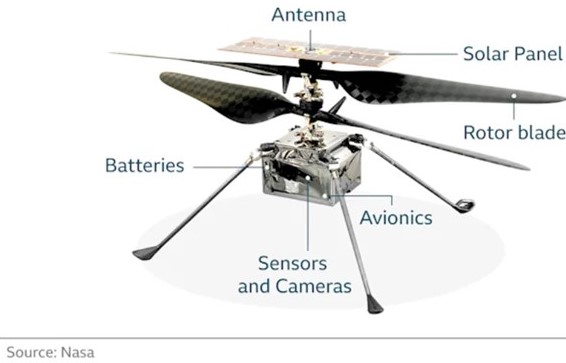
I’d love to make this a children’s story, but Ginny is anything but soft and cuddly. Have a look. She’s about as cute as a wasp. Consider Martian atmosphere is only 1/100th as dense as that of Earth, which means Ginny has virtually nothing to grab onto to sustain flight. But she whirls at five times the rate of a regular helicopter (2,400 rpm!), and then she rises.  Product safety warning: don’t go anywhere near Ginny’s rotor blades.

Ten days ago Ginny lifted off Mars to a skyscraping height of ten feet.  Then she hovered briefly before rotating about ninety degrees, kind of just observing the Mars-scape.  Finally, she landed.  The whole exercise lasted less than forty seconds.  Big deal, right?  Well, that little maneuver qualified Ginny as “the first powered controlled flight by an aircraft on a planet besides Earth”. Way to go, little wasp.  You just reserved a spot in the Smithsonian after you return home.

Will Ginny end up here?

When I picture Ginny clinging to the rover Percy, then hurtling through outer space for months on end, my middle-aged mind recalled the old Thunderbirds television show.  Thunderbirds featured the Tracy family (marionettes!) and their fleet of wicked-cool space vehicles.  The five Thunderbirds included a giant green supersonic carrier (“Thunderbird Two”), whose massive belly carried a yellow utility submersible (“Thunderbird Four”).  Kind of like Percy carried Ginny.  Trust me young(er) readers, Thunderbirds was awesome television in the 1960s… even if it was just puppets getting their strings pulled.

I’ve ridden in a helicopter exactly once in my life, on our honeymoon over the Napali Coast on the Hawaiian island of Kauai.  I turned to my bride mid-flight and probably uttered some not-so-nice words as I remembered how much I dislike heights.  The glass of champagne beforehand certainly helped.  For me, the fear has always been a toss-up between vertigo (physical) or the idea that terra firma is far, far below me (mental).  No matter the reason, heights just aren’t my cup of tea.

My acrophobia probably goes back to my first ride on a Ferris Wheel, with adolescent nightmares of slipping through the metal lap bar and taking an unplanned skydive.  Or ski lifts, where a little bit of fiddling with the lap bar latch could mean the end of everything.  Parasailing? (No).  Hang-gliding? (Never).  Hot-air balloons? (Why even ask?).  Sorry – airplanes aside, and only the bigger ones mind you – I prefer my thrills securely grounded.

For all the recent broadcast news on Percy and Ginny, I can’t seem to find the part of the story where Ginny returns to Percy, who then returns to the Atlas V rocket, who then returns to Earth.  I’m looking for the part about splashdowns and photo ops and ticker-tape parades – the happy-ending kind of stuff.  My earlier comment about a spot in the Smithsonian may have been a little premature (can you say, “Ginny replica”?).  Note to reader: if you do decide to make this a children’s story you might want to edit things a bit.  Just say our little pony and dog are now asleep on Mars, waiting for their human friends to get there someday.  It sounds much better than, “we just left them there”.

Some content sourced from Wikipedia, “the free encyclopedia”.

Game of Stones

Do you know the absurd story of the London Bridge? Built in 1831, the famous bridge lasted 130 years over the Thames River before overwhelming traffic demanded the construction of a new one. So, what did London do with the old one? They sold it. Robert McCulloch, an American oilman, paid over $2 million to have the bridge dismantled into pieces, shipped to the coast of California (through the Panama Canal), trucked across the desert to the edge of Arizona, and reconstructed in newly-established Lake Havasu City.  Look at that photo below – that’s a lot of truckloads.  Call him crazy but McCulloch recouped his bridge money by selling the surrounding desert properties to retirees. He also took several thousand bits of the bridge and put them in tiny glass bottles for souvenirs. I bought one of these bottled bits when I was a kid.

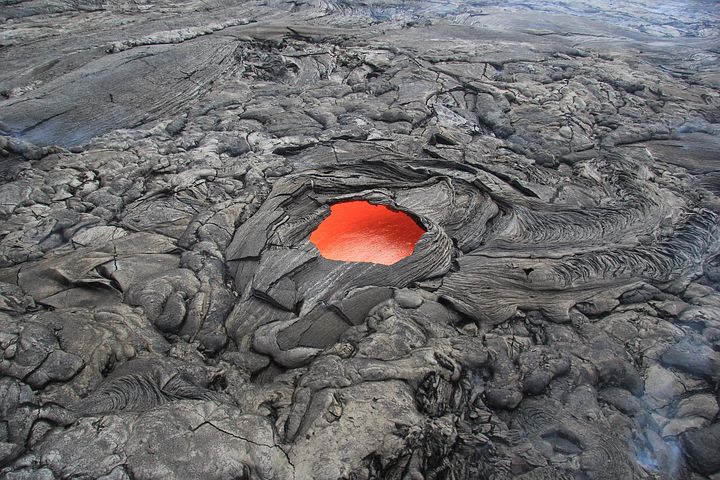
The London Bridge story came to mind this week after reading a Wall Street Journal article about Hawaii.  It seems volcanoes are making their way to mainland America much the same way the London Bridge made its way to Arizona.  Tourists to Hawaii’s Volcanoes National Park – the 500-square mile preserve on the Big Island – are stuffing lava rocks into their suitcases as souvenirs; some over a foot long.  I’d like to see the size of the volcano you could build from all the lava bits stolen (yes stolen; helping yourself to rocks in a national park is technically illegal).  That volcano would be hundreds of feet taller than the paper mache science project you assembled in your youth (baking soda + vinegar = lava flow!)

This rock-robbing in Hawaii is big business.  How do I know?  Because the real story here is the hundreds of rocks being returned to Volcanoes National Park.  Park rangers claim they’re receiving mailings every day, each containing a) a stolen lava rock, and b) a letter of apology.  Turns out – if you believe this sort of thing – taking lava rocks puts a curse on your life and bad things start to happen.  In one case, a tourist claimed his sons began having behavioral problems, his marriage fell apart, and his mother died; all within a few months of bringing home a lava rock.

The Hawaiian Goddess of fire, lightning, wind, and volcanoes – Pele – is responsible for the curse.  She is credited with creating the Hawaiian Islands in the first place.  Her domain encompasses all volcanic activity on the Big Island, and she’s known for her power, passion, jealousy, and capriciousness.  Yo, don’t take Pele’s rocks!

(Note: as I was reading up on “Madame Pele” I recalled the 2014 computer-animated short “Lava”.  Remember the story, about two volcanoes who fall in love – “Uku” and “Lele”?  Maybe Lele was Pele in disguise – casting her powerful curse from the big screen!)

My wife and I went to Hawaii on our honeymoon thirty years ago.  We saw several volcanoes but never did we consider taking a lava rock home (loading up on pineapples and several boxes of chocolate-covered macadamia nuts instead).  I mean really, what do you do with a lava rock: display it in your living room as if you own a share of Hawaii?

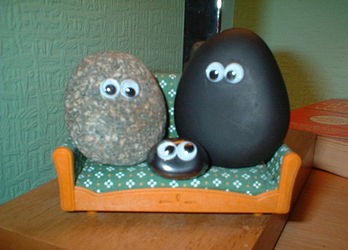
Perhaps these rock-robbers are the same peeps who fell for Pet Rocks in the 1970’s.  If you weren’t around back then, Pet Rocks were smooth stones gathered from Mexico’s Rosarito Beach.  They had cute painted faces and were sold as if live animals, in little boxes with straw beds and breathing holes.  They included a lengthy training manual to “properly raise and care for one’s new Pet Rock”.  (The easiest commands were “sit” and “stay”.)  The Pet Rock phenomenon was as absurd as rebuilding the London Bridge, yet 1.5 million were sold for four dollars apiece in a six-month frenzy.  Gary Dahl – “founder” of the Pet Rock – became an instant millionaire.

My conclusion on all this rock talk?  Real people are as capricious as Hawaii’s fiery goddess.  London Bridge inspired a nursery rhyme (“… is falling down…”) so we sing about rocks.  Hawaii’s volcanoes inspired a Pixar story so we watch a movie about rocks.  But stealing rocks inspired a curse, cast on all who dare to help themselves.  No thanks, Pele.  Put it in stone; if I must have a rock I’ll take my chances and invest in the $4 pet-friendly variety instead.

Some content sourced from Wikipedia, “the free encyclopedia”.