
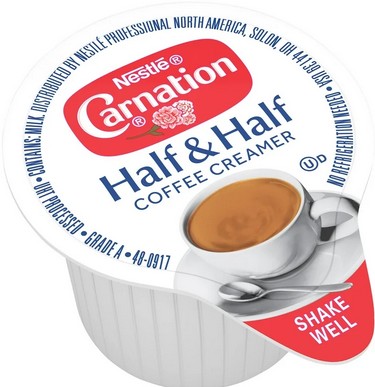
One of the essentials you’ll find in our refrigerator is a container of “half & half”. The 50/50 concoction of milk and light cream creates the perfect texture in our morning cup of coffee. Anything leaning more towards nonfat just doesn’t cut it for us. Earlier this week I noticed (with a wry smile) our half & half was parked right next to a tall, red can of Reddi Wip. Talk about your polar opposites. In the Jeopardy category of “Cream”, it doesn’t get much different.
 Today’s topic is brought to you by the makers of Häagen-Dazs. My wife brought home a couple of containers of their ice cream the other night, and right after dinner I was eager to dig in. The little tubs were smaller than what I was used to but I figured it was a good way to curb consumption. After the first bite however, I realized something wasn’t quite right. Or maybe it was very right. Turns out, I was enjoying the coffee flavor of Häagen-Dazs’ “cultured crème”. In other words, yogurt instead of ice cream.
 Häagen-Dazs describes its new product as “a unique blend of dairy cultures that offer a smoother taste experience unlike the slightly sour flavor of traditional yogurt.” Okay, that’s a mouthful (ha). It’s a tasty mouthful but it’s also just another spin on food products with creamy consistencies. We foodies are all about “mouth feel” aren’t we?
You probably have more cream-based products in your refrigerator/freezer than you realize. Go take a look. It wouldn’t surprise me to learn you also have a can of Reddi Wip (at least you Americans), as well as a tub of sour cream, several sticks of butter, several flavors of ice cream, and whatever version of “creamer” you prefer in your coffee.
 Cream itself is, of course, the higher fat layer skimmed from the top of raw milk. It’s sold in several grades depending on the butterfat content. IMHO the Canadians have the most straightforward set of descriptors, as follows:
- 40% milk fat: manufacturing cream (not available as retail)
- 33-36%: whipped cream (for topping)
- 15-18%: table cream (for coffee)
- 10%: half and half (for cereal, sauces, and soups)
- 3-10%: light cream (lower-fat alternative to any of the above)
Other countries complicate the matter, but often for the better. The French have their crème fraîche, which belongs in the 40% category above and makes for a nice unsweetened topping on a very sweet dessert. The Swiss produce a “double cream” that hits closer to 45% and is probably as thick as yogurt. And the Brits are famous for their “clotted cream”, which tops the milk fat charts at 45% and spreads on a scone like butter.
 Whether “cream” or “crème” (or even “crema”), the word enhances the appeal of a food product. Consider cream pie versus just “pie”. Cream puff instead of just “puff”. Want a cookie, or how about a cookie with cream filling? And anything with buttercream frosting – versus just “frosting” – is more decadent. Heck, I’d even try “plant cream” if you asked me to (the vegan spin on dairy).
 For my money, any product with “Häagen-Dazs” printed on the label is worth a try. Their ice cream products are the cream of their crop but it’s safe to say I’ll be buying more of their cultured crème cups. Not a bad substitute for less healthy dessert options. And just the latest entry in the crop of the cream.
LEGO Notre-Dame de Paris – Update #10
(Read about the start of this “church service” in Highest Chair)
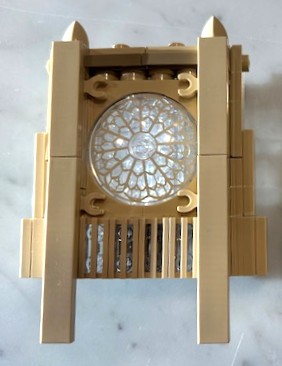
Roses are red, violets are… hang on, hang on; back up the truck. In Notre-Dame de Paris, roses are stained-glass windows. Bags 17 and 18… of 34 bags of pieces, focused almost entirely on the construction of the cathedral’s spectacular wheel-like windows. Today we worked away from the model to completely build two of the three roses, then installed them above the north and south walls of the cathedral’s transept. The LEGO versions aren’t nearly as intricate as the real windows but each one is still made up of thirty tiny pieces.
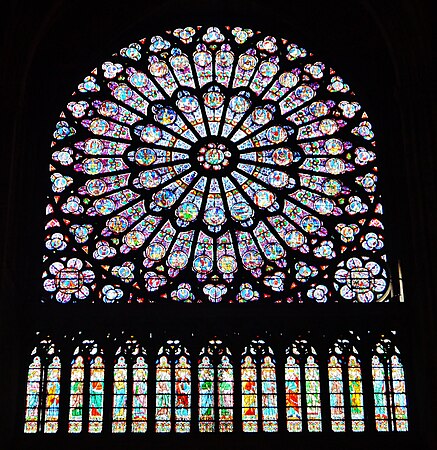
LEGO’s rose windows are necessarily simplified, but that’s not to take away from the craftsmanship of the windows in Notre-Dame de Paris. The transept roses are forty-two feet in diameter (about the width of a basketball court). The artwork of their dozens of panes of stained glass contains scenes from the life of Christ, the twelve apostles, as well as martyrs, virgins, angels, saints, and more. It’s a wonder these windows were created way back in the year 1250. It’s also a wonder they’ve lasted through wars and such, undamaged, for almost 800 years now.
 Besides the rose windows, we added more structure to the rising walls of the nave today, the area on the left side of the photo covered in gray. I point this out because the sanctuary is getting more and more closed in as we anticipate more of the roof structure above. Lest I’m fooled into thinking we’re almost complete, the fact is we have another sixteen bags of pieces to go!
Running build time: 8 hrs. 58 min.
Total leftover pieces: 28
Some content sourced from the Häagen-Dazs Cultured Crème website, and Wikipedia, “the free encyclopedia”.


 Life In A Word